
$2.2 trillion in outstanding debts – From lender to creditor: The structural transformation of China's Silk Road
Xpert pre-release

Available in 27 languages 📢
Prefer Xpert.Digital on GoogleⓘPublished on: January 1, 2026 / Updated on: January 1, 2026 – Author: Konrad Wolfenstein
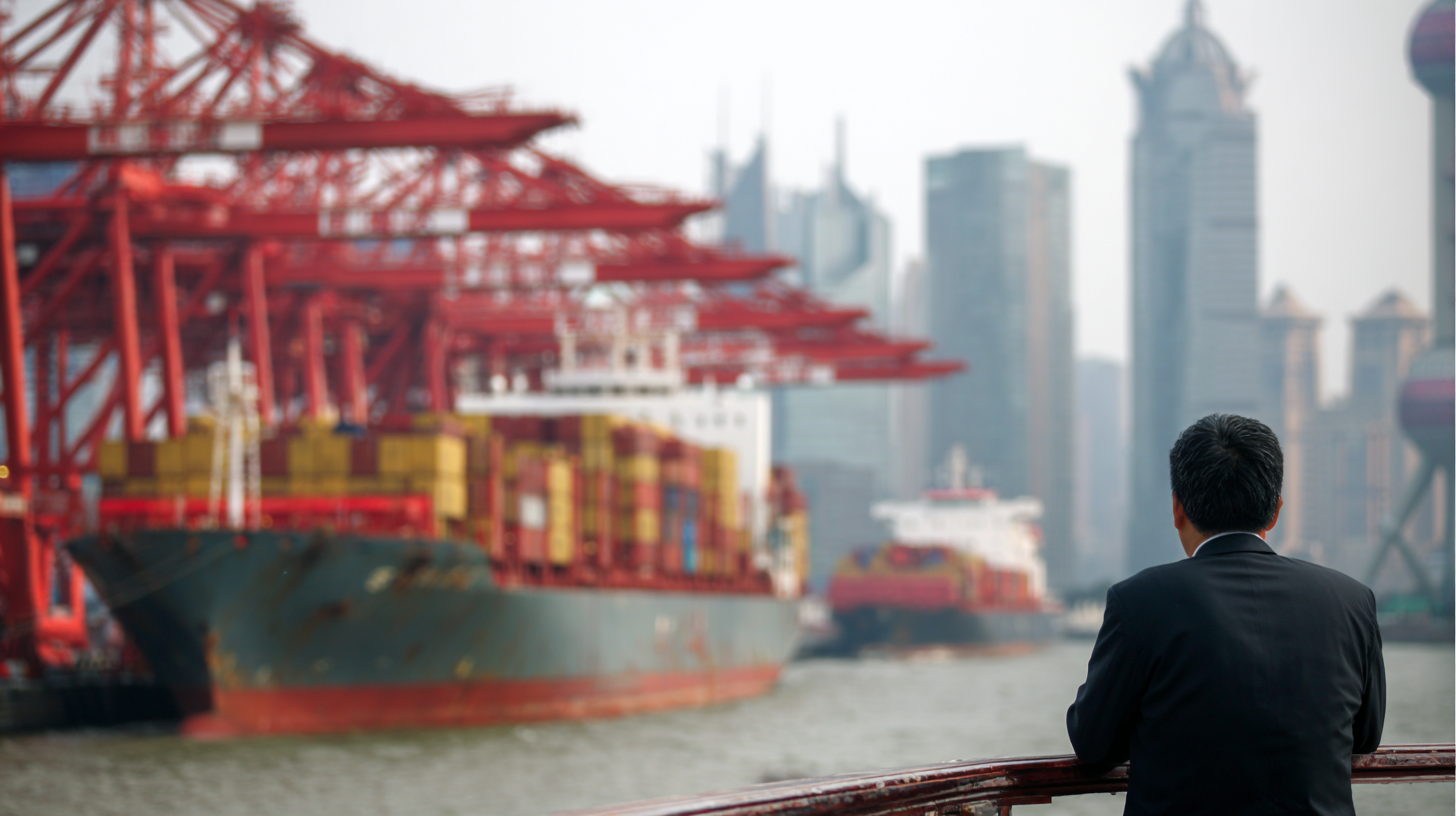
$2.2 trillion in outstanding debts – From lender to creditor: The structural transformation of China's Silk Road – Image: Xpert.Digital
Internal debt brake: How China's economic crisis is limiting foreign investment
Geopolitics of debt: When a lack of transparency burdens the global financial architecture
What began as the greatest infrastructure promise of the 21st century is increasingly turning into a financial nightmare for many nations. A decade after the launch of the "Belt and Road Initiative," a new analysis reveals the devastating record of China's global expansion—and why Beijing is now radically changing its strategy.
When Chinese President Xi Jinping announced the Belt and Road Initiative (BRI) in 2013, the world dreamed of new trade routes, modern railways, and thriving economic zones. But by 2026, little remains of the initial euphoria. Instead, a picture of a gigantic debt trap stretching across continents is emerging. New data reveals that China has now issued loans totaling a staggering $2.2 trillion – often on terms that are barely tolerable for the recipient countries.
The roles have shifted dramatically: While China was once the willing financier of bridges and dams, the superpower now increasingly acts as a global debt collector. Countries like Pakistan, Angola, and Laos are backed into a corner, forced to mortgage their raw materials or cede strategic infrastructure to meet payment demands from Beijing. But China itself is also under pressure: An internal real estate crisis and mounting debt are forcing the leadership to tighten the purse strings and pursue outstanding debts more aggressively.
The following report analyzes the anatomy of this global debt labyrinth. It shows how visionary construction projects became financial constraints, why Western alternatives have so far proven largely ineffective, and what geopolitical consequences threaten if Asia's largest economy calls in its loans.
Geopolitics of debt: When a lack of transparency burdens the global financial architecture
In 2013, Chinese President Xi Jinping announced the Belt and Road Initiative with great fanfare—a gigantic infrastructure program intended to connect Asia and Europe and redefine the economic future of entire continents. More than a decade later, an economic reality has emerged that is far removed from the original promises of salvation. China has transformed itself from the world's largest lender to the world's largest debt collector, while numerous developing countries groan under an crushing debt burden that fundamentally threatens their economic sovereignty.
The raw figures paint a disturbing picture of the global financial architecture. According to calculations by the research organization AidData, China lent a total of US$1.34 trillion to 165 countries between 2000 and 2021. Updated data for the period up to 2023 puts the total volume at an even higher US$2.2 trillion, spread across more than 200 countries and territories. Particularly alarming is the fact that 80 percent of Chinese foreign loans now flow to countries already in acute financial distress. The total amount of outstanding debt to China is nearly €920 billion, a figure that dwarfs even the loan amounts owed by traditional multilateral institutions.
The anatomy of a debt crisis
The global debt structure vis-à-vis China reveals a complex pattern of regional and economic dependencies. Pakistan tops the list of debtor countries with US$68.9 billion, representing 22 percent of the South Asian nation's total external debt. The China-Pakistan Economic Corridor, a flagship project of the Belt and Road Initiative with an investment volume exceeding US$60 billion, has plunged Pakistan into a precarious dependency. The Pakistani government's desperation is evident in the fact that, in March 2025 alone, a US$2 billion loan had to be extended to avert a looming default.
Angola presents a particularly instructive case of oil-backed debt. With $17 billion in debt to China, representing 40 percent of its total foreign debt, the southwestern African nation has entered into a structure where debt repayment is directly linked to oil deliveries. The so-called Angola Model stipulated that commodity exports would guarantee loan repayments. However, when China began to import more oil from Russia, the Persian Gulf, and Asia, this arrangement began to falter. Today, debt payments consume roughly half of Angola's national budget, and the country must transfer $10.1 billion annually to Chinese lenders.
The case of Sri Lanka and the Hambantota port is considered a prime example of what critics call debt-trap diplomacy. After building an ambitious deep-water port on its southern coast with Chinese loans, Sri Lanka could no longer meet the repayments. The consequence was an arrangement whereby 85 percent of the port's shares were sold to the China Merchants Port Holdings Company for US$1.12 billion, coupled with a 99-year lease. The strategic importance of this port on one of the world's most important maritime trade routes is immense, and India is watching the Chinese presence in its immediate geographical vicinity with growing concern.
Ethiopia is grappling with a $14 billion debt to China, representing half of its total $28 billion foreign debt. The Addis Djibouti Railway, a prestige project costing $4.5 billion, $2.5 billion of which was financed by the China Exim Bank, was intended to reduce travel time between the capital and the port from two days to twelve hours. However, technical problems, power outages, and low ridership have turned the project into a financial burden. The Ethiopian government was forced to renegotiate the debt in 2018, extending the original repayment period from ten to thirty years.
Laos perhaps represents the most extreme case of relative debt among the BRI participating countries. With public debt amounting to 112 percent of its gross domestic product in 2023 and roughly 50 percent of its external debt owed to China, the country is on the brink of economic collapse. The Laos-China Railway, a six-billion-dollar project, represents a third of Laos' total GDP. The Laotian kip lost half its value in 2022, effectively doubling the US dollar-denominated debt. Only repeated payment deferrals by China have so far prevented a formal sovereign default.
The paradigm shift of 2020
The year 2020 marks a fundamental turning point in China's foreign lending. The COVID-19 pandemic led to a dramatic decline in new loans of almost 50 percent. While China lent over US$150 billion annually abroad during the peak years of 2015 and 2016, the volume plummeted to around US$60 billion in 2020. However, this decline was not solely due to the pandemic. Net financial transfers had already turned negative in 2019, a clear indication that more money was flowing back to China in the form of debt servicing than was being issued in new loans.
The reasons for this strategic realignment are multifaceted and reflect both China's own economic challenges and the sobering experiences with failed Belt and Road Initiative (BRI) projects. China itself faces enormous internal problems. Local government debt, the real estate crisis, and structural economic weaknesses have severely restricted Beijing's capacity for foreign lending. Domestic debt reached 303 percent of GDP in 2024, and the government had to launch a multi-year debt conversion program of ten trillion renminbi to manage the debt burden of local governments.
At the same time, disappointing project completions within the framework of the Belt and Road Initiative (BRI) have dampened Beijing's appetite for risk. A study of 24 Chinese megaprojects in Southeast Asia revealed an average completion rate of just 33 percent. Of these projects, with a total value of US$77 billion, only eight have been completed, while another eight, worth US$35 billion, are still underway. Five projects, worth US$21 billion, have been completely abandoned. The average completion rate of Chinese infrastructure projects is a meager 35 percent, significantly lower than Japan's 64 percent or the Asian Development Bank's 53 percent.
From lending to emergency rescue
New infrastructure loans have increasingly been replaced by a system of emergency loans and bailout packages. Between 2008 and 2021, China provided a total of US$240 billion to 22 countries in financial distress. Of this, US$170 billion was in the form of liquidity support through currency swap lines from the People's Bank of China, while another US$70 billion was provided by state-owned banks as direct balance-of-payments support. This sum represents approximately 20 percent of total IMF lending during the same period, effectively making China a parallel lender of last resort.
Countries such as Argentina, Pakistan, Sri Lanka, Turkey, and Venezuela have repeatedly resorted to Chinese emergency loans. Pakistan alone received continuous balance-of-payments support for several years, a pattern reminiscent of the IMF's serial lending. However, unlike the International Monetary Fund's programs, Chinese bailout packages come without the typical reform conditions and transparency of multilateral institutions. The interest rates on these emergency loans are typically significantly higher than those on concessional development loans, further increasing the financial burden on recipient countries.
The economic consequences for debtor countries
The economic and social impacts of Chinese debt on recipient countries vary considerably, but follow discernible patterns. Kenya, which borrowed a total of US$9.6 billion from China between 2000 and 2023, now spends over US$1 billion annually servicing the debt of Standard Gauge Railways alone. In July 2025, payments to China accounted for more than 81 percent of Kenya's total foreign debt service. A report by the Kenyan Auditor General revealed that Kenya Railways owes US$741 million in principal repayments, US$222 million in interest, and an additional US$41 million in penalties for late payments to the China Exim Bank.
Zambia, the first African country to default on its debt during the COVID-19 pandemic in November 2020, demonstrates the complexity of Chinese credit structures. While the previous government under Edgar Lungu put the debt to China at US$3.4 billion, the China Africa Research Initiative determined the actual amount to be US$6.6 billion, nearly double the official figure. This discrepancy stems from opaque contract terms, confidentiality clauses, and the inclusion of state-owned enterprises whose debts do not appear in official statistics.
Dependence on a single commodity is dramatically exacerbating the debt crisis of many countries. Zambia generates 70 percent of its export earnings from copper, Angola is dependent on oil exports, and Venezuela has tied its entire debt repayment to oil deliveries. When commodity prices collapsed in 2014, these countries were caught in a vicious cycle of declining revenues and mounting debt burdens. Venezuela now ships over 300,000 barrels of oil per day to China to service debts estimated at $19 billion to $25 billion. These oil shipments account for more than a quarter of Venezuela's total exports, depriving the crisis-ridden country of much-needed foreign exchange.
The geopolitical dimension of debt
The Belt and Road Initiative was never solely an economic project. From the outset, China pursued far-reaching geopolitical goals with the BRI. The inclusion of the initiative in the Constitution of the Communist Party of China in 2017 underscores its central importance to Xi Jinping's political agenda. The BRI serves to secure strategic trade routes, access to critical resources, and extend Chinese influence in regions traditionally dominated by the West.
Port projects play a key role in this strategy. Besides Hambantota in Sri Lanka, China has financed strategic ports in Gwadar, Pakistan, and in Djibouti, on the Horn of Africa. Djibouti, whose debt to China amounts to 38 percent of its GDP, is home to both China's only military base outside of China and American and French military installations. The $1.2 billion in loans from the China Exim Bank for infrastructure projects have put the small East African nation in a position where 78 percent of its payment arrears are owed to Chinese creditors.
Debt creates political dependencies that extend beyond purely economic relationships. Countries with high levels of debt to China are significantly less likely to cooperate with the Paris Club of traditional creditor nations. An academic study found that higher debt to China reduces the likelihood of debt restructuring with the Paris Club by approximately 5.7 percentage points. This suggests that China, as an alternative lender and savior in times of need, is systematically undermining the negotiating position of traditional Western creditors.
Our China expertise in business development, sales and marketing

Our China expertise in business development, sales and marketing - Image: Xpert.Digital
Industry focus: B2B, digitalization (from AI to XR), mechanical engineering, logistics, renewable energies and industry
More about it here:
A topic hub with insights and expertise:
- Knowledge platform on the global and regional economy, innovation and industry-specific trends
- Collection of analyses, impulses and background information from our focus areas
- A place for expertise and information on current developments in business and technology
- Topic hub for companies that want to learn about markets, digitalization and industry innovations
China's global power is crumbling: This is why Beijing is running out of billions for the Silk Road
The problem of non-transparent debt restructuring
Addressing the global debt crisis is complicated by China's refusal to participate in established multilateral debt restructuring mechanisms. Unlike members of the Paris Club, China insists on bilateral negotiations, refuses to disclose loan terms, and categorically rejects debt relief. Instead, Beijing prefers extending maturities and deferring interest payments, which ultimately increases rather than reduces the overall debt burden.
A particularly problematic aspect is the confidentiality clauses included in many Chinese loan agreements. Kenya refused to disclose the contracts for the Standard Gauge Railway based on such clauses, arguing that doing so would violate bilateral agreements with China. This lack of transparency makes it extremely difficult for other creditors and international financial institutions to assess the true extent of individual countries' debt. The International Monetary Fund can only launch assistance programs if all major creditors provide financing commitments, but China's bilateral approach systematically delays or prevents such agreements.
The case of the Republic of Congo vividly illustrates this dynamic. When Congo-Brazzaville requested an aid program from the IMF in 2018, negotiations stalled for over a year because China refused to sign the financing commitments demanded by the IMF. The People's Republic did not dispute the need for debt restructuring but insisted on negotiating it bilaterally. Only in 2019, after China and Congo had reached a bilateral debt restructuring agreement, could the IMF program commence. Congo's foreign debt amounted to 61.75 percent of its GDP, of which approximately one-third, or 21.4 percent of GDP, was owed to China.
Employment and Development: The Mixed Legacy of the BRI
Despite all the justified criticism of the debt problem, it should not be overlooked that Chinese infrastructure investments have indeed achieved positive development effects in some areas. A comprehensive study on the employment impact of the BRI in 51 African countries found that BRI membership contributes to a reduction in unemployment of one to ten percent at the company level and of eleven to seventeen percent at the macroeconomic level. However, the BRI does not directly create jobs, but rather amplifies the job-creating effect of economic growth.
Specific projects show varying results. Kenya's Standard Gauge Railway created over 46,000 jobs during its construction phase and stimulated economic activity in the service sector. The Mombasa-Nairobi Railway dramatically reduced travel time between the two cities and is well-received by passengers. However, railway freight rates are higher than those of truck transport, and the lack of integration with industrial zones means that many exporters continue to prefer the more expensive but flexible road transport.
The Chinese-Indonesian high-speed rail line between Jakarta and Bandung, which opened in October 2023, is Southeast Asia's first high-speed railway and reduces travel time from three and a half hours to 45 minutes. In Mozambique, a BRI-funded project brought satellite television to a thousand villages. The Djibouti-Ethiopia railway significantly reduces transport time from the Ethiopian capital to the port, although technical problems and low ridership are impacting its economic viability.
However, it remains a critical point that many of these projects were primarily implemented with Chinese companies, Chinese technology, and Chinese labor, which limits technology transfer and the development of local capacity. The Ethiopian government found that awarding the operation and maintenance of the Addis Ababa railway to Chinese construction companies lacking operational experience led to significant problems. In contrast, localization proved more successful with the operation of the Addis Ababa light rail system, where, after three years, the entire daily operation was transferred to Ethiopian control.
Western alternatives: High aspirations, low impact
In response to China's Belt and Road Initiative, Western countries have launched several competing initiatives. The G7 countries announced the Build Back Better World Initiative in 2021, later renamed the Partnership for Global Infrastructure and Investment, which aims to mobilize $600 billion over five years. The European Union launched the Global Gateway Initiative in 2021, with a planned investment of €300 billion between 2021 and 2027. The US, Japan, and Australia had already launched the Blue Dot Network in 2019 with initial funding of $60 billion.
However, these Western initiatives have so far fallen far short of their own ambitions and even further behind China's Belt and Road Initiative (BRI). A fundamental problem lies in the differing financing structures. While China's state-owned banks and companies provide direct loans and investments, Western programs primarily rely on mobilizing private capital through public-private partnerships. But private capital is risk-averse and tends to avoid precisely those high-risk projects in unstable or poor countries that are in the most urgent need of infrastructure development.
Furthermore, the terms and conditions differ considerably. Chinese loans typically do not include political conditionality, do not require reforms in areas such as democracy, human rights, or environmental standards, and can be implemented more quickly. In contrast, Western development loans are tied to extensive conditions, which, while desirable in principle, significantly delay project launches. For governments in developing countries under domestic political pressure to deliver rapid, visible infrastructure improvements, the Chinese option often proves more attractive.
Another problem with Western alternatives is the lack of concrete projects. While China can point to a track record of over 20,000 completed projects, Western initiatives have so far produced few tangible results. Media attention focuses on announcements and declarations of intent, but the actual disbursement of funds and the start of construction fall far short of expectations. Developing countries prefer existing Chinese infrastructure to a promised Western alternative, even if the latter would theoretically offer better conditions.
China's own economic limits
The future of Chinese foreign lending will be largely determined by China's own economic development. The People's Republic faces a number of structural challenges that limit its capacity for large-scale foreign investment. The housing crisis, which peaked with the collapse of Evergrande and other major developers, has severely damaged consumer confidence. Household lending grew by a meager one percent in 2024, and bank loans reached 192 percent of GDP.
Local government debt poses an even greater problem. Estimates from the International Monetary Fund put China's actual public debt at 124 percent of GDP at the end of 2024, and this figure does not yet fully include the hidden debt of the Local Government Financing Vehicles. In November 2024, the government launched a 10 trillion renminbi debt conversion program to address the local government debt burden. This program is expected to save approximately 600 billion renminbi in interest payments over five years and provide local governments with greater fiscal flexibility.
At the same time, China is grappling with deflation, declining investment, and an aging population. Consumer prices rose by a mere 0.2 percent in 2024, while producer prices fell by 2.2 percent. Infrastructure investment shrank by about 12 percent year-on-year in October and November 2024. The expansion of export surpluses, which exceeded the trillion-dollar mark for the first time in 2024, can only partially offset these structural weaknesses. The People's Bank of China faces a dilemma: further interest rate cuts would further erode the profitability of its already struggling banks, while a restrictive monetary policy exacerbates the risk of deflation.
Under these conditions, a return to the expansive lending volumes of the BRI's peak between 2013 and 2017 appears unlikely. China will continue to make its foreign lending selective, focusing on strategically important projects, rescue loans to prevent defaults, and increasingly on greener, smaller projects. The megaproject phase seems largely over. It is being replaced by a more pragmatic, risk-aware approach that also increasingly involves private Chinese companies, particularly in future-oriented sectors such as battery technology, renewable energy, and electric mobility.
From a labyrinth of debt to sustainable development?
The global debt crisis, significantly exacerbated by Chinese lending, requires coordinated multilateral solutions. Annual debt payments to China by the 75 poorest countries will reach a record high of US$22 billion in 2025. This amount deprives these countries of urgently needed resources for health, education, and social development. Without substantial debt relief, many of these countries will be trapped in a vicious cycle of indebtedness, stagnant growth, and social tension.
A solution to the debt crisis requires China to engage more fully in multilateral mechanisms. The Common Framework for Debt Treatments, established within the G20 framework, has made initial progress. In 2023, Sri Lanka became the first country to reach a preliminary agreement on the restructuring of $4.2 billion of Chinese debt. Zambia, after years of negotiations, was able to sign bilateral debt restructuring agreements with Chinese lenders in 2024. However, these processes remain lengthy, opaque, and fall short of what is needed.
At the same time, recipient countries must critically reflect on their own role. Many of the failed BRI projects did not primarily result from Chinese debt-trap diplomacy, but rather from poor governance, corruption, and unrealistic expectations in the recipient countries. The Laotian government decided to spend six billion US dollars on a railway equivalent to a third of its national GDP without adequate cost-benefit analyses. Kenya's government accepted inflated construction costs for the Standard Gauge Railway, partly due to corruption. The responsibility for these flawed decisions does not lie solely with China.
More sustainable development financing requires diversified sources of credit, greater transparency in contract terms, more realistic project evaluations, and the involvement of local populations in planning processes. Western alternatives to the BRI must go beyond declarations of intent and actually mobilize capital that flows into concrete projects. At the same time, China should recognize that destabilizing debtor countries ultimately harms Chinese interests as well. A shift towards more concessional loans, greater participation in multilateral debt restructuring mechanisms, and a stronger focus on projects with proven economic viability would be in Beijing's own best interest.
The Belt and Road Initiative has fundamentally transformed global development finance, providing many countries with access to infrastructure funding they would not have received from traditional donors. However, the accompanying debt crisis threatens to negate these positive development effects. Whether China can transform itself from the world's largest debt collector back into a responsible development partner will be one of the central economic and geopolitical questions of the coming decade. The answer to this question will not only shape the fate of numerous developing countries but also significantly determine the future architecture of the global economic order.
Your global marketing and business development partner
☑️ Our business language is English or German
☑️ NEW: Correspondence in your national language!

Konrad Wolfenstein
I would be happy to serve you and my team as a personal advisor.
You can contact me by filling out the contact form or simply call me on +49 7348 4088 965 (Munich) . My email address is: wolfenstein ∂ xpert.digital
I'm looking forward to our joint project.
☑️ SME support in strategy, consulting, planning and implementation
☑️ Creation or realignment of the digital strategy and digitalization
☑️ Expansion and optimization of international sales processes
☑️ Global & Digital B2B trading platforms
☑️ Pioneer Business Development / Marketing / PR / Trade Fairs
🎯🎯🎯 Benefit from Xpert.Digital's extensive, five-fold expertise in a comprehensive service package | BD, R&D, XR, PR & Digital Visibility Optimization

Benefit from Xpert.Digital's extensive, fivefold expertise in a comprehensive service package | R&D, XR, PR & Digital Visibility Optimization - Image: Xpert.Digital
Xpert.Digital has in-depth knowledge of various industries. This allows us to develop tailor-made strategies that are tailored precisely to the requirements and challenges of your specific market segment. By continually analyzing market trends and following industry developments, we can act with foresight and offer innovative solutions. Through the combination of experience and knowledge, we generate added value and give our customers a decisive competitive advantage.
More about it here:










