
Dark Fleet, Gray Fleet and Shadow Fleet: 1,900 ghost tankers and an illegal shadow fleet that circumvents global sanctions
Xpert Pre-Release

Available in 27 languages 📢
Prefer Xpert.Digital on GoogleⓘPublished on: April 24, 2026 / Updated on: April 24, 2026 – Author: Konrad Wolfenstein
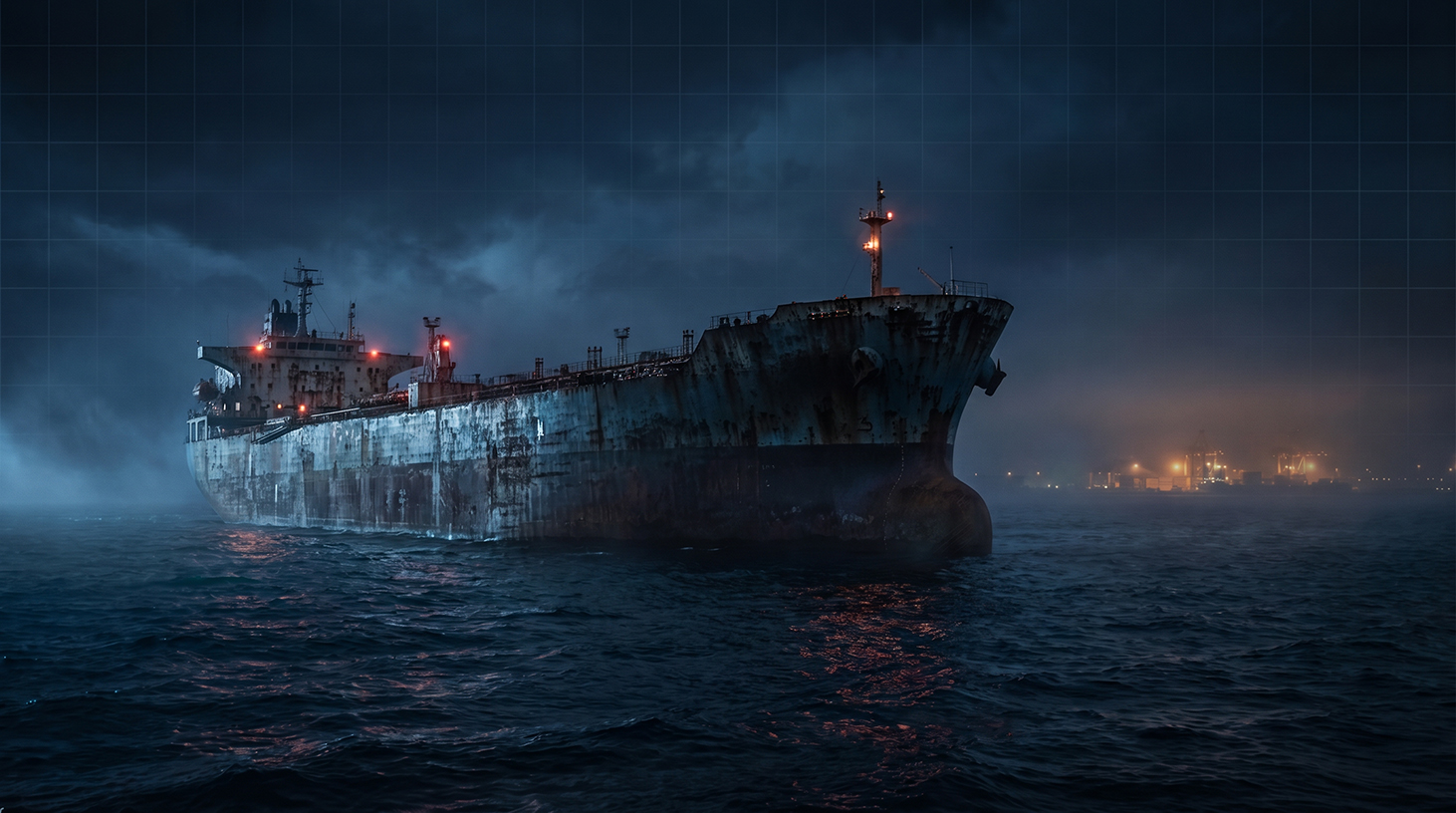
Dark Fleet, Gray Fleet and Shadow Fleet: 1,900 ghost tankers and an illegal shadow fleet that circumvents global sanctions – Image: Xpert.Digital
A multi-billion dollar business on the world's oceans: How an illegal market controls 18 percent of global oil trade
Ticking time bombs at sea: Why the "Dark Fleet" threatens our coasts – and who pays for it
Uninsured, but full of oil: The underestimated danger of the Dark Fleet for European taxpayers
A parallel economic power operates on the world's oceans, evading all international regulation. More than 1,900 oil tankers—old, often inadequately maintained, and completely uninsured vessels—cruise the seas daily as the so-called "Dark Fleet." Their sole purpose: the systematic circumvention of Western sanctions to financially secure the survival of regimes like Russia, Iran, and Venezuela. What once began as an opportunistic stopgap measure by a few risk-taking shipowners has evolved into a highly professional, multi-billion-dollar shadow system that now accounts for almost a fifth of the global tanker market.
Using sophisticated deception methods such as falsified GPS data, constant flag changes, and opaque shell companies, they fool international authorities and often make Western sanctions appear as mere window dressing. But this logistical cat-and-mouse game has a fatal flaw that affects us all: If one of these ghost tankers runs aground off the coast of Europe, unprecedented environmental disasters threaten. Since regular insurance is lacking, in a worst-case scenario, the taxpayers of coastal states will be left to foot the bill for the enormous costs. It is a structural failure of international shipping – and a ticking time bomb.
What the Dark Fleet really is – and why the term matters
Are sanctions ineffective? How a secret shipping network is rendering Western economic policy ineffective
In public debate, the terms Dark Fleet, Gray Fleet, and Shadow Fleet are often used synonymously, but this equation obscures crucial nuances. Analytically speaking, the Shadow Fleet describes the entire ecosystem of all ships that resort to deceptive practices to transport sanctioned commodities, concealing their origin, ownership, or destination port. The Dark Fleet is the hard core of this system—those ships that actively and systematically operate outside any regulated maritime order with the explicit aim of evading sanctions. The Gray Fleet, on the other hand, represents a gray area: ships that do not necessarily engage in sanctioned trade but, due to opaque ownership structures and questionable registration practices, carry the risk of transgressing borders.
This terminological precision is more than mere academic pedantry. It determines how authorities maintain sanctions lists, how insurers calculate risks, and how trading companies structure their due diligence. Those who equate the Dark Fleet with the entire shadow economy on the seas underestimate the systemic dimension of the problem – and simultaneously overestimate the effectiveness of targeted measures against individual ships.
The scale of the problem – intimidating figures
In the third quarter of 2025, according to analyses by the maritime data provider Windward, more than 1,900 tankers operated as part of the Dark Fleet. This figure marks not only quantitative growth but also a qualitative structural shift: what was once an opportunistic niche practice of a few risk-tolerant shipowners has become an organized, adaptive, and highly profitable parallel system. As of February 2026, the Ukrainian government listed a total of 1,337 such vessels, while Lloyd's List Intelligence puts the total number of tankers involved in sanctioned oil trading at 1,423 – 921 of which were subject to active US, EU, or UK sanctions.
The scale of this parallel market can be measured by another data point: According to S&P Global Market Intelligence, a parallel fleet of 978 oil tankers with over 27,000 deadweight tons operates outside established norms and has a combined capacity of 127 million deadweight tons – equivalent to approximately 18.5 percent of the global market. In January 2025, 86 percent of Russian crude oil exports were transported by this parallel fleet. This fleet more than tripled in size after the Russian invasion of Ukraine in February 2022.
The financial significance of these transports for the participating state apparatuses is enormous. Russia's oil export revenues amounted to US$15.8 billion in January 2025 and US$189.1 billion for the entire year of 2024. Direct revenues from the production and export of oil and gas cover approximately a quarter of the Russian federal budget. Without the continuous operation of the Dark Fleet, these revenues would not be achievable under the current sanctions regime—at least not on this scale.
The Architecture of Deception – How the System Works
The operational foundation of the Dark Fleet is based on a combination of technical, legal, and logistical deception maneuvers that reinforce each other and, in sum, create a system that is extremely resistant to traditional law enforcement approaches.
Manipulation of the automatic identification system
The Automatic Identification System (AIS) is mandatory under international maritime law for ships of 300 tons and above on international voyages. Ships continuously transmit their identity, position, speed, and destination port. The dark fleet has developed two systematic methods to circumvent this control system: First, so-called "going dark," in which the AIS transponder is simply switched off, rendering the ship invisible to monitoring systems. Second, "AIS spoofing," in which false position data is transmitted—the ship appears on monitors hundreds of kilometers from its actual location. In May 2025, documented AIS spoofing cases rose to over 200—coinciding with a major wave of sanctions. Dark ship-to-ship (STS) transfers reached record levels of over 300 cases during the same period. This temporal correlation is no coincidence: The system reacts in real time to enforcement pressure—adaptation rather than capitulation.
Flag hopping – the legal cloak of invisibility
Ship re-registration, or "flag hopping," reached an all-time high in 2025. Ships switch their flag registrations between permissive registries to evade regulatory scrutiny. As Western pressure led Panama, the Marshall Islands, and Liberia to refuse registration to shadow fleet vessels, tankers migrated to Cameroon, Gabon, Palau, the Comoros, Djibouti, and other flags of convenience with minimal oversight. The average time between a ship being sanctioned and its re-registration was halved in 2025 compared to the previous year. In a particularly egregious example of maritime identity fraud, at least one documented case involved a ship changing its IMO number—the maritime equivalent of a passport change. IMO numbers are supposed to be tamper-proof, lifetime identifiers for a vessel.
Opaque ownership structures as a protective shield
Perhaps the most powerful mechanism of the dark fleet is structural in nature: the systematic concealment of beneficial ownership. The usage rights for approximately 60 percent of dark fleet vessels are held by unknown owners. Since 2022, 81 percent of companies registered as owners of shipping fleets have been newly founded – and 94 percent of these new companies own and operate only a single vessel. The single-ship company model is not accidental, but rather a strategic design: each ship is packaged in its own legal shell, which can be easily dissolved and replaced with a new one in the event of sanctions or seizure. According to an audit by S&P Global, the beneficial owner remains unknown for 11 percent of all cargo ships worldwide exceeding 27,000 deadweight tons.
A Chinese corporate network investigated by C4ADS controls a subfleet of over 50 supertankers—the so-called "Protean Fleet"—and has transported more than 400 million barrels of illegal oil between high-risk countries such as China, Iran, Russia, and Venezuela since 2019, according to analysts. This network utilizes all known obfuscation techniques simultaneously: frequent clandestine voyages, STS transfers, GNSS manipulation, and complex corporate structures. It is symptomatic of the maturity and professionalism of a system that originally began as a stopgap measure and has evolved into a highly sophisticated parallel market.
Why sanctions are structurally reaching their limits
The fundamental premise of Western sanctions policy—that economic pressure will change the behavior of sanctioned states—rests on a model that systematically underestimates the adaptability of the Dark Fleet. The problem is not a lack of political will or sufficient legal frameworks. The problem is structural.
When a ship is placed on a sanctions list, in many cases it has already changed its name, flag, and ownership structure. The US has seized at least seven ships linked to illegal oil trafficking since the end of 2025—but for every tanker seized, new vessels enter the market. Shortly after the US sanctions 159 tankers on January 10, 2025, 31 of these ships had already resumed cargo operations, and 29 new tankers began transporting Russian oil—even though they had not been involved in such activities in 2024.
Despite increasing sanctions, the system's behavior has not fundamentally changed, but merely become more refined. By the end of November 2024, the US alone had sanctioned 63 ships via sanctions lists, which nevertheless continued to load oil. The message is clear: sanctions alone are not a sufficient deterrent against a system designed to replicate design structures and exchange identities faster than authorities can react.
At the same time, international coordination at the flag state level is lacking. International organizations such as the IMO lack robust enforcement powers. The Royal United Services Institute (RUSI), in an in-depth analysis, has found that flag hopping exploits a structural weakness in the international maritime legal order: flag states have extensive control rights over their registered vessels but bear no proportionate liability risks for the misuse of their registrations. As long as permissive registration states do not incur the economic or diplomatic costs of hosting sanctions violators, this systemic failure will persist.
The insurance gap – a ticking time bomb
One of the most serious, yet often overlooked in public debate, risks of the dark fleet is the structural lack of insurance coverage. Dark fleet vessels operate without the standard protection and indemnity (P&I) insurance that protects legitimate shipping companies against liability claims arising from collisions, oil spills, and other maritime accidents. When something goes wrong—a collision, a wreck, or a grounding—there is often no financially sound insurer to back the claim. Liability falls to port states, coastal states, and ultimately, the taxpayer.
This statement is not a theoretical warning. It is backed by precedents. In December 2024, two outdated Russian oil tankers collided in the Kerch Strait after a storm, spilling over 4,300 tons of heavy fuel oil into the Black Sea. A 55-kilometer stretch of coastline was contaminated, and more than 7,500 people were deployed for the cleanup. The tankers belonged to Russia's Dark Fleet, were underinsured, and the costs of the disaster fell on the Russian state and the affected coastal regions. In June 2025, a Dark Fleet oil tanker caught fire after a collision in the Persian Gulf. In February 2025, multiple explosions rocked the engine room of the Dark Fleet tanker Koala at the Russian Baltic port of Ust-Luga; it was carrying 130,000 tons of heavy fuel oil, prompting Finnish authorities to increase their oil spill preparedness.
The systemic nature of this risk has been quantified by the Helmholtz Centre Hereon in a comprehensive simulation study commissioned by Greenpeace: A single tanker accident involving a vessel from the shadow fleet along the route from the Russian oil port of Primorsk to Skagen in Denmark would release 48,000 tons of oil, which would spread across the Baltic Sea over 30 days, contaminating coastlines from Finland through Germany to Denmark – causing lasting damage to the Baltic Sea ecosystem for decades. The report explicitly states that in the event of an oil spill, German taxpayers would be left to bear the costs due to a lack of insurance coverage.
The fleet consists primarily of aging vessels that were specifically acquired because regular operators no longer wanted to take them on. According to the Congressional Research Service, as early as November 2023, 43 percent of all tankers involved in sanctioned oil trading were between 16 and 20 years old. A ship like the HYPERION, built in 2006 and en route through Caribbean waters in 2025, is 19 years old—far beyond the industry standard for ships in sensitive transit areas—and has changed flags of registration multiple times, from Barbados to the Comoros to Gambia.
🎯🎯🎯 Global Sourcing & Commodity Trading with integrated logistics

Raw materials, global procurement & trade - Image: Xpert.Digital
State-of-the-art cargo planes, optimized transport routes, and multimodal logistics chains are interchangeable—they can be bought, leased, or outsourced. What money can't buy are direct contacts with producers in Peruvian mines, reliable supply relationships in the CIS countries, and years of built-up trust in markets that are unfamiliar to outsiders. The decisive competitive advantage in global commodity trading lies not in transporting the good from A to B, but in knowing where the good comes from, who produces it, and how to gain access before others even know the market exists. Whoever owns the network sets the price. Everyone else pays it.
More information here:
The Dark Fleet's financial network: How shell companies and front men circumvent sanctions
Geopolitical dimension – Who benefits, who pays?
The economic analysis of the Dark Fleet would be incomplete without a sober assessment of the geopolitical architecture that both supports and benefits from the system. The phenomenon is not a natural growth process of maritime trade; it is a state-directed response to economic pressure.
Russia has invested an estimated $10 billion in building its shadow fleet, according to the Kyiv School of Economics. The goal: to export Russian oil at market prices by bypassing G7 vessels, ports, and financial and marine insurance providers. Three companies based in the United Arab Emirates accounted for 19 percent of Russian crude oil exports in January 2025, while five Chinese companies among the top 10 transporters accounted for 10 percent. The flags most commonly used by the Russian shadow fleet for crude oil transport are those of Panama, Barbados, and Sierra Leone.
For China and India, the main buyers of Russian oil, the incentive to purchase shadow fleet oil is a structurally lower price. In 2023, Russia exported 2.1 million barrels of crude oil per day to China—19 percent of China's total imports—a significant portion of which was transported via shadow fleet vessels. Ports such as Fujairah in the United Arab Emirates and certain Turkish ports are key hubs for blending and re-exporting Russian oil to disguise its origin.
Iran is pursuing a structurally similar strategy. According to a FinCEN analysis, in 2024 approximately $4 billion flowed through oil-linked shell companies via shipping companies and intermediaries that facilitated Iranian sanctions evasion. Since 2025, Iranian oil exports to the Far East have been under increased scrutiny from US authorities, who are pursuing a "maximum pressure" strategy – including sanctions against Chinese so-called teapot refineries that purchase Iranian oil.
Venezuela completes the triangle of sanctioned oil exporters. The shadow fleet transports not only oil, but also coal and other raw materials for all three countries, with the system's flexibility allowing it to react to changing demand and sanctions pressure in real time.
UNCTAD reports in its Review of Maritime Transport 2025 that global tonne-miles increased by approximately 6 percent in 2024 – an increase resulting almost entirely from extended shipping routes, particularly due to the diversion of Russian crude oil to India and China instead of Europe. More tonne-miles per barrel mean more ship days per unit transported: a de facto capacity shortage in the regular market, driving up freight rates and indirectly burdening legitimate trading companies through increased transportation costs.
Impact on legitimate trading companies – the underestimated compliance risk
For companies that source raw materials through freight brokers or intermediaries, the dark fleet creates a specific and increasingly regulated due diligence obligation. A cargo may be entirely legitimate at its point of origin, but if it is transported on a vessel operating without insurance, flying a flag associated with deceptive practices, and transiting through a jurisdiction without effective oversight, the buyer may face significant legal risks at the port of destination.
The consequences of non-compliance are not abstract. Weak vessel checks can lead to sanctions violations, resulting in multimillion-dollar fines, asset freezes, or criminal investigations. Insufficient due diligence in chartering can lead to insurance cancellations and uninsured maritime losses. Public sanctions can cost correspondent banking relationships and investor confidence. The UK's National Crime Agency (NCA) issued a red alert in July 2025 regarding Russian shadow fleet sanctions evasion networks and followed it up in November 2025 with a further warning highlighting the combined evasion typologies of Russia, Iran, and North Korea.
Vessel screening – the systematic review of flag status, ownership structure, insurance status, and AIS behavior – has become standard practice in responsible commodity sourcing. This process includes, among other things, analyzing flag and registration history, checking for frequent flag changes, examining corporate links to sanctioned entities, analyzing transaction and payment routing jurisdictions, and reviewing for previous detentions or compliance violations.
Financial institutions that finance or process shipping transactions have the same obligations as the trading companies themselves. Joint warnings from FinCEN and the U.S. Bureau of Industry and Security, as well as Tri-Seal Compliance Notes from the U.S. Departments of the Treasury, Commerce, and Justice, highlight systemic patterns: the use of shell and front companies to conceal beneficial owners, and the use of third-party intermediaries and transshipment hubs to divert sensitive goods. Companies that physically share the same headquarters or common ownership with sanctioned entities are considered high-risk indicators that must trigger in-depth investigation.
The financial system behind the Dark Fleet – more than a tanker problem
The Dark Fleet would not be viable without a parallel financial system. Ships must be purchased, operated, crewed, and accounted for – all of which requires bank accounts, payment flows, and insurance arrangements. The preferred method is single-ship companies operating in permissive jurisdictions, which are largely opaque to outside observers.
Straw men as directors and falsified documentation present these constructs as legitimate trading companies. Often, several such companies share the same address or have overlapping ownership structures with sanctioned entities, concealing the true control behind a layer of legal fiction. Shell companies, frequently registered in free trade zones, facilitated approximately $5 billion in transactions in 2024, according to a FinCEN analysis – all without operational substance.
For analysts and compliance departments, identifying these networks using traditional due diligence tools is only possible to a limited extent. The C4ADS network of the Protean Fleet demonstrates how pervasive these structures can be: A single Chinese corporate network allegedly controls over 50 supertankers, interconnected through complex holding structures, while the ships appear outwardly independent. Western sanctions authorities have thus far focused primarily on individual ships and their conduct, while the profiteers and organizers behind the scenes often go unpunished.
Signals of adaptation – why the system remains resilient
A fundamental misunderstanding in the sanctions debate is the assumption that enforcement reduces the amount of sanctioned oil on world markets. In reality, it merely distorts logistics—it does not eliminate supply. The shadow fleet is not a rigid entity that capitulates to government pressure. It is an adaptive system that reconfigures itself in real time.
Windward analyst Michelle Wiese Bockmann succinctly summarized this dynamic: Shipping in 2026 will be darker. The number of ships operating outside the rules-based international order is growing daily. The lines between commercial and military activities in shipping are becoming increasingly blurred. This statement is not alarmist exaggeration—it is a sober description of the trend.
Between 2025 and 2026, the following adaptation phenomena, among others, were documented: Tier 2 vessels—those with opaque ownership and historical associations with sanctioned entities—saw a 31 percent increase in 2025. So-called "zombie ships"—scrapped tankers digitally resurrected with cloned names and dimensions—are becoming more common. AIS spoofing incidents show spikes of over 200 cases per month, immediately following major waves of sanctions. The average size of dark fleet vessels is increasing: Over 71 percent of large crude oil tankers over 80,000 DWT are now sanctioned by at least one regulatory authority.
At the same time, there are initial signs that sustained, broadly coordinated sanctions pressure is having an effect – albeit only gradually. In April 2025, Russian oil exports rose slightly, but export revenues fell by six percent compared to the previous month to €585 million per day, as documented by the Centre for Research on Energy and Clean Air (CREA). The share of the shadow fleet in Russian oil exports has decreased from 65 percent to 53 percent since January 2025. These are measurable changes – but not yet a trend reversal.
Ways out of system failure – pressure for reform on several levels
An effective response to the Dark Fleet requires structural interventions that go beyond simply listing individual ships and owners. The analytical literature largely agrees that singular enforcement measures at the ship level are necessary, but not sufficient.
The RUSI Institute recommends, as a first step, a fundamental reform of flag state responsibility: Registration states must be held more accountable for the activities of ships sailing under their flag – through diplomatic pressure, economic costs, and international coordination. The IMO must be given stronger enforcement powers, or the leading maritime states must establish alternative enforcement mechanisms outside the IMO framework.
At the supply chain level, the decisive lever is the demand side: If major importers—above all China and India—were to accept higher security and transparency standards as a precondition for purchase, the economic viability of the dark fleet would deteriorate significantly. Without a sustained shift in buyer preference, shadow fleets will evolve faster than sanctions regimes can dismantle them. This insight is politically inconvenient because it means that the solution lies not solely in Western sanctions, but in the complex diplomatic engagement of non-Western actors.
At the operational level, compliance experts have recommended a shift from reactive to predictive risk analysis. Instead of relying on sanctions lists as the primary data source, maritime compliance systems should identify behavioral patterns – frequent AIS failures, rapid flag changes, unusual STS transfers, voyages to high-risk areas – and process them as early warning indicators before a vessel appears on an official list.
The seizure of physical assets—tankers, cargo, accounts—remains an important symbol of law enforcement. But what is analytically crucial is disrupting the support infrastructure: ship registries, insurance companies, and the intermediaries that keep the system running. Those who strike these nodes of the Dark Fleet are targeting the system itself—not just individual components.
A global challenge with local consequences
The Dark Fleet is not a fringe phenomenon of global maritime trade. It is a structural feature of today's geopolitical system, used by state-backed actors as a strategic instrument to neutralize the effectiveness of Western sanctions policies. With over 1,900 vessels, a capacity representing 18.5 percent of the global tanker market, and billions in revenue for Russia, Iran, and Venezuela, the system is neither small nor peripheral.
The consequences of this structural failure are not limited to geopolitics. European coastlines are genuinely threatened by oil spills, the costs of which, due to a lack of insurance coverage, fall on the taxpayer. Legitimate trading companies face increasing compliance requirements and liability risks resulting from the practices of the shadow economy. Freight rates are rising because regular shipping capacity is being absorbed by the pull of the shadow market.
The system is growing and becoming more professional, while the instruments for containing it remain structurally underdeveloped. The gap between the pace of adaptation and the pace of regulation is not accidental—it is the product of economic incentive structures massively biased in favor of the shadow economy. As long as flag states bear no costs for harboring sanctions violators, as long as shipping companies can be freely established and dissolved, and as long as large oil buyers accept a price discount for sanctioned oil, the system will not shrink. It will simply continue to adapt.
Your contact for raw materials ⛏️ Global sourcing 🚢🌐 & trading 📦

Dymitry Kovalenko
I would be happy to serve as your personal advisor.
Dymitry Kovalenko
Tel: +49 7348 4088 961
Your contact for raw materials ⛏️ Global sourcing 🚢🌐 & trading 📦

Konrad Wolfenstein
I would be happy to serve as your personal advisor.
Konrad Wolfenstein
Email: [email protected]
Our global industry and economic expertise in business development, sales and marketing

Our global industry and economic expertise in business development, sales and marketing - Image: Xpert.Digital
Industry focus areas: B2B, digitalization (from AI to XR), mechanical engineering, logistics, renewable energies and industry
More information here:
A thematic hub offering insights and expertise:
- Knowledge platform covering global and regional economies, innovation and industry-specific trends
- A collection of analyses, insights, and background information from our key areas of focus
- A place for expertise and information on current developments in business and technology
- A hub for companies seeking information on markets, digitalization, and industry innovations





