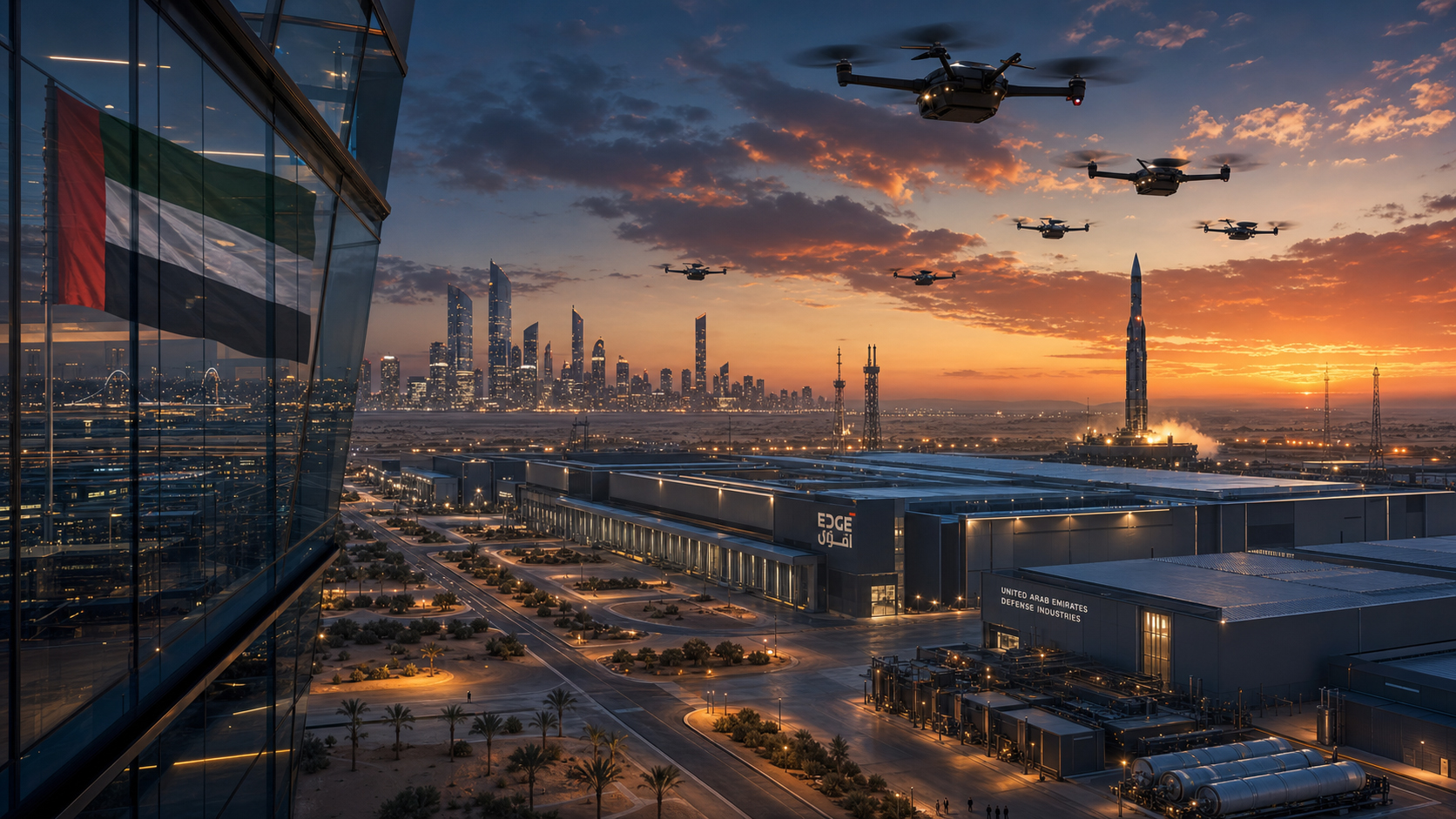
UAE, Qatar, Saudi Arabia: From customer to competitor – How the Gulf States are revolutionizing the arms industry – Image: Xpert.Digital
Lessons from the Iran War: Why Saudi Arabia and the UAE are now building their own weapons
End of dependency: How a new global arms power is emerging in the Arabian Gulf
A billion-dollar shock for the West? The secret high-tech arms plan of the desert states
For decades, the petrodollars of the Gulf states reliably flowed into the coffers of Western arms manufacturers – but this era is drawing to a close. Driven by new geopolitical shocks, such as the escalation of the Iran conflict in 2026, and the bitter realization that blind dependence makes them strategically vulnerable in a crisis, Saudi Arabia, Qatar, and the United Arab Emirates are undergoing a radical change of course. They are rapidly transforming themselves from lucrative major customers into independent producers. With multi-billion-dollar investments, massive joint ventures, and high-tech companies like the Emirati EDGE Group, the oil monarchies are building their own state-of-the-art defense industry. This transformation not only secures their own military sovereignty but also fundamentally destabilizes the entire global arms market.
UAE, Qatar, Saudi Arabia: A new arms giant is rising in the Gulf
From major customer to producer: The strategic shift in the Gulf States
For decades, the oil monarchies of the Arabian Gulf have been among the most reliable major customers of the Western arms industry. With their wealth, accumulated in petrodollars, they finance an exceptional share of the global arms trade. According to data from the Stockholm International Peace Research Institute (SIPRI), Saudi Arabia and Qatar were among the four largest arms importers worldwide between 2021 and 2025, accounting for 6.8 and 6.4 percent, respectively, of global arms imports. The United Arab Emirates ranked eleventh with 2.7 percent. Cumulatively, the countries of the Gulf Cooperation Council (GCC) thus absorb a significant portion of the global arms market – financed by revenues from crude oil and natural gas.
But this picture is fundamentally changing. The ruling dynasties in the Gulf have recognized that pure dependence on imports makes them strategically vulnerable: supply bottlenecks, political conditions imposed by Western export control authorities, and the shocking experience of not being informed in advance in a crisis have significantly increased the motivation for domestic production. The war with Iran, which reached a new level of escalation in February 2026 with American-Israeli airstrikes on Iranian missile sites and air defense installations in cities like Isfahan, Karaj, and Kermanshah, has brutally brought this realization to the forefront. Gulf states hosting US military bases immediately became targets of Iranian missiles and drones, even though they themselves were not involved in the attacks.
Between two worlds: The continuing dependency and its structural limits
However determined the course toward self-propulsion may sound, the reality remains more complex. The Gulf states are simultaneously purchasing more weapons than ever before. In May 2025, during a visit by US President Donald Trump, Saudi Arabia concluded an arms deal worth nearly $142 billion – the largest defense cooperation agreement in US history, according to the White House. This package includes air force capabilities, missile defense, maritime and coastal security, and communications systems. In 2024, the UAE secured $1.2 billion worth of precision-guided missiles, followed by approvals for CH-47F helicopters and F-16 maintenance contracts worth more than $1 billion.
This apparent paradox resolves itself when one soberly considers the structural limitations of regional arms buildup. Strategic analysts agree: fifth-generation fighter jets like the F-35, advanced tank technology, or large warships will not be able to be built domestically by the Gulf states in the foreseeable future. The unit price of an F-35 is around US$100 million, and its industrial ecosystem comprises hundreds of suppliers in the aerospace, electronics, and materials science sectors, built up over decades. Realistically, efforts toward domestic production are therefore focused on drones, precision munitions, electronics, and logistics—areas where entry is quicker and where the private sector is relatively accessible.
Saudi Arabia and the arithmetic of Vision 2030 ambition
Saudi Arabia is pursuing the most ambitious quantification target in the region. As part of its Vision 2030 agenda, the Kingdom has set the goal of localizing at least 50 percent of its defense spending domestically by the end of the decade. The General Administration of Military Industries (GAMI) reports a localization rate of 24.89 percent for 2024. This means that Saudi Arabia must more than double its domestic share within a few years. Given the enormous starting sums, this is an extraordinary challenge – Saudi Arabia spent an estimated US$75.8 billion on defense in 2024, with a target of US$78 billion for 2025, representing approximately 21 percent of government spending and 7.1 percent of GDP.
The state-owned Saudi Arabian Military Industries (SAMI), founded in 2017 as a wholly-owned subsidiary of the Public Investment Fund, is the instrument for implementing this agenda. Originally limited to the production of spare parts for American fighter jets and a few types of armored vehicles, SAMI is steadily expanding its industrial footprint. The company maintains joint ventures with the US corporation Boeing, the Spanish shipbuilder Navantia – from which the HAZEM Lite combat management system originated – and numerous other international partners. In July 2024, SAMI signed three memoranda of understanding with Turkish companies for the localization of defense industries: with Baykar for the development of UAV systems, with Aselsan for defense electronics, and with Fergani Space for emerging space technologies.
SAMI's appearance at the Paris Air Show in June 2025 focused entirely on the maintenance, repair, and overhaul (MRO) of military aircraft, as well as discussions about joint ventures and technology transfer with international original equipment manufacturers (OEMs). The company's goal of contributing 14 billion riyals (US$3.7 billion) to the Saudi economy, investing 6 billion riyals in research and development, and creating 40,000 jobs remains ambitious. At the same time, experts urge caution: the US-142 billion riyal deal demonstrates that, despite its localization goals, Riyadh continues to rely heavily on foreign arms imports – and that such announcements have historically often been exaggerated.
Qatar's modest but determined unique path
Qatar plays a distinct, albeit smaller, role in this regional race. Barzan Holdings, founded in 2016 as a commercial gateway to the Qatari defense industry, sees itself as a facilitator: The company strengthens the military capabilities of the Qatari armed forces by forging partnerships with leading international defense companies, facilitating technology transfer, and developing innovative defense and security technologies. Its focus is on munitions, drone defense systems, portable weapons, and—increasingly—artificial intelligence, autonomous capabilities, and cyber defense.
Barzan deliberately collaborates with industry. Cooperation with the Italian arms manufacturer Beretta for local small arms production, as well as partnerships for maintenance and overhaul services, exemplify this pragmatic approach. According to industry analyses, Barzan is prioritizing military AI, cyber defense, electronic warfare, and sovereign command and control systems for 2026 – areas that do not require massive manufacturing infrastructure but possess high strategic value. In January, the EDGE Group signed a joint venture agreement with Barzan and licensed its vehicle technology – a sign that the Gulf states are increasingly cooperating with each other rather than relying solely on Western partners.
The UAE and the EDGE phenomenon: How an arms company emerged in six years
The dynamics have been most pronounced in the United Arab Emirates. The creation of the EDGE Group in November 2019 through the merger of approximately 25 Emirati companies was a game-changer in industrial policy. In just six years, EDGE has expanded its product portfolio from 30 to 201 advanced solutions in the air, land, sea, and cyber domains – a growth of more than 550 percent. The workforce now comprises 14,000 employees, with an Emirati presence across the organization at 20 percent and already reaching 50 percent in the engineering departments.
What makes these figures particularly remarkable is that EDGE is not a company that produces exclusively for its domestic market. In 2024, the group generated revenue of US$4.9 billion, over 20 percent of which came from exports. By September 2024, international orders had increased from US$18.5 million in 2019 to over US$2.1 billion. In April 2026, EDGE reported new orders totaling US$7.96 billion and a total order backlog of US$20.4 billion. The group's products and services now reach customers in 91 countries. According to SIPRI, the UAE's share of global arms imports fell to 2.7 percent between 2021 and 2025, compared to 3.5 percent between 2016 and 2020 – increased domestic production is making some imports obsolete.
Hub for Security and Defense - Advice and Information


Hub for Security and Defense - Image: Xpert.Digital
The Security and Defence Hub offers expert advice and up-to-date information to effectively support companies and organizations in strengthening their role in European security and defence policy. Working closely with the SME Connect Defence Working Group, it particularly promotes small and medium-sized enterprises (SMEs) that wish to further develop their innovative capacity and competitiveness in the defence sector. As a central point of contact, the Hub thus creates a crucial bridge between SMEs and European defence strategy.
Related to this:
Autonomous drones, joint ventures, war tests: EDGE as the engine of the Emirati defense industry
Targeted alliances instead of industrial autarky: EDGE's partnership network
EDGE's strategic intelligence lies not in attempting universal in-house production, but in the targeted identification of areas where technological sovereignty or supply chain security is critical. For other areas, the company relies on deep industrial partnerships with leading Western companies. The result is a network of 23 joint ventures and alliances spanning all domains – air, land, sea, space, and cyber.
A standout is the partnership with the Italian aerospace and defense company Leonardo, with whom EDGE initially signed a letter of intent in June 2025 and took a significantly more concrete step towards establishing a joint venture in Abu Dhabi at the Dubai Airshow in November 2025. EDGE holds 51 percent of the shares, Leonardo 49 percent. The joint venture will encompass the design, development, testing, industrialization, production, sales, and lifecycle support of systems in the areas of sensors, system integration, and platforms – for the UAV market and selected export markets. In shipbuilding, EDGE has established the joint venture Maestral with the Italian global market leader Fincantieri. Maestral focuses on naval defense on a global scale and offers design, construction, and technical support for next-generation warships. As evidence of its growing export capabilities, EDGE secured a contract worth approximately one billion euros to supply corvettes to the Angolan Navy.
In the field of air defense, the partnership between EDGE subsidiary HALCON and Rheinmetall Air Defence from Switzerland is particularly revealing. HALCON developed the SkyKnight surface-to-air missile system, which was integrated as a component into Rheinmetall's Oerlikon Skynex air defense system – the first ever Emirati-developed and manufactured surface-to-air missile. The fact that EDGE acts not only as a customer but also as a supplier to a leading NATO defense company illustrates the level of vertical integration the group has already achieved.
Autonomous systems as a growth engine: The Anduril adventure
Perhaps the most symbolic collaboration to date is the joint venture established in November 2025 at the Dubai Airshow with the American defense technology company Anduril Industries, considered a rapidly emerging Silicon Valley challenger to the established US defense industry. The new EDGE-Anduril Production Alliance aims to transform Abu Dhabi into a production and sustainability hub for autonomous systems in the Middle East.
The first joint product is the Omen, a Group 3 hybrid-electric tailsitter drone system capable of vertical takeoff and landing, but operating horizontally like a fixed-wing aircraft – thus eliminating the need for a runway. It is networked with Anduril's AI-powered Lattice platform, enabling multiple drones to exchange data in real time, extend the sensor network across maritime and land approaches, and generate a shared situational awareness picture. EDGE is investing approximately US$200 million in manufacturing infrastructure in Abu Dhabi; the UAE has already ordered 50 systems. Full production is slated to begin by the end of 2028. Simultaneously, Anduril is establishing a 50,000-square-foot regional hub for engineering, design, and prototyping in Abu Dhabi – its first operational footprint in the Middle East.
The baptism of fire: How the Iran war became a testing ground for Emirati weapons
The war with Iran has given the Gulf states' industrial strategy a dramatic operational dimension. The Emirates were attacked far more frequently by Iranian drones and missiles than Saudi Arabia or Qatar – a direct consequence of their proximity to US military bases such as Al Dhafra. At the same time, these attacks became the first real combat test of Emirati defense technology.
According to official figures, approximately 80 percent of incoming Iranian Shahed drones were intercepted by Emirati systems. EDGE's electronic warfare systems were activated to detect incoming missiles and drones, initiate jamming measures, and conduct decoy maneuvers – in close cooperation with American missile defense systems. For EDGE CEO Hamad al-Marar, the strategic value of this experience is invaluable: The company's technology has now been tested and validated in real combat – a mark of quality that is virtually unrivaled in the global arms market.
At the same time, the war has exposed weaknesses in growth. Shipments stuck in the blocked Strait of Hormuz are inevitably delaying production plans. And the experience of the US not informing its Gulf partners in advance about Operation Epic Fury, even though it was clear they would be prime targets for Iranian retaliatory strikes, has fundamentally shaken the strategic calculations of the monarchs. Several Gulf states have now begun internal reviews to determine whether force majeure clauses in existing contracts can be invoked and to reconsider their current and future investment commitments.
Geopolitics of Dependence: Why Sovereignty in Armaments is Becoming a Matter of Survival
Recent events are coalescing into a clear strategic message: External security guarantees—however important they remain—offer no complete insurance against the devastating impact of regional conflicts. Gulf states that rely solely on foreign supply chains and armed forces face a structural dilemma. On the one hand, Western governments can restrict or delay arms deliveries for political reasons. On the other hand, the recent conflict has demonstrated that the United States' strategic interests are not always aligned with those of its host states.
Against this backdrop, the Gulf states' decision to develop their own defense industries appears as a rational response to a structurally uncertain global situation. In 2025, the GCC countries collectively spent more than US$100 billion on defense – placing them among the countries with the highest military expenditures in the world relative to their GDP. The average defense spending of the Gulf states is around four percent of GDP, twice as high as that of most NATO countries. This resource base creates the financial leeway for industrial policy ambitions that would be unthinkable elsewhere.
Furthermore, there is the realization that a domestic defense base means far more than mere weapons production. It implies building human capital in engineering professions, attracting foreign direct investment through technology partnerships, diversifying economies dominated by hydrocarbons, and generating export revenues in new markets. EDGE already exports almost three-quarters of its production to Latin America, Africa, and Asia – systematically developing markets that Western competitors have long neglected.
Between cooperation and competition: The new gravitational field of the global arms industry
The rise of Gulf arms is also changing the geometry of the global arms trade. Western arms companies face a decision: either they cooperate and accept technology transfer and production relocations – or they risk losing market share to new regional players in the long term. The partnership strategy of EDGE, Leonardo, Fincantieri, Rheinmetall, and Anduril shows that Western corporations are willing to enter into new partnerships as long as their technological leadership and control over intellectual property are preserved.
At the same time, a new level of competition is emerging: Not only South and East Asia, but increasingly the Gulf itself is emerging as an exporter of defense technology. EDGE's acquisition of majority stakes in Estonian MILREM Robotics (the world's leading manufacturer of military ground robots), the Swiss drone company ANAVIA, and Brazilian defense companies marks a qualitatively new phase: The Gulf states are no longer just investing in production lines, but also in intellectual property, engineering capabilities, and market positions on all continents.
The question increasingly occupying analysts is therefore no longer whether the Gulf will develop its own independent arms industry – that is already happening. The central question is how far up the global value chain this industry will rise and whether the transatlantic arms complex is prepared to accept the emerging new players as equal partners. Given order books worth tens of billions, world-class combat tests, and a targeted network of alliances and domestic developments, there is much to suggest that the era of the passive arms buyer in the Gulf is definitively over – and a new chapter of industrial military sovereignty has begun.
Consulting - Planning - Implementation

Markus Becker
I would be happy to serve as your personal advisor.
Head of Business Development
Chairman SME Connect Defense Working Group
Consulting - Planning - Implementation
Konrad Wolfenstein
I would be happy to serve as your personal advisor.
You can contact me at wolfenstein∂xpert.digital or
Just call me on +49 7348 4088 965 .