
Energy-intensive industries in Germany: Alarming figures – Between structural crisis and strategic decision-making
Xpert Pre-Release

Available in 27 languages 📢
Prefer Xpert.Digital on GoogleⓘPublished on: June 22, 2026 / Updated on: June 22, 2026 – Author: Konrad Wolfenstein
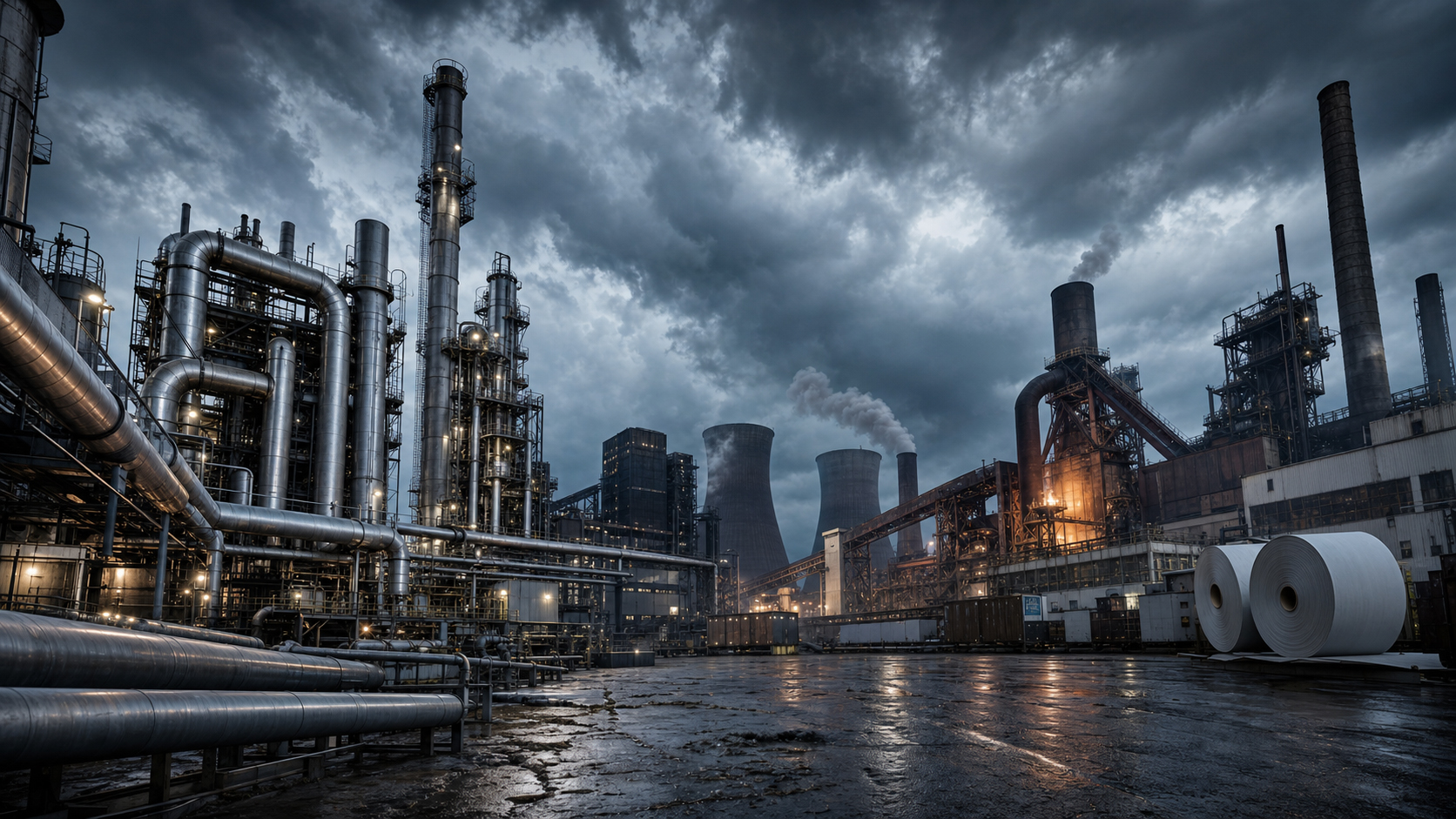
Energy-intensive industries in Germany: Alarming figures – Between structural crisis and strategic decision-making – Image: Xpert.Digital
Flight abroad: Why major German corporations are turning their backs on Germany as a business location
Over 50,000 jobs lost: The bitter conclusion four years after the start of the energy crisis
Germany's industrial foundation is crumbling: Four years after the start of the energy crisis, key energy-intensive industries – from chemicals and glass to steel – are experiencing a dramatic production decline of over 15 percent. While energy costs remain at historically high levels and new geopolitical conflicts are shaking the markets, more and more corporations are relocating their production abroad. Is Germany undergoing normal structural change, or are we witnessing the irreversible beginning of deindustrialization? This is an in-depth analysis of fatal competitive disadvantages, shrinking value chains, and the question of whether green technologies can still save the industrial backbone of the country in time.
The creeping sell-off of the industrial backbone – Why Germany is losing precisely the sectors it needs most urgently
Four years under pressure: The dramatic toll since the start of the war
On February 24, 2022, Russia launched its war of aggression against Ukraine, triggering an energy price crisis whose economic consequences are still being felt in German factories today. The figures presented by the Federal Statistical Office (Destatis) in May 2026 leave no room for embellishment: Seasonally and calendar-adjusted production in Germany's energy-intensive industries fell by 15.2 percent between February 2022 and March 2026 – a significantly steeper decline than the overall industrial sector, which saw a drop of 9.5 percent during the same period.
This decline is not a cyclical phenomenon that will resolve itself with an economic upswing. It is structural, profound, and in some areas already irreversible. The affected sectors include the chemical industry, metal production and processing, the manufacture of glass, glassware, and ceramics, as well as the processing of stone and earth, the paper industry, and petroleum refining. Together, they account for roughly three-quarters of total energy consumption in the manufacturing sector – even though, measured by the number of employees and production sites, they represent only a fraction of German industry. These energy-intensive sectors account for approximately 76 percent of industrial energy consumption, despite representing only 15 percent of all industrial enterprises and employees.
What these data reveal is the logical consequence of a structural imbalance: industries that depend on cheap energy as a raw material and process heat like the air they breathe are encountering a market where natural gas is permanently about twice as expensive as before the crisis. The once inexpensive pipeline deliveries from Russia are a thing of the past. Replacing it with LNG imports is more expensive, more prone to disruptions, and its price formation is more susceptible to globalized shocks, as the Iran conflict has demonstrated again since the beginning of 2026.
Glass, cement, ceramics: The hardest defeat in numbers
The sharpest decline among energy-intensive industries is affecting a sector that often receives little public attention: the production of glass, glassware, and ceramics, as well as the processing of stone and earth. This sector recorded a 25.0 percent drop in production between February 2022 and March 2026. The situation is particularly severe in the production of concrete, cement, and sand-lime brick products, where the decline is even more pronounced at 29.3 percent.
These figures must be seen in context: Cement and concrete are extremely energy-intensive materials. The production of clinker, the essential intermediate product of the cement industry, requires firing temperatures exceeding 1,400 degrees Celsius and is therefore entirely dependent on high-temperature process heat – an energy service for which there is no cost-effective alternative to natural gas in the short term. High gas prices, combined with a weakening construction sector, have put the industry in a double bind: rising costs on the input side and shrinking demand on the output side. The result is accelerated structural change, leading to plant closures and capacity reductions in several regions of Germany.
The glass industry is similarly affected, albeit somewhat less dramatically. Container glass, flat glass, and technical glass are all energy-intensive products that require melting furnaces to operate continuously at consistently high temperatures. Every cooling and restarting cycle involves significant material losses and technical risks, making production cutbacks particularly costly in this sector. Data from the Federal Statistical Office show that these structural constraints severely limit the sector's responsiveness to price signals—a phenomenon economists refer to as high adjustment costs in irreversible production structures.
Chemicals and paper: Key industries at a crossroads
The chemical industry is widely considered the backbone of German industry – and rightly so. It supplies basic materials for almost all other manufacturing sectors: plastics, paints, solvents, fertilizers, pharmaceutical precursors, and specialty chemicals. Its value-added multiplier is 2.08, meaning that every euro of direct value added in the chemical industry triggers a further 1.08 euros in the overall German economy through intermediate input and income effects. Through employment effects in supplier companies, more than 413,600 additional jobs depend on the chemical industry alone.
This is precisely why the decline in chemical production is particularly concerning. From February 2022 to March 2026, production fell by 18.1 percent. The production index, which stood at 99.4 points in January 2022, dropped to 78.7 points in March 2026. Using 2021 as a base year, the industry lost roughly one-fifth of its production output in four years. Total sales for German chemical companies in 2025 amounted to €220 billion – a decrease of 22 percent compared to 2022. The German Chemical Industry Association (VCI) anticipates either stagnation or a further decline for the current year.
The chemical industry's particular vulnerability lies in its dual role as an energy consumer: natural gas serves not only as fuel for process heat but also as a raw material for the synthesis of basic chemicals such as ammonia, methanol, and ethylene. Since the loss of inexpensive Russian pipeline gas and the associated price increase, these unit energy costs have risen dramatically in the sector. Energy costs have roughly doubled since the beginning of the war in Ukraine, and temporarily increased again due to the Iran-Iraq War in 2026. In the metal industry, unit energy costs rose to as much as 36 percent of the production value in the crisis year of 2022.
The paper and pulp industry shares this fate with similar intensity. From February 2022 to March 2026, its production shrank by 18.5 percent. The production index fell from 99.5 to 79.5 points. In the first half of 2023, the consequences were even more drastic: Total production in the German paper industry declined by almost 21 percent compared to the same period of the previous year, and sales even shrank by 25 percent. Compared to other European countries, Germany's paper industry is disproportionately affected – a direct reflection of the competitive disadvantage caused by higher energy prices. The paper industry lost the largest proportion of jobs among energy-intensive sectors: a decrease of 8.6 percent since February 2022.
Metal: Foundation of value chains during the degradation process
Metal production and processing saw a decline of 12.9 percent between February 2022 and March 2026. While this is the smallest decrease among the hardest-hit sectors, it has significant overall economic implications in absolute terms. Metals are the material from which machinery, vehicles, components, and infrastructure are made. A sustained decline in metal production has a direct impact on mechanical engineering, the automotive industry, and plant engineering – three of Germany's most important export sectors.
The steel industry reacted early to price pressures. In 2022, ArcelorMittal shut down two production plants in Germany and sourced intermediate products from cheaper locations abroad. This development exemplifies a broader dynamic: production steps with particularly high energy consumption are being gradually relocated, while downstream processing steps initially remain in Germany. The result is a gradual deindustrialization at the base of the value chains, which is likely to affect the entire vertical integration of manufacturing in the coming years.
At the end of 2025, the employers' association Gesamtmetall warned that tens of thousands more jobs could be lost in the metal and electrical engineering sectors in 2026 – arguing that taxes, energy costs, and labor costs in Germany were so high that production was simply no longer profitable for many companies. In March 2026, a total of 794,400 people were employed in all energy-intensive sectors – 6.3 percent fewer than in February 2022, representing a loss of approximately 53,200 jobs.
The special case of mineral oil processing: An outlier requiring explanation
Amidst this consistently negative trend, one sector stands out, distorting the overall statistics: petroleum refining. While all other energy-intensive industries are experiencing production declines, the refinery production index climbed to a remarkable 130.7 points in March 2026, its highest level in years. Compared to February 2022, this represents an increase of 24.6 percent.
This increase is less attributable to improved structural competitiveness than to a combination of catch-up effects and temporary economic booms. Since January 2026, the industry has recorded significant production increases. This is likely due, on the one hand, to improved refinery utilization following previously reduced production, and on the other hand, to effects from altered supply chain logistics resulting from geopolitical upheavals – particularly the Iran conflict, which diverted global LNG flows and temporarily increased demand for European refinery products. In the long term, petroleum refining remains under structural pressure, as declining petroleum consumption in Germany translates into lower demand; by 2026, refinery capacity in Germany will decrease by approximately 12 million tons as a result of plant adjustments.
The short-term upswing should therefore not be interpreted as a trend reversal for the industry. Rather, it is a symptom of volatile energy markets, in which geopolitical events create short-term production incentives that mask structural problems. For a dispassionate location analysis, it should be considered an exceptional effect that does not fundamentally alter the overarching finding of an industrial sector under pressure.
Three-quarters of industrial energy consumption – why these sectors are so vulnerable
To fully grasp the dramatic nature of this decline, one must consider the energy intensity of the affected industries in relation to their economic importance. Although energy-intensive industries represent only about 15 percent of manufacturing businesses and employees, they recently consumed 76 percent of total industrial energy. Their share of gross value added, however, is only about 17 percent. This ratio clearly illustrates how exceptionally energy-intensive their production processes are and how severely even moderate energy price increases impact their cost structures.
Natural gas is the primary energy source. In 2024, it accounted for 29.2 percent of industrial energy consumption, followed by electricity at 21.1 percent and petroleum products at 16.5 percent. During the acute energy crisis from 2022 to 2023, industrial energy consumption fell sharply: by 9.1 percent in 2022 and by a further 7.8 percent in 2023 – primarily due to rising prices and the resulting production cutbacks. The slight increase in energy consumption of 1.9 percent in 2024 indicates, at best, a partial stabilization at a permanently lower production level.
The relationship between energy prices and production follows a simple logic: If natural gas for industrial customers remains at six to seven cents per kilowatt-hour – roughly twice the pre-crisis level – then every energy-intensive production plant becomes less competitive. Companies in the US structurally pay significantly less for industrial gas, and Chinese manufacturers benefit from government-subsidized energy prices. This cost disadvantage of up to 300 to 400 percent compared to American locations cannot be offset by German productivity advantages.
Our EU and German expertise in business development, sales and marketing

Our EU and German expertise in business development, sales and marketing - Image: Xpert.Digital
Industry focus areas: B2B, digitalization (from AI to XR), mechanical engineering, logistics, renewable energies and industry
More information here:
A thematic hub offering insights and expertise:
- Knowledge platform covering global and regional economies, innovation and industry-specific trends
- A collection of analyses, insights, and background information from our key areas of focus
- A place for expertise and information on current developments in business and technology
- A hub for companies seeking information on markets, digitalization, and industry innovations
Economic alarm: Politics must take action – How the shrinking of energy-intensive industries is affecting Germany
Value chains at risk: What the shrinking means
The economic importance of energy-intensive industries far exceeds their direct production output. They are at the beginning of industrial value chains and supply intermediate products for almost all other manufacturing sectors. Of the non-exported goods produced by the chemical, pharmaceutical, glass, metal, and paper industries, an average of 87 percent are used as intermediate inputs in other sectors. This means that any decline in basic chemicals or steel production will, with a delay, also affect the automotive industry, mechanical engineering, the electrical industry, and the construction sector.
The five energy-intensive core industries generated direct gross value added of €135 billion in 2022. This was supplemented by value added contributions of €106 billion from the economic activity of suppliers and the net income spent by employees. In total, this resulted in a value added contribution of over €241 billion – an amount directly linked to public budgets and social security. If this value added shrinks, it not only jeopardizes those directly affected, but also, in the medium term, the competitiveness of downstream industries and their tax revenues.
The German Mineral Resources Agency (DERA) notes that the decline in production by energy-intensive companies between December 2021 and June 2025 amounted to approximately 22 percent – more than twice the decline of around 10 percent in the manufacturing sector as a whole. This above-average slump has accelerated the shift in economic power within German industry: Energy-intensive sectors, which still accounted for about 22 percent of total manufacturing revenue in 2023, are steadily losing ground.
Emigration as a response: When the location is abandoned
The reaction of companies to these structural pressures is understandable – and threatening for Germany as an industrial location. According to the "Simon-Kucher Location Perspectives Study 2025," for which 240 high-ranking managers from the basic chemicals, steel, glass, and cement sectors were surveyed, 73 percent of energy-intensive companies in Germany are relocating their investments abroad. 42 percent of the corporations are investing in other European countries instead of Germany, and another 31 percent are even investing on other continents – particularly in the USA, China, and India. For basic chemicals, the relocation rate is even higher at 86 percent. Nearly all – 97 percent – of the companies surveyed cite energy prices as the most important location factor.
These figures are alarming because they no longer refer solely to investment projects, but also to the relocation of existing production capacities. BASF, the flagship company of the German chemical industry, has systematically reduced its investments at its main plant in Ludwigshafen and instead invested billions in its new integrated production site in Zhanjiang, southern China. This move exemplifies a strategic option that more and more companies are choosing: relocating production to where energy is cheaper, permitting processes are faster, and sales markets are closer.
The Chamber of Industry and Commerce (IHK) Energy Transition Barometer for 2024 shows that four out of ten industrial companies are considering reducing or relocating their production due to the energy situation. Among industrial companies with more than 500 employees, this figure is now over half. The Bertelsmann Foundation already noted in 2023 that ammonia production and other energy-intensive economic activities in Germany were temporarily halted because they had become unprofitable due to rising prices. Once closed, production sites rarely reopen.
Carbon Leakage: When Climate Protection Fails to Make a Difference
The relocation of energy-intensive production abroad is not only an industrial policy failure, but also a climate policy failure. The term "carbon leakage" describes the phenomenon where strict climate protection regulations at a location lead to production capacities migrating to regions with less restrictive regulations – and generating more CO₂ there than was previously saved. If a German chemical plant closes and its production is moved to a Chinese facility with older processes and carbon-intensive electricity, the global climate is not helped.
The European Emissions Trading System (ETS) was designed to promote investment in clean technologies. In the energy-intensive basic chemicals sector, however, it is having a different effect: it is driving up production costs faster than clean alternatives are technically available and economically viable, thus accelerating the relocation of production rather than the transformation. With the gradual phasing out of free CO₂ allowances by 2030 and the full implementation of the Carbon Border Adjustment Mechanism (CBAM) from 2026/2027, important countermeasures have come into force at the European level. CBAM is intended to charge imports from third countries the same CO₂ cost level as European producers, thereby offsetting the competitive disadvantage – however, its impact on complex chemical product chains and processed metals is still limited.
The Ariadne project, a research consortium on Germany's energy transition, has found that Germany has higher production costs for green electricity and green hydrogen than countries with greater renewable energy potential. These structural cost disadvantages will gradually translate into incentives for relocating particularly energy-intensive production steps abroad – a trend the research group calls the "renewables pull." At the same time, the researchers point out that these disadvantages can be offset if energy-intensive intermediate products such as pig iron, ammonia, or methanol are imported from future global green hydrogen markets and used for downstream processing in Germany.
Structural change or deindustrialization? The crucial distinction
The political and academic debate increasingly revolves around the question of whether what Germany is currently experiencing should be considered normal structural change or the beginning of genuine deindustrialization. Michael Hüther, director of the German Economic Institute (IW), warns against excessive pessimism: Germany still has twice the industrial share of France or the USA. And a decline in the industrial share is to be expected in the long term – without this necessarily being a sign of crisis.
This distinction is important, but it should not be misinterpreted as a sign of complacency. The difference between orderly structural change and uncontrolled deindustrialization lies in the pace and the political support it receives. Orderly change would require that the eliminated energy-intensive production be replaced by higher-value, less energy-intensive activities – through research, development, specialization, and digitalization. There is little evidence of this in the current data. The relocation of production is happening rapidly, while new investments in transformation and innovation are starting too slowly.
In a 2023 guest article, the German Federal Ministry of Finance stated that it would be reckless to simply shrug off deindustrialization. Rising energy prices and geopolitical tensions are hitting the German economy at a time when industrial production has already been declining for some time – driven by problems in the automotive industry and a growing labor shortage. The convergence of these factors creates a vulnerability that extends beyond normal business cycles.
Transformation as an opportunity: Hydrogen, efficiency and new value creation
The structural challenges are real, but they also open up transformation potential that can create new competitive advantages in the long term. Decarbonizing energy-intensive industries with green hydrogen is considered technologically feasible – the use of climate-neutral hydrogen is fundamentally possible in steel production, ammonia production, and high-temperature industrial processes. In direct reduction processes, hydrogen can be used instead of coke, drastically reducing the specific CO₂ emissions of steel production.
The central problem, however, is the so-called chicken-and-egg dilemma: Building a German hydrogen economy requires the simultaneous ramp-up of supply, demand, and infrastructure. So far, investments have primarily flowed into pilot plants, not industrial-scale production. According to a study by the Fraunhofer Society, the Technical University of Munich, and other research institutions, the framework for a broad transition to hydrogen technologies on an industrial scale is not yet in place. Regulatory uncertainties and lengthy approval processes are cited by 43 percent of energy-intensive companies as the biggest obstacle to switching to low-carbon energy production.
The prospect of green hydrogen is therefore a medium-term, not a short-term, answer to the current crisis. In the short term, the focus is on limiting the rise in energy costs through energy policy measures: IW Director Hüther calls for an industry-compatible electricity price, improved depreciation rules, and a reliable energy supply. The VCI (German Chemical Industry Association) is pushing for a reduction in natural gas costs and relief from network charges. And indeed, there is considerable room for maneuver in the German energy pricing system: Taxes, levies, and network charges currently make up a large part of the industrial gas price and could be addressed politically without damaging market mechanisms.
Geopolitical shocks as accelerators: The Iran factor 2026
The long-term structural problems of energy-intensive industries were compounded in 2026 by a new geopolitical shock. The military conflict surrounding Iran once again destabilized global energy markets and brought the Strait of Hormuz, a critical bottleneck for LNG shipments, into sharp focus. At times, gas prices rose by up to 40 percent in a single trading day. The German Chemical Industry Association (VCI) noted that more than 20 percent of global LNG flows through this strait – a supply disruption would therefore lead to significant price increases worldwide, including in Germany.
This effect further exacerbated the already existing structural price burden for energy-intensive industries in the spring of 2026. Chemical, steel, and aluminum companies expressed concern, while the IG Metall union drew parallels to the 2022 energy crisis. The dependence of German industry on globalized gas markets, which can be quickly destabilized by geopolitical events, thus remains a systemic vulnerability – and an argument for accelerated investment in domestic renewable energies, efficiency, and demand flexibility.
Political conclusions: What would be necessary now
The data is clear, and it leaves no time for sluggish reactions: a 15.2 percent decline in production in energy-intensive industries, 53,200 lost jobs, 73 percent of companies shifting investments abroad, and a structural energy price premium of up to 300 to 400 percent compared to US locations. Anyone still referring to Germany's deindustrialization as structural change should explain what will replace the shrinking industrial base.
Political action is needed on several levels simultaneously: First, energy-intensive companies urgently require reliable planning certainty and competitive industrial electricity prices. Second, the hydrogen infrastructure must be developed with a clear timetable and sufficient public funding to make transformation investments economically viable. Third, the European trading architecture – particularly the CBAM – should be consistently expanded to ensure that carbon leakage does not go unpunished. Fourth, approval processes for industrial investments and energy infrastructure must be accelerated, as delays systematically influence location decisions against Germany.
The deeper conclusion is this: Germany has suffered a stress test in recent years due to the energy crisis, ruthlessly exposing structural weaknesses. Dependence on Russian pipeline gas was not merely a foreign policy miscalculation, but an industrial policy risk that is now fully materializing. The task for the coming years is to draw the right conclusions from this finding – not by protecting or subsidizing the status quo, but through a consistent transformation that understands competitiveness and climate protection as two sides of the same coin.
🎯🎯🎯 Data-driven B2B industry hub as a quasi-in-house solution

The quasi-in-house solution: How Xpert.Digital closes operational gaps in B2B marketing and sales – Smart Content-Driven Business - Image: Xpert.Digital
Xpert.Digital is a data-driven B2B industry hub led by Konrad Wolfenstein . The company acts as an external, quasi-in-house solution for industrial partners, closing operational gaps in marketing, content, and sales – without requiring additional resources on the client side.
More information here:
Your global marketing and business development partner
☑️ Our business language is English or German
☑️ NEW: Correspondence in your native language!

Konrad Wolfenstein
I and my team are happy to be available to you as your personal advisor.
You can contact me by filling out the contact form here [email protected]:or simply call me at +49 7348 4088 965. My email address is
I'm looking forward to our joint project.










