
When capital packs its bags: 8.7 billion euro exodus to China – Why investments in Germany are hardly worthwhile anymore
Xpert Pre-Release

Language selection 📢
Published on: March 29, 2026 / Updated on: March 29, 2026 – Author: Konrad Wolfenstein
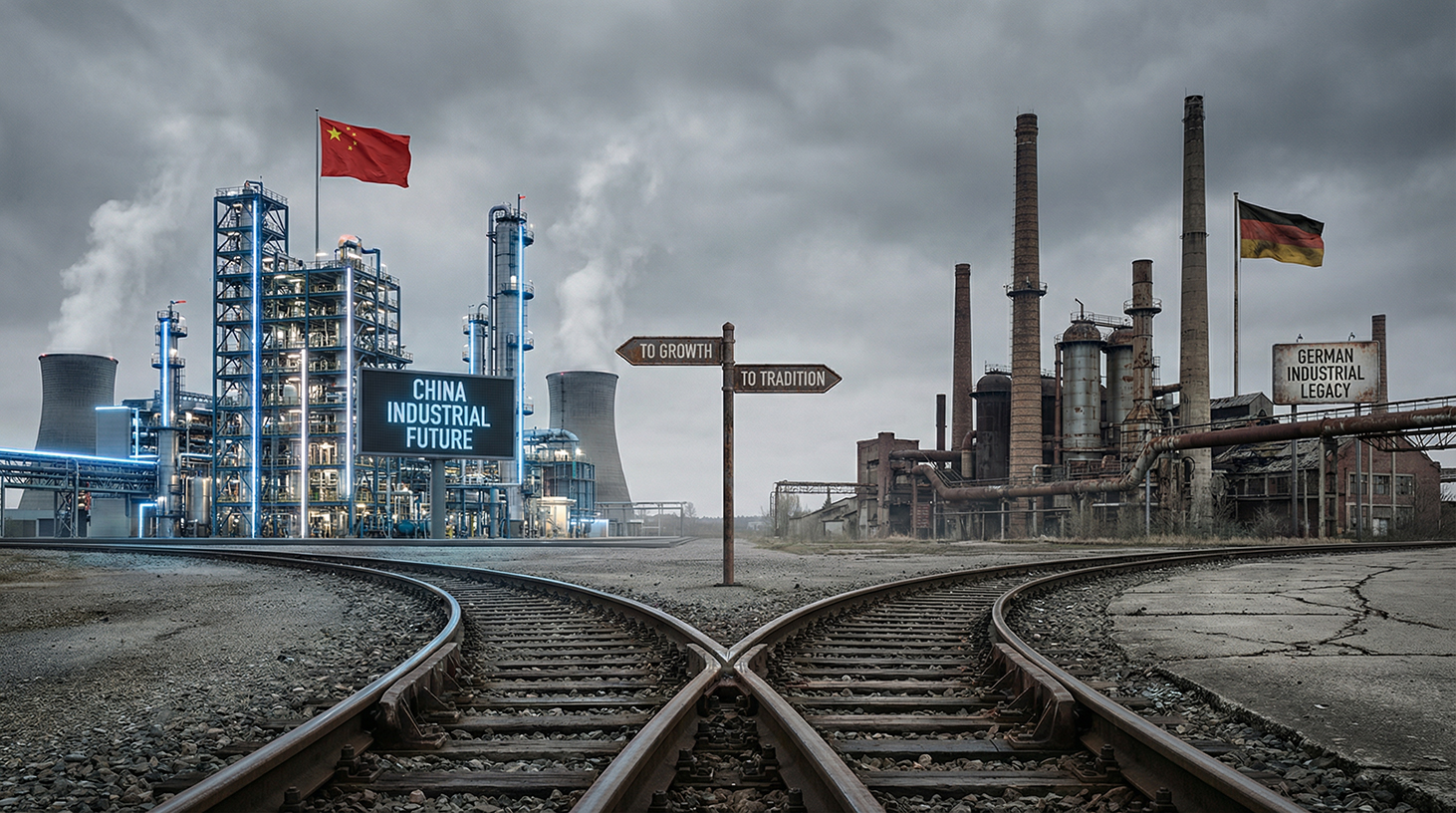
When capital packs its bags: 8.7 billion euro exodus to China – Why investments in Germany are hardly worthwhile anymore – Image: Xpert.Digital
Energy, bureaucracy, taxes: Why Germany's industrial giants are relocating
Warning sign for the location: Why investments in Germany are hardly worthwhile anymore
Nearly nine billion euros are flowing into a new mega-plant in southern China – completed on schedule and significantly under budget. At the same time, the chemical giant BASF is cutting thousands of jobs and closing plants in Germany. This stark contrast is far more than just a single corporate decision by the world's largest chemical company. It acts like a magnifying glass, ruthlessly exposing the acute investment crisis facing Germany as an industrial location. While new growth markets are being developed in Asia with massive government support, domestic companies are suffocating under exorbitant energy prices, paralyzing bureaucracy, a heavy tax burden, and a rapidly worsening shortage of skilled workers. But is the demise of "Made in Germany" already sealed, or can policymakers still turn things around? An in-depth analysis of the flight of capital, underestimated German strengths, and the question of what urgently needs to change now.
Germany as an industrial location: A success story in times of crisis
Germany's investment crisis as exemplified by BASF
Nearly nine billion euros – that's a sum that makes even seasoned economists pause for a moment. On March 26, 2026, BASF officially inaugurated its new integrated production site in Zhanjiang, Guangdong Province, in southern China. With an investment of around 8.7 billion euros, it is the largest single project in the history of the world's largest chemical company – completed on schedule and significantly under budget. While fanfares sound in Zhanjiang and Chinese government officials celebrate the significance of the foreign investment, an uncomfortable question arises in Germany: When was the last time a company invested a comparable sum in a single German site? The honest answer is: not for a long time.
The new giant in southern China: What was built in Zhanjiang
The plant in Zhanjiang is no ordinary chemical plant. Spanning approximately four square kilometers, BASF has established a fully integrated production chain based on its proven Verbund principle – from basic chemicals to specialty chemicals for transportation, consumer goods, electronics, and personal care. More than 2,000 employees now produce over 70 products in 18 fully operational plants and 32 production lines. The Verbund concept provides the decisive competitive advantage: waste heat, byproducts, and material flows are systematically exchanged between the plants, dramatically increasing energy efficiency and reducing costs. Furthermore, it boasts a unique feature that was historically almost impossible in China: the plant is wholly owned by BASF, unlike the existing joint venture site in Nanjing, which is operated jointly with the Chinese state-owned company Sinopec. In addition, the entire site is powered by 100 percent renewable electricity and, according to BASF, serves as a model for climate-friendly chemical production.
Why China? The logic behind the decision
The decision to invest in China was strategic and market-driven, not ideological. According to BASF's own assessment, China's chemical market grew by 6.8 percent in 2024, while growth in the rest of the world was only 1.1 percent. BASF CEO Markus Kamieth described China as the only market with significant growth in the entire chemical industry by mid-2025. BASF already generates around 14 percent of its global sales in China, and this figure is rising. The strategic logic behind this is called "local-for-local": products manufactured in China for Chinese customers to avoid transportation, customs, and logistics costs and to be close to the growth market. The Chinese government actively supported this investment – by providing land, favorable port and logistics connections, and a regulatory environment geared towards rapid implementation. The project was completed without the delays and cost overruns typical in Germany – a fact noted in the German business press with a mixture of admiration and bitterness.
At the same time: What BASF does in Germany – and what it refrains from doing
While investments are being made in Zhanjiang, BASF is shrinking in Germany. In 2024, the company announced the closure of its production sites for the herbicide active ingredient glufosinate ammonium in Knapsack near Cologne and in the Höchst district of Frankfurt – resulting in the elimination of approximately 300 jobs. As early as February 2023, BASF had closed several energy-intensive chemical plants in Ludwigshafen, including one for ammonia and the plastics precursor TDI, as a direct response to soaring energy prices. In fiscal year 2025, BASF's group sales fell to €59.7 billion – a decline of almost three percent compared to the previous year. Operating profit dropped by around ten percent to €6.6 billion. The cost-cutting program even exceeded its own targets: By the end of 2025, annual savings of €1.7 billion had been achieved, €100 million more than planned – with the elimination of approximately 4,800 jobs worldwide. The main plant in Ludwigshafen is at the center of the restructuring, even though a new site agreement excludes redundancies until the end of 2028 and provides for annual investments of around two billion euros.
🎯🎯🎯 Data-driven B2B industry hub as a quasi-in-house solution

The quasi-in-house solution: How Xpert.Digital closes operational gaps in B2B marketing and sales – Smart Content-Driven Business - Image: Xpert.Digital
Xpert.Digital is a data-driven B2B industry hub led by Konrad Wolfenstein . The company acts as an external, quasi-in-house solution for industrial partners, closing operational gaps in marketing, content, and sales – without requiring additional resources on the client side.
More information here:
From boom to exodus: How high costs and bureaucracy stifle investment
The first structural break: Energy as the number one location factor
No other cost factor has damaged Germany's competitiveness as much as energy prices. In 2024, the average industrial electricity price in Germany was around 14 cents per kilowatt-hour – above the EU-27 average of 12 cents. France paid an average of eight cents during the same period, Spain nine cents, and Norway just five cents. The gap is even more significant compared to its main global competitors: China and the USA both charged around eight cents per kilowatt-hour. According to the Bruegel think tank, industrial electricity tariffs in the EU were 158 percent higher than those in the USA in 2023 – a direct result of the 2022 energy crisis and the cessation of Russian gas imports. For natural gas, the key raw material for the chemical industry, European industrial customers paid five to six times more than their American competitors in 2022 and 2023. For energy-intensive sectors like chemicals, this price difference means the difference between profitable and unprofitable production. BASF has explicitly cited this as the main reason for closing several plants in Ludwigshafen. The FfE study commissioned by VBW comes to the sobering conclusion that a reversal of the trend in German industrial electricity prices is not currently in sight.
The second structural break: bureaucracy and the approval jungle as a brake on investment
High energy prices alone do not fully explain Germany's investment backlog. The national regulatory and permitting system is equally paralyzing. A systematic analysis by the Federation of German Industries (BDI) of over 250 permit applications under the Federal Immission Control Act across 27 sectors over a five-year period revealed that planning and permitting procedures in Germany take, on average, six months longer than stipulated by law. Simplified procedures, for which the law provides three months, actually take an average of nine months. A complete application processing, up to the point of the authority declaring the application complete, takes an average of eleven months – for roughly one in nine companies, it takes two years or more. To make matters worse, companies now have to submit five to ten expert reports per application, compared to just two 20 years ago. More than 70 percent of the economists surveyed by the ifo Institute cite bureaucracy as the single biggest obstacle to domestic and foreign investment in Germany. By comparison, in China the provincial government of Guangdong actively participated in the decision to establish a chemical industrial zone in Zhanjiang – and supported BASF with infrastructure, logistics and simplified procedures, instead of pushing the project through bureaucratic bottlenecks.
The third structural break: tax burden and lack of investment incentives
In addition to energy and bureaucracy problems, Germany also faces an above-average tax burden compared to other countries. Corporations in Germany are subject not only to a 15 percent corporate tax, but also to a locally determined trade tax and a solidarity surcharge – resulting in an average tax burden of around 30 percent, which can rise to 36 percent in high-tax jurisdictions. Within the EU, only Portugal and Malta have higher nominal corporate tax rates. Thus, over the past 15 years, Germany has bucked the international trend and become a high-tax country – at a time when countries like the USA, Great Britain, and Eastern European states were lowering their corporate taxes to attract investment. The German Economic Institute (IW Cologne) calculated in a simulation that a gradual reduction of the corporate tax by five percentage points over five years until 2033 would trigger additional investments of 57 billion euros – without jeopardizing the Maastricht criteria. From the perspective of location competition, this is a relatively easy lever to pull, but one that was politically blocked for a long time.
The fourth structural break: skills shortage and demographic pressure
An industrial location needs qualified people. Germany is sending mixed signals in this regard as well. Despite a persistently weak economy and ongoing job reduction programs at many companies, the German Economic Institute (IW) reported a shortage of approximately 391,000 skilled workers in June 2025, for whom no suitably qualified unemployed individuals could be found nationwide. The ifo Institute confirmed in the summer of 2025 that 28.1 percent of all surveyed companies were having trouble finding suitable skilled workers – a figure that is rising, even though the economy is simultaneously weakening. In the industrial sector, this figure increased from 17.9 to 19.3 percent, despite widespread workforce reduction programs. Demographic change is exacerbating the problem structurally: The Federal Ministry of Labor predicts shortages in IT, healthcare, technology, and education at least until 2028. ifo researcher Klaus Wohlrabe succinctly summarized the situation: In the long term, the problem will worsen – demographic change leaves no doubt about that. Although Germany still possesses an excellent dual education system and high-performing universities as genuine location advantages, it is increasingly lacking young talent.
What Germany still has to offer: Its underestimated strengths
It would be analytically dishonest to view Germany as a business location solely through the lens of its weaknesses. Germany possesses considerable structural strengths that cannot simply be dismissed. Political and legal stability creates a planning certainty that is structurally nonexistent in autocratic countries like China – and which BASF, through its growing dependence on China, also risks geopolitically. According to GTAI studies, legal certainty, transparent administrative processes, and an independent judiciary are key investment arguments for international companies. Added to this are its central geographic location in Europe and direct access to the world's largest single market. The level of education and the quality of scientific institutions are explicitly cited as strengths of Germany as a business location by over 60 percent of respondents in the ifo economists' ranking. The dual vocational training system, Fraunhofer Institutes, the Max Planck Society, and high-performing technical universities create an innovation infrastructure that cannot be replicated overnight. While China is investing heavily in building these structures, Germany's quality advantage in applied research and engineering education remains a real one.
The Deloitte finding: A shift of historic proportions
That the BASF case is not an isolated phenomenon is demonstrated with alarming clarity by recent survey data. Deloitte's CFO Survey from October 2024 revealed that while 82 percent of the German CFOs surveyed currently see their investment focus in Germany, this will only be true for 63 percent in five years. In the core industries of automotive, chemicals, and mechanical engineering, the shift is even more pronounced: Currently, 74 percent consider Germany a key investment destination – in five years, this figure is expected to drop to just 54 percent. The DIHK (Association of German Chambers of Industry and Commerce) report on foreign investment by industry in 2025 describes the balance of domestic investment at minus 17 points, while foreign investment stands at plus 9 points – a gap of 26 points, which the association considers an exceptional warning sign. According to the DIHK's economic survey, only 24 percent of German companies plan to increase their investments – a third even intend to reduce them. In mid-2025, equipment investments were still ten percent below pre-COVID levels.
What needs to change: The path back to investment attractiveness
The German government under Chancellor Friedrich Merz has since responded. In July 2025, the tax-based investment stimulus program came into effect, combining several key measures: special depreciation allowances of up to 30 percent for investments made between July 2025 and December 2027, a gradual reduction of the corporate tax rate from 15 percent in 2028 to 10 percent by 2032, and reductions in the retained earnings tax rate. The Chancellor described it as the most significant corporate tax reform in more than 15 years. This is accompanied by a special fund of 500 billion euros for infrastructure modernization and the transition to climate neutrality. The Cologne Institute for Economic Research (IW Köln) calculated that the tax relief measures could trigger additional investments of at least 57 billion euros by 2033 – a first, but structurally necessary, step.
However, tax reform alone is not enough to sustainably restore investment attractiveness. The following structural measures are essential:
- Energy prices: Only a competitive and predictable long-term industrial electricity price – independent of fossil fuel imports – can retain energy-intensive industries in Germany. The planned reduction in the electricity tax is a first step, but remains insufficient as long as systemic grid costs and levies keep industrial electricity prices structurally inflated.
- Permitting procedures: A radical simplification and acceleration of permitting procedures under immission control law is essential. The current legally mandated processing time is structurally exceeded by an average of six months. Halving the actual processing time – similar to the speed demonstrated at the LNG terminal in Wilhelmshaven or the Tesla factory in Grünheide – must become the standard, not the exception.
- Reducing bureaucracy: The bureaucracy identified by more than 70 percent of the economists surveyed as the biggest obstacle to investment requires profound structural reforms in public administration, not just lip service.
- Skilled worker policy: In view of the demographic gap, targeted recruitment of international skilled workers, combined with a substantial acceleration of the corresponding administrative procedures and recognition procedures for foreign professional qualifications, is unavoidable.
- Investment promotion: Targeted government incentives for large investments in strategically important industries – comparable to the US “Inflation Reduction Act” subsidies – could make the difference when location decisions are weighed in global competition.
Between resignation and new beginnings: What the BASF case teaches us
BASF's investment decision in Zhanjiang is not proof that Germany is irretrievably lost as an industrial location. It is a symptom of systemic perverse incentives that have been built up over years and now need to be corrected. With the new site agreement, BASF itself has committed to Ludwigshafen until the end of 2028 and plans to invest around two billion euros annually in its main plant. The decision for China was primarily a growth decision – to tap into a market that is growing nine times faster than the rest of the world – and not a decision against Germany. However, this does not preclude the possibility that the conditions for German companies as business locations will further influence the weighting of such decisions in the future.
How sound is the China bet itself? Critics point to growing geopolitical risks: After costly write-downs due to the war in Ukraine, BASF is once again making itself dependent on an autocratic leadership in Russia. BASF CEO Kamieth admitted shortly before the opening that the investment will pay off later than planned – Chinese overcapacity in basic chemicals, ruinous price competition, and fragile economic growth are already impacting the profitability of the new plant during its start-up phase. The irony is that China, whose state-subsidized overcapacity is putting the German chemical industry under pressure with price dumping, is now receiving BASF's largest single investment.
Germany's economic policy task for the coming years is clear: to create the framework conditions in such a way that investment decisions of this magnitude are once again made in Germany – not out of patriotism, but because it makes financial sense.
Your global marketing and business development partner
☑️ Our business language is English or German
☑️ NEW: Correspondence in your native language!

Konrad Wolfenstein
I and my team are happy to be available to you as your personal advisor.
You can contact me by filling out the contact form here or simply call me at +49 7348 4088 965. My email address is: [email protected]
I'm looking forward to our joint project.










