

Quantum Systems | 699 km/h! How a German start-up is chasing the drone world record – and raising billions
Xpert Pre-Release

Available in 27 languages 📢
Prefer Xpert.Digital on GoogleⓘPublished on: August 28, 2026 / Updated on: August 28, 2026 – Author: Konrad Wolfenstein
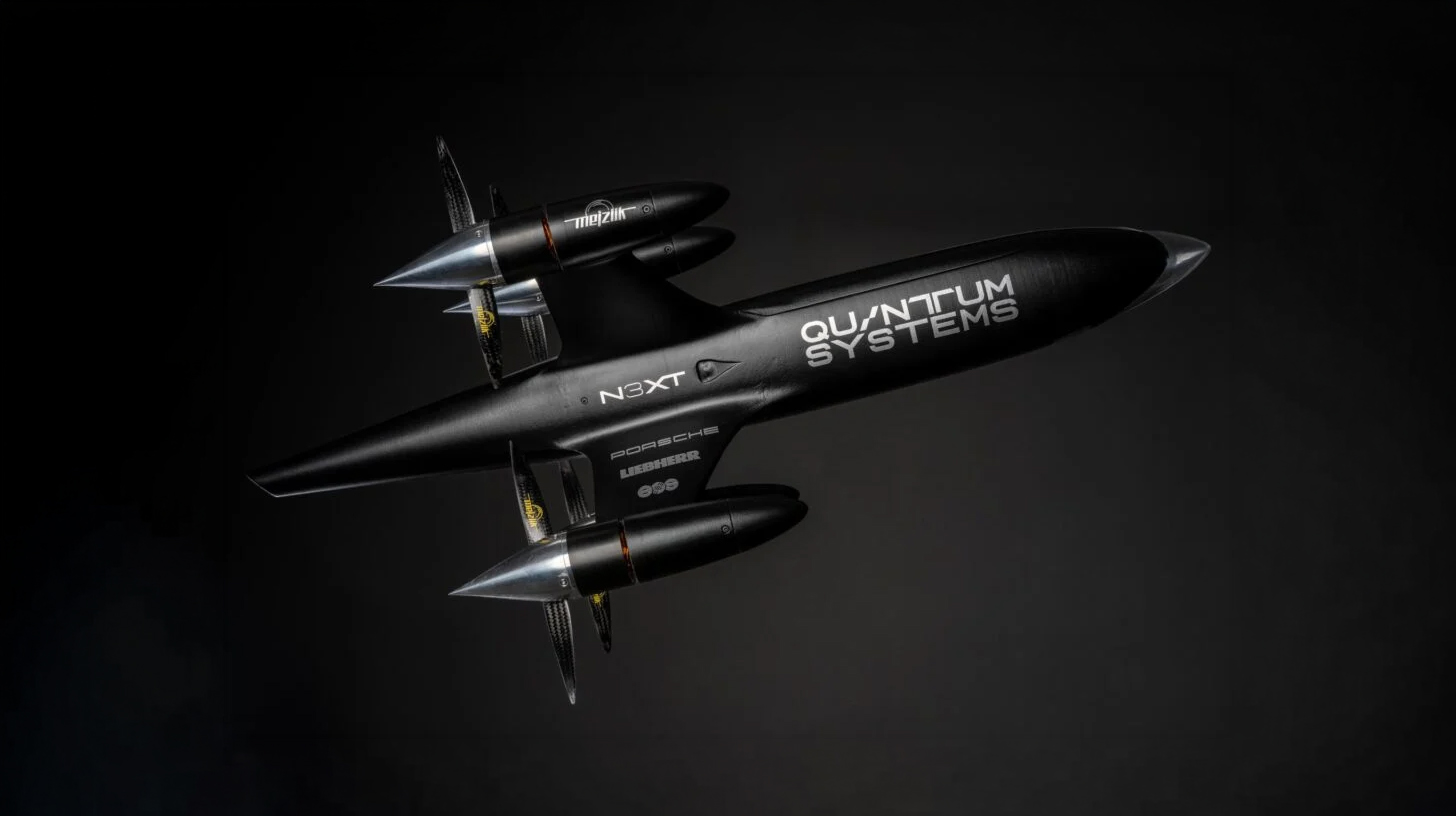
Quantum Systems | 699 km/h! How a German start-up is chasing the drone world record – and raising billions – Image: Quantum Systems
Faster than passenger jets: The insane record chase of the Bavarian arms giant Quantum Systems
Record-breaking flight into the future: This Bavarian company is currently transforming the European arms industry
A Bavarian start-up is making aviation and economic history: Quantum Systems' high-speed drone, the "Apex Recordhunter," has set a new benchmark for electrically powered aircraft in an unofficial test flight, reaching an impressive 699 kilometers per hour. But behind this record attempt lies far more than just the sporting ambition of engineers. It is the impressive showcase of a meteoric rise that has transformed the company, founded in Gilching in 2015, into an eight-billion-dollar defense powerhouse in record time. Fueled by the war in Ukraine, massive international venture capital, and a strategic realignment of European defense policy, military logic and cutting-edge civilian technology are merging here. The Quantum Systems case exemplifies how the "turning point" has long since gripped European industry – and the global race for dominance in autonomous defense systems has only just begun.
A record attempt as a symbol of a new arms economy
Quantum Systems' announcement that its "Apex Recordhunter" has reached a speed of 699 kilometers per hour seems at first glance like a technical footnote in aviation. However, closer examination reveals that this test flight is a prime example of the shift in the European defense and technology economy. The Bavarian company from Gilching, with its N3XT development team, has propelled a battery-powered aircraft to a speed approaching that of passenger jets in straight, level flight. This figure is remarkable because it significantly surpasses the previous officially certified record for battery-powered aircraft of 657.59 kilometers per hour, set by South African brothers Luke and Mike Bell in December 2025 with their Peregreen V4 model. The economic context of this record attempt is crucial for understanding its significance: Quantum Systems has transformed itself within just a few months from an emerging start-up to one of the most valuable defense technology companies in Europe.
From up-and-coming start-up to arms heavyweight
The story of Quantum Systems illustrates how rapidly the European defense sector has changed since Russia's war of aggression against Ukraine. In November 2025, the company, founded in 2015, raised €180 million in a funding round, thus exceeding the €3 billion valuation threshold for the first time and formally joining the ranks of so-called unicorns. Just a few months later, in July 2026, an even greater leap followed: In a Series D funding round, Quantum Systems raised US$1.2 billion, one of the largest funding rounds ever for a European defense company. This doubled the company's valuation to around US$8 billion, increasing it eightfold within a single year. Co-founder and co-CEO Florian Seibel explained that the new capital would be used for further growth and the development of autonomous systems that can communicate with each other via the company's proprietary software platform, Mosaic UXS. According to CFO Jonas Jarosch, the company has raised approximately two billion dollars in investor funding since its founding, the majority of which was received in the past twelve months. The fact that a private investor like Peter Thiel was involved with Quantum Systems at an early stage further underscores how much international venture capital now recognizes the European defense sector as an attractive investment opportunity.
Technological boundaries between sports and military technology
The core technical challenge of the project lies in exploring the limits of electric propulsion and battery technology in the realm of extreme speeds. The "Apex Recordhunter" was developed within a single year by the experimental department N3XT as a pure technology demonstrator, not as a market-ready product. On June 26, 2026, during an internal test flight in level flight—that is, without the aid of an accelerating dive—the aircraft reached its reported top speed of 699 kilometers per hour. This distinction is technically significant because records achieved in level flight are considered more meaningful than those from a dive, where gravity provides additional acceleration and masks the pure propulsion power. This high speed was made possible primarily by high-current battery cells from V4Smart, a battery technology company within the Porsche Group that specializes in high-performance energy storage systems. The engineer involved, Robert Gardemin, summed up the symbolism of the project by describing the achieved value as an incredible milestone, but one that should only be the beginning of further, even faster test flights.
Between self-reporting and official recognition
A key aspect often overlooked in reporting is the difference between an internally reported best time and an officially certified world record. So far, the 699 kilometers per hour is a value obtained through internal instrumentation and has not been verified or confirmed by either the Fédération Aéronautique Internationale or Guinness World Records. Both institutions require a standardized procedure for official recognition, involving independent observers, calibrated measuring equipment, a formal application, and typically a controlled two-way run to compensate for wind influences. Until the public Guinness database query in early August 2026, the existing record continued to be attributed to the South African record holders, indicating that the certification process had not even begun. Quantum Systems itself is transparent about this situation and has announced that it will attempt official certification in the coming weeks. This caution is economically understandable, because a value prematurely marketed as a world record, but later not confirmed, would damage the company's reputation, especially at a time when it is managing massive amounts of fresh capital from investors.
The military logic behind the speed race
The more economically and politically interesting aspect of the project lies less in the record attempt itself than in the intended application of the insights gained. Quantum Systems sees fast interceptor drones as a key future area of application, since such systems can engage moving and fast-moving aerial targets, such as enemy combat drones, far more effectively than conventional, slower defense systems. This strategic focus is not a mere aside, but rather follows the logic of a war that is increasingly decided by small, difficult-to-combat unmanned systems. Parallel to the German development, the Ukrainian partner WIY Drones is working on two further record attempts: The Strila drone aims to achieve a speed record for FPV interceptor drones with a payload of 0.5 kilograms, while the Spys model is designed for the category of anti-aircraft interceptor drones. This close collaboration between a German defense startup and a Ukrainian development partner illustrates how the war in Ukraine is now serving as an innovation laboratory for European defense technology.
Hub for Security and Defense - Advice and Information

Hub for Security and Defense - Image: Xpert.Digital
The Security and Defence Hub offers expert advice and up-to-date information to effectively support companies and organizations in strengthening their role in European security and defence policy. Working closely with the SME Connect Defence Working Group, it particularly promotes small and medium-sized enterprises (SMEs) that wish to further develop their innovative capacity and competitiveness in the defence sector. As a central point of contact, the Hub thus creates a crucial bridge between SMEs and European defence strategy.
Related to this:
Drones as an industrial engine: How Europe is rising to become a new defense power
Ukraine as an industrial testing ground for unmanned systems
To fully grasp the significance of the Quantum Systems project, it's worth examining Ukraine's war economy, which has fundamentally shifted its focus to unmanned systems in a very short time. Between 2022 and 2025, the production of first-person view (FPV) drones in Ukraine increased roughly a thousandfold, from an estimated three to five thousand units in 2022 to around three million units in 2025. By 2026, the annual production capacity of the Ukrainian defense industry is already estimated at more than seven million FPV drones. This expansion is driven by a decentralized industrial ecosystem involving more than five hundred companies, with the private sector responsible for up to ninety percent of FPV drone production. This development is sometimes described in expert circles as a form of drone Keynesianism, because government demand and decentralized private manufacturing reinforce each other and are more adaptable to wartime conditions than traditional mobilization models. By 2025, Ukraine had also built up the capacity to produce up to a thousand interceptor drones daily, specifically designed to be effective against low-flying targets that conventional air defense systems often cannot overcome. For a company like Quantum Systems, this Ukrainian testbed thus offers not only a morally charged application context, but also an extremely practical environment for validating new technologies under real combat conditions.
A European capital market gripped by arms fever
The Quantum Systems case is by no means isolated, but rather embedded in a Europe-wide wave of massive investments in drone and drone defense technology. In July 2026, several of the largest defense policy investment decisions in recent European history culminated within just a few days: In addition to the billions in funding for Quantum Systems, NATO announced the so-called Drone Edge Initiative at its summit in Ankara, under which member states intend to invest more than 40 billion US dollars over the next five years in drone defense, drone procurement, and the training of operators. Great Britain also presented the largest drone program in the history of the British armed forces with its defense investment plan published in June 2026, which allocates more than 5 billion British pounds over four years for unmanned and autonomous systems. At the European level, the Rearm Europe initiative aims to mobilize up to 800 billion euros in defense investments by 2030, while one billion euros from the European Defence Fund alone has already been invested in research and development measures related to drones. Five European nations—France, Poland, Germany, the United Kingdom, and Italy—signed the LEAP agreement in Krakow in February 2026, paving the way for the mass production of cost-effective drone interception systems starting in 2027. Market analysts at Grand View Research predict that Europe will spend nearly €12 billion on military unmanned aerial vehicles this year alone, rising to as much as €17.3 billion by 2030. Venture capital for defense technology in Europe also nearly doubled in 2025, reaching €3.5 billion, with drone projects representing by far the most common type of deal.
Germany as a rising location for defense technology
For Germany as a business location, the development of Quantum Systems is a remarkable signal, demonstrating that the traditionally civilian-oriented German technology landscape is increasingly shifting towards dual-use and explicitly military innovation. Analysts at the RAND Institute predict that Germany alone will invest more than €35 billion in advanced defense capabilities by 2030. This sum reflects the so-called turning point that, since the Russian attack on Ukraine, has fundamentally altered German security and economic policy, securing billions of euros in drone development and production contracts for established defense companies such as Airbus, Leonardo, and Hensoldt. It is also noteworthy that the cooperation between Quantum Systems and the Porsche subsidiary V4Smart bridges the gap between the civilian automotive industry and military aviation technology, a connection that has been rather unusual in German industrial history. This integration suggests that, in light of growing defense budgets, traditional high-tech sectors like automotive manufacturing are opening up new markets for their battery and drive technologies without themselves becoming defense companies in the traditional sense.
Regulatory frameworks as both a brake on growth and a growth engine
The European Commission is responding to this rapid technological and economic dynamism with its own regulatory framework, designed to simultaneously ensure safety and foster innovation. In February 2026, the Commission announced its intention to introduce an EU-wide quality label for certified drones by the fourth quarter of that year, aiming to increase the trustworthiness of civilian drone products. In parallel, the European Drone Defence Initiative was launched, with the goal of establishing a multi-layered, interoperable defense system against hostile drone intrusions in European airspace by 2027. The Commission is also specifically facilitating access to equity capital for companies in this sector, providing a €1 billion financing instrument for this purpose. This regulatory initiative demonstrates Brussels' commitment to actively managing the balancing act between promoting strategic technological sovereignty and the need for reliable safety standards, rather than leaving the market dynamics to dictate the outcome. At the same time, in July 2026, the EU jointly signed an industrial defense partnership with Ukraine and disbursed a further one billion euros from the Ukraine support loan for the expansion of Ukrainian drone capabilities, further deepening the close economic and security policy integration between European industry and the Ukrainian war economy.
What the record attempt reveals about the future of the industry
Anyone who views the "Apex Recordhunter" case merely as a curious footnote from the world of aircraft misses the true economic message of this project. The test flight is, in reality, a marketing tool within a highly competitive capital market, where defense technology companies must position themselves with spectacular technical achievements to attract investors, government clients, and potential competitors. The fact that Quantum Systems has increased its valuation eightfold within twelve months, while simultaneously promoting a flagship technical project like the "Apex Recordhunter," is no coincidence, but rather follows the classic logic of growth financing in capital-intensive, future-oriented industries. The deliberate communication strategy of initially presenting the record as an internal company achievement, rather than prematurely declaring it an official world record, also speaks to sophisticated risk management during a period of enormous public attention. At the same time, the close technological and personnel exchange with Ukrainian partners like WIY Drones illustrates that European defense innovation is increasingly organized across borders and that the war in Ukraine has effectively become an accelerated innovation laboratory for the entire continental industry. Whether the 699 kilometers per hour actually becomes an officially recognized world record is almost irrelevant from an economic perspective. What is crucial is that Germany, with Quantum Systems, possesses a company that has become one of the most visible and financially powerful players in the global race for autonomous defense technologies, thus exemplifying how profoundly European security and technology policy has changed since 2022.
Consulting - Planning - Implementation

Markus Becker
I would be happy to serve as your personal advisor.
Head of Business Development
Chairman SME Connect Defense Working Group
Consulting - Planning - Implementation
Konrad Wolfenstein
I would be happy to serve as your personal advisor.
You can contact me at wolfenstein∂xpert.digital or
Just call me on +49 7348 4088 965 .





