
Bulgaria's Deficit Proceedings: Shadow Budgets and Accounting Tricks? The Unvarnished Truth About Bulgaria's Euro Accession
Xpert Pre-Release

Available in 27 languages 📢
Prefer Xpert.Digital on GoogleⓘPublished on: June 9, 2026 / Updated on: June 9, 2026 – Author: Konrad Wolfenstein
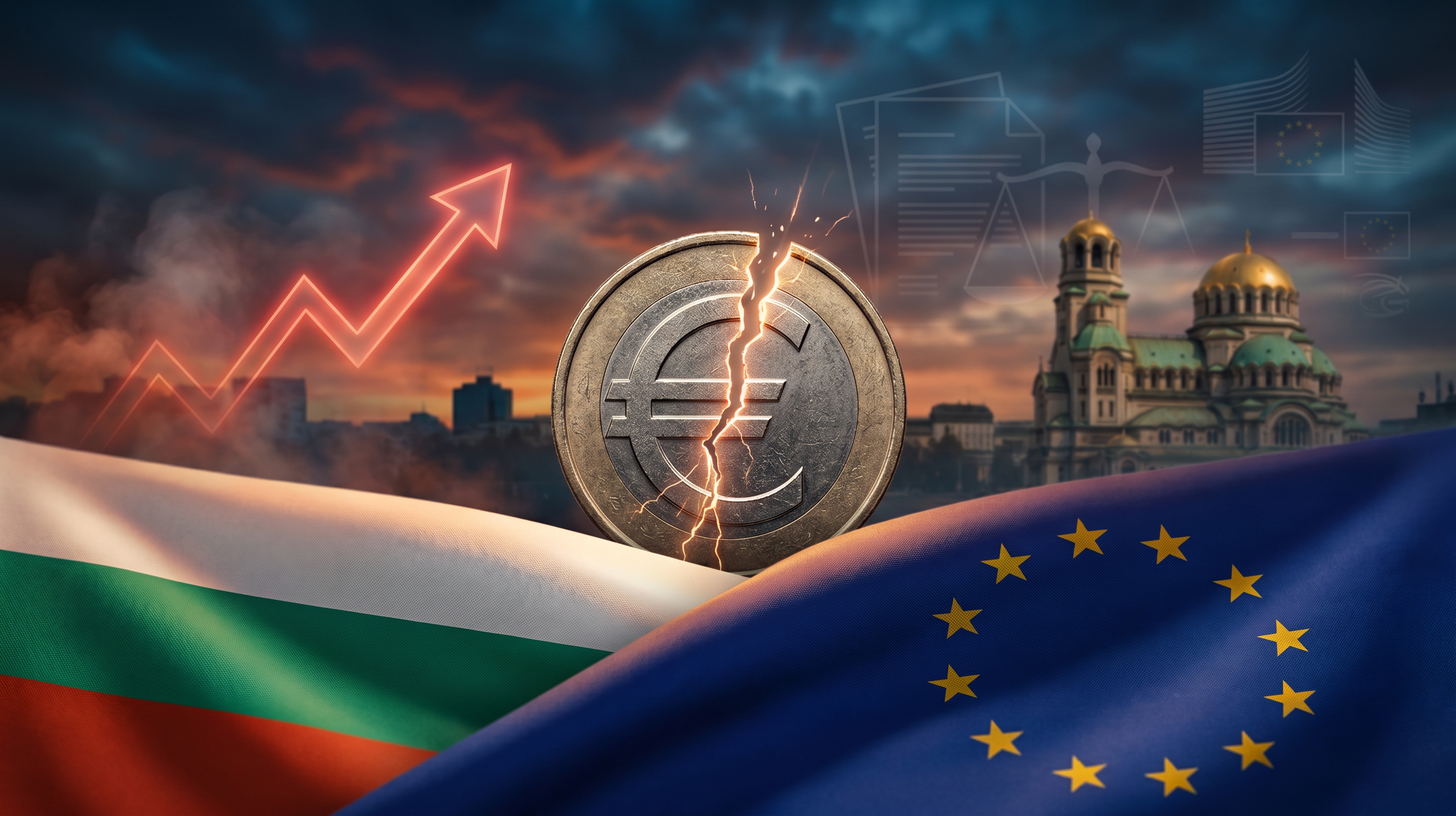
Bulgaria's Deficit Proceedings: Shadow Budgets and Accounting Tricks? The Unvarnished Truth About Bulgaria's Euro Accession – Image: Xpert.Digital
From model student to problem case: How Bulgarian politics misled Brussels for years
Is a second Greece looming? What Bulgaria's financial crash means for our currency
A historic milestone culminating in an unprecedented fiscal collapse: Just six months after its ceremonial entry into the Eurozone on January 1, 2026, Bulgaria is already facing an EU excessive deficit procedure. The supposed model of European fiscal discipline, which until recently boasted the lowest debt-to-GDP ratio in the EU, has transformed itself into a problem case for the monetary union in record time. But the sudden loss of control and a looming deficit of up to 7.4 percent did not come out of nowhere. For years, shadow budgets and political accounting tricks obscured the country's true financial situation to avoid jeopardizing its Eurozone dream. Now, under a new government and amidst a volatile economic and geopolitical climate, the reckoning is coming. In-depth analysis reveals that the Bulgarian case is far more than just a national drama. It is the first major stress test for the EU's reformed fiscal rules – and an unmistakable warning to all future accession candidates.
Six months of the euro, six months of deficit procedures – How a model student of accession became a problem case for the monetary union overnight
It is one of the most remarkable twists and turns in the recent history of European monetary integration: On January 1, 2026, Bulgaria joined the Eurozone as its 21st member, celebrated in Brussels as a historic milestone, proof that the single currency retains its appeal despite all the crises. Less than six months later, the same European Commission is proposing excessive deficit proceedings against that very same country. Within just a few quarters, the model student with the lowest debt-to-GDP ratio in the entire Union has become a disciplinary case. It is the first time ever that a new Eurozone member has been placed in fiscal penalty territory immediately after joining. To understand how this could have happened, one must delve deep into Bulgaria's political economy, the mechanics of the EU Stability and Growth Pact, and the fragile power struggle between Sofia, Brussels, and Moscow.
Anatomy of a fiscal collapse
The raw figures tell a surprisingly honest story. In June 2025, just over six months before Bulgaria's entry into the Eurozone, the European Commission certified that it met all convergence criteria. The deficit was projected to be only 2.8 percent of gross domestic product in both 2025 and 2026, and public debt, at under 25 percent of GDP, was the lowest in the entire European Union. Inflation had fallen from its peak of around 13 percent in 2022 to 2.7 percent in May 2025, just barely remaining below the reference value of 2.8 percent. It was a close call, but one that was formally sound enough to justify Eurozone membership.
The Commission's spring forecast from May 2026 then documents the loss of control with stark clarity. As early as 2025, the deficit stood at minus 3.5 percent of GDP, significantly above the Maastricht threshold. A deficit of 4.1 percent is projected for 2026, and 4.3 percent for 2027. The Finance Minister of the new interim government, Galab Donev, even spoke of a potential annual deficit of 7.4 percent of GDP if no countermeasures are taken. The debt-to-GDP ratio, long a Bulgarian hallmark, is projected by the Commission to climb from 29.9 percent in 2025 to 32.3 percent this year and 35.5 percent by the end of 2027. While this remains well below the Maastricht reference value of 60 percent, the dynamic is worrying, as it reverses a years-long trend of fiscal prudence.
A second macroeconomic warning sign is also emerging. Bulgaria has had the highest inflation rate in the eurozone since the beginning of 2026. According to the Commission's spring forecast, harmonized consumer price inflation is expected to reach 4.2 percent in 2026, driven by higher energy prices resulting from the escalation in the Middle East, rising food prices, and persistent second-round effects in the services sector. The Bulgarian National Bank even anticipates an average annual inflation rate of 3.7 percent, accelerating to 4 percent by the end of the year, with further increases of 0.7 to 1.4 percentage points in a worst-case scenario. This puts Bulgaria in the unfortunate situation of a stagflation-like mix: growth is slowing from 3.1 percent in 2025 to 2.5 percent in 2026 and 2.2 percent in 2027, while prices continue to rise and the deficit continues to mount.
The accounting tricks of the GERB era
The short history of the dramatic deficit increase cannot be told without considering the fiscal modus operandi of previous Bulgarian governments. In the press conference preceding the Brussels decision, Finance Minister Donev voiced what economists and rating agencies had suspected for years: Over the past five years, previous cabinets had regularly reported deficits of around 3 percent of GDP, but had only achieved this target by systematically postponing payments due to the following year. In plain terms: They booked what suited them and deferred what didn't. In Sofia's political jargon, they now openly speak of a shadow budget, cultivated for years to formally comply with the Maastricht criteria and avoid jeopardizing Bulgaria's Eurozone accession.
This approach was no secret, but it was functional. The center-right GERB party, under its long-time strongman Boyko Borissov, and its shifting coalition partners had a clear strategic goal: joining the Eurozone. To achieve this, the official deficit had to remain below three percent, and various levers were pulled to achieve it. Investment payments were stretched out, state-owned enterprises' bills were paid only in the following year, and certain one-off defense expenditures were lumped under the flexibility clause of the reformed Stability and Growth Pact. Former Finance Minister Temenushka Petkova, a GERB politician, confirmed precisely this logic in her defense against Radev's accusations, pointing out that Bulgaria only formally complied with the three percent limit in 2025 thanks to EU defense flexibility. In doing so, she implicitly admits that the structural deficit had long since exceeded the threshold.
Economic Affairs Commissioner Valdis Dombrovskis addressed this argument with diplomatic elegance in his justification for the procedural proposal. He stated that the exceedance of the reference value in 2025 could still be largely explained by additional defense spending, which fell under the exemption clause. However, for 2026, the peak deficit could no longer be fully justified by defense spending, and therefore the Commission proposed initiating proceedings. This is a sharp statement in Brussels' code: the exception no longer justifies the transgression.
Growth promises instead of austerity budget
Another reason for the slump lies in a fiscal policy shift that began as early as 2024 and accelerated in 2025. During a period of already strong economic recovery, Bulgaria decided on a massive expansion of government spending, particularly in the areas of public wages and social benefits. The pension increases introduced during the COVID-19 pandemic were made permanent, structurally straining the sustainability of the Bulgarian pension system, without a proportional increase in contributions. Added to this were real wage increases in the public sector, which at times reached double digits. The Vienna Institute for International Economic Studies documents that real wages in Bulgaria had risen by an average of 11.2 percent annually in the preceding years, an exceptional rate for an emerging market with persistently high inflation.
The draft budget for 2026, presented by the caretaker government in November 2025, signaled a continuation of this expansionary policy. It included planned public investments of €4.9 billion, of which 78 percent, or €3.8 billion, was earmarked for defense and security, including the procurement of additional F-16 fighter jets, a new air defense system, and modern radar technology. This was complemented by minimum wage increases to €620.20, a rise in the minimum pension, and a significant expansion of social benefits for people with disabilities. The mix was economically justifiable and politically necessary, but fiscally explosive: rising permanent expenditures were meeting already cyclically high revenues, which would decline again by 2027 at the latest, when growth noticeably slowed.
This is precisely the point that rating agencies like Fitch emphasized in their reports from December 2025 and early 2026. Bulgaria's fiscal problem is not primarily a cyclical one, but a structural one. If a country runs a deficit of 3.5 percent during a period of GDP growth exceeding three percent, then the underlying structural budget is significantly worse, because during the upswing, tax revenues should be flowing freely and the deficit should automatically decrease. If this doesn't happen, a structural problem arises that will become fully apparent during the next economic downturn. This is exactly the scenario outlined in the Brussels spring forecasts.
The political climate in Sofia
Without considering Bulgaria's domestic political situation, the fiscal drama remains incomprehensible. Between 2021 and 2025, the country experienced seven parliamentary elections, a period of unparalleled political instability in Europe. The last government of Prime Minister Shelyaskov, a fragile coalition including GERB and the controversial New Awakening party of sanctioned oligarch Delyan Peevsky, collapsed in December 2025 due to fierce street protests against the proposed austerity budget. The very package that would have mitigated fiscal risks failed due to public resistance to tax increases and a loss of confidence in a government whose stability depended on a politically toxic businessman. The result was a bridge budget, essentially an extension of the 2025 budget law into the first months of 2026, meaning no new consolidation measures, but all automatic spending increases continued.
In the snap parliamentary elections on April 19, 2026, Rumen Radev, the former president, won by a landslide. He had mobilized voters with a mix of anti-corruption rhetoric, social promises, and a decidedly Eurosceptic, occasionally pro-Russian foreign policy. Radev subsequently formed a government with Donev as finance minister, a personnel choice that signaled both continuity and a break. Donev had already served as prime minister under Radev's interim government from 2021 to 2022 and enjoys a good reputation as a pragmatic technocrat. The new government's political calculations are transparent: it presents itself as the honest reformer, opening the books and revealing the true deficits in order to shift responsibility for unpopular austerity measures onto its predecessors. The statement that the deficit could in reality reach 7.4 percent must be interpreted in precisely this light, as it creates a shock effect that facilitates political corrections and simultaneously delegitimizes the GERB for years to come.
Cui bono: Who benefits from the process?
The question of who benefits from the deficit procedure has several nested answers that differ from each other on different levels.
Paradoxically, the Radev government benefits most from this domestic political situation. It can portray itself as a fiscal reformer to the outside world while simultaneously presenting the painful measures that are coming as externally imposed. A spending freeze, hiring freezes in the public sector, the suspension of further pension increases, and potentially tax hikes are all much easier to implement when one can point to directives from Brussels. Furthermore, the official disclosure of the true deficit allows for a comprehensive discrediting of GERB, which had dominated politics for years. Strategically, Radev is thus consolidating his power by building credibility as an honest accountant and damaging his political rivals.
At the European level, the Commission, and especially the Directorate-General for Financial Market Stabilisation (ECFIN), benefits. After years of largely suspending the stability rules during the COVID-19 pandemic and the energy crisis, Brussels faced a clear credibility problem. If no effective sanctions are imposed against France, Italy, or Belgium, the entire regulatory framework loses its disciplinary character. A procedure against a small, recently acceded member state is politically much easier to implement than one against the major capitals. Bulgaria thus becomes a showcase case, used to demonstrate the pact's effectiveness. It is no coincidence that parallel proceedings against Germany, Estonia, Latvia, and Slovenia are also being considered, as the Commission needs a comprehensive approach to avoid accusations of selectivity.
At the level of the eurozone as a whole, the credibility of the architecture benefits, albeit indirectly. Investors and rating agencies see that the fiscal rules are still in place, that joining the eurozone with subsequent lax fiscal management does not go unpunished, and that the convergence criteria are not merely a gateway but also a lasting commitment. This tends to improve the credit ratings of the entire monetary union and bolsters confidence in the euro.
The biggest losers in this scenario are Bulgaria's old political elites, above all the GERB, whose fiscal sleight of hand is exposed, as well as the public sector, which is in need of consolidation, pensioners, and recipients of state benefits, who face less generous increases. The Bulgarian population as a whole also pays a price, because higher taxes and reduced government spending directly impact disposable income in a country already struggling with the highest inflation in the Eurozone and price increases that many citizens attribute to the introduction of the euro.
Our EU and German expertise in business development, sales and marketing

Our EU and German expertise in business development, sales and marketing - Image: Xpert.Digital
Industry focus areas: B2B, digitalization (from AI to XR), mechanical engineering, logistics, renewable energies and industry
More information here:
A thematic hub offering insights and expertise:
- Knowledge platform covering global and regional economies, innovation and industry-specific trends
- A collection of analyses, insights, and background information from our key areas of focus
- A place for expertise and information on current developments in business and technology
- A hub for companies seeking information on markets, digitalization, and industry innovations
Bulgaria between the Euro and austerity: The decisive moment for Sofia
The mechanics of the deficit procedure
To understand the economic consequences for Bulgaria, it is helpful to examine the specific mechanics of the excessive deficit procedure, which is codified in Articles 121 and 126 of the Treaty on the Functioning of the European Union and in the regulations of the reformed Stability and Growth Pact. Following the Commission's proposal, the Economic and Financial Affairs Committee will first issue an opinion. Subsequently, the Council of Economic and Financial Ministers, the so-called Ecofin Council, will formally determine the existence of an excessive deficit. Bulgaria will then receive a recommendation with a specific correction pathway, typically aiming to reduce the structural deficit by at least 0.5 percentage points per year, and a deadline by which the three percent threshold must be met. This deadline is usually two to three years, realistically by 2028 or 2029.
Should Bulgaria not follow this path, the Commission can propose fines for the eurozone member. Under current law, these can amount to up to 0.2 percent of GDP, which, given Bulgaria's economic output of around €110 billion, would mean sanctions in the order of approximately €220 million. However, such financial sanctions have never actually been enforced in the history of the eurozone. Even against Portugal and Spain, the legally stipulated fines were politically reduced to zero in 2016. Furthermore, in October 2025, the Commission proposed lowering the maximum rate from 0.2 to 0.05 percent, which further mitigates the threat of sanctions. A more realistic scenario than financial penalties is the suspension of funds from the European Structural and Investment Funds, which would be considerably more painful for Bulgaria as a major recipient of cohesion funds.
In addition, there is the less visible but important disciplining effect of the markets. A country in deficit proceedings is more closely monitored by rating agencies and institutional investors, which can tend to result in higher risk premiums on government bonds. However, Bulgaria's absolute debt level is so low that the market reaction has so far been muted, and a dramatic increase in refinancing costs is not expected in the short term.
What this means for the Bulgarian real economy
The economic consequences of the procedure can be analyzed on several time and impact levels and differ depending on the sector, income bracket and region.
In the short term, specifically in 2026 and 2027, the Radev government will have to pursue a more restrictive course. Donev has already announced a wage freeze in the public sector and cuts in government spending. Specifically, this means a slowdown or suspension of further wage increases for civil servants, teachers, nurses, and police officers, a postponement of investment projects, and likely adjustments to social benefits. This will have a procyclical dampening effect on domestic demand. Private consumption, which has been the main driver of growth so far, will lose further momentum because real wages, which recently rose by around four percent, will grow significantly more slowly. The commission forecasts wage growth of only 5.7 percent for 2026 and 4.3 percent for 2027 – nominally, meaning almost zero in real terms with inflation above four percent.
In the medium term, that is, until 2028 and 2029, much depends on whether Radev succeeds in broadening the tax base without stifling the middle class. Bulgaria has an extremely low tax level with a flat income tax of ten percent and a similarly low corporate tax. There is considerable scope for action regarding excise taxes, property taxes, and closing tax loopholes. The International Monetary Fund has recommended broadening the tax base in its Article IV consultations for years. Should the government summon the political courage to tax wealth more heavily, consolidation could even be made compatible with growth. If, on the other hand, it only reduces spending, there is a risk of exacerbating stagflationary tendencies.
In the long term, beyond 2030, the risks are considerable. The New Economics Foundation study from March 2026 points to the fiscal time bomb that climate change represents for Bulgaria. OECD projections show that Bulgarian GDP could be 12 percent lower by 2050 and 18 percent lower by 2070 under a continuation of current climate policies than under ambitious adaptation pathways. The NEF model concludes that, maintaining the current course, Bulgaria's debt-to-GDP ratio would be 49 percentage points higher by 2050 and 171 percentage points higher by 2070 than under a climate-neutral baseline scenario. A deficit procedure that enforces only short-term austerity measures and blocks long-term investments in energy, water, adaptation, and infrastructure could therefore be counterproductive and actually worsen long-term fiscal sustainability.
The euro as an amplifier and as a protective shield
A particular irony of the situation lies in the fact that Bulgaria's very accession to the euro likely both partially caused and simultaneously mitigated the crisis. The expectation that fiscal discipline would be less strictly enforced after joining the eurozone had already made economists like Guntram Wolff skeptical even before Bulgaria's accession. Wolff had explicitly warned that Bulgarian politicians might interpret accession as a license to loosen fiscal policy. This very mechanism now appears to be taking effect, albeit in an accelerated form that has surprised even the skeptics.
At the same time, Euro membership protects Bulgaria from precisely the kind of crisis that nearly drove the country to bankruptcy in the 1990s. A currency crisis with capital flight and rampant devaluation of the lev is impossible, because its own currency no longer exists. Interest rates are set by the ECB Governing Council, of which the President of the Bulgarian National Bank has been a full member since January 2026, at a level that keeps Bulgaria's financing costs significantly below what an independent Bulgarian monetary policy would require in a deficit crisis. In other words, Bulgaria pays a considerably lower market price for its fiscal laxity than, for example, Turkey or Hungary would have to pay.
This protective effect has a delicate side effect. It reduces the government's immediate perception of pain and makes it more difficult to mobilize political majorities for structural reforms. If refinancing costs don't skyrocket and inflation doesn't degenerate into hyperinflation, the pressure to consolidate remains weak. This is precisely where the disciplining function of the excessive deficit procedure lies. It replaces the lack of market discipline with political and reputational discipline. Whether this is sufficient depends crucially on how consistently Brussels, and especially the Council, enforce the regulations.
The geopolitical dimension
The crisis is not unfolding in a vacuum, but rather against the backdrop of an acute geopolitical situation that further exacerbates Bulgaria's precarious position. The escalation in the Middle East and the ongoing conflict with Russia are driving up energy prices and dampening consumer confidence. Bulgaria, as a country formerly heavily reliant on Russian natural gas and nuclear technology, is particularly vulnerable. Radev's election victory, which is interpreted in parts of his platform as pro-Russian, is creating additional tensions with Brussels. It is no coincidence that, shortly before the excessive deficit procedure, while €370 million from the recovery fund was released, a further €3 billion was withheld pending the completion of judicial and anti-corruption reforms. The Commission is thus sending a clear signal: money in exchange for reforms, encompassing both fiscal and rule-of-law aspects.
In this context, the issue of defense spending also plays a role. Bulgaria is a NATO member and, like all alliance partners, is under pressure to significantly increase its defense expenditures. The two percent target was already met in 2025, and new decisions aim for higher levels. Here, EU fiscal rules, NATO obligations, and national budgetary flexibility clash in a way that is typical for many Eastern European states. The EU has created a safety valve with the defense flexibility clause, but, as Brussels' justification against Bulgaria shows, this must not be misused to address structural deficits. For Sofia, this represents a squaring of the circle: more security without more debt is hardly feasible in a country with low tax revenues and rising social spending.
Comparative analysis and lessons for the Eurozone
Compared to previous accession cases, the speed with which Bulgaria is entering the process is unprecedented. While Greece was the most prominent negative example of a fiscally incorrigible country, it only encountered its major problems around ten years after joining the euro. The Baltic states and Slovakia also went through consolidation phases after joining the eurozone, but did not find themselves facing disciplinary proceedings within a few months. Bulgaria thus represents a new category, essentially joining with a deficit.
The lessons for the eurozone are ambivalent. On the one hand, the case shows that the convergence criteria are insufficient as an entry threshold if they are met through accounting tricks and one-off measures. Brussels will have to pay closer attention to the structural deficit in the future, not just the nominal one, and there will likely be calls to expand the convergence assessment to include a sustainability component. On the other hand, the case demonstrates that the institutional framework works. A procedure is initiated within six months of accession without causing panic in the markets or shaking the monetary union. This is a remarkable test of its robustness.
A well-founded perspective
From an economic perspective, there is much to suggest that the excessive deficit procedure is not the problem, but rather part of the solution. For years, Bulgaria has lived with a structural asymmetry that was masked by political instability and accounting ingenuity. Brussels' actions now force disclosure and a corrective path that would not be politically feasible under normal circumstances. The economic costs are real, but limited: a moderate slowdown in growth, a short-term burden on consumers, and a temporary slowdown in public investment. These are offset by medium-term gains, namely more credible fiscal policy, a more reliable framework for investors, and a better distribution of intergenerational burdens.
However, success hinges on three conditions, none of which are guaranteed. First, the Radev government must be politically stable enough to sustain a multi-year consolidation path. Bulgaria's recent history, with seven elections in four years, gives cause for skepticism. Second, consolidation must be intelligently designed, with a mix of spending discipline and tax reforms that does not stifle growth drivers. Third, Brussels must realistically scale the correction path and avoid a procyclical austerity course that triggers a recession and thus further increases deficits, as happened to Greece in the early 2010s. The reformed fiscal rules introduced in 2024, with their longer adjustment paths and greater consideration of investment, offer more leeway than before, but this leeway must be utilized.
A key lesson for German and European economic policy is that the true test for a Eurozone member only begins after accession. Convergence criteria are a necessary, but not sufficient, condition for sustainable fiscal soundness. Bulgaria, just a few months after joining, serves as the best illustration of this insight. It is also a warning to other accession candidates such as Romania, Poland, and the Czech Republic: joining the Eurozone is not an end point, but the beginning of a sustained period of fiscal self-discipline, which is more difficult in practice than the treaties suggest on paper.
Oligarchs, middle class, household budget — the twelve months that define Bulgaria
Bulgaria will most likely accept the procedure because the alternative—the suspension of cohesion funds and the resulting reputational damage—would be significantly more painful. The Radev government will put together a consolidation package in the coming months, which will likely include wage freezes in the public sector, spending cuts, adjustments to taxes on certain consumer goods, and possibly a broadening of the tax base for income and wealth taxes. However, should Radev succumb to the domestic political temptation to shift the burden primarily onto the middle class and ordinary citizens while continuing to protect oligarchs, a crisis of confidence threatens, which would ultimately exacerbate the deficit due to negatively impacting tax morale and compliance.
For the eurozone as a whole, Bulgaria serves as a cautionary tale demonstrating that integration without consolidation fails, but also that consolidation without integration would be even more difficult. The euro saved Bulgaria from an acute currency crisis, but at the same time, it exposed previously hidden fiscal weaknesses. This ambivalent diagnosis is what makes the process truly interesting. It's not about success or failure, but about demonstrating that the mechanisms of monetary union can exert a corrective function in a relatively early stage of their effectiveness, provided they are politically accepted and implemented wisely from an economic perspective.
Bulgaria is thus at the beginning of a multi-year learning process that could either transform the country into a more stable, prosperous, and politically mature member of the Eurozone or, in a less favorable scenario, into a chronic problem child like Greece, whose fiscal problems weigh heavily on the entire system. Which of these scenarios unfolds will not be decided in Brussels, but in Sofia, in the negotiations over the 2026 and 2027 budgets, in dealing with the oligarchs, and in the political class's ability to pursue a longer-term path beyond mere tactical calculations. The next twelve months will bring more clarity than any forecast could.
🎯🎯🎯 Data-driven B2B industry hub as a quasi-in-house solution

The quasi-in-house solution: How Xpert.Digital closes operational gaps in B2B marketing and sales – Smart Content-Driven Business - Image: Xpert.Digital
Xpert.Digital is a data-driven B2B industry hub led by Konrad Wolfenstein . The company acts as an external, quasi-in-house solution for industrial partners, closing operational gaps in marketing, content, and sales – without requiring additional resources on the client side.
More information here:
Your global marketing and business development partner
☑️ Our business language is English or German
☑️ NEW: Correspondence in your native language!

Konrad Wolfenstein
I and my team are happy to be available to you as your personal advisor.
You can contact me by filling out the contact form here [email protected]:or simply call me at +49 7348 4088 965. My email address is
I'm looking forward to our joint project.





