

Cold storage cost trap: Retrofit or new construction? Focus on energy, F-gases and pharmaceutical regulations
Xpert Pre-Release

Available in 27 languages 📢
Prefer Xpert.Digital on GoogleⓘPublished on: July 22, 2026 / Updated on: July 22, 2026 – Author: Konrad Wolfenstein
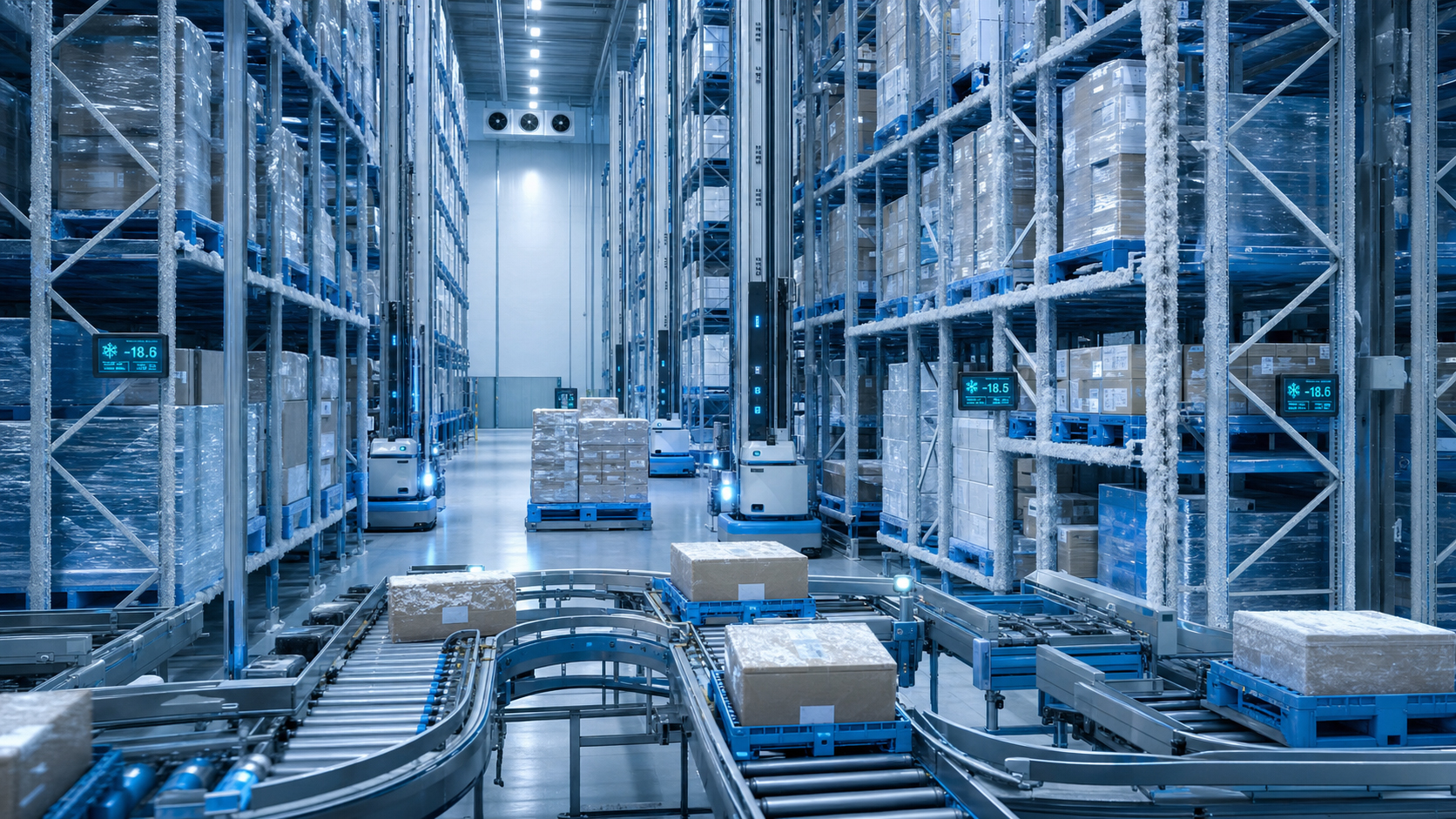
Cold storage cost trap: Retrofit or new construction? Energy, F-gases and pharmaceutical regulations in focus – Image: Xpert.Digital
Pharmaceutical standards as a new benchmark: This is what's changing in cold chain logistics
Retrofit or new construction? Logistics now faces this decision – How to make old cold storage facilities profitable again
Cold storage logistics is undergoing an unprecedented transformation. Long considered an inconspicuous and robust part of the supply chain, it is now being forced by three major factors to take immediate action: exploding and volatile energy costs, the ticking countdown of the F-Gas Regulation, and the highly complex requirements of pharmaceutical storage (GDP). Under these conditions, existing systems are increasingly becoming incalculable cost traps. To remain competitive in the future, simply replacing components is often no longer sufficient. Instead, holistic automation – from efficient high-bay warehouses to modular robotics – is becoming the focus of strategic investments. This article explores why the interplay of energy efficiency, regulatory compliance, and digital process control is fundamentally changing the industry and how modern intralogistics concepts can pave the way out of the cost trap.
Cold chain logistics in the tension between energy, regulation and pharmaceutical validation
Why the cold chain is becoming more expensive and complicated than any operator would like
Cold chain logistics is generally considered an inconspicuous part of the supply chain, a necessary evil between production and trade. However, a closer look at the figures reveals an industry currently having to reinvent itself on three fronts simultaneously. The first front is economic and energy-related. The second is regulatory and the F-gas transition. The third is quality-driven and concerns pharmaceutical storage according to Good Distribution Practice (GDP). None of these three forces can be considered in isolation, as they interlock like gears in a machine that is no longer rotating in sync. A cold storage operator investing in new refrigeration systems today must simultaneously consider future refrigerant availability, electricity price trends, and potential pharmaceutical usage scenarios, even if they currently only store fruit or fish. This simultaneous pressure of costs, regulatory changes, and quality demands makes cold chain logistics one of the most economically challenging segments of the entire warehousing industry.
The electricity price as the hidden main cost driver
Cold storage facilities are continuous operators. Unlike many other commercial properties, their technical systems run not eight hours a day, but around the clock, seven days a week, year-round. This constant operating load means that refrigeration alone often accounts for sixty to seventy percent of a cold storage facility's total electricity consumption. Therefore, the price of electricity is not simply one cost factor among many, but the central lever that determines the profitability of the entire operation. Anyone who wants to realistically calculate the total cost of ownership (TCO) cannot avoid a detailed analysis of electricity costs.
A key, often underestimated factor is not just the pure price per kilowatt-hour, but the contractually agreed-upon connection capacity. Cold storage facilities require enormous peak loads, especially when defrosting evaporators, receiving large batches of goods, or during summer temperatures that further increase the cooling demand. In many tariff models, network charges are based on the highest recorded peak load of a billing period, meaning that a single uncontrolled peak load spike can drive up costs for months. For this reason, so-called load management—the intelligent control and smoothing of peak consumption—is becoming increasingly important. Modern cold storage facilities rely on systems that stagger defrost cycles, ramp up refrigeration compressors in stages, and buffer peak consumption through the use of cold storage.
Besides the actual cooling process, so-called ancillary energy consumption also contributes significantly to the overall energy balance. Lighting, ventilation, conveying and handling technology, and control systems often add up to about one-fifth of a cold storage facility's total energy demand. Anyone who believes that a more efficient refrigeration system alone will solve the problem underestimates the savings potential that lies in the building envelope, door controls, and peripheral technology. Poorly insulated older buildings can consume up to eight times the energy of modern new buildings per cubic meter of storage space. Every time a door is opened, warm, humid outside air enters the cold storage room, which then has to be dehumidified and cooled down again – a process that consumes considerably more energy than many operators intuitively assume.
Investment decisions under the pressure of rising energy prices
The economic logic of cold chain logistics is fundamentally changing as a result. Where investment decisions were previously based primarily on the acquisition costs of a refrigeration system or racking system, life cycle cost analysis is now taking center stage. A system that is ten percent more expensive to purchase but reduces energy consumption by a quarter over a twenty-year operating period often pays for itself within just a few years and proves to be significantly cheaper in the long run. This shift in the evaluation logic has direct consequences for the automation of cold storage facilities, because automated high-bay warehouses with stacker cranes or shuttle systems not only enable higher storage densities but also smaller climate-controlled volumes per stored pallet. Where a manually operated cold storage facility requires wide aisles for forklifts and personnel, an automated system manages with significantly narrower aisles, which reduces the volume of air to be cooled and thus directly saves energy costs.
The F-Gas Regulation as regulatory time pressure
Parallel to the energy price debate, the legal framework for refrigeration technology itself is changing. The revised European regulation on fluorinated greenhouse gases, which came into force in March 2024, mandates an accelerated phase-out path for hydrofluorocarbons (HFCs), which serve as refrigerants in most refrigeration systems currently in operation. This so-called phase-down stipulates that the quantity of these refrigerants available on the market, measured in CO2 equivalents and relative to the 2015 baseline, will decrease drastically in several stages. By 2025, only about a quarter of the original quantity was available; by 2030, this figure will fall to a single-digit percentage, and by 2050, their use is to be completely phased out.
For operators of cold storage facilities, this means far more than an abstract climate protection measure. It means a gradual reduction and thus an increase in the cost of refrigerants currently circulating in existing systems. Anyone operating a system with conventional HFC refrigerant today must assume that refills in the event of leaks will become significantly more expensive and harder to obtain in the future. At the same time, the regulation prohibits the placing on the market of new stationary refrigeration systems above defined global warming potential (GWP) limits from certain cut-off dates, meaning that new systems will increasingly have to be converted to natural refrigerants such as ammonia, carbon dioxide, or propane. This conversion is technically demanding because natural refrigerants require different safety regulations, different system components, and, in some cases, different operating pressures than the synthetic substances that have been established until now.
Between retrofit and new construction: a strategic decision
This results in a narrow window of opportunity for strategic decisions for operators. Those who own an existing system with many years of remaining technical lifespan face the question of whether retrofitting to a future-proof refrigerant is worthwhile or whether a completely new system with compliant technology from the outset is more economical. This decision depends heavily on the age of the system, the remaining useful life of the building, and the extent to which the company intends to rely on pharmaceuticals or other highly sensitive refrigerated goods in the future, for which higher technical standards already apply. Those who miss the conversion window and enter a period of drastically rising refrigerant prices with an existing system risk significant cost increases that can hardly be offset in the short term. In this respect, the regulatory question merges with the economic one: those who fail to plan today will pay twice tomorrow – once for energy and once for the refrigerant.
Pharmaceutical cold chain logistics as the ultimate discipline
While energy and regulation shape the operational cost base of cold chain logistics, pharmaceutical applications define the segment's qualitative pinnacle. Medicines, vaccines, and certain diagnostics are subject to the principles of Good Distribution Practice (GDP). These regulations require not only uninterrupted temperature control within narrow tolerance ranges but also complete and tamper-proof documentation of every movement, temperature deviation, and intervention in the storage chain. An audit trail—a fully traceable, electronically secured record—is not optional but a mandatory requirement for a warehouse to be approved for handling pharmaceutical goods.
This requirement fundamentally changes the technical specifications of a cold storage facility. Sensors must not only be precise but also redundant and calibrated, so that in the event of an audit by regulatory authorities, it can be proven without gaps for each individual batch that it was never stored outside the permissible temperature limits. If the cold chain is interrupted, for example by a power outage or a malfunction in the refrigeration system, the system must automatically trigger an alarm, isolate the affected goods, and document the incident before any release for further use can even be considered.

Expert partner in warehouse planning and construction
From cold storage to high-tech warehouse: The new strategy for energy-efficient logistics
First-Expired-First-Out as a logistical control principle
In addition to temperature control, the principle of expiration date management is gaining crucial importance in pharmaceutical warehouse logistics. Unlike traditional consumer goods retail, where the first-in, first-out (FIFO) principle is often used, pharmaceutical distribution requires management based on the actual expiration date of the batch, regardless of when it was received. This principle, known in industry jargon as first-expired-first-out (FIFO), necessitates granular, batch-specific inventory management, which is virtually impossible to implement flawlessly in a manually operated warehouse. Automated storage systems with mini-load stacker cranes or shuttle technology, on the other hand, can address each individual loading unit, compare its expiration date with the warehouse management system in real time, and automatically prioritize the batch with the nearest expiration date during retrieval. This transforms a quality requirement originally from the pharmaceutical industry into a driver for automation investments that also pay off in other segments of cold chain logistics.
Automation as the common denominator of the three forces
This highlights why energy efficiency, regulatory compliance, and pharmaceutical validation are converging in practice into a single investment focus: the automation of the cold storage facility itself. Automated storage and conveying technology reduces the volume of air requiring cooling, thereby lowering energy consumption. Simultaneously, closed, sensor-monitored processes improve the conditions for seamless GDP documentation and make the facility less dependent on personnel, whose ability to work in extremely cold environments is already limited. Intralogistics providers have recognized this convergence and now offer integrated system landscapes that combine traditional high-bay warehouse technology with modern robotics and digital process control.
A prime example is the Japanese intralogistics company Daifuku, which has a presence in Europe, including a branch in Mönchengladbach, and offers a broad portfolio of automated storage and sorting systems. At the heart of its core portfolio is the so-called Mini-Load AS/RS, an automated storage and retrieval system for smaller load units such as containers, cartons, or trays. This system utilizes high storage density and short access times thanks to fast storage and retrieval machines. This classic unit-load and mini-load principle is complemented by shuttle-based systems that integrate the sequencing, sorting, and storage of small-volume items into a single technical network.
From classic shelving technology to modular robotics
Beyond its traditional stacker crane technology, Daifuku has expanded its product range to include modular sorting and transport robots, marketed under the name Sorting Transfer Robot. These systems are available in various sizes for pallets, cartons, and individual items, enabling fleet-based, flexible sorting where numerous small, autonomous vehicles operate in parallel, rather than requiring a rigid, monolithic conveyor system. This modular approach is particularly attractive for cold storage logistics because it allows for gradual capacity expansion without having to shut down an entire cold storage facility for the installation of a new, fixed system. Especially given the tight timeframes created by the F-gas transition, this ability to incrementally modernize represents a significant economic advantage, as it allows for the decoupling of retrofit measures for refrigeration technology and modernization steps for storage technology.
The life cycle and service aspect as an underestimated value driver
An often overlooked but economically crucial aspect of automated cold storage technology is the lifecycle and service considerations. Systems operating in cryogenic environments at minus twenty degrees Celsius or below are subject to accelerated material stress because the cold makes lubricants more viscous, electronic components more sensitive, and mechanical wear processes differ from those at room temperature. Economically viable operation therefore requires proactive maintenance concepts that minimize unplanned system downtime, as a failure of the storage and retrieval machine in a fully automated cold storage facility can lead to significant consequential damage within hours – both economically, through supply disruptions, and qualitatively, through the risk of temperature deviations in pharmaceutical products.
Manufacturers who offer not only the technical equipment itself but also a well-designed service model with remote diagnostics, spare parts logistics, and predictable maintenance intervals shift the economic viability calculation in favor of higher initial investments with lower operational risks. For a cold storage operator who already has to contend with volatile energy costs and uncertain refrigerant prices, this predictability is a crucial factor. The ability to identify wear parts in advance and schedule maintenance during planned operational downtimes thus becomes a quantifiable economic factor that must be included in a sound life cycle cost analysis.
Three target groups, one common strategy
Looking at the overall situation from a bird's-eye view, it becomes clear that three different groups of stakeholders are affected by these developments, yet they all rely on structurally similar solutions. The first group consists of traditional cold storage operators in the food sector, for whom energy cost optimization is paramount, while regulatory and pharmaceutical aspects are of secondary importance. The second group comprises plant manufacturers and system integrators, for whom the tight timeframe of the F-gas transition represents both a risk and an opportunity, as compliant, future-proof technology offers the potential to gain new market share. The third group consists of specialized pharmaceutical and biotech logistics providers, for whom automation is primarily a tool for meeting increasingly stringent validation requirements, with energy efficiency as a welcome side effect.
However, the same basic economic principle applies to all three groups: Anyone investing in a cold storage facility today must design the system in such a way that it remains energy-competitive, regulatory-compliant, and potentially upgradeable for higher-value uses throughout its entire technical lifespan. This multidimensionality of the investment decision fundamentally distinguishes cold storage logistics from traditional dry storage logistics, where energy costs play a subordinate role and regulatory timeframes are considerably less restrictive.
Economic consequences for the coming years
From this complex situation, a clear economic trend can be derived for the coming years. The operating costs of traditional, less automated cold storage facilities will tend to rise further, driven by volatile energy prices and the foreseeable increase in the cost of conventional refrigerants due to the ongoing shortage of fluorinated gases (F-gases). At the same time, access to pharmaceutical and other high-value refrigerated goods segments will become increasingly difficult for operators without validated, documentable storage infrastructure because regulatory requirements are continuously tightening. Those who fail to invest in automation, digital process control, and energy optimization in this environment risk gradual marginalization in the lower, low-margin price segment of cold chain logistics.
Conversely, operators who invest early in modular, future-proof systems gain a twofold competitive advantage. On the one hand, they benefit from lower operating costs thanks to energy-efficient, densely packed warehouse architectures, and on the other hand, they gain access to higher-value market segments, particularly in pharmaceutical and biotech distribution, which tend to offer more stable and predictable returns than the price-sensitive fresh produce logistics segment. This strategic shift will lead to noticeable consolidation within the industry in the coming years, with financially strong, technologically advanced operators expanding their market position, while undercapitalized companies with outdated technology come under increasing pressure.
A multifaceted transformation
Cold storage logistics is currently undergoing a transformation that goes far beyond simple technical modernization. Energy costs, regulatory changes, and pharmaceutical quality requirements are merging into a single, complex investment calculation that can only be effectively addressed through an integrated approach to plant technology, energy strategy, and compliance requirements. Automated storage and sorting systems, such as those offered by specialized intralogistics providers, act as a technological hub where all three sets of requirements converge and can be addressed collectively. For operators, manufacturers, and integrators alike, the coming years will determine competitiveness in the cold storage segment of the logistics industry – not through isolated, one-off measures, but through a consistent, multidimensional modernization strategy.
Your intralogistics experts

Consulting, planning and implementation of complete solutions for high-bay warehouses and automated storage systems - Image: Xpert.Digital
More information here:
Your global marketing and business development partner
☑️ Our business language is English or German
☑️ NEW: Correspondence in your native language!

Konrad Wolfenstein
I and my team are happy to be available to you as your personal advisor.
You can contact me by filling out the contact form here [email protected]:or simply call me at +49 7348 4088 965. My email address is
I'm looking forward to our joint project.
☑️ SME support in strategy, consulting, planning and implementation
☑️ Creation or realignment of the digital strategy and digitization
☑️ Expansion and optimization of international sales processes
☑️ Global & Digital B2B trading platforms
☑️ Pioneer Business Development / Marketing / PR / Trade Fairs
Our global industry and economic expertise in business development, sales and marketing

Our global industry and economic expertise in business development, sales and marketing - Image: Xpert.Digital
Industry focus areas: B2B, digitalization (from AI to XR), mechanical engineering, logistics, renewable energies and industry
More information here:
A thematic hub offering insights and expertise:
- Knowledge platform covering global and regional economies, innovation and industry-specific trends
- A collection of analyses, insights, and background information from our key areas of focus
- A place for expertise and information on current developments in business and technology
- A hub for companies seeking information on markets, digitalization, and industry innovations










