
LogiMAT 2026: 5 technologies for your competitiveness – including retrofit and smart maintenance for intralogistics systems
Xpert pre-release

Available in 27 languages 📢
Prefer Xpert.Digital on GoogleⓘPublished on: January 12, 2026 / Updated on: January 12, 2026 – Author: Konrad Wolfenstein
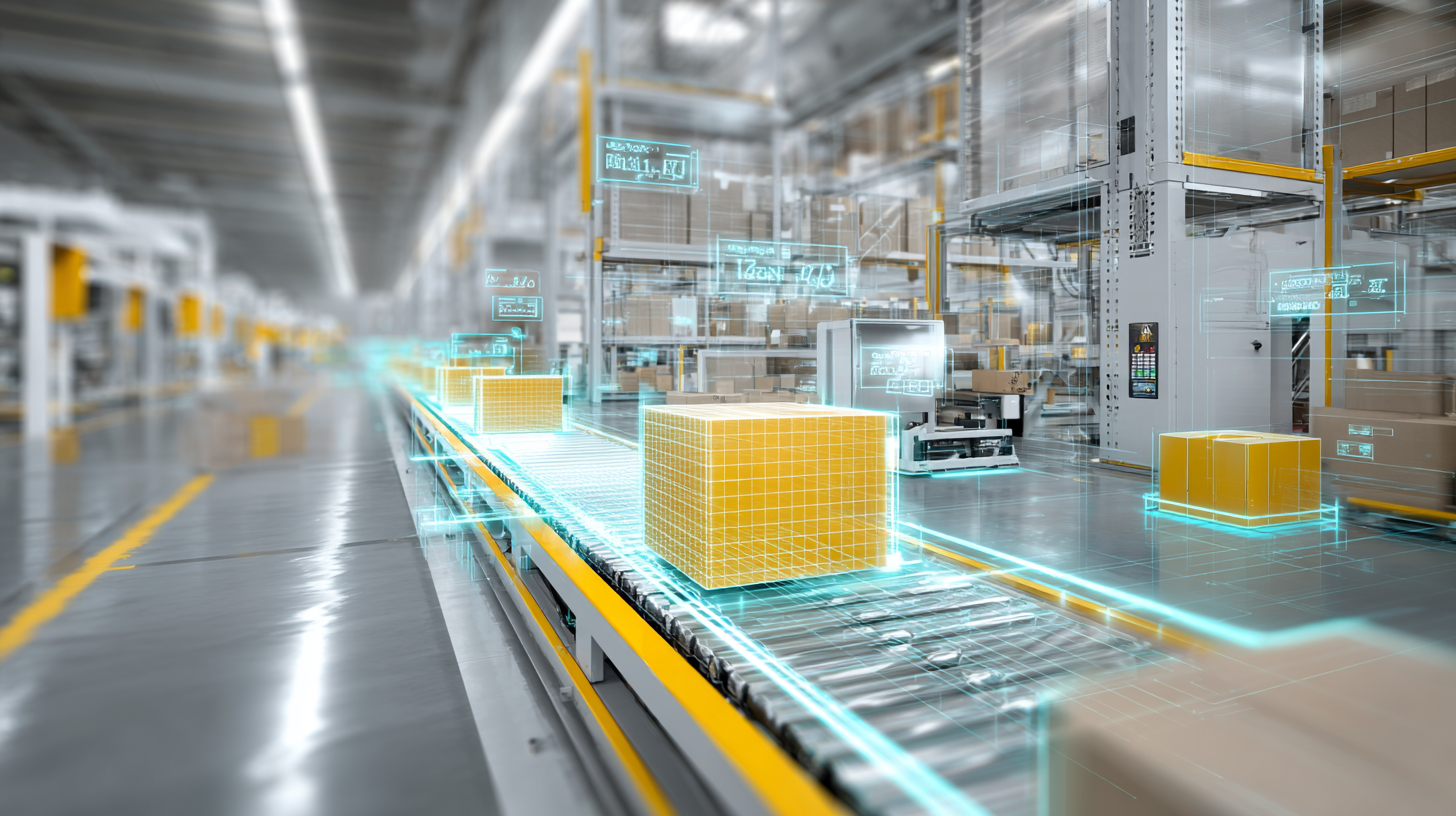
LogiMAT 2026: 5 technologies for your competitiveness – including retrofit and smart maintenance for intralogistics systems – Image: Xpert.Digital
From cost driver to savior: How “Automation as a Service” is radically changing investments
Stuttgart is becoming a tech hotspot: Here's what trade visitors need to know about the largest logistics trade fair
Stuttgart, March 2026 – When the doors of LogiMAT open from March 24 to 26, it will be about much more than forklifts and racking systems: it will be about the future viability of the European economy.
In an era characterized by volatile supply chains, skyrocketing energy costs, and a dramatic labor shortage, intralogistics has transformed from a purely support function into a crucial competitive factor. The upcoming trade fair in Stuttgart acts as a seismograph for an industry under intense pressure. With over 1,600 exhibitors and a record number of world premieres expected, LogiMAT 2026 demonstrates that the era of incremental progress is over.
Under the telling motto "Passion for Details – Discover the Difference," the event focuses on those technological fine-tunings that ultimately determine profit or loss. From revolutionary honeycomb storage systems that catapult space utilization to up to 95 percent, to AI-controlled swarm robotics, to sustainable retrofit solutions for existing facilities: the answers to the pressing economic questions lie in the intelligent networking of hardware and software.
The following article analyzes in depth why automation is no longer a luxury, but an economic imperative. We examine how autonomous mobile robots (AMRs) are revolutionizing infrastructure, why artificial intelligence is becoming the new control center of the warehouse, and why flexibility has become the most important currency in uncertain markets. Dive into the LogiMAT 2026 panorama – and discover where the journey of European logistics is headed.
When efficiency improvement becomes a matter of economic survival
With more than 1,600 international exhibitors from over 40 countries presenting their innovations across 120,000 square meters of exhibition space, Stuttgart is hosting a unique economic showcase. The organizers anticipate a three-figure number of world and European premieres, underscoring the strategic importance of this event for the entire industry. Given that the previous edition in 2025 attracted 66,000 trade visitors and featured 1,625 exhibitors, the continued dynamism of a sector undergoing significant transformation is evident.
The economic dimension of this trade fair only becomes apparent through an analysis of the exhibited technologies and their economic implications. Under the motto "Passion for Details – Discover the Difference," the organizers deliberately focus on the often underestimated detail optimizations that, in total, determine significant efficiency gains and cost reductions. This focus is by no means accidental, but rather reflects a fundamental insight: in saturated markets and with shrinking margins, disruptive major innovations no longer solely determine economic success, but rather the systematic optimization of each individual process step.
Automation as an economic imperative
The hall layout of LogiMAT 2026 follows a clear, industry-specific structure that simultaneously reflects the intralogistics value chain. Halls 1, 3, 5, and 7 will house machine manufacturers, system integrators, and conveyor technology providers whose solutions form the physical backbone of modern warehouse systems. The world premieres announced there, such as a honeycomb-based storage and order picking system, flexible robotic picking solutions, and new shuttle systems for high-bay warehouses, are not mere technical gimmicks, but rather answers to fundamental economic challenges.
The honeycomb-based storage system, considered a true innovation, promises a revolution in space utilization. While conventional racking systems typically achieve space utilization rates of 60 to 75 percent, modern compact storage systems aim for rates of up to 95 percent. The economic significance becomes evident when considering that warehouse space costs in metropolitan areas in Germany range from 80 to 150 euros per square meter per year. For a medium-sized distribution center with 10,000 square meters of warehouse space, space utilization optimizations of 20 percentage points can translate into savings in the mid-six-figure range per year, directly impacting the profit and loss statement.
The flexible robo-picking technology, which will also be prominently featured, addresses an even more fundamental problem in modern logistics: the so-called last mile of order picking. While the automation of transport processes is already well advanced, gripping, identifying, and placing individual items of varying sizes, shapes, and properties remains a technical and economic challenge. At the trade fair, Progressive Robotics will showcase physical AI solutions for mixed palletizing that operate without predefined patterns and dynamically adapt to the incoming product flow in real time. This flexibility is of inestimable economic value in an era of increasing SKU diversity and shorter product lifecycles.
Autonomous Mobile Robots as an Infrastructure Revolution
Halls 8, 9, and 10 showcase another technological and economic development: autonomous mobility in intralogistics. Nearly all leading manufacturers of industrial trucks are presenting their latest developments in driverless transport systems and autonomous mobile robots. This technology represents a fundamental paradigm shift in intralogistics, the full economic impact of which is not yet understood.
The economic logic behind the massive expansion of autonomous transport systems is multifaceted. At the most obvious level, AMRs and AGVs are replacing human labor in a sector suffering from an acute shortage of skilled workers. In Germany, around 45,000 positions in warehousing and postal services were vacant in the fourth quarter of 2025, and this number is rising. The cost of a forklift driver, including benefits and training, averages between €45,000 and €55,000 per year. An autonomous transport vehicle typically pays for itself within three to five years, taking into account acquisition, maintenance, and energy costs, but offers 24/7 operation without downtime.
The deeper economic significance, however, lies in the flexibility and scalability of these systems. Manufacturers like KUKA are showcasing autonomous mobile robots at the trade fair with payload capacities between 250 and 3000 kilograms, which can be adapted to changing requirements through software updates and modular upgrades. DS Automotion is presenting Amy, a compact AMR for transporting small loads up to 25 kilograms, whose simple operation and VDA 5050 interface enable rapid deployment in swarms. This interoperability between different manufacturers and systems is highly relevant economically, as it prevents vendor lock-in and allows for incremental investments.
KNAPP demonstrates the breadth of application possibilities with its Open Shuttles, which can transport Euro pallets, industrial pallets, half pallets, and now also CHEP pallets. The integration of AI-supported navigation enables these systems to move precisely and safely in highly dynamic, unstructured environments. Obstacles are automatically detected and avoided, ensuring a smooth and safe flow of materials. The economic benefit lies in the avoidance of downtime and collision damage, which cause significant hidden costs in conventional systems.
Shuttle systems and modular warehouse robotics
Shuttle systems and modular warehouse robotics solutions form the core of modern automation strategies. Companies like SIVAplan are presenting automated high-bay warehouses, channel storage systems, and flexible shuttle modules at LogiMAT that can be adapted to various rack heights, aisle widths, and throughput requirements. The modular design of these systems allows for adaptation to different storage requirements and enables rapid commissioning and expansion with minimal downtime.
KNAPP will showcase its award-winning AeroBot warehouse robotics system as an impressive highlight – a 3D robotic warehouse system that stands for simplicity, flexibility, and maximum storage density. The economic superiority of such systems lies in their three-dimensional space utilization and their ability to achieve high throughput rates with minimal access times through autonomous shuttle operations. Optimizing storage capacity with minimal footprint directly addresses one of the largest cost factors in logistics: real estate costs.
The economic appeal of shuttle systems is further enhanced by their scalability. Unlike conventional stacker crane systems, where typically one or two stacker cranes serve an entire aisle, shuttle systems can have their throughput increased almost linearly by adding more shuttles. This enables a phased investment strategy, allowing companies to start with a basic configuration and expand gradually as volumes grow, without having to completely restructure the entire plant.
Artificial intelligence as a control revolution
The integration of artificial intelligence permeates almost all areas of the solutions presented at LogiMAT 2026. In Hall 4, specialized IT companies and system integrators are showcasing their warehouse management systems and software solutions. The integration of AI models for robust analyses and forecasts, cloud applications, and scalable rental models for warehouse management characterize the new offerings.
In 2025, PSI Software won the Best Product Award for PSIwms AI, an AI-based platform directly integrated with the warehouse management system (WMS) that enables comprehensive optimization of warehouse processes. The platform automatically analyzes and optimizes intralogistics processes in real time using artificial intelligence algorithms. A virtual test warehouse connected to the WMS allows for the flexible, rapid, and cost-effective testing of thousands of scenarios without direct intervention in real-world operations.
The economic relevance is evident through practical examples. At the fashion group LPP, which operates a distribution center with 750,000 storage locations and over 700 employees, PSIwms AI reduced picking distances by approximately 31 percent and increased the efficiency of the entire picking process by about 23 percent. With average picking costs accounting for 60 to 70 percent of total warehousing expenses, such efficiency gains translate into immediate and significant cost reductions.
At the trade fair, IMAGO Technologies is showcasing AI-based vision solutions that detect deviations early, before they lead to downtime or quality issues. The combination of continuous image acquisition and intelligent analysis enables predictive process evaluation. AI-supported container and load carrier control detects deviations such as contamination, incorrect filling, or surface anomalies without the need for complex rules or pre-labeled training data. The low barrier to entry for these technologies makes AI economically attractive even for medium-sized businesses.
With its Stradivari platform, the ICS Group presents AI warehouse agents for efficient digital processes. The logistics platform, which won the Telematics Award in 2024, integrates predictive logistics, demand forecasting, simultaneous barcode scanning, AI-powered computer vision, and real-time control. This orchestration of various AI functions into a coherent overall system represents the current state of warehouse intelligence development.
Identification technologies and digital transparency
In Hall 2, manufacturers from the AutoID segment will present their latest solutions. The integration of diverse technologies such as AI, sensors, RFID, and vision systems into intelligent solutions for efficient identification, information encoding, and data capture forms the basis for digital transparency in supply chains.
Kathrein Solutions won the Best Product Award in 2025 for its Gen4 RFID reader, which sets new standards with integrated phased-array antenna technology and three scalable antenna beams. Mounted on forklifts, the reader can reliably and specifically read all transponders on a pallet, enabling real-time inventory while goods are still in motion. The captured data is transmitted directly to the ERP system via WLAN or 5G. This eliminates manual scanning processes and reduces the need for additional RFID gates.
The economic significance of such systems lies in the avoidance of inventory inaccuracies, which represent a massive hidden cost problem in the logistics industry. Studies show that average inventory discrepancies between physical stock and system inventory range from three to five percent of total inventory. For a company with €10 million in inventory, this translates into potential losses or inefficiencies in the range of €300,000 to €500,000. Fourth-generation RFID technologies enable inventory accuracies of over 99.5 percent and drastically reduce these hidden costs.
The range of solutions presented extends from innovative scanner hardware and RTLS and RFID solutions to new material developments for labels, reusable labels, e-paper, and radio-controlled digital labels. This diversity reflects the different requirement profiles of various industries and application scenarios, enabling customized solutions with optimal cost-benefit ratios.
Electric drives and energy efficiency
In Halls 9 and 10, nearly all leading manufacturers of industrial trucks are presenting their innovations in the field of electric drives and alternative energy concepts. Under the motto "The First Name in Forklifts," Clark is showcasing its Raider and Renegade series electric crossover forklifts with lifting capacities from 2.5 to 3.5 tons, as well as the S-Series Electric with a lifting capacity of 1.6 to 2 tons.
The economic logic behind the electrification of industrial trucks is multifaceted. Besides regulatory requirements for emission reduction and the growing sustainability pressure from customers and investors, direct operating cost advantages play a key role. Electric counterbalance forklifts typically have 40 to 60 percent lower energy costs than comparable diesel or gas forklifts. With an annual operating time of 2,000 hours and energy costs of 30 cents per kilowatt-hour compared to diesel costs of €1.50 per liter, this results in savings of several thousand euros per vehicle per year.
The availability of lithium-ion batteries instead of conventional lead-acid batteries further enhances these advantages. Lithium-ion batteries allow for intermediate charging without the memory effect, eliminate the need for battery replacement, and extend operating times. The higher initial costs are typically recouped within the battery's lifespan through longer service life, increased efficiency, and reduced maintenance. Manufacturers like Clark offer flexible plug-and-play solutions where the battery type can be changed via simple software adjustments, providing companies with maximum flexibility to meet evolving operational requirements.
The integration of telemetry systems, camera systems for assistance and warning functions, biometric access systems, and advanced safety features into modern electric forklifts creates additional economic value. Fleet management software enables real-time monitoring of utilization, maintenance needs, and driver behavior, facilitating preventive maintenance and optimal resource allocation.
Packaging technology and sustainable materials management
Hall 6 is dominated by exhibitors from the packaging, packaging technology, and container solutions sectors. Their product range focuses on sustainability through material reduction, right-sized packaging, circular economy principles, and reusable packaging. On the other hand, high-performance packaging lines and strapping machines with optimized consumption data and high throughput are also showcased.
Heripack presents the HVR-500 volume reducer, a fully automatic packaging machine with a unique feature for reducing packaging volume. The economic importance of right-sized packaging is often underestimated. Studies show that in e-commerce, an average of 40 to 50 percent of the package volume consists of air and filler material. With shipping costs calculated based on volume, volume reductions of 20 to 30 percent can directly lead to corresponding cost reductions in freight and shipping.
Kern and Müller are presenting the award-winning PackOnTime 2box multi-format packaging system and the LogiPack document insertion system, which enables the automatic and precise insertion of invoices or personalized documents at a throughput of up to 2,200 cartons per hour. These efficiency gains in packaging are particularly relevant given that packaging processes typically account for 15 to 25 percent of total fulfillment costs.
The focus on sustainable packaging solutions is by no means solely driven by regulation. The EU Packaging Regulation (PPWR), which becomes binding from 2030 and requires higher recycling rates, reusable solutions, and transparency and traceability along the entire supply chain, will generate significant adaptation costs. At the same time, however, market opportunities are opening up for companies that invest early in circular economy solutions. The German Association of Waste Management, Water and Recycling Industries (BDE) is calling for a "Made in Europe" regulation for recycled plastics to strengthen the domestic recycling industry and keep value creation within Europe.
LTW Solutions

LTW Intralogistics – Engineers of Flow - Image: LTW Intralogistics GmbH
LTW offers its customers not individual components, but integrated complete solutions. Consulting, planning, mechanical and electrotechnical components, control and automation technology, as well as software and service – everything is networked and precisely coordinated.
In-house production of key components is particularly advantageous. This allows for optimal control of quality, supply chains, and interfaces.
LTW stands for reliability, transparency, and collaborative partnership. Loyalty and honesty are firmly anchored in the company's philosophy – a handshake still means something here.
Suitable for:
More than just greenwashing: How sustainable logistics becomes a hard-hitting competitive advantage
Digital twins and virtual commissioning
At LogiMAT, SimPlan is presenting two innovative cloud-based solutions that are revolutionizing planning and optimization processes in intralogistics. SimVSM, a value stream analysis software with an integrated AI component, enables the digitization of brown papers. Hand-drawn process sketches are automatically recognized and converted into digital value stream models, which can then be analyzed, adapted, and simulated.
SimPacSi, a cloud-based SaaS solution for modeling, simulating, and optimizing processing and packaging plants, enables companies to make informed decisions in the early project phases. Unlike static calculations, SimPacSi considers dynamic parameters such as disturbances and availability. The integrated batch simulation allows for automated runs with variable durations and detailed analyses at the machine and line levels.
The economic significance of such planning tools lies in reducing the risk associated with investment decisions. Intralogistics projects typically involve investment volumes in the tens of millions and amortization periods of five to ten years. Planning errors can be existential threats. Digital twins and simulations make it possible to explore various scenarios, identify bottlenecks early on, and optimize system dimensions before the first physical component is installed.
The availability of a free basic version with extended premium features significantly lowers the barriers to entry for small and medium-sized enterprises. Location-independent access, scalable computing power, automatic updates, and real-time collaboration also make these tools attractive for distributed teams and international projects.
Retrofit and Smart Maintenance
A new highlight in the supporting program of LogiMAT 2026 is the Smart Maintenance User Forum, which focuses on the modernization of existing intralogistics systems. Solutions for retrofit projects will be presented, significantly extending the service life of stacker cranes or conveyor technology after up to 20 years of continuous operation.
The economic logic behind retrofit strategies is immediately obvious. New investments in fully automated warehouse systems typically range between €500 and €1,500 per pallet space. For a medium-sized high-bay warehouse with 10,000 pallet spaces, this translates to investment volumes of €5 to €15 million. Retrofit projects, which modernize essential components such as controls, drives, or safety systems, typically cost 20 to 40 percent of these costs and extend the service life by another 10 to 15 years.
The manufacturer-independent approach of specialized providers is particularly relevant, as many intralogistics system manufacturers have exited the market or restructured their service organizations over the years. Companies that have relied on proprietary systems often face a lack of spare parts availability and excessive service costs. Manufacturer-independent service providers with extensive experience in design, manufacturing, and PLC programming offer solutions to overcome vendor lock-in.
The integration of modern control concepts and connection to current WMS systems makes it possible to integrate even older systems into modern, networked intralogistics architectures. Distance control for stacker cranes, Flow for conveyor technology, and Distance Curve for the coordinated operation of multiple curve-traveling stacker cranes demonstrate how software innovation can significantly increase the performance of existing hardware.

Xpert.Plus warehouse optimization - high-bay warehouses such as pallet warehouses consulting and planning
Young talent and skills shortage
The LogiMAT Career Day on March 26, 2026, and the Young Innovators at the Federal Ministry for Economic Affairs and Energy's booth address a fundamental problem in the industry: the acute shortage of skilled workers. Connecting students and young professionals with potential employers is not only relevant for individual careers but also strategically important for the entire industry.
The shortage of skilled workers in the logistics sector manifests itself on several levels. At the operational level, there is a lack of warehouse staff, forklift drivers, and order pickers. At the technical level, commissioning engineers, automation technicians, and software developers are in demand. At the planning and strategic level, there is a need for supply chain managers, logistics planners, and intralogistics specialists.
The economic consequences of the skilled worker shortage are significant. Vacant positions lead to capacity bottlenecks, overburdening of existing employees, reduced quality, and ultimately lost revenue. The time to fill specialized logistics positions averages six to nine months, and even longer in specialized fields. The cost of a vacant position is estimated at 50 to 70 percent of the annual salary.
Automation solutions, such as those presented at LogiMAT, are partly an answer to the labor shortage. However, they do not completely replace human labor, but rather shift the demands. While operational tasks are automated, the need for technically qualified personnel for the operation, maintenance, and optimization of the systems increases. The Career Day provides a platform to identify these qualified young professionals early on and attract them to the industry.
Supporting program as a knowledge transfer platform
LogiMAT 2026 offers an extensive supporting program with 25 high-caliber expert forums across two stages, Exhibitor Insights, the Mobile Robotics User Forum, and live demonstrations of AutoID technologies and load securing. This congress-level program distinguishes LogiMAT from purely product-focused trade fairs and positions it as a central knowledge transfer and networking platform.
The Institute for Materials Handling and Logistics at the University of Stuttgart is presenting research findings on cooperating AGVs for increased efficiency in intralogistics at an expert forum. Bridging the gap between academic research and industrial application is crucial for innovation transfer. Companies gain insights into forward-looking technologies that are not yet market-ready but could become relevant in the medium term. Research institutions receive practical feedback on real-world problems and requirements.
The ICS Group will give a presentation on AI warehouse agents and efficient digital processes using the Stradivari platform. Fraunhofer IML will be presenting on modern warehouse management systems. This combination of vendor presentations and independent research allows visitors to gain a nuanced understanding of technologies and solutions.
The Mobile Robotics User Forum focuses on current developments in the field of AGVs and AMRs in a focused atmosphere away from the hustle and bustle of trade fairs. The neutral and practical advice provided by Forum-FTS members offers decision-makers an independent perspective on investment projects, which often involve sums in the tens of millions.
Flexibility and scalability as strategic imperatives
A common thread running through almost all the solutions presented at LogiMAT 2026 is the focus on flexibility and scalability. These characteristics are by no means technical details, but rather answers to fundamental economic uncertainties.
The volatility of sales volumes has increased dramatically in recent years. Seasonal fluctuations, which used to be between 20 and 30 percent, now reach 100 to 200 percent in certain industries. The Covid pandemic, supply chain problems, and geopolitical upheavals have further reduced planning certainty. Companies that design their intralogistics capacities for peak loads pay high fixed costs for facilities that are underutilized for much of the year. Companies that design for average loads cannot handle peak periods and lose revenue.
Modular and scalable systems enable incremental expansion. Element Logic presents FlexBins, an innovation that allows AutoStore systems to be used with mixed bin sizes and can be retrofitted without interrupting operations. KNAPP showcases modular shuttle systems where performance can be increased almost linearly by adding more shuttles. This flexibility enables pay-as-you-grow strategies, where investments can be closely linked to actual volumes.
Element Logic's Automation as a Service model represents a paradigm shift from capital expenditure (Capex) to operating expenditure (Opex). Companies subscribe to automation solutions and pay based on performance, such as throughput or storage capacity. Clear availability guarantees ensure stable operation and maximum performance. This model drastically reduces initial investments while transferring operational risk to the provider and creating planning certainty through predictable, volume-based costs.
Sustainability as a competitive factor
The focus on sustainability and resource efficiency at LogiMAT 2026 is by no means merely greenwashing or driven by regulations, but is increasingly developing into an independent competitive factor. Trade fair director Michael Ruchty emphasizes that sustainability is a key competitive factor for exhibitors from various industry segments. Energy savings, waste reduction, and efficient resource use strengthen and expand market positions.
The economic logic is multifaceted. On the cost side, energy-efficient systems directly lead to lower operating costs. SMB presents a compact warehouse that operates with only 0.01 kilowatt-hours per storage and retrieval operation. With 1 million movements per year and electricity costs of 30 cents per kilowatt-hour, this results in energy costs of only 3,000 euros. Conventional systems are often three to five times higher.
On the revenue side, pressure from customers and end consumers for sustainable supply chains is growing. Large retailers and e-commerce platforms are increasingly demanding proof of their logistics providers' carbon footprints and sustainable practices. The EU Taxonomy Regulation and upcoming reporting obligations are further increasing this pressure. Companies that invest early in sustainable intralogistics are positioning themselves as preferred partners for growing customer segments.
The circular economy and reusable packaging, prominently featured in Hall 6, address both cost aspects and regulatory requirements. The Circular Valley Convention, taking place in Düsseldorf in March 2026 alongside LogiMAT, underscores the cross-industry importance of circular value creation.
Investment decisions under uncertainty
The key economic challenge for companies attending LogiMAT 2026 lies in evaluating and prioritizing investments under conditions of considerable uncertainty. Intralogistics projects typically have payback periods of five to ten years. During this time, business models, customer structures, regulatory frameworks, and technologies can undergo fundamental changes.
The diversity of solutions presented at the trade fair reflects this complexity. There is no one-size-fits-all solution. An e-commerce fulfillment center with high SKU diversity and small order sizes has fundamentally different requirements than a B2B distribution center with palletized goods and large batch sizes. A cold storage facility with temperatures of minus 25 degrees Celsius requires different technologies than an ambient warehouse.
Evaluating investment alternatives requires integrating multiple factors, including investment costs, operating costs, flexibility, scalability, energy efficiency, availability, service quality, future-proofing, and many more. Total cost of ownership analyses over the entire lifespan are complex and subject to uncertainties.
LogiMAT offers immense added value as a central information and comparison platform. Within three days of the trade fair, visitors can evaluate a range of solutions that would take months in individual discussions with suppliers. The comparability and the opportunity to experience different technologies and suppliers side-by-side create transparency and improve the quality of investment decisions.
European intralogistics in global competition
LogiMAT, Europe's largest annual intralogistics trade fair, also serves as a barometer for the competitiveness of the European intralogistics industry in a global context. With 35 percent international exhibitors at the 2025 edition and participants from over 40 countries, the fair has an international focus, yet retains its European emphasis.
Innovation and technology leadership in intralogistics has traditionally resided in Europe, particularly in Germany, Austria, Switzerland, and the Benelux countries. Companies such as SSI Schäfer, Dematic, KNAPP, Witron, and many others are among the global market leaders. However, this position is by no means guaranteed and is facing increasing pressure from Asia and North America.
Chinese providers such as Geek+ in the AMR sector and Megvii in the AI vision systems sector have gained massive market share in recent years, particularly in price-sensitive segments. US technology companies are also investing heavily in logistics automation, driven by the demands of Amazon, Walmart, and other e-commerce giants.
The European intralogistics industry can only maintain its position through continuous innovation, quality, and service. LogiMAT, as the central innovation platform, plays a crucial role in this. The concentration of over 1,600 exhibitors and an expected 65,000 to 70,000 trade visitors creates an innovation ecosystem where suppliers, users, research institutions, and investors network and inspire one another.
The presence of international exhibitors and visitors fosters technology transfer and international collaborations. At the same time, it enables European suppliers to present their solutions to a global audience and tap into international markets. In an environment where economies of scale are increasingly important and global platforms dominate, international networking is vital.
The momentum of transformation
LogiMAT 2026 is taking place in a time characterized by fundamental upheaval. Digitalization is transforming business models and customer expectations. Decarbonization requires fundamental changes in energy and material use. The deglobalization and regionalization of supply chains is altering the flow of goods and the demands for flexibility. Demographic change is exacerbating the shortage of skilled workers and making automation a necessity.
In this environment, the question is no longer whether companies invest in their intralogistics, but how they do it. The strategic decisions made today will determine competitiveness for the next 10 to 15 years. Poor decisions can be existential threats, while correct decisions can create far-reaching competitive advantages.
The diversity and innovative nature of the solutions presented at LogiMAT 2026 demonstrate that the technologies for this transformation are available. Autonomous mobile robots, AI-driven warehouse management systems, modular warehouse robotics, energy-efficient industrial trucks, intelligent packaging systems, and networked identification technologies offer a comprehensive set of tools for modernizing intralogistics.
The challenge lies in the intelligent orchestration of these technologies into coherent overall systems that meet specific requirements, are economically viable, and remain adaptable to future developments. As the industry's central platform, LogiMAT 2026 offers the opportunity to evaluate and compare this complex portfolio of solutions and to make informed investment decisions. While the three days of the trade fair in Stuttgart may be short, their significance for the strategic direction of entire companies and industries is immense. In an era of accelerated change, the ability to efficiently filter information, correctly assess technologies, and act promptly is becoming a decisive competitive advantage. LogiMAT 2026 is more than just a trade fair; it is a catalyst for the transformation of an entire industry.
Your global marketing and business development partner
☑️ Our business language is English or German
☑️ NEW: Correspondence in your national language!

Konrad Wolfenstein
I would be happy to serve you and my team as a personal advisor.
You can contact me by filling out the contact form or simply call me on +49 7348 4088 965 (Munich) . My email address is: wolfenstein ∂ xpert.digital
I'm looking forward to our joint project.
☑️ SME support in strategy, consulting, planning and implementation
☑️ Creation or realignment of the digital strategy and digitalization
☑️ Expansion and optimization of international sales processes
☑️ Global & Digital B2B trading platforms
☑️ Pioneer Business Development / Marketing / PR / Trade Fairs
🎯🎯🎯 Benefit from Xpert.Digital's extensive, five-fold expertise in a comprehensive service package | BD, R&D, XR, PR & Digital Visibility Optimization

Benefit from Xpert.Digital's extensive, fivefold expertise in a comprehensive service package | R&D, XR, PR & Digital Visibility Optimization - Image: Xpert.Digital
Xpert.Digital has in-depth knowledge of various industries. This allows us to develop tailor-made strategies that are tailored precisely to the requirements and challenges of your specific market segment. By continually analyzing market trends and following industry developments, we can act with foresight and offer innovative solutions. Through the combination of experience and knowledge, we generate added value and give our customers a decisive competitive advantage.
More about it here:
Our global industry and economic expertise in business development, sales and marketing

Our global industry and business expertise in business development, sales and marketing - Image: Xpert.Digital
Industry focus: B2B, digitalization (from AI to XR), mechanical engineering, logistics, renewable energies and industry
More about it here:
A topic hub with insights and expertise:
- Knowledge platform on the global and regional economy, innovation and industry-specific trends
- Collection of analyses, impulses and background information from our focus areas
- A place for expertise and information on current developments in business and technology
- Topic hub for companies that want to learn about markets, digitalization and industry innovations










