
One of the most pressing questions that will concern decision-makers at LogiMAT 2026 is the dilemma between retrofitting and new construction
Xpert pre-release

Available in 27 languages 📢
Prefer Xpert.Digital on GoogleⓘPublished on: January 6, 2026 / Updated on: January 6, 2026 – Author: Konrad Wolfenstein
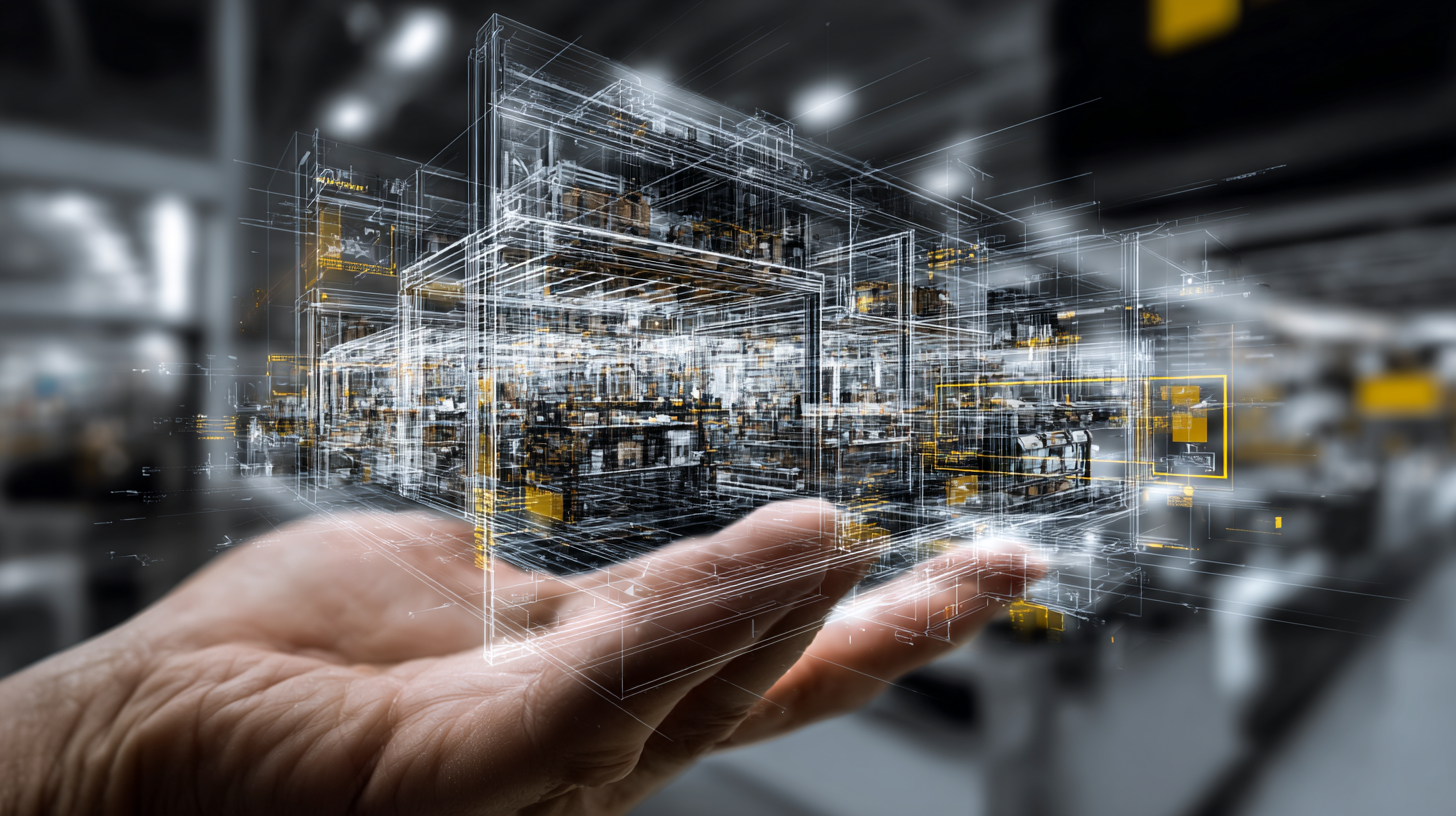
One of the most pressing questions that will concern decision-makers at LogiMAT 2026 is the dilemma between retrofitting and new construction – Image: Xpert.Digital
Insolvency risk “Operational blindness”: Why SMEs will not survive in the future without a digital twin
Operational blindness? The radical transformation of logistics: Those who don't act now will be overtaken by reality
The year is 2026. The days when digitalization in logistics was considered a "nice-to-have" for increased efficiency are definitively over. In a global economy no longer characterized by linear growth, but by asymmetric shocks, geopolitical tensions, and volatile supply chains, the rules of the game have fundamentally changed: Transparency is no longer a technological gimmick, but the life insurance for small and medium-sized enterprises (SMEs).
Just in time for LogiMAT in Stuttgart, it's clear that we've crossed a critical threshold. Anyone who can't simulate their inventory, risks, and process flows in real time today suffers from "operational blindness"—arguably the biggest insolvency risk in modern logistics. The digital twin has moved beyond the experimental stage and become the central nervous system of resilient value chains.
This article examines the radical transformation of the industry: from the difficult investment decision between retrofitting and new construction, to the shift away from pure efficiency towards anticipating disruptions, and the new role of the human factor. Learn why the ability to simulate the future has become the most valuable asset in competition and how companies are using digital intelligence to protect their physical infrastructure from collapse.
Logistics at a turning point: When data decides between existence and non-existence
The year 2026 marks a turning point in the global logistics industry, one that will be more evident than ever at LogiMAT in Stuttgart. We have passed the point where digitalization merely promised efficiency gains. In today's global economy, characterized by persistent volatility, the digital mapping of physical processes has become an indispensable prerequisite for operational survival. While discussions in 2023 and 2024 were still dominated by the introduction of isolated AI solutions, we are now witnessing a fundamental consolidation: The digital twin has moved beyond the status of an experimental innovation project and now forms the central nervous system of modern value chains.
Macroeconomic conditions have drastically worsened. Companies operate in an environment characterized not by linear growth curves, but by asymmetric shocks – be it regulatory interventions such as stricter supply chain laws, geopolitical upheavals that render traditional trade routes obsolete overnight, or the increasing fragmentation of global markets into protectionist blocs. In this context, resilience is no longer a catchy marketing buzzword, but a crucial financial metric. Those who cannot simulate their inventory, flows, and risks in real time not only lose margins, but also, in a crisis, their ability to act.
This year's LogiMAT is therefore under a new star. It's no longer primarily about the faster forklift or the tallest rack, but about the software architecture that orchestrates these assets. We are witnessing the rise of predictive logistics, where decisions are made before the event occurs in the physical world. This requires a cultural and technological shift that deeply impacts the DNA of companies. The separation between physical asset and digital representation is dissolving. The warehouse of the future is primarily a data space that also happens to house physical goods.
The investment decision: Modernization versus greenfield in the age of algorithms
One of the most pressing questions facing decision-makers at LogiMAT 2026 is the dilemma between retrofitting and new construction. This classic investment decision has taken on a completely new level of complexity, but also a new dimension of solutions, thanks to the availability of sophisticated digital twins. Traditionally, new construction on a greenfield site was considered the gold standard for maximum automation. Ideally, processes could be planned without having to consider existing column grids, outdated floor load capacities, or legacy IT silos. However, the economic realities of 2026 have shifted the balance.
Capital costs have risen significantly compared to the low-interest-rate period of the last decade, and the availability of attractive industrial building land in Europe's logistics hubs has fallen to a historic low. At the same time, time pressure is forcing companies to seek faster solutions than the traditional 24-month construction cycles. Here, the brownfield approach—modernization and automation of existing buildings—is experiencing a renaissance, made possible technologically with minimal risk only through the use of digital twins.
In the past, retrofitting during ongoing operations was like open-heart surgery with incalculable risks. No one knew exactly which cable ducts were actually in the walls or how the implementation of new conveyor technology would affect ongoing order picking processes. Today, the digital twin allows us to capture the entire inventory with millimeter precision via laser scan and virtually anticipate the integration of new automation technology – be it an AutoStore system, autonomous mobile robots (AMRs), or shuttle warehouses. We can simulate the installation process, identify bottlenecks during the conversion phase, and test the software commissioning before a single screw is turned in the actual warehouse.
Data shows that this virtual anticipation can reduce project durations for retrofit measures by up to 40 percent. The digital twin acts as a risk buffer here. It allows different levels of automation to be weighed against each other: Is full automation of the pallet warehouse worthwhile, or does a hybrid solution with driverless transport systems in the existing aisle offer a better ROI? These questions are no longer answered with gut feeling or static Excel spreadsheets, but through dynamic simulations that utilize the company's historical movement data.
For new construction, however, the twin offers the opportunity to plan the building not as a shell, but as a machine. Architectural decisions are directly linked to logistical performance data. Instead of building a warehouse and filling it with technology, one designs the optimal material flow and builds the shell around it. Nevertheless, a clear trend emerges in 2026: With speed becoming the critical currency, more and more companies are opting for technology-driven retrofitting. They use intelligent software to extract new performance from old hardware, instead of waiting for the perfect new building.
From reaction mode to anticipation: The new currency of competitiveness
The concept of operational resilience has changed. Just a few years ago, it referred to the ability to extinguish a fire – whether metaphorically in the case of a supply disruption or a machine breakdown. One reacted to the event, mobilized resources, and returned to normal as quickly as possible. By 2026, this reactive approach is a competitive disadvantage. True resilience today means anticipation. It's about solving the problem before it arises.
This is where the digital twin unfolds its operational power in day-to-day business. By linking it with real-time data from the entire supply chain – from sensors on container cranes overseas to telematics data from trucks and the status data of intralogistics systems – a living representation of reality is created. This representation serves not only for monitoring, i.e., looking in the rearview mirror, but also for prediction. Algorithms analyze patterns invisible to the human eye. They recognize that a minimal delay at a supplier, combined with a predicted weather event and increased sick leave in the warehouse, will lead to a stock-out of a key item within three days.
This three-day lead time is the new currency. It gives the dispatcher, who is increasingly becoming a manager of exceptional situations, back the necessary flexibility. They can proactively request stock from another central warehouse, shift picking priorities, or proactively inform customers. Companies are using this technology to consolidate implicit knowledge. In many organizations, problem-solving skills previously depended on experienced employees who "knew" how to improvise in the event of disruptions. The digital twin systematizes this knowledge. It suggests solution strategies based on the most successful interventions of the past.
Another aspect is process acceleration through waste elimination. In a manually controlled warehouse, enormous inefficiencies arise due to search times, waiting times for replenishment, or suboptimal routing. The virtual twin constantly simulates the ideal state and compares it with reality. It detects when picking routes gradually lengthen because the putaway strategy no longer matches current order patterns. This dynamic slotting optimization, in which fast-moving items are automatically moved to optimal locations based on forecasts for the next shift, is a prime example of operational resilience. The warehouse adapts to requirements like a living organism, instead of rigidly adhering to a once-defined set of rules.
LTW Solutions

LTW Intralogistics – Engineers of Flow - Image: LTW Intralogistics GmbH
LTW offers its customers not individual components, but integrated complete solutions. Consulting, planning, mechanical and electrotechnical components, control and automation technology, as well as software and service – everything is networked and precisely coordinated.
In-house production of key components is particularly advantageous. This allows for optimal control of quality, supply chains, and interfaces.
LTW stands for reliability, transparency, and collaborative partnership. Loyalty and honesty are firmly anchored in the company's philosophy – a handshake still means something here.
Suitable for:
Supply chain stress test: What happens when your most important port fails?
Supply chain stress tests: Identifying risks with digital forecasts and networked planning
Perhaps the most powerful application of the digital twin lies beyond the four walls of the warehouse, in strategic network simulation. What has been known in the banking sector as stress testing since Basel II is now finding its way into supply chain management. Companies are deliberately simulating supply chain shocks to test the robustness of their networks. What happens if the most important port in Northern Europe is on strike for two weeks? What happens if a Tier 1 supplier fails? What impact does a sudden 20 percent tariff increase have on certain product groups?
This scenario planning is no longer a one-off annual exercise, but a continuous process of integrated planning (Sales & Operations Planning – S&OP). Previously, demand planning (sales) and supply planning (logistics/purchasing) were often separate worlds that only intersected in monthly meetings. The digital twin forces these silos to integrate. It creates a single source of truth. When sales plans a promotion, the system immediately simulates its feasibility in terms of warehouse capacity, staff availability, and supplier reach.
This makes risk monitoring quantifiable. Instead of vague fears of supply chain disruptions, the virtual twin provides concrete financial scenarios: “Scenario A costs us €2 million in revenue, scenario B costs €500,000 in express shipping costs, but saves the revenue.” This basis for decision-making is essential for C-level management. Cloud platforms for network optimization make it possible to perform computationally intensive simulations without burdening the company's own IT infrastructure. They also allow the integration of external data sources, such as weather data, traffic flows, or political risk indices.
This is particularly relevant for multi-sourcing and geographic diversification strategies. A company can simulate the volume threshold at which establishing a second supplier in Eastern Europe becomes worthwhile, even if its unit costs are higher than those of the supplier in the Far East. The second supplier offsets the higher unit costs with lower transportation costs, reduced inventory holding costs due to shorter lead times, and the monetized risk factor. Often, the seemingly more expensive source proves to be the more cost-effective and, above all, more resilient option when considering the total cost of ownership.
The continuous adjustment of inventory levels is another result of these simulations. The dogma of inventory minimization (“lean to the bone”) has proven dangerous. However, simply building up inventory ties up capital unnecessarily. The solution lies in “smart inventory.” The digital twin calculates the optimal safety stock for each item at every node in the network, based on the current volatility of demand and the reliability of supply. This allows inventory to be built up where the risk is highest and reduced where supply is stable.
The Architecture of Truth: Data Integrity as the Foundation of the Twin
Any discussion about digital twins and AI-supported scenario planning must honestly address the issue of data quality. A digital twin is unforgiving: it not only amplifies an organization's intelligence but also its shortcomings if fed with inaccurate data. "Garbage in, garbage out" is more relevant than ever in 2026. Many companies that enthusiastically embark on simulation projects today are in for a rude awakening when they discover that their master data—from product dimensions and actual stack heights to real supplier lead times—doesn't reflect reality.
Therefore, the path to resilience often begins with a forensic cleanup of the data. Modern systems increasingly use computer vision and IoT sensors to automatically correct master data. A package passing through a volumetric scanner automatically updates its master data in the system if its dimensions deviate from the database. Forklifts equipped with sensors remap the warehouse on every trip and report any layout deviations. This automatic feedback loop ensures that the virtual twin doesn't age but becomes more accurate with every movement.
The technological architecture is increasingly shifting towards edge computing. While large-scale strategic simulations run in the cloud, operational decisions—such as collision avoidance for robots or millisecond-fast track switching on conveyor systems—take place directly at the machine (“on the edge”). This hybrid architecture is necessary to utilize the vast amounts of data for training AI models in the cloud while simultaneously maintaining operational capability in the event of internet outages or latency issues. A warehouse must not come to a standstill simply because the cloud connection is briefly interrupted.
The economic imperative: ROI considerations beyond efficiency
From an economic perspective, the use of digital twins changes the logic of return on investment (ROI). Traditional investment calculations in logistics were based almost exclusively on the savings of full-time equivalents (FTEs). Investments were made in technology to reduce personnel costs. This calculation will fall short by 2026 and ignores the reality of the skilled labor shortage. Often, personnel are not reduced, but rather shifted from repetitive tasks to value-adding, supervisory roles.
The real economic leverage of the digital twin lies in optimizing working capital and avoiding opportunity costs. If improved simulations can reduce inventory by 15 to 20 percent without jeopardizing delivery capability, this frees up enormous liquid funds. In an environment where liquidity is expensive, this is often the decisive driver for the project. Furthermore, it avoids penalties for customer production stoppages or breaches of delivery obligations.
Another often underestimated economic factor is insurance costs. Industrial insurers are beginning to incorporate supply chain resilience into their premium calculations. A company that can demonstrate active risk management through digital twins and scenario planning, and that its emergency plans are not just on paper but simulated, can achieve significant savings on insurance premiums. Resilience thus has a direct impact on the balance sheet.
The costs of inaction, on the other hand, have risen dramatically. A company operating blindly loses market share to competitors who remain able to deliver during volatile market phases. This market share is often lost permanently. Investing in digital transparency is therefore also an investment in preserving the company's value. We see that in company valuations (M&A), the digital maturity of the supply chain is increasingly viewed as either a value driver (premium) or a value destroyer (discount). An investor is reluctant to buy a black box.
The human factor: From forklift driver to data manager
Despite all the automation and AI, humans remain a critical factor in this system, but their role is changing radically. The introduction of digital twins leads to a democratization of expert knowledge, but simultaneously requires new data literacy at all levels. Warehouse workers receive instructions via wearables or tablets that have been optimized by AI, but they must also be able to provide feedback when the digital instruction does not match the physical reality (e.g., damaged goods that the system lists as "available").
For middle management, this transformation means liberation from the "firefighting mentality." Instead of chasing problems all day, they become scenario analysts. The user interfaces of modern systems are evolving towards gamification and intuitive dashboards. Complexity is abstracted. A dispatcher doesn't need to understand how the neural network generated the forecast, but they do need to understand what the confidence intervals mean for their decision.
Training and change management are therefore often more expensive items in a digitization project than the software licenses themselves. It's crucial to alleviate the fear of surveillance by the "transparent employee" and to emphasize the benefits of the support provided. Successful companies position the digital twin as a "co-pilot" that empowers employees to perform better, not as a supervisor.
Geopolitical recalibration: Nearshoring as a stress test for IT
Finally, we must turn our attention to the geopolitical dimension, which is omnipresent at LogiMAT 2026. The trend toward nearshoring, i.e., relocating production and warehousing closer to sales markets (e.g., from Asia to Eastern Europe or North Africa for the EU market), remains unbroken. However, this strategic relocation is a logistical nightmare if it is not meticulously planned. New routes must be established, new customs processes integrated, and new warehouse locations brought online.
The digital twin is the tool for designing this new network before the first contracts are signed. Companies can simulate: How will my carbon footprint change due to the relocation? How will transport costs change relative to labor costs? Is the infrastructure in Romania or Morocco robust enough for my requirements? Scenario planning helps to avoid concentration risks. Instead of putting all their eggs in one basket, resilient companies are establishing hybrid models: a base supply from cost-effective Far Eastern sources, supplemented by flexible, fast regional suppliers who can step in during peak demand or disruptions.
This agility, however, requires extremely high data integration. Suppliers' IT systems must be able to communicate with their own digital twin. Data sovereignty and interface standards (as promoted by the Open Logistics Foundation) are therefore key political and technical issues. Those who entrench themselves in proprietary systems will be isolated in the long run.
The future belongs to the prepared
In summary, LogiMAT 2026 marks the definitive transition to the era of data-driven logistics. The digital twin is no longer a futuristic concept, but an industry standard for those who want to remain competitive in the global market. Whether retrofitting existing facilities or constructing new ones, the ability to digitally plan, control, and optimize physical processes is crucial for profitability.
Companies that understand operational resilience as a strategic asset and invest in the corresponding transparency will differentiate themselves from those that view logistics merely as a cost center. In a world where the only constant is change, the ability to adapt quickly—enabled by simulation and scenario planning—is the ultimate competitive advantage. The technology is mature, the data is available. It is now up to management to summon the courage for transparency and align the organization with this new reality. Those still groping in the dark today will be lost tomorrow.
Your global marketing and business development partner
☑️ Our business language is English or German
☑️ NEW: Correspondence in your national language!

Konrad Wolfenstein
I would be happy to serve you and my team as a personal advisor.
You can contact me by filling out the contact form or simply call me on +49 7348 4088 965 (Munich) . My email address is: wolfenstein ∂ xpert.digital
I'm looking forward to our joint project.
☑️ SME support in strategy, consulting, planning and implementation
☑️ Creation or realignment of the digital strategy and digitalization
☑️ Expansion and optimization of international sales processes
☑️ Global & Digital B2B trading platforms
☑️ Pioneer Business Development / Marketing / PR / Trade Fairs
🎯🎯🎯 Benefit from Xpert.Digital's extensive, five-fold expertise in a comprehensive service package | BD, R&D, XR, PR & Digital Visibility Optimization

Benefit from Xpert.Digital's extensive, fivefold expertise in a comprehensive service package | R&D, XR, PR & Digital Visibility Optimization - Image: Xpert.Digital
Xpert.Digital has in-depth knowledge of various industries. This allows us to develop tailor-made strategies that are tailored precisely to the requirements and challenges of your specific market segment. By continually analyzing market trends and following industry developments, we can act with foresight and offer innovative solutions. Through the combination of experience and knowledge, we generate added value and give our customers a decisive competitive advantage.
More about it here:
Our global industry and economic expertise in business development, sales and marketing

Our global industry and business expertise in business development, sales and marketing - Image: Xpert.Digital
Industry focus: B2B, digitalization (from AI to XR), mechanical engineering, logistics, renewable energies and industry
More about it here:
A topic hub with insights and expertise:
- Knowledge platform on the global and regional economy, innovation and industry-specific trends
- Collection of analyses, impulses and background information from our focus areas
- A place for expertise and information on current developments in business and technology
- Topic hub for companies that want to learn about markets, digitalization and industry innovations










