
The refrigeration industry is undergoing a transformation: Cold storage facilities are booming worldwide – why even full warehouses don't automatically generate profits
Xpert Pre-Release

Available in 27 languages 📢
Prefer Xpert.Digital on GoogleⓘPublished on: November 15, 2026 / Updated on: November 15, 2026 – Author: Konrad Wolfenstein
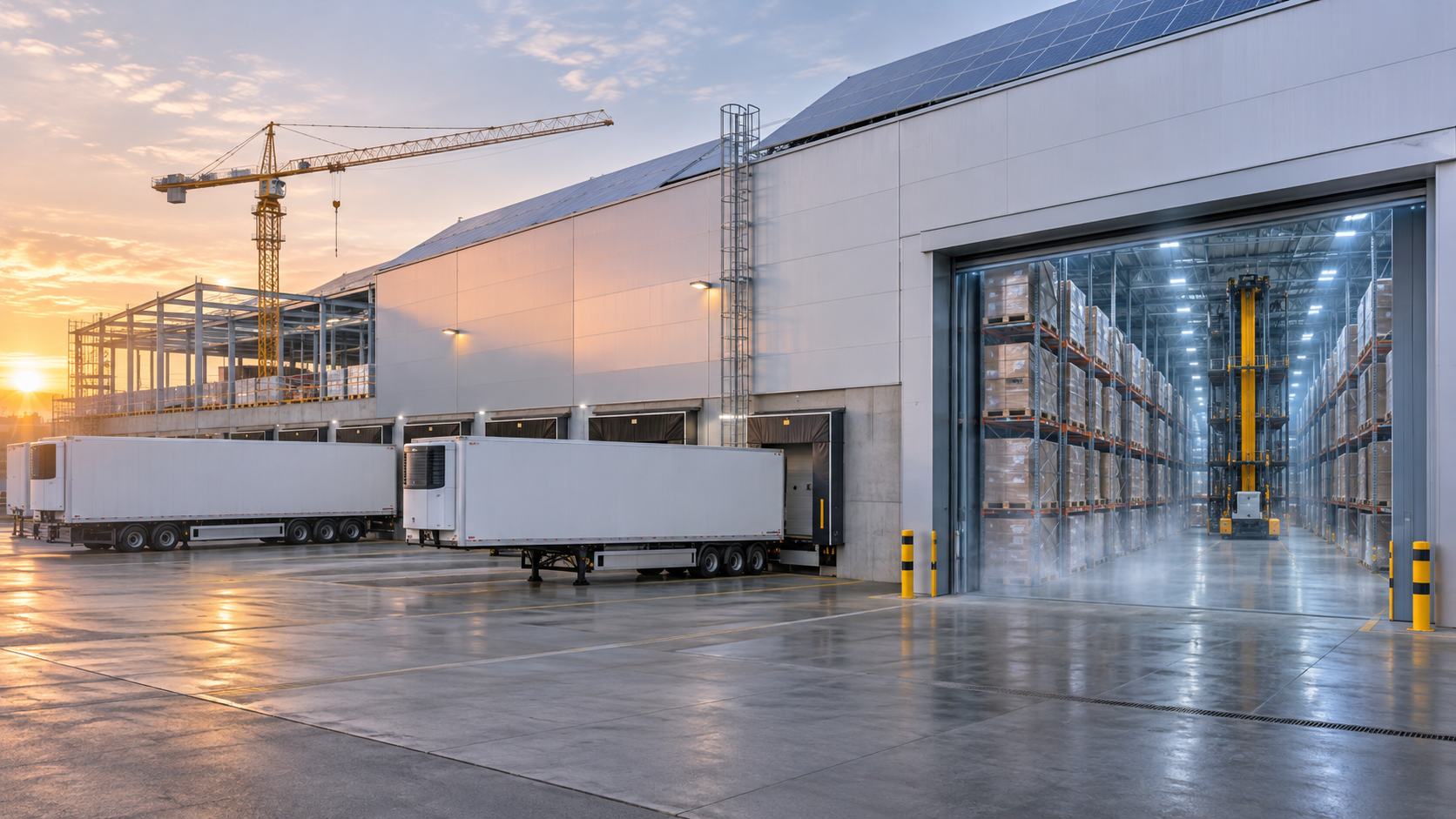
The refrigeration industry is undergoing a transformation: Cold storage facilities are booming worldwide – why even full warehouses don't automatically generate profits – Creative image on the topic, created with AI: Xpert.Digital
Billions for the cold chain: Where cold storage facilities are growing and investors underestimate risks
Cold storage facilities are becoming a key industry – but energy consumption and capacity utilization are setting limits
More cold storage, more pressure: What will determine the success of the new logistics centers
New refrigerated and deep-freeze warehouses are springing up worldwide: food retailers are expanding their distribution centers, logistics companies are building automated high-bay warehouses, and investors are developing new locations for growing markets. This is more than just a short-term real estate cycle. Temperature-controlled logistics is increasingly becoming strategic infrastructure for food supply, trade, and industry.
However, expansion does not automatically translate into increased returns. Cold storage facilities are expensive to build, demanding to operate, and permanently dependent on a reliable energy supply. Even modern facilities can come under economic pressure if goods flows are disrupted, utilization falls short of expectations, or energy and financing costs rise. At the same time, the projects differ significantly: An expansion for daily store replenishment follows a different logic than a seasonal warehouse for agricultural products or an automated deep-freeze center for the food industry.
Therefore, the decisive factor is not solely the number of new square meters or pallet spaces. Suitable locations, reliable customer contracts, and an operating model that effectively combines storage capacity, handling, energy consumption, and automation are crucial. The global investment boom opens up significant opportunities for the refrigeration industry – but the most economically successful projects will be those that translate additional capacity into truly reliable supply and productive material flows.
Cold storage facilities are experiencing an investment boom: Why the refrigeration industry is growing, yet returns are still under pressure
Those who only build storage space risk freezing their capital in the worst-case scenario
The construction and expansion of refrigerated and deep-freeze warehouses is developing into a strategically important investment area for the international logistics industry. Food retailers are expanding existing distribution centers, specialized service providers are building automated high-bay warehouses, and international investors are developing new locations in growing consumer markets. These developments represent more than just a temporary real estate cycle. They represent a fundamental reorganization of temperature-controlled supply chains between agriculture, the food industry, retailers, and end consumers.
However, numerous construction announcements do not necessarily indicate a widespread surge in demand. Cold storage facilities are capital-intensive operations with high technical requirements, continuous energy consumption, and close ties to regional supply chains. A building can be technically superb yet poorly positioned economically. Conversely, a relatively small expansion of an existing site can generate greater economic benefits than a spectacular new building.
The key thesis, therefore, is this: The market doesn't simply grow through more cooled square meters. It changes through more efficient networks, increased automation, differentiated temperature requirements, and the replacement of inadequate existing systems. The most economically successful projects will be those that translate these changes into reliably utilized capacities and competitive overall costs.
A unified global market does not emerge from individual construction projects
The international project landscape reveals several simultaneous developments. In Germany, the focus is on expanding existing retail logistics. In Australia, large, highly automated capacities are being built for the food industry. In Japan, the need for modernization is intertwined with large-scale site development. In Vietnam, new hubs are being established for a more integrated cold chain. Smaller projects in agriculturally dominated regions, in turn, pursue different objectives: reducing crop losses and improving the marketing of perishable products.
These differences are crucial for any economic evaluation. A cold storage facility for the daily replenishment of a food retailer's branches follows a different operational logic than a seasonal warehouse for agricultural products. A deep-freeze high-bay warehouse for standardized industrial pallets differs from a fresh produce center with small-item order picking. Even a warehouse for pharmaceutical products, despite shared temperature control, cannot be readily compared to a food warehouse.
In addition, there is the time dimension. An expansion that has already been completed immediately increases available capacity. In contrast, a project that has been announced but is not scheduled to go live for several years is initially considered part of the potential future supply. Financing, construction schedule, customer contracts, and technical implementation can all affect the actual market entry.
For a reliable market analysis, project announcements, construction starts, and operational plants must therefore be considered separately. Likewise, multiple announcements about the same project should not be counted as additional investments. Especially in an internationally monitored specialized market, the media attention given to individual large-scale projects can create the illusion of broader growth than actually occurs.
The actual demand arises between production, time, and availability
Refrigeration capacity is needed because production and consumption are separated in time and space. Food is harvested, processed, imported, and distributed before it is consumed. During this time, quality, safety, and marketability must be maintained. The cold chain is therefore not a downstream service, but an integral part of the economic viability of many products.
Investment needs increase when more perishable goods are traded, transport routes become longer, or delivery capacity requirements rise. A changed product range can also necessitate additional capacity, even if the total volume of food transported doesn't increase proportionally. More diverse items, smaller order quantities, and more frequent deliveries increase operational complexity.
Inventory levels and turnover have different effects. A company might need more storage space because goods are stored for longer periods. However, even with unchanged average inventory, it might need additional loading bays, conveyor technology, or order picking capacity because the number of daily movements increases. Simply looking at warehouse space doesn't capture this difference.
This leads to a fundamental requirement for investors: demand must be described as a concrete operational profile. Crucial factors are not solely expected tonnage or pallets, but also dwell time, temperature range, seasonal fluctuations, daily movements, and the required delivery speed. Only then can the necessary facility be determined.
Food security makes cold chains valuable, but not automatically profitable
The overall economic importance of functioning cold chains extends far beyond the logistics sector. For the reference year 2017, global food losses due to inadequate refrigeration were estimated at around 526 million tons. This corresponded to approximately twelve percent of global production. While this historical figure illustrates the problem, it should not be considered a current indicator for 2026.
Such losses create significant economic potential. If a larger proportion of the produced food remains marketable, the utilization of already employed resources improves. Agricultural land, water, fertilizer, labor, and transportation then yield a higher usable return. Refrigeration technology can therefore enable additional supply without requiring a corresponding increase in production.
However, not every avoided loss translates into revenue for the storage operator. The benefit is distributed among producers, processors, retailers, and consumers. A farmer can achieve higher selling prices, while the cold storage operator receives only a limited storage fee. Therefore, a gap often exists between the overall economic benefit and the ability of private companies to pay.
Especially in lower-income agricultural regions, the organization of the value chain determines whether a cold storage facility is economically viable. Sufficiently large quantities of goods, reliable customers, suitable packaging, and affordable transport are essential. An insulated cold storage facility cannot compensate for a lack of market structures.
Germany is primarily expanding functioning supply networks
The developments in Lehrte illustrate the logic of German retail. Rewe is expanding its logistics center in Sievershausen with a refrigerated warehouse. Aldi is planning to enlarge its existing refrigerated warehouse and add a deep-freeze warehouse at its Aligse location. The Aldi project is expected to add approximately 1,800 square meters of usable space.
What's economically interesting is less the absolute size than the integration into existing processes. Existing sites already have regional supply chains, established transport structures, and operational organization. An expansion can better utilize this infrastructure than building all functions at a new location.
At the same time, the temperature structure of a distribution center can be adapted to changing product ranges. If chilled and frozen products are more extensively integrated into deliveries, expanding an existing site can avoid additional interfaces. However, this requires that traffic areas, staff areas, power supply, and operational processes can grow accordingly.
Even small additions to existing space can have a significant impact on resolving bottlenecks. For example, if a lack of staging areas limits loading, expanding these areas may be more valuable than substantially increasing pure storage capacity. The economic benefits are then measured by more stable routes, reduced waiting times, and a more reliable supply to branches.
Australia's large-scale facilities demonstrate the industrial dimension of cold chain logistics
The extent to which temperature-controlled storage has become industrialized is demonstrated by the expansion of NewCold in Truganina, near Melbourne. In September 2026, a 200 million Australian dollar expansion was opened there. It added 80,000 pallet spaces and increased the capacity of the facility to 180,000. The two NewCold facilities at the site together have a total of 405,000 pallet spaces, including deep-freeze, refrigerated, and non-refrigerated storage areas.
This distinction is crucial. The total capacity of a site should not be interpreted solely as its deep-freeze capacity if it includes different temperature ranges. Similarly, an expansion should not be equated with the entire facility.
The new deep-freeze area is approximately 40 meters high, covers a floor space of about 10,453 square meters, and operates at around minus 23 degrees Celsius. The facility utilizes automated storage and retrieval systems, conveyor technology, and data-driven warehouse management. Goods required for the following day are positioned proactively based on order data.
This example clearly illustrates that modern cold storage facilities are simultaneously buildings, production systems, and digital control platforms. Their value arises from the interplay of these components. The physical structure itself represents only one part of the investment; equally important are system availability, throughput, and the ability to reliably meet the requirements of large food manufacturers.
Japan combines modernization with a large-scale site redevelopment
In Japan, this development is reaching a different spatial dimension. On the former JFE steelworks site in Kawasaki-Ōgishima, Japan GLP is planning a complex with eleven refrigerated and deep-freeze storage buildings, as well as a central building. The project envisions approximately 370,000 square meters of floor space and a storage capacity of around 550,000 tons. The planned investment volume is more than 300 billion yen. Completion is scheduled to begin in phases from 2030 onwards.
Such a project is more than just an expansion of storage capacity. It transforms the use of a large industrial site and lays the foundation for a new logistical division of labor. Proximity to a large consumer market and port infrastructure can be just as important as the technical equipment.
The economic rationale also lies in replacing older facilities. If existing cold storage facilities are no longer competitive in terms of energy efficiency, construction, or processes, new capacity is needed, even if the total amount of stored goods only increases slightly. New capacity can then displace older capacity instead of solely accommodating additional market volume.
This distinction is crucial for market valuation. A large construction volume does not necessarily translate into a correspondingly large increase in net capacity. If older sites are abandoned or repurposed, the actual capacity increase will be smaller. At the same time, the overall network performance can increase significantly.
Vietnam is expanding connections between regional markets
In Vietnam, the focus is increasingly on developing integrated, temperature-controlled networks. The Konoike Group, through its subsidiary Anpha AG, is planning a new facility in the northern Vietnamese province of Bắc Ninh. The plans call for approximately 12,300 square meters of floor space and a storage capacity of 11,600 pallets. In addition to deep-freeze and refrigerated areas, the facility will also include uncooled and climate-controlled zones. Construction is scheduled to begin in June 2027, with commissioning planned for January 2028.
The economic significance stems from the connection to southern locations and temperature-controlled north-south transport. A single warehouse initially serves a regional market. A connected network, on the other hand, can consolidate supra-regional flows of goods, standardize supply relationships, and offer customers a more comprehensive range of services.
Igarashi Reizo's market entry, with a planned cold storage facility and a local subsidiary, also fits into this development. Crucially, it's not just that foreign capital is financing additional buildings. Establishing local operational structures simultaneously anchors processes, customer relationships, and organizational capabilities.
For economic viability, the utilization of transport routes remains crucial. If refrigerated goods predominantly flow in only one direction, return trips can become expensive. A successful warehouse project therefore requires not only demand at the location, but also the most balanced possible transport connections between production and consumption.
Small regional plants fulfill a different economic function
Not every important cold storage facility needs to be a large, automated complex. The example of a logistics center with a 400-ton cold storage facility in Chon-Alai, Kyrgyzstan, illustrates a different investment logic. Here, the focus can be on decoupling harvesting and sales in time.
For agricultural producers, immediate marketing after harvest is often associated with price pressure. When many suppliers have to sell simultaneously, their negotiating power decreases. Suitable storage can extend the sales window and enable a more consistent supply. However, this only works if quality, product selection, and storage duration are all aligned.
The announced expansion of a cold storage company in Oswestry, in turn, demonstrates the importance of capacity adjustments for medium-sized businesses. Such projects do not necessarily have to target global trade flows. They can be geared towards existing customers, regional food production, or additional services.
Both cases illustrate why size comparisons alone are of little use. A small plant can be systemically important for a region, while a large plant in an oversupplied submarket suffers from capacity problems. The economic measure is the eliminated bottleneck, not the visibility of the construction project.

Expert partner in warehouse planning and construction
New construction or expansion: Which investment is the right one?
New construction and expansion are two different capital decisions
Expanding an existing cold storage facility offers advantages if the infrastructure and customer relationships are already robust. Access roads, administration, technical services, and parts of the energy supply can potentially be shared. However, this does not automatically reduce overall investment costs, as existing systems may be operating at their capacity limits.
A new building offers greater planning freedom. Building height, temperature zones, conveyor technology, gates, and traffic flow can all be coordinated. Future expansions can also be considered from the outset. However, this also entails additional risks due to site development, infrastructure connections, and the establishment of a new facility.
Expansions during ongoing operations are particularly challenging. Work on the building envelope, cooling systems, or conveyor technology must be organized in such a way that existing performance is not unduly disrupted. A favorable construction price can be partially offset by operational interruptions or temporary procedures.
The right decision therefore results from a comprehensive calculation. Not only construction costs must be compared, but also relocation expenses, start-up losses, changes in transportation, future expandability, and remaining technical service life. An expansion is attractive if it strengthens a future-proof system. It is problematic if it merely prolongs structural weaknesses.
Without clear reference points, investment comparisons become misleading
Cold storage facilities are described in square meters, cubic meters, tons, or pallet spaces. Each of these units captures a different aspect. Square meters indicate space utilization, cubic meters the volume, tons a weight-related capacity, and pallet spaces a defined logistical storage unit.
None of these key performance indicators alone describes economic performance. Two warehouses with the same number of storage locations can differ significantly in temperature, throughput, accessibility, and order picking capabilities. Similarly, a warehouse with high spatial density may be unsuitable for frequent individual access.
A reliable analysis therefore requires several reference points simultaneously. These include investment costs per usable parking space, operating costs per movement, energy consumption per occupied parking space day, and the actual achievable throughput. For a distribution center, peak throughput may be more important than maximum inventory volume.
Project budgets are also only comparable to a limited extent. Land costs, upstream development, automation, planning scope, and construction stage can be defined differently. A general comparison of euros per square meter therefore often conveys a level of accuracy that is not objectively present.
Capacity utilization determines the viability of the investment
The key business challenge lies in the high proportion of costs that are incurred even during periods of low occupancy. Financing, building maintenance, technical readiness, and a portion of the energy requirements remain regardless of the number of pallets stored.
A simplified model calculation illustrates the effect. Let's assume a facility has 50,000 parking spaces and incurs annual fixed costs of five million euros. With an average occupancy rate of 90 percent, these costs are distributed across 45,000 occupied spaces. This equates to approximately 111 euros per average occupied parking space per year. At 70 percent occupancy, this figure rises to approximately 143 euros. Variable operating and handling costs are not yet included in this calculation.
The figures are not market values, but a transparent example calculation. However, they show that a decline in occupancy can significantly increase unit costs. Therefore, a project can run into difficulties despite stable prices if the projected occupancy rate is not achieved.
The contractually usable capacity is also important. Not every theoretically available space can be economically utilized at all times. Different temperature requirements, customer separation, blocked inventory, or necessary capacity for movement can limit the actual marketable capacity.
Full warehouses are not always productive warehouses
High occupancy initially appears positive, but can mask operational problems. If there are too few free spaces for relocations, search efforts, movements, and waiting times increase. This is especially true for facilities whose customers store many different items with uneven demand.
Longer dwell times also require careful consideration. While they may increase inventory revenue, they tie up capacity and can limit turnover. Conversely, fast-moving goods generate numerous transactions but relatively little inventory. Which structure is advantageous depends on the pricing model and the technical design.
A warehouse operator should therefore manage occupancy and throughput simultaneously. A system optimized for high storage density is not automatically suitable for high peak performance. Accepting customer profiles that don't match the system will result in hidden costs.
The most economically efficient capacity utilization is therefore not necessarily the highest technically achievable occupancy. It lies where storage revenues, throughput, and operational reliability together generate the highest sustainable contribution. To achieve this, the company must precisely understand its own bottlenecks.
Electricity is a location factor and a contractual risk
Energy requirements make cold storage facilities a special type of logistics property. Crucial factors include not only the price of electricity, but also the availability of sufficient connection capacity, the consumption pattern, and the possibility of contractually mitigating price fluctuations.
Another model calculation illustrates the scale of the problem. If a plant consumes ten million kilowatt-hours annually, a price increase of five cents per kilowatt-hour changes the annual electricity bill by €500,000. With a long-term customer contract lacking a suitable adjustment clause, such a change can significantly impact the operating margin.
Energy efficiency doesn't begin with the compressor. Building design, insulation, gates, airlocks, defrosting, and operational organization all influence cooling requirements. Frequent opening of gates or unnecessary material movements can also create additional loads.
For site selection, this means: A cheap plot of land can become expensive if grid connection and energy supply are inadequate. Conversely, a higher land price can be economically justifiable if the location offers better connection conditions and lower ongoing system costs. Energy and property must be evaluated together.
Building height changes the cost structure, but not every problem
Vertical storage offers the possibility of accommodating large capacities on a limited footprint. A compact building structure can also improve the ratio between cooled volume and external building envelope, resulting in potential advantages in terms of space consumption and heat gain.
The Australian example, with a height of around 40 meters, demonstrates the scale that is now being realized. The expansion of a cold storage facility near Mountville, Pennsylvania, which was already discussed in 2019 and reached a height of 150 feet (approximately 46 meters), further illustrates that the vertical approach is not a short-lived trend.
However, a high-bay warehouse requires suitable goods and process structures. Standardized pallets, reliable load carriers, and predictable processes facilitate automated operation. Significant dimensional variations, frequent manual interventions, or very small-scale orders may necessitate additional solutions.
The decision regarding height should therefore not be based solely on land prices. It influences automation requirements, fire protection concepts, maintenance access, and restart strategies. A high-bay warehouse may save space, but at the same time increases the importance of technical reliability and careful system integration.
Automation not only replaces work, but also changes dependencies
Automation is particularly interesting in frozen food logistics because manual tasks take place under demanding working conditions. Automated storage and retrieval can relieve the burden on people, stabilize standardized processes, and reduce dependence on tasks that are difficult to fill.
The economic benefits still need to be calculated specifically. Savings in manual labor are offset by higher investments, maintenance costs, software expenses, and specialized personnel requirements. A labor-intensive operation doesn't simply become a labor-free operation, but rather an operation with different qualifications and cost structures.
At the same time, dependence on critical system components increases. If a central conveyor section or the warehouse control system fails, large parts of the plant can be affected. Redundancy, spare parts supply, and emergency operation are therefore integral parts of the business model and not subsequent technical additions.
The planned expansion of Fukuoka Unyu at its Nagoya site, with a target completion date of January 2029, and Rantec's previously announced expansion demonstrate that capacity planning is a multi-year process. The technology developed must be suited to anticipated customer profiles but should not be exclusively tailored to a single future scenario.
Data and artificial intelligence only work on a solid foundation
Digital control can improve the performance of a cold storage facility if inventory levels, orders, and technical statuses are reliably tracked. Predictive pallet positioning at NewCold in Truganina is a practical example of how order data influences physical warehouse organization.
Furthermore, forecasts for goods receipts, order volumes, and maintenance requirements are potential applications. However, their value does not stem from the label "artificial intelligence." The crucial factor is whether better decisions lead to fewer disruptions, lower energy consumption, or higher throughput.
Poor master data limits these possibilities. If article dimensions, temperature requirements, or inventory information are unreliable, even powerful optimization can produce incorrect results. Therefore, the quality of the data foundation is a crucial economic prerequisite.
In addition, digital dependencies must be secured. Interfaces to customers, transport planning, and plant control increase networking but also create shared potential points of failure. A robust concept therefore includes not only data analysis but also access rights, recovery, documented processes, and realistic operation during communication disruptions.
Sustainability requires an assessment of the entire life cycle
Cold storage facilities can reduce food waste, but they themselves consume resources and produce emissions. A serious assessment must consider both sides. Neither portraying them as a blanket climate problem nor as a blanket climate protection facility does justice to the system.
On the drawback side are construction, technical equipment, electricity consumption, and potential refrigerant losses. On the benefit side are avoided spoilage and potentially more efficient distribution. Whether there is an overall advantage depends, among other things, on the product, energy supply, operating mode, and the actual amount of loss avoided.
The choice of refrigerant also belongs in this overall assessment. Climate impact, safety, efficiency, technical availability, and long-term maintainability must all be compatible. A solution that is inexpensive in the short term can become economically unattractive if it requires costly modifications later on.
Photovoltaics, waste heat recovery, or flexible operating strategies can be beneficial, but require a site-specific concept. A large roof area alone does not guarantee a suitable energy supply. Similarly, available waste heat is not yet an economical product as long as a suitable consumer and a viable connection are lacking.
Financing and customer contracts determine the risk distribution
Cold storage facilities combine long-term structural commitments with sometimes shorter customer relationships. This creates a time constraint. The building and essential technical equipment must be used economically over extended periods, while sales markets and logistics contracts can change more rapidly.
Having a single, long-term key customer can facilitate financing, but it also creates concentration risks. If this customer relocates production or changes its product range, a highly specialized plant can be difficult to utilize again. Multiple customers reduce this dependency, but may increase operational complexity.
Contracts must therefore align with the cost structure. Minimum order quantities, reserved capacities, and verifiable energy adjustments can better distribute risks. Equally important is a clear definition of additional services, such as special order picking, short-notice requests, or alternative load carriers.
The Lineage development in West Sydney, announced back in 2022 with a project volume of approximately 250 million Australian dollars, further illustrates that major investment decisions are part of a longer cycle. Past announcements should not be treated as new investment drivers for a later year. Financing decisions are based on the current project status.
High investments can simultaneously create modernization and oversupply
Growing demand does not protect against problems. If several providers respond simultaneously to the same anticipated demand, excessive local capacity can develop. This is especially true when projects with similar customer profiles compete within a small catchment area.
The question of the opportunities and risks of numerous new logistics centers, already discussed in South Korea in 2021, therefore remains fundamentally relevant. A market can grow structurally and yet still suffer from oversupply at times. Long-term demand and short-term capacity utilization are different factors.
Furthermore, there is a displacement effect. New systems can be more efficient and thus draw customers away from older buildings. For the overall market, this may only mean a moderate increase in volume, while individual existing properties come under considerable pressure. Modernization therefore creates winners and losers.
Against this backdrop, the planned commissioning of a new deep-freeze warehouse by Europastry in the Barcelona area in 2027 can also be classified as a production-related investment. Such facilities do not necessarily follow the open rental market. They can be part of an internal company capacity and production strategy and must therefore be evaluated separately.
The next growth phase will require more discipline than euphoria
Three plausible directions can be distinguished for further development. In a favorable scenario, customer volumes grow sufficiently quickly, new plants start up as planned, and older capacities are replaced in an orderly manner. Then productivity and supply quality can increase without competition becoming ruinously intense.
In the medium term, expansion continues, but remains regionally variable. Well-connected, contractually secured projects achieve sustainable capacity utilization. Others require longer start-up times or must adapt their service offerings. This would not be a failure of the market, but rather an expression of its increasing differentiation.
In an unfavorable scenario, delayed demand, high financing costs, and additional capacity coincide. Projects whose calculations rely on rapid full capacity utilization, consistently low energy prices, or few non-binding customer assumptions then come under particular pressure.
The economically sound perspective is therefore neither one of unbridled euphoria nor of fundamental skepticism. Cold and deep-freeze warehouses are gaining importance as infrastructure. However, their attractiveness does not stem from the label of a growth industry, but from verifiable location advantages, suitable operational profiles, and financing that can also withstand deviations from the plan.
Future-proof refrigeration logistics sells reliability, not cubic meters
The international expansion wave demonstrates that temperature-controlled logistics is increasingly understood as a strategic system. Trading companies are securing their regional supply, food manufacturers are combining production growth with efficient storage, and specialized operators are building multi-site networks. At the same time, fundamental prerequisites for better marketing of perishable goods are emerging in less developed markets.
For companies, the most important decision therefore comes before the actual construction. First, it must be clarified which problem needs to be solved: insufficient existing capacity, inadequate throughput, unfavorable transport routes, outdated technology, or insufficient supply security. Only then can it be determined whether new construction, expansion, modernization, or the use of external capacities is the most economically viable solution.
The most consistently successful projects will not be those with the highest projected figures. They will be facilities whose supply chains are robust, whose technology matches the customer profile, and whose operation remains manageable even during periods of weaker demand.
This shifts the focus of competition from simply providing cold storage to reliably managing complex supply chains. This is precisely where the economic opportunity of the refrigeration industry lies: not in tying up as much capital as possible in refrigerated space, but in creating more usable supply, higher productivity, and more reliable product availability with every unit invested.
Your intralogistics experts

Consulting, planning and implementation of complete solutions for high-bay warehouses and automated storage systems - Image: Xpert.Digital
More information here:
Your global marketing and business development partner
☑️ Our business language is English or German
☑️ NEW: Correspondence in your native language!

Konrad Wolfenstein
I and my team are happy to be available to you as your personal advisor.
You can contact me by filling out the contact form here [email protected]:or simply call me at +49 7348 4088 965. My email address is
I'm looking forward to our joint project.
☑️ SME support in strategy, consulting, planning and implementation
☑️ Creation or realignment of the digital strategy and digitization
☑️ Expansion and optimization of international sales processes
☑️ Global & Digital B2B trading platforms
☑️ Pioneer Business Development / Marketing / PR / Trade Fairs
Our global industry and economic expertise in business development, sales and marketing

Our global industry and economic expertise in business development, sales and marketing - Image: Xpert.Digital
Industry focus areas: B2B, digitalization (from AI to XR), mechanical engineering, logistics, renewable energies and industry
More information here:
A thematic hub offering insights and expertise:
- Knowledge platform covering global and regional economies, innovation and industry-specific trends
- A collection of analyses, insights, and background information from our key areas of focus
- A place for expertise and information on current developments in business and technology
- A hub for companies seeking information on markets, digitalization, and industry innovations










