
China's fusion offensive: Race for solar energy – This giant Chinese magnet is supposed to solve our energy problem
Xpert Pre-Release

Available in 27 languages 📢
Prefer Xpert.Digital on GoogleⓘPublished on: August 10, 2026 / Updated on: August 10, 2026 – Author: Konrad Wolfenstein
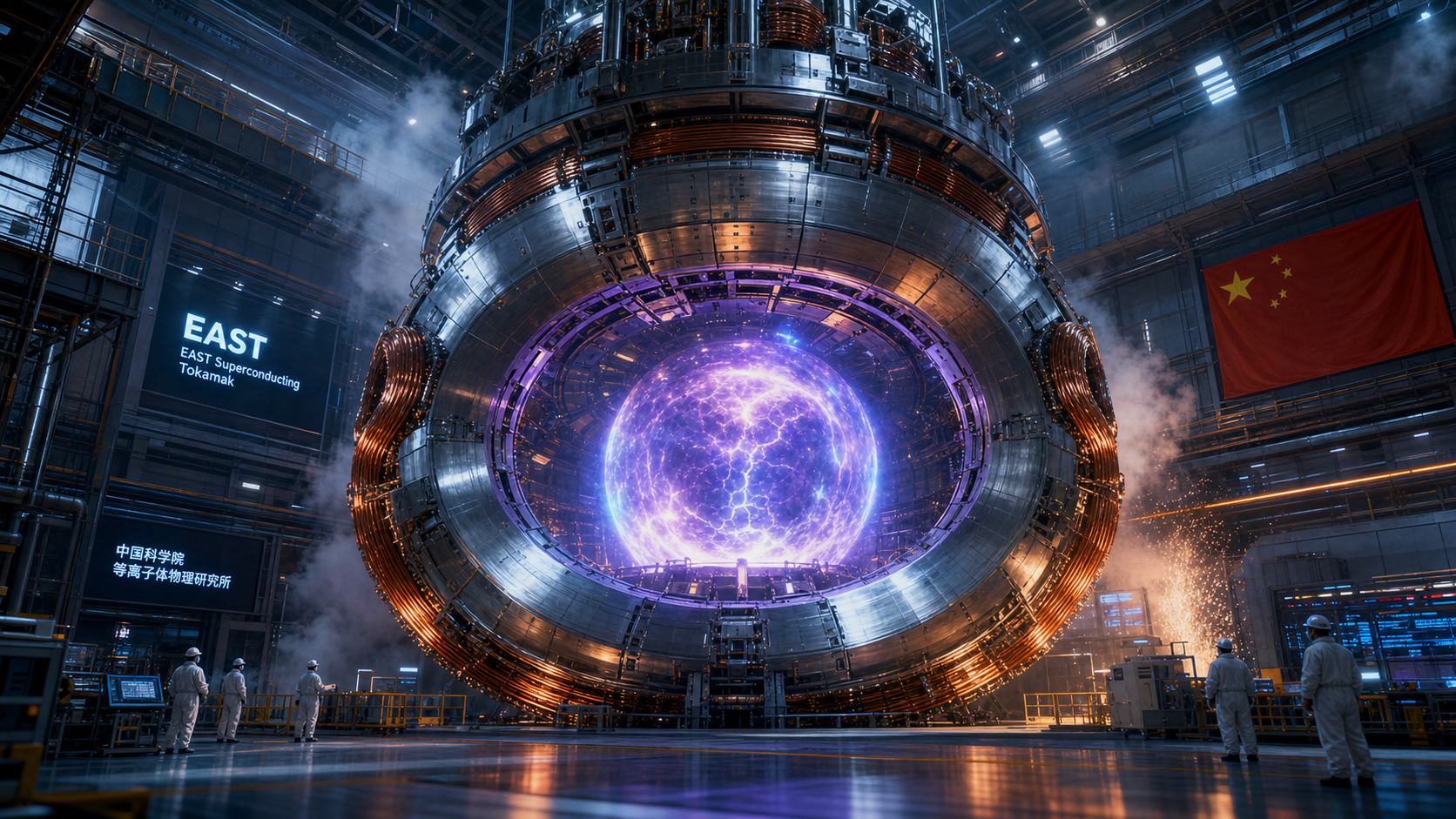
China's merger offensive: Race for solar energy – This giant Chinese magnet is supposed to solve our energy problem – Creative image on the topic, with AI: Xpert.Digital
Infinite energy by 2030? How China is winning the global fusion race with state billions
Billion-dollar disaster in Europe: Why the ITER project is failing and China is now taking over
Holy Grail of Energy: A technological breakthrough in China shocks Western researchers
For decades, nuclear fusion has been considered the "holy grail" of clean energy production – and for just as long, it seemed unattainable, trapped in a perpetual cycle of technological hurdles and broken promises. But while the Western flagship project ITER in southern France is increasingly mired in chaos, delays, and cost overruns, China is now creating facts on the ground at unprecedented speed. With the completion of a massive superconducting magnet for its own test reactor CFETR, Beijing is not only reinforcing its claim to global technological leadership but also demonstrating the power of its state capitalism. Fueled by massive investments and a tightly organized industrial policy, the country is rapidly building the energy source of the future. Is the ambitious goal of delivering the first kilowatt-hours of fusion power by 2030 actually realistic? Or will commercial nuclear fusion remain a distant utopia? A deep dive into the Asian multi-billion-dollar race for a technology that has the potential to drastically alter the geopolitical balance of power in the coming decades.
While the West is still debating, Beijing is already building
A 582-ton component made of superconducting wire, cryogenically cooled to just a few degrees above absolute zero, marks a technological turning point whose significance extends far beyond physics. The Institute of Plasma Physics of the Chinese Academy of Sciences in Hefei has announced the completion of a gigantic magnet that will form the heart of China's CFETR fusion reactor. The goal is ambitious and, at the same time, unusually concrete for a field of research that, for seven decades, has struggled with the reputation of always being twenty years away from market readiness: By 2030, the reactor is slated to deliver its first kilowatt-hours of fusion power. With this, China is positioning itself not only as a technological challenger to the international ITER project in southern France, but also as an independent pacesetter in a global race whose outcome could significantly influence energy supply, industrial competitiveness, and the geopolitical balance of power in the coming decades.
A magnet as a symbol of national engineering prowess
The latest technological advancement specifically concerns two superconducting magnets that passed their full parameter tests in June of this year. Particularly noteworthy is not only the sheer size of the components, but also the fact that these magnets are 100% domestically produced, from the raw materials and structural design to the manufacturing equipment and process technologies. Within six years, Chinese engineers have succeeded in establishing a complete supply chain for superconducting materials, reducing the cost of the crucial superconducting material from 400 yuan per meter to just 100 yuan per meter – a reduction of 75%. This cost reduction is not a minor aspect, but rather the key to the economic viability of fusion technology, as superconducting magnets are among the most expensive and technically demanding components in the entire reactor system.
The CFETR's magnetic system consists of sixteen toroidal field coils and central solenoid coils, with the heaviest individual components having increased in weight from 350 to 580 tons, thus enabling a significantly higher energy output from the reactor. The coils are made of a combination of niobium-titanium and niobium-tin superconductors, which generate different magnetic field strengths of up to 14.5 Tesla, depending on their position within the reactor. These magnets fulfill a fundamental physical function: they keep the plasma, heated to over 100 million degrees Celsius, suspended without contact, as no known material could withstand direct contact with such intensely hot matter.
Why merging is better than splitting
The fundamental physical principle of nuclear fusion differs from classical nuclear power, which is based on the fission of heavy atomic nuclei such as uranium. In fusion, light hydrogen isotopes, namely deuterium and tritium, fuse to form helium, releasing many times the amount of energy produced by a comparable fission reaction. The decisive strategic advantage lies in the availability of the fuel: Deuterium can be extracted from seawater in virtually unlimited quantities, making fusion energy potentially independent of geopolitically concentrated raw material deposits, such as those found in uranium, oil, or even lithium for batteries.
The environmental impact of fusion is generally considered virtually flawless, as the reaction itself produces no greenhouse gases, no long-lived radioactive waste on the scale of nuclear fission, and, for physical reasons, the reactors cannot suffer a meltdown in the classical sense, since a disruption of plasma confinement immediately extinguishes the reaction. If a commercial breakthrough is achieved, it would fulfill a promise that scientists have been calling the Holy Grail of energy production since the 1950s: a virtually inexhaustible, clean energy source for all of humanity. The Fraunhofer Institute also emphasizes that, unlike weather-dependent renewable energies, fusion power plants would be capable of providing baseload power and could therefore represent a valuable addition to a stable electricity grid, especially in combination with photovoltaics and wind power for sector coupling via hydrogen production.
The disillusionment of the skeptics
This technological optimism, however, is countered by a sober scientific perspective that is often overlooked in public debate. The German Institute for Economic Research (DIW) has determined in a comprehensive study that the estimated time until the commercial use of fusion for energy has remained consistently between twenty and forty years since the 1950s, regardless of when the respective forecast was made. The researchers therefore ironically refer to this as a "fusion constant" because market readiness is continually being pushed further into the future, even though technological progress is indeed real. From an energy economics perspective, nuclear fusion is just as far from commercial use today as it was in the 1950s, which is why it remains simply irrelevant for the current energy transition, according to the study authors' clear assessment.
Even optimistic scenarios assume that a marketable fusion power plant would not be available until the second half of this century at the earliest, meaning the technology would simply arrive too late to achieve climate targets by 2045 or 2050. This assessment significantly tempers the media euphoria surrounding individual technological milestones, without, however, invalidating them, as the study's authors also emphasize that fusion research can certainly represent a sensible long-term innovation policy, even if it does not provide an immediate answer to the climate crisis. For current economic analysis, this results in an important distinction between genuine technological breakthroughs and the speculative expectations in capital markets that such news regularly triggers.
The billion-dollar game for future energy
Despite this skepticism, more capital than ever before is flowing into the fusion industry worldwide. The Fusion Industry Association reported a record investment volume of $4.48 billion in the private sector alone last year, a 69 percent increase over the previous year. Since the annual survey began in 2021, private fusion companies have cumulatively raised more than $14.2 billion. Companies such as Commonwealth Fusion Systems, Pacific Fusion, TAE Technologies, Helion Energy, and SHINE have each surpassed the $1 billion mark in funding.
China pursues a fundamentally different financing model than the Western, heavily venture-capital-driven scene. According to an analysis by the European mergers agency Fusion for Energy, of the approximately thirteen billion euros in global private merger investments, roughly 53 percent is attributable to the United States, with 42 registered companies, while China, with just eight companies, already accounts for 34 percent of global funding. This highly efficient model, with a few but massively state-backed champions, contrasts sharply with the fragmented American startup landscape. The European Union, by contrast, accounts for only about five percent of global private merger investments, with Germany clearly leading the EU with 605 million euros.
The following overview illustrates the distribution of global private merger investments by region:
| region | Share of global private investment | Number of companies | Investment volume |
|---|---|---|---|
| USA | 53 percent | 42 | approximately 6.9 billion euros |
| China | 34 percent | 8 | approximately 4.4 billion euros |
| European Union | approximately 5 percent | 8 | 712 million euros |
| United Kingdom | shown separately | several | 417 million euros |
New: Patent from the USA – install solar parks up to 30% cheaper and 40% faster and easier – with explanatory videos!

New: Patent from the USA – Install solar parks up to 30% cheaper and 40% faster and easier – with explanatory videos! - Image: Xpert.Digital
The core of this technological advancement is the deliberate departure from conventional clamp mounting, which has been the standard for decades. The new, more time- and cost-effective mounting system addresses this with a fundamentally different, more intelligent concept. Instead of clamping the modules at specific points, they are inserted into a continuous, specially shaped support rail and held securely in place. This design ensures that all forces – whether static loads from snow or dynamic loads from wind – are distributed evenly across the entire length of the module frame.
More information here:
Race for nuclear fusion: Why China's system is outpacing Western bureaucracy
State capitalism as an accelerator
What makes the Chinese strategy particularly effective is the close integration of state industrial policy, state-owned energy companies, and private venture capital. In the summer of last year, China founded China Fusion Energy Co. in Shanghai with initial capital of the equivalent of US$1.6 billion. Major players such as the oil company PetroChina, the China National Nuclear Corporation, state-owned investment funds, and regional energy suppliers are involved. The China National Nuclear Corporation alone contributed over four billion yuan, giving it a controlling stake of just over fifty percent. This structure consolidates research, development, and financing under one roof to rapidly transform experimental reactors into demonstration plants and later into commercial power plants.
According to calculations by Chinese market observers, the State Asset Control Administration (SASAC) officially included nuclear fusion in its list of ten strategic future industries in 2025 and plans to invest more than 300 billion yuan by 2030, averaging over 60 billion yuan per year. Chinese press reports indicate that Bill Gates himself was surprised that China's investments in thermonuclear fusion now exceed the combined investment of all other global regions. For the period from 2025 to 2027, industry experts anticipate total Chinese investments of nearly 60 billion yuan in fusion projects alone, distributed across specialized materials, nuclear equipment, and project services. In the first half of this year alone, 7.268 billion yuan flowed into China's primary market for the nuclear fusion sector, a 233-fold increase compared to the same period last year, spread across 28 funding rounds and involving nearly 30 startups.
Beijing is also reinforcing these ambitions through regulation: The fifteenth Five-Year Plan, published in March of this year, explicitly names hydrogen and nuclear fusion energy as key industries of the future, on par with quantum technology, biofabrication, and sixth-generation mobile communications. Furthermore, a national atomic energy law, establishing the legal framework for promoting fusion energy, came into effect for the first time on January 15 of this year. In addition, a 20 billion yuan national fusion industry fund was established, while the Shanghai Fund for Future Industries was increased to 15 billion yuan.
ITER as a cautionary counter-example
The contrast to the international flagship project ITER in southern France could hardly be greater and simultaneously provides the key to understanding the media impact of the Chinese news report. ITER, a joint project of the European Union, the United States, Russia, China, India, Japan, and South Korea, was originally slated for completion in 2016 at a cost of approximately eleven billion US dollars. Since then, the project has been repeatedly delayed by a series of management errors, faulty deliveries, and international coordination problems. An Indian supplier treated kilometers of cooling pipes with the wrong protective spray, causing hairline cracks, while the edges of the reactor vessel's multi-ton steel segments did not align with millimeter precision, resulting in a pause in assembly since 2022.
In July 2024, ITER Director-General Pietro Barabashi had to present a radically revised timeline: The first plasma is now expected no earlier than 2034, nine years later than the most recent plan from 2016; full heating power is to be reached in 2036; and actual deuterium-tritium fusion experiments are planned for no earlier than 2039, four years later than originally intended. This delay is estimated to cost an additional five billion euros, bringing the total costs from around five billion euros at the project's inception in 2006 to approximately 25 billion euros. In addition to technical problems, those involved cite regulatory concerns from the French Nuclear Safety Authority (ASN) as a reason for the delay. The ASN was concerned about the radiation protection of future employees and temporarily halted construction completely in 2022.
This chronic history of delays with ITER explains why news of the Chinese magnet is receiving so much attention in Western media and financial markets. While an international consortium of democratic and authoritarian states has been grappling with bureaucracy and technical glitches for two decades, China, with its centralized, tightly organized national program, is demonstrating a speed that many Western observers have clearly underestimated. Its real competitive advantage lies less in superior physics than in superior project management, short decision-making processes, and the ability to make multi-billion-dollar investment decisions without lengthy international coordination procedures.
Between laboratory milestone and power plant reality
For all the justified fascination with technological progress, economic analysis should not obscure the difference between a successful engineering milestone and a truly functioning, economically viable power plant. The CFETR itself is initially designed as a test reactor to demonstrate technical feasibility before it can be developed into a commercial demonstration power plant. The roadmap communicated by the Chinese side envisions a firing experiment starting in 2027, with the goal of achieving the capability to design a full experimental reactor by 2030. The first experimental reactor itself is not expected to be completed until 2035, and the first commercial demonstration reactor is not slated for construction until around 2045. Other sources from the Chinese fusion industry also openly acknowledge that more than a single decade is likely to pass between the construction of the facilities, the actual feed-in of electricity to the grid, and regular commercial operation.
This self-assessment by Chinese industry experts largely aligns with the more skeptical Western perspective, even if the tone is naturally more optimistic. According to calculations by Debon Securities, the market for nuclear fusion reactors in China could reach a cumulative volume of 5.2 trillion yuan by 2050—a colossal figure, however, based on a largely speculative market development, as not a single commercial fusion reactor anywhere in the world is currently feeding electricity into the grid. According to the International Atomic Energy Agency, of the 168 fusion facilities built or planned worldwide in 2024, 102 were actually operational, and these were exclusively research and test facilities, not power plants in the energy-related sense.
What the race means for investors and the economy
For investors and companies, this complex situation presents a nuanced picture that justifies neither blind euphoria nor blanket rejection. In the short term, concrete economic opportunities are already emerging along the upstream supply chains, for example in the production of high-temperature superconductors, specialized magnetic components, vacuum technology, and precision manufacturing, even if a completed power plant is still decades away. Chinese market analysts estimate that investments in high-temperature superconducting magnets alone could reach more than 100 billion yuan by 2028, expanding the magnet market to almost 30 billion yuan and the superconducting tape market to over 10 billion yuan. Listed companies in related sectors such as specialty metals, cryogenics, and electrical engineering are already benefiting from the rising demand, regardless of when an actual fusion power plant is connected to the grid.
In the long term, however, nuclear fusion remains what it has been since the 1950s: a technology with enormous potential and equally enormous uncertainty regarding the timing of its commercial maturity. According to the prevailing scientific consensus, fusion makes no significant contribution to the short-term energy transition and the achievement of climate targets by the middle of this century, but it does contribute to the long-term technological sovereignty and industrial leadership of those nations that are consistently investing in it today. China is skillfully using the technology both as a tangible research investment and as a geopolitical signal of technological superiority, while the West continues to lose ground due to bureaucratic inefficiencies and fragmented funding structures. Those who keep an eye on developments in China on the capital markets can derive concrete investment opportunities from them, but must always distinguish between short-term supply business and long-term speculative power plant promises.
Your partner for business development in the fields of photovoltaics and construction
From industrial rooftop PV to solar parks and larger solar parking lots
☑️ Our business language is English or German
☑️ NEW: Correspondence in your native language!

Konrad Wolfenstein
I and my team are happy to be available to you as your personal advisor.
You can contact me by filling out the contact form here [email protected]:or simply call me at +49 7348 4088 965. My email address is
I'm looking forward to our joint project.







