
Solar parks in China's deserts as ecological micro-laboratories: The two faces of China's gigantic desert solar parks
Xpert pre-release

Language selection 📢
Published on: October 12, 2025 / Updated on: October 12, 2025 – Author: Konrad Wolfenstein
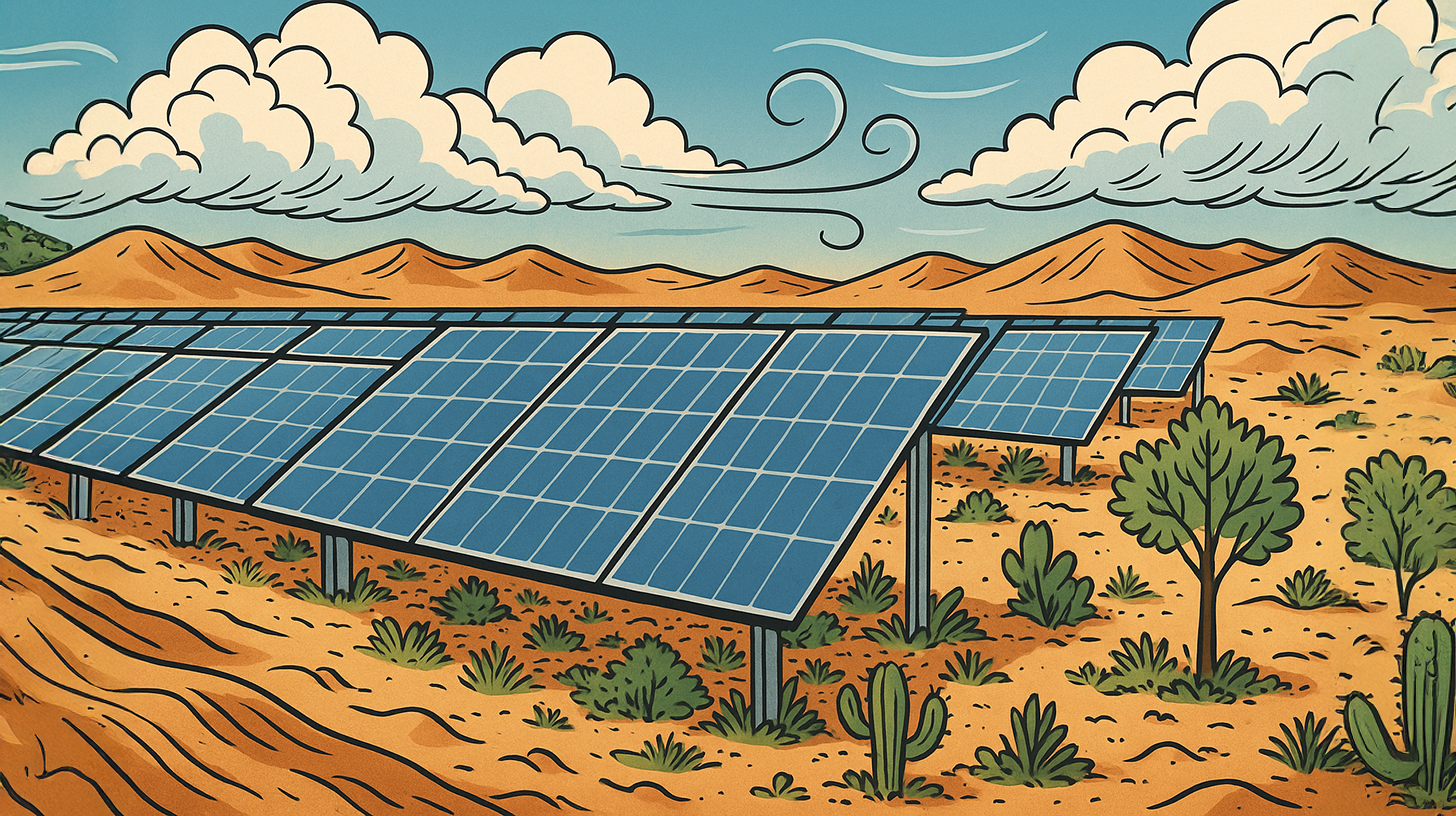
Solar parks in China's deserts as ecological micro-laboratories: The two faces of China's gigantic desert solar parks – Image: Xpert.Digital
Green oases in the desert? What's really happening beneath China's massive solar arrays
The Secret of the Gobi Desert: How Solar Parks Are Creating a New Ecosystem
It sounds like a paradox, but it's becoming an observable trend: In the middle of China's most barren deserts, beneath the endless rows of gleaming solar modules, small green oases are emerging. New field data from 2024 and 2025 from gigantic facilities like the Gonghe megaproject in the Talatan Desert or parks in the Gobi Desert confirm what researchers have long suspected: Large-scale solar parks fundamentally change their local environments, creating a measurably cooler, wetter, and wind-protected microclimate.
The mechanism is as simple as it is effective: The modules provide shade, reduce extreme soil temperatures during the day, retain heat at night, and reduce evaporation. At the same time, they break the desert wind, thus reducing soil erosion. These protected niches allow pioneer plants and soil microbes to reestablish themselves and establish a fragile ecosystem. But this positive effect doesn't happen automatically. It only works as part of an integrated concept that includes targeted erosion control, thoughtful water management, and the right site selection.
While these "solar oases" offer an opportunity for ecological regeneration locally, they raise new questions on a global level. Climate models warn of potential side effects at extreme scale, which could alter regional weather patterns. This text examines the facts, opportunities, and risks of this fascinating phenomenon from a neutral perspective – from the biophysical processes beneath the modules and the technological challenges in the desert to the systemic issues of energy policy and supply chain responsibility.
More than just clean electricity: The surprising climate effect of solar fields in the desert
In several Chinese desert regions, large-scale solar farms are altering the microclimate to create measurably cooler, wetter, and wind-protected conditions beneath and around the modules, favoring vegetation and soil life—but only if integrated planning, erosion control, and water management are considered. Field data from 2024/2025 on installations in the Gobi and Talatan Deserts, as well as on the Gonghe megaproject in Qinghai, support this finding, while studies and models also highlight the limitations and potential climate side effects of large-scale installations.
Are the “green oases” under solar modules in the desert isolated cases or a robust trend?
Field data from multiple locations in Chinese desert regions consistently show that a milder microclimate develops beneath solar modules: lower soil temperatures during the day and slightly higher temperatures at night, as well as reduced evaporation and increased soil moisture. The modules act as shade providers and wind barriers; these microinterventions promote plant establishment and microbial life and can gradually stabilize vegetation when supplemented with erosion control measures and appropriate water management. Similar results have been reported for the Talatan region (Gonghe), Gansu, and Gobi and are consistent with international observations on PV shading effects on soil moisture and evaporation in arid zones.
What is the Gonghe Project – and why does it play such a big role in this discussion?
The Gonghe project in the Qinghai-Tibet Plateau is considered the world's largest contiguous photovoltaic site and has been gradually expanded since 2020. Reports cite 2.2 GW of PV capacity plus storage, which went online in 2020; the plant is part of a larger renewable energy base that serves as a hub for grid-stabilizing electricity transmissions from western China. In addition to PV, concentrated solar thermal (CSP) systems with heliostats were also installed there – some with modular salt storage for multi-hour supply during evening peaks. The completion of large heliostat fields was announced for 2025, underscoring the PV+CSP hybridization at the site.
Mechanism: Why do PV fields in deserts promote vegetation?
Shade forms beneath solar modules, reducing direct solar radiation, lowering soil temperatures, slowing evaporation, and preserving soil moisture for longer. The module surfaces drain rainwater along their edges or gaps, which can lead to localized improvements in moisture conditions in peripheral areas. At the same time, the module structure reduces wind speed on the ground, reducing sand transport and mechanical stress on young plants. These micro-alterations stabilize microhabitats in which pioneer species and microorganisms re-establish themselves. Measurements from China report improved microclimatic conditions, soil parameters, and biodiversity in the module area compared to control areas.
Differentiation: Are the effects equally strong in all years and climate phases?
No. In very rainy years, the benefits are significantly less evident or can even partially be reversed, for example, due to excessive light reduction directly beneath module centers with low diffuse light penetration, which can lead to local biomass declines. In dry and hot years, however, the moisture and heat protection compensates for the lack of light, leaving a positive effect on vegetation and soil moisture. The effectiveness therefore depends on the weather and location; micro-location and module arrangement (height, inclination, row spacing, east/west vs. south) significantly influence the result.
Transferability: Is desert PV alone sufficient to permanently restore vegetation?
PV shading creates favorable starting conditions, but sustainable greening requires accompanying measures: erosion control (e.g., surface stabilization, windbreak structures), targeted seeding and plant selection, rainwater retention and, if necessary, minimal irrigation for establishment, as well as dust and maintenance management. Without such measures, there is a risk that wind and water erosion, drifting, or nutrient deficiencies will slow development. Operator reports and research teams emphasize the combination of technology design and ecosystem management as success factors.
Scaling: What large-scale climate effects can desert solar fields have?
Climate models show that extremely large-scale installations with significantly altered albedo could influence regional circulation patterns: increased heating compared to light-colored sand, altered pressure fields, and potentially increased convection, clouds, and precipitation over the installations. In scenarios with up to 20% coverage of the Sahara, increased rainfall, vegetation feedback, and potential yield losses due to cloud cover, as well as teleconnective effects on other regions, are discussed. These findings call for caution with mega-scale projects and suggest that ecological and climatic system impacts must be an integral part of planning and permitting.
Technology mix: What role does CSP play alongside PV in Western China?
Concentrating solar thermal power (CSP) complements PV with storable high-temperature heat, which uses molten salt to enable several hours of electricity production after sunset. Hybrid parks in Qinghai, Tibet, and other regions combine PV for cost-effective daytime production with CSP for flexibility and grid support. Solar towers with heliostat fields are well-suited for use in plateau climates with high direct radiation; projects with 8-hour heat storage have been documented. This combination improves the system integration of large desert power plants and reduces curtailment peaks.
Resource and operational issues: How do operators deal with dust, soiling, and water shortages?
Dust deposition reduces yields and is a key OPEX driver in arid zones. Operators are increasingly relying on robotic, semi-autonomous, or low-water cleaning systems, non-stick surfaces, and data-driven cleaning schedules. Where water cleaning remains unavoidable, consumption is optimized. At the same time, research shows that the improved soil water regime provided by modules should not be confused with available process water for module cleaning; water for O&M remains a scarce resource and must be planned for separately.
Site selection: Why are Gobi, Talatan/Taklamakan and Kubuqi mentioned so prominently?
These deserts combine high solar irradiation, enormous land availability, and often low competing land-use demands. At the same time, they are part of national strategies to deliver clean electricity via ultra-high-voltage power lines to industrial centers. Iconic "solar wall" projects are being reported in Kubuqi; the largest PV clusters have been built in Qinghai/Talatan; and combined wind-solar farms of the first wave of expansion are underway in the Gobi Desert. The Taklamakan is considered the second largest sand desert in the world, with extreme aridity levels – greening and infrastructure projects bypass the cores of the sand sea and concentrate on the edges and plateau areas.
Evidence: What data support the claim that the microecology under modules is “healthier”?
A study on Qinghai Gonghe Park published in late 2024 used an indicator system (DPSIR) with 57 parameters for microclimate, soil physics/chemistry, and biodiversity. It compared the modular area with adjacent and distant control areas and found significantly better conditions in the module area than outside. Parallel reports and measurement campaigns at other desert sites confirm reduced daytime heat, increased soil moisture, and differences in microbial composition that favor the modular areas. Seasonal cycles and site design are key moderators of this effect.
Limitations: What risks or side effects should be considered?
Several aspects require caution. First, extremely large-scale solar parks can alter regional radiation balances and circulation; the literature discusses possible shifts in precipitation zones. Second, social and environmental issues related to supply chains (e.g., human rights, environmental standards in module manufacturing) remain relevant, even if these must be considered separately from on-site micro-effects. Third, dust, soil degradation, habitat fragmentation, and potential disruption of migration corridors pose risks that must be considered in environmental impact assessments. Fourth, module rows that are too dense or too close to the ground can impair plant growth due to a lack of light if the design is not adapted.
New: Patent from the USA – Install solar parks up to 30% cheaper and 40% faster and easier – with explanatory videos!

New: Patent from the USA – Install solar parks up to 30% cheaper and 40% faster and easier – with explanatory videos! - Image: Xpert.Digital
At the heart of this technological advancement is the deliberate departure from conventional clamp fastening, which has been the standard for decades. The new, more time- and cost-effective mounting system addresses this with a fundamentally different, more intelligent concept. Instead of clamping the modules at specific points, they are inserted into a continuous, specially shaped support rail and held securely. This design ensures that all forces occurring—be they static loads from snow or dynamic loads from wind—are evenly distributed across the entire length of the module frame.
More about it here:
Ecological co-benefits: Can desert PV regenerate landscapes?
Planning principles: Which design maximizes ecological co-benefits?
Several design principles have proven beneficial. These include increased module clearance heights and sufficient row spacing for air and light penetration, east-west configurations for more even distribution of light and moisture, targeted micro-swales or swales for rainwater retention, surface stabilization against erosion, protective planting with drought-resistant, native species, and specific edge zone management at the bottom edges of modules where runoff water can form pockets of moisture. Long-term monitoring of soil moisture, temperature, wind, and biodiversity enables adaptive management.
Transfers: Can the principle also be used outside the desert?
Yes. In temperate climates, the effect is more nuanced, as water is not always the limiting factor. Nevertheless, shading can stabilize yields in agricultural systems and save water during hot summers; agri-PV studies show significant reductions in evaporation and mitigation of heat stress. On green roofs, PV modules influence vegetation patterns, with moisture and temperature buffers interacting synergistically with module efficiencies. Floating PV also reduces evaporation from reservoirs. These applications confirm that PV structures can exert ecological microeffects far beyond deserts.
Systemic perspective: How do desert parks fit into China's energy strategy?
Large-scale plants in the Gobi Desert and other arid regions feed into consumption centers via ultra-high-voltage power lines, flanked by capacity expansions in wind, solar, hydropower, and nuclear energy. In the first expansion phase, 100 GW were prioritized in desert regions; the national targets aim for long-term carbon neutrality. Hybrid parks, storage, and CSP reduce volatility. In summary, a spatial division of labor is emerging between generation in radiation and wind belts and demand in industrial eastern provinces.
Case study Talatan/Qinghai: What is special from a landscape ecological perspective?
Talatan is located in the highlands with cold, thin air and high global radiation. The combination of high direct radiation (for CSP), large flat areas (for PV), and low competing land uses makes the site ideal for a large-scale hybrid power plant. The observed microclimate effects are clearly evident here because aridity and wind represent a strong background stress, which is noticeably mitigated by shading and wind refraction. At the same time, the altitude and climate require robust plant and construction logistics design.
Governance: Which management and monitoring standards are recommended?
Standardized baselines and time series measurements are crucial for ecological co-benefits: soil moisture profiles, near-ground temperature loggers, wind and particulate matter measurements, biodiversity indices (vegetation, invertebrates, soil microbiome), and erosion markers (surface sealing, rill erosion). Adaptive management plans should dynamically adjust cleaning cycles, vegetation cutting or grazing, reseeding, and small-scale water retention structures. Multi-year monitoring across climatic extremes is necessary to map the range of effects between wet and drought years.
Counterarguments: Do PR sources distort the scientific impression?
Press reports popularize results and can be selective; therefore, reference to peer review and verifiable measurement programs is important. In the case of the Chinese desert parks, several independent reports and a scientific paper on Gonghe Park published at the end of 2024 support the core message of positive micro-effects in the module sector. In addition, academic studies on agri-PV, green roofs, and floating PV demonstrate the biophysical plausibility. Nevertheless, extrapolations to mega-scales should be made with caution; modeling and scenario studies with uncertainties predominate here.
Practical guidelines: Which design decisions increase the chances of creating “green oases”?
Maximize light penetration at module edges by deliberately designing the lower edge areas as moisture and vegetation zones. Optimize row spacing to allow sufficient wind and diffuse light to pass through. Consider east-west orientations if even light distribution is desired. Plan for micro-retention of precipitation along the lower edges of modules. Increase surface roughness to reduce erosion. Select species that are shade- and drought-tolerant, with a shallow root mat for soil stabilization. Ensure maintenance access for vegetation management to avoid module shading.
Infrastructure and networks: What role does transmission technology play?
Ultra-high-voltage direct current (UHVDC) makes it possible to export large amounts of power from desert regions to urban centers with minimal losses. Projects in the Gobi Desert/Tengger region already demonstrate UHV connectivity; further lines are planned. These lines are essential to ensure that local ecological co-benefits are not at the expense of systemic curtailments – only with transmission capacity can high full-load hours and stable grid contributions be achieved.
Balancing: Do ecological advantages outweigh local disadvantages?
At the site level, the benefits of microclimate improvement, soil moisture retention, and erosion reduction in arid zones outweigh the benefits if planning and maintenance are appropriate. These are offset by potential habitat fragmentation, operational and cleanup requirements, dust management, and the need for vegetation control. The key is to minimize disturbances, maintain corridors, and reduce dust and noise emissions during operation. The result is a mosaic: modular areas as microrefuges, surrounded by ecologically designed buffer zones.
Social dimension: How are supply chain and human rights issues classified?
Regardless of local micro-effects, the social and environmental responsibility of the PV value chain remains a key issue, for example with regard to energy use, emissions, and labor standards in module production. Media reports highlight these negative aspects and call for robust audit, certification, and due diligence mechanisms. For an integrated assessment, local environmental impacts and global supply chain impacts must be considered together.
Knowledge gaps: What is still insufficiently researched?
Long-term time series spanning decades are lacking in many places. Open questions concern the resilience of newly established vegetation to extreme events, the scaling of positive microeffects at the landscape level, the cumulative impacts of many parks on regional albedo and convection, and the optimal combination of PV geometry, vegetation mix, and microwater management. Interdisciplinary programs combining engineering, ecology, hydrology, and social sciences are warranted.
International parallels: Which examples outside China are relevant?
Morocco's NOOR Ouarzazate demonstrates the systemic role of CSP, including local environmental management issues in arid regions. In Europe, projects using large-scale PV and green roofs are investigating water balance and vegetation dynamics. Studies on floating PV demonstrate evaporation reduction at reservoirs. This diversity demonstrates that solar structures reliably modulate microclimates—however, the specific manifestation depends heavily on site conditions.
What lessons can be learned for future desert solar parks?
- PV structures can create “green oases” in arid zones by alleviating heat and moisture stress on the soil, reducing erosion, and enabling vegetation.
- Without erosion control, targeted vegetation establishment and water management, effects remain fragile.
- Large-scale projects should consider potential climate feedbacks; regional benefits must not lead to undesirable long-range impacts.
- Hybridization with CSP and storage improves system integration and reduces curtailment, thus combining ecological and energy goals.
- Supply chain governance remains integral to holistic sustainability.
Outlook: What concrete research and policy recommendations are available?
Technically, adaptive PV layouts with optimized heights, spacing, and orientations should be prioritized, complemented by micro-water retention, erosion control, and site-adapted vegetation mats. Operationally, low-water cleaning methods, dust monitoring, and biodiversity tracking should become standard. Systemically, ultrahigh-voltage (UHV) connections, storage integration, and CSP hybrids are central pillars. Politically, environmental impact assessments should be expanded to include albedo/circulation analyses, supported by due diligence regimes along the supply chain. Scientifically, long-term cohorts with open data are important for refining robust guidelines.
Additional location examples: What do Kubuqi and Tengger show about the trend?
In Kubuqi, media are documenting a "solar wall" with gigawatt-scale expansions and symbolic landmarks that address not only energy production but also desert stabilization. In the Tengger Desert, a combined 1 GW wind-solar farm was connected to the grid, connected via new ultrahigh-voltage transmission lines, as the first building block of numerous desert projects. Such lighthouses point the way: large-scale, grid-integrated, with the potential for local ecosystem co-benefits – provided environmental and social standards are rigorously implemented.
Are solar parks in deserts a substitute for nature or a bridge to regeneration?
Solar parks do not replace natural desert ecosystems; they modify selected areas to create a milder microclimate. In degraded, erosion-prone zones, they can serve as technical buffers that enable islands of vegetation and slow erosion—a bridging technology between energy generation and ecological stabilization. Whether these nuclei develop into robust vegetation mosaics in the long term depends less on the module itself than on the depth of planning, maintenance, hydrological logic, and systemic integration into grids and governance.
Look, this little detail saves up to 40% installation time and costs up to 30% less. It's from the USA and patented.

NEW: ready -to -mount solar systems! This patented innovation accelerates your solar construction massively
The heart of ModuRack 's innovation is its departure from conventional clamp fastening. Instead of clamps, the modules are inserted and held in place by a continuous support rail.
More about it here:
Your partner for business development in the field of photovoltaics and construction
From industrial roof PV to solar parks to larger solar parking spaces
☑️ Our business language is English or German
☑️ NEW: Correspondence in your national language!

Konrad Wolfenstein
I would be happy to serve you and my team as a personal advisor.
You can contact me by filling out the contact form or simply call me on +49 7348 4088 965 (Munich) . My email address is: wolfenstein ∂ xpert.digital
I'm looking forward to our joint project.







