
China's European strategy: Export power without the will to invest – When the world market leader suddenly becomes a beggar
Xpert Pre-Release

Available in 27 languages 📢
Prefer Xpert.Digital on GoogleⓘPublished on: August 12, 2026 / Updated on: August 12, 2026 – Author: Konrad Wolfenstein
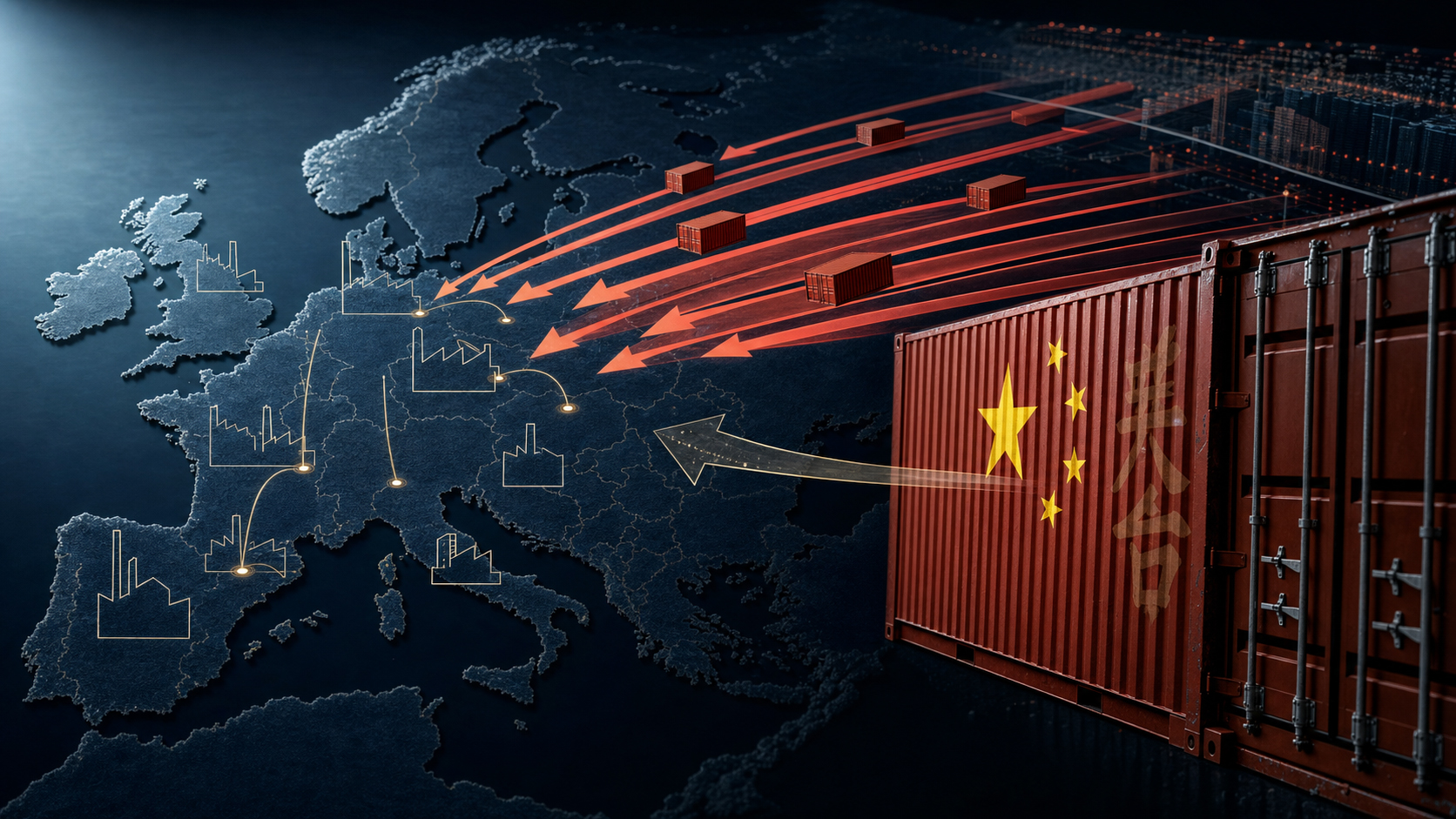
China's European strategy: Export power without the will to invest – When the world market leader suddenly becomes a beggar – Image: Xpert.Digital
So much for investors: The ruthless strategy of Chinese companies in the European market
Unsuspecting Brussels and Berlin: Why Europe is completely in the dark about China's European expansion
When Chinese corporations enter the European market, alarm bells often ring in the business world. Aggressive expansion plans and multi-billion-euro factory construction projects, particularly in the automotive sector, dominate the headlines. But a closer look, and especially a survey of European SMEs, quickly reveals a completely different picture. Beyond these large, prestigious projects, seemingly all-powerful technology leaders from the Far East often shy away from any local investment. They outsource the entire financial risk to European sales partners, refuse to allocate marketing budgets, and are characterized by inadequate local service infrastructure. Is China, then, an unstoppable investor or a risk-averse profiteer solely focused on quick commissions? The answer lies in an extremely calculated, two-pronged strategy that poses new challenges for European businesses. This article debunks the myth of the all-powerful Chinese investor, exposes glaring gaps in knowledge on the part of the government, and equips European entrepreneurs with the necessary tools for future negotiations.
Global market leader or penny pincher? The true strategy of Chinese companies in Europe
Chinese companies are perceived worldwide as aggressive, well-capitalized competitors that, with state backing, are transforming entire industries. At the same time, practitioners from European SMEs, in sales, trade, and consulting, repeatedly report a completely different picture: Chinese partners who express great ambitions in discussions but are reluctant to invest their own capital, personnel, or infrastructure locally. This observation warrants closer examination, as the available data paints a far more nuanced picture than a sweeping, paradoxical narrative suggests.
The common criticism of the presence of Chinese companies in Europe can be broken down into several individual statements that must be evaluated separately:
- Firstly, Chinese companies receive massive state support and are driven by export success from a fiercely competitive domestic market.
- Secondly, the investment volume for new markets, especially Europe, is extremely thin.
- Thirdly, cost-neutral partnerships and success-based compensation models are particularly sought.
- Fourthly, marketing budgets for new markets are practically nonexistent.
- Fifthly, the expansion of local service and performance infrastructure is practically not taking place.
- Sixthly, this contradicts media reports that it was primarily automotive companies that were looking for production facilities in Europe.
- Seventhly, this does not happen in particular in new EU countries such as Bulgaria, Hungary or Romania, and even in old EU countries it mostly remains at the level of declarations of intent.
The first and last of these claims can be clearly refuted or at least significantly qualified by current figures. The remaining statements contain a kernel of truth, which is particularly evident outside of capital-intensive heavy industry, especially in the area of medium-sized B2B collaborations, photovoltaic sales, and the service sector.
Billions for electric cars, not a cent for the middle class: China's second face
Anyone claiming that Chinese companies barely invest in Europe needs to examine the figures from the China think tanks Merics and Rhodium Group. In 2025, Chinese direct investment in Europe reached €16.8 billion, the highest level in seven years and an increase of 67 percent compared to the previous year. The structure of these investments is particularly noteworthy: around €9 billion, a record figure, flowed into so-called greenfield investments, meaning the construction of entirely new plants on European soil, not simply the acquisition of existing companies. The automotive sector alone accounted for €7.6 billion, of which around 93 percent was attributable to supply chains for electric vehicles.
These figures refute the claim that these projects remain mere declarations of intent. BYD has commissioned a factory in Szeged, Hungary, with an initial capacity of 150,000 vehicles per year, having invested around four billion euros in its construction. Battery manufacturer CATL invested more than seven billion euros in a factory in Debrecen. Chery is already producing at the former Nissan plant in Barcelona. In Spain, SAIC, with its MG brand, is building a plant in the port of Ferrol in Galicia, with an announced initial investment of around 200 million euros and a future capacity of up to 120,000 vehicles annually. Stellantis and CATL are jointly building a battery factory in Zaragoza with a potential investment volume of up to 4.1 billion euros. These projects are no longer non-binding announcements; they are either under construction or have already commenced production.
Export power without its own money: The great paradox of Chinese corporations
Nevertheless, the widespread criticism touches upon a real mechanism that only becomes apparent upon closer examination. The current wave of Chinese investment in Europe is extremely concentrated, capital-intensive in only a few sectors, and geographically limited to a handful of locations. At one point, almost half of all Chinese direct investment in Europe flowed into Hungary alone, more than into Germany, France, and the UK combined. Outside of electromobility and battery production, which together account for a large share of the capital, Chinese engagement in Europe remains comparatively small. Despite some spectacular individual projects, the investment stocks of Chinese companies in Central, Eastern, and Southeastern Europe still represent only about one percent of the total foreign direct investment stock in this region, while around 70 percent continues to originate from EU member states themselves.
This discrepancy between headlines and substance explains why the perception among SMEs differs so significantly from the media portrayal of large-scale projects. Smaller and medium-sized European suppliers negotiating with Chinese manufacturers outside the automotive and battery sectors, for example in photovoltaics, electronics, or industrial supply, often experience a pattern of high ambitions coupled with minimal capital commitment.
Overlooked growth regions: What's really happening in Bulgaria, Hungary and Romania
The claim that Bulgaria, Hungary, or Romania hardly benefit from Chinese investment needs precise correction, as it is simply wrong for Hungary and only partially true for Bulgaria and Romania. For years, Hungary was by far the largest recipient of Chinese direct investment in the EU, accounting for up to 44 percent of all Chinese investment in Europe in a single year. However, since the change of government in Hungary and the expiration of the preferential treatment granted under Viktor Orbán, a significant decline in investment announcements has become apparent. The incoming Prime Minister, Péter Magyar, has already announced plans to review the existing subsidy policy, creating additional uncertainty for Chinese investors.
Bulgaria, on the other hand, plays a subordinate role. Chinese direct investments and contracts in Bulgaria reach only a fraction of the levels seen in Serbia, Bosnia and Herzegovina, or Poland. Larger Chinese projects, such as the Belene nuclear power plant, have failed due to the need for state guarantees, for which an exemption from the EU Commission is virtually impossible to obtain. While approximately 15 percent of Bulgaria's photovoltaic infrastructure is Chinese-financed, these are predominantly smaller projects in the agricultural and energy sectors rather than large industrial production facilities. Romania, in contrast, has shown surprisingly high growth rates in overall foreign direct investment since 2024, with China increasingly becoming the most important investor in the region in terms of the number of projects, if not in terms of capital volume. Overall, a pattern is confirmed here: Chinese capital intensity is concentrated in a few countries with particularly favorable political and infrastructural conditions, while the rest of the new EU member states remain structurally disadvantaged.
Our global industry and economic expertise in business development, sales and marketing

Our global industry and economic expertise in business development, sales and marketing - Image: Xpert.Digital
Industry focus areas: B2B, digitalization (from AI to XR), mechanical engineering, logistics, renewable energies and industry
More information here:
A thematic hub offering insights and expertise:
- Knowledge platform covering global and regional economies, innovation and industry-specific trends
- A collection of analyses, insights, and background information from our key areas of focus
- A place for expertise and information on current developments in business and technology
- A hub for companies seeking information on markets, digitalization, and industry innovations
China's new expansion logic: Why German SMEs pay more in collaborations
Clueless about China deals: Why Germany is completely in the dark
A particularly revealing detail is provided by the German Federal Government's response to a parliamentary inquiry from the Green Party in July 2026. According to the response, Chinese automakers currently do not have their own passenger car production plants in Germany, although several companies maintain or plan to establish research and development centers in the country. Even more remarkable is the extent of the lack of information: The Federal Government stated verbatim that it had no data on how many jobs Chinese automakers have created in Germany and Europe since 2020, what proportion of these are in high-value sectors such as research, software, or battery development, and what the status of collective bargaining agreements, co-determination, and working conditions is at the new locations. This knowledge gap at the governmental level is indicative of the overall vague information surrounding Chinese involvement in Europe and explains why both euphoric and alarmist interpretations find equal traction.
Brownfield instead of Greenfield: The secret plan of BYD and Co. in Europe
A key, often overlooked aspect of China's current European strategy in the automotive industry is its focus on acquiring existing, underutilized European production capacity rather than building entirely new industrial clusters. BYD is in intensive negotiations with Stellantis to take over underutilized plants in Italy, France, and Spain, precisely to avoid the costs associated with building from scratch. BYD has also held talks regarding a stake in Volkswagen's Transparent Factory in Dresden. Leapmotor is gradually acquiring control of the Stellantis plant in Villaverde near Madrid, Dongfeng produces its premium brand Voyah at the Stellantis plant in Rennes as part of a joint venture, and Hongqi is negotiating for Stellantis' Spanish capacity.
This pattern confirms a clear cost logic: Chinese corporations want a presence in the European market, but preferably without bearing the full fixed costs of building their own independent industrial base. Crucially, this is not a case of a lack of investment, but rather a deliberate shifting of investment risk to European partners who, in return, provide equity stakes, management influence, and joint venture structures with Chinese technological leadership.
The middle class as losers: Commission-driven pursuit instead of partnership on equal terms
While large corporations like BYD, CATL, or SAIC negotiate deals worth billions, the reality for small and medium-sized Chinese suppliers seeking European partners in niche markets such as photovoltaic components, energy storage technology, electronics, or industrial supplies is quite different. A clear pattern dominates in this segment: Companies are looking for distribution partners who operate on a purely success-based commission model, while financing, warehousing, installation, and sometimes even marketing remain entirely with the European partner or the end customer. European solar companies, which are now even including Chinese suppliers as shareholders in joint ventures, do so precisely because the Chinese side generally does not want to build its own costly sales and service infrastructure locally, but rather supplies the core technology and leaves operational market development to the local partner. This model, in which a European cooperation partner bears the full entrepreneurial risk, while the Chinese technology provider benefits almost exclusively from sales success without investing substantial marketing budgets, inventory or service personnel in the target market, reveals the real imbalance in Chinese-European SME business.
Beijing's calculations: Why cost minimization abroad is becoming state doctrine
This reluctance outside of key strategic sectors like electromobility and battery technology is easily explained economically and is by no means irrational, but rather follows a sound calculation. The Chinese domestic market is characterized by brutal price competition and massive overcapacity, which structurally compresses the margins of Chinese manufacturers in virtually all sectors, from solar energy to electronics. Companies that can barely achieve adequate returns domestically cannot and do not want to tie up additional capital abroad, the return of which is uncertain until the new market has proven viable. Added to this is the political uncertainty caused by EU tariffs on Chinese electric vehicles and the increased scrutiny of foreign direct investments through European screening mechanisms, which further encourages a cautious, capital-conserving market entry strategy in many sectors. However, in the capital-intensive sectors where market access is effectively blocked without local production, for example through import duties on electric vehicles, there is indeed a considerable willingness to invest, because here the costs of inaction are higher than the costs of investment itself.
Related to this:

Warranty desert Europe: Where the Chinese service gap is most painful
The issue of the lack of service, spare parts, and warranty infrastructure deserves particularly critical attention, as it touches on a sore point that even the multi-billion-euro automotive projects cannot fully resolve. Even if Chinese manufacturers produce in Europe, the question remains to what extent development, software architecture, spare parts logistics, and ultimately the vertical integration actually remain in Europe or continue to be controlled from China. The German Federal Government has so far lacked reliable answers to precisely this question because it simply lacks systematic data on the value-added share of European suppliers in Chinese supply chains. This structural lack of transparency fuels the justified suspicion that a significant portion of the value creation, particularly in sensitive areas such as software, battery cell chemistry, or core components, remains anchored in China despite local final assembly, and that Europe is primarily relegated to the role of an extended workbench with a lower vertical integration.
Regaining negotiating power: What European entrepreneurs must do now
This analysis yields a clear recommendation for European entrepreneurs and decision-makers negotiating with Chinese partners: Negotiating power does not automatically lie with the Chinese side, even if their brand, economies of scale, and cost advantages are impressive. European partners who recognize that a Chinese company, outside of a few capital-intensive core sectors, is not actually willing to invest significant equity capital, marketing budgets, or a robust service infrastructure in the new market should consistently factor this insight into their own pricing, contract structure, and risk allocation. Performance-based commission models are rational from a Chinese perspective, but acceptable from a European perspective only if they are supplemented by binding commitments regarding spare parts availability, warranty processing, and minimum marketing contributions. The automotive industry, at the same time, demonstrates that this reluctance dissolves where regulatory pressure, customs barriers, and market size make local production unavoidable. The seemingly paradoxical combination of export power and reluctance to invest is therefore not a contradiction, but the logical consequence of a Chinese industrial policy that concentrates capital where it is strategically indispensable and keeps it as scarce as possible everywhere else.
📈🚀 From visibility to trust 👀🤝 Your scalable path with Xpert.Digital

From visibility to trust: Your scalable path with Xpert.Digital - Image: Xpert.Digital
In industrial B2B, sustainable business relationships rarely emerge overnight. They develop step by step – through visibility, professional relevance, recurring touchpoints, and growing trust. Xpert.Digital's 4-stage model addresses precisely this: It offers a structured path that begins with a manageable entry point and can evolve into deeper collaboration in business development if needed.
Instead of relying on loud marketing promises, this model puts the relationship at the forefront. Companies start with clearly defined, easily calculable measures and then decide, based on their own experience, how far they want to expand the collaboration. A key factor for this undisturbed trust-building process: The platform completely avoids annoying advertising ads, so the editorial focus remains solely on the companies' expertise.
More information here:
Consulting - Planning - Implementation

Konrad Wolfenstein
I would be happy to serve as your personal advisor.
You can contact me at wolfenstein∂xpert.digital or
Just call me on +49 7348 4088 965 .










