
China's car crisis is becoming a problem for Europe: What's behind the global price war
Xpert Pre-Release

Available in 27 languages 📢
Prefer Xpert.Digital on GoogleⓘPublished on: November 1, 2026 / Updated on: November 1, 2026 – Author: Konrad Wolfenstein
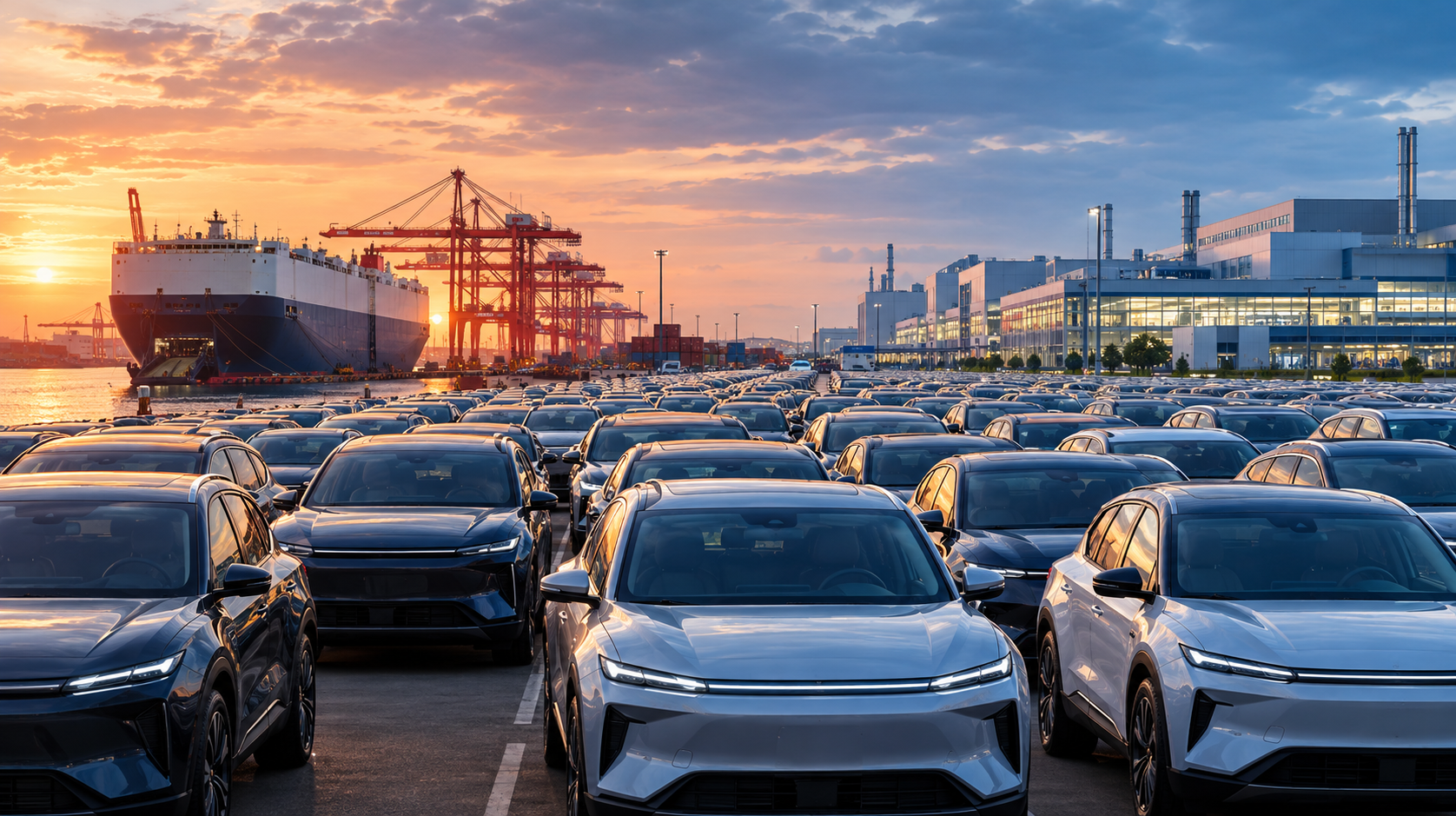
China's automotive crisis is becoming a problem for Europe: What's behind the global price war – a creative image on the topic, created with AI: Xpert.Digital
Lower demand, more exports: How China's automotive crisis is changing competition
Tariffs or open markets? Europe's difficult response to China's automotive crisis
Chinese cars are becoming cheaper – but European consumers may pay a different price
China's automotive market is in crisis, with repercussions extending far beyond the country's borders: Demand is weakening, industry profits are declining, and price competition is intensifying. For manufacturers capable of producing more than their domestic customers are buying, export markets are gaining importance – including in Europe. There, more affordable vehicles can ease the burden on consumers and stimulate competition. At the same time, established automakers, suppliers, and jobs are coming under pressure.
This creates a difficult conflict of objectives for Europe. Protectionism could make vehicles more expensive and reduce the incentive to solve domestic cost and product problems. Unrestrained competition, on the other hand, could jeopardize industrial value creation and employment. Tariffs can buy time, but they cannot replace competitive models. The crucial question, therefore, is how Europe reconciles open markets, fair competition, and a strong automotive industry.
The following text examines why Chinese demand is declining, the role of overcapacity and exports, and how increasing competition is affecting Europe. It is important to distinguish between import figures, manufacturer output, and actual sales – and to take short-term price advantages as seriously as the long-term consequences for Europe's industrial locations.
China's car crisis and Europe's test of resilience: How the price war is changing the global automotive industry
Cheap cars, expensive consequences: Europe's prosperity cannot be parked behind customs walls
China's automotive industry is experiencing a crisis whose consequences extend far beyond its domestic market. Weak demand, declining profits, and fierce price competition are altering the business fundamentals of an industry that for years has focused on growth, high production volumes, and technological catch-up. What initially appears to be a Chinese economic problem is increasingly becoming an international question of distribution: Who bears the costs when a major automotive production site can produce more vehicles than its domestic customers are willing to buy?
For Europe, the answer is far from clear-cut. Cheaper vehicles can ease the burden on consumers, stimulate competition, and make electromobility more affordable. At the same time, manufacturers, suppliers, and industrial jobs are coming under pressure. The situation is made particularly difficult by the fact that European companies are affected on two fronts: They may lose business in China and simultaneously have to compete in their home market against more internationally oriented Chinese competitors.
The crucial question, therefore, is not whether Europe should fundamentally allow or reject Chinese vehicles. It is how the continent can reconcile open markets, industrial value creation, and economic resilience. A viable strategy must distinguish between short-term price advantages and long-term consequences for business locations. It must also acknowledge that tariffs can buy time, but they cannot replace competitive products or lower production costs.
A sales slump that goes far beyond normal market fluctuations
The scale of the weak demand in China is considerable. In the first nine months of 2026, passenger car sales in Chinese retail outlets fell by 21.7 percent year-on-year to approximately 13.33 million vehicles. A decline of about 22 percent to 18.5 million vehicles was expected for the entire year. It's important to distinguish between sales figures already recorded and an annual forecast: the nine-month figures reflect the current trend, while the full-year result was not yet available at the beginning of November.
A decline of more than a fifth fundamentally alters the economic conditions of a capital-intensive industry. Vehicle manufacturers cannot reduce their costs at the same rate as orders dry up. Factories, development centers, tooling, software platforms, and sales organizations generate expenses that can only be changed to a limited extent in the short term. The fewer vehicles sold, the higher the calculated share of these costs per vehicle.
The projected 18.5 million sales, representing a decline of approximately 22 percent, correspond to the previous year's level of roughly 23.7 million vehicles. This would mean the market would theoretically lose more than five million sales within a single year. This magnitude explains why minor price promotions or individual new models alone are unlikely to be sufficient to fully offset the economic pressure.
However, this decline should not lead to the conclusion that all manufacturers, drive types, and price ranges are performing the same. A shrinking overall market can simultaneously produce companies that gain market share. Likewise, individual premium segments may remain relatively stable, while the volume market suffers particularly severely. The crisis is therefore not only a volume crisis, but also an intensified competition for the remaining demand.
Why the real estate crisis and consumer reluctance are affecting the car market simultaneously
For private households, a car is one of the biggest purchases. Consequently, demand reacts strongly to changes in income expectations, assets, and economic security. When households anticipate uncertain job prospects or perceive declining property values, they often postpone major expenditures, even if they could theoretically afford them.
The real estate market operates through several channels. Falling housing prices can diminish subjective feelings of prosperity. At the same time, they can restrict actual financial flexibility when real estate serves as an asset reserve or security. Furthermore, there are indirect consequences for the construction industry, local services, and other sectors whose income depends on a robust real estate market.
This creates an unfavorable combination for car buyers: the need is often postponed, while the financial commitment is long-term. Those who already own a functioning vehicle can delay a replacement purchase. Even an attractive discount might not be enough to trigger the decision. In the short term, foregoing the purchase appears to be a greater saving than the discount on a new vehicle.
Reduced or altered subsidies can amplify this effect. Government purchase incentives not only lower the price but also influence the timing of purchases. If purchases are brought forward initially, a demand gap can arise later. A reliable analysis must therefore differentiate between permanently weaker purchasing power, temporary subsidy effects, and postponed purchasing decisions. The respective contribution of each of these causes cannot be precisely determined from the available sales figures alone.
Why falling prices don't automatically stabilize demand
At first glance, the solution seems simple: if too few vehicles are sold, prices must fall. In practice, this mechanism is more complicated. Discounts can attract additional buyers, but they can also create expectations that further delay sales.
If consumers expect further price reductions, waiting becomes economically attractive. A vehicle that seems inexpensive today could be even cheaper a few months later. The more frequently manufacturers change their prices, the more difficult it becomes for customers to determine a reliable time to buy.
Furthermore, there are effects on the used car market. Falling new car prices can depress the achievable selling prices of comparable used vehicles. For a household that wants to sell its current car, this may reduce some of the price advantage of buying a new one. The decisive factor is not just the new car's list price, but the difference between the purchase price and the proceeds from selling the old vehicle.
Leasing companies and commercial fleets must also consider potential residual value losses. If vehicles are worth less than expected at the end of the contract, new leasing offers may be calculated at a higher price. Therefore, a lower new car price does not necessarily lead to a corresponding reduction in monthly mobility costs.
A price war can thus simultaneously make more vehicles affordable and increase economic uncertainty across the entire market. This is precisely where its unique dynamic lies: what seems beneficial for an individual manufacturer in the short term can worsen the overall profitability of the industry.
The drop in profits reveals the true depth of the crisis
For economic stability, what matters is not only the number of vehicles sold, but also the profit remaining after all costs. In the first nine months of 2026, reported profits in Chinese industry as a whole rose by 15.5 percent, while profits in the automotive sector fell by 22.8 percent. This contrasting trend illustrates the particular pressure on the automotive sector. However, it should not be equated with a complete profit calculation for all companies and activities.
Sales and profits can develop differently. A manufacturer can sell more vehicles and still earn less if it has to offer high discounts. Conversely, a company can stabilize its earnings with declining sales volume by selling more profitable models or significantly reducing its costs.
Competition becomes particularly problematic when price reductions grow faster than productivity gains. In such cases, the manufacturer finances additional sales from its own margin. This strategy can be sensible in the short term, for example, to fully utilize a new platform or gain market share. However, it can only be sustained in the long run if sufficient liquidity, financing options, or profits from other business areas are available.
The drop in profits is therefore a more important warning signal than an isolated monthly sales figure. It shows that the adjustment is not only happening through reduced production, but also through a deterioration in the economic quality of the remaining business.
Overcapacity doesn't only arise when factories are shut down
Overcapacity is often discussed as if it could be identified solely by unused factory halls. Economically, the problem starts earlier. A factory can be technically operating at full capacity and still produce too much if its vehicles can only be sold with steep discounts or growing inventories.
The relevant question, therefore, is not how many vehicles can theoretically be produced, but how many can be sold under sustainably profitable conditions. This distinction is crucial. High production figures can signal industrial strength, but they can also mask adjustment problems.
Some companies have an incentive to continue production despite weaker demand. As long as an additional vehicle sold generates more revenue than its directly avoidable production costs, it can contribute to covering existing fixed costs. However, this does not mean that the manufacturer is operating profitably overall.
If many companies act this way simultaneously, supply remains high and price pressure persists. A correction then requires either a recovery in demand, a reduction in capacity, the closure of individual suppliers, or the development of new sales markets. Exports become particularly attractive under these conditions because they can tap into additional demand without requiring an immediate reduction in domestic production.
Why exports are becoming a strategic way out
For Chinese manufacturers, international business fulfills several functions simultaneously. It can enable additional production volumes, improve capacity utilization, and reduce dependence on domestic price competition. Furthermore, other markets can allow for higher sales prices, provided customers perceive the vehicles as attractive and the additional distribution costs remain manageable.
However, exporting does not automatically equate to higher profits. Between the factory gate and the foreign end customer, there are transport costs, financing costs, insurance expenses, and potentially customs duties. In addition, there are adjustments to technical regulations, the establishment of spare parts supply, marketing, and the financing of a dealer and service network.
A vehicle manufactured cost-effectively in China may not necessarily be equally affordable for European customers. The decisive competitive advantage stems from the entire cost chain. This includes warranty expenses, discounts for distributors, and potential residual value risks.
Nevertheless, international expansion remains a logical step. If the domestic market shrinks significantly, simply waiting for its recovery is insufficient. Manufacturers with competitive products will seek to broaden their sales base geographically. A national demand crisis thus generates an international competitive impetus.
BYD and Li Auto demonstrate how differently the adaptation process unfolds
The company figures illustrate that the development is by no means uniform. BYD increased its global sales by approximately 17 percent to 463,561 vehicles in September 2026. At the same time, exports grew by 153.9 percent. Li Auto, on the other hand, reported a decline in deliveries of 6.3 percent to 31,817 vehicles. These figures describe different company performance and should not simply be treated as identical market indicators.
Export growth of 153.9 percent means that exports were more than two and a half times higher than in the same month of the previous year. However, the growth rate alone does not indicate the absolute contribution of this growth. Nor does it necessarily mean that all exported vehicles have already been sold to end customers.
Manufacturer sales, deliveries, exports, and new registrations measure different stages of the business. A vehicle can be recorded as exported while it is still on a ship, in an import warehouse, or at a dealership. Therefore, actual end-customer sales and recurring demand are also important for assessing a long-term market position.
The time frame is also important. A successful September doesn't necessarily prove a strong overall year. According to additional company information, BYD's strong monthly growth was offset by declining cumulative sales in the first nine months. Especially in a volatile market, monthly records should therefore not be mistaken for a complete trend reversal.
Our global industry and economic expertise in business development, sales and marketing

Our global industry and economic expertise in business development, sales and marketing - Image: Xpert.Digital
Industry focus areas: B2B, digitalization (from AI to XR), mechanical engineering, logistics, renewable energies and industry
More information here:
A thematic hub offering insights and expertise:
- Knowledge platform covering global and regional economies, innovation and industry-specific trends
- A collection of analyses, insights, and background information from our key areas of focus
- A place for expertise and information on current developments in business and technology
- A hub for companies seeking information on markets, digitalization, and industry innovations
Strategies to strengthen the European automotive industry
Europe is caught in a double competitive bind
European manufacturers face two interconnected challenges. In China, they compete with companies that directly serve the local market, its digital usage habits, and customer price expectations. At the same time, pressure from Chinese vehicles in Europe is increasing.
The first channel concerns the profitability of international business. Declining sales or lower margins in China can limit the financial resources available for new platforms, software, and European production sites. However, the extent of this effect depends on the specific company structure and the actual importance of the China business.
The second channel concerns the European domestic market. New competitors can lower prices, offer additional features, or tap into previously underserved segments. Even if their market share remains limited initially, they can influence pricing. Established manufacturers may then have to increase discounts, accelerate the production of cheaper models, or change their equipment policies.
Both developments can reinforce each other. Lower profits in China make investment more difficult, while increasing competitive pressure in Europe necessitates additional investment. The challenge, therefore, lies not only in selling individual models, but also in maintaining financial resources, the speed of innovation, and cost discipline.
What the European import figures actually say
From January to August 2026, the EU imported approximately 1.1 million passenger cars from China. This import volume already exceeded the total value of the previous year. In August, imports increased by 151 percent compared to the same month of the previous year. This development demonstrates a strong increase in the cross-border supply of vehicles, but does not yet provide a complete picture of the market success of individual brands.
First, a distinction must be made between the place of production and the company's origin. A vehicle imported from China is not automatically a vehicle of a Chinese brand. International manufacturers can also produce there and supply other markets from Chinese factories. Conversely, a Chinese corporation could manufacture vehicles outside of China in the future.
Imports are not synonymous with vehicle registrations. Rising imports can reflect actual demand, but also inventory build-up, preparations for new model launches, or concentrated deliveries over time. Furthermore, a single month can show exceptionally high growth rates due to a low baseline for comparison.
For a sound market analysis, import figures, inventory levels, registrations, brand shares, and drive types must therefore be considered together. The sharp increase is a relevant warning signal of growing competitive pressure. However, it does not permit the simplistic conclusion that European customers have already replaced vehicles from domestic manufacturers with Chinese brands to the same extent.
The price advantage is real, but its causes must be separated
An analysis projecting for 2026 estimates the average price advantage of Chinese electric models compared to similar competitor vehicles at around 21 percent. This figure is relevant from a competition policy perspective. However, it should not be interpreted as meaning that every Chinese electric car is exactly one-fifth cheaper, or that all differences in size, range, features, and distribution are completely irrelevant.
A simple calculation illustrates the potential impact: If a comparable vehicle costs €40,000, a price reduction of 21 percent would correspond to an offer price of €31,600. The difference of €8,400 can be decisive for many households when making a purchase decision. This example merely illustrates the aforementioned percentage and does not describe a specific pair of models.
The reasons for a price advantage can be manifold. Larger production runs, cheaper intermediate products, a different level of vertical integration, and more efficient development processes are all possibilities, as are lower profit margins or government subsidies. A low selling price alone does not reveal which factor is dominant.
This distinction is important because it leads to different policy responses. Trade policy instruments are appropriate against genuinely distorting subsidies. In contrast, domestic improvements are the primary means of addressing higher productivity or better industrial organization. Those who categorize every price advantage as unfair risk overlooking real competitive disadvantages.
Why affordable electric cars are more than just a consumer issue economically
Affordable vehicles aren't just for private buyers. Businesses, care services, tradespeople, and other commercial users also need to factor in mobility costs. Lower purchase prices can facilitate investment and accelerate fleet renewal.
For electric vehicles, price is a particularly relevant factor because customers don't just evaluate technical specifications. They compare the total cost of ownership with existing alternatives. This includes financing, energy, insurance, maintenance, and eventual resale. A low initial price improves the starting position, but it doesn't replace a reliable total cost calculation.
From a macroeconomic perspective, cheaper imports can free up purchasing power. Money that a household saves on a car purchase is available for other expenses or savings. This benefit is real and should not be overshadowed by industrial policy interests in the debate.
At the same time, low import prices can trigger adjustment costs domestically. If domestic production declines, this creates burdens for employees, suppliers, and regions. The overall economic assessment therefore depends on the extent of consumer benefits, the amount of lost added value, and whether new economic activities emerge. A low vehicle price is neither automatically a macroeconomic gain nor automatically an industrial loss.
Tariffs shift competition but do not solve the cost problem
Since 2024, the EU has levied additional tariffs on certain battery-electric vehicles manufactured in China. Their economic purpose is to counteract perceived distortions of competition. Crucially, these measures should not be equated with a blanket tariff on all Chinese vehicles and all drive types.
Additional tariffs can have several consequences for the European market. Manufacturers can pass them on in whole or in part through higher prices. They can also absorb some of the cost from their own margins or change their supply and production structures. Which reaction predominates depends on cost position, demand, and strategic goals.
Therefore, a tariff does not necessarily translate directly into a one-to-one reduction in the end-customer price. A supplier seeking to gain market share can temporarily absorb part of the burden themselves. Another could withdraw models or shift the focus of their product offering.
For European manufacturers, such protection may buy time. However, this time is only economically valuable if it is used for productivity gains, more affordable vehicles, and better products. If the structural problems remain unchanged, the same competitive pressure will re-emerge once the protective measures expire or are adjusted. Trade policy can support an adjustment strategy, but it cannot permanently replace it.
The American market is influencing the pressure on Europe
The European situation cannot be viewed in isolation. If large sales markets make access difficult for Chinese vehicles, manufacturers look for other growth regions. The potential export pressure is then distributed among the remaining open or more easily accessible markets.
However, this does not mean that every car that doesn't sell elsewhere automatically ends up in Europe. Manufacturers must consider customer preferences, purchasing power, technical requirements, and distribution structures. Other regions can also be attractive for internationalization. Therefore, global sales shifts are not a mechanical process.
Nevertheless, a more restrictive trade policy in large markets alters strategic incentives. Europe can become more attractive to companies if high purchasing power meets a comparatively receptive market. At the same time, the risk of political backlash increases as soon as growing imports are linked to factory closures or job losses.
The real danger lies in an escalation spiral. Market protection measures can trigger evasive movements, which in turn encourage new protection measures elsewhere. Ultimately, this could lead to more fragmented production and trade structures. While these may offer greater regional control, they can also increase costs and reduce international economies of scale.
Local production changes the equation, but does not eliminate all dependencies
One possible response from Chinese manufacturers to trade barriers is to establish production facilities in target markets. For Europe, this could fundamentally mean investment, employment, and additional demand for local service providers and suppliers.
However, the economic impact is highly dependent on the actual level of vertical integration. A plant that primarily assembles imported components generates different industrial effects than a site with its own development department, local component manufacturing, and a regional supply chain. Therefore, the number of vehicles assembled alone is not a sufficient measure of a location's benefits.
The distribution of knowledge and decision-making authority also matters. Where are platforms developed? Who controls central software? Where are batteries and power electronics manufactured? Which companies can build their own technological capabilities? These questions determine whether a production site will create additional industrial substance in the long term.
An economically sound policy should therefore neither reflexively reject local investments nor evaluate them solely based on announced production volumes. Crucial factors are sustainable employment, actual added value, reliable supply chains, and adherence to common regulations. Origin and location impact are linked, but not identical.
Suppliers and car dealerships are bearing a large part of the adaptation costs
The public debate often focuses on well-known car brands. However, a significant portion of the economic burden originates in upstream and downstream sectors. Suppliers must finance development costs, maintain production capacity, and simultaneously respond to fluctuating demand.
Declining vehicle production can worsen capacity utilization. At the same time, manufacturers may try to pass on their own cost pressures through lower purchase prices. This will be particularly difficult for companies that are heavily dependent on a few customers, individual platforms, or specific technologies.
Car dealerships can also find themselves caught between multiple pressures. In-stock vehicles tie up capital, price reductions can alter their calculations, and declining residual values make the used car business more difficult. While new brands require sales and service partners, building such relationships also demands investment.
For industrial stability, it is therefore crucial that adjustments are made in an orderly manner. The sudden failure of a specialized supplier can disrupt production chains more severely than its revenue share would suggest. Economic policy should therefore consider not only the largest manufacturers but also the functionality of the industrial infrastructure.
Europe's cost problem is bigger than the wage issue
In international comparisons, high European labor costs are often cited as the main reason for a lack of competitiveness. This perspective is insufficient for an objective analysis. What matters are the costs per competitive vehicle, not just the labor costs per hour.
Productivity, capacity utilization, platform strategy, and product variety significantly influence the outcome. An expensive location can be competitive if processes are efficiently organized and high production volumes are achieved using a common technical platform. Conversely, low wages cannot indefinitely compensate for inefficient processes.
In addition, development organization, procurement, energy supply, and the speed of decision-making must also be considered. If projects start late or introduce additional complexity, costs increase regardless of the actual assembly effort. Especially in a market with rapid model changes, time itself becomes a competitive factor.
This presents European manufacturers with a challenging but clear task: they must simultaneously reduce costs and improve customer value. Pure cost-cutting programs can stabilize results in the short term. However, if important development capabilities are weakened in the process, they merely postpone the problem.
The viable answer lies between isolation and industrial indifference
A European strategy should not be based on either complete isolation or unconditional trust in every market change. Both positions underestimate the conflicting objectives.
Complete isolation would weaken competition and could increase vehicle prices. It could also reduce incentives to solve existing cost and product problems. Conversely, a purely short-term focus on the lowest purchase price ignores the fact that industrial capabilities are built up slowly and cannot be recovered at will if lost.
A rules-based approach is therefore advisable. Demonstrable distortions of competition should be addressed with appropriate instruments. At the same time, European companies must be able to invest under predictable conditions. This includes reliable framework conditions, functioning infrastructure, and procedures that do not unnecessarily delay necessary location decisions.
Industrial policy support should be tied to concrete economic goals. Technological performance, productivity, and viable business models are relevant. Permanently protecting every existing structure, on the other hand, would be neither financially feasible nor conducive to innovation. Protection should enable adaptation, not prevent it.
Three development paths will determine the next few years
One possible path forward is an orderly market consolidation in China. Weaker suppliers reduce capacity, consolidate, or exit the market. At the same time, demand stabilizes. In this case, export pressure could remain elevated, but it would not accelerate indefinitely.
A second scenario involves continued international price competition. Manufacturers attempt to compensate for a lack of demand through additional foreign sales, while new production capacity continues to enter the market. Europe would then have to contend with persistent margin pressure, faster model changes, and intensified trade conflicts.
A third path would be greater regionalization. More vehicles would be produced in the respective sales regions, supply chains would be partially rebuilt, and trade barriers would be circumvented or mitigated through local investments. This could strengthen regional employment, but at the same time cause additional investment costs and more complex production structures.
None of these developments are inevitable. Crucial factors include the recovery of Chinese demand, the financial resilience of manufacturers, political reactions, and the absorption capacity of foreign markets. It would therefore be risky for companies to base their planning solely on a rapid return to previous growth levels.
Whether Europe pays the bill depends on its own response
China's automotive crisis is increasing economic pressure on Europe, but it doesn't completely determine the European outcome. Cheaper vehicles could lead to real gains in prosperity. At the same time, lost market share and lower margins could weaken the industrial base. Which effect prevails depends on the speed and quality of adaptation.
Europe would pay a particularly high price if it combined two mistakes: implementing expensive short-term safeguards and then failing to use the time gained for its own improvements. Equally problematic would be dismissing industrial dependencies and regional employment consequences solely as an unavoidable side effect of cheap imports.
The clear economic perspective is therefore: allow competition, limit distortions, and systematically increase domestic performance. European manufacturers must offer vehicles whose price, technology, and everyday usability are convincing. Policymakers must create reliable conditions for this without permanently assuming entrepreneurial responsibility.
The Chinese economic downturn is therefore not just a threat, but a stress test for Europe's economic model. It will show whether the continent can derive its industrial strength from past successes or establish it anew under changed conditions. The crucial factor will not be keeping out all foreign competitors. What will be crucial is ensuring that European value creation remains viable even when customers have a genuine and competitively priced alternative.
🎯🎯🎯 Data-driven B2B industry hub as a quasi-in-house solution

The quasi-in-house solution: How Xpert.Digital closes operational gaps in B2B marketing and sales – Smart Content-Driven Business - Image: Xpert.Digital
Xpert.Digital is a data-driven B2B industry hub led by Konrad Wolfenstein . The company acts as an external, quasi-in-house solution for industrial partners, closing operational gaps in marketing, content, and sales – without requiring additional resources on the client side.
More information here:
Your global marketing and business development partner
☑️ Our business language is English or German
☑️ NEW: Correspondence in your native language!

Konrad Wolfenstein
I and my team are happy to be available to you as your personal advisor.
You can contact me by filling out the contact form here [email protected]:or simply call me at +49 7348 4088 965. My email address is
I'm looking forward to our joint project.