

China reaches for Europe – the EU strikes back: AliExpress fined 550 million euros
Xpert Pre-Release

Available in 27 languages 📢
Prefer Xpert.Digital on GoogleⓘPublished on: July 20, 2026 / Updated on: July 20, 2026 – Author: Konrad Wolfenstein
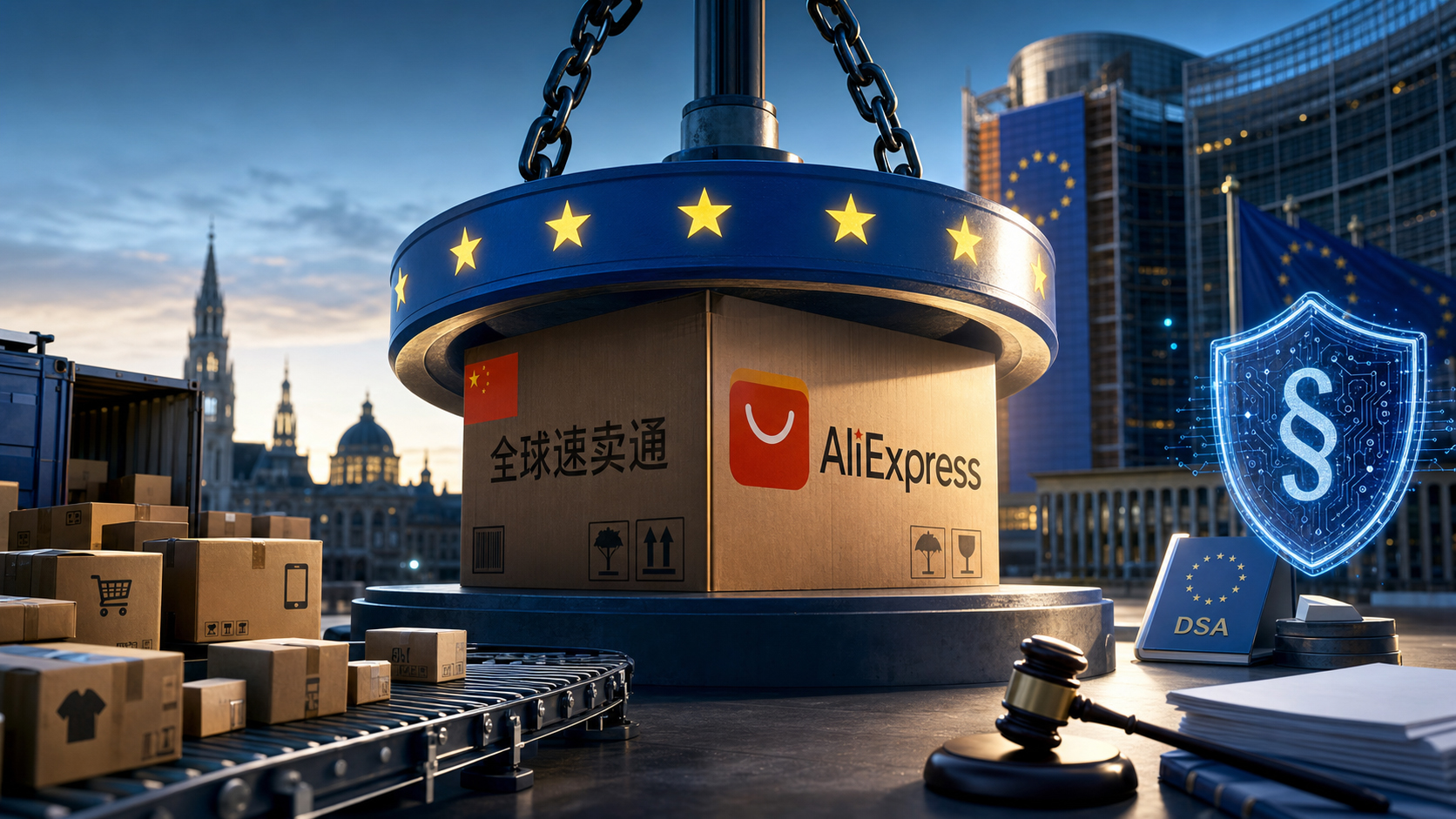
China reaches for Europe – the EU strikes back: AliExpress fined 550 million euros – Image: Xpert.Digital
Dangerous products: This is why AliExpress now has to pay half a billion euros to the EU
The end of cheap Chinese packages: What customers of Temu, Shein and AliExpress need to know now
The end of duty-free access: Why orders from the Far East have become really expensive since July
The European Union is cracking down on unfair competition and inadequate consumer protection from the Far East. With a record fine of €550 million against the online marketplace AliExpress, Brussels is setting an unprecedented example under the new Digital Services Act (DSA). But this massive fine for counterfeit and dangerous products is just the tip of the iceberg. At the same time, old duty-free allowances are being abolished, and new flat-rate fees are making small shipments from Asian giants like Temu, Shein, and AliExpress significantly more expensive for European consumers. This marks the beginning of a massive shift in trade policy, intended to curb the rapid rise of Chinese e-commerce platforms and protect domestic retailers. A closer look behind the scenes reveals that this is no longer just about cheap charging cables or costume jewelry, but about a real geopolitical power struggle for regulatory sovereignty and the future of the European single market.
A record fine as a signal of a new trading order
The European Union has fined the Chinese online marketplace AliExpress €550 million, the highest penalty ever imposed under the Digital Services Act (DSA). With this move, Brussels is sending a clear message to the Chinese e-commerce giants that have taken the European market by storm in recent years. The European Commission announced on July 20, 2026, that counterfeit branded clothing, unsafe toys, and dangerous cosmetics were not removed from the platform for weeks, despite the company being aware of the risks. It is noteworthy that while Brussels is presenting the fine as a historic milestone, it is considered relatively moderate in relation to the economic power of the Alibaba Group. A closer look at the figures quickly reveals that this is not just about consumer protection, but about a much larger geopolitical and economic power struggle between Europe and the rising Chinese e-commerce platforms.
To put the scale of the fine into perspective, it's worth looking at the legal basis. The Digital Services Act theoretically allows the EU Commission to impose fines of up to six percent of a company's global annual revenue. With Alibaba's estimated annual revenue of around €120 billion, the fine could have potentially exceeded €7 billion. At €550 million, the actual fine is therefore significantly less than a tenth of the theoretical maximum. This demonstrates that the EU Commission is acting deliberately and strategically; it wants to make an example of Alibaba without risking an open economic conflict with China. This restraint can also be interpreted as a diplomatic signal, as the EU finds itself in a fragile balance between economic dependence and political distancing from Beijing.
When control mechanisms fail – the allegations in detail
Why AliExpress is considered a blueprint for structural failure
The real substance of the proceedings lies not solely in the amount of the fine, but in the nature of the violations identified. On March 14, 2024, the European Commission initiated formal proceedings against AliExpress after initial indications of systematic deficiencies in product safety emerged. The Commission found that AliExpress was not consistently enforcing its own sanctions policy against merchants offering illegal products. Merchants who had already been penalized for selling counterfeit or dangerous goods were nevertheless able to continue selling on the platform. This essentially means that the platform's entire enforcement system was a placebo, a facade of control without any real consequences for repeat offenders.
Adding to the controversy is the allegation that AliExpress's recommendation systems actually boosted the sale of potentially dangerous products before they were even removed from the platform. Algorithmic recommendation mechanisms, intended to improve the shopping experience, effectively became amplifiers for the distribution of risky goods. Commission officials conducted their own test purchases to concretely demonstrate the violations – a methodical approach that shows how seriously Brussels took the investigation. AliExpress itself argued that it was simply overwhelmed by the sheer volume of goods on its platform. However, Henna Virkkunen, EU Executive Vice-President for Technological Sovereignty and Security, firmly rejected this argument, stating that the scale of a business model cannot be an excuse for a lack of safety. Risks must be systematically identified and addressed to ensure consumers can shop safely online, she asserted. The company itself described the decision as disproportionate, stating that it did not adequately reflect either the established system or the proactive improvements it had implemented. AliExpress announced that it would thoroughly review the decision and consider all available legal options.
The proceedings against AliExpress are by no means isolated. This is already the third decision made by the European Commission under the Digital Services Act, following previous sanctions against the online service X and its competitor Temu. This cluster of actions highlights a pattern: Brussels has decided to systematically target platforms that, in the Commission's view, exhibit structural deficiencies in dealing with illegal content and products, regardless of whether they are social networks or online marketplaces. AliExpress now has until October 20, 2026, to submit a concrete action plan outlining how it intends to address the shortcomings identified by the Commission. The Commission will then decide within two months of receiving this plan whether further steps are necessary. If the improvements remain insufficient from Brussels' perspective, the company faces additional substantial penalties.
The silent triumph of Chinese platforms
How AliExpress, Temu and Shein are revolutionizing European commerce
The real economic bombshell of this story lies less in the fine itself than in the sheer market penetration that Chinese and Asian platforms have now achieved in Europe. Alongside the established market leader Amazon, AliExpress, Temu, and the Singapore-based Shein have developed into serious forces in European online retail. In the second quarter of 2026, these providers already accounted for 5.3 percent of total online retail sales in Germany – a record figure, as reported by the German E-Commerce and Distance Selling Association (bevh). This number may seem unspectacular at first glance, but it describes a shift of historic proportions: Within just a few years, platforms registered outside the EU, whose business models are based on extremely cheap direct imports from the Far East, have secured a double-digit billion-euro share of the German consumer market.
This growth is no accident, but the result of a consistently optimized business model. Chinese platforms produce, package, and ship goods directly from factories in East Asia to European end customers, often bypassing traditional intermediaries, expensive European warehousing, and for a long time, customs duties. This combination allowed for prices that no European retailer, and hardly any established online retailer, could match. For many consumers under pressure from rising living costs, these platforms became a welcome alternative. At the same time, however, political and economic pressure grew from European industry, which complained of massive distortions of competition, since European retailers were subject to the same customs and safety regulations as before, while many small shipments from third countries remained virtually unchecked and duty-free.
The end of duty-free access for small consignments
Why Brussels is simultaneously arming itself on several fronts
The fine against AliExpress comes at a time when the EU is completely revamping its regulatory framework to combat cheap imports from the Far East. As of July 1, 2026, the traditional duty-free threshold for shipments with a value of less than €150 has been abolished. The Council of the European Union made this decision on December 12, 2025, and the corresponding regulation was published on February 18, 2026. Since that date, a flat customs duty of €3 is levied on each category of goods imported in a small shipment, regardless of the actual value of the goods. For example, if a package contains ten pairs of socks, a one-time fee of €3 is charged. If the same package also contains two cable ties and four pairs of trousers, the duties add up to a total of €9, as each different category of goods, defined by its six-digit code in the Harmonised System, is accounted for separately. In addition, the import VAT of 19% or 7% generally remains in effect, unless an exemption applies via the so-called Import One-Stop Shop (IPS) scheme.
This regulation is designed as a transitional solution and is initially intended to apply until July 1, 2028. The actual reason for this time limit lies in technical limitations: Complete, precise customs clearance based on the actual value of the goods requires a Europe-wide digital infrastructure, the so-called EU Customs Data Hub, which is not expected to be fully operational until 2028. Until then, the flat-rate duty of three euros per item serves as a pragmatic compromise to gain at least some fiscal and regulatory control over the flood of small consignments that flow into the Union daily from third countries. Industry estimates suggest that several hundred thousand parcels are sent daily from China alone to European consumers – a volume that structurally overwhelms traditional customs authorities.
This regulation will be further tightened by an additional processing fee, scheduled to take effect in November 2026, which will be levied on top of the flat-rate duty. This so-called handling fee is intended to cover the actual costs of customs clearance and will be finalized by the European Commission via a delegated act. Taken together, this reveals a clear regulatory pattern: the EU is implementing several instruments simultaneously in quick succession – competition law through the Digital Services Act, customs law through the abolition of the de minimis threshold, and, presumably, a complete overhaul of the entire customs system by 2028. This simultaneity is no coincidence, but rather the result of a growing political consensus in Brussels that the uncontrolled influx of cheap imports structurally threatens both consumer protection and fair competition.
Our EU and German expertise in business development, sales and marketing

Our EU and German expertise in business development, sales and marketing - Image: Xpert.Digital
Industry focus areas: B2B, digitalization (from AI to XR), mechanical engineering, logistics, renewable energies and industry
More information here:
A thematic hub offering insights and expertise:
- Knowledge platform covering global and regional economies, innovation and industry-specific trends
- A collection of analyses, insights, and background information from our key areas of focus
- A place for expertise and information on current developments in business and technology
- A hub for companies seeking information on markets, digitalization, and industry innovations
Between consumer protection and power politics: The DSA as a new geopolitical tool
Distortion of competition as an economic problem
How unequal rules of the game burden European SMEs
From an economic perspective, the AliExpress case reveals a deeper structural problem that extends far beyond individual fines. European retailers and medium-sized online merchants are subject to a dense network of regulations: they must comply with product safety standards under European law, are fully liable for VAT, pay social security contributions for their employees, and fulfill return and warranty obligations to consumers. Chinese platforms, which ship millions of small packages directly to end consumers, were largely able to circumvent this cost structure for years because the individual shipment remained below any effective control threshold. The result was a de facto distortion of competition that put European manufacturers and retailers in sectors such as fashion, toys, electronics, and household goods under considerable pressure.
The 5.3 percent market share that Chinese platforms achieved in German online retail in the second quarter of 2026 clearly demonstrates that this is no longer a niche phenomenon. Extrapolating this share to the total value of the German e-commerce market reveals a shift in revenue that directly threatens many medium-sized companies in structurally weak sectors. Segments with low product complexity and high price sensitivity are particularly affected, such as fashion jewelry, consumer electronics, textiles, and toys – precisely the product categories in which the EU Commission identified massive safety deficiencies at AliExpress. The link between unfair price undercutting and inadequate product safety is not coincidental, but rather structurally determined: those who forgo any margin in order to compete on price have little incentive to invest in costly quality controls and compliance systems.
The DSA as a geopolitical tool
Between consumer protection and industrial policy calculations
The Digital Services Act (DSA) was initially perceived primarily as a tool to combat disinformation, hate speech, and illegal content on social networks. However, the AliExpress case demonstrates that the law is increasingly evolving into a general regulatory instrument for the entire digital single market, with noticeable repercussions for physical goods trade as well. The fact that three of the platforms sanctioned under the DSA so far—X, Temu, and now AliExpress—originate from the US or the Chinese economic sphere inevitably raises the question of the extent to which this regulation also pursues industrial and geopolitical objectives. Critics from the US and China repeatedly accuse the EU of using the DSA as a protectionist tool against non-European digital corporations, while European representatives emphasize that it is a matter of uniform, cross-platform application of existing law.
It is clear that with this approach, the European Union is attempting to assert its independent regulatory sovereignty in the digital sphere at a time when both the United States, under President Donald Trump's second term, and China are increasingly viewing their respective digital ecosystems as strategic instruments of power. For European consumers and businesses, this translates in practice into a growing number of new control mechanisms, reporting obligations, and levies, which may lead to higher prices in the short term but could ultimately create fair competition and a higher level of security. The coming months, particularly the October 20, 2026 deadline for AliExpress's action plan and the additional handling fee for small shipments announced for November 2026, will reveal whether this regulatory course holds or whether economic and diplomatic pressure from Beijing leads to adjustments.
Trade policy in transition: Consequences of the EU customs reform for consumption and competition
What consumers, retailers and platforms should expect now
The combination of stricter platform regulations and new customs rules marks the beginning of a new phase in Europe's approach to globalized online trade. For consumers, this initially means noticeably higher costs for orders from third countries, both due to the new flat-rate duty of three euros per item and the processing fee that will be added from November 2026. At the same time, the pressure on platforms like AliExpress, Temu, and Shein to significantly expand their internal product safety control systems is likely to increase, if only to avoid further fines. This offers European manufacturers and retailers the chance for somewhat fairer competitive conditions, although the structural cost advantage of Asian production locations will by no means be fully offset.
In the long term, the decisive factor will be whether the complete customs reform, including the planned EU Customs Data Hub, is technically feasible by 2028 and whether the political resolve in Brussels will hold firm in the face of potential trade policy repercussions from Beijing. The AliExpress case is likely to set a precedent for dealing with other Chinese platforms whose business models are similarly based on extreme cost minimization and exploiting regulatory loopholes. Europe thus stands at a crossroads between open global trade and increasing regulatory protectionism – a balance that will significantly determine the structural shape of the European consumer market in the coming years.
🎯🎯🎯 Data-driven B2B industry hub as a quasi-in-house solution

The quasi-in-house solution: How Xpert.Digital closes operational gaps in B2B marketing and sales – Smart Content-Driven Business - Image: Xpert.Digital
Xpert.Digital is a data-driven B2B industry hub led by Konrad Wolfenstein . The company acts as an external, quasi-in-house solution for industrial partners, closing operational gaps in marketing, content, and sales – without requiring additional resources on the client side.
More information here:
Your global marketing and business development partner
☑️ Our business language is English or German
☑️ NEW: Correspondence in your native language!

Konrad Wolfenstein
I and my team are happy to be available to you as your personal advisor.
You can contact me by filling out the contact form here [email protected]:or simply call me at +49 7348 4088 965. My email address is
I'm looking forward to our joint project.
☑️ SME support in strategy, consulting, planning and implementation
☑️ Creation or realignment of the digital strategy and digitization
☑️ Expansion and optimization of international sales processes
☑️ Global & Digital B2B trading platforms
☑️ Pioneer Business Development / Marketing / PR / Trade Fairs
📈🚀 From visibility to trust 👀🤝 Your scalable path with Xpert.Digital

From visibility to trust: Your scalable path with Xpert.Digital - Image: Xpert.Digital
In industrial B2B, sustainable business relationships rarely emerge overnight. They develop step by step – through visibility, professional relevance, recurring touchpoints, and growing trust. Xpert.Digital's 4-stage model addresses precisely this: It offers a structured path that begins with a manageable entry point and can evolve into deeper collaboration in business development if needed.
Instead of relying on loud marketing promises, this model puts the relationship at the forefront. Companies start with clearly defined, easily calculable measures and then decide, based on their own experience, how far they want to expand the collaboration. A key factor for this undisturbed trust-building process: The platform completely avoids annoying advertising ads, so the editorial focus remains solely on the companies' expertise.
More information here:










