
Surprise in Munich: Why 14 Bulgarian companies are stealing the show at the largest energy trade fair
Xpert Pre-Release

Available in 27 languages 📢
Prefer Xpert.Digital on GoogleⓘPublished on: June 23, 2026 / Updated on: June 23, 2026 – Author: Konrad Wolfenstein
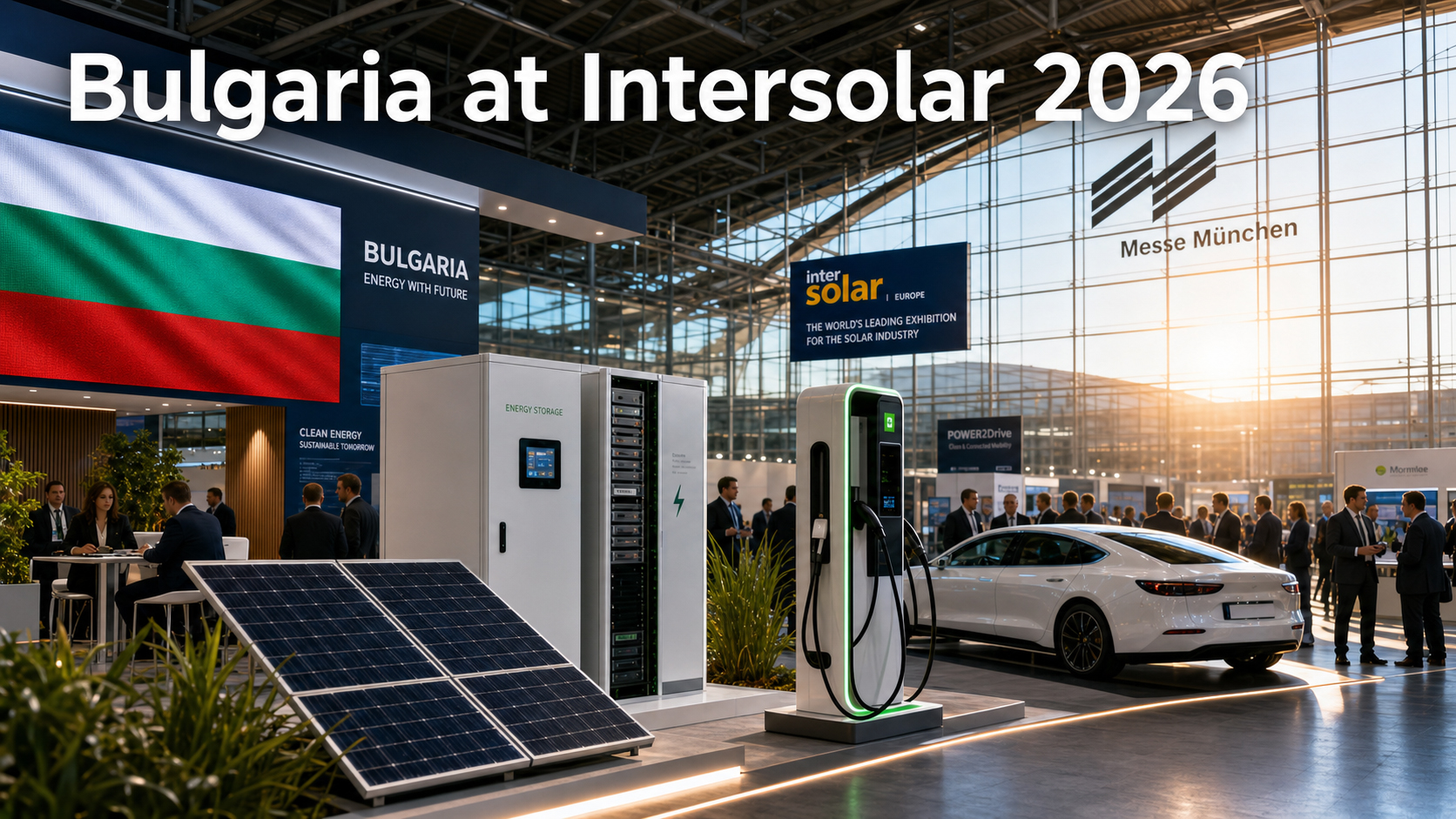
Surprise in Munich: Why 14 Bulgarian companies are stealing the show at the largest energy trade fair – Creative image: Xpert.Digital
Europe's hidden solar giant: How Bulgaria is shaking up the energy transition – batteries, AI and solar boom
From problem child to tech pioneer: How a Balkan state can become the new superpower of the European energy transition
From coal-mining state to pioneer of the energy transition: Bulgaria's technological awakening
For a long time, Bulgaria was a footnote on the European energy map – a country perceived more as a hub for old lignite-fired power plants than for green innovations. But those days are definitively over. With unprecedented speed of transformation, the Balkan state has developed into one of the most dynamic renewable energy markets in all of Europe over the past five years. The most impressive testament to this rapid rise is "The Smarter E Europe 2026" in Munich: At Europe's leading energy trade fair, 14 Bulgarian technology companies are presenting their solutions for the world of tomorrow. From AI-driven trading software and global e-mobility infrastructure to state-of-the-art hydrogen electrolyzers and an EU-funded battery gigafactory – this concentrated presence is no coincidence. It is the result of a new, bold generation of entrepreneurs, massive private investment, and outstanding engineering. Bulgaria is stepping out of the shadows and impressively proving that the country has what it takes not only to accompany the European energy transition, but to actively lead it as a producer and exporter of cutting-edge technology.
Bulgaria's green rise: 14 companies at Intersolar Europe 2026
Anyone strolling through the halls of The Smarter E Europe 2026 at the Munich trade fair grounds will inevitably encounter a phenomenon that was hardly on anyone's radar just a few years ago: Bulgaria. Fourteen Bulgarian companies will be presenting themselves from June 23 to 25, 2026, at Europe's largest energy trade fair network – spread across all four sub-fairs, from Intersolar Europe and ees Europe to EM-Power and Power2Drive Europe. This is no coincidence. It is the visible result of a technological and economic transformation whose speed and depth have surprised most observers.
Bulgaria represents the new face of Eastern Europe's energy transition. Long perceived by Western audiences as a periphery of the EU single market, the country has transformed itself in less than five years into one of the continent's most dynamic solar energy markets. Installed photovoltaic capacity increased from just over one gigawatt at the beginning of 2021 to almost six gigawatts by the end of 2025 – a tripling in barely three years. A further 2.5 gigawatts are projected to be under construction or in advanced stages of development by 2026. This success is attributable not only to favorable solar irradiance, averaging between 2,000 and 2,600 hours of sunshine per year in Bulgaria, but also to a targeted industrial policy, a willingness to take risks in the private sector, and a generation of entrepreneurs who have dared to make the leap from the national to the European stage.
These fourteen companies in Munich are more than just a delegation exhibition. They are a showcase of a country learning to capitalize on its comparative advantages – and doing so with remarkable breadth: from EPC general contractors for solar parks to manufacturers of large-scale stationary storage systems, software-as-a-service platforms for electricity trading, hydrogen electrolyzers, transformer manufacturers with 75 years of industrial history, and global EV charging software market leaders. The portfolio is comprehensive. And in some parts, it is world-class.
From sunshine to the power grid: Bulgaria's rapid energy ascent
To properly assess the significance of Bulgaria's presence in Munich, it's worth examining the macroeconomic factors that enabled this rise. Until 2021, Bulgaria's energy system was structurally ambivalent: the country was simultaneously one of the EU's largest coal producers and enjoyed the most favorable conditions for solar energy in Central and Eastern Europe. This ambivalence has since been partially resolved – in favor of renewables.
In 2025, for the first time in Bulgaria's history, renewable energy sources surpassed coal-fired power generation. Solar and wind power, along with hydropower and biomass, supplied more electricity than the country's lignite-fired power plants – a historic turning point that occurred earlier than projected in national planning documents. Coal-fired power generation fell to its lowest level in Bulgarian history in 2025, around 60 percent below the 2022 level. On June 20, 2025, solar power production exceeded the country's total electricity consumption for two hours – a symbolic moment that placed Bulgaria on par with Germany and Spain.
The solar energy market reached a total installed capacity of 5.29 gigawatts in 2026 and, according to Mordor Intelligence, is projected to grow to 9.07 gigawatts by 2031 – with an average annual growth rate of 11.35 percent. This forecast appears rather conservative given the actual dynamics: In 2025 alone, 1,416 megawatts of new PV capacity were installed, marking the third consecutive year with more than one gigawatt of new capacity added. Ninety percent of this was in the form of large-scale ground-mounted installations, financed through competitive credit lines and power purchase agreements.
An even more explosive development is emerging for battery storage. Around 500 megawatts of BESS capacity with a storage capacity of 1,300 megawatt-hours were installed by mid-2025. By the end of 2026, this capacity is expected to more than double to over 10,000 megawatt-hours – an increase of almost eightfold within 18 months. The grid operator ESO confirmed that an additional 7,000 to 7,500 megawatts of battery storage are to be installed in the next 12 to 18 months – enough to cover 10 to 15 percent of daily consumption. Bulgaria has also established itself as a net electricity exporter: In the first seven months of 2025, the positive export balance was 230,000 megawatt-hours.
The fact that 67.27 percent of Bulgaria's electricity came from low-carbon sources between September 2024 and August 2025 – 53 percent of which was solar energy – is not just an environmental policy success story. It forms the basis for a paradigm shift in industrial policy: Bulgaria no longer wants to be merely a consumer of European green technology, but a producer and exporter. This ambition has materialized in Munich.
Europe's largest energy trade fair as a stage: The Smarter E Europe 2026
The backdrop against which this showcase unfolds is not arbitrarily chosen. The Smarter E Europe is the world's most important meeting place for the solar, storage, mobility, and energy management technologies industry. Intersolar Europe alone is expected to host around 1,300 exhibitors in 2026; the entire network will bring together 2,800 companies across 200,000 square meters of exhibition space – with more than 100,000 visitors expected from around the globe. Last year's event attracted participants from 157 countries.
Fourteen Bulgarian companies on this stage – that's a critical mass. Not just a few outliers buying international visibility, but a cohesive cluster covering the entire value chain of the energy transition. Their distribution across the various trade fairs underscores this diversity: two companies at Intersolar Europe (photovoltaics), five at ees Europe (energy storage), five at EM-Power Europe (energy management and software), and two at Power2Drive Europe (e-mobility). Two of these have made it to the finals for the prestigious Smarter E Award 2026 – Solarpro Technology in the Outstanding Projects category and International Power Supply (IPS/EXERON) in the Energy Storage category.
Pioneers of photovoltaics: Solar parks from the Danube to the North Sea
Solarpro Technology – The EPC champion from Sofia, remapping Eastern Europe
Solarpro Technology is the flagship of the Bulgarian solar industry – and one of the most impressive examples of what Eastern European companies can achieve in the energy transition. Founded in 2007, the company has developed into a leading EPC (Engineering, Procurement, Construction) general contractor for renewable energies in Central Europe and beyond. More than 1,500 employees have planned, built, and integrated photovoltaic plants with a cumulative capacity of over 12 gigawatts – in six Eastern European countries, with projects of a global scale. The company sees itself as a multi-technology integrator: In addition to conventional PV plants, Solarpro implements hybrid projects that combine photovoltaics, wind power, battery storage, and hydrogen.
At the trade fair, Solarpro will be presenting itself at booth A4.631, focusing on EPC services for solar parks and BESS projects, lithium batteries, and – of particular technological note – battery recycling and second-life concepts. The circular economy for batteries is still underdeveloped in the industry, and Solarpro is thus occupying a strategic niche that will gain in importance in the coming years.
Recent reference projects underscore Solarpro's European focus: In the summer of 2026, in collaboration with the Chinese battery manufacturer Hithium, Solarpro announced the successful commissioning of what was then the largest BESS project in Southeast Europe – a 55 MWh storage facility in Razlog, southwest Bulgaria, for which Solarpro was responsible for the entire EPC lifecycle. Previously, the company had secured the EPC contract for a 229 MW solar park in Silistra, financed by Rezolv Energy and built on a former military airfield, featuring nearly 400,000 solar modules across 165 hectares. A strategic partnership was also established with JA Solar for the 240 MW solar park in Tenevo, financed by the European Bank for Reconstruction and Development (EBRD). Solarpro's nomination as a finalist for The Smarter E Award in the Outstanding Projects category provides external validation of this performance trajectory.
Hec Solar – Two decades of international open-field expertise
Hec Solar is further proof that the Bulgarian solar industry doesn't produce one-hit wonders, but rather has built sustainable expertise. The company develops and builds solar power plants on a global scale and boasts 33 successfully completed solar projects with a cumulative capacity of 1.8 gigawatts peak in nine countries. Active since 2012, Hec Solar has developed a clear focus on ground-mounted PV systems and offers the complete value chain: from project development and financing advice to turnkey delivery. The company will be exhibiting in Munich at booth A5.480 in Hall A5.
What sets Hec Solar apart from many competitors is its consistent international focus from the very beginning. In a market that was still heavily dependent on national subsidy programs in the early 2010s, the company gained experience in several countries early on – an advantage that is now paying off, as the European solar market is increasingly characterized by cross-border investors and IPPs (Independent Power Producers). The combination of technical implementation expertise and an international project portfolio positions Hec Solar as a reliable partner for investors seeking proven execution quality at competitive prices.
Europe's new battery manufacturers: Storage technologies made in Bulgaria
International Power Supply – EXERON: Bulgaria's first battery gigafactory and an EU strategy project
The story of International Power Supply (IPS) and its BESS brand EXERON is one of the most remarkable industrial narratives in recent European economic history. The Sofia-based company, which has been active in stationary large-scale energy storage and power electronics for decades, underwent a transformation in 2024 and 2025 that is unparalleled in the EU. In October 2025, IPS opened Bulgaria's first battery gigafactory in the Hemus High-Tech Industrial Park in Kremikovtzi, near Sofia – a production facility with an annual capacity of 3 gigawatt-hours, which is planned to expand to 5 gigawatt-hours by the end of 2026.
What makes this project particularly noteworthy from an industrial policy perspective is its status as an EU Strategic Project under the Net Zero Industry Act (NZIA): The EXERON X-BESS project is one of only six projects in the entire European Union to have received this designation so far. The European Commission thus recognizes the project as strategically important for Europe's security of supply and decarbonization goals. The total investment framework for three planned production sites amounts to approximately €180 million, of which up to €95 million will be EU funding. A second, fully automated robot factory is in the planning stages, with a capacity of up to 15 gigawatt-hours by the end of 2027 – which theoretically puts Bulgaria in a position to cover up to 15 percent of the expected European demand.
The technological centerpiece is the EXERON X-BESS system: a next-generation battery storage system for utility-scale and C&I applications with a modular architecture. IPS has patented the entire X-BESS technology and manufactures almost all critical components in-house – from battery modules and packs to distributed liquid cooling systems, electronics, battery management systems, control units, and inverters. Only the LFP (lithium iron phosphate) cells are sourced externally. The EXERON X-BESS 8, the latest model, delivers a nominal capacity of up to 8.1 megawatt-hours with an integrated 4 MW inverter and, according to the company, sets a new standard in energy density for large-scale applications. Its nomination as a finalist for The Smarter E Award 2026 in the Energy Storage category is international recognition of this innovative achievement. IPS/EXERON will be presenting at booth B1.580 in Munich.
V-TAC EUROPE – The global specialist for home and commercial energy storage
While IPS addresses the utility-scale market, V-TAC EUROPE Ltd. occupies the other end of the energy storage value chain: lithium batteries and energy storage systems for residential and commercial applications. Based in Sofia, the company is part of the international V-TAC Group, which was founded in 2010 as an LED lighting manufacturer and has gradually expanded its portfolio into renewable energy. Today, V-TAC offers a full range of products: solar modules, inverters, battery storage systems, heat pumps, charging stations, and smart home products – distributed in over 70 countries through subsidiaries in Bulgaria, the UAE, the UK, Hungary, Poland, Romania, India, Hong Kong, and Ireland. The portfolio comprises over 4,500 products.
At ees Europe in Munich, V-TAC EUROPE will present its LFP-based storage solutions at booth B1.171 in hall B1, including the VT-10240W home storage system with a capacity of 10.24 kilowatt-hours and a ten-year warranty. The company's strength lies in its scalability: V-TAC supplies both individual home storage units and larger commercial storage solutions, combined with a broad sales network that many smaller competitors lack. The group's international presence gives its Bulgarian subsidiary a reach that extends well beyond its domestic market.
Telelink Infra Services – The network expertise behind the energy transition
Telelink Infra Services EAD is a company that might not immediately fit the typical image of a solar energy company – and that's precisely its strength. As an infrastructure specialist, Telelink brings expertise that is often lacking in the traditional energy sector: the ability to plan, build, and operate complex networks. At booth B1.580 in hall B1 of ees Europe, Telelink will present its services as an EPC company for solar parks and BESS projects, combined with lithium batteries and grid infrastructure expertise.
The fact that Telelink, as an infrastructure service provider, has made the leap into the solar industry reflects a broader trend: The realization of large renewable energy projects increasingly demands network and data infrastructure expertise, from connecting remote locations to integrating SCADA systems and ensuring cybersecurity. Telelink addresses this interface and positions itself as a bridge between traditional telecommunications infrastructure and the new energy sector. This positioning makes the company a valuable system integrator, particularly for projects where digital control and physical energy infrastructure need to be closely intertwined.
World Transport Overseas – When logistics becomes a battery strategy
World Transport Overseas' (WTO) presence at ees Europe in Munich initially seems to require some explanation. A logistics company at an energy trade fair – what is it doing there? The answer reveals a strategic shift that exemplifies the diversification dynamics of Bulgarian companies. WTO, one of Eastern Europe's fastest-growing logistics companies with subsidiaries in Bulgaria, China, Croatia, Greece, Kosovo, North Macedonia, Romania, Serbia, Slovenia, and Taiwan, has expanded its portfolio to include lithium batteries, stationary storage systems for commercial and industrial (C&I) and utility applications, battery chargers, and – of particular technological interest – cell manufacturing equipment.
At booth C3.129 in Hall C3, WTO is presenting this new dimension of its offering. The logic behind it is clear: WTO has an established global network for the procurement and distribution of heavy industrial goods – precisely the infrastructure needed for the delivery of battery systems and manufacturing equipment. The internationalization of energy projects, the global raw material and technology market for battery components, and the complexity of supply chains in the energy storage industry create genuine added value for an experienced logistics service provider. WTO is leveraging its existing strengths as a strategic springboard into a growth market.
Green Innovation / Hydrogenera – Bulgaria's hydrogen pioneer with a VW contract
Hydrogenera – the operating brand of Green Innovation AD – is perhaps the most remarkable company in the entire Bulgarian delegation because it operates in a technology segment that is still often dismissed as futuristic: green hydrogen. Founded in 2016 by Dragomir Ivanov, the company has become the leading manufacturer and integrator of alkaline electrolyzers in Central and Eastern Europe – and is possibly the only company in the European green hydrogen sector that operates profitably.
Hydrogenera's electrolyzers cover a wide power range: from 10 kW models for small-scale applications to the 1 MW model, which was the first electrolyzer of this power class to be introduced in the Balkans in 2024. The 1 MW electrolyzer produces 423 kilograms of hydrogen daily – enough to meet the energy needs of 536 households or to power a vehicle for 56,000 kilometers. Hydrogenera's electrolyzers boast an efficiency level of 85 percent – a figure that stands out from the competition. To date, the company has completed over 83 projects in Bulgaria, Turkey, and Poland and is a member of the European Clean Hydrogen Alliance.
What has garnered Hydrogenera particular international attention in 2026 is an order that demonstrates both technological maturity and strategic reach: Volkswagen has qualified the company as an authorized supplier and commissioned it to integrate an electrolyzer into the VW plant in Poznań, Poland. The goal is to feed hydrogen and oxygen into a 1.5 MW gas burner to reduce natural gas consumption by up to 30 percent. This order is more than just a business deal: it is a testament to the company's reputation at the highest industrial level. In Munich, Hydrogenera will be presenting its electrolyzers, hydrogen storage systems, and H2 production plants at booth B2.450B.
New: Patent from the USA – install solar parks up to 30% cheaper and 40% faster and easier – with explanatory videos!

New: Patent from the USA – Install solar parks up to 30% cheaper and 40% faster and easier – with explanatory videos! - Image: Xpert.Digital
The core of this technological advancement is the deliberate departure from conventional clamp mounting, which has been the standard for decades. The new, more time- and cost-effective mounting system addresses this with a fundamentally different, more intelligent concept. Instead of clamping the modules at specific points, they are inserted into a continuous, specially shaped support rail and held securely in place. This design ensures that all forces – whether static loads from snow or dynamic loads from wind – are distributed evenly across the entire length of the module frame.
More information here:
Bulgaria at the energy fair: These startups are driving Europe's energy transition
The digital backbone: Bulgaria's software champions for the energy transition
TokWise – AI-driven energy trading decisions for the age of flutterness
In the industry, it's known as the "duck curve" problem or volatile feed-in: Renewable energy producers increasingly have to make active trading decisions in a fragmented and volatile electricity market without having professional trading teams. TokWise, founded in Sofia in 2018, solves precisely this problem. Its SaaS platform enables renewable energy producers, industrial consumers, aggregators, and traders to connect their plants directly to power exchanges and automate the buying and selling of electricity.
At the heart of the platform is the so-called GuardianTrade agent: an AI-powered system that analyzes market data around the clock, forecasts prices, and executes trading decisions in real time. The promised results are quantifiable: up to a 30 percent reduction in balancing energy costs and up to 20 percent higher trading revenues. These promises have convinced prominent investors: in 2023, TokWise received an equity investment of €3 million, led by the German renewable energy producer Encavis AG, which recognized the platform's strategic benefits for its own portfolio. The Bulgarian venture capital firm Vitosha Venture Partners also participated.
TokWise is a prime example of the new Bulgarian tech entrepreneurship: built on solid data science expertise, focused on a specific market problem, and already anchored in the B2B value chain with its first major investor. In Munich, TokWise will be present at booth B5.275 in Hall B5, addressing European market participants for whom the intelligent marketing of electricity is increasingly becoming a competitive factor.
Solarity BG – Flexible energy solutions and DER management from Plovdiv
Solarity BG OOD is one of the few Bulgarian companies at the trade fair that is not based in Sofia. Founded in 2009 in Plovdiv, Bulgaria's second-largest city and a burgeoning industrial center, Solarity has established itself as a specialist provider of distributed energy resources (DER), system integration, demand response, and flexibility management. The company boasts 16 years of experience in the photovoltaic sector and specializes in high-performance solar installations for industrial clients, investors, and businesses.
At EM-Power Europe, booth B5.571, Solarity will present its APC energy management system – a proprietary Automated Power Control system designed for flexible power supply solutions, backup systems, off-grid PV installations, pump power supply, and comprehensive energy management. The DER management portfolio addresses the growing need of industrial prosumers to intelligently coordinate distributed generation, storage, and loads. Solarity BG represents the type of regionally rooted specialist that has built a stable market position through in-depth market knowledge and long-term customer relationships.
ADEX Energy – Virtual power plants and AI-supported operational optimization
ADEX Energy AD from Sofia is one of the most technologically interesting new discoveries at this year's The Smarter E Europe. The company is developing an AI-powered software platform for virtual power plants (VPPs), yield optimization, EMS/SCADA solutions for battery storage, and power purchase agreements (PPAs). The solution is based on big data aggregation from multiple sources and intelligent algorithms that enable strategy-based calculations: When should the plant produce electricity? When should it charge? When should it feed electricity into the grid?
A pilot project with the Bulgarian-German company Sunotec – which has acquired a minority stake in ADEX Energy – has recently provided ADEX with its first references: In a 26 MWp hybrid park in Pernik with 61 MWh of storage capacity, the platform optimizes generation, storage, and grid feed-in strategies in real time. ADEX was highlighted in a report by Sofia University's Net Zero Lab as one of the companies putting Bulgaria on the European clean-tech map. The company will be presenting at booth C5.416 in Hall C5 in Munich.
Solarhome Ltd – Holistic energy management from Gorna Oryahovitsa
Solarhome Ltd is the only company in the Bulgarian delegation headquartered in a medium-sized provincial town – Gorna Oryahovitsa in northern Bulgaria. This is not a disadvantage; on the contrary, it signals that Bulgaria's energy innovation dynamic is no longer limited to Sofia and Plovdiv. Solarhome combines storage technologies with ICT software, virtual power plants (VPPs), and energy management systems into an integrated offering. This approach is aimed at customers seeking comprehensive energy management solutions, not individual technology components.
At booth C5.319 in hall C5 of EM-Power Europe, Solarhome is positioning itself as a full integrator for decentralized energy systems. Given the growing complexity of the energy system – with an increasing number of prosumers, flexible loads, and storage systems that need to be intelligently coordinated – this integration expertise is in high demand. Solarhome is targeting both industrial and commercial customers who want to reduce their energy costs while simultaneously participating in the flexibility market.
Network infrastructure: The invisible heroes of the energy transition
Elprom Heavy Industries – 75 years of transformer excellence in the service of the energy transition
Anyone who believes that the energy transition can be sustained solely by solar panels and batteries is overlooking a crucial component: the grid infrastructure. Transformers, substations, switching and protection devices – without these components, not a single kilowatt-hour from a solar park can be fed into the grid. And this is precisely where the core competence of Elprom Heavy Industries, the oldest company in the Bulgarian delegation, lies.
The company was founded in 1949 through the merger of several small electrical equipment factories. In the following decades, Elprom developed into an internationally significant manufacturer of on-load tap changers (OLTCs) and became the world's second-largest producer of this technology in the 1970s. In 1997, the South Korean conglomerate Hyundai Heavy Industries acquired the company as part of the Bulgarian privatization wave; in 2020, BEZ Transformatory from Slovakia acquired a majority stake, and since 2021, the company has operated under its current name, Elprom Heavy Industries. Annual sales exceed €30 million.
In Munich, Elprom will present its portfolio of power transformers, substations, and switching and protection devices at booth C5.111 in hall C5. Given the massive need for grid expansion associated with the energy transition – the EU estimates that over €600 billion will need to be invested in grid infrastructure by 2030 – Elprom is strategically positioned. The company combines industrial tradition with state-of-the-art manufacturing technology and offers a level of reliability and certification that is essential in the market for critical grid infrastructure.
E-mobility: Bulgarian software and hardware for the charging station boom
AMPECO – The world's leading EV software provider from Sofia
AMPECO is a company that has made waves even on a global scale. Based in Sofia, the firm develops a white-label SaaS platform for managing charging station networks – and has thus become a recognized global market leader in its segment. Founded by Orlin Radev, who discovered his passion for electromobility in 2010 when he first drove an electric car, AMPECO emerged from the realization that the bottleneck in EV charging infrastructure is not the hardware, but the lack of suitable management software.
Today, AMPECO's platform connects more than 120,000 charging points in over 60 markets and is used by more than 160 customers worldwide – including energy providers, mobility service providers, retailers, and automotive groups. IDC MarketScape – one of the most prestigious research firms in the tech industry – ranked AMPECO as a Leader in global EV charging management solutions in 2024. In November 2024, AMPECO closed a $26 million Series B funding round led by Revaia, with participation from Cavalry Ventures, BMW i Ventures, and LAUNCHub Ventures. BMW i Ventures, as a strategic investor, underscores the relevance of AMPECO's technology to the automotive industry.
AMPECO's platform's unique technological features lie in its hardware agnosticism (compatible with virtually all charging station manufacturers), its white-label capability (customers can market it under their own brand), and its scalability from individual stations to national networks. Concrete references demonstrate its practicality: Eldrive, one of the leading EV infrastructure operators in Eastern Europe, operates over 2,000 charging points in Bulgaria, Romania, and Lithuania on the AMPECO platform. AMPECO will be showcasing its technological leadership at Power2Drive Europe in Munich at booth C6.140 in hall C6.
4S4 Power – Hardware expertise for AC and DC fast charging
Alongside software champion AMPECO, 4S4 Power represents the hardware counterpart in the Bulgarian delegation's e-mobility presentation. The Sofia-based company develops and distributes AC and DC charging systems for electric vehicles, addressing the growing need for physical charging infrastructure, which remains unabated despite all digitalization trends. The market for EV charging hardware is characterized by increasing consolidation and quality differentiation: customers, especially commercial CPOs (Charge Point Operators), are looking for reliable hardware that is compatible with leading management platforms.
At booth C6.151 in hall C6 of Power2Drive Europe, 4S4 Power is presenting its product portfolio and positioning itself as a reliable hardware supplier for the growing European market. The combination of a hardware provider (4S4 Power) and a software provider (AMPECO) in the Bulgarian delegation is more than coincidental – it reflects the maturity of a national ecosystem that covers the entire technological value chain and benefits from synergies between its players.
Structural analysis: What the 14 exhibitors reveal about Bulgaria's economic model
The fourteen companies representing Bulgaria in Munich are not a statistical cross-section of the Bulgarian economy. They are an elite selection of those companies that had the courage and resources to venture onto the international stage. Nevertheless, they allow conclusions to be drawn about the strengths and structural characteristics of the Bulgarian energy innovation ecosystem.
The first striking feature is the overwhelming concentration in Sofia: eleven of the fourteen companies are headquartered in the capital. Only Solarity BG is based in Plovdiv, Solarhome in Gorna Oryahovitsa, and Hec Solar maintains additional locations besides Sofia. This concentration reflects the structural realities of the Bulgarian ecosystem: Sofia is the center of gravity for venture capital, talent, and international business contacts. At the same time, it carries a risk: without greater regional distribution, the dynamics of innovation will remain geographically limited.
Secondly, the strong export orientation is striking. From AMPECO with customers in 60 markets, to Solarpro with projects in six countries, Hydrogenera with orders in Turkey, Poland, and now Germany, to V-TAC with a presence in 70 countries: the majority of these companies generate the lion's share of their revenue outside Bulgaria. This is both a strength and a necessity: the Bulgarian domestic market is too small to serve as the sole basis for technological scaling.
Thirdly, the software and AI-powered platform segment stands out in particular. With TokWise, ADEX Energy, Solarity BG, AMPECO, and Solarhome, digital platform providers account for five of the fourteen companies – more than a third of the delegation. This is no coincidence: Bulgaria has developed a tech-savvy entrepreneurial culture over the past two decades, supported by an excellent tradition of STEM education, comparatively low labor costs, and a growing number of venture capitalists such as LAUNCHub Ventures, Vitosha Venture Partners, and Impetus Capital. The country is now producing world-class B2B technology companies – AMPECO being the most shining example.
Fourth, the presence of Elprom Heavy Industries, with its 75-year history, and World Transport Overseas, with its logistics expertise, demonstrates that the energy transition is not just an opportunity for startups. Established industrial companies transferring their existing expertise to new growth markets play an equally important role. This mix of tech startups, medium-sized specialists, and traditional industrial companies lends the Bulgarian delegation a financial stability that purely startup-based delegations often lack.
Geopolitics and Economics: Why Bulgaria is now picking up the pace
Bulgaria's rise in energy technology is not an isolated phenomenon. It is taking place within a geopolitical and regulatory context that is opening new windows of opportunity for countries with Bulgaria's specific locational advantages. The Russian invasion of Ukraine in 2022 fundamentally altered the European discussion on energy security and triggered an acceleration of the energy transition, linking national interests with European climate goals. For Bulgaria, which has historically been heavily dependent on Russian natural gas, this watershed moment provided a particular impetus for diversification.
The EU Recovery and Resilience Plan is providing Bulgaria with €342 million from the Recovery and Resilience Facility for the expansion of renewable energy and storage, supplemented by €684 million in private co-financing. The National Energy and Climate Plan aims to increase the share of renewable energy to 34.1 percent by 2030, requiring the installation of approximately 5 gigawatts of new solar capacity beyond the 2024 level. According to current data, the target of tripling renewable energy by 2026 compared to 2020 is indeed on track to be met.
The Net Zero Industry Act, which designates IPS/EXERON as one of six European strategic projects, is another building block in an industrial policy that no longer sees Bulgaria merely as a sales market for Western European technology, but as a production location for the European energy and climate sectors. The classification as an EU strategic project means accelerated approval processes, access to EU funding, and visibility in European value chains – a combination that can be crucial for attracting further investment.
At the same time, there are structural challenges that even the best corporate performance cannot overcome on its own. Bulgaria's grid infrastructure is a bottleneck: despite massive expansion of renewable energy capacity, limited grid capacity has slowed further development and capped the share of renewables at 27 percent of electricity supply – even though the potential is significantly higher. The costs for green energy charges and recycling levies for solar modules and batteries are 5 to 10 times higher in Bulgaria than in comparable EU countries, which burdens project costs and deters investors. And the market reforms necessary for a functioning flexibility market system are not yet complete.
The year 2026 is indeed a pivotal year for Bulgaria – as the chairman of the Solar Academy Bulgaria already stated at the end of 2025: The country faces the choice of positioning itself as an active participant in the new European energy and industrial architecture or remaining on the periphery, dependent on external factors and outdated structures. The 14 companies in Munich have already made the first choice.
An ecosystem in motion: The structural drivers of the Bulgarian energy cluster
What makes Bulgaria such fertile ground for energy technology companies? The answer is multifaceted and goes beyond obvious factors like abundant sunshine and EU membership. First, Bulgaria boasts one of the highest densities of engineers and IT professionals in Eastern Europe. Its long-standing tradition of STEM education, combined with comparatively low labor costs, creates a pool of technical talent that forms the foundation for software-intensive companies like AMPECO, TokWise, and ADEX Energy. Second, the Bulgarian venture capital scene has become more professional. Funds like LAUNCHub Ventures (an investor in AMPECO), Vitosha Venture Partners (an investor in TokWise), and Impetus Capital (an investor in Hydrogenera) operate internationally and understand the capital structures necessary for rapidly scaling technology companies. Third, Bulgaria's EU membership since 2007 has provided companies like IPS/EXERON, Solarpro, and Hec Solar with direct access to EU funding programs, EBRD financing, and European buyer networks.
These three structural factors – talent, capital, and market – create an ecosystem that transcends individual success stories and exhibits systemic reproducibility. The energy transition is not merely a market that Bulgarian companies are addressing; it is also the societal transformation project that gives the ecosystem direction and legitimacy.
What Munich means as a signal for the future
Fourteen companies at Intersolar Europe 2026 – that's a number worth remembering. Not because it represents a critical mass for the European market, but because it marks the beginning of a trajectory. None of these fourteen companies were founded yesterday. Solarpro, Elprom, WTO, Solarity – they all took years, sometimes decades, to build their expertise. What has changed is their international visibility, their willingness to take center stage, and their awareness that their solutions are competitive on a global scale.
AMPECO, which manages over 120,000 charging stations in 60 markets after a $26 million investment round with BMW i Ventures as a strategic investor, is no longer an exception – it's a blueprint. Hydrogenera, which won a VW contract based on proprietary electrolyzer technology and the only profitable business model in the European green hydrogen sector, is not a stroke of luck – it's engineering excellence. IPS/EXERON, which is building a battery gigafactory as one of six EU strategy projects, manufacturing almost all core components in-house, is not a subsidized project – it's a European industrial model.
Bulgaria is making its presence felt in Munich. What happens next depends on whether the structural obstacles – grid capacity, excessive recycling fees, and a lack of market reforms – are overcome quickly enough to maintain the pace. The companies are ready. The market is waiting. And Munich 2026 may well be remembered in retrospect on the European energy transition as the moment when a small Balkan country demanded – and received – Europe's attention.
🎯🎯🎯 Data-driven B2B industry hub as a quasi-in-house solution

The quasi-in-house solution: How Xpert.Digital closes operational gaps in B2B marketing and sales – Smart Content-Driven Business - Image: Xpert.Digital
Xpert.Digital is a data-driven B2B industry hub led by Konrad Wolfenstein . The company acts as an external, quasi-in-house solution for industrial partners, closing operational gaps in marketing, content, and sales – without requiring additional resources on the client side.
More information here:
Your global marketing and business development partner
☑️ Our business language is English or German
☑️ NEW: Correspondence in your native language!

Konrad Wolfenstein
I and my team are happy to be available to you as your personal advisor.
You can contact me by filling out the contact form here [email protected]:or simply call me at +49 7348 4088 965. My email address is
I'm looking forward to our joint project.





