
Automated warehouses and new supply chains: Belgium is preparing for the logistics boom
Xpert Pre-Release

Available in 27 languages 📢
Prefer Xpert.Digital on GoogleⓘPublished on: November 24, 2026 / Updated on: November 24, 2026 – Author: Konrad Wolfenstein
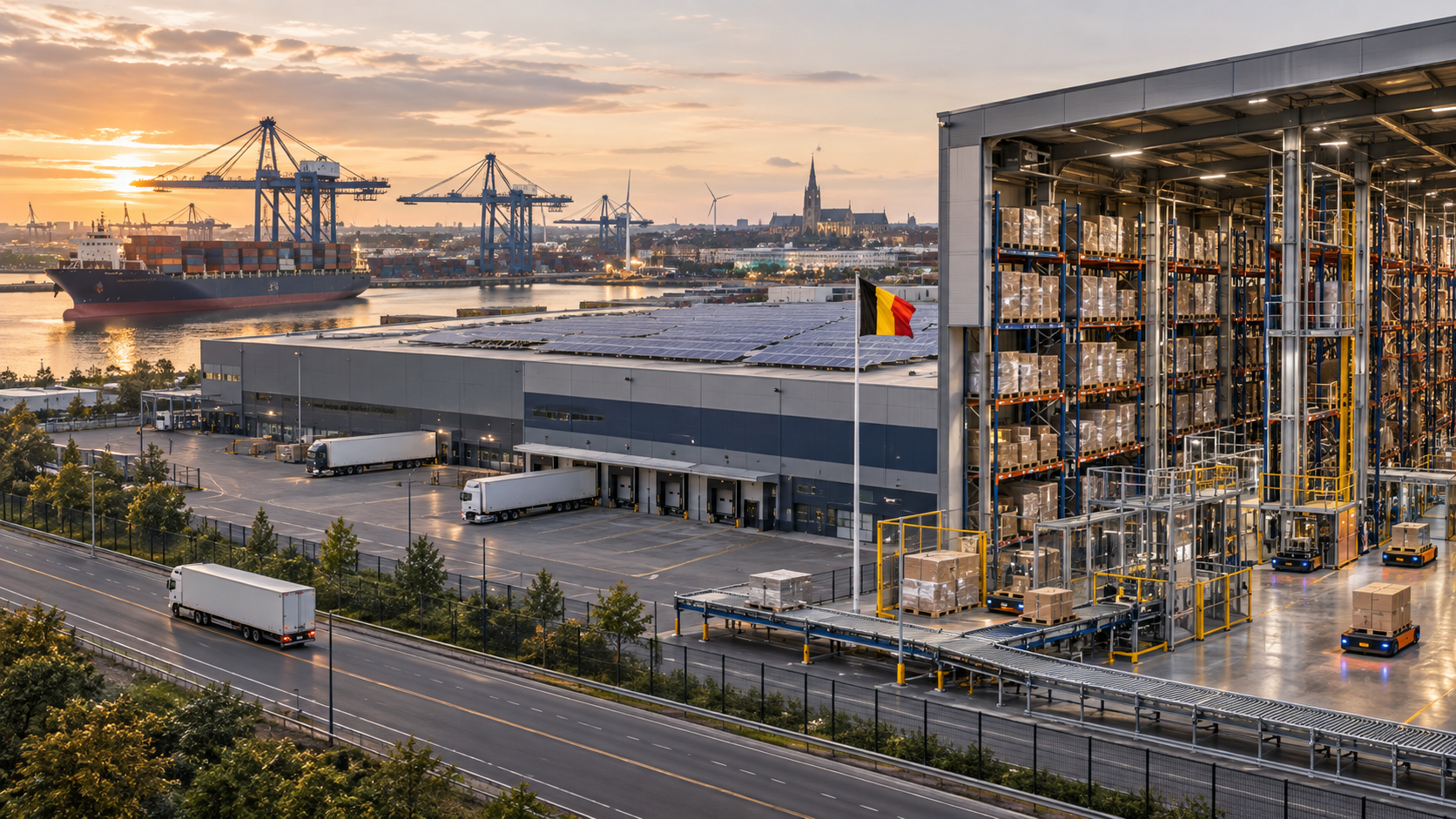
Automated warehouses and new supply chains: Belgium is preparing for the logistics boom – creative image on the topic, with AI: Xpert.Digital
Why Belgium is more important for Europe's trade flows than its size would suggest
Delhaize, Skechers and HAVI invest: What makes Belgium's logistics market so attractive
Belgium is neither Europe's largest economy nor a location with particularly low labor costs. Nevertheless, international companies and leading trading and logistics providers are investing there in new distribution centers, automated warehouses, and specialized supply chains. The reason lies in its strategic location between major European markets, efficient ports, and a dense transport infrastructure. Projects by Delhaize, Skechers, and HAVI demonstrate the dramatic shift in logistics requirements: fresh produce must be distributed reliably and efficiently, millions of different items must be made available quickly, and the flow of goods across national borders must be coordinated. At the same time, these developments make it clear that modern logistics is far more than just the transport and storage of goods. Automation, energy supply, precise inventory management, and resilient supply chains are increasingly becoming crucial factors for productivity and competitiveness. Can Belgium leverage its geographical advantages to become an indispensable hub of the European economy despite high costs and limited space?
Belgium as Europe's strategic logistics hub: billion-dollar markets, automation and the competition for the most efficient supply chain
Whoever controls Europe's flow of goods is not necessarily Europe's largest economic power
In an increasingly challenging European economic environment, Belgium is developing into a particularly attractive location for logistics, intralogistics, warehouse automation, and strategic supply chain management. While numerous European industrial companies are suffering from high energy prices, rising labor costs, geopolitical uncertainties, and sometimes weak demand, international corporations, food retailers, logistics service providers, infrastructure companies, and real estate developers continue to invest strategically in Belgian distribution structures.
This creates a remarkable economic contrast. Belgium is neither among the largest economies in Europe nor among the countries with particularly low production and labor costs. Nevertheless, the country possesses structural advantages that could increasingly pay off in light of the transformation of international supply chains.
Belgium's geographical location between Germany, France, the Netherlands, Luxembourg and Great Britain, efficient seaports, international cargo airports and proximity to important industrial and sales markets make it a strategic link within the European economy.
Recent developments at Delhaize, HAVI, Skechers, and the Belgian infrastructure company Fluvius demonstrate that the economic importance of logistics extends far beyond traditional goods transport. Supplemented by historical investments such as Coca-Cola's automated high-bay warehouse in Antwerp, it becomes clear that this development has been underway for several years and is increasingly gaining strategic significance.
The focus is no longer solely on additional storage space. It's about automated goods retrieval, temperature-controlled supply systems, intelligent inventory management, shorter delivery times, increased supply security, and the long-term reduction of operating costs.
Belgium thus provides a vivid example of how logistics has evolved from a supporting corporate function to an independent factor in industrial and economic competitiveness.
Belgium's locational advantage: Why economic size isn't everything
Belgium boasts a geographical position that is exceptionally attractive compared to other European countries. Within relatively short transport distances lie the Paris metropolitan area, the German Rhine-Ruhr region, the Dutch Randstad, Luxembourg, and numerous important industrial and commercial centers of Northwest Europe.
For international companies, this location offers the opportunity to serve multiple national markets from a central site. Depending on the product structure and transport concept, a European distribution center in Belgium can handle tasks that would otherwise require several national warehouse locations.
The economic advantages of such centralization arise in particular from the pooling of inventories, the better utilization of technical facilities, the reduction of administrative duplication, and the ability to coordinate transport flows across national borders.
Furthermore, Belgium has a dense transport network with motorways, railway connections and inland waterways. The combination of different modes of transport creates alternatives when individual transport routes suffer from capacity bottlenecks, rising costs or temporary disruptions.
This flexibility is gaining importance in light of the increasing uncertainty surrounding international trade flows. Companies are no longer solely looking for the most cost-effective transport route, but rather for supply chains that function reliably even under challenging conditions.
However, geographical location alone is no guarantee of economic success. Traffic congestion, high land prices, limited land availability, and complex permitting requirements can partially negate the location advantages.
The crucial question is therefore not whether Belgium is geographically well-located, but how efficiently companies can economically utilize this location through suitable real estate, technical infrastructure and organizational processes.
The Belgian logistics real estate market in 2026: Recovery instead of unchecked expansion
The development of the Belgian logistics real estate market in 2026 presents a mixed picture. After a period of exceptionally high demand during and after the COVID-19 pandemic, the market initially normalized.
The first half of 2026 was characterized by comparatively subdued demand in the traditional logistics segment. However, a significant recovery began in the third quarter.
Between January and September 2026, approximately 1.14 million square meters of industrial and logistics space were transacted in Belgium. Compared to the approximately 1.02 million square meters in the same period of the previous year, this represents an increase of about eleven percent.
Other market surveys, due to different methods of recording and delimitation, arrive at a sales volume of approximately 1.25 million square meters.
In the third quarter of 2026 alone, the take-up of space in the industrial and logistics segment exceeded 400,000 square meters. This meant that demand was significantly higher than in the same quarter of the previous year.
This development suggests a revival of the market, but does not yet justify the assumption of a widespread logistics boom.
Particularly striking is the concentration of demand on strategically attractive locations. According to market analysis, the Antwerp-Brussels axis accounted for approximately 50 percent of logistics space turnover. The E313 corridor between Antwerp and Liège reached about 27 percent, while the Walloon axis accounted for roughly 16 percent.
Rental trends also illustrate the increasing importance of modern and well-connected properties. The market report for the third quarter showed rent increases in the logistics sector of seven percent in Antwerp, 14 percent in Brussels, and 27 percent in Liège.
Along the Brussels-Antwerp axis, the vacancy rate was only around 4.1 percent.
This means that competition is increasingly shifting from the mere availability of large warehouse spaces to the quality of the properties themselves. High-performance energy connections, sufficient building heights, flexible floor plans, automation capabilities, and convenient transport links are becoming key selection criteria.
Not every available warehouse meets these requirements. While older and less technically suitable properties may face vacancy pressure, modern facilities in strategic locations remain comparatively sought after.
Why rising demand for land does not automatically lead to an investment boom
The recovery of the rental market contrasts with a continued selective development in the real estate investment market.
In the first nine months of 2026, transactions totaling approximately €249 million were recorded in the Belgian industrial and logistics real estate sector. Of this, around €165 million, or 66 percent, was attributable to traditional logistics properties.
The transaction volume was therefore below the exceptionally high level of the previous year, which had been influenced by larger institutional portfolio transactions.
In the third quarter of 2026, prime yields for logistics properties were around 4.75 percent, while smaller and mixed-use commercial properties yielded approximately 6.25 percent. At the same time, the yield on ten-year Belgian government bonds was around 3.84 percent.
This creates a challenging risk-return profile for real estate investors. When comparatively safe government bonds offer higher yields than in previous periods of low interest rates, real estate investments must be justified by additional return opportunities, long-term leases, or particularly compelling location qualities.
This situation explains why developers are increasingly focusing on tailor-made logistics properties for creditworthy companies.
A distribution center leased long-term to an established food retailer presents a different risk profile than a warehouse developed without a fixed tenant. At the same time, a property tailored to the user's needs often allows for more efficient operational use.
The Belgian logistics market will not necessarily shrink as a result, but it will become more selective. Capital will preferentially flow into projects whose economic benefits, location quality, and long-term viability can be convincingly demonstrated.
Antwerp and Zeebrugge: The maritime foundation of the Belgian economy
The Antwerp-Bruges port network, with its locations in Antwerp and Zeebrugge, plays a central role in Belgian logistics.
With an annual cargo throughput of approximately 267 million tons, the port network is one of the most important maritime economic centers in Europe. Its economic environment comprises more than 1,400 companies, around 164,000 direct and indirect jobs, and an annual added value of approximately 21 billion euros.
The port's economic importance stems from more than just container handling. Antwerp boasts a large chemical and industrial complex, while Zeebrugge plays a significant role in areas such as vehicle handling, ferry services, and the energy sector.
In the first nine months of 2026, the port network handled approximately 200.9 million tons of goods. Compared to the same period of the previous year, this represented a slight decrease of 0.8 percent.
At the same time, container throughput, measured in standardized 20-foot container units, increased by 1.2 percent. However, the throughput of empty containers in particular increased, while the number of full containers decreased.
Conventional general cargo handling fell by 16.6 percent, while handling in the roll-on/roll-off segment rose by 5.5 percent. Dry bulk cargo saw growth of around 13 percent.
These contrasting trends demonstrate that the Belgian logistics sector cannot be viewed in isolation from the European industrial economy. Weak industrial demand, high energy costs, and international trade conflicts are impacting certain goods flows, while other segments continue to grow.
For operators of distribution centers, this means that flexibility is becoming increasingly important. Warehouses and transshipment facilities must be able to handle different product structures and react to changes in transport volumes.
Particularly in a port economy system, significant economic advantages arise when maritime transport, inland transport, warehousing and distribution mesh together as smoothly as possible.
A container that is processed faster, stored more efficiently, and transported more reliably to its destination ties up less capital and incurs lower follow-up costs. The efficiency of intralogistics thus indirectly becomes a competitive factor for the entire port system.
Liège: How Wallonia is transforming its industrial past into a logistical advantage
While Flanders particularly benefits from its maritime infrastructure and proximity to the Dutch economic centers, Wallonia has another strategically important logistics location in Liège.
For decades, the region was characterized by heavy industry, steel production, and the structural transformation of traditional industrial sectors. Today, logistics, air freight, international distribution, and the development of former industrial sites are creating new economic opportunities.
Liège Airport plays a central role in this. In 2025, it handled approximately 1.325 million tons of air freight, about 14 percent more than in the previous year.
In the first nine months of 2026, freight volume reached approximately 1.03 million tons. Compared to the same period of the previous year, this represented a growth of about 7.3 percent.
Especially for time-critical goods, high-quality products, spare parts, temperature-controlled transport and international e-commerce supply chains, air freight infrastructure creates additional location advantages.
Proximity to a cargo airport should not be confused with the necessity of using air freight for all goods. Especially for large distribution centers, sea and road transport often remain the economically decisive modes of transport.
The advantage lies rather in being able to combine different transport options and, if necessary, flexibly resort to alternative transport routes.
For Wallonia, this development offers the opportunity to attract and retain international companies in the region long-term. The resulting jobs encompass not only traditional warehousing activities, but also technical maintenance, software integration, automation planning, and overarching supply chain management.
Skechers and the reorganization of European shoe logistics
One of Belgium's particularly extensive logistics and automation projects is the new European distribution center of the American shoe manufacturer Skechers.
A logistics center covering approximately 230,000 square meters is being built in Grâce-Hollogne, near Liège Airport. This equates to 23 hectares and illustrates the exceptional scale of the project.
The new center is intended to replace the existing European distribution site in Milmort and to secure the company's long-term capacity for its further European business.
Weerts and Montea are involved as real estate partners. Technical automation is being carried out in cooperation with the Austrian intralogistics specialist KNAPP.
Construction was scheduled for completion in August 2026. This is distinct from the installation and phased commissioning of the automation technology. The first automation phase is expected to be completed by the end of 2028.
This temporal distinction is economically significant. For a logistics center of this size, the building represents only one of several investment levels. Conveyor technology, storage technology, software, interfaces, test operations, and the organizational relocation of existing processes can all result in considerable additional time expenditure.
The new distribution center is designed with a total capacity of more than 3.3 million storage locations. At its heart is a large-scale automated shuttle storage system.
The particular challenge of shoe logistics arises from the enormous variety of product options. A single shoe model can be available in several colors, numerous sizes, and different designs. Added to this are seasonal collections, regional differences in demand, and various distribution channels.
The economic performance of a shoe retailer therefore depends significantly on whether the right product in the appropriate size is available at the desired time.
Automated storage systems enable denser storage, faster goods provision and systematic control of large inventories.
For Skechers, this involves both supplying brick-and-mortar retailers and processing orders from online stores. Both sales channels place different demands on the assembly, packaging, and provision of goods.
While retail stores receive larger delivery quantities, direct sales to end customers require the processing of a large number of small and individually compiled orders.
A high-performing European distribution center must be able to coordinate these different processes within a common infrastructure.
This project highlights a fundamental shift in international retail: growth cannot be achieved solely through additional retail space, marketing efforts, and product development. Without a sufficiently efficient supply chain, operational bottlenecks arise that can limit further revenue growth.
Delhaize invests in freshness: Logistics as the foundation of the food trade
The Belgian food retailer Delhaize is also focusing on extensive further development of its logistics infrastructure.
On September 7, 2026, the company announced investments of €120 million in its own logistics activities.
The project centers on an additional distribution center for fresh produce in Zellik, on the western edge of the Brussels metropolitan area. This will be complemented by a new transport center and the modernization of existing facilities. The existing logistics operations in Zellik and Ninove will be maintained.
The new fresh produce center is scheduled to begin operations in 2029.
The Belgian logistics real estate developer WDP will develop the new property. This will require a separate real estate investment of approximately €55 million starting in 2027, in addition to the investments already announced by Delhaize in its logistics activities.
The temperature-controlled high-bay warehouse will have more than 20,000 square meters of rentable space and will be tailored to the operational requirements of the food retailer.
For WDP, a fixed-term lease with a duration of 20 years creates a long-term revenue prospect. Delhaize, in turn, receives a tailor-made property without having to assume all real estate-related development tasks itself.
The economic importance of the project arises particularly from the specific characteristics of fresh produce logistics.
Food products have a limited shelf life. Even short delays within the supply chain can shorten the available sales time in stores, thereby increasing the risk of write-offs and product losses.
Therefore, efficient fresh food logistics must take into account different temperature requirements, precisely monitor stock levels, and organize the flow of goods as efficiently as possible.
This presents a fundamental conflict of objectives. On the one hand, branches need to receive sufficient goods to meet demand. On the other hand, overly generous stockpiling of perishable food products leads to additional losses.
Logistical optimization therefore does not solely serve to reduce costs. It also simultaneously supports product availability, product quality, and the profitability of the branch network.
Delhaize plans to create 130 additional permanent jobs in connection with the expansion. At the same time, fresh produce logistics will continue to be operated with its own employees.
This shows that modern logistics investments do not necessarily mean a retreat from labor-intensive activities. With increasing volumes of goods, technological modernization, higher productivity, and additional employment can occur simultaneously.
WDP and the business model of the specialized logistics property
The collaboration between Delhaize and WDP highlights another structural trend within the European logistics industry.
Real estate development and operational logistics are increasingly being taken over by specialized companies whose expertise complements each other.
A food retailer possesses extensive experience in sourcing goods, supplying its branches, demand planning, and managing its supply chains. A logistics real estate developer, on the other hand, has expertise in land development, financing, construction planning, and long-term property management.
By combining these competencies, real estate can be created that is geared towards the operational requirements of the user while simultaneously meeting the economic expectations of institutional investors.
Upon completion of the new Delhaize project, the WDP portfolio within the Zellik logistics cluster will comprise eleven buildings with a total of more than 163,000 square meters of leasable space. An additional development potential of approximately 21,000 square meters exists.
This spatial concentration creates opportunities to gradually expand existing logistics structures without having to relocate all processes to another location.
Especially in established economic areas with limited land availability, the further development of existing logistics clusters has considerable strategic value.
The challenge, however, is that highly specialized properties cannot always be reused without additional investment when the user changes.
A temperature-controlled high-bay warehouse differs significantly in its technical requirements from a conventional commercial building. Long-term leases reduce this risk, but do not eliminate it entirely.
HAVI: The invisible infrastructure behind the chain restaurant industry
Another recent example of the specialization of Belgian logistics is HAVI's new distribution center in Sint-Katelijne-Waver in the province of Antwerp.
Construction officially began on October 20, 2026. The center, developed jointly with MG Real Estate, is intended to complement HAVI's existing Belgian logistics network.
HAVI specializes in supply chain solutions for the food industry and gastronomy. Its existing Belgian supply network already includes a location in Olen, which supplies, among others, restaurant concepts such as McDonald's, Lunch Garden, and Le Pain Quotidien.
According to the planning information published at the start of construction, the new center comprises a total of 11,831 square meters. Of this, 11,126 square meters are storage areas and 5,253 square meters are various temperature-controlled areas.
An earlier project specification stated the total area as 12,126 square meters. Since the exact boundaries or cause of this discrepancy are not clearly established, the later area figure should be considered the authoritative current planning value.
Of particular economic interest is the combination of different temperature zones within a common distribution structure.
Professional restaurant supply requires a reliable supply of frozen, chilled, and non-chilled products. This also includes packaging materials and other goods necessary for daily operations.
In larger restaurant chains, the quality of the supply chain directly determines the performance of individual restaurants.
A lack of ingredients can lead to certain products being temporarily unavailable. Unreliable deliveries increase the need for safety stock, while overstocked inventories require additional storage space in restaurants.
A specialized distribution center makes it possible to centrally bundle these tasks and efficiently coordinate the supply of multiple locations.
The economic importance of such systems is often underestimated because the end customer primarily perceives the finished product. In reality, a significant portion of operational efficiency begins with the storage, order picking, and delivery of the required goods.
The HAVI investment therefore demonstrates how strongly the logistics industry is developing towards industry-specific solutions.
Your intralogistics experts

Consulting, planning and implementation of complete solutions for high-bay warehouses and automated storage systems - Image: Xpert.Digital
More information here:
Your container high-bay warehouse and container terminal experts

Container terminal systems for road, rail and sea transport in the dual-use logistics concept of heavy-lift logistics - Creative image: Xpert.Digital
In a world marked by geopolitical upheavals, fragile supply chains, and a new awareness of the vulnerability of critical infrastructure, the concept of national security is undergoing a fundamental reassessment. A state's ability to guarantee its economic prosperity, the provision of essential goods and services to its population, and its military capability increasingly depends on the resilience of its logistical networks. In this context, the concept of "dual-use" is evolving from a niche category of export control to a broader strategic doctrine. This shift is not merely a technical adjustment but a necessary response to the "paradigm shift" that demands a profound integration of civilian and military capabilities.
Related to this:
Refrigerated and frozen food logistics: Strategic growth in Belgian logistics
Refrigerated and frozen food logistics: Why temperature control is a strategic growth market
The projects by Delhaize and HAVI highlight the growing importance of temperature-controlled supply chains.
Refrigerated and frozen food logistics is among the more technically demanding areas of warehousing. In addition to the usual requirements for warehouse technology, inventory control, and transport organization, companies must ensure the continuous maintenance of defined temperature ranges.
Temperature fluctuations can have significant economic consequences. In the worst-case scenario, entire inventories may have to be destroyed, even though the products appear perfectly fine on the outside.
At the same time, cold storage facilities require a constant energy supply. While conventional storage facilities can partially reduce their energy consumption when occupancy is low, temperature-controlled systems must remain functional even outside of regular operating hours.
Rising energy costs therefore significantly change the profitability calculation of such properties.
Efficient building insulation, modern refrigeration technology, intelligent temperature control, heat recovery and a coordinated energy supply can have a significant long-term impact on operating costs.
Automation also offers particular advantages in this segment. Working in very cold storage areas places high demands on employees. Automated systems can reduce the amount of time employees spend in these zones while simultaneously enabling continuous goods movement.
However, the economic viability of such systems depends on several factors. In addition to the investment volume, maintenance costs, energy consumption, technical availability, and actual utilization are crucial.
Due to its food industry, international trade and proximity to major European markets, Belgium has favorable conditions for the further expansion of temperature-controlled logistics.
This does not mean that every cold storage project is automatically profitable. Rather, it means that a demanding market with long-term demand is opening up for specialized providers of storage technology, refrigeration technology, automation, and energy management.
Coca-Cola in Antwerp: An early pioneer of today's automation strategy
The economic importance of automated warehouse structures can also be seen in a previous investment by Coca-Cola in the Wilrijk district of Antwerp.
Back in August 2018, the then bottling company Coca-Cola European Partners announced an investment of 13.7 million euros in an additional automated high-bay warehouse.
The project envisioned an additional capacity of approximately 9,400 pallet spaces.
At that time, the site produced approximately 413 million liters of soft drinks annually. Due to limited in-house storage capacity, some of the goods had to be stored with external service providers.
This situation caused additional transport movements, external storage costs, and increased organizational effort. At the same time, the existing automated warehouse was designed for specific pallet formats.
The expansion was intended to make the storage of different product formats more flexible and to improve the connection between production and distribution.
The original project calculations assumed that approximately 50,000 transport kilometers and about 43 tons of carbon dioxide could be saved annually. These were projected benefits and not a subsequent confirmation of actual savings achieved.
This example is not a new investment announcement for 2026. Rather, it has historical significance because it illustrates a trend that continues in current projects.
In the beverage industry, large quantities of goods are moved with comparatively low margins per product unit. Even small savings per pallet, transport movement, or storage process can add up to significant economic advantages when dealing with correspondingly high volumes.
The decisive competitive advantage therefore does not necessarily arise from greater production capacity. It can equally result from a better connection between production, warehousing and distribution.
Fluvius in Lokeren: When warehouse automation supports public infrastructure
The economic importance of efficient intralogistics is not limited to the retail sector, the food industry, or international consumer goods companies.
One example of this is the central distribution center of the Belgian infrastructure company Fluvius in Lokeren in the province of East Flanders.
The site was opened in November 2000 and has developed into a central material supply point for various supply infrastructures.
In addition to components for electricity and gas supply, materials for telecommunications, public lighting, wastewater infrastructure and heating networks are also provided there.
From Lokeren, numerous technicians and external service companies are supplied with the materials they need for their work.
The technical development of the site also includes the use of automated storage and retrieval systems, which are summarized under the term Automated Storage and Retrieval Systems, or AS/RS for short.
Existing conveying, supply and packaging processes can be replaced or modernized by more integrated systems.
The special feature of such a distribution center lies in the economic function of its inventory.
While a lack of goods can lead directly to lost sales in the retail sector, infrastructure companies face additional risks due to delayed maintenance, repairs, or network expansion measures.
If a specific component is missing to rectify a technical malfunction, the indirect consequential costs can significantly exceed the value of the required spare part.
The economic efficiency of warehousing should therefore not be assessed solely on the basis of capital tied up or the cost per storage space. Equally relevant are the availability of critical materials, the speed of retrieval, and the reliability of inventory information.
Especially in connection with the energy transition, the expansion of electrical distribution networks and the increasing electrification of economic processes, a reliable supply of materials is gaining in importance.
This makes the intralogistics of a utility company a supporting component of a country's economic infrastructure.
Automation as an answer to the European personnel cost problem
A key factor influencing the development of Belgian logistics is the comparatively high labor costs.
In 2024, average total labor costs in Belgium amounted to €48.20 per hour worked. This placed Belgium, along with Luxembourg and Denmark, among the countries with the highest labor costs within the European Union.
For the year 2025, no comparable Belgian estimate was initially available in the relevant European labor cost publication. The figure of €48.20 should therefore be explicitly understood as the value for 2024 and not as the current logistics wage for 2026.
High labor costs do not necessarily represent a locational disadvantage. What matters is the economic output achieved with each hour of work.
With sufficient capacity utilization, an automated logistics center can manage with fewer manual goods movements, handle larger order volumes, and utilize human labor more effectively.
A simplified calculation example illustrates the scale. If a process improvement saves 20,000 working hours annually, valued at a calculated labor cost of €48.20 per hour, this results in a theoretical gross cost advantage of €964,000 per year.
However, additional maintenance costs, energy consumption, software costs, financing costs and depreciation must be deducted from this.
It is also important to consider whether the saved working hours actually lead to lower personnel costs or are instead used for additional growth and other tasks.
Automation is therefore not an end in itself. A technically sophisticated system can perform worse economically than a simpler solution if its capacities are not fully utilized or if it is not flexible enough to react to changes.
For Belgium, the opportunity lies in offsetting high labor costs through increased productivity and more efficient processes. This would also allow logistics activities to remain in Belgium, which might otherwise be relocated to countries with lower labor costs.
The competition between Belgium, the Netherlands and Germany
The development of the Belgian logistics industry is not happening in isolation. Belgium is in intense competition with the Netherlands, Germany, and France for business locations.
The Netherlands, in particular, has a high-performance logistics infrastructure with Rotterdam, its inland waterways and numerous international distribution centers.
With its large industrial base and significant consumer markets, Germany also possesses considerable locational advantages.
Two projects outside Belgium illustrate the framework conditions and investment strategies that shape this cross-border competition.
Waalwijk: Why approval times are increasingly becoming an economic factor
In Waalwijk, Netherlands, an environmental permit was granted on July 27, 2026, for a distribution center of Beleggingsmaatschappij Van Haren BV.
The original application was submitted on July 14, 2022. Therefore, slightly more than four years passed between the application and the decision.
The project on Tielenstraat combines the storage of shoes and related products with two separate storage areas, each capable of holding more than ten tons of hazardous materials.
The specific security requirements illustrate that modern distribution centers increasingly have to meet different technical and regulatory requirements.
Lengthy permitting processes can have significant economic consequences. Land ties up capital, plans may need to be adjusted, construction costs change, and the originally anticipated demand can shift during the development phase.
For international companies, the predictability of regulatory processes is therefore becoming a relevant location criterion, in addition to geographical location.
Belgium could benefit in this competition if suitable logistics areas can be developed quickly. However, Belgian projects also face complex permitting requirements, environmental regulations, and limited land resources.
Therefore, an automatic locational advantage over the Netherlands cannot be derived from a single Dutch project.
Gelsenkirchen: Belgian industrial history as the basis for new German logistics areas
Another interesting cross-border example is the planned LiteHub Gelsenkirchen logistics center by the European real estate developer Verdion.
Verdion acquired a former steel cable factory site of approximately 6.67 hectares belonging to the Belgian industrial group Bekaert in the northern part of Gelsenkirchen, near the A42 motorway.
The site will provide approximately 37,675 square meters of modern urban logistics space, distributed across two building complexes with up to ten flexibly divisible units.
The planned floor areas range from 2,945 to 20,098 square meters. The project's economic potential is estimated at approximately 68 million euros.
The aim is to achieve the EG40 efficiency building standard and a DGNB Gold certification.
Following the announcement of the land acquisition in 2026, the project is currently in the further planning and approval development phase. A reliably confirmed completion date is not yet available.
The investment is being made as part of Verdion's second European Logistics Fund, which was endowed with more than 300 million euros in equity capital at the end of 2024.
The project demonstrates how former industrial production areas can be repurposed for new economic uses.
For Belgium, this example is particularly interesting due to its connection with the Belgian industrial group Bekaert. However, it is clearly a German logistics real estate project and not an investment in Belgian warehouse capacity.
The economic challenge for Belgium, as for Germany, is to develop former industrial areas in a meaningful way without having to claim large amounts of additional open space.
Especially in densely populated economic areas, such brownfield developments can make an important contribution to the long-term availability of suitable logistics locations.
Brownfield development instead of land consumption: The economic future also lies in existing buildings
The availability of suitable land is one of the structural challenges facing the Belgian logistics industry.
In attractive regions such as Antwerp, Brussels and Liège, industry, housing, transport infrastructure, commerce and logistics compete for limited space.
This makes the development of former industrial sites just as important as the expansion of existing logistics sites.
Brownfield projects can utilize existing transport links and, in some cases, existing infrastructure. At the same time, they potentially reduce additional land consumption compared to developments on undeveloped land.
However, such sites may be associated with environmental contamination, dismantling costs, complex ownership structures, and technical limitations.
The economic attractiveness of a brownfield project must therefore be assessed based on its total costs.
In addition to land development, the modernization of existing warehouses is becoming increasingly important. New racking systems, automated conveyor technology, digital inventory management, and better utilization of building height can create additional capacity without necessarily requiring a completely new building.
The Fluvius project in Lokeren illustrates this possibility, while Delhaize's project in Zellik demonstrates the gradual expansion of an established logistics cluster.
This creates a market for providers of modular automation systems that goes beyond the classic construction of new logistics centers.
Energy supply as an increasingly crucial location factor
Modern logistics properties are increasingly evolving into energy-intensive technical facilities.
Automated storage technology, conveyor systems, robotics, cooling technology, IT infrastructure and charging facilities for electric vehicles require a reliable power supply.
Therefore, when selecting a location, the available electrical connection capacity, long-term energy costs and the possibility of integrating renewable energies are becoming increasingly important.
The new Delhaize distribution center in Zellik, for example, is to be equipped with a photovoltaic system with a peak output of around two megawatts. Furthermore, BREEAM certification of the building is planned.
Especially in temperature-controlled logistics centers, combining photovoltaics with a continuous electricity demand can be economically attractive. A portion of the generated solar power can be used directly to operate the system.
However, a photovoltaic system alone is not sufficient to reliably cover the entire energy needs of a cold storage facility.
Cooling technology must continue to operate at night, during winter months with little sunshine, and in adverse weather conditions. Depending on the load profile, energy storage, intelligent energy management systems, contractually secured electricity supplies, and a high-performance grid connection can become additionally important.
This creates an increasing connection between logistics real estate, industrial energy technology and digital infrastructure.
The economic quality of a modern logistics location can no longer be judged solely on the basis of its transport connections and warehouse space. The availability of a reliable, affordable, and long-term efficient energy supply will also be crucial.
Inventory management: Why tied-up capital is becoming an underestimated logistics problem
Besides personnel, transport and energy costs, inventory management has a central economic importance.
Inventory ties up capital. The longer products remain in a warehouse, the longer the invested capital is unavailable for other business activities.
With seasonal products such as shoes and clothing, there is also the risk that goods can only be sold at discounted prices after the end of a sales season.
In contrast, food products are at risk of spoilage. With technical components, requirements can change, causing existing stocks to lose their economic value.
A high-performance warehouse management system can help reduce these risks. More precise inventory information, shorter replenishment times, and better alignment between demand and product availability enable companies, under suitable conditions, to reduce safety stock.
A simplified example illustrates the economic dimension: If a company reduces its average inventory from 50 million to 45 million euros, five million euros of tied-up capital are released.
Assuming annual financing costs of five percent, this corresponds to a calculated financing cost advantage of 250,000 euros per year.
Additional benefits can arise from lower storage space requirements, less depreciation, and lower insurance costs.
Such effects explain why investments in intralogistics cannot be judged solely on the basis of the personnel costs saved.
The economic benefits can also lie in lower capital requirements, higher delivery capacity and improved use of existing production and distribution capacities.
The new demand for automation, robotics and intelligent warehouse technology
The Belgian logistics projects illustrate a long-term transformation that is particularly interesting for suppliers of industrial automation technologies.
The spectrum ranges from automated pallet high-bay warehouses to shuttle systems and conveyor technology, as well as autonomous mobile robots, robot-assisted order picking and intelligent warehouse management systems.
However, the requirements differ considerably between the individual industries.
A beverage warehouse requires high-performance systems for handling large quantities of heavy loads. Shoe logistics must manage a wide variety of products and diverse order structures. A food distribution center needs temperature-resistant technology and reliable monitoring of product shelf life.
In contrast, an infrastructure company like Fluvius must be able to provide very different technical materials with sometimes irregular demand profiles.
A uniform automation concept for all these application areas would hardly make economic sense.
This creates a need for technology providers not to offer only individual machines or storage systems, but to develop integrated solutions that meet the operational requirements of the respective customer.
In addition to mechanical technology, software, data integration, maintenance, technical availability and the long-term development potential of the systems are gaining in importance.
An automated warehouse is only as economically efficient as the quality of its entire process integration.
What economic risks does the wave of automation bring with it?
Despite the considerable potential of automated logistics systems, their risks should not be underestimated.
With increasing automation, the dependence on functioning technical systems, software solutions and digital interfaces also increases.
If a single piece of equipment fails in a predominantly manually organized warehouse, employees may be able to resort to alternative processes. In a highly automated facility, however, the failure of a central system can significantly disrupt parts of the flow of goods.
Cyberattacks can also become a business risk when merchandise management, warehouse management and technical systems are interconnected.
Furthermore, there is a risk of technological dependence on individual system suppliers. Proprietary interfaces, limited spare parts availability, or long-term increases in software costs can restrict a company's economic flexibility.
Companies must therefore consider how facilities can be maintained, expanded and, if necessary, modernized as early as the planning stage.
An investment should not be judged solely on the basis of the maximum achievable hourly output. Equally crucial are its performance in the event of partial failures, its restart time after malfunctions, and its total life cycle costs.
The most successful automation strategies will therefore not necessarily be those with the highest degree of automation, but rather those that combine technical performance with economic adaptability.
Why Belgian logistics can enable new industrial value creation
The development of efficient logistics hubs has economic implications that extend far beyond the operation of individual warehouses.
The construction of new distribution centers generates demand for construction services, steel construction, electrical engineering, building technology, refrigeration technology, warehouse technology, software and industrial automation.
Once completed, long-term tasks will arise in the areas of maintenance, repair, IT, technical building management and process optimization.
This allows a network of specialized service providers and technology companies to develop around larger logistics centers.
International companies that make substantial investments in automated systems also create a comparatively long-term commitment to a location. Relocating a highly specialized distribution center is significantly more complex than abandoning a simple warehouse.
For Belgium, this offers the opportunity to permanently tie international business activities to the location.
At the same time, the employment profile is changing. While standardized manual tasks can be partially automated, the demand is increasing for technically qualified employees, IT specialists, maintenance personnel, and experts in managing complex supply chains.
This also increases the importance of vocational training and further education.
The economic quality of this development ultimately depends on what proportion of the resulting added value actually remains in Belgium.
If planning, technology development and technical services are predominantly sourced from abroad, the immediate regional benefit is lower than with strong involvement of domestic companies.
Outlook until 2030: From traditional logistics hub to intelligent distribution economy
By the end of the decade, the Belgian logistics market is expected to continue developing towards more specialized, energy-efficient and highly automated distribution structures.
The projects by Delhaize, HAVI, Skechers and Fluvius represent different areas of application, but follow a common economic logic.
Delhaize is expanding its fresh produce logistics to support store supply and further growth. HAVI is creating additional specialized capacity for food and restaurant supply. Skechers is modernizing its distribution for the European footwear market. Fluvius is further developing the material supply for its technical infrastructure.
The different projects cannot be combined into a reliable national investment sum due to their varying sizes, development phases, and economic functions.
Nevertheless, together they demonstrate in which areas the demand for modern logistics solutions arises.
Particularly interesting areas are likely to remain temperature-controlled warehouses, automated high-bay warehouses, shuttle systems, the modernization of existing distribution centers and the integration of energy and logistics technology.
The digitization of inventory management and the use of artificial intelligence for demand forecasting, route optimization and predictive maintenance also offer additional development opportunities.
However, artificial intelligence can only generate economic benefits if the underlying data is sufficiently complete and reliable.
The digitization of existing processes, the standardization of interfaces and the development of robust data structures therefore remain fundamental prerequisites.
Whether Belgium can further strengthen its position will not depend solely on the investment readiness of individual companies. Equally relevant are general European economic developments, energy prices, infrastructure capacity, financing costs, and the availability of skilled labor.
Conclusion: Belgium does not need to be Europe's largest economy to become indispensable to Europe's economy
Belgium is in an economically attractive position. The country boasts an exceptionally favorable geographical location, important seaports, efficient air freight hubs, and an established industrial and logistics infrastructure.
At the same time, it faces challenges that are characteristic of many highly developed European economies. High labor costs, limited land space, increasing technological requirements, and uncertain international conditions make a purely volume-oriented growth strategy difficult.
The answer increasingly lies in increasing the economic efficiency of existing and new logistics structures.
The investments by Delhaize, HAVI and Skechers, the technological advancements at Fluvius and Coca-Cola's historic high-bay warehouse project demonstrate that companies want to improve their competitiveness through more efficient, reliable and more integrated supply chains.
The projects in the Netherlands and Germany also show that Belgium is part of a larger European competition for suitable logistics locations, predictable development processes and efficient infrastructure.
This leads to a fundamental realization for European industry: economic strength does not depend solely on where products are manufactured. Equally crucial is how efficiently these products can be stored, supplied, and transported to their destinations.
Logistics not only secures existing demand and order volumes, but under suitable conditions also creates the operational basis for developing additional sales markets and managing further company growth.
Due to its geographical size, Belgium might be forced to utilize these connections more consistently than other European economies.
The country's long-term potential, therefore, does not lie in building as many warehouses as possible. It lies in providing a high-performing, technologically advanced, and economically efficient distribution system for significant parts of the European single market.
In international competition, it's no longer solely about who produces most cheaply or sells most successfully. Increasingly, it's also about who can make goods available at the right time, in the right place, in the right quantity, and with the lowest possible economic expenditure.
This is precisely one of Belgium's strategic opportunities.
Consulting - Planning - Implementation

Konrad Wolfenstein
I would be happy to serve as your personal advisor.
You can contact me at wolfenstein∂xpert.digital or
Just call me on +49 7348 4088 965 .
Your container high-bay warehouse and container terminal experts

Container high-bay warehouses and container terminals: The logistical interplay – expert advice and solutions - Creative image: Xpert.Digital
This innovative technology promises to fundamentally change container logistics. Instead of stacking containers horizontally as before, they will be stored vertically in multi-story steel racking structures. This not only allows for a drastic increase in storage capacity within the same area, but also revolutionizes all processes at the container terminal.
More information here: