
Automated warehouse and logistics systems in Texas – Growing demand for modern warehouse solutions
Xpert Pre-Release

Available in 27 languages 📢
Prefer Xpert.Digital on GoogleⓘPublished on: September 14, 2025 / Updated on: September 14, 2025 – Author: Konrad Wolfenstein
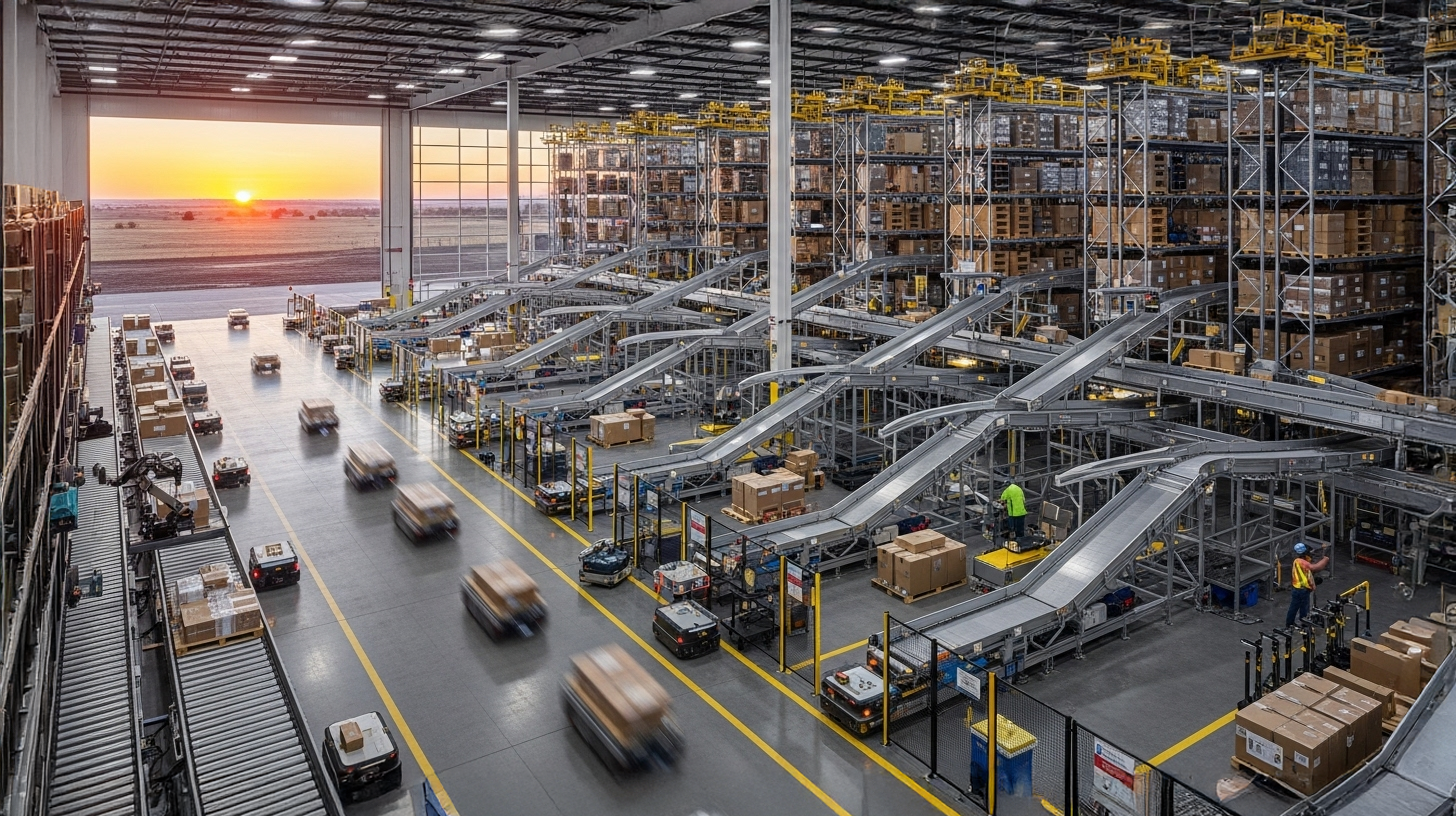
Automated warehouse and logistics systems in Texas – Growing demand for modern warehouse solutions – Image: Xpert.Digital
50 meters high, -28°C cold: A look inside the most extreme robot warehouses in the USA
The warehouse transformation: These technologies from Texas are changing everything now
Texas, once known for oil and cowboys, is writing a new chapter in its economic history, becoming the epicenter of modern warehouse automation in the US. Fueled by the unstoppable boom in e-commerce, its strategically advantageous location as a national distribution hub, and a significant labor shortage, the Lone Star State is experiencing an unprecedented transformation of its logistics landscape. This change is manifest in gigantic, up to 50-meter-high high-bay warehouses where robots move pallets at breakneck speed, as well as in specialized systems that lift 80-ton industrial components or operate in deep-freeze warehouses at arctic temperatures of -28 degrees Celsius. From the food and automotive industries to heavy-duty and container logistics, customized automation solutions are being implemented across sectors to increase efficiency, precision, and sustainability. The following text explores the technological innovations, market drivers, and forward-looking trends that are making Texas not only a central logistics hub but also a pioneer of the next generation of smart, connected, and autonomous supply chains.
From cowboy state to logistics hub: Texas' quiet rise to automation superpower
Texas is developing into one of the leading centers for modern warehouse automation in the United States. The state's strategic location, the continued growth of the e-commerce sector, and increasing industrialization are creating a tremendous demand for advanced warehouse and material flow systems. This demand for automated solutions is driven by several factors.
The Texas warehouse market experienced a remarkable boom in 2024, with over 50 million square feet of new warehouse space added, representing a 10 to 15 percent increase over the previous year. This growth reflects Texas's increasing importance as a central distribution hub for national and international trade, with the major metropolitan areas of Dallas-Fort Worth, Houston, and San Antonio serving as the primary drivers of this expansion.
Automated storage systems and their areas of application
High-bay warehouses and storage and retrieval machines
The implementation of automated high-bay warehouse systems is gaining significant importance in Texas. These systems make optimal use of available building height and can automatically store and retrieve goods from floor to ceiling. Modern high-bay warehouses reach heights of up to 50 meters and can accommodate several hundred thousand pallet spaces.
Rail-guided storage and retrieval machines form the core of these automated systems. These machines move along precisely aligned rails between the aisles and are fully automatically controlled by warehouse management systems. The latest technologies enable these systems to travel at speeds of up to five meters per second and lift at two meters per second.
An impressive example of the efficiency of modern high-bay warehouses can be found in Dallas, where Ben E. Keith implemented a fully automated system. This system can store 14,400 pallets on eight levels in just 30,000 square feet, compared to the 105,000 square feet that would have been required with conventional storage methods. The system achieves a throughput of 240 pallets per hour during combined putaway and retrieval operations.
Heavy-duty systems for exceptional requirements
Texas boasts a growing number of specialized heavy-lift systems that meet exceptional demands. These systems can handle goods up to 31 meters long or containers weighing up to 18,000 kilograms. One particularly impressive example is a storage and retrieval system developed for an Austrian materials manufacturer, consisting of two frames with a three-section pallet truck approximately 31 meters wide. The total weight of this system reaches an impressive 80 tons, including payload.
The development of such heavy-duty systems is particularly relevant for Texas industries that process large and heavy components, including petrochemicals, mechanical engineering, and power generation. These systems find applications in various areas of materials processing, woodworking, and mechanical engineering.
Automated container handling
Another growth area in Texas is automated container handling. Modern container storage facilities can stack up to 14 containers high and handle various container sizes from 10 feet to 53 feet. This flexibility allows companies to combine different container types in the same storage spaces, for example, one 40-foot container, two 20-foot containers, or four 10-foot containers.
The automated container systems use fully automated cranes that travel along the length of the storage area and precisely place containers in the correct storage locations. These systems can handle various container sizes and offer complete flexibility in inventory management.
Deep freezing and refrigeration solutions
Growing market for refrigeration applications
The market for frozen and refrigerated storage solutions in Texas is expanding rapidly. Agile Cold Storage recently invested $61 million in a new cold storage facility in Kaufman, Texas, scheduled to open at the end of 2025. The 122,949-square-foot facility will create over 70 jobs and cover a range of temperature zones.
RealCold has already opened a 14 million cubic foot cold storage facility in Lockhart, Texas, specifically equipped for e-commerce operations and serving both Austin and San Antonio. This facility acts as a staging location for products from Gulf ports and cross-border shipments.
Technical requirements at extreme temperatures
Modern deep-freeze facilities in Texas must be able to operate at temperatures as low as minus 28 degrees Celsius. These extreme conditions require specialized automation solutions capable of continuous operation at these low temperatures.
Implementing automation in refrigeration applications offers significant advantages, as it reduces the need for human labor in extremely cold environments. Automated systems such as high-density storage solutions, shuttle systems, and rack cranes can operate continuously in these freezing temperatures, thereby helping to alleviate labor shortages.
Sustainability plays a crucial role in modern refrigeration systems. LED lighting, solar integration, and sustainable materials are increasingly used to achieve both operational and environmental goals. Prioritizing automation and energy efficiency can reduce energy costs by almost 50 percent.
Industry-specific applications
Food industry and frozen food logistics
The food industry in Texas places unique demands on automation solutions. The growing demand for fresh and frozen products is driving investment in urban and suburban micro-fulfillment centers. These facilities often integrate technologies such as automated picking systems and advanced temperature controls to maximize efficiency and reduce costs.
A notable example is DHL eCommerce, which opened a $57.5 million distribution center in Irving, Texas. The 220,000-square-foot facility is equipped with a loop sorter capable of processing 24,000 packages per hour, doubling the capacity of its previous facility.
The food industry benefits particularly from automated solutions, as it must meet strict temperature controls, fast throughput times, and high hygiene standards. Modern systems can utilize real-time data for improved productivity and cost reduction.
Automotive industry
The automotive industry in Texas is undergoing a significant transformation through automation. Modula, a leading provider of warehouse automation, has completed over 1,250 installations in the automotive sector, including solutions for car dealerships and manufacturing companies.
Automation solutions in the automotive industry can be seamlessly integrated into assembly lines, especially in combination with robotics. They serve as efficient buffer storage for components between production stages or for storing semi-finished goods.
The expansion of electric vehicle production requires flexible, high-speed assembly lines, which is an additional driver for automation investments. The automotive sector expects automation solutions to contribute to improved safety standards and compliance with regulatory requirements.
Transport logistics
Texas plays a pivotal role in American transportation logistics, and automation is becoming increasingly important to keep pace with growing demand. Warehouse growth is supported by Texas' strategic location and robust transportation networks, making the region ideal for large-scale warehouse developments.
Bastian Solutions, a leading provider of material handling solutions, operates offices in Dallas and Houston and serves customers throughout Texas, as well as in New Mexico, Oklahoma, Arkansas, and Louisiana. The company offers comprehensive solutions for conveyor systems, sorting systems, robotics, palletizing, automated guided vehicles (AGVs), and order picking systems.
Transportation logistics in Texas benefits from advanced technologies such as artificial intelligence, the Internet of Things, and automation, which improve efficiency and accuracy in warehouse operations and reduce errors.
Your intralogistics experts
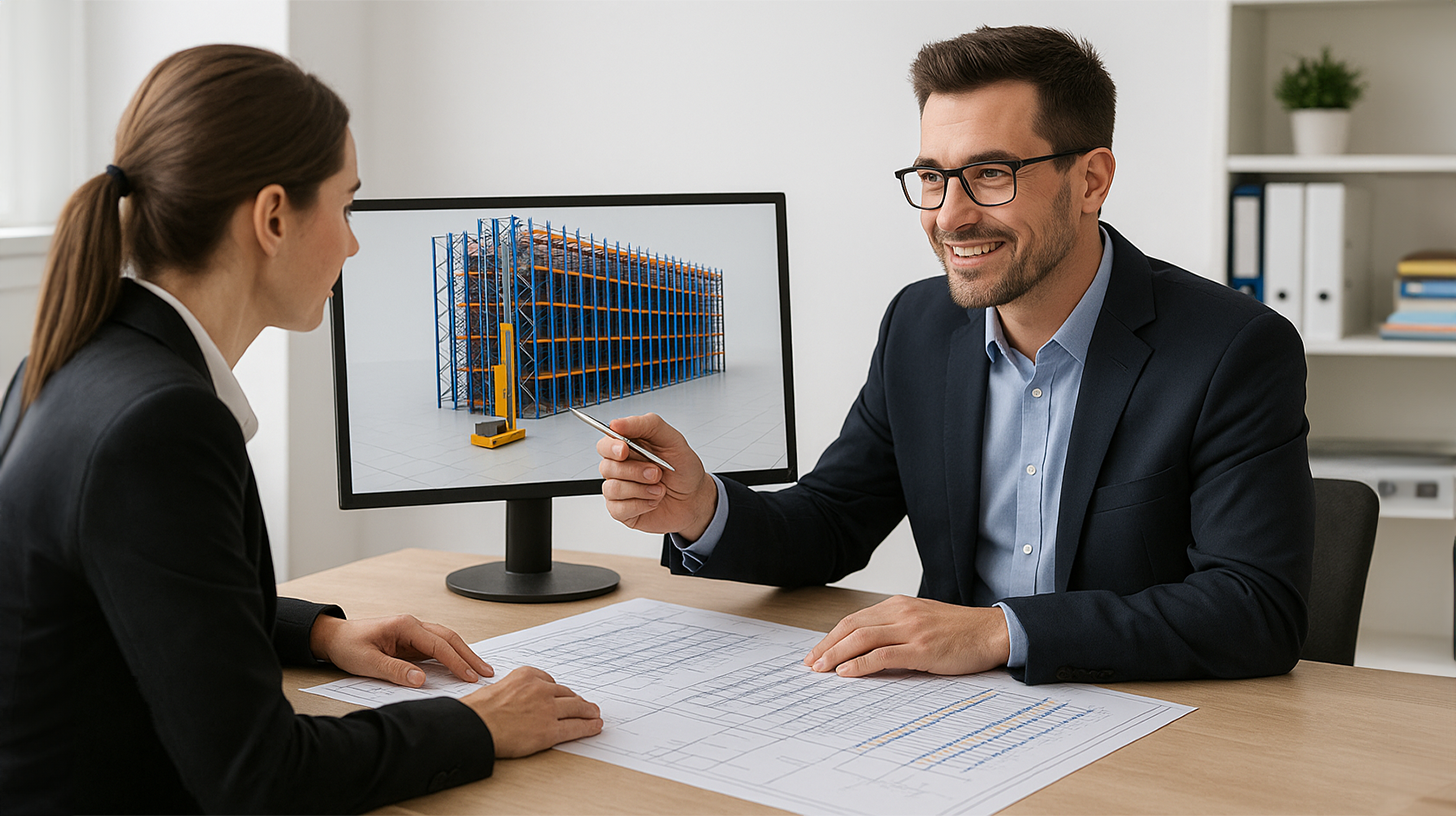
Advice, planning and implementation of complete solutions for high -bay warehouse and automated storage systems - Image: Xpert.digital
More about it here:
Scalable automation: Modular use of robotics, AI and IoT
Market development and technological trends
Growth forecasts for the automation market
The American market for industrial automation and control systems was valued at $47.04 billion in 2024 and is projected to grow at a compound annual growth rate (CAGR) of 10.6 percent from 2025 to 2030. Texas is disproportionately benefiting from this growth due to its strong industrial base and strategic location.
The increasing shift towards cloud-based data management solutions provides manufacturers with real-time insights into operations and enables predictive maintenance. The integration of artificial intelligence and machine learning algorithms into automation systems allows for smarter and more autonomous control processes.
Technological innovations
The rise of the industrial Internet of Things facilitates improved connectivity between devices and enables the collection of valuable operational data, driving further improvements in efficiency and predictive analytics.
Modern automated warehouse systems increasingly leverage advanced technologies such as digital twins, augmented reality, and artificial intelligence to make processes more efficient, predictable, and responsive. These technologies are revolutionizing industrial automation, enabling manufacturers to streamline production processes by reducing human labor, increasing precision, and delivering reliable manufacturing.
Sustainability and energy efficiency
Sustainability is becoming a key factor in the development of automated storage systems in Texas. Companies are increasingly focusing on energy-efficient practices such as LED lighting, improved insulation, and optimized cooling cycles, which can significantly reduce energy consumption in cold storage facilities.
The use of renewable energy sources is gaining importance, and modern storage systems are increasingly being equipped with solar panels and other sustainable technologies. These developments not only support environmental goals but can also offer long-term cost savings.
AI-powered predictive maintenance: Up to 25% lower maintenance costs, longer plant lifespan and positive return on investment
Labor shortage as a driver of automation
The labor shortage in Texas has become a significant driver of automation investments. Over half of supply chain executives plan to increase their technology and automation investments, with 42 percent expecting to spend more than $10 million in 2024 to improve current logistics processes.
Automation offers a solution to the challenges associated with labor shortages and the need to reduce human intervention in hazardous environments. McKinsey Global Institute ranked transportation and warehousing among the top three industries best suited for automation.
Integration and scalability
Modern automation solutions must be flexible and scalable to adapt to changing business needs. There is a clear shift away from rigid, fixed infrastructures towards more adaptable, scalable systems that can be reconfigured and scaled as needs change.
Tightly integrated solutions that combine hardware, robotics, artificial intelligence, and software have now become the standard. This integration allows companies to gradually expand their systems and add additional components without disrupting existing processes.
Cost optimization and return on investment
Implementing automated systems requires significant initial investment, but offers long-term cost savings. Companies report increases in operational efficiency of up to 30 percent and a substantial reduction in downtime through the use of automation.
Predictive maintenance through AI-supported systems can reduce maintenance costs by up to 25 percent and extend the lifespan of critical equipment. These cost savings often justify the high initial investment and lead to positive returns on investment.
Texas as a logistics hub: Micro-fulfillment, AI & IoT for faster deliveries, lower costs and higher efficiency
Micro-fulfillment and urban logistics
The increased adoption of localized micro-fulfillment centers enables faster deliveries and improves the customer experience while simultaneously reducing transportation costs. The micro-fulfillment center market is projected to reach $9.39 billion by 2025, with a compound annual growth rate (CAGR) of 44.5 percent.
This development is particularly relevant for Texas, as the growing urban areas of Dallas-Fort Worth, Houston, and San Antonio require more efficient delivery solutions.
Artificial intelligence and machine learning
The adoption of artificial intelligence and machine learning is gaining momentum, with approximately 40 percent of companies planning to implement AI-supported solutions in their manufacturing processes within the next two years.
Collaborative robots are another important aspect of this evolving landscape and are expected to exceed four billion dollars. These robots are designed to work alongside human operators, improving efficiency in tasks that require both human dexterity and robotic precision.
Data integration and networking
The future of automated warehouse systems in Texas will be heavily influenced by advanced data integration and connectivity. An estimated 75 billion devices will be connected to the Internet of Things by 2023, profoundly impacting industrial operations.
This connectivity leads to smarter factories and warehouses that can operate autonomously, improving operational efficiency by up to 30 percent and significantly reducing downtime.
The development of automated warehousing and material flow systems in Texas shows a clear trajectory toward greater efficiency, sustainability, and technological sophistication. The state is positioning itself as a leading location for innovative logistics solutions serving both local and national markets. The combination of its strategic location, growing industrial base, and continuous investment in modern technologies makes Texas an ideal environment for implementing advanced automation solutions across various industries.

Xpert.Plus warehouse optimization - high-bay warehouses such as pallet warehouses consulting and planning
We are there for you - advice - planning - implementation - project management
☑️ SME support in strategy, consulting, planning and implementation
☑️ Creation or realignment of the digital strategy and digitalization
☑️ Expansion and optimization of international sales processes
☑️ Global & Digital B2B trading platforms
☑️ Pioneer Business Development

Konrad Wolfenstein
I would be happy to serve as your personal advisor.
You can contact me by filling out the contact form below or simply call me on +49 7348 4088 965 (Munich) .
I'm looking forward to our joint project.
Write to me

Xpert.Digital - Konrad Wolfenstein
Xpert.Digital is a hub for industry with a focus on digitalization, mechanical engineering, logistics/intralogistics and photovoltaics.
With our 360° business development solution, we support well-known companies from new business to after sales.
Market intelligence, smarketing, marketing automation, content development, PR, mail campaigns, personalized social media and lead nurturing are part of our digital tools.
You can find out more at: www.xpert.digital - www.xpert.solar - www.xpert.plus
Keep in touch










