
Daifuku, Daiichi Storehouse & Refrigeration: How a clever hybrid approach is saving frozen food logistics from collapse
Xpert Pre-Release

Available in 27 languages 📢
Prefer Xpert.Digital on GoogleⓘPublished on: April 25, 2026 / Updated on: April 25, 2026 – Author: Konrad Wolfenstein
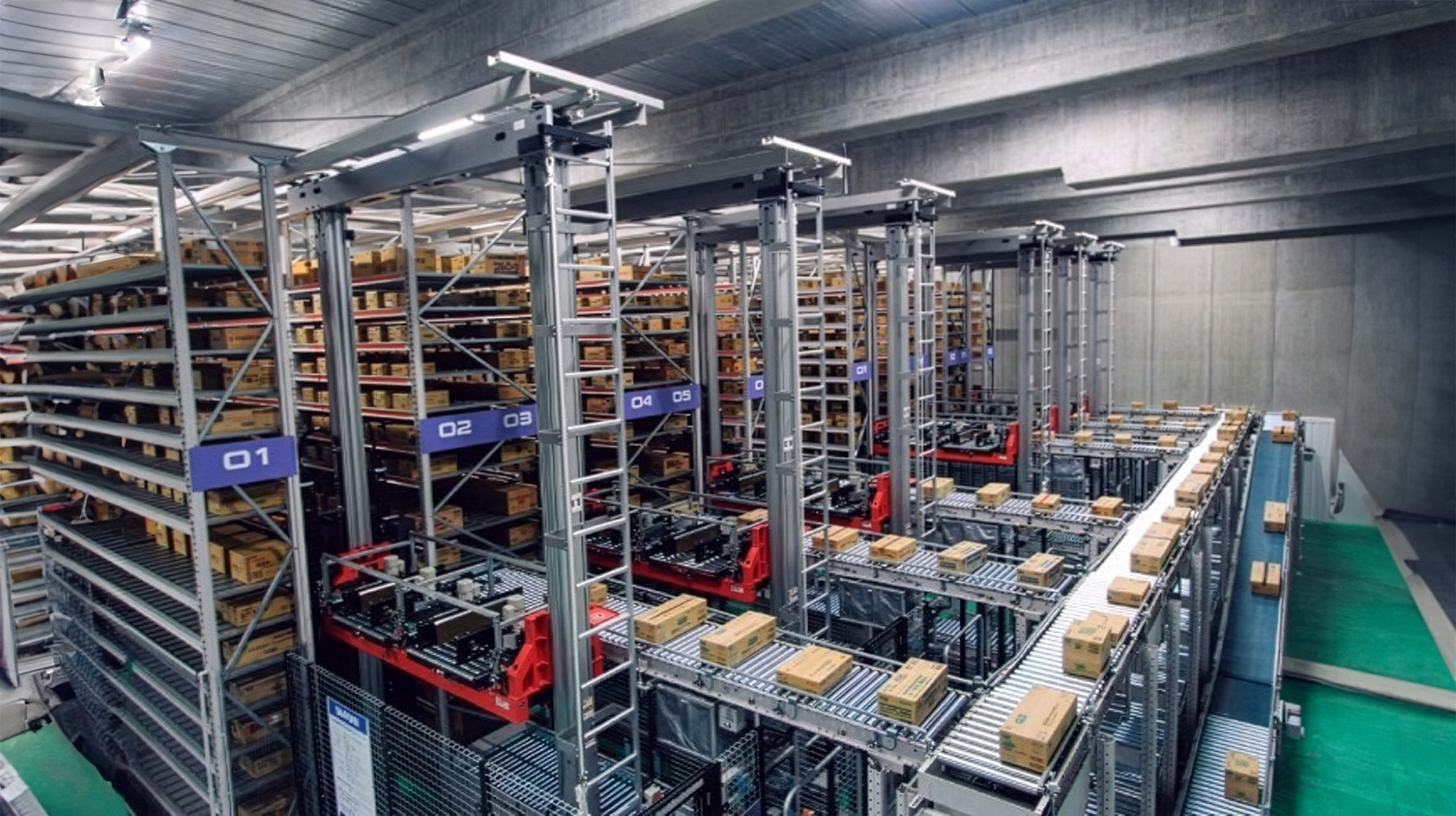
Daifuku, Daiichi Storehouse & Refrigeration: How a clever hybrid approach is saving frozen food logistics from collapse – Image: Xpert.Digital
Blueprint for logistics: Why automated deep-freeze warehouses will become the new industry standard
Working at -25 degrees Celsius: Why manual labor in deep-freeze warehouses no longer has a future
The smart refrigeration strategy: Why modern deep-freeze warehouses don't fully automate everything
Frozen food logistics is facing a historic turning point: At extreme temperatures of -25 degrees Celsius, human labor is reaching its physical and economic limits. Rising error rates, enormous energy costs, and a dramatically worsening shortage of skilled workers are forcing the industry to rethink its approach. However, the solution doesn't necessarily lie in uncompromising full automation, but rather in an intelligent hybrid approach. A pioneering project by the Japanese logistics provider Daiichi Storehouse & Refrigeration impressively demonstrates that strategically deploying robots and intelligent conveyor systems where they offer the greatest benefit not only drastically reduces costs but also secures the company's ability to deliver goods in times of demographic change. Learn why this strategic automation model is considered a blueprint and survival strategy for the entire logistics industry, extending far beyond Asia.
Automated frozen food logistics as a strategic competitive advantage
When cold exposes the flawed thinking: Why manual work in deep-freeze storage is no longer an option
Frozen food logistics is considered one of the most technically demanding and operationally challenging areas of modern distribution. What at first glance appears to be an operational optimization measure in the case of Daiichi Storehouse & Refrigeration Co., Ltd., reveals upon closer inspection a fundamental shift in the entire industry logic: Manually managed frozen food operations are not only uneconomical – they are structurally unsustainable. The Iwatsuki Nagamiya Distribution Center in Saitama provides a paradigmatic example of this, with relevance far beyond Japan.
The case study in context: Saitama as a laboratory for modern cold chain logistics
In April 2015, Daiichi Storehouse & Refrigeration, a 3PL service provider specializing in refrigerated food logistics, opened its Iwatsuki Nagamiya Distribution Center in Saitama City. The four-story, earthquake-resistant building was designed so that its second floor functions exclusively as a deep-freeze area for frozen goods—the so-called "Frozen DC." This area serves a wide range of customers, from chain stores with home delivery services to large food wholesalers in the prefectures of Saitama, Chiba, Ibaraki, Tochigi, and Gunma.
The logistical challenge is complex: The company processes around 1,500 commercial frozen products, including ice cream and prepared frozen meals. Of these 1,500 items, approximately 600 have a particularly high turnover rate, making precise lot management according to best-before dates and the efficient handling of high-mix, low-volume deliveries—that is, many different products in small quantities—an essential operational requirement. This combination of a wide product range, strict batch traceability, and extreme temperature conditions created structural pressure on manual operations from the outset.
Working in freezing conditions as a system risk: The underestimated costs of manual refrigeration processes
When Frozen DC began operations in 2015, incoming goods inspections, storage, and retrieval were predominantly carried out manually. The immediate consequences of this decision weren't immediately apparent in the cost balance – they materialized as a chronic strain in the form of staff shortages, increasing error rates, and rising recruitment costs. Working at -25 degrees Celsius is not merely unpleasant; according to current ergonomic research, it poses a significant health risk and demonstrably leads to shorter productive work periods, as regular warm-up breaks are necessary.
The shortage of skilled workers in frozen food logistics is not a purely Japanese phenomenon, but it is significantly exacerbated there due to the demographic situation. Understandably, warehouse workers in frozen food logistics prefer positions in non-refrigerated distribution centers, which puts frozen food companies at a structural disadvantage in the competition for labor. The high physical strain at these extreme temperatures, the resulting above-average sick leave, and the increased employee turnover drive real personnel costs far above nominal wage levels – a factor that is systematically underestimated in many calculations.
Added to this is the aspect of potential errors: Manual processes in cold environments are subject to a higher probability of errors. Limited motor skills due to cold-weather clothing, cognitive fatigue under extreme conditions, and the physical strain of order picking under time pressure create a situation in which shipping and storage errors are not exceptions, but rather an inherent phenomenon. Order picking errors alone can account for over 55 percent of total operating costs in manual warehouses – a figure that is even more unfavorable in deep-freeze storage.
The technological answer: A tiered automation concept as a blueprint
In April 2016, Daiichi Storehouse & Refrigeration implemented new IT and material flow systems to streamline its deep-freeze processes and significantly reduce the amount of manual work in its freezer warehouse. The implemented solution – supplied by Daifuku, the world's largest intralogistics specialist with a global market share of approximately 14.8 percent in material flow technology and sales of around 612 billion yen in the fiscal year ending March 2025 – features an intelligent hybrid approach that combines automated and manual processes based on economic considerations.
The installed system comprises several interconnected components: wireless handheld terminals with character recognition, a deep-freeze mini-load AS/RS (automated small parts warehouse) with an operating temperature of -25°C and cranes with dual extractors – allowing for the simultaneous storage and retrieval of multiple cases – as well as mobile racking for specific product categories, automatic labeling machines for applying shipping labels, and a conveyor system capable of processing an average of 12,500 cases per day. The mini-load AS/RS has nine storage and retrieval machines and offers a capacity for up to 15,000 cases.
The core of the concept is differentiated product classification: Products are categorized into four groups (A, B, C, D) based on their turnover profile, which determines their storage location. A-products are stored in mobile racks, B and C products in the fully automated Mini-Load AS/RS, and D products in conventional fixed racks. This stratification follows a simple yet effective economic logic: Automation is deployed where it generates the highest throughput and most effectively reduces the workload for personnel – for the B and C items, which are handled frequently in the medium term. Investment in expensive automation technology is concentrated on those product segments with the highest handling frequency and picking error risk.
Goods receipt and traceability: Digital closing of gaps in the cold chain
The receiving area was redesigned using handheld terminals with automatic character recognition. Upon arrival, employees scan the JAN or ITF codes printed on the cases, along with the best-before and production dates. A portable label printer then automatically generates a goods receipt label, which is attached to each case before the product is moved to its respective storage zone. This step – technically simple, operationally transformative – creates the foundation for seamless, digital lot tracking by best-before date (FEFO: First Expired, First Out), which could no longer be reliably guaranteed manually for approximately 600 high-frequency frozen food items.
Accurate lot management in frozen food logistics is economically critical for two reasons: First, frozen products are subject to regulatory requirements regarding batch traceability. Second, an incorrect picking sequence leads to an increased rate of product spoilage, which not only results in direct write-offs but also triggers delivery complaints and damages reputation in consumer-oriented supply chains. Digital scanning and system-controlled allocation virtually eliminate these sources of error.
Production flow and picking process: How automation strategically frees up human power
In the shipping process, A and D products are picked from mobile and fixed racks by personnel using a handheld terminal, then consolidated and fed into an auto-labeling machine. This machine automatically applies shipping labels based on the delivery destination. During further transport, the products are automatically sorted onto shipping lines based on the applied label. Before loading onto shipping vehicles, operators check whether the assembled cases are assigned to the correct shipping line – a final manual quality check that complements, but does not replace, machine sorting.
The B and C products in the mini-load AS/RS are consolidated and picked fully automatically, without significant on-site personnel intervention. After automated picking, these products are conveyed into the regular shipping flow, where they are processed identically to manually picked goods. This seamless transition between fully automated and semi-automated process steps is a key characteristic of modern hybrid logistics architectures: full automation is not implemented as an all-or-nothing decision, but rather as a strategic layer within a mixed process chain. The result is a significant reduction in required labor hours and a decrease in shipping errors.
The economic anatomy of deep-freeze automation: Where the real savings occur
The economic justification for automation projects in frozen food logistics rests on the interplay of several cost levers that together generate significant economic benefits. Experience shows that in manually operated frozen food warehouses, approximately 20 percent less productive working time is spent on warm-up breaks and setup times compared to normal temperature operation. While automation investments in frozen food warehouses are more capital-intensive than in temperature-controlled areas, they typically pay for themselves within three to four years due to the higher ongoing operational savings. In frozen food logistics, the greatest economic benefit arises from the interplay of three factors: reduced labor costs, energy efficiency, and space utilization.
Regarding labor cost savings: Typical automation implementations in cold storage warehouses achieve a reduction in labor costs of 30 to 35 percent. In manual warehouse operations, order picking alone accounts for over 55 percent of operational warehouse costs. The complete or near-complete automation of this process for medium and high-frequency items substantially reduces staffing requirements – and allows the remaining staff to work in more value-added areas.
Regarding energy efficiency: AS/RS systems in the deep-freeze sector offer structural energy advantages compared to conventional construction methods. Since the volume of heated and illuminated traffic areas is significantly reduced – aisles that previously had to be accessible to personnel are eliminated – and regenerative drive technologies in modern crane systems recover energy during lowering, the overall energy consumption per storage unit can be significantly reduced. Energy costs represent 9 to 18 percent of total operating revenue in deep-freeze logistics – a share where even moderate savings have a significant impact on the bottom line. Documented cases show energy reductions of up to 16 to 20 percent after automation implementations.
Regarding space utilization: Automated deep-freeze systems allow for vertical densification of storage space, as no passageways for forklifts or pedestrians are required. This significantly increases storage density for a given footprint – an important factor, given the continuously rising land and construction costs near urban centers like Saitama City. Daifuku itself documents that a new building with integrated AS/RS freezer systems can be up to US$12 million cheaper than conventional construction methods in a direct comparison.
For medium-sized projects, amortization periods of generally less than five years are considered realistic – in cases with high throughput, even around one and a half years. Total investment costs for fully automated systems of this size typically range between 5 and 20 million euros, depending on capacity, temperature setting, and degree of automation.

Expert partner in warehouse planning and construction
Energy-efficient cold chain logistics: Automation as a climate pioneer – How Daifuku revolutionized deep-freeze storage at -25 °C
Japan's structural automation imperative: Demographics as an accelerator
Daiichi Storehouse & Refrigeration's decision to automate must be understood within a broader macroeconomic context that fundamentally influences the operational decision-making logic of Japanese logistics companies. Japan is facing a demographic upheaval of unparalleled intensity among developed economies. The working-age population has been shrinking for decades: over 30 percent of the population is now over 65, and the total fertility rate is around 1.2 children per woman – far below the replacement level. The total population declined for the fourteenth consecutive year in 2024, and only 59.6 percent of the population is of working age.
This has immediate consequences for the logistics industry. The so-called "2024 problem"—the 960-hour annual limit on overtime for truck drivers, which comes into effect in April 2024—has exacerbated the already latent capacity crisis in the transport sector. Projections from Japan's Nomura Research Institute predict that by 2025, up to 28 percent of planned deliveries could no longer be transported; by 2030, this figure is expected to rise to 38 percent, resulting in economic damage of more than 10 trillion yen (approximately 74 billion euros). While the "2024 problem" primarily affects road transport, the shortage of skilled workers in warehousing—and especially in frozen food logistics—is having at least as significant an impact.
In this context, automation in Japan is not a strategic option, but a matter of operational survival. Companies like Daiichi, which invested in automation as early as 2016, have gained a structurally superior competitive position over competitors who continue to rely on manual processes – not through cost optimization alone, but through their ability to deliver reliably.
The Japanese frozen food market as a demand context
This pressure to automate coincides with a frozen food industry that is experiencing sustained growth. Japan's frozen food market reached a volume of US$16.1 billion in 2025 and is projected to grow to US$22.1 billion by 2034, representing an annual growth rate of 3.59 percent. In 2024, the total Japanese frozen food market reached an all-time high of approximately 2.93 million tons – marking the fourth consecutive year of growth. Per capita consumption increased by 1.7 percent year-on-year to 23.6 kilograms. Sales of commercial frozen food rose by 3.7 percent in 2024 to 39.4 billion yen.
The Japanese cold chain market is growing at a CAGR of 5.4 percent from 2024 to 2030, driven by intensified demand for fresh produce and the expanding online grocery market. The food and beverage sector accounts for 64 percent of the overall cold chain logistics market. The broader Japanese food logistics market reached a volume of US$33 billion in 2025 and is projected to grow to over US$40 billion by 2030. Within this dynamic of increasing demand, a logistics provider like Daiichi operates at a critical juncture between rising volume and a structural labor shortage – a gap that can only be bridged through automation.
The 3PL market in Japan as a whole is estimated at around US$38.44 billion in 2026 and is projected to grow to US$44.19 billion by 2031, with a CAGR of 2.83 percent. Drivers include digital transformation programs, the Green Logistics Act, and increasing demands for real-time transparency in the supply chain. For frozen food 3PL providers like Daiichi, this means: the market is growing, but cost requirements are rising in parallel – without automation, profitable growth in this segment is hardly achievable.
Daifuku as a system provider: Technology ecosystem and market position
The selection of Daifuku as the system partner for the Iwatsuki project was no coincidence, but rather the result of clear industrial logic. Daifuku is not only Japan's leading intralogistics provider, but with an estimated global market share of 14.8 percent in material handling technology and over 34,000 AS/RS crane systems delivered worldwide since 1966, it is the globally dominant force in this segment. The company achieved a revenue of US$4.16 billion in fiscal year 2024, with intralogistics accounting for 52 percent of total revenue.
For deep-freeze applications at -25 degrees Celsius, Daifuku's Mini-Load-AS/RS is a specially developed solution: The crane systems are designed for continuous operation under extreme temperatures, and the materials and lubricants used are optimized for cold stability. The fact that the Mini-Load-AS/RS used in the Iwatsuki system has nine storage and retrieval units and can store up to 15,000 cases is not a standard configuration feature, but rather an indicator of the system's scalability: The solution can be modularly adapted to increasing throughput requirements without altering the overall concept.
Hybrid automation architecture: Why not everything should be automated
A particularly noteworthy aspect of the Daiichi concept is its deliberate decision not to fully automate. A and D products – items with very high or very low turnover, respectively – remain in manually operated storage areas (mobile racks and fixed racks). This decision is economically rational: For extremely fast-moving products (A), the access frequency is so high that mobile racks with direct personnel access can be more efficient than an automated storage and retrieval (AS/RS) cycle. For very slow-moving products (D), the low movement frequency does not justify expensive AS/RS integration.
This concept demonstrates a key principle of modern warehouse automation: full automation for its own sake is not an economically viable goal. The optimal solution selectively combines automation according to the principle of maximizing economic benefit per segment. Crucial is the precise analysis of the product portfolio based on turnover rate, picking frequency, and handling effort – and the resulting differentiation of storage zones. In practice, this hybrid model shows that a differentiated system with selective automation often achieves a better return on investment than a system with comprehensive automation.
Energy policy dimension: The deep-freeze warehouse as an energy consumer and efficiency candidate
A frequently overlooked aspect in operational logistics discussions is the energy policy dimension of deep-freeze automation. Deep-freeze facilities are among the most energy-intensive building types: the refrigeration system alone can account for 60 to 70 percent of a deep-freeze warehouse's total energy consumption. Given the commercial electricity prices typical in Japan—and against the backdrop of an energy transition that will increase electricity costs in the long term—energy consumption represents a substantial and growing cost factor for deep-freeze operations.
Automated storage systems offer structural advantages for several reasons: First, AS/RS systems reduce the frequency of door openings and minimize thermal loss from loading and unloading – a significant energy factor at -25 °C. Second, highly automated systems enable more precise temperature control, as human-machine interactions in the cold core area decrease. Third, regenerative drive systems in modern crane systems allow braking energy to be fed back into the grid. Fourth, the higher storage density reduces the surface area of the thermal envelope relative to the storage volume. All these factors combine to result in energy savings of typically 20 percent compared to conventional deep-freeze warehouses.
In Japan, where the Green Logistics Act and ambitious decarbonization targets are increasingly exerting regulatory pressure on logistics service providers, energy efficiency arguments are gaining additional strategic weight alongside the already strong economic motives. Automation here is not only a productivity tool but also a catalyst for sustainability – an aspect that is becoming increasingly relevant in corporate ESG reports and tender processes from retail and food wholesale customers.
FEFO, traceability and regulatory compliance: The underestimated risk management argument
In addition to the quantifiable productivity and cost advantages, the qualitative dimension of automation in frozen food logistics deserves special attention: the systematic improvement of regulatory compliance. Frozen food products in Japan—as throughout the developed world—are subject to strict requirements regarding batch traceability and adherence to FEFO (First-In, First-Out) principles. A manually operated system for 1,500 items and approximately 400 stores is inherently prone to errors.
The system implemented at Daiichi eliminates these risks through the digital recording of all batch-relevant information upon goods receipt, system-supported FEFO control during picking, and automatic labeling with delivery-destination-based sorting. In the event of a product recall—a real and economically consequential risk scenario in the food industry—such a system allows for the traceability of all affected batches down to the store level within seconds. The ability to precisely trace batches is not only a compliance issue but also a liability protection tool that, in a worst-case scenario, can determine the economic survival of a 3PL company.
Industry trend and market dynamics: Automation as a differentiation tool in 3PL competition
Daiichi's measures align with a broader market trend that has accelerated significantly since around 2020. The COVID-19 pandemic massively boosted the consumption of frozen foods and the trend toward home cooking, increasing throughput in cold storage facilities while simultaneously exacerbating staff shortages due to illness and safety requirements. This dual pressure transformed automation projects from a strategic option into an operational necessity. According to industry data from intralogistics specialist TGW, the labor shortage ranks first among motivations for automation, followed by sustainability goals, rising energy costs, and digitalization.
The same dynamic is evident in a global context. In the US, the cold storage market is growing at a CAGR of 11 percent and is projected to increase from US$167 billion in 2023 to US$408 billion by 2033. There, too, labor shortages and high employee turnover rates are the main drivers of automation in refrigerated and frozen food warehouses. Companies that invest early in automated frozen food distribution not only gain cost advantages – they also secure the operational reliability that has become a key differentiator in service tenders from major retail chains and food wholesalers.
The Japanese 3PL market itself is projected to grow from US$82.32 billion to US$127 billion by 2035, with a CAGR of 4.94 percent. For 3PL service providers in the frozen food sector, this means: the market is growing, but with it, the scaling requirements for infrastructure and technology. Those who want to grow profitably in this market cannot rely on manually managed processes.
What Saitama teaches the rest of the world
The Iwatsuki Nagamiya Distribution Center model is more than just a case study of successful frozen food automation. It is an economic blueprint for a structural challenge that is prevalent far beyond Japan: the impossibility of remaining competitive in extreme working environments with high product range pressure and a simultaneous shortage of skilled workers without consistently implementing selective automation.
The economic appeal of this concept lies in its pragmatism: It does not aim for a fully automated warehouse where all processes are handled by machines. Instead, automation is deployed precisely where it generates the highest marginal benefit – for moderately frequently handled products with high picking volumes and strict requirements for batch integrity. The remaining personnel are relieved of physically demanding and error-prone tasks in the cold environment and reassigned to quality assurance and planning-oriented roles. This approach maximizes the return on investment and minimizes the operational risks of full automation.
For decision-makers in food logistics, 3PL providers, and investors in logistics infrastructure, Saitama delivers a clear message: Frozen food automation is not a luxury reserved for advanced corporations, but an economic imperative for all market participants who want to operate profitably in a market characterized by labor shortages, energy costs, regulatory requirements, and growing volumes. The question is not whether – but when and to what extent.
Your intralogistics experts

Consulting, planning and implementation of complete solutions for high-bay warehouses and automated storage systems - Image: Xpert.Digital
More information here:
Your global marketing and business development partner
☑️ Our business language is English or German
☑️ NEW: Correspondence in your native language!

Konrad Wolfenstein
I and my team are happy to be available to you as your personal advisor.
You can contact me by filling out the contact form here or simply call me at +49 7348 4088 965. My email address is : [email protected]
I'm looking forward to our joint project.
☑️ SME support in strategy, consulting, planning and implementation
☑️ Creation or realignment of the digital strategy and digitization
☑️ Expansion and optimization of international sales processes
☑️ Global & Digital B2B trading platforms
☑️ Pioneer Business Development / Marketing / PR / Trade Fairs
Our global industry and economic expertise in business development, sales and marketing

Our global industry and economic expertise in business development, sales and marketing - Image: Xpert.Digital
Industry focus areas: B2B, digitalization (from AI to XR), mechanical engineering, logistics, renewable energies and industry
More information here:
A thematic hub offering insights and expertise:
- Knowledge platform covering global and regional economies, innovation and industry-specific trends
- A collection of analyses, insights, and background information from our key areas of focus
- A place for expertise and information on current developments in business and technology
- A hub for companies seeking information on markets, digitalization, and industry innovations










