
Published on: December 3, 2024 / Updated on: December 3, 2024 – Author: Konrad Wolfenstein
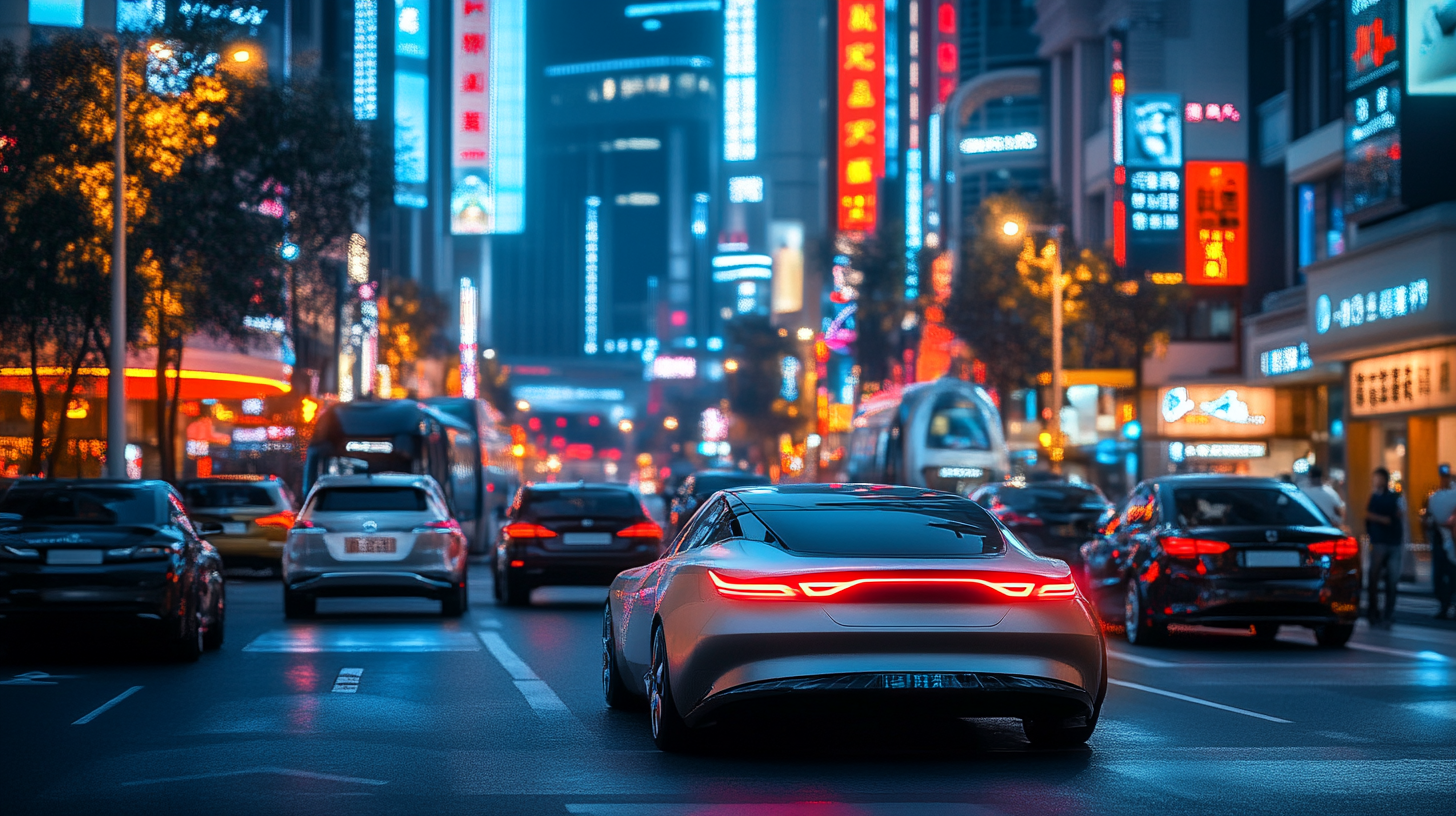
German automotive crisis: High production costs and low competitiveness – Image: Xpert.Digital
The German automotive industry in a dilemma: Challenges and opportunities in times of change
The biggest upheaval in decades: Why the automotive industry must act now
The German automotive industry is facing one of the greatest challenges in its history. A combination of technological, economic, and geopolitical factors has plunged the sector into a deep crisis. The following points examine the causes, effects, and potential solutions to this difficult situation.
Missed transition to electromobility
A key reason for the crisis is the German automakers' hesitant shift towards electromobility. While international competitors like Tesla and Chinese companies focused on electric vehicles (EVs) early on, German automakers clung to the combustion engine for a long time. This strategy led to them falling behind in the development and market launch of competitive electric cars.
Demand for electric cars has recently plummeted in Europe, particularly in Germany. This is due to several factors: the elimination of government purchase incentives has hampered sales, and many consumers find the currently available models too expensive or impractical. Furthermore, Chinese and American manufacturers dominate the market with more affordable and technologically advanced vehicles. German manufacturers have so far failed to develop comparable offerings, further weakening their competitive position.
High production costs and low competitiveness
Germany is a cost-intensive production location. High energy prices and labor costs make it difficult to manufacture vehicles at competitive prices – especially in the entry-level segment. For this reason, German manufacturers are increasingly focusing on the premium segment, where higher margins can be achieved. However, even here, pressure from international competitors is growing.
Another problem is the low utilization of production facilities. Many plants are operating at only about two-thirds of their capacity, which reduces efficiency and increases the cost per vehicle. These structural weaknesses are making it increasingly difficult for German automakers to compete with manufacturers from countries with lower production costs.
Strong international competition
Foreign competition poses an immense challenge. The dependence on the Chinese market, long considered a growth pillar for German automakers, is particularly problematic. However, the market share of German manufacturers in China is declining rapidly, as domestic brands like BYD and Nio are conquering the market with innovative electric vehicles. At the same time, these Chinese manufacturers are increasingly pushing into the European market, putting German automakers under pressure.
Another weakness is the technological lag in software and digitalization. While Chinese and American manufacturers equip their vehicles with state-of-the-art digital features – from autonomous driving functions to connected services – many German models appear outdated. This lag not only jeopardizes competitiveness but also damages the image of German car brands as innovation leaders.
Economic and geopolitical factors
The general economic downturn in Europe is further dampening demand for new cars. Many consumers are postponing major purchases such as cars due to uncertainty about their financial future. At the same time, geopolitical tensions are creating further uncertainty: potential US tariffs on German cars and EU tariffs on Chinese electric vehicles could exacerbate the situation.
The dependence on the US market is particularly critical, as it is currently the most important destination for German car exports. Last year, Germany exported around 400,000 vehicles to the USA – more than to any other country. However, should Donald Trump be re-elected, new tariffs could be introduced on European cars, which would significantly reduce the profits of Volkswagen, BMW, and Mercedes-Benz.
Structural problems and management errors
The crisis in the German automotive industry is also self-inflicted: unclear strategies and management errors have contributed to missing important trends. One example of this is the back-and-forth between combustion engines and electric drives, which ties up valuable resources and delays innovation.
Furthermore, many manufacturers have maintained unrealistic return targets after the high profits during the pandemic. This ambition leads to excessive pressure to cut costs, which in the long run hinders innovation and undermines employee confidence.
Impact on employment and suppliers
The crisis is already having a noticeable impact on the labor market: around 130,000 jobs could be at risk, as car production has fallen by 23% since its peak, while the number of employees has only decreased by 8%. Suppliers are particularly affected, as they have to adapt to the changing demands of electromobility. Many are planning job cuts or restructuring to remain competitive.
Even smaller companies along the value chain are fighting for survival: The switch from combustion engines to electric drives requires massive investments in new technologies – a challenge that financially overwhelms many suppliers.
Strategies for overcoming the crisis
To become competitive again, German car manufacturers must make fundamental changes:
Focus on electromobility
Greater investment is needed in research and development to create competitive electric cars – in both the premium and entry-level segments.
Developing digital skills
Digitalization must be consistently advanced – from software solutions to networked services.
Optimize cost structure
Production processes need to be made more efficient in order to reduce costs.
Opening up new markets
To reduce dependence on China and the USA, new sales markets should be developed – for example in Southeast Asia or Africa.
Strengthening cooperation
Partnerships with technology companies could help to close innovation gaps more quickly.
Long-term perspectives
The German automotive industry is at a crossroads: Without a fundamental transformation, this key sector risks a long-term loss of importance for the German economy. Yet, despite all the challenges, the crisis also offers opportunities: With a clear focus on innovation and sustainability, German manufacturers could once again assume a leading role in the global automotive market.
The speed and decisiveness with which companies and policymakers can act will be crucial. Because one thing is certain: the future of the automobile will be electric, digital, and sustainable – those who fail to make this change in time risk their survival in international competition.
Suitable for: