

These 10 unknown companies dominate the tech world: Not Apple or Tesla – Who really builds your smartphone and electric car?
Xpert Pre-Release

Available in 27 languages 📢
Prefer Xpert.Digital on GoogleⓘPublished on: August 30, 2026 / Updated on: August 30, 2026 – Author: Konrad Wolfenstein
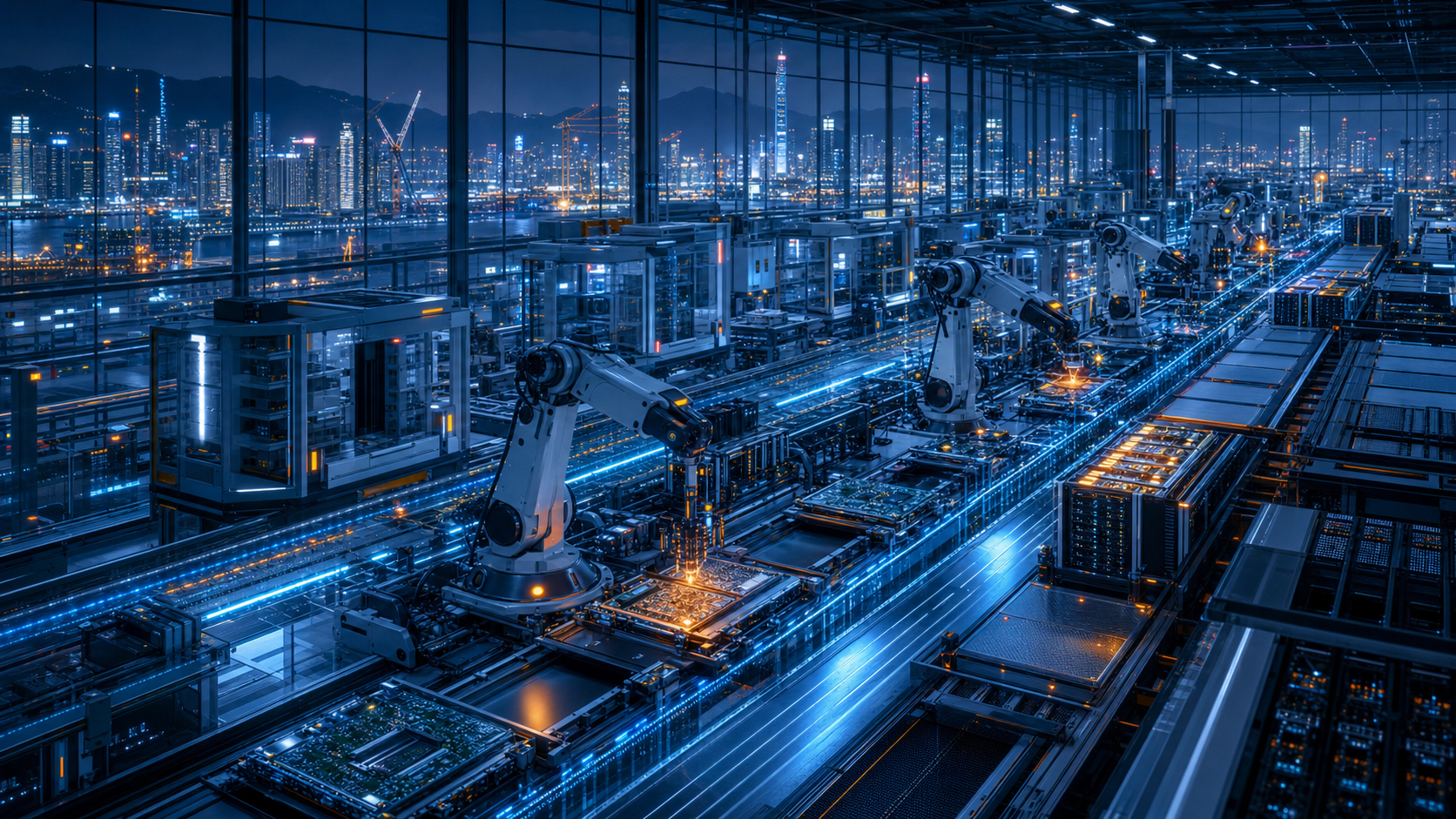
These 10 unknown companies dominate the tech world: Not Apple or Tesla – Who really builds your smartphone and electric car – Creative image on the topic, with AI: Xpert.Digital
The hidden tech giants: Foxconn, Luxshare & Co.: The secret power centers of the global economy
The invisible billion-dollar boom: How contract manufacturers are profiting from the AI revolution
From niche supplier to AI champion: The ranking of the most powerful tech builders
When we admire the latest iPhones, the most powerful AI servers, or modern electric cars, we often only think of the big brand names: Apple, Nvidia, or Tesla. But who actually assembles, solders, and orchestrates the production of these technological masterpieces? The answer lies in an industry that generates gigantic revenues in the hundreds of billions, yet remains completely invisible to most consumers: the so-called Electronic Manufacturing Services (EMS). The giants of this contract manufacturing sector—such as Foxconn, Luxshare, or Wistron—are no longer simply assembly line workers. They have evolved behind the scenes into the true architects of the digital global economy. They are a major driver of the rapid AI boom, dominate global supply chains, and, through their extreme market concentration, simultaneously pose one of the greatest geopolitical risks of our time. Let's take a look behind the scenes at the ten most powerful contract manufacturers that truly keep our interconnected world running.
Foxconn, Luxshare & Co. – The invisible architects of the digital global economy
How ten little-known contract manufacturers control the global technology infrastructure and why hardly anyone knows their names
Few consumers who unpack an iPhone, order a new laptop, or get into an electric car know who actually assembled the device. The brand names on the packaging—Apple, Dell, HP, Tesla, Cisco, or Nvidia—suggest that these companies manufacture their products themselves. In reality, behind almost every electronic device is an Electronic Manufacturing Services (EMS) provider, which handles the actual physical production. This sector is one of the most concentrated and yet least visible industries in the global economy. Its largest players generate combined revenues that exceed the economic output of medium-sized industrialized nations, yet they remain largely unknown to the public. This is due to the business model itself: EMS companies almost never operate under their own name when dealing with end customers, but rather work behind the scenes as an extension of the major brand corporations.
The significance of this sector has fundamentally shifted in recent years. Previously, EMS companies were primarily seen as assemblers of smartphones and notebooks at the lowest possible unit costs. Today, they are key players in building the global data center and AI infrastructure, in electromobility, in medical technology, and increasingly in robotics. Anyone wanting to understand the true resilience of global supply chains for artificial intelligence, cloud computing, and electric vehicles cannot avoid a close examination of these ten corporations.
The world ranking of contract manufacturers in the financial year 2025
The current annual reports for fiscal year 2025 paint a more nuanced picture than simplified social media graphics often convey. While the figures fluctuate depending on the exchange rate date and accounting currency, the fundamental ranking and the enormous differences in size within the industry become clear.
| Rank | Pursue | seat | Revenue for fiscal year 2025 | Development |
|---|---|---|---|---|
| 1 | Hon Hai Precision Industry (Foxconn) | Taiwan | approximately 260 billion US dollars (NT dollars 8.1 trillion) | plus 18 percent compared to the previous year |
| 2 | Wistron | Taiwan | approximately 68 billion US dollars (NT dollars 2.19 trillion) | plus 108 percent compared to the previous year |
| 3 | Luxshare Precision Industry | China | approximately 46 billion US dollars (RMB 332.3 billion) | plus 23.6 percent compared to the previous year |
| 4 | Pegatron | Taiwan | approximately 36 billion US dollars (NT dollars 1.117 trillion) | minus 0.7 percent compared to the previous year |
| 5 | Jabil | United States | 29.8 billion US dollars (fiscal year ending August 2025) | plus 3.2 percent compared to the previous year |
| 6 | Flex | Singapore | 25.8 billion US dollars (fiscal year ending March 2025) | minus 2 percent compared to the previous year |
| 7 | BYD Electronic | China | approximately 25 billion US dollars (RMB 179.5 billion) | plus 1.2 percent compared to the previous year |
| 8 | Inventec | Taiwan | approximately US$22.6 billion (NT$691.2 billion) | plus 7 percent compared to the previous year |
| 9 | Celestica | Canada | 12.4 billion US dollars | plus 28 percent compared to the previous year |
| 10 | Sanmina | United States | 8.1 billion US dollars (fiscal year ending September 2025) | plus 7.4 percent compared to the previous year |
This list differs significantly from popular overviews frequently circulating on social media. In particular, Wistron has transformed itself within a year from a niche provider to one of the fastest-growing forces in the industry thanks to its explosive growth in the AI server business, leaving Luxshare, Pegatron, and Jabil far behind in terms of pure growth momentum. Celestica, long a relatively inconspicuous North American supplier, has also catapulted itself into a growth position through its early specialization in network technology for hyperscalers and cloud providers, surpassing even Foxconn in percentage terms.
Foxconn as a structure-defining giant of the industry
Hon Hai Precision Industry, better known worldwide under the brand name Foxconn, leads the global EMS industry by a significant margin. With annual revenue of approximately US$260 billion in fiscal year 2025, the Taiwanese company surpasses its second-placed competitor by more than three times and, according to its own figures, holds a market share of over 40 percent in the global EMS market. This dominance is the result of historical growth: Foxconn has been Apple's most important manufacturing partner for decades, assembling a large proportion of all iPhones worldwide, but has consistently diversified its business model.
The company's primary growth driver is no longer its smartphone business, but rather the expansion of its server infrastructure for artificial intelligence. In the second quarter of 2025, revenue from AI servers grew by more than 60 percent year-over-year, and an increase of over 170 percent was expected for the third quarter. The company itself describes the current decade as the first decade of AI-driven industrial production, citing strategic partnerships with leading chip and cloud companies as well as its own investments in robotics, electric vehicles, and semiconductor manufacturing. At the same time, Foxconn is broadening its production base geographically and now operates more than 230 sites in 24 countries to mitigate geopolitical risks and trade conflicts.
From niche player to rising star: Wistron and the AI server effect
Few examples illustrate the structural transformation of the industry as vividly as Wistron. The Taiwanese corporation, which for a long time operated in the shadow of larger competitors like Pegatron or Quanta, more than doubled its revenue within a single fiscal year, breaking the two trillion NT dollar mark for the first time. The reason for this extraordinary leap is the massive demand for AI and general-purpose servers, which, according to the company, generated triple-digit percentage growth rates across several product lines. This exemplifies how heavily traditional contract manufacturing now depends on the investment momentum of large cloud providers, who are equipping their data centers with specialized AI hardware at a record pace.
🎯🎯🎯 Data-driven B2B industry hub as a quasi-in-house solution

The quasi-in-house solution: How Xpert.Digital closes operational gaps in B2B marketing and sales – Smart Content-Driven Business - Image: Xpert.Digital
Xpert.Digital is a data-driven B2B industry hub led by Konrad Wolfenstein . The company acts as an external, quasi-in-house solution for industrial partners, closing operational gaps in marketing, content, and sales – without requiring additional resources on the client side.
More information here:
The hidden giants of the tech world: Why EMS companies hold the power today
China's catch-up race: Luxshare and BYD Electronic as geopolitical rivals
While Taiwanese companies traditionally dominate the top spots in the industry, a Chinese conglomerate, Luxshare Precision Industry, has established itself and is now confidently competing for the position of preferred manufacturing partner for Western technology brands. The Dongguan-based company increased its revenue by almost a quarter in 2025, recording growth of over 185 percent, particularly in the automotive electronics sector, largely due to the acquisition of the German cable specialist Leoni. This development marks a strategic shift: Luxshare is increasingly positioning itself not merely as an extended workbench for consumer electronics, but as a fully-fledged system supplier for the automotive industry and data center technology.
BYD Electronic, a subsidiary of the Chinese electric vehicle giant BYD, presents a more nuanced picture. Total revenue stagnated almost completely in 2025, while net profit declined by more than 17 percent, due to a shift towards lower-margin assembly contracts and intense price pressure on smartphone components. At the same time, however, the company's future-oriented business areas are growing rapidly: the electric vehicle electronics division increased by almost 28 percent, and the still small but strategically important segment for AI infrastructure components grew by more than 30 percent. This situation demonstrates that even within a single corporation, traditional consumer electronics are increasingly becoming obsolete, while automotive electronics and data center hardware are emerging as the real drivers of growth.
American and Canadian providers between consolidation and AI boom
Compared to the Asian industry giants, US and Canadian EMS companies operate on a significantly smaller but higher-margin scale. Florida-based Jabil generated $29.8 billion in revenue in fiscal year 2025, benefiting primarily from a 34 percent increase in demand in its smart infrastructure segment, while traditional consumer electronics and regulated industries contracted. Singapore-based Flex, historically closely associated with automotive and industrial electronics, experienced a slight decline in revenue during the same period, but partially offset this through above-average growth in its data center business and improved operating margins.
Particularly noteworthy is the performance of Celestica. The Canadian company, which often plays only a minor role in traditional EMS rankings, grew by 28 percent in 2025 to US$12.4 billion, significantly exceeding its own forecast. This success is largely attributable to its connectivity and cloud solutions segment, whose revenue increased by 42 percent, while hardware for hyperscale data centers now accounts for 41 percent of total revenue, compared to just 21 percent two years prior. Sanmina, also based in the United States, experienced more solid but considerably more moderate growth of 7.4 percent to US$8.1 billion, placing it near the lower end of the top ten companies considered here.
Why these corporations constitute the real power structure of the technology industry
The key finding from the current data is that market power in the electronics industry no longer depends solely on brand logos, but lies primarily with those who actually control physical production, quality assurance, and global logistics. EMS companies possess several structural advantages that make them virtually irreplaceable. They operate high-volume production lines designed for billions of components per year, thereby achieving economies of scale that no single brand could achieve on its own. They are also the only players capable of manufacturing complex AI servers, smartphones, automotive electronics, medical technology, and data center hardware in parallel and with comparable precision.
Added to this is their ability to orchestrate extremely complex global supply chains that must coordinate thousands of suppliers of semiconductors, circuit boards, enclosures, batteries, and specialized components. In an era of geopolitical tensions, export controls, and customs risks, this supply chain expertise has become a distinct competitive advantage, determining whether major technology companies win or lose contracts. Any brand-name company wanting to launch a new AI server rack or a new electric vehicle today is effectively dependent on the capacity, level of automation, and innovative capabilities of these few large EMS companies.
The next industrial revolution of contract manufacturing
The industry is currently undergoing a profound technological transformation that extends far beyond traditional mass production. All major suppliers are investing heavily in AI-supported manufacturing control, where algorithms optimize production lines in real time, reduce error rates, and predict downtime. At the same time, fully automated, so-called smart factories are increasingly emerging, in which robotic arms, autonomous transport systems, and networked sensors largely replace humans in repetitive assembly steps.
A second key trend is the regionalization of supply chains. After decades of almost complete concentration of manufacturing in East and Southeast Asia, major EMS companies are now strategically building production capacities in North America, India, Vietnam, and, to some extent, Europe, in order to address geopolitical risks, trade conflicts, and customer demands for local manufacturing. Foxconn itself explicitly points out that it recognized the trend toward regional manufacturing several years ago and has established corresponding capacities in more than 24 countries.
Third, the product portfolio is shifting fundamentally towards electromobility and renewable energies. Several of the companies considered here are building their own battery cell production facilities, power electronics for electric vehicles, and charging infrastructure, thus positioning themselves as system suppliers for the automotive industry of the future, no longer just as pure electronics assembly companies. Fourth, sustainability is gaining importance as a competitive factor, as major brand customers such as Apple, Microsoft, and Amazon are increasingly demanding climate neutrality along their supply chains and, consequently, requiring binding reduction targets for energy consumption and emissions from their manufacturing partners.
Concentration risk and geopolitical vulnerability
As impressive as the growth figures may seem, they mask a structural risk that should not be underestimated from an economic policy perspective. The enormous market concentration, in which a single company controls more than 40 percent of the global EMS market and the top five providers together account for a significantly larger share, creates considerable dependencies for the entire global technology sector. If a single major production site in Taiwan or China fails due to natural disasters, political escalation, or trade conflicts, supply chains for smartphones, servers, and vehicles worldwide can be disrupted within weeks.
This vulnerability is the real reason why Western governments and technology companies are now actively pushing for diversification and directing billions of dollars in investment to alternative production locations. At the same time, the data shows that even Chinese suppliers like Luxshare and BYD Electronic are increasingly becoming geopolitically sensitive players themselves, especially when they directly influence European industrial structures through acquisitions like that of the German supplier Leoni. For companies that rely on robust and crisis-resistant supply chains, a precise understanding of this concentration structure is therefore becoming a strategic necessity and no longer just an academic question.
An industry with enormous leverage on the global economy
An analysis of the ten largest electronic manufacturing services (EMS) companies reveals an industry whose economic significance is strikingly disproportionate to its public perception. With a combined annual revenue of well over $500 billion, these ten largest providers form the true industrial backbone of the digital global economy, from smartphone production and the expansion of global AI infrastructure to electromobility. At the same time, current data shows that the growth dynamics within the sector are shifting dramatically in favor of those companies that invested early and consistently in the production of AI servers and data center hardware, while traditional consumer electronics are increasingly becoming a low-margin, obsolete business. Anyone wanting to understand the global technology economy of the coming years should therefore not only look at the well-known brand names, but also focus specifically on those few corporations that actually produce, assemble, and deliver behind the scenes.
📈🚀 From visibility to trust 👀🤝 Your scalable path with Xpert.Digital

From visibility to trust: Your scalable path with Xpert.Digital - Image: Xpert.Digital
In industrial B2B, sustainable business relationships rarely emerge overnight. They develop step by step – through visibility, professional relevance, recurring touchpoints, and growing trust. Xpert.Digital's 4-stage model addresses precisely this: It offers a structured path that begins with a manageable entry point and can evolve into deeper collaboration in business development if needed.
Instead of relying on loud marketing promises, this model puts the relationship at the forefront. Companies start with clearly defined, easily calculable measures and then decide, based on their own experience, how far they want to expand the collaboration. A key factor for this undisturbed trust-building process: The platform completely avoids annoying advertising ads, so the editorial focus remains solely on the companies' expertise.
More information here:
Your global marketing and business development partner
☑️ Our business language is English or German
☑️ NEW: Correspondence in your native language!

Konrad Wolfenstein
I and my team are happy to be available to you as your personal advisor.
You can contact me by filling out the contact form here [email protected]:or simply call me at +49 7348 4088 965. My email address is
I'm looking forward to our joint project.










