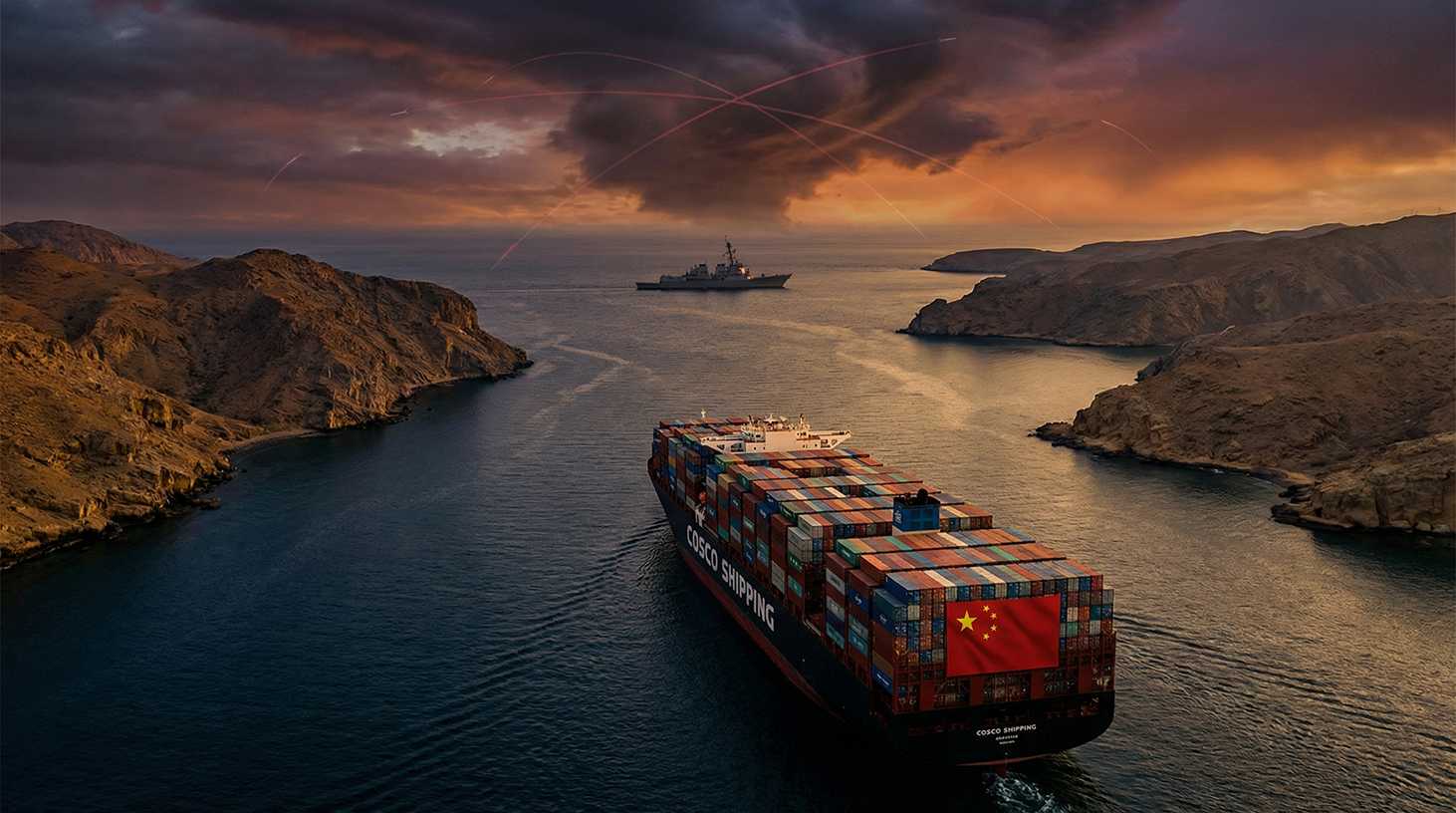
When trade routes become weapons: The secret alliance between China, Russia and Iran – Image: Xpert.Digital
"Ammunition for just two days": The West's fatal arms deficit in the shadow of China and Russia
The West's fatal error: Why we are sacrificing our global security for cheap Chinese goods
Shipyards, ships, missiles: How China has overtaken the West with a gigantic master plan
The fictional, yet highly realistic scenarios of an escalation in the Persian Gulf reveal a bitter truth: the West has gradually relinquished control over global trade routes. While democracies debated fuel prices for years and enjoyed cheap consumer goods, actors like China, Russia, and Iran have been working purposefully toward a multipolar new order. They now use the fragile maritime infrastructure of the global economy as a powerful weapon. From dramatic munitions shortages and China's absolute dominance in both civilian and military shipbuilding to the fatal dependence on Asian shipyards and financiers, the structural and industrial weaknesses of Europe and the US are being ruthlessly exposed. But all is not yet lost: Germany and Europe still possess a maritime and industrial core that can serve as a basis for a return to strategic autonomy. This text analyzes the quiet failure of Western deterrence and poses the most pressing question of our time: What price are we prepared to pay for our security and sovereignty?
Western dependence, Chinese dominance, and the silent failure of deterrence
The images from the Persian Gulf in the spring of 2026 are symptomatic of a tectonic shift in the global power architecture: Two naval powers—Iran and the United States—are simultaneously blockading the same strait through which some 20 million barrels of crude oil flow daily, almost 20 percent of global consumption. What at first glance appears to be a regional escalation, upon closer analysis reveals the West's structural weaknesses in an area that democracies have neglected for decades: maritime power, shipbuilding capacity, and control of global trade routes. Reserve corvette captain and maritime security expert Moritz Brake, from the University of Bonn, aptly summarized the situation on Markus Lanz's talk show with a phrase that has lost none of its sting: As long as the discussion revolves around fuel prices, it's about soldiers risking their lives so that someone else can have more money to order junk from China online.
The bottleneck of the global economy: Whoever controls the Strait of Hormuz controls the world
The Strait of Hormuz is a mere 33 kilometers wide at its narrowest point, offering shipping a mere three kilometers of corridors in each direction – yet it remains the most significant maritime bottleneck in the world. More than a quarter of global seaborne oil trade and roughly a fifth of the world's liquefied natural gas trade, primarily from Qatar, pass through this strait. A staggering 38 percent of Saudi Arabia's oil alone leaves the country via this route. Pipelines could only handle a fraction of these quantities in the event of a prolonged naval blockade.
The escalation of the Iran conflict from mid-2025 onward transformed this abstract vulnerability into a tangible reality. Iran blocked shipping and levied tolls for passage—whereupon US President Trump ordered the US Navy to completely seal off the strait and threatened to seize any ship that had paid a toll to Tehran. The consequences were immediate: Major shipping companies like Hapag-Lloyd and Maersk suspended all voyages through the strait, rerouted their vessels around the Cape of Good Hope, and war risk premiums skyrocketed. Several marine insurers canceled their coverage for war risks in the region. The ceasefire of April 7, 2026, effectively collapsed, and the subsequent talks in Islamabad ended without result.
This conflict cannot be viewed in isolation. The Strait of Hormuz is just one of several strategic bottlenecks that have come under simultaneous pressure. In the Red Sea, the Iranian-backed Houthi rebels in Yemen have attacked more than 100 ships since the end of 2023. Around 60 percent of Chinese exports to Europe pass through the Suez Canal, which connects the Red Sea to the Mediterranean. When the attacks reached their peak, container prices on this route tripled, and transit times increased dramatically. The entire construct of global trade infrastructure, which has been taken for granted in recent decades, is proving fragile.
The geopolitical triangle: Iran, Russia and China as an axis against the Western order
To understand current events, one must grasp the ideological and strategic connections between the actors. The Houthi militia in Yemen is not merely an instrument financed and armed by Tehran—it operates within a larger network in which Russia plays an active role. According to a report in the Wall Street Journal, Russia allegedly supported the Houthis in attacks on ships in the Red Sea with satellite data relayed by members of the Iranian Revolutionary Guard. China and Russia reportedly even entered into an agreement with the Houthi rebels guaranteeing safe passage through the Red Sea for Russian and Chinese vessels—while Western merchant ships were attacked.
This arrangement is more than a tactical deal. It demonstrates how closely intertwined the anti-Western network of Russia, Iran, China, and their proxies is. As Moritz Brake put it, the Houthis are fighting, at least tacitly, with material support from China. Beijing finds itself in a characteristic strategic dilemma: As the world's largest exporting nation, China depends on free trade routes, yet simultaneously maintains strategic partnerships with the actors who threaten these routes. The Konrad Adenauer Foundation aptly described this situation as a political tightrope walk for Beijing. The fact that Chinese and Russian ships remained unmolested for a long time, while Western shipping companies had to reroute their routes at great expense, makes the asymmetry of this constellation abundantly clear.
Ammunition on the scales: What wars reveal about the West's armament base
A central argument in Moritz Brake's analysis touches on a particularly sensitive issue: the consumption of anti-aircraft missiles. In the first weeks of the Iran-Iraq War, the US and Israel fired around 1,000 anti-aircraft missiles – a volume roughly equivalent to a year's production. Concrete figures confirm this picture: Within just a few days, stockpiles worth $26 billion were depleted, and shortages of THAAD and Patriot interceptor missiles quickly threatened. In response, the US accelerated production – increasing Patriot PAC-3 from 21 to 42 units per month, and THAAD to 400 units per year – but the effectiveness of these measures lags considerably behind the demands of the war.
The structural implications of this problem can hardly be overstated. Every missile used in the Persian Gulf is no longer available for the defense of Europe or for deterring Russia. According to Brake, Russia and China count every interceptor missile fired. Israel has reportedly indicated privately that its stockpiles are critically low – although the Israeli foreign minister has officially denied this. Some analysts estimated that the twelve-day war against Iran consumed two years' worth of global production capacity for certain interceptor missiles. The ability to simultaneously supply Ukraine is significantly diminished in this context.
This finding is not an isolated observation. Europe as a whole suffers from decades of neglected defense capabilities. The war in Ukraine dramatically demonstrated that in 2022, many EU member states possessed artillery stockpiles sufficient for just two days of combat. According to experts, Europe's arms industry has insufficient production capacity and is unable to replenish depleted stockpiles quickly enough. Even cotton for gunpowder production comes predominantly from China – a dependency that could jeopardize all Western ammunition production should the trade conflict with Beijing escalate. While Rheinmetall is currently building a new artillery ammunition plant, even optimistic estimates anticipate a tenfold increase in production by 2027 – while Ukraine's demand alone amounts to up to 6,000 rounds per day.
The silent takeover of the world's oceans: China's maritime strategy as a comprehensive concept
While the West debates energy prices and supply chains, China has expanded its position on the world's oceans with a consistency that is virtually unparalleled in its strategic depth. The figures are both impressive and alarming: In 2025, China achieved the largest global market share for the 16th consecutive year across three key indicators of the shipbuilding industry – completions, new orders, and order backlog. Shipbuilding production reached a deadweight tonnage of 53.69 million tons, an increase of 11.4 percent compared to the previous year. New orders accounted for 69 percent of the global market.
According to leaked US Navy documents, China's shipbuilding capacity is 232 times greater than that of the United States. With over 355 ships, China possesses the world's largest navy; the US has approximately 296. In 2024, China's largest state-owned shipbuilding company produced more merchant ships by tonnage than the entire US shipbuilding industry has since the end of World War II. This figure is hard to swallow: even if China's shipbuilding industry were to stagnate for ten years, experts believe the US could not catch up.
Hub for Security and Defense - Advice and Information


Hub for Security and Defense - Image: Xpert.Digital
The Security and Defence Hub offers expert advice and up-to-date information to effectively support companies and organizations in strengthening their role in European security and defence policy. Working closely with the SME Connect Defence Working Group, it particularly promotes small and medium-sized enterprises (SMEs) that wish to further develop their innovative capacity and competitiveness in the defence sector. As a central point of contact, the Hub thus creates a crucial bridge between SMEs and European defence strategy.
Related to this:
Dual-use and naval power: How China is reshaping the shipping world
Dual-use as a strategic weapon
Particularly revealing is the structural architecture behind this growth. China consistently pursues the concept of so-called military-civilian fusion: shipyards that build civilian merchant vessels are often simultaneously involved in the production of warships. This infrastructure is dual-use in a very serious sense – it can be quickly converted to purely military production in a crisis. The West, on the other hand, decoupled and privatized civilian and military shipbuilding over decades, with the result that the corresponding industrial capacities hardly exist today.
The US has recognized the consequences of this development and is now reacting hastily. The US Secretary of the Navy declared himself overwhelmed by South Korea's shipbuilding capabilities. The Pentagon plans to invest $47 billion annually in shipbuilding to close the gap with China. South Korean companies like Hanwha and HD Hyundai have already acquired US shipyards and obtained certifications for the US Navy. Even with military vessels, the US is thus dependent on allied nations as an extended production line – precisely what Moritz Brake pointed out on the Lanz program.
The financing trap
In addition to its dominance in manufacturing, China has established a second, more subtle power base: control over the financing of the global merchant fleet. Chinese leasing companies have experienced unprecedented growth in ship financing over the past decade, channeling well over $100 billion into the sector, representing more than 15 percent of global ship financing volume. This aligns with Brake's estimate that China finances approximately 60 percent of the world's merchant fleets. The strategic implication is clear: if loans default or China withdraws financing during a crisis, ships can simply be laid up – and thus be unavailable at the very moment they are most urgently needed.
The US has responded to this dependency with new rules that, starting in October 2025, will impose massive port fees on Chinese-financed ships – up to $2.8 million per US port visit for a 20,000 net tonnage container ship from 2026 onward. Many shipping companies have subsequently begun to prematurely terminate Chinese leases and replace them with financing from non-Chinese banks. This process is painful and costly, but it clearly illustrates the depth of the dependency created.
Europe and Germany: Between the illusion of prosperity and industrial heritage
In Europe, the situation is even more dramatic than in the US. Europe's share of the global merchant shipbuilding market has fallen to below two percent. China, South Korea, and Japan dominate the global merchant shipbuilding industry with a market share of almost 90 percent. More than 90 percent of all newly built merchant ships are constructed in Asian shipyards. The once-proud European shipbuilding industry has retreated to niche markets: cruise ships, ferries, and specialized vessels.
Germany is by no means an irrelevant player. German shipyards received new orders worth €10.7 billion in 2024 – more than in the previous four years combined. Naval shipbuilding is booming and accounts for a third of German shipyards' revenue. The Meyer Werft shipyard in Papenburg, partly owned by the federal government, is the country's largest shipyard. Nearly 15,800 people work in German shipbuilding. So an industrial base still exists – and that's precisely the point Brake is making: the shipping companies, the shipyards, the steel construction industry are still there. This core sector must be preserved and expanded.
Hapag-Lloyd, the world's fifth-largest container shipping company, exemplifies what Germany still possesses. With a group revenue of US$21.1 billion in 2025, a transport volume of 13.5 million standard containers, and a fleet of nearly 300 ships, the Hamburg-based company is a true heavyweight in global maritime trade. However, during the crisis, the shipping company suspended all voyages through the Strait of Hormuz and rerouted its vessels around the Cape of Good Hope – a costly detour that underscores the structural dependence on safe shipping routes.
With its "Navy Course 2025" concept, the German Navy has outlined a clear framework: deterrence on NATO's northern flank, rapid deployment readiness by 2029, and technological modernization by 2035. Gaps in ammunition, personnel, and unmanned systems are openly identified, and the command structure is being aligned with the tactical leadership of maritime forces. The guiding principle is: Every unit a drone carrier. However, there is still a long way to go between this concept paper and operational capability.
The economic calculation: What dependency really costs
The economic consequences of the crisis are immediately noticeable. Container prices rose sharply as major shipping companies rerouted their services. Freight rates, which had already fallen by 8 percent at Hapag-Lloyd in 2025, became volatile again due to the crisis. The Suez Canal detour via the Cape of Good Hope significantly lengthens delivery times and noticeably increases fuel costs. Shipping companies like Hapag-Lloyd introduced war risk surcharges of $1,500 per standard container and up to $3,500 for refrigerated containers.
These figures, however, only scratch the surface. The deeper costs concern the West's industrial foundation. Those who are dependent on ordering ships from China, manufacturing munitions with Chinese raw materials, and outsourcing their arms production to South Korea or Japan have already significantly relinquished their strategic autonomy. The debate about fuel prices at the local gas station, however justified it may be from a consumer perspective, obscures this fundamental question: What price is the West prepared to pay for its industrial sovereignty?
The question of strategic autonomy: What can be salvaged from the wreckage?
The sobering diagnosis is this: For decades, the West has profited from a global trading system that it is increasingly unable to protect itself. While the liberalization of world markets, the abandonment of state industrial policy, and the relocation of production to low-wage countries have generated short-term prosperity, they have destroyed strategic capabilities in the long run. China has pursued the opposite strategy: massive state investment in key industries, consistent military-civilian integration, and the patient building of financial power – and is now waiting to see when these advantages can be translated into political influence.
But there is room for maneuver, and Brake explicitly emphasizes this. Germany and Europe still have shipping companies, shipyards that have mastered steel construction, and steelworks. This is the core from which something can be rebuilt. The boom in German shipbuilding, with record orders of €10.7 billion in 2024, shows that the demand is there. The EU's ReArm Europe program, with a volume of €150 billion, which explicitly promotes investments in defense production, provides the necessary financial framework. The question is whether the political will exists to actually use these instruments.
Strategic autonomy in the maritime sphere means, in practice, several things simultaneously: first, a reindustrialization of shipbuilding with state support, extending niche excellence to broad production capacity. Second, a reduction in dependence on Chinese ship financing, which is currently underway on a broad front but is far from complete. Third, a massive increase in arms production, especially for air defense systems, which have come under enormous pressure in multiple conflicts simultaneously. Fourth, a clearer political prioritization of maritime security – not as a niche military issue, but as a core issue for Europe's economic capacity.
The German Navy's "Navy 2025 Course" is a step in the right direction, but it remains a concept. Only when procurement, personnel, ammunition depots, and industrial capacities actually align with the stated ambitions will deterrence on paper become a credible capability. Russia, China, and Iran measure this credibility by different standards than Western parliamentary debates—they count missiles, ships, and shipyards.
Why public silence is dangerous
Moritz Brake's pointed message on Markus Lanz's show targets a societal failure, not just a political one. A democracy that reduces its security debate to fuel prices and ignores the structural issues of maritime dependence is making strategic errors through inaction. As Brake put it, the global situation is demanding ever more suffering – and it is questionable whether societies accustomed to comfort are prepared to accept this truth before a real disaster strikes.
The dual naval blockade in the Persian Gulf, the Houthi attacks in the Red Sea, the depletion of Western air defense systems, and Chinese dominance in shipbuilding are not unrelated events. They are manifestations of a coordinated realignment of global power relations that has been foreseeable for years. The warning signs were sent early on: when China's shipbuilding production first exceeded half of the world's total capacity, when Chinese leasing companies replaced European banks as the main financiers of the global merchant fleet, and when the Houthi militia allowed Russian and Chinese ships to pass unmolested while attacking Western vessels.
The industrial base Brake is talking about must not only be defended, but actively rebuilt. Anyone who believes that maritime security is a matter for specialists and that their purchasing power when online shopping remains unaffected is fundamentally mistaken. The costs of strategic dependence are ultimately not borne by the Ministry of Defense alone – they land on every household's table in the form of energy prices, supply bottlenecks, inflationary surges, and, in extreme cases, vulnerability to military blackmail.
Consulting - Planning - Implementation

Markus Becker
I would be happy to serve as your personal advisor.
Head of Business Development
Chairman SME Connect Defense Working Group
Consulting - Planning - Implementation
Konrad Wolfenstein
I would be happy to serve as your personal advisor.
You can contact me at wolfenstein∂xpert.digital or
Just call me on +49 7348 4088 965 .