
China | More dangerous than 5G? The power grid as a geopolitical weapon: Is Europe knowingly heading towards the next dependency?
Xpert Pre-Release

Language selection 📢
Published on: February 23, 2026 / Updated on: February 23, 2026 – Author: Konrad Wolfenstein
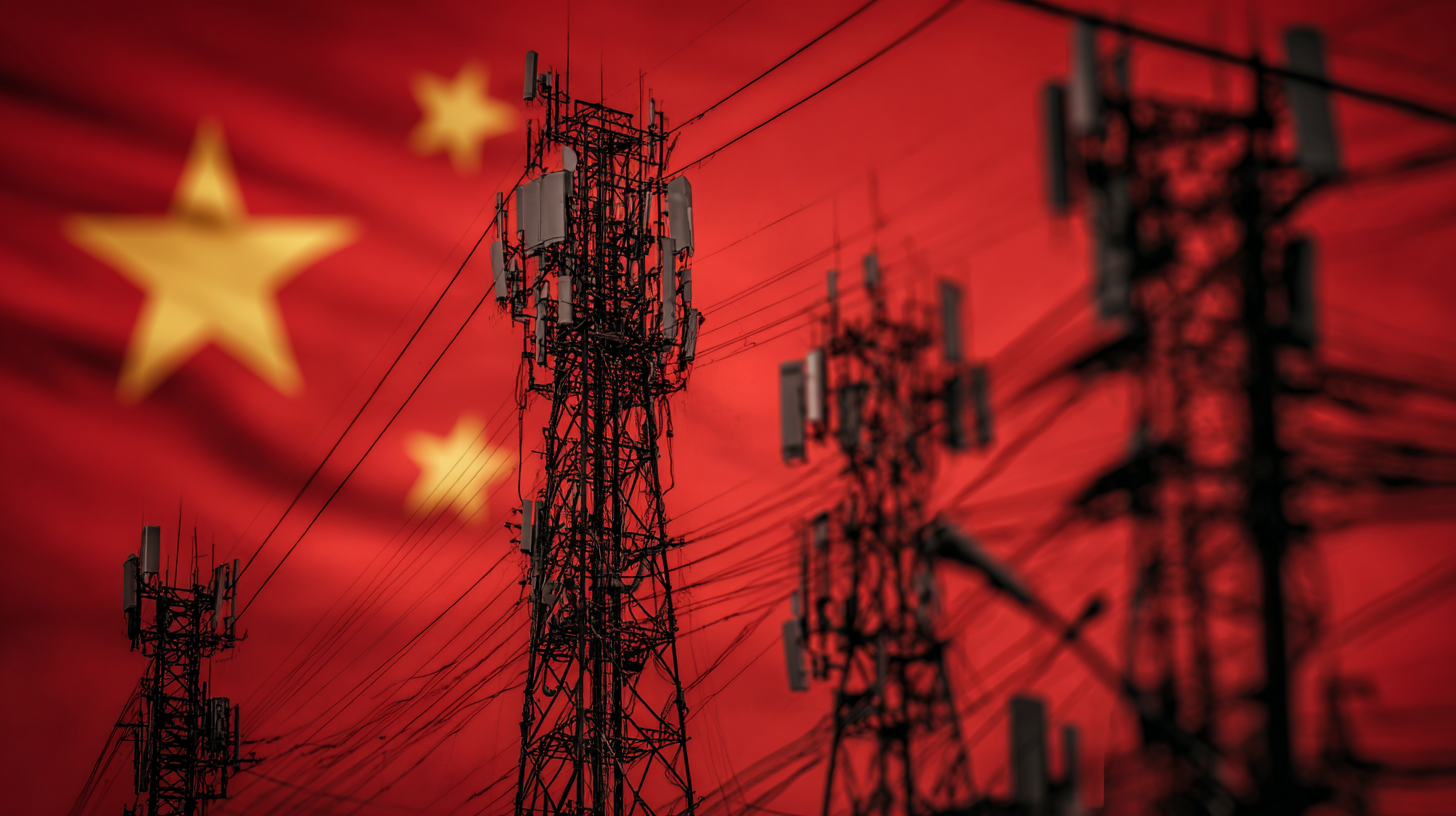
China | More dangerous than 5G? The power grid as a geopolitical weapon: Is Europe knowingly heading towards the next level of dependency? – Image: Xpert.Digital
The secret weapon of the energy transition: Why we must fear China's gigantic power highways
Solar boom with a back door: How Chinese technology could remotely control Europe's power supply
Ultra-high voltage: China's mega-project shows where Europe's industrial policy is spectacularly failing
When geopolitics is debated in Europe, oil, gas, and microchips dominate the discussion. But the true power struggle of the 21st century is currently being decided, largely unnoticed by the general public, on a completely different scale: in the realm of electricity grids. While Germany and Europe are bogged down in endless bureaucratic approval processes for mere kilometers of transmission line, the People's Republic of China is building the world's most powerful ultra-high-voltage grid with massive investments. What at first glance appears to be merely a solution to domestic energy problems reveals itself upon closer inspection as an unprecedented global export strategy. With its own technological standards, enormous scaling, and control over critical components such as solar inverters, Beijing is weaving a global web of dependency. Is Europe, after the devastating fossil fuel crisis, now heading for the next geostrategic trap – or is the window of opportunity for a European response not yet completely closed? An analysis of the electricity highways of the future and why copper cables have long since become instruments of global politics.
Related to this:

China's ultra-high voltage grid and the geopolitical reorganization of global energy infrastructure
Anyone who thinks of the power grid only as copper cables has not understood the power question of the 21st century
The People's Republic of China is currently constructing by far the world's most ambitious electricity transmission system. While European states remain mired in lengthy approval processes and debates over public acceptance, Beijing has already created a technological and regulatory infrastructure with its network of ultra-high voltage (UHV) lines that has an impact far beyond its own borders. What at first glance appears to be a purely technical achievement of energy transmission is, upon closer inspection, a strategic instrument of geopolitical influence that is fundamentally shifting the balance of power in the global energy sector. Europe, and Germany in particular, faces the question of whether to merely observe this development or to formulate its own strategic response that goes beyond punitive tariffs and symbolic gestures.
Related to this:

The backbone of China's energy transformation
China faces a fundamental energy policy problem stemming from its geography. The resource-rich provinces in the west and north, which possess enormous potential for wind and solar energy, are located up to 3,000 kilometers from the industrial centers in the southeast, where around 70 percent of the nation's electricity is consumed. Conventional high-voltage transmission lines with 500 kilovolts AC lose a significant portion of the transported energy over such distances, making long-distance transmission economically unviable. The solution lay in a technology that, in the early 2000s, had only limited commercial experience worldwide: ultra-high-voltage transmission with up to 1,000 kilovolts AC or 800 kilovolts and above as direct current.
The energy loss of a 1,000-kilovolt UHV line is only a third of that of a conventional 500-kilovolt line, with almost three times the transmission capacity. What allowed China to break new technological ground was less the physics than the sheer scale of the planned grid expansion. The State Grid Corporation of China (SGCC), a quasi-monopolist supplying electricity to around 88 percent of China's territory and serving approximately 1.1 billion people, became the driving force behind this project. Data from the national energy administration shows that the length of China's UHV direct current lines increased from 28,000 to more than 40,000 kilometers during the 14th Five-Year Plan (2021 to 2025) alone. A total of 45 UHV projects are now operational, including one record-voltage line of plus/minus 1,100 kilovolts, 23 lines with plus/minus 800 kilovolts direct current, and 21 lines with 1,000 kilovolts alternating current. China thus possesses the world's largest and most technologically advanced long-distance transmission network.
Half a trillion dollars for the next expansion phase
The momentum of China's grid expansion will not slow down in the coming years, but rather accelerate further. In January 2026, the SGCC announced its investment plan for the 15th Five-Year Plan (2026 to 2030): approximately four trillion yuan, equivalent to about 553 billion US dollars, is earmarked for capital investments in the expansion and modernization of the national power grid. This represents a 40 percent increase compared to the previous Five-Year Plan and is by far the largest investment plan in the company's history. The funds will primarily be used to expand UHV direct current corridors, which will transport renewable energy from the large wind and solar power plants in the desert and Gobi regions, as well as hydropower from the southwest, to the consumption centers in the east. The nationwide transmission capacity is projected to grow by more than 30 percent by 2030 compared to 2025 levels.
In parallel, the SGCC aims to integrate approximately 200 gigawatts of new wind and solar capacity annually within its service area. The share of non-fossil energy in total consumption is projected to increase to 25 percent by 2030, and the share of electricity in final energy consumption to 35 percent. These figures illustrate that the UHV infrastructure is not an isolated technological project, but rather forms the physical foundation of China's entire decarbonization strategy. Without high-performance long-distance transmission corridors, the vast generation capacities in the west would remain "stranded assets"—assets without economic benefit.
From national grid to global power highway
The strategic reach of China's UHV program by no means ends at its own borders. As early as 2015, President Xi Jinping presented his vision of a Global Energy Interconnection (GEI) to the United Nations—a worldwide power grid designed to transport renewable energy across continental distances. The specially established Global Energy Interconnection Development and Cooperation Organization (GEIDCO) is driving this agenda forward and planning a network of 18 UHV lines connecting more than 80 countries. In June 2025, GEIDCO published seven new international standards for wind farms, photovoltaic plants, pumped storage power plants, and cross-border grid connections. According to the organization, these standards fill a gap in international standardization and are intended to accelerate the development of a global energy internet.
The vision is already being put into practice in concrete large-scale projects. In Brazil, SGCC is building a 1,468-kilometer-long, 800-kilovolt, five-gigawatt UHV direct current (UHV) transmission line to deliver clean energy from the northeast of the country to the central regions. The previously completed 2,500-kilometer Belo Monte transmission line is already the world's longest UHV direct current line and supplies electricity to approximately 70 percent of the state of Rio de Janeiro. In Chile, the country's largest electricity distributor, Empresa CGE, signed an agreement worth over three billion US dollars with SGCC to transport solar power from the Atacama Desert over a distance of about 4,000 kilometers to the southern metropolitan areas. These projects are not philanthropic development aid, but rather represent the spearhead of an industrial export strategy that integrates Chinese technology, equipment, and operating protocols into the energy infrastructure of other countries.
The lever of standardization as a new form of geopolitical power
The most geopolitically sensitive aspect of China's UHV strategy lies not in the hardware itself, but in standardization. China has already published over 500 technical standards for the planning, construction, operation, and components of UHV technology. The SGCC leverages its position as the dominant player in by far the largest national UHV market to establish Chinese technological solutions as global standards within international standardization organizations such as the International Electrotechnical Commission (IEC). This strategy follows a two-pronged approach: First, China is securing a leading position within the global standardization system for UHV technology. Second, Beijing aims for the long-term internationalization of its own UHV technologies, ensuring their acceptance and adoption as standards.
The vertical integration of China's energy sector, where transmission system operators and component manufacturers are closely intertwined, has forced a convergence of national UHV standards, which are now being pushed onto the global market as a unified package. If these standards gain international acceptance, a dependency structure would emerge similar to that of American platforms in the digital economy. Chinese manufacturers and software providers would have a systemic advantage because their products define the reference architecture. Countries seeking to build UHV infrastructure would not only choose a specific transmission line technology but also an entire ecosystem of control software, protocols, maintenance systems, and component supply chains. The dependency would shift from fossil fuels to grid infrastructure and digital control technology.
A Norwegian research report from the Norwegian Defence Research Institute (FFI) explicitly warns of the security policy implications: While the GEI project could accelerate the green transformation, it potentially makes participating countries vulnerable to Chinese influence, espionage, and coercion. The EU's Institute for Security Studies (ISIS) reaches a similar conclusion and recommends systematically excluding Chinese components from European energy infrastructure projects.
Our China expertise in business development, sales and marketing

Our China expertise in business development, sales and marketing - Image: Xpert.Digital
Industry focus areas: B2B, digitalization (from AI to XR), mechanical engineering, logistics, renewable energies and industry
More information here:
A thematic hub offering insights and expertise:
- Knowledge platform covering global and regional economies, innovation and industry-specific trends
- A collection of analyses, insights, and background information from our key areas of focus
- A place for expertise and information on current developments in business and technology
- A hub for companies seeking information on markets, digitalization, and industry innovations
More than just power lines: Who dictates the new global standards
The Achilles heel of European energy infrastructure
Europe is already facing an uncomfortable reality. Chinese companies control over 70 percent of the global market for solar inverters – the digital control centers that convert the direct current generated by solar panels into grid-compatible alternating current. In Europe, over 220 gigawatts of installed solar capacity, equivalent to the output of more than 200 nuclear power plants, are connected to the grid via Chinese inverters and are therefore potentially controllable remotely. Huawei, which has been banned from 5G networks in many European countries for security reasons, is simultaneously Europe's largest supplier of solar inverters. The contradiction is obvious: A company classified as a security risk for telecommunications networks is building the digital infrastructure of Europe's energy transition unhindered.
At the beginning of 2026, the European Commission began taking steps to exclude Chinese companies like Huawei and ZTE not only from 5G networks, but also from solar energy systems, security scanners, and other critical infrastructure. The existing recommendations regarding high-risk vendors are to be replaced by legally binding obligations. However, the path to a genuine reduction in dependency is long, as European manufacturers like SMA and SolarEdge currently cannot compete with their Chinese rivals in terms of price and scale.
Related to this:

Germany's network expansion: a balancing act between ambition and bureaucracy
The problem of the geographical separation of generation and consumption regions also exists in Germany, albeit on a much smaller scale. Offshore wind farms in the North Sea generate significant amounts of renewable energy, but the largest consumers are located in the industries of southern Germany. In 2025, the Federal Network Agency approved approximately 2,000 kilometers of power lines, an increase of 45 percent compared to the previous year, and for the first time completed the approval processes for all four major high-voltage direct current (HVDC) transmission lines: SuedLink, SuedOstLink, A-Nord, and Ultranet. SuedLink, the largest ongoing HVDC project, received full approval in October 2025.
However, the legally mandated requirement amounts to approximately 16,800 kilometers of high-voltage power lines, of which the permitting processes have only been fully completed for about 4,700 kilometers. The costs are enormous: The grid development plan estimates the necessary investments in the German transmission grid at more than €280 billion by 2037 and a further €80 billion by 2045, totaling over €360 billion. A study by the German Chambers of Industry and Commerce estimates the total costs of the energy transition by 2049 at €4.8 to €5.4 trillion, with the grid infrastructure alone, including expansion and operation, accounting for around €1.2 trillion. The federal government plans a subsidy of €6.5 billion for 2026 to offset the increased grid costs for consumers and businesses.
A direct comparison starkly illustrates the disparity in pace between China and Germany. While China is constructing 13,600 kilometers of new ultra-high-voltage direct current (UHV) transmission lines within a five-year plan, creating a transmission capacity of 50 gigawatts, Germany is struggling to obtain approval for individual corridors, delaying their completion by years. The SuedOstLink, originally planned for 2022, is now slated for completion in 2027; the SuedLink not before 2028. The 2015 decision to lay the major DC lines as underground cables rather than overhead lines has improved local acceptance, but has significantly increased costs.
Europe's industrial niches and the shrinking window of opportunity
The question for Europe and Germany, therefore, is not whether to build their own UHV network spanning thousands of kilometers. Fragmented regulations, approval times, and the political focus on decentralized structures argue against such a project. The more relevant question is what role European companies can and want to play in the global UHV value chain. UHV networks require copper, aluminum, specialty steels, high-performance insulation, power electronics, measurement and control technology, as well as quality and bottleneck management. European companies have traditionally held strong positions in precisely these premium segments.
ABB, headquartered in Switzerland, achieved an order intake exceeding ten billion dollars in a single quarter for the first time in the fourth quarter of 2025 and reached a record high on the stock market. Siemens is also benefiting from strong demand in the electrification sector. Both companies were involved in the early trials of China's UHV technology and possess deep expertise in high-voltage engineering. Hitachi Energy supplies switchgear and transformers for transmission grids worldwide, such as for the 765-kilovolt project in Pakistan. The European market for high-voltage switchgear is dominated by ABB, Siemens, General Electric, Toshiba, and Mitsubishi. The global market for circuit breakers, a key element of any grid infrastructure, was estimated at 24.4 billion dollars in 2025 and is projected to grow to over 50 billion dollars by 2034, with the Asia-Pacific region dominating with a market share of over 40 percent.
However, these positions are by no means secure. China's industrial policy explicitly aims to scale its plant and equipment industry through its massive domestic market to such an extent that it becomes internationally competitive. The enormous government contracts enable Chinese manufacturers to develop expertise with domestic know-how and personnel that was previously the domain of European and Japanese specialists. The mechanism is identical to that which led the Chinese photovoltaic and battery industries to global market dominance: first, localization and scaling through a protected domestic market, then aggressive expansion into foreign markets with price advantages made possible by mass production and government support.
The dual challenge of standards and cybersecurity
The European response to China's UHV offensive must be addressed simultaneously on two levels. First, it involves actively shaping international standards. If Europe merely observes the Chinese standardization process instead of contributing its own technological expertise to international bodies, it will become a passive recipient of a system whose rules have been written by others. The IEC committees, where UHV standards are negotiated, are the battleground where the future market order will be decided. European expertise in power electronics, insulation technology, and network management must be represented more proactively there.
Secondly, the question of digital sovereignty in energy infrastructure is becoming increasingly urgent. The Iberian blackout of April 28, 2025, in which the loss of just 2.2 gigawatts led to cascading shutdowns within seconds, leaving over 50 million people without power for twelve hours, painfully demonstrated the vulnerability of modern power grids. Chinese researchers have systematically studied and analyzed Western grid outages, identifying the most vulnerable nodes and how disruptions could be optimized. In a world where technology can be used as a geopolitical weapon, remotely controlled inverters and grid components, whose data runs through Chinese servers and is subject to Chinese law, pose a systemic risk.
Lithuania became the first EU country to pass a law in April 2024 prohibiting China from remotely accessing the digital systems of renewable energy plants. Estonia warns of the risks of extortion. EU institutions are now calling for the Cybersecurity Act to be revised so that not only telecommunications networks but also energy systems are subject to strict security requirements. However, there is a fundamental dilemma: non-Chinese inverters cost two to three times as much as their Chinese counterparts. Any regulation that favors European manufacturers increases the cost of the energy transition and potentially slows down the expansion of renewable energies.
The strategic gap in European industrial policy
China's success in green technology, whether in photovoltaics, batteries, or ultra-high-voltage technology, follows a recognizable industrial policy pattern: government targets, massive initial subsidies, the creation of national champions through a protected domestic market, the parallel development of the necessary infrastructure, and finally, the targeted withdrawal of state intervention once the industry is internationally competitive. The European response, on the other hand, has oscillated for years between neoprotectionist reflexes and regulatory passivity. Punitive tariffs on Chinese electric cars and the debated reintroduction of tariffs on photovoltaic modules are instruments that have already failed once: Between 2013 and 2018, European tariffs on Chinese solar modules led neither to the hoped-for technological innovations nor to production increases in Europe; instead, numerous German solar manufacturers filed for bankruptcy.
What is missing is a coherent, long-term plan that links incentives for industrial innovation, the development of production capacity, and the stimulation of domestic demand. Europe's installed solar capacity is less than half that of China; China increased its locally installed solar capacity fourteenfold between 2015 and 2023, from 44 to 610 gigawatts. China's electricity consumption is projected to reach 10,500 terawatt-hours in 2025, more than three times that of the entire EU at 2,700 terawatt-hours. These figures make it clear that China, not only as a producer but also as a market, operates with a completely different dynamic than could ever be achieved in Europe. Europe's leverage, therefore, lies not in imitating the Chinese model, but in defending and expanding its technological specialization advantages along the global value chain.
The energy transition as a geopolitical arena
The energy transition has transformed from an environmental and climate policy project into a central arena of geopolitical rivalry. Power grids are becoming the infrastructure powerhouse of tomorrow, comparable to the significance that oil and gas pipelines held in the 20th century. China understands this and is acting accordingly. It is not just building lines, but an entire ecosystem of technology, standards, and dependencies designed to secure its strategic reach for decades to come.
For Germany and Europe, this means rethinking their positioning along three strategic axes. First, they must actively participate in shaping international standards instead of simply following Chinese standards. Second, they must secure and expand key competencies in materials, hardware, and systems management while European companies still hold competitive advantages in these segments. Third, they must develop their own reference projects that demonstrate European technology under real-world conditions and can serve as an alternative to the Chinese offerings. The window of opportunity is open, but it closes with each passing year as China establishes further facts on the ground and establishes its standards and systems in new markets. Those who only argue about domestic power lines will miss the opportunity to build global power highways and thus the industrial policy decision of the century.
Consulting - Planning - Implementation

Konrad Wolfenstein
I would be happy to serve as your personal advisor.
contact me at wolfenstein ∂ xpert.digital
Just call me on +49 7348 4088 965 (Munich) .










