
More storage space, lower costs? What really matters when it comes to pallet racking
Xpert Pre-Release

Available in 27 languages 📢
Prefer Xpert.Digital on GoogleⓘPublished on: November 9, 2026 / Updated on: November 9, 2026 – Author: Konrad Wolfenstein
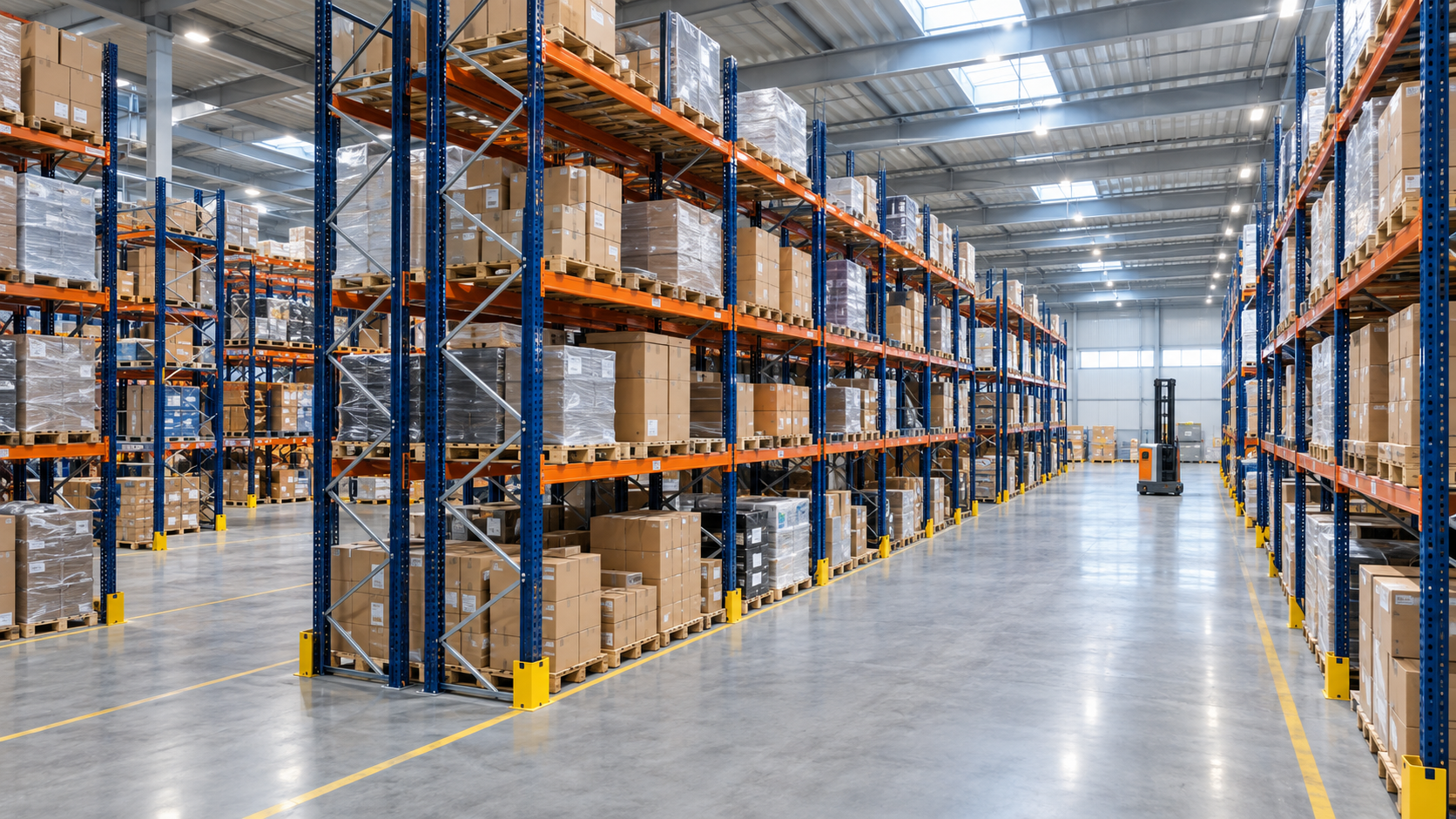
More storage space, lower costs? What really matters when it comes to pallet racking – a creative image on the topic, created with AI: Xpert.Digital
Pallet racking cost comparison: These factors determine profitability
Automation, security, space: How companies plan their warehouses for the future
Making more efficient use of warehouse space: The most important questions before buying a pallet rack
Pallet racking systems are far more than just basic technical equipment for warehouses. Their design influences how much space a company needs, how quickly goods can be moved, how reliably customers are supplied, and how much capital remains tied up in day-to-day operations. Therefore, the purchase price of uprights and beams is not the only decisive factor. The total cost of a system is crucial – from planning, transport, and assembly to maintenance, inspections, and potential downtime.
The market for warehouse technology is growing, but that doesn't mean every building needs an automated high-bay warehouse. Higher storage density can reduce building and energy costs, but it can also make accessing goods more difficult. International suppliers offer a wide selection, but export experience alone doesn't guarantee suitable planning or reliable on-site service. Key figures such as factory floor space, production capacity, or the number of countries supplied are no substitute for solid references and technical documentation.
Anyone seeking an economically viable solution should therefore start with the actual needs: product structure, inventory levels, access frequency, building conditions, and requirements for delivery reliability and security. Only when these factors are taken into account can racking systems and suppliers be meaningfully compared. The greatest benefit does not come from the most impressive system, but from a system that functions reliably, flexibly, and cost-effectively under the specific operational conditions.
Pallet racking: Efficiency beats purchase price – Those who only buy steel pay later
By 2026, pallet racking will be far more than just basic technical equipment for warehouses. Its design will influence how much space a company needs, how quickly it moves goods, how reliably it delivers to customers, and how much capital remains tied up in operations. The crucial economic question, therefore, is not which manufacturer offers the lowest price for uprights and beams. The decisive factor is which overall system, under the actual conditions of a given location, delivers the lowest cost per pallet that is safely stored and moved on time.
A sober assessment is necessary. The market is growing, but not every warehouse needs an automated high-bay warehouse. International suppliers are expanding their offerings, but global export experience is no substitute for local support. Higher storage density can reduce building and energy costs, but at the same time, it can make accessing goods more difficult. Therefore, the most compelling investment doesn't result from a blanket ranking, but rather from a combination of reliable operational data, a comprehensible design, and a long-term cost-benefit analysis.
The hall as a productivity factor
A pallet racking system translates available space into usable storage capacity. In simplified terms, it consists of load-bearing columns, horizontal load-bearing beams, bracing, connections, and suitable anchoring. However, this seemingly straightforward construction defines essential parameters for internal logistics: traffic routes, storage heights, access options, travel distances, and compatibility with forklifts or automated equipment.
This means that the racking system impacts several cost categories simultaneously. An unsuitable layout lengthens travel distances and increases staffing requirements. Insufficient capacity may necessitate external storage or an early relocation. Conversely, oversized systems tie up capital without generating corresponding benefits. Furthermore, there are costs associated with damage, maintenance, inspections, and the economic consequences of business interruptions.
The most important management task, therefore, is not to consider warehouse technology in isolation. An inexpensive system can be costly in daily operation, while a higher initial investment can be justified by lower space costs or fewer handling steps. Conversely, technical complexity is not an end in itself. If simple racking systems reliably handle the required throughput and remain flexibly adaptable, they can be economically superior.
Growth without a gold rush mentality
Current estimates place the global market for warehouse racking at approximately US$10.2 to US$10.5 billion in 2026. One forecast anticipates around US$12.4 billion by 2030; another extends to 2032 and projects approximately US$14 billion. The associated annual growth assumptions, depending on the definition and timeframe, range roughly between four and five and a half percent. This suggests a structurally growing capital goods market, but not a reliably double-digit boom.
However, such figures do not constitute a complete official survey. Market studies differ in which types of shelving, automated components, and services they include. Particularly with regard to figures for 2026, some are still estimates that combine already available data with expectations for the fourth quarter. Therefore, neither a reliable annual balance nor a precise sales volume should be derived from an estimated market size.
Nominal revenue growth also requires a nuanced interpretation. Higher steel prices can increase market volume without a corresponding increase in storage capacity. Conversely, a larger share of technically sophisticated systems can boost revenue even if the amount of steel processed hardly increases. Therefore, for assessing the industry, order structure, project quality, and vertical integration are at least as important as the reported growth rate.
US demand with regional differences
The US industrial and logistics real estate market shows signs of renewed demand for space in 2026. Net absorption reached 76.6 million square feet in the third quarter; for the first nine months, it totaled approximately 203 million square feet. At the same time, roughly 64 million square feet of new industrial space were completed in the third quarter. The nationwide vacancy rate was 6.8 percent.
Net absorption refers to the change in occupied floor space between two points in time. It is therefore not identical to signed leases and certainly not to the sales of pallet racking. Nevertheless, an increasing number of occupied buildings shows that companies are making real usage decisions. Additional or reorganized locations can trigger investments in warehouse technology, provided the buildings are actually designed for the corresponding storage processes.
Also noteworthy is the shift in quality. Buildings constructed since 2020 accounted for approximately 202 million square feet of net absorption in the first nine months of 2026. This indicates the high importance of modern building characteristics. However, it does not prove that every one of these areas will be automated or needs to be completely fitted with new shelving.
Asking rents rose by about four percent nationwide in the third quarter compared to the previous year. This average reflects varying local developments. Therefore, any investment in densification must be compared with the costs of the alternative space actually available at the specific location. A nationwide rental trend provides a starting point, but is not a sufficient basis for decision-making.
Capacity follows the business model
Several developments are driving the demand for pallet racking. These include e-commerce, the modernization of existing distribution networks, temperature-controlled supply chains, and the spatial reorganization of industrial production. However, their impact on specific warehouse design varies considerably.
Online retail doesn't automatically create a need for additional pallet space. Often, the product variety, the number of small orders, and the effort required for replenishment and returns all increase simultaneously. A warehouse then needs to not only accommodate more goods but also coordinate different flows of goods. Reserve stock on pallets and small-item order picking often require different technical solutions within the same building.
In industry, raw materials, intermediate products, and finished goods can each have different storage profiles. A buffer zone close to production places different demands on storage than a long-term spare parts warehouse. Food and pharmaceuticals also require reliable inventory turnover and, where necessary, temperature-controlled storage. The common denominator, therefore, is not the largest racking system, but rather a better alignment between product structure and technical organization.
From an economic perspective, demand arises from a trade-off between space consumption, processing costs, and delivery capacity. The more expensive buildings and personnel are, and the higher the availability requirements, the greater the benefits of a carefully planned warehouse structure can be. However, the strength of this effect remains dependent on location and company.
Five providers without a guaranteed ranking
The international offerings include companies such as Guangzhou HEDA Shelves, PrimeBay Heavy Duty Racking, FlexBeam Warehouse Equipment, Rackzzszn Storage Equipment, and SolidFort Storage Equipment. These companies and their brands can be examined based on their published product portfolios and performance promises. However, this does not provide an independently verified list of the five largest or most economically important manufacturers worldwide.
It would also be wrong to equate this selection with five leading US manufacturers. HEDA, PrimeBay, Rackzzszn, and SolidFort list Chinese production sites. With FlexBeam, additional questions arise regarding the unambiguous assignment of individual product names. The US market is also served by other manufacturers and system providers, including Steel King and Nucor Warehouse Systems. An international supplier comparison must take these different origin, production, and support structures into account.
For none of the five offers considered is there a reliably comparable series of independently verified shelf sales, actual annual deliveries, and market shares available. Factory floor space, number of export countries, and advertised capacity can provide initial indications, but they do not replace such data. Even less do they allow for a generally valid statement about which supplier will deliver the best performance in a specific warehouse project.
HEDA connects shelves and mezzanine floors
Guangzhou HEDA Shelves cites 2001 as its founding year and describes a 30,000-square-meter production facility. According to the company, it also employs more than 300 people in technical and knowledge-related fields, has completed over 10,000 warehouse projects, and delivers to more than 120 countries. Its product range includes conventional pallet racking, drive-in racking, flow racking, push-back racking, shuttle solutions, cantilever racking, and various mezzanine floors.
The economically attractive approach lies in connecting different storage and work levels. Planning pallet storage, order picking areas, and mezzanine floors together reduces the number of interfaces between separate structures. However, such a combination is only advantageous if the supporting structure, traffic routes, fire protection, and operational use are truly coordinated. A wide product range alone does not guarantee this integration.
The published maximum production capacity of 30,000 tons per month requires particular attention. This figure should be treated as company information and not equated with proven deliveries. For an economic evaluation, the actual scope of the project, the production stages involved, any potential additional locations, and the actual production achieved would need to be clarified. The combination of a high capacity figure with a specific factory area is insufficient proof of performance for a single project.
The combination of a large product range and international experience makes HEDA a worthwhile supplier to consider. However, a clear advantage over competitors requires concrete references involving similar loads, storage heights, and operating conditions. The question of who will reliably handle assembly, technical coordination, and spare parts supply at the final installation site remains particularly important.
PrimeBay: Broadness needs clear responsibility
PrimeBay cites a company start date of 2006, a location in Nanjing, and a production base of 40,000 square meters. According to the company, it supplies more than 85 countries. Its product range includes pallet racking, push-in, drive-in, flow-through, and narrow-aisle solutions, mobile racking, shuttle systems, and solutions for automated warehouses.
Key features include in-house manufacturing processes, project-specific drawings, load documentation, and a ten-year product warranty. This breadth of capabilities can offer an economic advantage if an operator wants to combine different technologies or expand the system later. At the same time, it increases the demands on technical differentiation: the development of the control system, the origin of moving components, and responsibility for their interaction must be clearly defined.
A ten-year warranty is not the same as a ten-year availability guarantee or comprehensive cost coverage. Crucial factors are the terms and conditions, exclusions, geographical scope, and enforceability. Especially in international projects, it must be clarified whether, in addition to replacement components, transport, removal, reinstallation, or consequential costs are also covered.
The strong similarity between published company data and that of Remprack Storage Solutions creates an additional need for clarification. Both websites mention Nanjing, the year 2006, and a production base of 40,000 square meters. This suggests a possible connection, but does not definitively establish ownership. Nevertheless, clarification is essential for operators: different brands should not be considered independent suppliers as long as the legal and operational relationships remain unclear.
FlexBeam: Identity before performance promises
FlexBeam presents a technically oriented product range including conventional and compact racking systems, work platforms, containers, and safety devices. Key features include closed column profiles, structural resistance to impact damage, and the reduction of long-term repair costs. North American, European, and Australian standards are cited as design references.
The basic business principle is understandable. A system that experiences less frequent damage or is easier to repair can be more cost-effective over its lifespan than a less expensive system with high maintenance costs. However, whether a particular design actually delivers this advantage must be demonstrated through appropriate testing and comparable operating conditions. Blanket statements about the superiority of one design are insufficient for this purpose.
The use of the designations SK2000 and SK3000 is noteworthy. These are also used by Steel King for its own pallet racking systems. Therefore, before any economic evaluation can be made, it must be clearly established which manufacturer the offered products belong to and whether an authorized distribution or licensing relationship exists. The overlap in names alone does not allow for a conclusive legal assessment.
As long as such questions remain unanswered, information on design and life cycle costs has only limited value for decision-making. A reliable comparison begins with the clear legal identity of the supplier, the origin of the components, and the traceability of technical documentation. Only then is an evaluation of the actual solution offered meaningful.
Rackzzszn: Correctly classifying export scale
Rackzzszn boasts a 20,000 square meter production facility, over 23 years of experience, and an annual steel processing capacity exceeding 50,000 tons. The company also reports exporting more than 1,000 containers per year to over 60 countries. Their product range includes pallet and cantilever racking, mezzanine floors, shelving solutions, pallets, and storage containers.
Such a combination can be attractive for operators who require additional standardized equipment besides the actual pallet warehouse. Uniformly coordinated deliveries can reduce organizational complexity. However, they can also increase dependence on a single supplier if different product groups can only be procured economically or expanded later on through joint purchasing.
The aforementioned export and processing figures are not directly comparable with the key performance indicators of other companies. Steel processing describes a different phenomenon than the tonnage delivered to shelf space. Furthermore, the number of containers depends on packaging, product mix, and capacity utilization. Similarly, the number of countries supplied says little about the actual service coverage in a particular region.
A planned process involving site assessment, design, assembly support, and subsequent monitoring is generally sensible. However, its economic value only becomes apparent during implementation: the accuracy of the site data, the reliability of technical responses, and the actual availability of services on-site are crucial. Especially in export projects, this is often the difference between a mere delivery of goods and a permanently operational plant.
SolidFord: Pace doesn't end at the factory gate
SolidFort describes its founding in 2016, a 30,000-square-meter factory in Xiamen, and deliveries to more than 53 countries. Its product range includes selective pallet racking, drive-in and drive-through racking, shuttle and push-in solutions, cantilever racking, mezzanine floors, and safety components. According to the company, its technical approach takes into account base plate dimensions, pallet dimensions, forklift parameters, and local requirements.
The published timeframes are particularly specific: standard deliveries should be produced and shipped within ten to fifteen days, while more complex projects should take approximately 30 days. These figures should be understood as supplier-provided guidelines. They do not automatically describe the time until the system is operational at the customer's site.
Between completion and use, there may be sea transport, customs clearance, inland transport, unloading, assembly, and testing. Technical approvals and possible building modifications are also required. Therefore, a short production time can become economically irrelevant due to incomplete planning or delayed assembly.
Even small minimum order quantities for custom parts are not just a matter of price. They can facilitate later modifications and reduce the need for large spare parts inventories. However, this requires that drawings, material properties, and fasteners remain traceable over time. Ultimately, for the operator, what matters is not the fastest single delivery, but the most reliable restoration or expansion of their system.
Manufacturer size is not proof of benefit
The comparison of suppliers reveals a fundamental problem with industrial market comparisons: publicly visible size characteristics are easier to grasp than actual operational quality. A large factory footprint can indicate high production capacity. However, it says little about how well a manufacturer plans a warehouse with a fluctuating product mix or how quickly they replace damaged components.
Similarly, the informative value of certificate lists is limited. An ISO 9001 certification pertains to the quality management system. It is not an independent proof of load-bearing capacity for every delivered rack. An environmental management certification, in turn, answers different questions than a structural analysis. A factory audit or a test mark must also be evaluated according to its subject matter, scope, issuer, and validity period.
The economically relevant performance of a manufacturer consists of a chain of interconnected capabilities: correct assumptions, verifiable calculations, consistent manufacturing, suitable packaging, proper assembly, and reliable technical support during operation. A single weak point can negate the advantages of other stages. Therefore, a smaller, well-supported solution is not automatically inferior to a large-volume direct delivery.
This results in a clear order for the selection process. First, safety and functional requirements must be met. Then, performance and long-term costs are compared. A particularly low price must not compensate for technical shortcomings. Such shortcomings are not ordinary price differences, but rather potential grounds for exclusion.
LTW Intralogistics Solutions

LTW Intralogistics – Engineers of Flow - Image: LTW Intralogistics GmbH
LTW offers its customers not individual components, but integrated complete solutions. Consulting, planning, mechanical and electrotechnical components, control and automation technology, as well as software and service – everything is networked and precisely coordinated.
In-house production of key components is particularly advantageous. This allows for optimal control of quality, supply chains, and interfaces.
LTW stands for reliability, transparency, and collaborative partnership. Loyalty and honesty are firmly anchored in the company's philosophy – a handshake still means something here.
Related to this:
Strategies for optimizing warehouse technology
Density and access in a conflict of objectives
Conventional pallet racking allows direct access to every stored pallet. This simplifies handling numerous items and fluctuating quantities. The trade-off for this flexibility is a comparatively large amount of traffic space. Drive-in racking allows for greater storage density, as forklifts drive directly into the storage channels. It is particularly suitable for larger quantities of similar goods, but restricts independent access.
Inventory rotation must be precisely differentiated. A drive-in rack accessible from one side typically operates on the principle that the most recently stored pallet is retrieved first. In contrast, a drive-through rack accessible from both sides allows for storage on one side and retrieval on the other. Therefore, it should not be equated with a drive-in rack accessible from one side.
Flow racks transport pallets on inclined tracks and facilitate orderly retrieval in the storage sequence. Push-back racks, on the other hand, compact several pallets in succession and typically operate in reverse order. Shuttle systems handle movements within deep storage channels but require appropriate control and organization. Narrow-aisle and mobile racks, in turn, prioritize different aspects, balancing accessibility, space efficiency, and simultaneous operation.
For goods with expiration dates, simply distinguishing between storage sequences is not always sufficient. The decisive factor can be which batch expires first. This requires product labeling, warehouse management, and physical access to be aligned. The economically appropriate shelving system therefore results from the product profile and not from an abstract density table.
Empty spaces may still be blocked
A high number of designated storage locations does not necessarily equate to high usable capacity. In deep storage channels, empty spaces can arise that are temporarily unavailable for other items. This occurs, for example, when a channel is reserved for a specific product for organizational reasons, and its stock is currently decreasing. The system then theoretically contains empty spaces, but these cannot be used arbitrarily during operation.
This effect is often referred to as honeycomb formation. It illustrates why the theoretically densest solution is not necessarily the most economical. Different item quantities, batch rules, and minimum stock levels influence the actual occupancy. Greater channel depth creates additional positions but can simultaneously exacerbate the problem of leftover space.
Equating maximum occupancy with maximum productivity is also an oversimplification. A warehouse may need free space for relocations, peak goods receipts, quality checks, and blocked stock. If every item is planned for, even minor deviations can trigger significant search and relocation efforts. The appropriate reserve capacity depends on the specific operation; there is no universally optimal utilization rate.
A robust planning concept therefore doesn't just examine an average inventory day. It must also account for seasonal peaks, fluctuating batch sizes, and varying product mixes. Only then can it be assessed whether additional density creates real capacity or merely generates a more attractive number in the layout.
Automation requires more than precision
The willingness to invest in supply chain technology remains evident in 2026. In a survey of more than 500 executives conducted at the end of 2025, 56 percent planned to increase spending on technology and innovation in the supply chain. 52 percent expected expenditures of more than one million US dollars; 17 percent cited more than ten million US dollars.
These figures reflect the priorities of the surveyed companies, not the actual investment volume of the entire market. They also encompass a broad range of technologies. Therefore, a correspondingly high increase in investment for pallet racking should not be inferred. However, the survey clearly shows that warehouse technology is increasingly being evaluated in conjunction with data processing, robotics, and human resources strategy.
Automated systems place increasing demands on dimensional accuracy, interfaces, and coordinated processes. A shuttle or storage and retrieval machine requires reproducible transfer positions. Control systems, safety concepts, power supply, and fault handling are also crucial. Therefore, a rack that is structurally designed for automated operation does not automatically constitute a functioning automation system.
Economically, throughput under real-world conditions, system availability, and the cost of disruptions are crucial. High theoretical peak performance is of little use if unsuitable pallets, damaged loads, or interrupted data flows regularly trigger interventions. Therefore, standardizing loading units and process data can be more beneficial before implementing comprehensive automation.
AI must become physically effective
Artificial intelligence doesn't transform a warehouse simply by marketing a racking system as intelligent. Its potential contribution lies primarily in forecasting, inventory planning, storage location allocation, anomaly detection, and the coordination of goods movements. This requires sufficiently reliable data on items, stock levels, orders, and movements.
In the aforementioned survey of executives, 33 percent reported using AI applications to improve demand forecasting and optimize inventory. Thirty percent mentioned predictive maintenance. Such applications can be economically attractive if they reduce unnecessary inventory or avoidable downtime. However, the survey results do not substantiate a specific amount of savings or the profitability of any single warehouse project.
Furthermore, improved forecasting only has an effect if it leads to changed decisions. If safety stock levels, order quantities, or storage location rules remain unchanged, part of the benefit remains theoretical. Similarly, a more favorable calculated storage location allocation can fail due to real-world access restrictions. Therefore, software and physical equipment must be considered together.
This is precisely where the importance of flexible warehouse technology becomes apparent. If the product mix and inventory levels change in the future, the system should be able to react as economically as possible. The value of such adaptability lies not in a blanket AI surcharge, but in the concrete savings on remodeling, space, and process costs.
Cold storage facilities measure in usable cubic meters
In temperature-controlled warehouses, high density becomes even more important. Not only the construction but also the temperature control of the space incurs costs. If the same quantity of inventory can be stored in a smaller, suitable volume, this can improve efficiency. Therefore, compact drive-in, shuttle, and mobile systems are particularly worth considering in this environment.
However, this does not automatically translate into savings proportional to the number of additional pallet spaces. Energy consumption also depends on insulation, outside temperature, door openings, the type of goods being stored, and airflow. Increased density that hinders movement or impedes necessary airflow can have undesirable side effects. Therefore, the benefits must be evaluated in conjunction with the overall cooling and operational concept.
The components must also be suitable for the environmental conditions. Operating temperature, humidity, and corrosion change the requirements. For battery-powered devices, the suitability of the energy storage systems and charging concepts also comes into play. This involves not only the shelf construction, but also drives, sensors, maintenance, and safe working procedures.
For food and pharmaceuticals, inventory quality is also a crucial factor. An additional pallet in a confined space offers little economic value if it hinders the correct batch removal or causes temperature-sensitive goods to remain outside their designated area for too long. Therefore, the benchmark must be a reliably available, correctly managed pallet, not just a more compact storage space.
Total costs instead of material price
A cost-benefit analysis begins with the investment amount, but it doesn't end there. In addition to shelving and accessories, planning, transport, assembly, anchoring, potential floor renovation, testing, and any necessary fire protection adjustments must be considered. For automated solutions, control systems, software, training, and integration into existing systems are also included.
During operation, additional costs arise from maintenance, regular inspections, repairs, energy, licenses, and spare parts. Damage and downtime are particularly significant. If a section of the shelving system is blocked, repair costs are not the only expense. Reorganization, additional transport, delays, and potentially external storage can also become relevant. The consequences depend on the affected inventory and its importance to production or customer deliveries.
On the benefits side, these include avoided space costs, fewer work steps, less relocation, and increased process reliability. Such advantages should only be considered if they are actually achievable. For example, saved calculated working time does not automatically translate into a reduction in staff. However, it can create additional capacity or reduce overtime.
A sound calculation therefore distinguishes between direct cash effects, freed-up capacity, and risk improvements that are more difficult to quantify. Likewise, double-counting must be avoided. Anyone who simultaneously equates the same productivity increase entirely with personnel savings and with additional throughput overestimates profitability.
Financing changes the technological choice
For long-life storage technology, the capital investment significantly impacts its economic viability. An automated system can be cheaper to operate, but often requires a higher initial investment. Whether this additional expense is worthwhile depends on capacity utilization, financing costs, service life, and the reliability of expected savings.
The simple payback period only answers the question of when an investment will theoretically recoup its initial expenditure. It does not adequately consider all subsequent cash flows or their timing. For larger projects, a net present value (NPV) analysis is therefore advisable, which relates future cash inflows and outflows to the point of decision. In this analysis, the assumed price increases and the discount rate used must be compatible.
In addition, different business scenarios should be examined. A solution must not only work under optimistic volume increases. Lower occupancy rates, increasing product variety, higher maintenance costs, or delayed commissioning are also relevant. High fixed costs, in particular, can significantly increase the cost per pallet actually moved when utilization is weaker.
This creates economic value through gradual expansion. A conventional warehouse with planned expansion options can be more attractive under uncertain conditions than immediate full automation. However, this advantage only exists if the subsequent expansion is technically sound and well-planned. Merely asserted future-proofing is no substitute for tested interfaces and adequately dimensioned infrastructure.
Security also protects the yield
The load-bearing capacity of a pallet rack is not a fixed property of individual steel components. It results from the interplay of uprights, beams, connections, bracing, anchoring, and the actual configuration. The distances between the storage levels also affect stability. Removing or repositioning a beam can therefore change the permissible load.
For North American projects, the ANSI MH16.1 family of standards plays a crucial role. However, a single standard cannot be applied indiscriminately to all rack designs: For example, the scope of ANSI MH16.1-2023 does not include the design of drive-in, drive-through, and cantilever racks. In Europe, EN 15512 is relevant for the design of adjustable pallet racks, and EN 15635 covers application and maintenance. For Australian projects, AS 4084 is an important reference.
The decisive factors remain the specific applicable regulations in conjunction with local requirements and the actual project scope. Load capacity labels must also be compatible with the installed system. A general catalog specification is insufficient if different heights, loads, or connecting elements are used on site. The base plate and anchoring must also be considered.
Safety is therefore synonymous with securing profits. Damage endangers people and goods, but can also paralyze key operational areas. This does not justify evaluating personal safety solely in financial terms. Rather, it means that, from a business perspective, safe design and orderly operation are fundamental prerequisites for a viable investment.
Controls are part of the operational concept
In Germany, the inspection of racking systems is governed by the relevant requirements of the Industrial Safety Ordinance. For racking systems exposed to damaging influences and potential hazards, recurring inspections are required. Forklift-operated pallet racking is a particularly obvious example of this. Furthermore, checking that the racking is properly assembled before its initial use after installation is of paramount importance.
The European application standard distinguishes between regular expert inspections at intervals of no more than twelve months and more frequent inspections. The specific intervals for these inspections are to be determined based on operational risks. The crucial factor is not possessing an inspection sticker, but rather identifying, assessing, and appropriately addressing damage in a timely manner.
This includes up-to-date documentation, verifiable load data, and clear responsibilities. Repairs must also be technically sound. The mere external similarity of a replacement part proves neither suitable material properties nor sufficient load-bearing capacity. Therefore, when replacing damaged components, proven system compatibility is crucial. Furthermore, repair and component replacement should not be equated without verification: Properly documented repair procedures can, under certain conditions, also be carried out by companies other than the original manufacturer.
For cost planning, this means that testability and repairability must be considered right from the selection stage. A system for which sufficient documentation or suitable components are later unavailable can incur high follow-up costs. Good documentation is therefore not a bureaucratic add-on, but rather an integral part of the system's economic value.
Supply chain risks shift price advantages
Steel shelving systems are material- and transport-intensive products. Their cost therefore depends not only on manufacturing efficiency but also on steel procurement, surface treatment, transport routes, and trading conditions. A low factory price can be partially offset by freight, duties, additional technical inspections, or subsequent maintenance.
The US has trade policy measures in place for certain steel racking and parts of Chinese origin, and administrative review of these measures continued into 2026. The specific tariffs imposed on a particular shipment depend on factors such as the volume of goods, their origin, the companies involved, and the applicable rulings. Therefore, a blanket tariff on all Chinese racking would be objectively inappropriate.
The economic basis for comparison must be the fully delivered and operational state. Responsibilities for transport, insurance, import, and unloading must be clearly separated. Even a delivery with extensive transport obligations assumed does not automatically answer the question of who ensures assembly, technical documentation, or commissioning.
Regional manufacturers can have advantages such as shorter supply chains, local contacts, and faster spare parts availability. International suppliers, on the other hand, can impress with scaled production, product breadth, or competitive pricing. Which structure is superior can only be assessed based on the specific project. Origin alone is neither proof of quality nor a reason for exclusion.
Resilience without a survival reflex
Supply chain resilience can justify additional storage capacity, but it should not be equated with maintaining the highest possible inventory levels. Safety stocks tie up capital and can create additional risks for obsolete or perishable products. Larger inventories only improve supply if the right goods are available in the appropriate quantities.
Similarly, a single, highly automated central warehouse does not automatically make a supply chain more robust. While it can improve productivity and inventory visibility, it can also create greater dependence on a single location. Decentralized warehouses reduce certain concentration risks but often require additional inventory and coordination. The economically viable structure depends on customer distribution, product value, replenishment time, and the consequences of disruptions.
This results in a dual requirement for the racking design. It must efficiently support the intended inventory while simultaneously allowing for operational adjustments. This may include separate areas for critical materials, flexible buffer zones, and a clearly defined emergency plan. A system with limited peak capacity but good redundancy options can potentially be more resilient than a fully dense system without any reserves.
The central question, therefore, is not just how much can be stored. Equally important is how the warehouse can continue operating in the event of disruptions. Spare parts availability, access to critical stocks, and manual restart options can be more crucial for supply security than additional nominal storage spaces.
Existing buildings don't always beat new construction
Existing warehouses often offer potential for better space utilization. A modified warehouse layout, more suitable aisle widths, or the combination of different racking types can create additional capacity. This is particularly interesting if it allows a relocation or building expansion to be avoided or postponed.
However, every building has technical limitations. Hall height, column grid, floor slab, sprinkler system, and available energy all influence which solutions are feasible. A higher rack is not a simple way to increase capacity if the existing forklifts cannot operate it or if the building's technical systems require extensive modifications. Similarly, an additional storage level can impede the flow of goods if deliveries and shipping are already operating at capacity.
A completed warehouse project in New Jersey illustrates the potential diversity within a single facility: Approximately 17,500 pallet spaces were combined there with varying height configurations and complementary high-density systems. This example demonstrates the importance of application-specific planning, but does not allow for a general transfer of area metrics to other buildings.
From an economic perspective, retrofitting must therefore compete against realistic alternatives. These include an additional area, modified inventory levels, external storage services, or a new location. The most attractive solution is not necessarily the one with the highest degree of technical compaction, but rather the one that meets the expected demand with acceptable risk and sustainable operational performance.
Competition for manageable complexity
The pallet racking market remains characterized by diverse supplier roles. Some companies focus on manufacturing standardized steel components. Others combine racking construction with planning, assembly, and support. Still others integrate conveyor technology, warehouse management, and automation. These business models differ in their cost structures and the actual risk they assume for the customer.
For simple, well-specified systems, a specialized manufacturer with a suitable local partner can be very economical. However, for complex projects, the value of clear overall responsibility increases. When several technical systems are combined, unclear handover processes can quickly outweigh the benefits of inexpensive individual components. Conversely, a comprehensive package can generate unnecessary costs and dependencies if the operation does not require the additional functions.
A manufacturer's long-term competitiveness therefore does not solely result from low production costs. Transparent technology, reliable scheduling, suitable service, and robust statements regarding future expansion can equally influence purchasing decisions. This is especially true when companies aim not only for additional storage space but also for increased delivery capacity and more stable operations.
The clear economic outlook for 2026 is therefore this: pallet racking should be evaluated as part of a comprehensive, productive system. Those who compare only prices per ton, factory floor space, or export countries easily measure the wrong metrics. The decisive advantage arises where storage capacity, access, personnel, buildings, and technology demonstrably align. The most impressive racking system doesn't create the greatest value, but rather the one that functions reliably and consistently under real-world conditions.
Consulting - Planning - Implementation

Konrad Wolfenstein
I would be happy to serve as your personal advisor.
You can contact me at wolfenstein∂xpert.digital or
Just call me on +49 7348 4088 965 .
Your intralogistics experts

Consulting, planning and implementation of complete solutions for high-bay warehouses and automated storage systems - Image: Xpert.Digital
More information here:










