
Usage-oriented small parts warehouses and high-bay warehouses with a high degree of automation – a top LogiMAT topic!
Xpert Pre-Release

Available in 27 languages 📢
Prefer Xpert.Digital on GoogleⓘPublished on: February 25, 2026 / Updated on: February 25, 2026 – Author: Konrad Wolfenstein
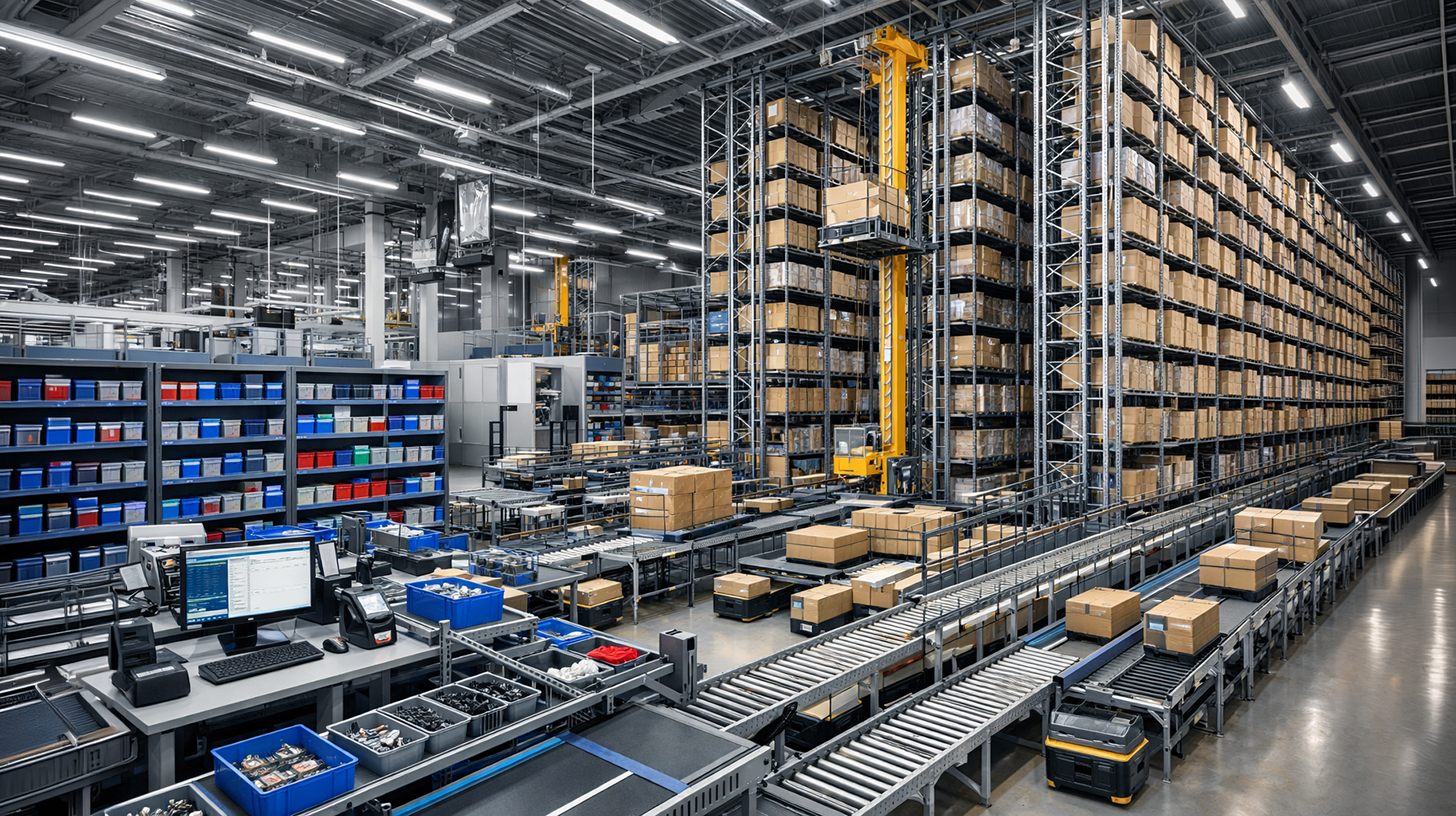
Usage-oriented small parts warehouses and high-bay warehouses with a high degree of automation – Image: Xpert.Digital
The truth about intralogistics: Why proven technology is often more lucrative than the latest robotics or AI trend
8 golden rules for your new warehouse: How to avoid ruin through incorrect automation
No robot gimmicks, but real added value: We recommend highly automated warehouse logistics where the focus is not on hype, but on concrete benefits
Intralogistics is booming, and the buzzwords at industry trade fairs sound like pure science fiction: autonomous robots, AI-controlled 3D shuttle systems, and fully automated cube storage promise the ultimate solution for virtually every logistics problem. But behind the glossy brochures lies an uncomfortable truth: companies that plan their warehouses based on the latest hype instead of a sound process analysis risk losing millions. Time and again, enormous budgets are poured into technological gimmicks that completely miss the mark with companies' actual needs and overwhelm established organizations. The logistics industry doesn't need ever more spectacular machines, but rather smart, user-oriented concepts. This article debunks the automation myth and shows why proven storage and retrieval systems or classic high-bay warehouses are often the more economical choice. Learn how to avoid the most dangerous cost traps, why software is the real key to success, and which eight guidelines will help you find the level of automation that truly suits your company.
Related to this:

Why the most expensive technology is often the dumbest investment
AutoStore, Shuttle or high-bay racking? Which system really suits your company (and which one just eats up money)?
The intralogistics industry has been experiencing a veritable race for technological superlatives for years. Cube storage, autonomous mobile robots, AI-driven warehouse management, 3D shuttle systems: the industry's buzzwords sound like science fiction and promise revolutionary efficiency gains. But a closer look reveals a worrying gap between what is showcased at trade fairs and in glossy brochures and what actually works in reality. The global market for warehouse automation was estimated at US$26.5 billion in 2024 and is projected to grow at an average annual growth rate of 19.9 percent until 2034. In Europe alone, an increase from US$4.28 billion in 2024 to US$8.37 billion by 2029 is forecast. These figures suggest an unstoppable trend. But behind the exponential growth lies an uncomfortable truth: It is not the market for functioning automation that is growing so fast, but also the market for bad decisions made with expensive technology.
However, the actual needs of a company must be at the heart of every warehouse planning process, not the latest technological hype. Those who are dazzled by robotics demonstrations instead of conducting a thorough needs analysis risk losing millions. The logistics industry doesn't need ever more spectacular machines, but rather smart, usage-oriented planning with a level of automation that suits the company.
The anatomy of a bad decision in warehouse planning
The most frequent and costly mistake in warehouse planning begins long before the first machine is ordered. It starts with a false premise: that technology will solve the problem. In practice, it is repeatedly observed that companies begin technical planning before the fundamental requirements have been clearly defined. What quantities need to be transported? What routes, speeds, and cycle times are relevant? Without a precise process analysis, the foundation for a well-thought-out solution is lacking, and the result is equipment that misses the mark when it comes to actual needs.
This observation has been confirmed by experienced interim managers in logistics for years. An analysis of the ten most common mistakes in warehouse projects prominently features technology as an end in itself. Too little automation, despite clear labor market demand and sufficient volume, is just as problematic as too much technology that no one truly understands. Both erode stability. Especially too much technology at the outset overwhelms organizations that have neither prepared their processes nor their personnel structure for it.
Another common mistake is choosing the wrong type of storage for the wrong items. Decisions are often made based on price, availability, or current trends, rather than on product structure, turnover, and service level. These flawed decisions have repercussions throughout the entire lifespan of a warehouse and can only be corrected later with enormous effort. A medium-sized company planning a fully automated high-bay warehouse for 5 to 20 million euros simply cannot afford such fundamental errors.
The primacy of needs analysis
Before any technological decision is made, a thorough needs analysis is essential. This analysis is not a tedious formality, but rather the foundation upon which everything else is built. A professional needs analysis encompasses the specific requirements of the company, including product types, inventory throughput, stock levels, and seasonal fluctuations. It differs fundamentally from a vendor's product presentation, which naturally focuses on its own systems.
The difference between sales and consulting is crucial in warehouse planning. A pure system provider will always want to sell their system. A professional consultant, on the other hand, will first want to understand the processes. Good consulting asks the right questions: What is the throughput of each item according to an ABC analysis? What are the current picking routes and picking times? Where exactly in the material flow do waiting times occur? Do the current warehouse strategies still meet the requirements? What growth is planned for the next three, five, or ten years?
Only the answers to these questions determine whether a simple shelving system, a dynamic pallet racking system, or a semi-automated solution is needed. Investing without this analysis is an expensive gamble. And in most cases, it's a gamble that loses. The complexity of warehouse requirements has increased dramatically in recent years. Product variety is growing, order quantities are decreasing, delivery times are shortening, and demand volatility is increasing. Anyone planning in this situation without a solid data foundation will build a warehouse that is already outdated on opening day.
Automated small parts warehouse: One system, many faces
Automated small parts warehouses are always automated. Unlike conventional high-bay warehouses, there are no manually operated automated small parts warehouses. They typically consist of a racking system with one or more aisles, one or more storage and retrieval machines per aisle or level, small parts containers or trays, one or more picking stations, the connecting conveyor technology, and control software. This basic principle has been tried and tested for decades and has proven reliable millions of times in practice.
In the context of modern warehouse automation, a small parts warehouse refers to standardized small parts containers, typically made of plastic, used for storing and transporting small items. The systems designed for this purpose are highly dynamic, automated small parts warehouses, technologically implemented either as miniload systems with stacker cranes or as shuttle systems with autonomously moving shuttles on each storage level. These systems focus on maximum throughput, fast cycle times, and the efficient provision of goods according to the goods-to-person principle.
An automated small parts warehouse (AS/RS) is always operated automatically and controlled via computer terminals with ERP integration. After the required parts are entered into the warehouse management software, the control software accesses the necessary storage containers. These are automatically transported via the conveyor system to the user who processes the order. The automated warehouse thus enables rapid access to the stored goods while simultaneously making optimal use of available ceiling height. This proven principle is in no way inferior to many modern robotic solutions in terms of efficiency, but is often perceived as less exciting by the public.
High-bay warehouses: When vertical space becomes a strategic resource
The classic high-bay warehouse for large load carriers such as Euro pallets or wire mesh containers is known as a unit-load AS/RS and is designed for maximum storage density. These systems are the backbone of industrial logistics and have proven themselves to be reliable, low-maintenance, and economical over decades. A fully automated, medium-sized high-bay warehouse requires an investment of approximately 5 to 20 million euros, with the range varying considerably depending on size, height, and level of automation.
The profitability of a high-bay warehouse depends on reducing personnel costs through automation. Fully automated warehouses require less manual intervention, which increases efficiency and thus profitability in the long run. Automation not only reduces personnel costs but also human error, leading to improved efficiency. Furthermore, funding opportunities exist to support investments in energy-efficient technologies.
The crucial point in planning a high-bay warehouse, however, is that the building envelope must be designed from the perspective of material flow, not the other way around. A warehouse must be conceived in terms of the flow of goods, not the concrete. First comes the flow of goods, then the appropriate technology, and finally the building envelope. This fundamental principle is surprisingly often disregarded in practice. The building is erected first, and then attempts are made to cram the logistics in. The result is suboptimal routing, a lack of buffer zones, and bottlenecks that don't occur within the racking itself, but rather in front of and behind it.
Technology comparison: Which system suits which need?
Choosing the right technology for an automated warehouse system is more complex than ever. Essentially, four basic technologies are available, each with specific strengths and weaknesses, and their suitability can only be determined by the specific requirements.
Storage and retrieval machines: The proven classic
The classic stacker crane-operated automated small parts warehouse (AS/RS) offers a clearly defined performance: one vehicle per aisle, handling all horizontal and vertical movements. This results in reliable and low-maintenance operation. Costs per storage location are lower than with other forms of automation. For medium to high throughput, stacker crane systems can be the more economical solution because they are often more robust and require less maintenance. The disadvantage is that if one unit fails, the entire aisle comes to a standstill. At the same time, unlike other systems, the storage compartments are difficult to access on foot.
Shuttle systems: Scalable high performance
Compared to conventional stacker crane-operated automated storage and retrieval systems (AS/RS), shuttle systems can be designed for higher throughput with the same number of storage locations. Performance is scalable by increasing the number of shuttles used, and the system is flexible in utilizing warehouse geometries. The use of many identical vehicles results in high fault tolerance. Shuttle systems are particularly well-suited for very high throughput because they enable high scalability and parallelization of storage movements. However, the higher costs per storage location and the greater susceptibility to failure due to the large number of active components must be factored in. Furthermore, the lifting mechanisms can quickly become the limiting factor. In terms of energy consumption, shuttle systems are more efficient per storage and retrieval cycle thanks to their lightweight construction and the separation of horizontal and vertical movement.
Cube Storage: Compact, but not suitable for everyone
Cube storage systems like AutoStore are characterized by their particularly space-saving design. Robots move along a rail system above a compact storage rack where containers are stacked on top of and next to each other. AutoStore, the market leader, has installed over 1,600 systems worldwide and offers high storage density with low energy consumption. The system requires only a quarter of the floor space compared to traditional systems. However, the maximum height is limited to approximately 6 meters, the maximum container weight is 35 kilograms, and mixed container heights are not possible. Therefore, for those with high ceilings, who store heavy parts, or who require various container sizes, cube storage is not the ideal solution, despite the hype.
3D shuttle systems: The new generation
3D shuttle storage systems like Skypod from Exotec combine the advantages of classic shuttle systems with the features of automated guided vehicles (AGVs). Autonomous robots move freely in all directions, climb between levels, and transport containers directly to the conveyor system. Skypod allows for a maximum height of up to 14 meters, which significantly exceeds the capabilities of cube storage. Newer systems like Aerobot even allow for four-deep storage and offer greater freedom in planning workstation positioning. However, many of these newer solutions have limited application experience, which must be considered when assessing investment security and system maturity.
Navigating the Technology Jungle
To provide orientation in the technological jungle of warehouse automation, different systems are compared based on important criteria.
The classic storage and retrieval machine (SRM) system offers medium to high throughput at low cost per storage location. It allows for impressive heights of over 20 meters, requires little maintenance, and is considered technologically very mature. While it offers good flexibility in bin selection, its scalability is limited.
In contrast, shuttle systems offer very high throughput and excellent scalability. They can also reach heights of over 20 meters and are technologically advanced. However, the cost per parking space is higher, and maintenance requirements are considered medium to high. Container flexibility is good.
Cube storage systems are characterized by medium throughput, low maintenance, and good scalability. The cost per storage space is in the mid-range. A key difference is the limited height of only about 6 to 8 meters and the restricted flexibility of the containers. The technology is highly mature.
A more recent development is the 3D shuttle. It combines high throughput with good scalability and container flexibility. The height can reach up to 14 meters. This is offset by higher costs per parking space and moderate maintenance requirements. Its technological maturity is rated as medium.
| criterion | RGB system | Shuttle system | Cube Storage | 3D Shuttle |
|---|---|---|---|---|
| throughput | Medium to high | Very high | Medium | High |
| Cost per parking space | Low | Higher | Medium | Higher |
| Maximum building height | Up to 20 m | Up to 20 m | Approx. 6-8 m | Up to 14 m |
| Maintenance costs | Low | Medium to high | Low | Medium |
| Scalability | Limited | Very good | Good | Good |
| Technological maturity | Very high | High | High | Medium |
| Flexible containers | Good | Good | Restricted | Good |
The central question is not: What is technically possible? But rather: What makes technical sense? Regardless of market share or functional diversity, a system's performance depends significantly on its alignment with the company's individual requirements. AutoStore is ideal for companies with limited floor space and medium throughput. A stacker crane system is more economical when maximum throughput is not required and long-term maintenance costs are a factor. Shuttle systems only justify their higher price for companies that actually need the highest throughput.
LTW Intralogistics Solutions

LTW Intralogistics – Engineers of Flow - Image: LTW Intralogistics GmbH
LTW offers its customers not individual components, but integrated complete solutions. Consulting, planning, mechanical and electrotechnical components, control and automation technology, as well as software and service – everything is networked and precisely coordinated.
In-house production of key components is particularly advantageous. This allows for optimal control of quality, supply chains, and interfaces.
LTW stands for reliability, transparency, and collaborative partnership. Loyalty and honesty are firmly anchored in the company's philosophy – a handshake still means something here.
Related to this:
Forget the robot hype: Why proven automation is often the smarter choice
Why industry experts, not planners, should be your advisors
A structural problem in the warehouse automation industry lies in the frequent intertwining of consulting and sales. Many system manufacturers also offer planning services. This leads to an inherent conflict of interest: The planner, who will later deliver and maintain the system, has a natural interest in recommending the system that is easiest for them to implement and maintain, not the system that is optimal for the customer.
This conflict manifests itself on several levels. First, tied planners tend to recommend standard solutions within their own portfolio, rather than conducting a vendor-neutral evaluation of all options available on the market. Second, the complexity of the requirements is often oversimplified to make their own system appear suitable. Third, the risks and disadvantages of the recommended system are systematically downplayed.
The solution lies in a strict separation of consulting and implementation. A robust requirements analysis precedes every system decision. Only then can a sound technology comparison of the various systems available on the market be conducted, ideally vendor-neutral and considering the interplay of the entire logistics process. An external, independent consultant has no incentive to favor a particular system. Their loyalty lies with the client and the project's success, not with selling a specific technology.
According to a McKinsey study, 62 percent of logistics companies report that technical and software-related difficulties represent the biggest obstacle to automation and the implementation of new warehouse solutions. A typical delay ranges from 8 to 12 months when software or technical problems arise. In the majority of cases, these problems stem from inadequate planning, not technological failure. The technology itself usually works. It is the mismatch between technology and requirements that causes projects to fail.
Related to this:
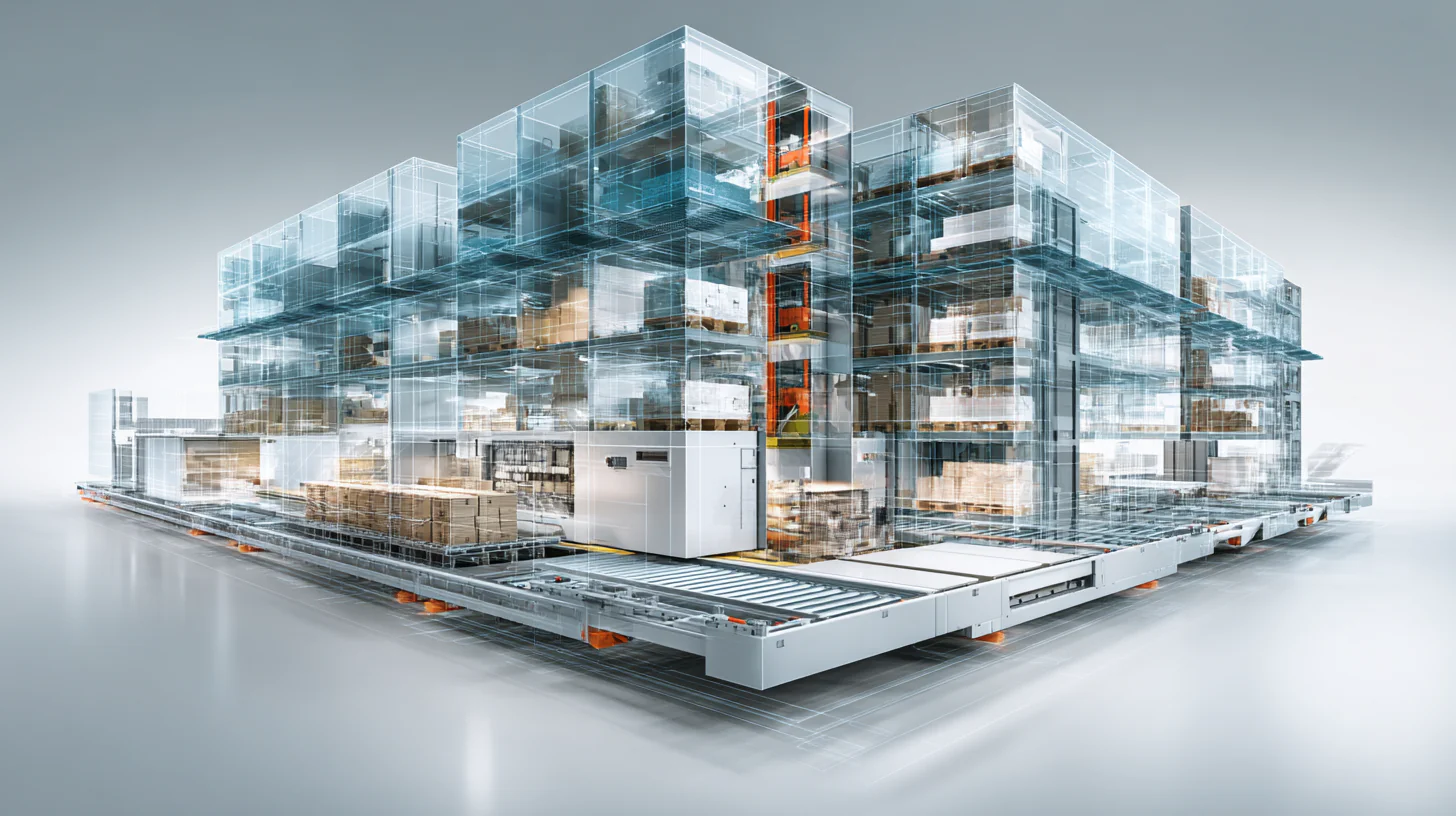
The automation myth and the cost trap
The logistics industry is regularly swept up by waves of new trends, each promising great things. Automation, predictive analytics, and highly complex software solutions are supposed to revolutionize the industry. But while market research companies and vendors portray these developments as the inevitable future, reality clashes with expectations. In most cases, the actual success of implementation falls far short of the marketing hype. This discrepancy points to a fundamental misunderstanding prevalent throughout much of the industry.
A major mistake lies in expecting automation to work without fundamental process optimization. If manual processes are already chaotic and non-standardized, automation won't solve these problems, but merely shift them to a higher level of complexity. Mobile robots often fail not because of the technology itself, but because companies have unrealistic expectations and the necessary prerequisites aren't in place. Despite all the optimistic forecasts, driverless transport systems remain a niche solution in widespread use. Forklifts and conveyor belts are still the norm in most warehouses, not robots.
The heterogeneity of the systems used is also underestimated. When a company uses robots from different manufacturers, integration problems arise, leading to high additional costs. These costs are often not factored in and result in budget overruns that fundamentally jeopardize the overall project return on investment. The automation myth states that more technology is always better. Reality shows the opposite: More technology is only better if it meets the actual need and can be integrated into the existing process landscape.
Highly automated instead of highly robotic: A plea for the right focus
The public debate surrounding warehouse automation is dominated by images of autonomous robots navigating independently through warehouses. These images are media-savvy and create the impression that the future of logistics lies in complete robotization. However, there is a fundamental difference between automation and robotics that many decision-makers overlook.
Highly automated systems, such as proven automated small parts warehouses (AS/RS) with stacker cranes or shuttle systems, operate on fixed paths, with defined processes and high reliability. They achieve availability rates of over 99 percent and have been operating in industrial environments for decades. Robotic systems, on the other hand, move freely in space, must perceive their surroundings and react to obstacles, which introduces additional complexity and additional potential sources of error.
For the majority of applications in small parts and pallet logistics, highly automated systems are the more economical and reliable choice. The use of robotics makes sense where high flexibility is required, such as with rapidly changing layouts, the integration of different storage areas, or bridging distances that cannot be covered economically with conventional conveyor technology. However, these cases represent only a fraction of all warehouse projects.
A company that needs 16,000 storage locations and must manage them reliably in three shifts is better served by a conventional automated small parts warehouse (AS/RS) than by a robotic solution. This is illustrated by the example of an automotive manufacturer that implemented a 3-aisle AS/RS with BOXer stacker cranes for 16,000 storage locations, which conveys up to 360 small load carriers per hour and enables sequenced retrieval according to the assembly order. This solution isn't spectacular; it's not something you see at trade shows, but it operates reliably and economically every day.
The role of software: The underestimated success factor
An automated warehouse is only as good as its software. The warehouse management system, the control software, and the interfaces to ERP systems are the real showstoppers in warehouse projects. Master data, interfaces, mobile data capture, Wi-Fi coverage, and testing concepts are the areas where most problems arise, not on the aisle.
Many companies blindly rely on their ERP system for materials management without questioning how intelligent the underlying order suggestions truly are. ERP systems offer solid basic functionality with reorder points, minimum stock levels, and fixed order intervals. However, what they don't typically provide is dynamic adaptation to volatile demand, the modeling of uncertainties, or predictive control based on genuine forecast accuracy. The result: either there's too much stock, or it's missing when needed. A study shows that a medium-sized company with 1,500 stocked items can free up around €48,000 annually in tied-up capital simply by implementing smarter ordering processes—without purchasing a new ERP system, but rather by making better use of existing data.
This finding is directly relevant for warehouse planning: Before a company invests in new hardware, it should critically examine the performance of its software. A perfectly planned automated small parts warehouse (AS/RS) controlled by a poorly configured warehouse management system (WMS) will never achieve its theoretical performance. Software integration must be an integral part of the planning from the outset, not a task to be added later during ramp-up.
Scalability and future-proofing: Think in steps, not leaps
One of the most serious planning errors is designing for the current situation. Many warehouses are already at capacity upon opening because growth and volatility were underestimated. Peak demand, product range changes, and multi-channel requirements necessitate reserves that are often considered unnecessary costs in the planning phase. Companies with 20 to 30 percent growth rates per year need warehouses that can grow with them.
Planning on the edge, where systems are designed precisely for the current situation without any room for growth, new products, or changed processes, is a widespread mistake. Markets and production processes change. Those who don't plan for reserves or forgo modular systems will later face costly modifications or completely new investments.
The right strategy is scalability in steps, not leaps. Start small pilot projects, measure success, learn, and then scale. A company that starts small and experiments in a limited space can transfer the insights gained to other areas. This is less risky and more cost-effective than a grand, sweeping approach, which often fails in practice. Shuttle systems and modular cube storage solutions offer a structural advantage here compared to automated guided vehicles (AGVs), whose throughput per aisle is fixed and cannot be easily increased.
The human factor: Why the best technology is worthless without qualifications
An automated high-bay warehouse is impressive, but if the operators aren't properly trained or don't understand how it works, chaos ensues. Companies often ignore the human element. Technology is just a tool, and without the right people and the right culture, even the best tool won't work.
Addressing ergonomics, user interface logic, roles, and training only during ramp-up is far too late. Processes must be established from the outset, and staff must be trained well before commissioning. A three-day workshop before go-live is insufficient. People need continuous learning, support, feedback loops, and time to adapt to changes. Companies that invest in genuine support programs see dramatically better results.
The shortage of skilled workers exacerbates this problem. Automated warehouse systems require highly qualified personnel for maintenance and operation, which is particularly problematic in a market already suffering from a skills shortage. Simply reducing the workforce through automation is not enough. The remaining employees must be more highly qualified than before, and this qualification must be actively developed.
The economic balance sheet: What works and what doesn't
The economics of logistics is fundamentally simple: fewer errors, faster throughput times, lower costs, and improved customer satisfaction. These goals are not achieved through expensive technology alone, but through discipline, organization, and continuous improvement. Companies that master these fundamentals have a competitive advantage that no matter how expensive a system may be, it cannot replace it.
Companies achieve an average ROI of 18 to 24 months from warehouse automation if the implementation is carried out professionally. This period increases dramatically if the fundamentals are not sound. The pitfalls are well-known: starting too big without the processes, data, or infrastructure being ready. Vehicles block each other, the software cannot be integrated with existing WMS systems, or employees do not understand the new workflow.
Successful companies take a different approach. They start small, with one or a few autonomous vehicles on a fixed route. This allows them to test processes, collect data, and train employees without disrupting operations. The system is then gradually expanded based on proven efficiency. This iterative approach significantly reduces risk and allows them to learn from mistakes before they become costly.
The irony is that many of the most effective improvement measures cost almost nothing. A 5S initiative requires only time and discipline. Kaizen requires no new software. Clear accountability requires only organizational clarity, not technology. A company that consistently implements the 5S methodology can improve its operations by 20 to 30 percent without investing a single euro in new technology. And yet, these fundamentals are constantly overlooked while millions are poured into hyped-up technologies.
Eight guidelines for user-oriented warehouse planning
The analysis of the most common mistakes and success patterns yields clear recommendations that every company should consider before investing in small parts warehouses or high-bay warehouses:
First: Needs analysis always precedes technology selection. Reversing this order means planning the warehouse from the wrong end. Data collection on product structure, turnover, order structure, and performance requirements is the non-negotiable foundation.
Secondly, planning must be based on sound industry expertise. Only those who truly understand the specific requirements of an industry can make the right choice – this applies to consultants as well as manufacturers. The knowledge advantage of an industry expert typically pays for itself by preventing a single wrong decision.
Thirdly: The material flow determines the technology, not the other way around. First the flow of goods, then the right technology, and finally the building structure. This principle applies to every type of warehouse, whether automated small parts warehouse (AS/RS), high-bay warehouse, or hybrid solution.
Fourth: Plan for scalability from the outset. Prefer modular systems, provide reserve space, and prepare the infrastructure for future expansions. A warehouse that fits perfectly today but cannot be expanded tomorrow is a strategic mistake.
Fifth: Software before hardware. The performance of the warehouse management system, the data quality of the master data, and the integration into existing IT systems must be clarified before the first shelf meter is ordered.
Sixth: Highly automated before highly robotic. Proven technologies with high availability and a long track record of success are more economical in the majority of use cases than the latest generation of robotic systems. Robotics is not an end in itself, but a solution for specific requirements.
Seventh: People and processes first. Without standardized processes, trained personnel, and effective change management, even the best technology will not reach its full potential.
Eighth: Iterative rather than disruptive. Start small, measure, learn, and only then scale. Grand schemes fail more often than controlled development.
The strategic view ahead
Warehouse automation will continue to grow in the coming years. By 2027, 26 percent of all warehouses are expected to be automated, and the global warehouse automation market is projected to reach $63 billion by 2030. The AI market in logistics has exploded to $20.8 billion, with a compound annual growth rate of 45.6 percent since 2020. AI algorithms can reduce picking times by up to 30 percent and cut stockouts and overstocks by 25 to 40 percent.
These developments are real and relevant. But they don't change the fundamental insight: technology is a tool, not an end in itself. The companies that will build the best warehouses in the coming years will not be those with the largest technology budgets, but those with the best needs analysis, the smartest planning, and the most consistent implementation. A German family business that avoids technical complexity because it leads to a higher risk of errors, and instead relies on reliably functioning solutions, has understood more than many a corporation with a nine-figure budget.
The future of warehouse automation doesn't belong to hype. It belongs to those who have the courage to prioritize actual needs, even if that means foregoing the next robotics spectacle. Needs-based planning with a high, but appropriate, degree of automation is not a step backward. It's the only sustainable way forward.
Consulting - Planning - Implementation

Konrad Wolfenstein
I would be happy to serve as your personal advisor.
contact me at wolfenstein ∂ xpert.digital
Just call me on +49 7348 4088 965 (Munich) .
Your intralogistics experts

Consulting, planning and implementation of complete solutions for high-bay warehouses and automated storage systems - Image: Xpert.Digital
More information here:










