
Understanding market dynamics: Completely replace EEG funding for photovoltaic and wind turbines with direct marketing?

Available in 27 languages 📢
Prefer Xpert.Digital on GoogleⓘPublished on: April 29, 2024 / Update from: April 29, 2024 - Author: Konrad Wolfenstein
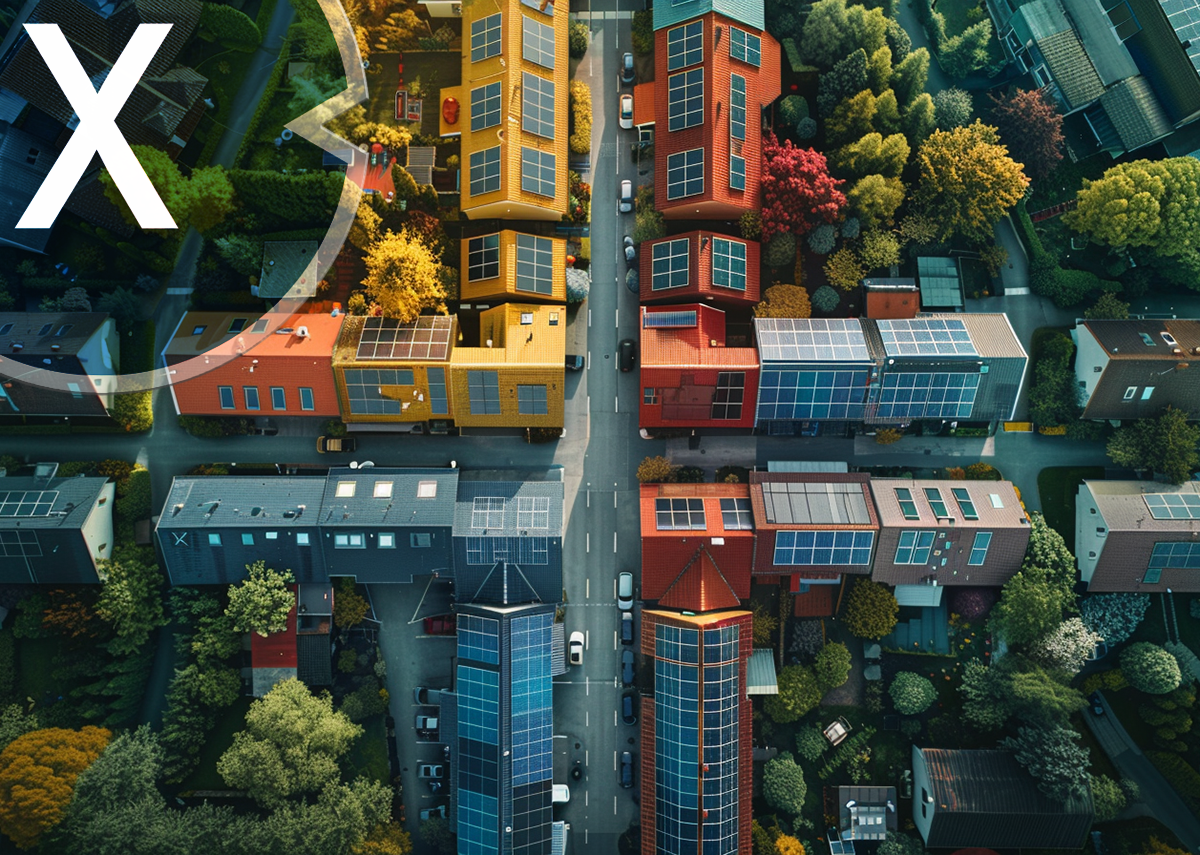
Achieving sustainability goals: Can direct marketing replace EEG funding and accelerate the expansion of renewable energies? – Image: Xpert.Digital
💰🌍 Economy or ecology? The financing dispute over Germany's energy transition
🌱🌬️ The future of renewable energies in Germany
The discussion about the future of renewable energies in Germany is more topical than ever. A controversial debate revolves around the promotion of photovoltaic (PV) and wind turbines under the Renewable Energy Sources Act (EEG). The core question: Should EEG funding be abolished in favor of a complete switch to direct marketing? This question forms the starting point for a broader discussion about the efficiency, costs and future viability of promoting renewable energies in Germany.
📘🔌 Background to the EEG funding
Understanding why EEG funding was introduced is essential in order to be able to classify the current debate. The EEG was created to promote the expansion of renewable energies such as solar and wind energy by providing operators of these systems with a guaranteed feed-in tariff for the electricity they feed into the grid. The goal was to increase the share of renewable energy in the energy mix, reduce CO2 emissions and reduce dependence on fossil fuels.
💰📈 Rising costs and deficits
However, the costs for the EEG account increased significantly over time. Network operator forecasts show an expected deficit of up to 20 billion euros by the end of a year. A significant portion of these costs arise from funding the facilities that were built over the last two decades. This deficit has led to discussions as to whether and how the financing of EEG funding can be made sustainable.
📊🌞 Advantages of direct marketing
Proponents of a complete switch to direct marketing argue that this will enable the integration of renewable energies into the market. With direct marketing, the system operators sell the electricity they generate directly on the market instead of receiving a fixed remuneration. This could create incentives to produce electricity when it is needed most and increase efficiency in the overall system. It is also argued that such market integration strengthens the responsibility of plant operators and prevents over-subsidization.
😟🚧 Disadvantages and challenges
At the same time, there are serious concerns about a complete changeover. Critics fear that this could slow down the expansion of renewable energies, as the uncertainties of the market represent high barriers, especially for smaller producers and private households with PV systems on the roof. Direct marketing also requires significant technical requirements, such as being equipped with smart meters, and a thorough understanding of the electricity market, which is a challenge, especially for smaller operators.
🛠️💡 Technical and regulatory solutions
As part of a transition strategy, various options are being discussed to overcome the technical and economic challenges. For example, in tender systems, the remuneration could be adjusted for periods of negative electricity prices, which were already introduced in the EEG 2023 with the regulation that the remuneration is suspended after one hour of negative electricity prices on the exchange. Another approach is to lower the maximum prices for tender bids to control costs.
🌍🔋 Future of energy supply
Ultimately, the debate about EEG funding and direct marketing is not just about the question of costs. It's about the fundamental direction of Germany's energy supply in the future. How can it be ensured that the expansion of renewable energies continues to progress without placing a disproportionate burden on the economy or the end consumer?
A balanced approach is required that both provides incentives for the further expansion of renewable energies and ensures a fair distribution of the burden. In addition, the resilience of the energy system to fluctuations in energy supply and demand must be strengthened through technical innovations such as energy storage and intelligent grids.
📝📚 Market integration and increased efficiency
The complete conversion of EEG funding to direct marketing would be a radical step. While the benefits of better market integration and increased efficiency are obvious, the potential risks to the expansion of renewable energies and the burdens on smaller operators cannot be underestimated. Such a transition requires careful planning, smart political decisions and a broad social debate. The challenge is to find a way that is both ecologically sustainable and economically viable to make Germany's energy supply sustainable.
📣 Similar topics
- 🍃The future of renewable energies in Germany: A critical view
- ☀️Photovoltaics & wind power: Should we rethink EEG funding?
- 💡Direct marketing vs. EEG funding: Which path leads to the future?
- 💶The rising costs of the EEG account: A burden on the economy?
- ⚖️Pro & Contra: The comprehensive effects of direct marketing on the energy market
- 🌪️Challenges for small energy producers: Is direct marketing a hurdle?
- 🛠️Technical and regulatory solutions for renewable energies
- 🚀Securing the future of energy supply in Germany: A path full of challenges
- 🌱The need for balanced support for renewable energies
- 💼 EEG funding under scrutiny: risks and opportunities of direct marketing
#️⃣ Hashtags: #RenewableEnergy #EEG funding #Direct marketing #Energypolicy #FutureEnergy
🎯🎯🎯 Benefit from Xpert.Digital's extensive, fivefold expertise in a comprehensive service package | R&D, XR, PR & SEM

AI & XR 3D Rendering Machine: Fivefold expertise from Xpert.Digital in a comprehensive service package, R&D XR, PR & SEM - Image: Xpert.Digital
Xpert.Digital has in-depth knowledge of various industries. This allows us to develop tailor-made strategies that are tailored precisely to the requirements and challenges of your specific market segment. By continually analyzing market trends and following industry developments, we can act with foresight and offer innovative solutions. Through the combination of experience and knowledge, we generate added value and give our customers a decisive competitive advantage.
More about it here:
🌱💡 The promotion of renewable energies in Germany and the turning point
☀️ The promotion of renewable energies in Germany through the Renewable Energy Act (EEG) is at a turning point. Amid growing concerns about the financial sustainability of this system, a fundamental overhaul of the funding mechanism is being discussed. The proposal to aim for a rapid end to EEG funding and to comprehensively integrate photovoltaic (PV) and wind turbines into the market is at the center of this debate. This development not only represents a significant departure from previous practices, but also aims to pave the way for a more environmentally friendly and economically viable future of energy production in Germany.
💰 The financial challenge and the need for change
On the one hand, the debate about the future of EEG funding reflects the need to reduce the financial burden on the public sector. The current situation, in which the EEG account - partly financed from the federal budget - is expected to show a deficit of around 20 billion euros by the end of the year, has made the urgency clear. These alarming numbers clearly show that continuing the status quo is both economically and environmentally unsustainable.
🔁 The switch to direct marketing
The proposed solution of transferring all types of systems - including small PV systems in the private rooftop segment - to direct marketing is accompanied by the expectation that a seamless transition is both technically and regulatory feasible. This includes, among other things, the installation of smart meters, which enable precise recording of electricity consumption and generation in real time. This approach is intended to ensure that renewable energy generation is efficiently integrated into the electricity grid and better matched to demand.
📉 Adjustments in the event of negative electricity prices
A particularly innovative approach in this context is the proposal to adjust the remuneration for renewable energies in times of negative electricity prices. It is already common practice for tender systems not to receive EEG funding in the event of negative electricity prices that last longer than three hours. In the future, this should be the case after just one hour, with the aim of achieving an even finer resolution, including recording negative electricity prices down to the minute. Such a regulation would inevitably require technological adjustments to enable such precise market integration.
🔄 Reduction of maximum prices for tenders
Furthermore, the possibility of reducing the maximum prices for tender bids for renewable energies is being considered. This is an important step that is already supported by the Federal Network Agency. Given that the last tender in December 2023 recorded bids between 4.44 and 5.47 cents per kilowatt hour with an average of 5.17 cents, while the maximum set was 7.37 cents per kilowatt hour, such an adjustment appears both reasonable and necessary.
🌍 The global dimension and the way forward
These developments underline a growing awareness of the need to see renewable energy not only as an ecological necessity, but also as an economic opportunity. Promoting the integration of renewable energy sources into the market through technological innovation and regulatory adjustments offers the opportunity to realize a sustainable, efficient and cost-effective energy supply that meets the environmental requirements of the 21st century.
Furthermore, this approach is in line with global efforts to combat climate change and advance the energy transition. Germany, as a leading economic power, has the unique opportunity to take a pioneering role in this area. By implementing advanced, market-oriented solutions, Germany can not only sustainably transform its own energy infrastructure, but also serve as a global example for the successful integration of renewable energy into existing energy markets.
⚙️ Challenges and solutions
However, the possible adjustments require careful design and implementation to ensure security of supply and avoid undesirable economic or social impacts. In particular, the switch to direct marketing and the implementation of smart technologies represent challenges that require innovative solutions and close cooperation between all actors involved. This includes energy producers, network operators, consumers, political decision-makers as well as research and development.
📣 Similar topics
- 🌞 Future of photovoltaics in Germany: Between funding and market adaptation
- 💡 The role of smart meters in the energy transition: challenges and opportunities
- 💰 Financial sustainability of the EEG: What happens next?
- 🌬️ Wind power in Germany: New ways without EEG funding?
- 🔌 Direct marketing of renewable energies: A new era begins
- ⏳ Negative electricity prices: Innovation through adjustment of remuneration models
- 📉 Price adjustments in tenders for renewable energies: A necessary step?
- 🌍 Germany's role in the global energy transition: pioneer or laggard?
- ⚙️ Technological innovations as drivers of energy efficiency
- 🤝 Cooperations and challenges: The future of the energy industry in Germany
#️⃣ Hashtags: #RenewableEnergyGermany #EEGFörderung #Energyefficiency #Marketintegration #EnergiewendeDeutschland 🌍
☀️💰🔌 What is direct marketing in photovoltaics? What is the difference between a fixed feed-in tariff and direct marketing?

Direct marketing vs. fixed feed-in tariffs - From fixed tariffs to flexible markets: The change in the marketing of solar power - Image: Xpert.Digital
Direct marketing in photovoltaics is a model in which electricity producers sell the electricity they produce directly to the market instead of receiving fixed feed-in tariffs as part of the feed-in tariff system. The transfer usually takes place via the electricity market, with different marketing options available, such as the spot market or long-term power purchase agreements (PPAs).
More about it here:
☀️🌬️💬 Direct marketing in renewable energy: challenges and opportunities
🌳 In times of global climate change and the increasing need to promote sustainable energy sources, the focus of discussion is the transition from traditional funding mechanisms, such as feed-in tariffs through the Renewable Energy Sources Act (EEG), to direct marketing. The implications of this transition are complex and varied, affecting both the economic feasibility of renewable energy projects and the speed at which we can achieve our sustainability goals.
🌞⚡️ Changing incentive mechanisms: The potential of direct marketing
Direct marketing related to renewable energy sources, such as photovoltaic (PV) and wind turbines, represents a significant change compared to traditional incentive systems. While the EEG aimed to make renewable energy projects financially attractive through a guaranteed feed-in tariff for the electricity fed in, direct marketing shifts the focus to the direct sale of generated electricity to end consumers or via the electricity exchanges. This shift brings both challenges and opportunities.
On the one hand, direct marketing enables a more direct relationship between producers and consumers of renewable energy. This may allow producers to get better prices for their electricity, especially during periods of high demand. In addition, direct marketing offers the advantage of flexibility; Plant operators can react to market developments and adapt their sales strategy accordingly.
On the other hand, the transition to direct marketing places increased demands on market participants. You must familiarize yourself with the mechanisms of the electricity market and have the necessary technical and commercial skills to be able to survive in the competitive market environment. This can be a hurdle for smaller producers who may not be able to afford this expense.
🌍💡 Sustainability goals and the contribution of direct marketing
In order to achieve the international community's ambitious sustainability goals, a rapid and far-reaching expansion of renewable energies is essential. Direct marketing has the potential to make a decisive contribution by increasing the economic attractiveness of investments in PV and wind turbines and thus accelerating expansion.
A key advantage of direct marketing is the possibility of establishing long-term purchase agreements between producers and large consumers through innovative contract models such as Power Purchase Agreements (PPAs). These can offer economic security for both sides and form the basis for new investments in renewable energies.
Another opportunity that direct marketing offers is the promotion of local energy communities and cooperatives. Through the direct sale of locally produced energy, these communities can be strengthened and regional added value can be increased. In addition, participation in direct marketing enables consumers to actively contribute to the energy transition and consciously support renewable energies.
⚖️🔋 Challenges and solutions
Despite the obvious advantages of direct marketing, challenges remain, particularly in relation to market barriers and the integration of renewable energy into the existing energy system. The volatility of wind and solar energy requires improved storage technologies and a flexible energy system capable of balancing fluctuations. Promoting such technologies and developing incentives for investments in storage and balancing capacities are crucial to the success of direct marketing.
In addition, it is important not to disadvantage small and medium-sized producers. Measures such as simplified market access rules, support for building skills in the field of energy trading and the promotion of cooperation can help to facilitate participation in direct marketing.
🔄💼 From the EEG funding model to direct marketing
The transition from the EEG funding model to direct marketing offers great potential to make the production of renewable energy more economically attractive and thus make a decisive contribution to achieving our sustainability goals. However, this change also brings with it significant challenges that need to be overcome. What is required is a supportive policy framework, the development of innovative technologies and business models, and the willingness of all market players to adapt to new conditions.
Ultimately, the success of this transition can only be ensured if the benefits of direct marketing are fully exploited and the associated challenges are effectively addressed. This requires concerted action by all parties involved – from governments, to energy producers and consumers, to technology providers. The implementation of direct marketing offers the opportunity to accelerate the energy transition and at the same time increase the economic viability of renewable energies. The associated transformation of the energy sector represents a significant step towards a more sustainable and climate-friendly future.
📣 Similar topics
- 🌞🔄 From feed-in tariffs to direct marketing: A turning point for renewables
- 💡📈 Direct marketing of renewables: An economic revolution
- 🌱🤝 The new era of energy production: collaboration in direct marketing
- 🌍⏳ Global climate crisis: The role of renewable energies in the fight against warming
- 💼🌬️ Wind and solar energy: direct marketing as a game changer
- 🔌🔄 Challenges in the electricity market: Overcoming them through direct marketing
- ☀️💰 Financial incentives for renewables: The path from EEG to direct sales
- 🏡🌳 Strengthening local energy communities through direct marketing
- 🔄➕ Benefits and challenges of transitioning to direct marketing for renewables
- 🌿💡 Innovative business models in the renewable energy industry through direct marketing
#️⃣ Hashtags: #RenewableEnergy #Direct Marketing #Energy Transition #Sustainability #Climate Protection
📣 Solar solutions for industry, retail and municipalities
Everything from a single source, specifically aimed at solar solutions for large buildings, parking lots or open spaces. You can refinance or counter-finance your future with your own electricity generation.
👨🏻 👩🏻 👴🏻 👵🏻 For private households
We are from the region! We advise, plan and take care of the installation. We have interesting solar solutions for you. From the roof to the terrace to your car parking space. Whether construction company or solar company – we offer construction and solar in one.
🎯 For solar engineers, plumbers, electricians and roofers
Advice and planning including a non-binding cost estimate. We bring you together with strong industry partners.
💡 What is the difference between direct marketing and feed-in tariffs?
☑️ The market for renewable energy sources is developing rapidly and with it various mechanisms are emerging to promote and integrate these energy sources into the existing energy supply system. Two essential instruments that play an important role in this context are direct marketing and feed-in tariffs. Both methods offer different approaches to supporting renewable energy production. But to understand their importance and how they work, we need to understand the core concepts, differences, and advantages and disadvantages of both systems.
🌱 Direct marketing
🇩🇪 Direct marketing is a model in which electricity producers sell their electricity directly to the market instead of feeding it into the public grid at fixed tariffs. This usually happens through the wholesale market. The central goal of direct marketing is to promote competition in the electricity market and to facilitate the integration of renewable energies into the existing market.
💪 Advantages of direct marketing
Prices close to market
Direct marketing allows producers to benefit from price fluctuations on the market. During times of high demand or tight supply, selling prices for electricity can increase, which can result in increased revenue for producers.
Promoting competitiveness
By learning to participate in the energy market, renewable energy producers are encouraged to become more efficient and improve their competitiveness.
flexibility
Producers can react flexibly to market signals and optimally adapt their electricity generation or the sale of their energy.
🤔 Disadvantages of direct marketing
Market risk
Prices on the electricity market can fluctuate greatly. This leads to increased uncertainty and greater financial risk for producers.
complexity
Participation in the direct market requires a good understanding of the electricity market and the mechanisms of energy trading. This can be a hurdle, especially for smaller producers.
💵 Feed-in tariff
🇩🇪 The feed-in tariff is a support mechanism that offers renewable energy producers a fixed compensation for every kilowatt hour of electricity they feed into the grid. Compensation rates are usually set by the state and guarantee stable income over a longer period of time.
🤲 Advantages of the feed-in tariff
Financial security
The guaranteed feed-in tariffs give producers a secure source of income, which makes it easier to plan and finance projects.
Promotion of investments
The financial security and long-term fixed remuneration rates encourage investments in renewable energies, including from smaller players or private individuals.
simplicity
The feed-in tariff is a relatively simple and understandable system that is accessible to producers of all sizes.
📉 Disadvantages of the feed-in tariff
costs for the general public
The costs of feed-in tariffs are usually passed on to consumers via electricity prices. This can lead to higher electricity prices.
Lack of market incentives
Since compensation is not dependent on market prices, there is little incentive for producers to adapt their energy production to demand or to invest in efficiency and innovation.
⚖ Differences and decision making
If we compare direct marketing and feed-in tariffs, it becomes clear that both systems have their specific advantages and disadvantages and work in different ways. Direct marketing is market-oriented and promotes competitiveness, but also involves risks due to the volatility of market prices. The feed-in tariff, on the other hand, offers financial security and encourages investment, but can increase electricity costs for consumers and inhibit innovation.
The choice between the two mechanisms depends on various factors: the objectives of the energy policy, the characteristics of the respective electricity market, the capacity of the actors involved to manage risks and, last but not least, the long-term visions for the development of the energy landscape. While some countries and regions prefer direct marketing to increase market efficiency and accelerate renewable energy integration, others continue to rely on feed-in tariffs to create a stable and predictable environment for the development of renewable energy projects.
In practice, a balanced energy policy often means finding a middle ground between these mechanisms or using them in a complementary manner to support both market integration and the continued promotion of renewable energy. Ultimately, both instruments are indispensable tools in the transition to a more sustainable and resilient energy supply. Their careful application and constant adaptation to changing market conditions and technological advances will be crucial to successfully meeting the challenges of the energy market in the 21st century.
📣 Similar topics
- 🌞 Introduction to the direct marketing of renewable energies
- 💰 Understanding the feed-in tariff: advantages and disadvantages
- ⚖️ Direct marketing vs. feed-in tariff: A comparison
- 🔋 How renewable energies are changing the electricity market
- 🌱 The role of renewable energies in today's energy supply
- 💼 The importance of competitiveness for renewable energy producers
- 👥 Support mechanisms for renewable energies: An overview
- 📈 Market risks and price volatility in the energy market
- 🚀 Promoting investments in renewable energy projects
- 🌍 The Future of Energy: Decision Making and Policy Making
#️⃣ Hashtags: #direct marketing #feed-in tariff #renewableenergy #energypolicy #sustainableenergy
We are there for you - advice - planning - implementation - project management
☑️ Smart City & Factory: Industry expert for energetic 5G buildings and halls as well as advice and installation of solar systems
☑️ Xpert.Plus - logistics consulting and logistics optimization
☑️ Industry expert, here with his own Xpert.Digital Industry Hub with over 2,500 specialist articles

Konrad Wolfenstein
I would be happy to serve as your personal advisor.
You can contact me by filling out the contact form below or simply call me on +49 7348 4088 965 (Munich) .
I'm looking forward to our joint project.
Write to me

Xpert.Digital - Konrad Wolfenstein
Xpert.Digital is a hub for industry with a focus on digitalization, mechanical engineering, logistics/intralogistics and photovoltaics.
With our 360° business development solution, we support well-known companies from new business to after sales.
Market intelligence, smarketing, marketing automation, content development, PR, mail campaigns, personalized social media and lead nurturing are part of our digital tools.
You can find out more at: www.xpert.digital - www.xpert.solar - www.xpert.plus
Keep in touch








