
Securities regulator investigates Nvidia – Will Nvidia stumble over its circular trading practices?
Xpert Pre-Release

Available in 27 languages 📢
Prefer Xpert.Digital on GoogleⓘPublished on: November 21, 2026 / Updated on: November 21, 2026 – Author: Konrad Wolfenstein

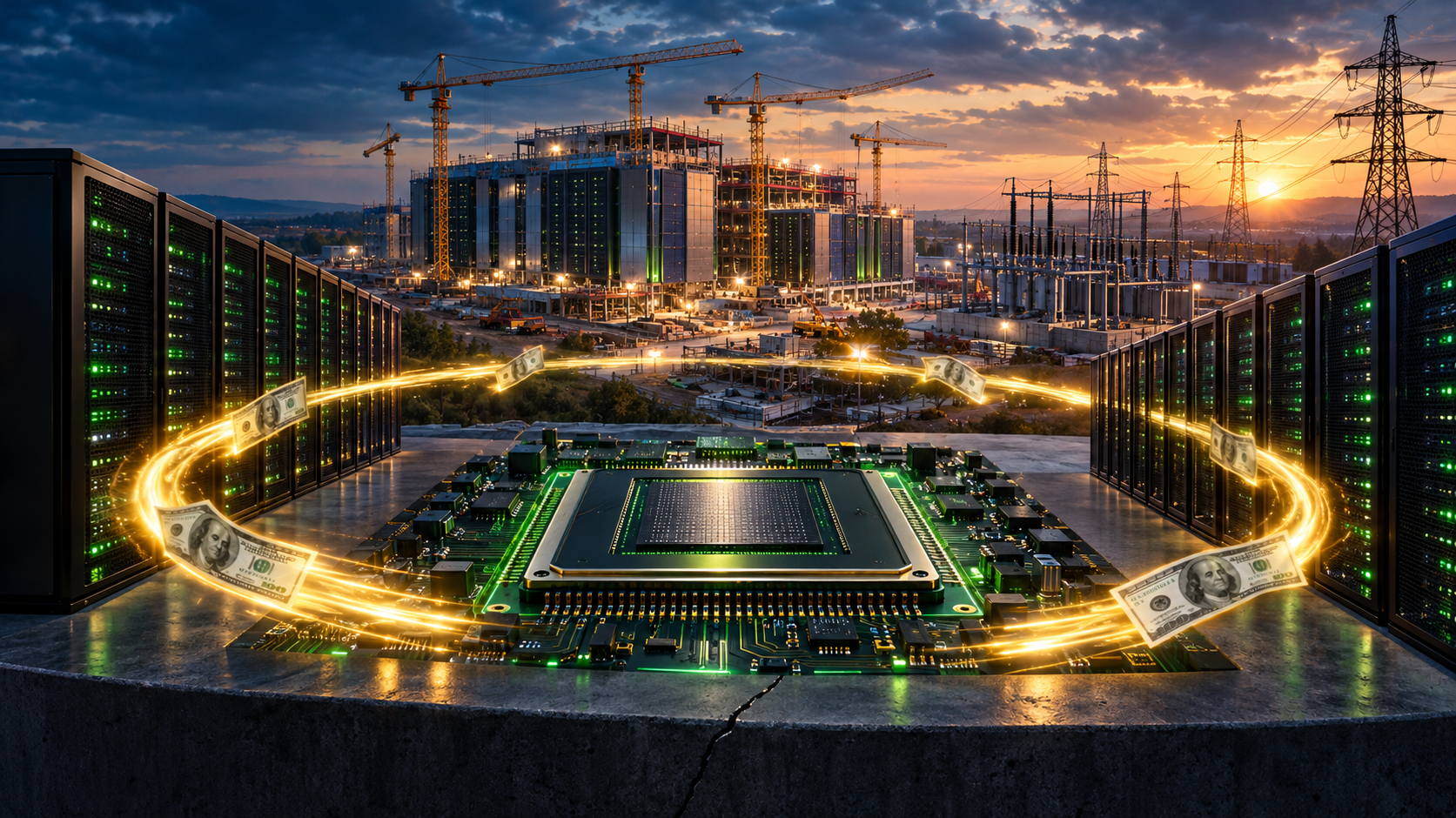
Securities regulator investigates Nvidia – Is Nvidia stumbling over its circular trading practices? – Creative image on the topic, with AI: Xpert.Digital
Nvidia under pressure: How risky are the multi-billion dollar interconnections in the AI business?
AI boom or money cycle? Why investors are taking a closer look at Nvidia's business
Nvidia is financing its AI boom with: Nvidia between record profits and SEC audit – How sustainable is the growth?
Nvidia is profiting from the global expansion of AI infrastructure like almost no other company. But the chip manufacturer is no longer just a supplier: through equity investments, long-term purchase commitments, and guarantees, it also supports companies that need its chips and data center capacity. This can accelerate the expansion – and at the same time lead to sales, equity, and financing risks becoming closely intertwined.
A recently revealed investigation by the US Securities and Exchange Commission (SEC) into Nvidia's accounting practices raises further questions. The specific issues being examined and when the investigation began remain unclear. An investigation is not proof of any regulatory violation. Similarly, it is not established that the financing structures within the AI business are the specific subject of the review. Nevertheless, an important question arises for investors: How much of the demand stems from customers who can finance their investments from their own income – and how much depends on financial support from within the AI ecosystem?
The answer lies neither in the blanket interpretation of the AI boom as an artificial money cycle nor solely in Nvidia's record revenues. The crucial question is whether the financed data centers and chips generate sustained paying demand – and whether reasonable returns remain after electricity costs, financing, maintenance, and necessary replacement investments. (Revised: Swiss spellings have been converted to German orthography, and the spelling of the introduction has been checked.).
Related to this:
Nvidia under pressure: When the AI market leader becomes the financier of its own boom
Those who co-finance their customers are not just selling chips – they are also buying their risks
Nvidia faces a crucial test that extends far beyond the development of high-performance AI chips. The key economic question now is how independent and resilient the demand is for the infrastructure upon which a large part of the global AI boom depends. Equity stakes in customers, long-term purchase commitments, and guarantees for data center projects have transformed the chipmaker into a major financial player. This role can accelerate growth. However, it can also mean that sales risks, losses on equity stakes, and financial obligations all come into play simultaneously during a downturn.
This development gains additional significance due to the recently revealed investigation by the US Securities and Exchange Commission (SEC) into Nvidia's accounting practices. The specific accounting issues being examined and when the review began remain undisclosed. An investigation is not proof of any regulatory violation. Nor has it been established that the financing arrangements within the AI business are the specific subject of the proceedings. Nevertheless, the news touches on a sensitive issue: Investors need to be able to assess which revenues are generated from independently viable customer demand and what additional financial risks Nvidia assumes beyond its traditional delivery business.
The appropriate perspective therefore lies between two extremes. The AI boom cannot be dismissed outright as an artificial money-making scheme, nor are record revenues sufficient to dispel all doubts about its financing structure. The crucial question is whether the new infrastructure will generate more lasting economic benefits than its construction, financing, and ongoing maintenance costs.
A crisis of confidence changes the way we view exceptional business figures
On November 20, 2026, Nvidia's stock temporarily lost around twelve percent during trading, falling to $128.75. By the previous Thursday, it had already lost approximately 22 percent since the beginning of the year. The aforementioned twelve percent represents a temporary price movement and should not be interpreted as the final daily loss. Nevertheless, the reaction illustrates how significantly the perception of the company has changed.
A high market capitalization is not solely based on the most recently reported profit. It incorporates expectations about future earnings, growth opportunities, and the reliability of available information. If any of these foundations falters, even operationally strong companies can suffer significant valuation losses.
Several uncertainties are currently converging at Nvidia. These include accounting practices, the quality of financially supported demand, the control of long-term liabilities, and corporate governance following the departure of long-time CEO Jensen Huang. These issues must be analyzed separately. A leadership problem does not prove an accounting error. A complex financing transaction is not automatically economically unsound. However, taken together, such uncertainties can increase the risk premium that investors demand for a stake.
Economically, this means that even if expected profits remain unchanged, lower confidence could reduce their current market value. If lower future margins or higher financial burdens are also factored in, both effects are amplified.
The share price is therefore neither a court ruling nor a complete company analysis. However, it shows that the capital market no longer solely assesses the speed of AI growth. Increasingly, it is focusing on its financing, verifiability, and resilience.
The leadership crisis is economically relevant, but it is no substitute for a balance sheet analysis
Jensen Huang's departure is particularly significant for Nvidia because the co-founder shaped the company's strategy, technological understanding, and public image for decades. Following the revelation of personal relationships and related allegations, he resigned as CEO. Chief Financial Officer Colette Kress initially assumed leadership on an interim basis. The board of directors accepted Huang's resignation and ruled out his return to the top position. Therefore, a simplistic portrayal of the dismissal as having already been resolved would not accurately reflect the publicly known situation.
For an economic evaluation, private details are not decisive. Personal relationships become relevant where they touch upon potential conflicts of interest, internal reporting lines, the handling of confidential information, or the independence of business decisions.
Particular attention is being paid to the connection with Alice Huang, a former executive of the Singapore-based company Megaspeed, which was a major customer of Nvidia chips. US authorities are investigating possible export control violations related to Megaspeed. In addition, there are intelligence allegations, which cannot be considered proven facts. China has rejected the espionage accusation; Megaspeed has maintained the legality of its business practices.
The economic link between leadership culture and corporate value is built on control and trust. When a corporation makes significant investments and provides long-term guarantees, it must be transparent how such decisions are reviewed, approved, and monitored. The more an organization is dominated by a single leader, the more crucial independent control mechanisms become.
A thorough investigation would therefore need to examine personal responsibility, export controls, internal compliance, and accounting separately. While conflating these issues would generate dramatic headlines, it would likely obscure the actual economic risks.
The operating business remains exceptionally strong
Despite the crisis of confidence, Nvidia possesses a level of profitability that is unusual in the industry. In the second quarter of fiscal year 2027, which ended on July 26, 2026, the company generated revenue of approximately $96.2 billion. Compared to the same quarter of the previous year, this represented growth of 106 percent. The data center business contributed around $89 billion, growing by 117 percent. The gross margin was 75 percent, and operating profit was approximately $63.7 billion.
These figures are essential for context. Nvidia is not a company that relies primarily on continuous funding rounds to sustain its core business. It generates substantial operating profits and therefore has the capacity to financially support other parts of its ecosystem.
The following quarter also initially showed no significant operational slowdown. For the third quarter of fiscal year 2027, revenue of approximately US$115.8 billion and net income of approximately US$65.3 billion were reported. Data center revenue reached roughly US$107.6 billion. The gross margin was 74.8 percent.
However, these figures do not answer all the questions. High profits for the supplier can coincide with tight financing for its customers. Similarly, infrastructure may be in high demand today even though its long-term profitability is still uncertain.
This is precisely where the analytical challenge lies: the real strength of the current business and the uncertainty surrounding the economic viability of the entire investment cycle can coexist. Those who focus solely on the risks underestimate Nvidia's financial strength. Those who focus solely on the gains may overlook how significantly the future risk profile is changing.
The supply chain has become a dense financing network
A traditional supply relationship seems straightforward: A manufacturer delivers a product, the customer pays and then bears the usage risk. In the AI infrastructure sector, this division of roles is becoming increasingly incomplete.
Nvidia supplies accelerators and other system components to cloud providers, data center operators, and other customers. At the same time, the company invests in companies within the AI ecosystem or assumes commitments that facilitate their financing. Model developers need computing power, infrastructure partners build the necessary facilities, and investors finance projects based on long-term customer contracts.
This creates a network of mutual dependencies. A long-term contract with a model developer can enable the financing of a data center. Its operator orders Nvidia hardware. In turn, an investment or guarantee by Nvidia can strengthen the solvency or creditworthiness of a participating company.
This structure serves a clear industrial purpose. Large infrastructure projects often fail not because of a single technical problem, but because several prerequisites must be met simultaneously. Without reliable demand, there is no financing. Without financing, no capacity is created. Without capacity, the customer cannot adequately expand their product offerings.
Financial support can resolve this coordination bottleneck. It becomes problematic, however, when the economic security of the participants stems primarily from mutual promises and too little from already reliable payments from independent end customers. In such cases, the network appears more stable than it actually is in the face of a shared disappointment in demand. This very overlap of supply, participation, and guarantee relationships shapes the debate surrounding AI circular trading.
Why a money cycle does not prove fictitious sales
The term "circular transaction" suggests that money is merely being moved around to feign artificial growth. However, this conclusion is not automatically justified.
When a manufacturer invests capital in a customer and the customer subsequently purchases the equipment they actually need, both the investment and the sale can be economically viable. The crucial factors are whether tangible services are provided, the contract terms are fair, and the customer develops a sustainable business model.
A simplified thought experiment illustrates the difference. If an equipment supplier invests one billion US dollars in an operator who uses it to build computing capacity and then sells consistently profitable services to independent customers, the financing can enable productive value creation. However, if external demand fails to materialize and the operator can only order new equipment with the help of further capital injections, the dependence on continued financing increases.
Equity inflow, sales revenue, and profit are three distinct metrics. An investor exchanges money for an equity stake. A supplier receives payment for products or services. Whether the investment retains its value later and whether the overall system generates profits only becomes apparent over time.
The central question, therefore, is not whether money returns to its point of origin. This happens in many supply chains. The crucial question is what additional economic output is generated along the way and who ultimately bears its costs from their own revenue.
Likewise, a new, independent financial investor will not automatically solve the fundamental problem. External capital can also finance permanently unprofitable capacities. A new face among the investors does not replace sustainable demand.
The OpenAI funding demonstrates the new scale
The interrelationship between capital provision and infrastructure business is particularly evident in the case of OpenAI. In February 2026, a funding round of $110 billion was announced. Of this, $30 billion each went to Nvidia and SoftBank, and $50 billion to Amazon. The resulting company valuation was stated to be around $840 billion.
The timing is important. Earlier negotiations regarding potential investments did not yet constitute finalized capital inflows. Similarly, an announced total sum does not necessarily mean that the full amount is immediately available. Amazon's initial commitment was $15 billion; a further $35 billion was subject to conditions.
In parallel, Amazon and OpenAI agreed to utilize two gigawatts of computing capacity based on Amazon's own Trainium chips. This directly links the equity investment to a strategic infrastructure deal.
For Amazon, this is more than just a financial investment. The company can gain additional capacity utilization for AWS, promote the adoption of its own AI chips, and strengthen its position against other cloud providers. Nvidia, in turn, supports a significant customer for AI computing power and participates in its potential increase in value.
Microsoft remains an important part of this system due to its existing collaborations and cloud relationships. However, these various relationships should not be taken as a conflation of the assumption that all the companies mentioned have identical contracts, risks, or investment conditions.
Even a potential stock market listing of OpenAI would not be economic proof of the business model's profitability. It could broaden access to capital and promote the publication of standardized financial information. However, the real test would remain the same: Rapidly growing usage must generate revenue to sustain ongoing development, research, and infrastructure in the long term.
Related to this:

Investments turn sales opportunities into additional asset risks
Strategic investments can create significant advantages for Nvidia. A successful customer might order more hardware, strengthen the platform's adoption, and simultaneously increase the value of the stake. This allows Nvidia to potentially benefit on multiple levels.
This multiple effect also works in reverse. If a participating company comes under pressure, Nvidia can simultaneously suffer from weaker orders and a declining investment value. If additional guarantees or purchase obligations exist, another layer of risk is added.
For valuation purposes, it is therefore important not to equate investment holdings with annual investment outlays. The book value of a portfolio changes not only through new acquisitions, but also through disposals, valuation gains, and valuation losses.
Nvidia's cash flow statement for the first half of fiscal year 2027 shows purchases of equity instruments totaling approximately $42.4 billion. At the same time, gains from such securities of approximately $23.7 billion were excluded when reconciling net income to operating cash flow. These figures demonstrate that earnings performance is now also influenced by financial assets.
This does not imply that the operating business is weak. It simply means that analyzing the overall result becomes more challenging. Anyone wanting to assess sustainable profitability must differentiate between profit from product sales and changes in the value of the investment portfolio.
Even a large number of investments does not guarantee broad risk diversification. If many portfolio companies depend on the same capital markets, the same major customers, and the same expectation of rising AI spending, their risks remain closely intertwined.
Guarantees shift risks without making them disappear
Nvidia's expanded role is even more evident in guarantees and long-term commitments. The support for SB Energy's data center campus in Pike County, Ohio, is particularly substantial. The project is initially slated to provide approximately 4.25 gigawatts of IT capacity. The guarantee is capped at $105 billion and is linked to long-term leases with an OpenAI subsidiary.
Such a guarantee is not equivalent to an immediate cash outflow exceeding the maximum amount. Decisive factors include the triggering conditions, project progress, terms, and potential proceeds from asset recovery. In this project, the safeguards become relevant gradually with the completion of individual construction phases. The underlying leases are each structured for a term of 20 years.
Economically, this support improves the financing of a project whose risks would otherwise lie more heavily with the developer, landlord, or lender. The financially stronger partner assumes some of the uncertainty, thereby facilitating the development of capacity focused on its technology.
However, this does not eliminate the risk. It merely changes its medium.
The quality of potential recourse claims is particularly critical. If the guarantor can demand reimbursement from the original debtor after a payment, this only reliably reduces the burden if that debtor remains solvent. However, the very economic situation that triggers a guarantee can also weaken the value of the reimbursement claim.
For the third quarter, Nvidia's maximum financial exposure from various guarantees was estimated at approximately $118 billion. This maximum figure does not represent an expected loss or an immediate payment. However, it demonstrates that the company's analysis must now extend far beyond revenue growth and chip margins.
Purchase commitments can stimulate the market or replace demand
In addition to guarantees, commitments to use or purchase cloud capacity are economically significant. Nvidia's corresponding commitments to certain AI cloud providers amounting to approximately US$36 billion were described for the end of July 2026. These commitments typically extend over several years. The remaining burden can decrease if capacity is sold to third parties or used by Nvidia itself.
For an operator, such an agreement can mean the difference between a financially viable and an unfinanceable expansion project. A reliable customer reduces uncertainty about future revenues. Lenders can then assess the project more favorably.
This presents a strategic opportunity for Nvidia: Additional cloud capacity facilitates the use of its platform and can enable further hardware sales. If this capacity is later utilized by independent customers, the commitment will have overcome a temporary market entry barrier.
The problematic scenario arises when the support cannot be repaid because the expected demand from third-party markets fails to materialize. In that case, initial funding effectively becomes a permanent assumption of capacity utilization risks.
The decisive metric would therefore not be solely the absolute amount of new commitments. A more meaningful indicator would be how quickly existing commitments are fulfilled by actual customer demand and what economic benefit Nvidia derives from the computing power it actually uses itself.
The cash flow statement provides a more detailed picture than the profit statement
Nvidia's financial strength is considerable. At the end of July 2026, the company had approximately $56.6 billion in cash and publicly traded debt. Its equity stood at nearly $229 billion. In the first half of the fiscal year, Nvidia generated operating cash flow of approximately $74.4 billion.
Nevertheless, a closer look at the timeline is worthwhile. In the second quarter, net income of approximately US$59.7 billion was offset by operating cash flow of about US$24.1 billion. In the previous quarter, operating cash flow had amounted to approximately US$50.3 billion.
Key changes in the second quarter included a cash outflow of approximately $22.3 billion from the build-up of receivables and additional cash tied up in inventories. Valuation gains from investments also had to be adjusted when reconciling them with operating cash flows.
Such differences do not prove any irregularity. Rapidly growing companies often require more working capital because deliveries and payments are staggered in time. This is precisely why their continued development is important.
If receivables consistently increase significantly faster than business activity, questions arise regarding payment terms, customer structure, and collectability. However, if they transition back into liquid assets after a strong delivery period, the strain may prove to be temporary.
Similarly, reported free cash flow is not synonymous with a completely risk-free distribution pool. Strategic investments, acquisitions, and potential future guarantee payments fall outside some common definitions of free cash flow. A company can therefore report high free cash flow while simultaneously committing significant additional capital.
🎯🎯🎯 Data-driven B2B industry hub as a quasi-in-house solution

The quasi-in-house solution: How Xpert.Digital closes operational gaps in B2B marketing and sales – Smart Content-Driven Business - Image: Xpert.Digital
Xpert.Digital is a data-driven B2B industry hub led by Konrad Wolfenstein . The company acts as an external, quasi-in-house solution for industrial partners, closing operational gaps in marketing, content, and sales – without requiring additional resources on the client side.
More information here:
CoreWeave highlights the gap between growth and profitability
CoreWeave shows why rapid growth and financial strain go hand in hand
While Nvidia generates high margins, the situation is different for specialized infrastructure operators. CoreWeave illustrates how drastically revenue growth, capital requirements, and financing costs can diverge.
In the second quarter of 2026, the company generated approximately $2.575 billion in revenue, about 112 percent more than in the same period of the previous year. At the same time, it incurred a net loss of approximately $626 million. Net interest expenses amounted to approximately $640 million, representing nearly a quarter of the quarterly revenue.
An adjusted EBITDA of approximately $1.51 billion, or a corresponding margin of 59 percent, initially gives the impression of high operational efficiency. However, for a capital-intensive business model, this metric only answers part of the profitability question.
Interest payments are not insignificant costs in a heavily debt-financed expansion. Depreciation, in turn, is intended to reflect the economic consumption of the assets used. Ignoring both of these factors provides little insight into whether the total invested capital will generate a sufficient return in the long term.
The funding gap becomes even clearer in the cash flow statement. Operating cash inflows of approximately US$679 million were offset by cash-effective investments in property, plant, and equipment and related software of roughly US$6.422 billion in the quarter. The difference was therefore approximately US$5.74 billion.
Such a gap can be economically justifiable during a rapid expansion phase. However, it must be closed through equity capital, loans, or other sources of financing. The crucial question is whether the current expansion will later develop into an infrastructure that generates sufficient revenue after covering operating costs and necessary upgrades.
A large order backlog does not guarantee a return on investment
At the end of June 2026, CoreWeave had a sales order backlog of approximately $104 billion. Such figures are important for planning and financing, but they should not be confused with available cash or profits already generated.
An order backlog describes expected future revenues from existing contractual relationships. Whether and when payments are generated depends, among other things, on whether the agreed service is provided on time and what contractual terms apply.
This distinction is particularly important for data centers. Buildings, power connections, cooling, network technology, and servers must be technically and temporally compatible. A contract alone will not eliminate construction delays or insufficient network capacity.
Oracle faces a similar fundamental question, although its business structure and financial starting position cannot be equated with those of a specialized AI cloud operator. Large, long-term customer contracts can secure investments. However, their economic value depends on the associated costs, the timing of payments, and the reliability with which the counterparty fulfills its obligations.
A particularly large customer can, on the one hand, provide planning security but, on the other hand, increase dependency. If they default, the infrastructure must be marketed elsewhere. The more standardized and versatile a site is, the easier it should be to find alternative uses. Customer-specific technical designs, however, can incur additional adaptation costs.
Therefore, the evaluation depends not only on the length of the order book, but also on the expected free cash flow after all necessary expenses.
Debt turns small deviations into big problems
As of June 30, 2026, CoreWeave reported approximately $35.1 billion in interest-bearing liabilities (excluding leases) and approximately $16.3 billion in operating lease liabilities. These were offset by equity of approximately $5 billion. Debt liabilities and lease obligations differ legally and economically; therefore, they should not be treated indiscriminately as the same item. However, both represent fixed payment claims.
Debt financing can increase the return on equity if assets are well utilized and their returns exceed the financing costs. Conversely, it exacerbates losses if revenues fall short of expectations.
This vulnerability arises from the differing volatility of revenues and expenses. Rental prices for computing power can decrease, while interest and lease payments initially remain the same. An operator can therefore experience increased usage and still face financial pressure if prices fall faster than unit costs.
A combination of weaker demand, lower collateral values, and more difficult refinancing would be particularly problematic. This would not only reduce current profits but also worsen the ability to refinance existing liabilities.
Therefore, the risk of AI expansion cannot be assessed solely based on share prices. Loan terms, maturities, repayment schedules, and contractual safeguards often have a more direct impact on whether a company can proceed with its investment plans.
The lifespan of the hardware determines the actual capital requirement
An important part of the cost-benefit analysis concerns the lifespan of AI accelerators. Newer generations can offer higher performance and better energy efficiency. However, this does not mean that older systems immediately become unusable or worthless.
A contract for A100 capacity running until 2029 demonstrates that even a product family introduced as early as 2020 can remain marketable. However, this does not mean that every single device will be operated for nine years, nor that older hardware will retain its original rental prices or margins.
Economically, a distinction must be made between technical and economic lifespan. A functioning GPU can technically continue to perform tasks. However, it remains economically attractive only if its revenue justifies the electricity, operating, and other avoidable costs.
For lenders, the price a system could fetch upon sale is also relevant. This residual value depends not only on the condition of the equipment, but also on market supply, energy efficiency, software support, and the demand for the respective performance class.
Joint sales pressure can further reduce the value of collateral. If many operators simultaneously have to divest older systems or liquidate them due to financial difficulties, the previously assumed residual value may not be achievable.
Conservative financing should therefore not assume that each hardware generation will deliver similarly high returns over many years. Conversely, it would be equally unrealistic to completely write off all older accelerators as soon as a successor is released.
Long-term real estate contracts do not automatically align with short technology cycles
AI data centers consist of assets with very different lifespans. Land, building envelopes, and high-performance power connections can remain usable for a long time. Servers, network technology, and accelerators may need to be replaced or upgraded much sooner.
A 20-year lease agreement is therefore no guarantee that the originally installed technical equipment will operate economically over the same period. Several hardware generations and significant modifications may be necessary during the lease term.
This temporal asymmetry affects the entire capital planning. A project may appear attractive at the building level and yet require additional financing because technical replacement investments arise earlier than expected.
The residual value must also be assessed according to its components. A location with a reliable network connection can remain economically valuable even if the installed servers become less attractive. Conversely, a highly specialized cooling or power architecture may require adjustments when new systems have different requirements.
For guarantees and financing, this means that the quality of the secured assets is at least as important as their original acquisition costs. A blanket view of the entire campus can obscure risks that only become apparent when the land, buildings, utilities, and computing hardware are separated.
Electricity is not just a cost factor, but a limit to growth
The scale of AI expansion cannot be understood without considering energy supply. Global electricity demand for data centers was projected to reach approximately 485 terawatt-hours in 2025. A key projection for 2030 is around 950 terawatt-hours. While such forecasts are not guaranteed, they illustrate the magnitude of the additional demands.
For certain projects, a timely network connection may be more important than a low land price. Completed buildings and delivered servers do not generate marketable computing power if the power supply is unavailable or unreliable.
Furthermore, there is a coordination problem. Investors, construction companies, network operators, hardware suppliers, and customers are working with different timelines. If one component falls behind schedule, already financed assets can become unproductive.
The specification of data center capacity in gigawatts should not be confused with revenue or actual computing power. It describes an electrical power quantity. If it refers to IT load, the energy requirements for cooling and other technical equipment must also be included.
As a rough guide, investment costs of 50 to 60 billion US dollars are cited for one gigawatt of complete AI infrastructure. However, the actual figures depend heavily on hardware, location, scope of construction, and the specific scope defined. Therefore, such a guideline does not replace a detailed project cost estimate.
The decisive factor is the yield per economically usable unit of calculation
The long-term sustainability of AI expansion can be traced back to a simple relationship: the revenue from its use must cover the total economic costs over time.
These costs include not only electricity and personnel, but also hardware, buildings, cooling, networks, financing, maintenance, replacement investments, and a reasonable return on invested capital.
This makes capacity utilization a key metric. With high fixed costs, additional paid usage often significantly improves profitability. Conversely, unused capacity continues to incur costs without generating corresponding revenue.
At the same time, high technical utilization is not automatically profitable. If services are offered at prices that cover variable costs but do not make a sufficient contribution to capital consumption and financing in the long term, a fully utilized data center can still generate an inadequate return.
A similar situation exists at the level of model developers. A sharp increase in user numbers is insufficient if providing the services remains too expensive or if a large portion of the usage is barely monetized.
The productive impact of AI must therefore be translated into solvent demand. A company that actually reduces costs, shortens development times, or generates additional revenue through AI can sustainably pay for it. A user who merely experiments, on the other hand, does not yet create a solid foundation for decades-long infrastructure commitments.
Falling AI prices can promote growth while simultaneously destroying returns
Technological progress can significantly reduce the cost per task performed. This is generally advantageous for users. However, the situation is more complex for investors.
When lower costs enable new applications, overall demand can increase significantly. In that case, suppliers benefit from higher volumes and better capacity utilization despite falling unit prices.
However, it is equally conceivable that prices will fall faster than costs, or that new capacity will be created faster than additional paying users. In this case, the industry's technical capabilities will increase, while the returns of individual operators will decline.
This leads to a key distinction: The social success of a technology and the financial success of all investments in that technology are not identical.
AI can be economically very valuable for industry, logistics, software development, and administration, even if individual data centers were built too expensively or certain business models fail. An infrastructure surplus could even provide users with more affordable services, while investors accept losses.
Therefore, the alternative between complete AI success and a complete AI bubble is too simplistic. A heterogeneous development, with varying technology adoption, market share, and returns on investment, is more likely.
Sales transparency is becoming a crucial factor in building trust
In a tightly interwoven financing network, key performance indicators (KPIs) must be defined with particular precision. Gross revenue, net revenue, partner revenue, and projected annual revenue describe different things.
A current sales rate projected over twelve months is not the same as the actual annual revenue. Similarly, a high reported revenue figure says little about the amount that remains with the company and is available to meet its own obligations.
The debate surrounding differing OpenAI revenue figures for autumn 2026 illustrates this difficulty. A projected annual revenue of approximately $50 billion contrasted sharply with a previously cited figure of roughly $68 billion, which also included gross revenue from partnerships. The difference, therefore, should not be automatically interpreted as a corresponding actual revenue decline.
Nvidia's reporting also incorporates geographic data. The company switched its reporting from billing addresses to the customer's headquarters. This particularly affected the reporting of Singapore. While such a change can be objectively justified, it creates new comparability requirements.
For an economic analysis, at least three questions must be distinguished: Who buys the product, where is it delivered, and where is it ultimately used? These locations do not have to be the same.
Especially with regard to export controls and geopolitical risks, a single geographical indicator may not be sufficient to fully explain all economic dependencies. However, this does not necessarily prove that revenue has been incorrectly recognized.
Financing is becoming a competitive tool with potential side effects
Nvidia's financial support can help customers realize projects faster. At the same time, it can change the competitive landscape.
A competitor then has to develop more than just a high-performance chip. They may be competing against a complete package of hardware, software, developer ecosystem, funding, and long-term support. This can strengthen the economic ties to the platform provider.
Customers face a conflict of objectives. More affordable or even newly available financing facilitates entry into the market. However, in the long run, it can restrict flexibility in choosing other technologies if financial support is tied to specific infrastructure decisions.
Amazon's combination of OpenAI investment and Trainium capabilities also demonstrates that such strategies don't exclusively benefit Nvidia. Large cloud providers can use capital to expand their own semiconductor platforms and reduce their reliance on external suppliers.
For Nvidia, supporting the ecosystem is therefore both a growth strategy and a way to defend its market position. The company must weigh whether additional financing will unlock economically attractive demand or become increasingly necessary to maintain existing sales assumptions.
The crucial boundary lies where the strategic benefits no longer adequately compensate for the risks assumed. More financed demand does not automatically translate into more economic value.
The real danger lies in simultaneous stresses
A single customer can fail without seriously endangering a large corporation. A single project can be delayed without destabilizing the entire market. It becomes more difficult when many risks are based on the same underlying assumption.
In the AI sector, this assumption is that paid usage is growing fast enough to justify the massive expansion of the infrastructure.
If this expectation is disappointed, several developments could coincide: model developers reduce their spending, cloud providers postpone investments, used hardware loses value, lenders tighten conditions, and warranties are more heavily claimed.
This creates a particular multifaceted risk for Nvidia. The company could sell less hardware, suffer losses in the value of its investments, and simultaneously have to meet additional payment obligations.
The procurement side is also relevant. For the third quarter, delivery and capacity commitments of approximately $390 billion were reported. These are not the same as guarantees, but they demonstrate how strongly Nvidia is focusing on further growth, even within its own supply chain.
That's precisely why it would be misleading to simply add up all obligations and present them as immediately due debts. It would be equally wrong to consider them individually and ignore their shared dependence on the investment cycle.
A reliable risk assessment must combine the magnitude, duration, trigger conditions, and simultaneity.
Three development paths explain the range of possible outcomes
A favorable scenario requires a rapid increase in the economically viable use of AI and a further decrease in the cost per productive task. This would allow model developers to reduce their dependence on funding, data centers to achieve high utilization rates, and currently necessary safeguards to gradually become obsolete.
In this case, Nvidia would have overcome an industrial bottleneck through capital and guarantees. Investments could also increase in value, while the assumed liabilities would only be called upon to a limited extent.
A moderate trajectory would be less spectacular. Demand continues to grow, but falls short of even the most ambitious expansion plans. Individual projects are postponed, rents come under pressure, and operators have to adjust their financing. AI is gaining economic traction, but not every investment achieves the originally expected return.
An unfavorable scenario would combine several challenges. Excess capacity would meet insufficient willingness to pay, while securing new financing would become more difficult. Declining hardware values would weaken collateral, necessitating an expansion of financial support measures.
These scenarios are not forecasts with fixed probabilities. They illustrate which variables make the difference: external demand, price trends, capacity utilization, access to capital, and the actual costs of technological upgrades.
For the evaluation of a company, it is crucial whether it remains capable of acting even outside the optimistic scenario.
For industry and SMEs, the benefit is what counts, not the investment volume
This results in a different perspective for industrial users, logistics companies and medium-sized businesses than for capital market investors.
The level of investment in AI infrastructure is not direct proof that every specific application is economically viable. Conversely, potential over-investment in data centers does not render individual production applications worthless.
The crucial factor is the cost-benefit analysis at the process level. An AI solution must deliver a demonstrable benefit in relation to its total costs. This includes not only license and usage fees, but also integration, data preparation, quality control, security, and organizational adjustments.
Falling infrastructure prices could make implementation more economically attractive. At the same time, companies should avoid unnecessarily tying their processes to a single provider if switching later would be technically or contractually difficult.
The public sector also needs to differentiate. A data center project can create regional infrastructure, investments, and digital capacity. However, this does not automatically mean that every subsidy or network expansion will generate an appropriate societal return.
Private sector risk assessment should not be replaced by the mere strategic importance of AI. Especially in major infrastructure decisions, it is crucial to distinguish between the benefits that will be generally available and the risks that will remain with individual investors or potentially public authorities.
Nvidia's test of resilience is called capital discipline
The strongest economic position does not consist of investing as many billions as possible or issuing the largest possible guarantees. It consists of deploying capital in such a way that additional demand can exist later without permanent support.
Several developments will therefore be crucial for Nvidia. First, its operating business must maintain its high level of cash generation. Second, receivables should translate into reliable cash inflows. Third, equity stakes, guarantees, and purchase commitments must be transparent enough to ensure their true economic significance remains comprehensible.
Fourth, it depends on whether the financial support for the ecosystem can decrease relatively as it matures. If each additional growth step requires increasingly greater guarantees from the supplier, this would be a different business model than an increasingly self-sustaining infrastructure market.
The interim management has already announced that it will be more selective in future financing agreements in the AI sector. The crucial factor will be whether this results in measurable changes in capital commitment, contract design, and risk mitigation.
A stricter selection process would not necessarily be a sign of waning technological conviction. Rather, it could be an expression of a necessary distinction: between projects that become viable through their own economic resources and ventures whose attractiveness depends primarily on continued support.
It is not the money cycle that decides, but the demand outside the cycle
Nvidia cannot be adequately described as merely a victim of a temporary crisis of confidence, nor as a convicted operator of artificial revenues. The known investigations so far do not allow for a conclusive statement regarding specific accounting violations. At the same time, the extent of its financial entanglements justifies a significantly more rigorous examination of its business model than was the case when it was primarily a traditional chip supplier.
The company possesses real technological strengths, exceptional profits, and substantial financial resources. It is precisely this strength that enables it to take on risks that other market participants could not bear alone. This allows Nvidia to accelerate the development of a new industrial infrastructure.
The limitations of this model become apparent when financing permanently replaces a lack of profitability. Equity investments buy time, guarantees improve creditworthiness, and purchase commitments facilitate capacity expansion. None of these measures can permanently replace the need for independent customers to pay adequately for economically valuable services.
The clearly reasoned perspective is therefore this: The greatest risk is not simply the fact that money is circulating within the AI ecosystem. It is the possibility that many companies will simultaneously bet on the same, as yet not fully proven, return on investment and treat their mutual commitments as independent safeguards.
Whether Nvidia stumbles over this structure or successfully transforms it into a self-sustaining market depends less on the next big announcement than on a sober assessment of its development: Will the financed capacity translate into reliable cash flows, and will reasonable returns remain after all costs are covered? Only then can it be determined whether today's multi-billion-dollar cycle has been a productive financing bridge – or a costly extension of inflated expectations.
📈🚀 From visibility to trust 👀🤝 Your scalable path with Xpert.Digital

From visibility to trust: Your scalable path with Xpert.Digital - Image: Xpert.Digital
In industrial B2B, sustainable business relationships rarely emerge overnight. They develop step by step – through visibility, professional relevance, recurring touchpoints, and growing trust. Xpert.Digital's 4-stage model addresses precisely this: It offers a structured path that begins with a manageable entry point and can evolve into deeper collaboration in business development if needed.
Instead of relying on loud marketing promises, this model puts the relationship at the forefront. Companies start with clearly defined, easily calculable measures and then decide, based on their own experience, how far they want to expand the collaboration. A key factor for this undisturbed trust-building process: The platform completely avoids annoying advertising ads, so the editorial focus remains solely on the companies' expertise.
More information here:
Your global marketing and business development partner
☑️ Our business language is English or German
☑️ NEW: Correspondence in your native language!

Konrad Wolfenstein
I and my team are happy to be available to you as your personal advisor.
You can contact me by filling out the contact form here [email protected]:or simply call me at +49 7348 4088 965. My email address is
I'm looking forward to our joint project.