
Location on the brink, stock market booming: The paradoxical phenomenon of the German economic crisis
Xpert Pre-Release

Available in 27 languages 📢
Prefer Xpert.Digital on GoogleⓘPublished on: August 18, 2026 / Updated on: August 18, 2026 – Author: Konrad Wolfenstein
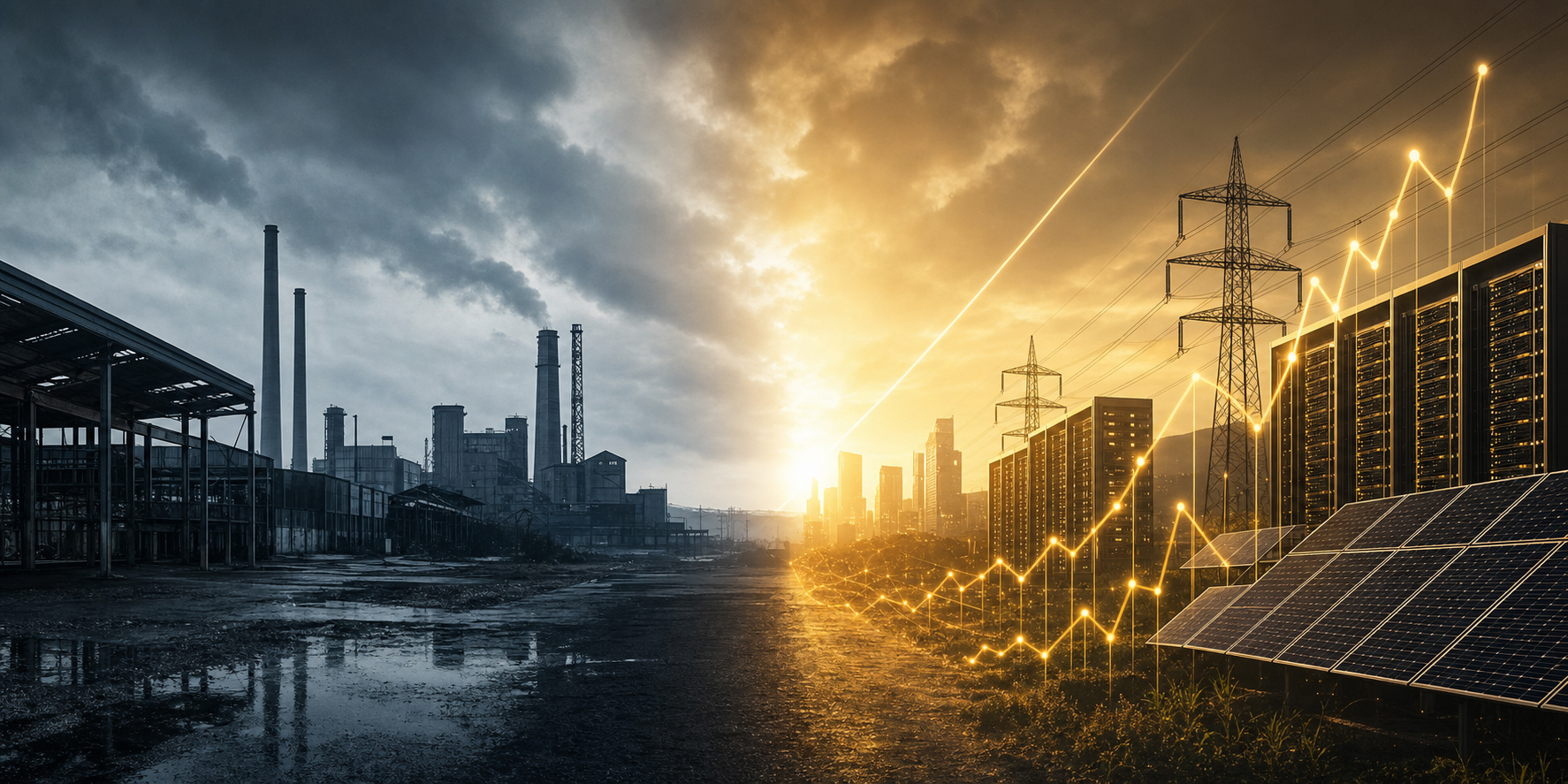
Location on the brink, stock market booming: The paradoxical phenomenon of the German economic crisis – Image: Xpert.Digital
Germany in crisis? Why our corporations are secretly breaking all records
Two worlds in one country: The secret saviors of the German economy
Crisis at the pub, party on the stock exchange: The deep rift through the German economy
Germany is talking itself into a deep economic crisis – and the symptoms seem to confirm the pessimism. Traditional industries are faltering, job cuts dominate the headlines, and complaints about expensive energy and excessive bureaucracy are relentless. But a closer look at the balance sheets of major corporations reveals a completely different, almost paradoxical reality: While the country as a business location is suffering, numerous DAX-listed and medium-sized companies are posting record profits. They have long since abandoned the old business model, decoupled themselves from the domestic economy, and, as indispensable suppliers, are profiting massively from global megatrends such as artificial intelligence, defense, and the rapid expansion of energy infrastructure. How can this enormous discrepancy between public perception and the hard numbers be explained? An in-depth analysis of the two economic worlds of an increasingly divided republic.
Germany's two economies: How a country declares itself dead while its corporations celebrate records
The contradiction between perception and balance
Germany is in crisis. This assessment has become less of an economic diagnosis than a national certainty that hardly anyone questions anymore. Industry is faltering, energy is expensive, the United States is imposing tariffs, China has transformed from a reliable sales market into a serious competitor, the war in the Middle East is temporarily driving up oil prices, and excessive bureaucracy is a constant source of frustration for entrepreneurs across the country. Anyone asking a mid-sized business owner how they're feeling should take their time, because the complaint usually follows promptly and at length.
But there's a fundamental problem with this doomsday narrative, and that problem is the numbers. The profit margins of Germany's largest companies stubbornly behave as if they are far from on the brink. The forty companies listed on the DAX increased their net profits by 13.5 percent to €68.3 billion in the first half of 2026, according to calculations by the Handelsblatt Research Institute based on Bloomberg data. For the full year, analysts expect an increase of almost 14 percent to around €127.7 billion, which would be more than ever before in German economic history and would significantly exceed the previous record of €123.5 billion from 2021. According to these calculations, at least thirteen of the forty DAX companies are likely to earn more in 2026 than ever before in their corporate history.
If the crisis only affects one floor
One might consider this finding to be the usual DAX anomaly, the well-known effect that while Germany complains, its global corporations earn their money elsewhere anyway and are thus largely independent of the domestic economy. However, this explanation falls short in this case. Because even in the second and third tiers of the stock market, i.e., the MDAX and SDAX, the situation sometimes looks more like a boom than a business climate crisis.
Nemetschek, the Munich-based provider of software for architects and construction companies, significantly increased its revenue and profit in the first half of the year, with particularly strong growth in its subscription and cloud software business. Deutz, the long-established engine manufacturer from Cologne, is actually one of those classic German industries whose demise is regularly predicted. Nevertheless, order intake and operating profit are growing strongly there, which is not only due to increased business, but also to a comprehensive corporate restructuring with reduced costs and new business areas in energy and defense.
MLP, the financial services provider from Wiesloch near Heidelberg, significantly increased its operating profit in the first half of the year. Hensoldt, the manufacturer of radar and defense electronics from Taufkirchen near Munich, now has an order backlog of almost ten billion euros. Krones, the manufacturer of filling and packaging systems from Neutraubling near Regensburg, is also receiving more orders, and Bilfinger, the Mannheim-based industrial services provider, expects further margin increases. This isn't the kind of economic news that's being discussed at every pub table in Germany, and therein lies a first answer to the question of why the stock market and public sentiment have diverged so drastically. The stock market doesn't trade Germany as a whole, but rather individual companies, and these are far from the same thing.
Two republics, one country
Speaking of the German economy in the singular lumps together, statistically, an automotive supplier from Baden-Württemberg, a bakery in Brandenburg, the software company SAP, the defense contractor Rheinmetall, and a global reinsurer like Munich Re. While this may be practical for official statistics, it offers little economic insight. A company can be headquartered in Munich, Walldorf, or Cologne and be far more economically dependent on the construction of a data center in Virginia than on consumer sentiment in its home state.
This is precisely the new German economy that has long since emerged beneath the surface of the old narrative. Defense is replacing the combustion engine as a growth driver. Data centers are replacing housing construction. Power grids are replacing traditional chemical raw materials. Software subscriptions are replacing machinery exports to China. While Germany may not have its own company the size of Nvidia, a fact that is frequently lamented, German companies sell a surprisingly large amount of the technical equipment that a corporation like Nvidia needs to conduct its business globally.
The invisible suppliers of the AI revolution
The best example of this mechanism is located in Oberkochen in the Swabian Alps. The optics and technology company Zeiss supplies high-precision optical systems for the lithography machines of the Dutch manufacturer ASML, using its semiconductor technology. These machines expose the structures of modern high-performance chips onto silicon wafers, with the optics operating at a precision where deviations in the nanometer range determine success or failure. German industry may not have invented the artificial intelligence revolution, but without a company from Oberkochen, a significant portion of its most important hardware could hardly be produced to the required quality.
Zeiss is by no means an isolated case, but rather a symbol of an entire network of German suppliers to the global technology infrastructure. Siemens Energy, the Munich-based energy technology group, profits directly from the world's hunger for electricity, driven by the construction of ever more data centers. Siemens itself, the industrial conglomerate also headquartered in Munich, supplies the electrification and building technology for these data centers. Infineon, the semiconductor manufacturer from Neubiberg near Munich, sells the power semiconductors for their power supply, while the Darmstadt-based pharmaceutical and technology company Merck contributes essential materials for chip manufacturing. Meanwhile, the Bonn-based logistics company DHL transports servers and cooling technology worldwide.
Birgit Henseler, an analyst at DZ Bank, aptly summarizes this finding when she states that the thesis of the DAX being technologically weak falls short, because many German industrial and specialized companies have long since become suppliers to the global tech infrastructure. According to her, the German economy hasn't invented the next technological revolution, but it is, in a sense, selling the safety devices for it. This undoubtedly sounds less glamorous than the name Nvidia, but it can be marketed just as profitably.
Siemens is currently sitting on a record order backlog of €132 billion. The data center business is growing particularly rapidly: In the first nine months of fiscal year 2025/26 alone, orders for data centers worth over €6 billion were received, primarily from the United States and Europe – more than double the amount from the previous year. Revenue in this segment rose by a good fifty percent to €3.1 billion, and nine of the ten largest global data center operators, known in industry jargon as hyperscalers, now work with Siemens. CEO Roland Busch spoke in this context of triple-digit order growth in this segment. At Siemens Energy, the same mechanism is evident in almost textbook form: Artificial intelligence needs data centers, data centers need electricity, and electricity in turn needs grids and power plants. At the end of this rather short value chain is, ironically, a German turbine manufacturer that investors considered a hopeless case for restructuring just a few years ago.
🎯🎯🎯 Data-driven B2B industry hub as a quasi-in-house solution

The quasi-in-house solution: How Xpert.Digital closes operational gaps in B2B marketing and sales – Smart Content-Driven Business - Image: Xpert.Digital
Xpert.Digital is a data-driven B2B industry hub led by Konrad Wolfenstein . The company acts as an external, quasi-in-house solution for industrial partners, closing operational gaps in marketing, content, and sales – without requiring additional resources on the client side.
More information here:
The silent transformation: How German companies are turning the crisis into record profits
How the crisis itself is fueling profits
There is a second, less obvious reason for the positive figures, and that reason is the crisis itself, which is indeed having an effect, just not as politically anticipated. In recent years, companies have closed plants, reduced staff, sold off business units, and rigorously streamlined their cost structures. What employees and local politicians experience immediately as a crisis reappears a few quarters later in the profit and loss statement as a noticeably higher margin. The engine manufacturer Deutz, for example, is drastically reducing its structural costs, and many other companies are following the same pattern, ultimately conforming to the logic of the stock market. Thus, an economy can suffer from significant job losses while, at the same time, the shareholders of the same companies profit from them.
This also explains a significant part of the apparent contradiction between poor sentiment and simultaneously rising stock prices. Sentiment and the stock market simply move in different orbits that are hardly synchronized. Consumer and business climate indices describe the current situation, while the stock market is betting on how the situation might develop in the future. And right now, the situation in many parts of Germany is truly dire: The ifo Business Climate Index reached its lowest level since May 2020 in April 2026 at 84.4 points, before recovering somewhat in the following months and rising to 86.6 points in July. In the housing construction sector, almost half of the companies surveyed are now complaining about a lack of orders. Anyone building apartments, producing car parts, or whose business model relies heavily on energy needs no further explanation of the serious problem facing Germany as a business location. However, those who sell radar systems, data center technology, or cloud software view the same Federal Republic through a completely different lens.
The stock market has decoupled from the crisis sentiment
Strictly speaking, Germany doesn't currently have a single economy, but rather several parallel economic systems that have little in common. On the one hand, there's the old economy, still clinging to the traditional German business model: cheap energy from Russian sources, a seemingly endless market in China, vehicles with combustion engines, and an industry that exports its machinery worldwide. This model, proven over decades, simply isn't as viable as it once was, as exemplified by the three major German automakers, whose combined net profit in the first half of 2026 already plummeted by 19 percent to €8.1 billion and is expected to reach just over €17 billion for the entire year.
Alongside this, however, another, younger economy is unmistakably emerging. It earns its money from defense, electrification, digitalization, infrastructure, insurance, software, and artificial intelligence. Henrik Ahlers from the consulting firm EY sees this development as a powerful structural boost, driven by defense spending, the development of AI infrastructure, and the ongoing disruptions in the energy and chemical markets. The rising demand for electricity is not a temporary phenomenon, but a lasting trend that will shape the coming years.
This also provides a coherent explanation for one of this year's more peculiar phenomena. The longer and more loudly the supposed decline of the German economy is publicly debated, the less the stock market seems to take notice. The DAX continues to trade near its historical highs, and the MDAX and SDAX have by no means joined in this general German gloom. The gleaming corporate balance sheets simply tell a different story than the political talk shows. German companies are proving to be significantly more resilient and adaptable than the country where their headquarters are still located. And while the country publicly argues about how to salvage its old, decades-long successful business model, many of its companies have long since moved beyond this debate in their own financial statements and reinvented themselves.
What this division means for economic policy
This dual reality presents German economic policy with a fundamental dilemma that has so far received little adequate attention in public debate. If support measures, subsidies, and energy policy relief continue to be primarily tailored to traditional industries, they are defending a business model that, in its original form, is hardly sustainable. At the same time, those growth sectors that are actually building substance for the coming decades risk being shortchanged in political priorities, even though they have long since become the true backbone of value creation.
For employees in traditional industries, this structural transformation often means painful personal upheavals, such as factory closures, reduced working hours, or the loss of familiar jobs in regions steeped in tradition. For investors, fund managers, and the capital markets as a whole, however, the same transformation offers attractive return opportunities, which are directly reflected in the record profits described. This imbalance between social costs and financial returns is likely to continue to shape the political debate in Germany for some time, especially as the two economies become increasingly decoupled geographically and structurally.
Ultimately, the sobering realization remains that business journalism and public debate would do well to distinguish more precisely between location analysis and corporate reality. Both analyses are accurate in themselves, but describe two different phenomena occurring simultaneously within the same economy. Those who focus solely on sentiment indicators overlook the quiet transformation of many companies. Those who focus solely on stock market prices overlook the real social costs of this change for entire regions and industries. Only the interplay of both perspectives provides a realistic picture of the German economy in 2026.
📈🚀 From visibility to trust 👀🤝 Your scalable path with Xpert.Digital

From visibility to trust: Your scalable path with Xpert.Digital - Image: Xpert.Digital
In industrial B2B, sustainable business relationships rarely emerge overnight. They develop step by step – through visibility, professional relevance, recurring touchpoints, and growing trust. Xpert.Digital's 4-stage model addresses precisely this: It offers a structured path that begins with a manageable entry point and can evolve into deeper collaboration in business development if needed.
Instead of relying on loud marketing promises, this model puts the relationship at the forefront. Companies start with clearly defined, easily calculable measures and then decide, based on their own experience, how far they want to expand the collaboration. A key factor for this undisturbed trust-building process: The platform completely avoids annoying advertising ads, so the editorial focus remains solely on the companies' expertise.
More information here:
Your global marketing and business development partner
☑️ Our business language is English or German
☑️ NEW: Correspondence in your native language!

Konrad Wolfenstein
I and my team are happy to be available to you as your personal advisor.
You can contact me by filling out the contact form here [email protected]:or simply call me at +49 7348 4088 965. My email address is
I'm looking forward to our joint project.










