The lie of the China shock: The fairy tale of the defenseless German and European industry – Image: Xpert.Digital
The End of Arrogance: Why China's Rise to Superpower Hits Us So Hard
Victim mentality instead of innovation: How German and European industry is dismantling itself
The term "China Shock 2.0" is being bandied about in the media, painting a picture of a defenseless German industry being overwhelmed by an unfair wave of Asian exports. But this framing is not only analytically simplistic, it is also dangerously convenient from a political standpoint. It distracts from a painful truth: the real problem is not Beijing's consistent industrial policy, but rather the years of complacency and arrogance of the domestic economy. Blinded by past export successes and the arrogance of its own engineering prowess, Germany has radically missed the boat on change. It's time for a frank analysis – why the current malaise is primarily homegrown and why the retreat into a victim mentality is blocking the urgently needed structural transformation.
From the “department store of the world” to the “engineering office of the future” – how China is turning the tables
Over 20 years ago, China's accession to the WTO dramatically altered the global economy. The initial "China shock" was characterized by cheap consumer goods flooding global markets and leading to job losses in low-skilled industrial jobs in many countries. Germany benefited greatly at that time: German export industries supplied machinery, equipment, and vehicles with which China built its infrastructure and production capacities. This symbiosis guaranteed the growth of the German export industry for many years.
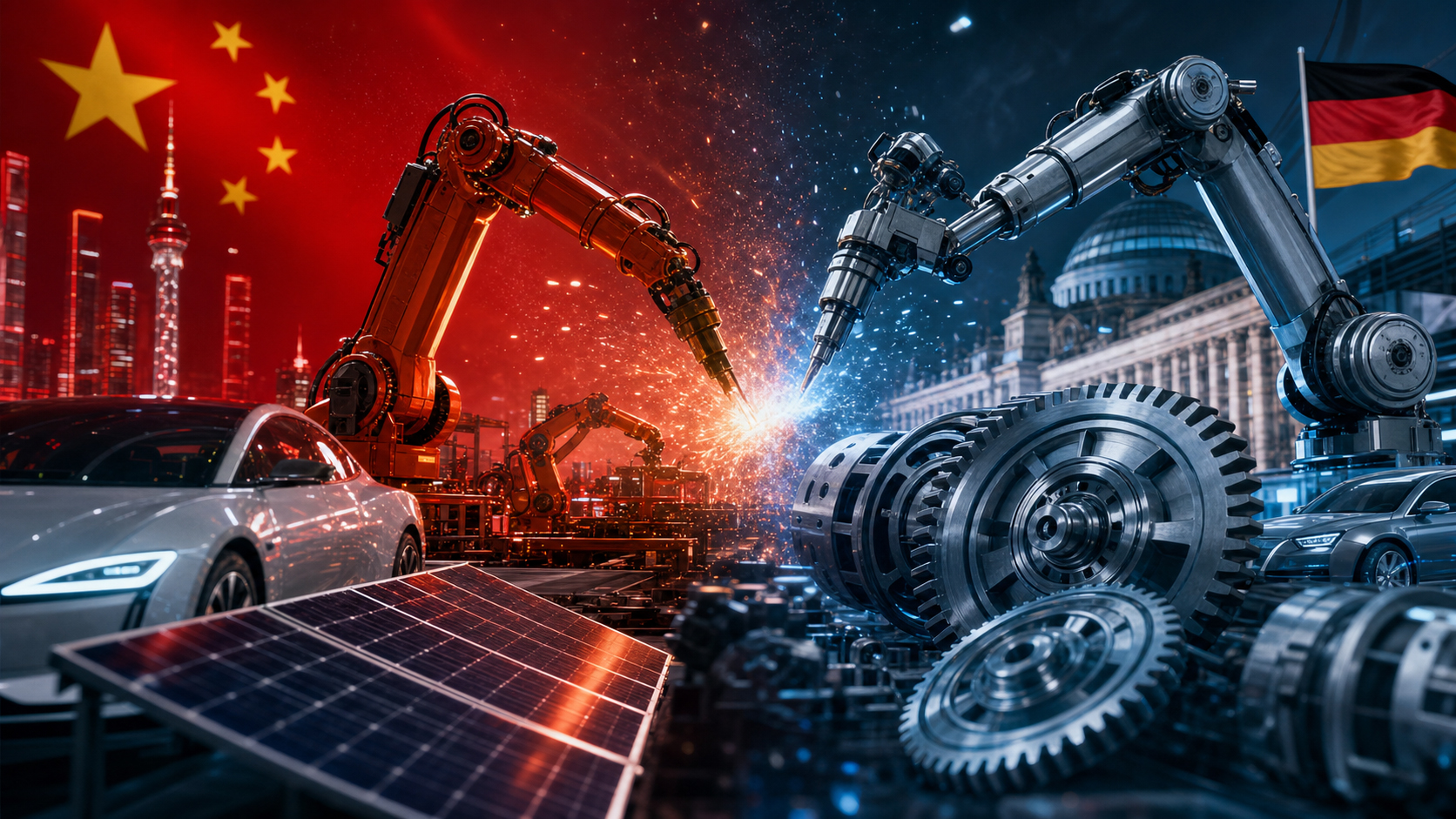
What did anyone expect? That China would merely function as an extended workbench and cheap "department store of the world" for years, while the West skimmed off the high-margin added value? Anyone who believed that fundamentally misunderstood the ambitions of a rising global power. It is downright naive to assume that a nation that has invested massively in education, infrastructure, and technology transfer would be content indefinitely with the role of a mere supplier. That China is seizing the opportunity and—strategically orchestrated by state five-year plans like "Made in China 2025"—entering into direct competition for the key industries of the future is no surprise, but rather the logical consequence of a consistent industrial policy.
China's rise in electromobility, battery technology, mechanical engineering, artificial intelligence, and solar technology didn't happen overnight. It was a process, supported by the state with unprecedented consistency and hundreds of billions of dollars, aimed at achieving technological sovereignty. The question, therefore, is not why China took this path, but rather why we in the West, particularly in Germany, turned a blind eye for so many years. Competition is now decided not by unit labor costs, but by innovative strength, productivity, economies of scale, and speed.
The triple twist: Why the new shock is hitting German industry so hard
Export losses, import pressure and cutthroat competition – the dismantling of a business model
For Germany, the effects of this competition are dramatic, as it directly attacks the core of the German economic model. Economists now describe Germany as the epicenter of the current changes. The burden on industry is coming from three directions simultaneously.
First, exports to China are collapsing. Key German industries such as the automotive, mechanical engineering, and chemical sectors are rapidly losing ground in China. German vehicle exports to China, for example, have fallen dramatically, which has a direct impact on domestic value creation and employment. China is increasingly replacing Western technology with domestic products that have caught up technologically or even surpassed their Western counterparts.
Secondly, pressure is increasing in the domestic market and in Europe. Chinese manufacturers are pushing into the European single market with state-subsidized overcapacity and aggressive pricing. Imports from China are growing steadily and now more than double German exports to China. This is squeezing the margins of domestic companies and depriving them of the necessary capital for future investments.
Thirdly, fierce competition is emerging in third-country markets. In regions such as Latin America, Asia, and Africa, where German engineering has long set the standard, Chinese suppliers are increasingly taking over market leadership. They offer technologically advanced products at prices that German companies can hardly match. According to expert reports, this cumulative effect has already contributed significantly to the decline in Germany's net exports.
🎯🎯🎯 Data-driven B2B industry hub as a quasi-in-house solution

The quasi-in-house solution: How Xpert.Digital closes operational gaps in B2B marketing and sales – Smart Content-Driven Business - Image: Xpert.Digital
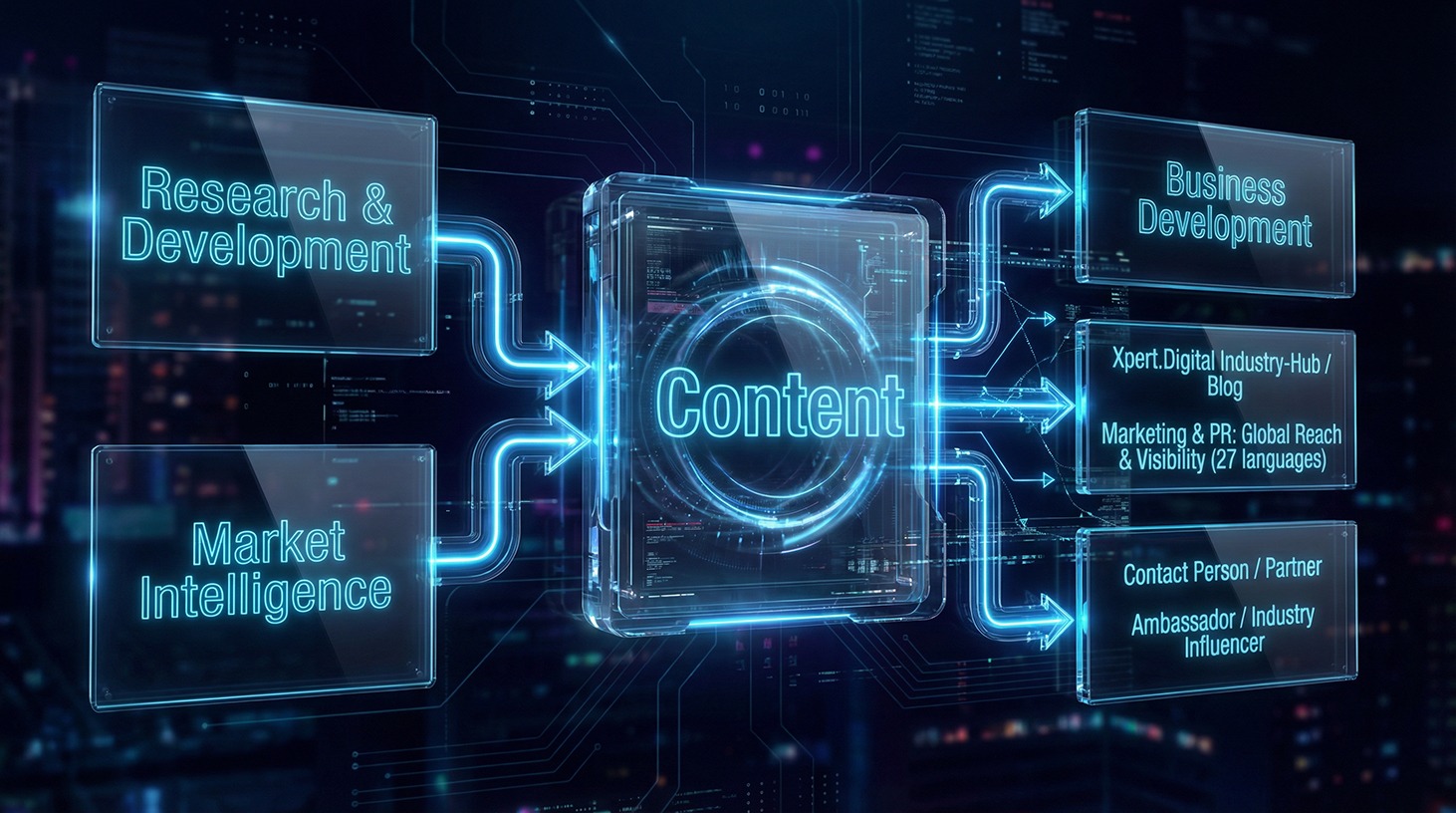
Xpert.Digital is a data-driven B2B industry hub led by Konrad Wolfenstein . The company acts as an external, quasi-in-house solution for industrial partners, closing operational gaps in marketing, content, and sales – without requiring additional resources on the client side.
More information here:
Between complacency and loss of touch with reality: The truth about the China shock
Structural Failures: The Price of Industrial Complacency
Innovation vs. complacency: How Germany neglected its future technologies
The current situation, however, is not solely attributable to China's strategic actions, but also to profound failures on our part. We systematically ignored the warning signs, blinded by substantial export surpluses and a comfortable belief in the inviolability of German engineering. This complacent slumber of European industry, this resting on incremental improvements instead of radical innovation, is now taking its toll. Anyone now speaking of a surprising "China Shock 2.0" is essentially admitting that they have spectacularly missed the signs of the times. Instead of focusing on radical innovation and disruptive technologies, we rested on past successes.
In crucial technology fields such as electromobility, battery cell manufacturing, and digital networking, German companies have lost valuable time. Innovation spending stagnated or focused on incrementally improving existing technologies—such as optimizing the combustion engine—instead of investing in new, radical future technologies. While China invested massively in the entire value chain of renewable energies and electromobility and secured critical raw materials, Germany often prioritized short-term profit maximization and relied on seemingly secure supply chains.
So how much nonsense is there in the mainstream media, from the Frankfurter Allgemeine Zeitung to the like, when the buzzword "China Shock 2.0" is used so frequently? The term deliberately evokes dramatic memories of the massive deindustrialization of the American "Rust Belt" in the early 2000s. While this media framing certainly grabs attention, it dangerously distracts from the real cause of Germany's malaise. Media outlets and business associations often portray China one-sidedly as an all-powerful, unfairly subsidized aggressor that is overwhelming and systematically crippling the European economy with a second wave. The reporting often gives the impression that this shock has struck German industry like an unforeseen natural disaster.
This is an oversimplification from an analytical perspective and politically convenient. Institutes like the Kiel Institute for the World Economy (IfW) and the think tank Center for European Reform (CER) rightly point out that the media's fixation on China as the "villain" masks glaring homegrown mistakes. The much-cited "complacency"—German self-satisfaction—is the far bigger problem. When inadequate European integration, delayed digitalization, excessive bureaucracy, high energy prices, and the years-long neglect of disruptive research in favor of established cash cows are relegated to mere footnotes in the news coverage, it distorts reality.
The shock lies less in Chinese economic policy than in the belated realization of Germany's own industrial stagnation. Germany simply underestimated the Chinese system of close integration of state control, technology promotion, and massive scaling in future-oriented sectors, while accepting its own superiority as a given. It is easier to call for protective tariffs and de-risking and portray oneself as a victim of an unfair Chinese export juggernaut than to admit one's own strategic shortsightedness. Therefore, when mainstream media primarily paint a picture of defenseless German industry, they are perpetuating a victim narrative that intellectually stifles the necessary, radical internal structural transformation. The real question is not how hard China is hitting us, but why we allowed ourselves to become so vulnerable.
Strategic realignment: Ways out of the crisis
From defensive isolation to an offensive innovation strategy
The crucial question now is whether industry is merely experiencing the beginning of a gradual decline, or whether this crisis will serve as a catalyst for necessary structural change. A purely protectionist policy, as practiced to some extent in the USA, is not a viable solution for an extremely export-dependent nation like Germany. Tariffs and trade barriers may provide short-term relief, but they do not solve the underlying problem of a lack of competitiveness.
What is needed instead is a comprehensive realignment. This requires, firstly, massive investments in research, development, and infrastructure to regain or rebuild technological sovereignty in key areas. Secondly, bureaucratic hurdles must be dismantled and the speed of approval and decision-making processes drastically increased to keep pace with the agility of Asian competitors.
Thirdly, a smart European industrial policy is needed that reduces one-sided dependencies on critical raw materials and intermediate products and promotes the development of resilient supply chains. Ultimately, a culture must be fostered that rewards entrepreneurial risk, engineering excellence in future technologies, and technological openness. Only by significantly increasing productivity and innovation can German industry survive in the intensified global competition of the 21st century.
📈🚀 From visibility to trust 👀🤝 Your scalable path with Xpert.Digital


From visibility to trust: Your scalable path with Xpert.Digital - Image: Xpert.Digital
In industrial B2B, sustainable business relationships rarely emerge overnight. They develop step by step – through visibility, professional relevance, recurring touchpoints, and growing trust. Xpert.Digital's 4-stage model addresses precisely this: It offers a structured path that begins with a manageable entry point and can evolve into deeper collaboration in business development if needed.
Instead of relying on loud marketing promises, this model puts the relationship at the forefront. Companies start with clearly defined, easily calculable measures and then decide, based on their own experience, how far they want to expand the collaboration. A key factor for this undisturbed trust-building process: The platform completely avoids annoying advertising ads, so the editorial focus remains solely on the companies' expertise.
More information here:
Your global marketing and business development partner
☑️ Our business language is English or German
☑️ NEW: Correspondence in your native language!

Konrad Wolfenstein
I and my team are happy to be available to you as your personal advisor.
You can contact me by filling out the contact form here wolfenstein@xpert.digital:or simply call me at +49 7348 4088 965. My email address is
I'm looking forward to our joint project.