

The myth of expensive oil: 80 billion euros in profit – The real reason for the price explosion at the pump
Xpert Pre-Release

Available in 27 languages 📢
Prefer Xpert.Digital on GoogleⓘPublished on: September 21, 2026 / Updated on: September 21, 2026 – Author: Konrad Wolfenstein
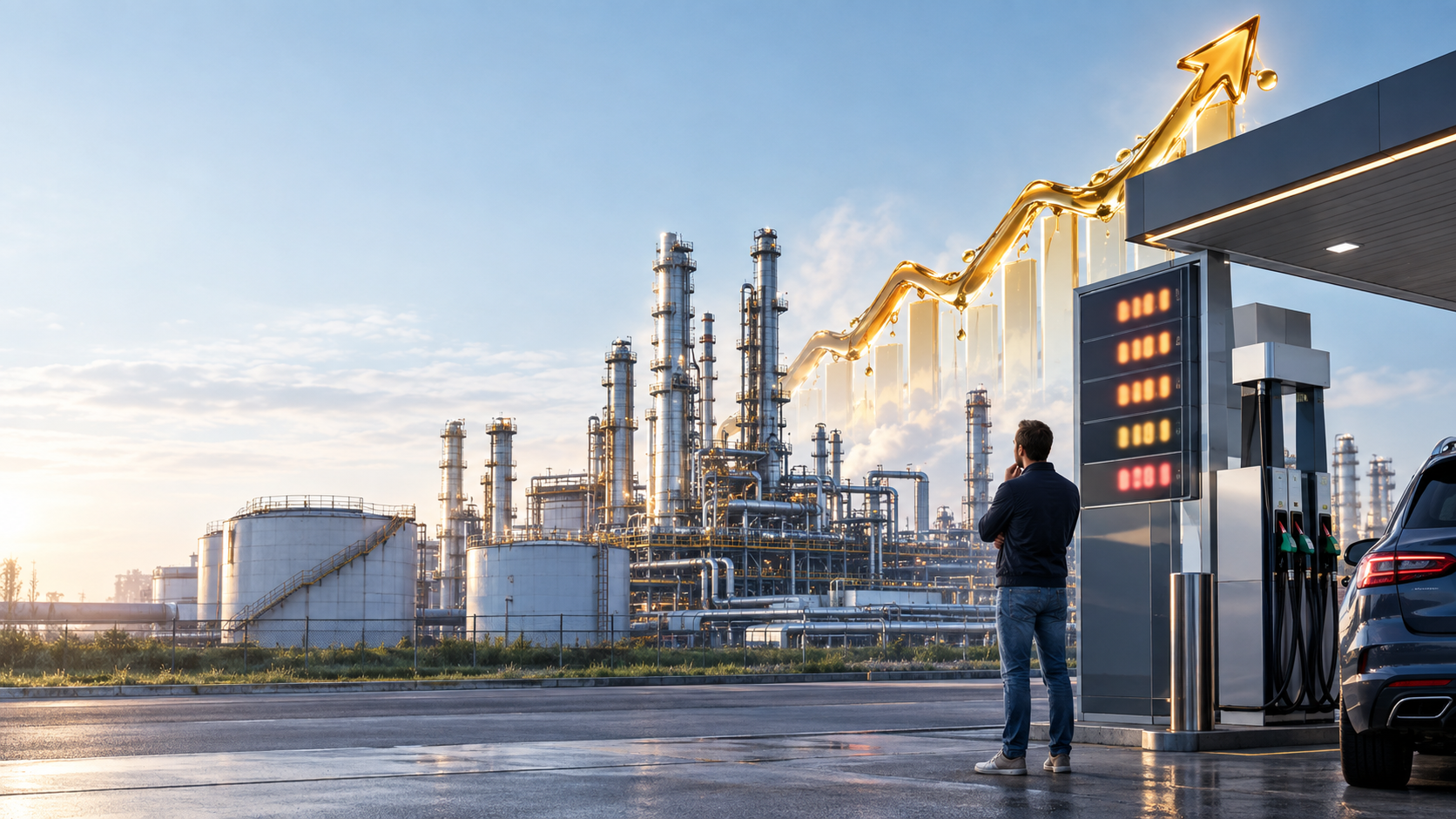
The myth of expensive oil: 80 billion euros in profit – The real reason for the price explosion at the pump – Creative image on the topic, with AI: Xpert.Digital
How energy companies really achieve their record margins: Secret price-fixing at the pump? What the Federal Cartel Office knows about the oil billions
Fuel prices out of control: Why the fuel discount is failing and who's really profiting
Record profits despite the crisis: Is politics failing to control the oil giants?
When prices at the pump skyrocket and oil companies simultaneously rake in record profits in the billions, public outrage is immense – and understandable. But those who simply accuse the companies of illegal cartel agreements or politicians of systematic corruption are missing the point. The reality of the global oil market is more complex, but no less explosive. How do geopolitical crises and limited capacity translate into such astronomical dividends? Why is the Federal Cartel Office often powerless, and why does the popular fuel discount turn out to be a costly economic policy blunder? This in-depth analysis puts the spectacular figures into perspective, examines the mechanisms of price formation from the wellhead to the gas station, and shows which measures – from an intelligent excess profit tax to radical market transparency – are truly necessary now to relieve the burden on consumers and limit the market power of the energy giants.
Oil companies' crisis profits: market result, power problem or political failure?
When the crisis at the gas pump becomes a dividend
Eight of the largest oil companies earned a combined total of almost 93 billion US dollars, equivalent to around 80 billion euros, in the second quarter of 2026. In the same quarter of the previous year, their earnings were just under 50 billion US dollars, or approximately 43 billion euros. The scale of this is real and politically explosive: while households and businesses bear higher fuel and transportation costs, the same price shock translates into exceptionally high profits for major producers.
The understandable outrage is therefore not a substitute for economic analysis. A doubling of corporate profits does not automatically imply an illegal cartel, nor does it prove that all the increased revenues were generated without higher costs. Conversely, it would be equally wrong to dismiss the development simply as a normal result of supply and demand. In a concentrated, vertically integrated market that is essential for the entire economy, scarcity rents can arise that, while legal, are problematic from a distributional policy perspective and are, in some cases, subject to taxation.
The objectively justified perspective is therefore this: The record profits are primarily a consequence of higher market prices, limited transport and processing capacities, and the special position of integrated energy companies. They are not, in themselves, proof of price fixing or corruption. Nevertheless, they justify significantly greater transparency, more effective abuse control, and a well-designed tax on exceptional economic rents. The crucial mistake for policymakers would be to relieve consumers with blanket fuel discounts without simultaneously disclosing price formation in wholesale and refinery operations.
Putting this spectacular number into proper perspective
The frequently cited figure of 80 billion euros is not an official indicator for the German fuel market, but rather the combined quarterly profits of Saudi Aramco, BP, Shell, Equinor, Total Energies, Eni, Chevron, and ExxonMobil. These companies differ considerably in size, production volume, refining operations, trading activities, geographic reach, and accounting practices. Saudi Aramco alone reported adjusted net income of 33.4 billion US dollars for the second quarter of 2026. ExxonMobil reported a profit of 14.5 billion US dollars, and Shell reported adjusted earnings of 9.8 billion US dollars.
The aggregated figure thus describes the global profitability of large energy companies, not the margin at German gas stations. Profits from crude oil production in Saudi Arabia, the Permian Basin, or the North Sea are added together with results from refineries, liquefied natural gas, chemicals, electricity trading, and gas station networks. The sum is nevertheless relevant for the political debate because it shows how significantly an external price shock can alter the industry's earnings. However, it is insufficient to prove a specific violation of competition law in Germany.
The comparison with the same quarter of the previous year also requires careful interpretation. Quarterly profits of large commodity companies fluctuate significantly due to changes in market prices, production volumes, inventory valuations, depreciation, trading results, and exchange rates. A low comparative figure can artificially inflate the growth rate. While doubling remains exceptional, a sound assessment should also consider free cash flows, invested capital, production costs, refinery margins, and longer-term average profits. For excess profit tax purposes, the crucial factor is not the media-friendly quarterly comparison, but rather a clearly defined reference profit over several normal years.
High profits are not automatically illegal
In a market economy, companies are allowed to make profits, even very high ones. Profits serve several functions: they compensate for invested capital, bear risks, finance investments, and direct resources to areas of scarcity. The situation becomes problematic when a company coordinates prices through illegal agreements, abuses a dominant market position, eliminates competitors, or deliberately exploits structural bottlenecks without competition limiting its scope.
Antitrust law and tax law therefore raise different questions. Antitrust law examines whether competition is restricted or market power is abused. A tax on excess profits, on the other hand, examines whether a portion of extraordinary income should be reaped as economic rent. A profit can be entirely legal and still be subject to a special levy. Conversely, a high tax payment does not prove that competition is functioning properly.
The term "excess profit" is vague in political discourse, but can be defined more precisely in economic terms. It refers to the portion of profit that exceeds a normal return on invested capital and an appropriate risk premium. With raw materials, this rent often arises when market prices rise sharply while the extraction costs of already developed fields increase only slightly. This is precisely why a corporation can earn significantly more with unchanged production and similar operating costs. The additional return then stems not primarily from higher productivity, but from the scarcity of a commodity and from property rights to particularly favorable deposits.
Owning oil fields is not a free purchase
The claim that large oil companies are unaffected by higher global market prices because they supply themselves from their own oil fields is an oversimplification. While vertically integrated companies do own exploration rights, refineries, trading companies, and sometimes even gas station networks, within a group, crude oil and products are typically valued at market-based transfer prices. The economic rationale is opportunity value: a barrel of oil produced in-house and processed in the company's own refinery could alternatively be sold at the current market price.
If the world market price rises, the value of a company's own production increases, even if the technical costs of the production operation hardly rise. For the corporation as a whole, this represents a profit at the production stage. For the refinery, however, the crude oil remains economically expensive because its use forgoes the potential sales revenue on the market. Those who use historical production costs instead of this opportunity value confuse book costs with economic costs and underestimate the role of market prices in the allocation of scarce resources.
This does not mean that every price increase is justified. Integrated corporations can profit simultaneously at several levels: from extraction, trading, high refining margins, and distribution. It is precisely this vertical integration that complicates public assessment. Low reported profits from the gas station business can be offset by high earnings in wholesale or refining. An effective investigation must therefore consider the entire value chain and cannot end with the visible price displays at gas stations.
Even long-term supply contracts do not negate the impact of rising market prices. Such contracts often contain pricing formulas linked to Brent crude, Dubai crude, exchange rates, product quotations, freight costs, or other indices. A long-term contract often guarantees quantities and supply relationships, but not necessarily an unchanged price until 2030. Without reviewing specific contracts, the claim of widespread fixed prices cannot be substantiated. Furthermore, even a genuinely fixed purchase price would generate an economic advantage based on the higher market value of the goods, which is not automatically passed on to the end customer as a lower price.
From crude oil price to price at the pump
The price of fuel is not solely determined by the value of crude oil. It also includes refining, transport, storage, legally mandated blends, distribution, gas station operations, energy tax, CO₂ pricing, and value-added tax. Furthermore, gasoline and diesel are traded as separate products. Their prices can fluctuate more significantly than crude oil prices at times, for example, if refinery capacity is unavailable, certain product grades become scarce, or regional stockpiles decrease.
This explains why comparing individual annual figures such as 2008, 2022, and 2026, while raising political questions, cannot in itself prove margin abuse. The nominal oil price in US dollars must first be converted into euros. Then, inflation, taxes, CO₂ costs, refinery margins, freight costs, product shortages, and changes in diesel and gasoline demand must be taken into account. The German CO₂ price increased fuel prices in 2026 by approximately 17 cents per liter of gasoline and 19 cents per liter of diesel compared to a situation without this levy; however, the additional increase compared to 2025 was only a small part of the overall price movement.
The current data also show that the difference between the price of crude oil and the final price is significant. In August 2026, the price of crude oil reported by the Market Transparency Unit ranged between 43.0 and 50.5 cents per liter, while average pump prices were €2.203 for Super E5, €2.146 for E10, and €2.223 for diesel. This difference is not synonymous with profit, as it includes taxes, processing, and distribution. However, its magnitude underscores why examining wholesale and refinery operations is more important than simply looking at the crude oil price chart.
In September, the situation worsened again. Average prices reached around €2.30 per liter for E5, €2.25 for E10, and €2.31 for diesel in the first two weeks. Between September 1st and 11th, gasoline prices rose by 7.1 cents and diesel prices by 13.6 cents per liter. Such movements can be triggered by real expectations of shortages, but they can also allow for margin expansion. Markets react not only to an actual physical shortage, but also to the probability of future bottlenecks.
Scarcity often begins with expectations
The argument that there can be no shortage as long as all gas stations are supplied misunderstands how commodity markets function. Prices don't only rise when a pump runs dry. They rise as soon as traders expect future supplies to be scarcer, riskier, or more expensive. Higher prices dampen demand, mobilize inventories, and create incentives to organize alternative supplies. The fact that the market continues to provide sufficient quantities can therefore be a direct consequence of the increased price.
Nevertheless, a lack of expectations can exceed what is economically necessary. In strained markets, risk premiums, freight and insurance costs, precautionary storage, and speculative positions all increase simultaneously. Uncertainty surrounding the Middle East and the Strait of Hormuz was particularly significant in 2026. Following the outbreak of the Iran conflict, the price of oil temporarily reached more than US$126 per barrel, and Brent crude was significantly above the previous year's level in the second quarter.
The higher profits, therefore, do not prove that the conflict was deliberately instigated to increase profits. Such a causal claim would be speculative without solid evidence. However, they do show that owners of low-cost extraction capacity benefit from geopolitical shocks. This creates a legitimate political problem: Society bears a significant portion of the inflation, security, and distribution costs, while a concentrated group of resource owners receives a large share of the scarcity rent.
Market power also works without secret agreements
An oligopolistic market can produce high prices and stable margins without managers secretly meeting. A small number of suppliers monitor each other, possess similar market information, and recognize that aggressive price cuts would reduce the profits of all involved. This parallel behavior is known as tacit coordination. It is economically relevant, but legally much more difficult to prosecute than a demonstrable agreement.
In its earlier investigation, the Federal Cartel Office initially found no evidence of direct, prohibited price-fixing. However, it specifically examined refineries and the wholesale fuel trade because structural competition problems and significant information gaps exist in these sectors. The final report from 2025 analyzed the price-setting mechanisms at these market levels and documented, among other things, a sharp increase in the frequency of price changes at gas stations: from approximately four to five changes per day in 2014 to an average of around 18 at the beginning of 2024.
A crucial dividing line therefore lies between explicit cartels and structural market power. Public debate often focuses on the notion of secret agreements because it appears morally clear-cut. Economically, however, a market with high barriers to entry, limited refining capacity, difficult-to-replace infrastructure, and few integrated suppliers can deliver unsatisfactory results even without criminal communication. The appropriate response is then not solely prosecution, but a combination of transparency, access regulations, divestiture options, import competition, and targeted abuse control.
Our EU and German expertise in business development, sales and marketing

Our EU and German expertise in business development, sales and marketing - Image: Xpert.Digital
Industry focus areas: B2B, digitalization (from AI to XR), mechanical engineering, logistics, renewable energies and industry
More information here:
A thematic hub offering insights and expertise:
- Knowledge platform covering global and regional economies, innovation and industry-specific trends
- A collection of analyses, insights, and background information from our key areas of focus
- A place for expertise and information on current developments in business and technology
- A hub for companies seeking information on markets, digitalization, and industry innovations
The role of the Federal Cartel Office in the oil market
Why the antitrust office doesn't simply lower prices
The Federal Cartel Office is not a price control authority. Current competition law does not permit it to set a reasonable gasoline price based on political discretion. It requires a basis under antitrust law, such as an illegal agreement or the abuse of a dominant market position. High prices and high profits are important indicators, but not, in themselves, sufficient grounds for a legal violation.
The question of why the authority hadn't intervened long ago therefore has two answers. First, it did indeed investigate, monitor, and initiate proceedings. The Market Transparency Unit records price changes at approximately 15,000 gas stations; since April 2026, prices may only be increased once a day at noon, while reductions remain possible at any time. Second, the in-depth examination of the wholesale fuel trade encountered legal resistance. Proceedings initiated after the conclusion of the sector inquiry were initially halted in the spring of 2026 by a ruling of the Higher Regional Court of Düsseldorf.
This conflict highlights the core institutional problem. A competition authority needs detailed information about purchasing, freight, refining, storage, trading, and internal accounting to assess unusual margins. If companies challenge these disclosure requirements in court, delays occur, while the crisis has long since reached the gas stations. This argues for legally sound, clearly defined powers to request information and ongoing margin monitoring, not for the claim that the authority is completely inactive.
The market transparency office only partially solves the fundamental problem. It makes end-customer prices visible and improves price comparisons. However, it doesn't automatically reveal what portion of a margin is allocated to extraction, raw material trading, refining, or wholesale. For genuine competitive pressure, refinery capacity utilization, import capacities, product pricing, transfer prices, and wholesale conditions must also be transparent.
Corruption allegations require evidence
The assumption that a large number of political decision-makers were bribed is not supported by the profit figures. Lobbying influence, personal connections, and political perverse incentives are real areas for investigation. Bribery, on the other hand, is a concrete criminal charge that requires proof of payments, quid pro quo, or undue advantages. There is a significant legal and analytical difference between interest-driven politics and corruption.
While politicians' past professional connections to financial or energy companies may be viewed critically, they do not replace proof of current influence. Friedrich Merz was chairman of the supervisory board of BlackRock Germany from 2016 to 2020 and has been Chancellor of Germany since May 2025. This does not automatically imply that a specific fuel policy decision should serve BlackRock or individual oil companies, nor does it automatically mean that a personal conflict of interest exists. Instead, serious criticism should focus on published contacts, party donations, shareholdings, legislative proposals, and the distributional effects of specific measures.
Unsubstantiated allegations of crime ultimately weaken legitimate criticism. They allow those targeted to dismiss the entire debate as a conspiracy theory. A more compelling question is why the state socializes costs, receives pricing data only belatedly, and fails to systematically collect exceptional pensions. There are ample economic policy arguments to support this, without inventing motives.
The fuel discount treats the symptom
The German government decided to reduce the energy tax by 14 cents per liter for the period from October to December 2026. Together with the lower value-added tax, this should result in a total tax relief of around 17 cents. Such a measure is quick and administratively simple. It helps commuters, tradespeople, logistics companies, and rural households that have no immediate alternative to the combustion engine.
Economically, however, the fuel discount has serious weaknesses. It is not targeted precisely because the driver of a heavy vehicle or one with high annual mileage benefits more in absolute terms than a frugal household. It reduces the incentive to combine trips, save fuel, or switch to other modes of transport. Above all, it is not guaranteed that the tax reduction will reach consumers fully and permanently if the supply is inelastic in the short term or if providers have market power.
The pass-through of the tax relief depends on competition. In intense competition, the gross price falls by approximately the amount of the tax reduction. In a tight market, some of the relief may be absorbed into higher margins. This is precisely why a blanket discount is contradictory if the government cannot simultaneously measure precisely how wholesale and refinery margins are developing. It is essentially transferring purchasing power into the market and hoping that it reaches the right end.
A targeted alternative would be temporary mobility payments to low-income households, commuters, and particularly affected small businesses. Such assistance could be tiered according to income, distance, vehicle dependency, and regional public transport availability. While more administratively demanding, it would be fiscally more cost-effective and socially equitable. For companies with demonstrably energy-intensive transport services, temporary, degressive subsidies or liquidity assistance might be more effective than a general price reduction for every liter of fuel.
A tax on excess profits is possible, but not trivial
Germany and the European Union have already demonstrated that a special levy on exceptional fossil fuel profits is legally and administratively feasible. The European solidarity contribution for 2022 and 2023 covered companies that generated at least 75 percent of their revenue from crude oil, natural gas, coal, refining, or coke products. Excess profit was defined as the portion of taxable profit that exceeded the average of the years 2018 to 2021 by more than 20 percent; a levy of at least 33 percent was applied to this portion.
The final reported revenue from this emergency measure amounted to just over €26 billion across the EU for 2022 and 2023. This refutes the claim that a tax on excess profits is fundamentally unfeasible. However, it does not yet prove that every design is efficient. The tax base, reference period, loss carryforward, group classification, and international profit shifting determine whether crisis-related pensions or merely normal cyclical income are actually being taxed.
A poorly designed tax can distort investment. If it is introduced retroactively and unexpectedly, it increases regulatory uncertainty. If it is based on revenue rather than profit, it can also affect companies with high revenues but low margins. If it applies only in one country, trade activities, financing, or profits may be shifted. If it favors new fossil fuel investments through generous deductions, it can even counteract the climate policy objectives.
A good solution should therefore not take the form of an improvised punitive tax, but rather a permanent, rules-based tax on rents. The International Monetary Fund recommends capturing a portion of economic rents because a tax precisely targeted at excess returns can generate revenue without significantly impacting investment or inflation. At the same time, it warns against poorly designed, short-term special taxes. Crucial factors include a long-term benchmark return, an appropriate return on equity, full consideration of real losses, and a clear limitation to exceptional returns.
For internationally operating oil companies, a coordinated European solution would be more robust than a unilateral German approach. It should treat production, refining, and trading separately so that losses in one sector cannot be arbitrarily offset against crisis benefits in another. At the same time, it must be ensured that the same profit is not taxed multiple times. The revenues should be used transparently for targeted relief measures, networks, storage, charging infrastructure, rail, and industrial transformation.
The state profits, but not from the same mechanism
It is often claimed in the debate that the real surplus lies with the state. Indeed, the state collects considerable sums through energy tax, CO₂ pricing, and value-added tax. However, the fixed component of the energy tax does not automatically increase with the price of crude oil. Value-added tax rises nominally with higher net prices, while at the same time state spending increases on mobility, construction, defense, social welfare, and inflation-related wage adjustments.
Government revenue and corporate profits are also functionally different. Taxes finance public services and are decided by parliament. Corporate profits belong to the owners and are reinvested, distributed as dividends, or used for share buybacks. Both can be criticized, but the term "excess profit" should not be applied arbitrarily to every higher revenue.
It is true, however, that the government creates a contradictory price mix. On the one hand, it makes fossil fuels more expensive through CO₂ pricing to reduce consumption and emissions. On the other hand, it lowers energy taxes during crises, thereby weakening the price signal. This policy is understandable when alternatives are lacking and the burden is unequally distributed across society. In the long run, however, it is expensive and lacks credibility. The better approach is: targeted compensation for vulnerable groups, expansion of alternatives, and avoiding the permanent artificial lowering of fossil fuel prices.
Critical infrastructure needs control, not necessarily state ownership
Energy supply is part of the critical infrastructure. However, this does not automatically mean that all extraction, refining, logistics, and gas stations must be nationalized. Private companies can invest efficiently, assume risks, and generate innovations. State ownership can facilitate security of supply, but it does not automatically protect against misplanning or politically motivated underinvestment.
Institutional control is crucial. Strategic reserves, non-discriminatory access to terminals and pipelines, robust storage obligations, contingency plans, reporting requirements, and investment mandates can ensure security of supply without nationalizing every facility. Where a natural monopoly exists, such as with certain networks or bottleneck infrastructures, regulation or public ownership should be considered more strongly than in competitive markets.
Breaking up integrated corporations can be beneficial if vertical integration demonstrably stifles competition. However, it is not a panacea. Separating extraction, refining, and distribution could reduce conflicts of interest and improve comparability, but at the same time increase coordination costs and make supply chains more vulnerable. Therefore, a robust impact analysis is needed before any structural unbundling, one that considers market access, import alternatives, and regional refinery dependencies.
E-mobility is competition policy with a time lag
The shift to electric vehicles, rail, public transport, and more efficient logistics not only reduces emissions but also the market power of fossil fuel suppliers. Every liter saved lowers demand and expands consumers' alternative options. In the long term, this substitution is the most effective competitive pressure on oil companies. It also reduces geopolitical dependence on oil-producing countries and transport routes.
In the short term, however, this shouldn't lead to a moral condemnation of all drivers. Rural areas often lack dense public transport networks; renters don't always have access to charging points; and trades and logistics businesses need suitable ranges, payloads, and predictable charging times. Furthermore, an electric car requires an initial investment that low-income households cannot easily afford. Convenience plays a role in some decisions, but infrastructure, capital, and operational requirements are equally real.
Effective policy therefore combines clear, long-term price signals with practical alternatives. These include rapid grid expansion, affordable charging at home and at work, reliable public charging points, competitive electricity tariffs, the electrification of light commercial vehicles, rail investments, and digital logistics optimization. Support programs should be more strongly aligned with income and actual substitution effects than with a vehicle's list price.
A package of measures instead of symbolic outrage
The first priority is transparency along the entire value chain. The Federal Cartel Office should promptly receive standardized data on refinery capacity utilization, crude oil and product procurement, freight, inventory levels, wholesale prices, internal transfer prices, and regional margins. Trade secrets can remain protected while aggregated margin indicators are published. Such a database would neither prohibit profits nor administratively fix prices, but would make conspicuous deviations visible earlier.
The second priority is more effective competition in the wholesale sector. Independent service stations and medium-sized retailers need non-discriminatory access to fuels, terminals, and storage capacity. If integrated providers set wholesale prices in such a way that independent service stations can hardly compete, abuse control measures must be implemented more quickly. At the same time, import bottlenecks, infrastructure access, and regional dependencies should be investigated.
The third priority is a rules-based pension tax. It should only tax profits exceeding a normal return on capital, treat losses symmetrically, be coordinated across Europe, and ideally be permanently enshrined in tax law. This would not penalize profits per se, but rather capture the exceptional portion resulting from geopolitical scarcity or particularly favorable resources. Planning certainty would be greater than with a one-off levy announced retrospectively.
The fourth priority is targeted relief. Instead of subsidizing fuel consumption across the board, low- and middle-income households, unavoidable commuters, and particularly affected small businesses should receive direct, temporary support. Across-the-board tax cuts may be justifiable as a very short-term emergency measure, but should be subject to transparent monitoring of their distribution and a fixed end date.
The fifth priority is accelerating the reduction of oil dependency. Investments in charging infrastructure, distribution networks, storage, public transport, rail, and efficient logistics have a dual effect: they protect the climate and limit the ability of fossil fuel providers to translate geopolitical scarcity into permanently high rents. To achieve this, permits, grid access, and municipal planning must be expedited. A credible transformation pathway is more economically powerful than recurring fuel discounts.
The crucial difference between outrage and judgment
The nearly doubled quarterly profits of the eight oil companies are strong evidence of exceptional crisis rents. They show that higher global market prices are disproportionately benefiting owners of cost-effective extraction and processing capacities. However, they prove neither that the companies incurred no additional costs, nor that secret agreements, bribery, or a deliberate staging of war took place.
The Federal Cartel Office is not inactive, but its tools remain limited in the face of a highly concentrated, internationally interconnected market. It cannot lower prices at the whim of political discretion and requires reliable data as well as a legal basis for abuse. This is precisely why legislators must design rights to information, wholesale trade supervision, and remedial measures in such a way that proceedings do not only take effect years after a crisis.
A tax on excess profits is neither socialist arbitrariness nor an automatic panacea. If properly designed, it can capture economic rents without destroying normal investment returns. If poorly designed, it creates legal uncertainty, incentives for avoidance, and new distortions. The most convincing approach is a permanent, rules-based, and European-coordinated tax on pensions, combined with full transparency and targeted social relief.
The provocative, yet economically sound, conclusion is this: the real failure is not that companies respond to high prices with high profits. It lies in the fact that the state sets the rules of the game so incompletely that crisis profits are privatized, relief costs are socialized, and structural dependency is subsequently perpetuated with the next fuel discount. Anyone who wants to change this needs less unsubstantiated rhetoric about corruption and more access to data, competition law, pension taxation, and investment in genuine alternatives.
🎯🎯🎯 Data-driven B2B industry hub as a quasi-in-house solution

The quasi-in-house solution: How Xpert.Digital closes operational gaps in B2B marketing and sales – Smart Content-Driven Business - Image: Xpert.Digital
Xpert.Digital is a data-driven B2B industry hub led by Konrad Wolfenstein . The company acts as an external, quasi-in-house solution for industrial partners, closing operational gaps in marketing, content, and sales – without requiring additional resources on the client side.
More information here:
Your global marketing and business development partner
☑️ Our business language is English or German
☑️ NEW: Correspondence in your native language!

Konrad Wolfenstein
I and my team are happy to be available to you as your personal advisor.
You can contact me by filling out the contact form here [email protected]:or simply call me at +49 7348 4088 965. My email address is
I'm looking forward to our joint project.










