

F126 – The Billion-Dollar Disaster: How Germany Sinks Its Largest Naval Project Twice – Shock for Rheinmetall and the Navy
Xpert Pre-Release

Available in 27 languages 📢
Prefer Xpert.Digital on GoogleⓘPublished on: June 27, 2026 / Updated on: June 27, 2026 – Author: Konrad Wolfenstein
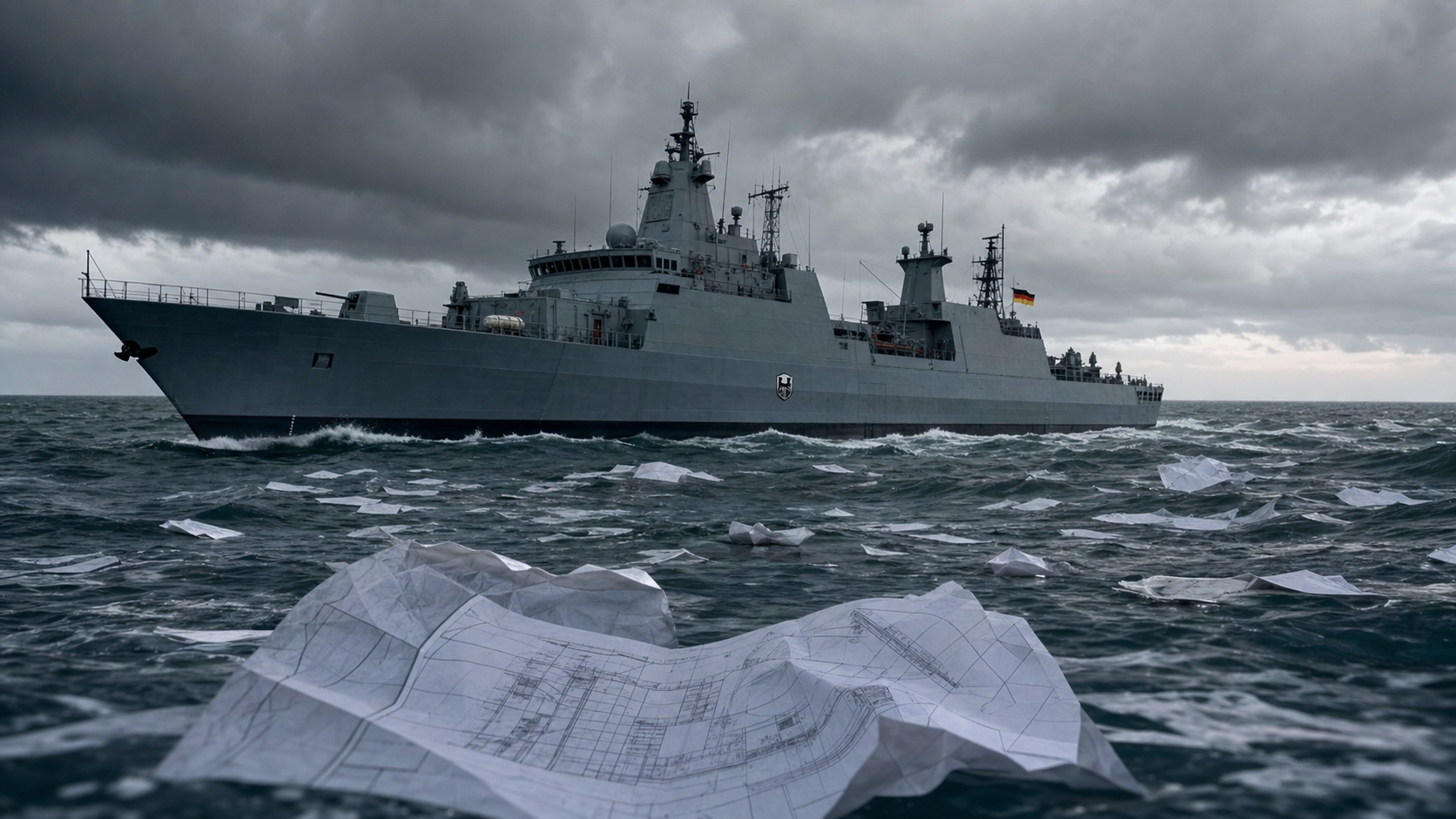
F126 – The Billion-Dollar Disaster: How Germany Sinks Its Largest Naval Project Twice – Shock for Rheinmetall and the Navy – Creative Image: Xpert.Digital
Shock for Rheinmetall and the Navy: The real reasons for the end of the F126 frigate
Change of plans in the German Armed Forces: This frigate is now supposed to save the F126 disaster
A turning point in history, a dead end? What the frigate halt reveals about our procurement system
It is the provisional culmination of an unprecedented arms procurement debacle: German Defense Minister Boris Pistorius has definitively halted the F126 project, the most ambitious and largest naval project in the history of the German Armed Forces. After years of delays, spiraling technical requirements, and a looming cost explosion to over 18 billion euros, the German government has pulled the plug. More than two billion euros of taxpayers' money have already been irretrievably lost. But the failure of this sea-based "jack-of-all-trades" is not merely the story of an overwhelmed general contractor or the failed takeover ambitions of the arms manufacturer Rheinmetall. It is a symptom of a structurally flawed procurement system that is reaching its limits in the new security policy reality of Europe. While the German Navy is now pragmatically switching to the smaller but proven frigate MEKO A-200 (F128), a pressing question arises: Is Germany even still capable of successfully implementing complex large-scale military projects – or is history repeating itself in a dramatic way?
Related to this:

A debacle with a long lead time
On June 24, 2026, German Defense Minister Boris Pistorius announced the end of a project that, in its early stages, should never have truly begun, at least not in its original form. Six F126-class frigates, the largest warships the German Navy would ever have commissioned, will not be built. The Federal Ministry of Defense justified the decision with significant delays, foreseeable cost increases, and risks associated with a necessary change of general contractor. Had the project continued, the initial cost of around ten billion euros would have ballooned to more than 18 billion euros – an 80 percent increase compared to the original budget.
The failure of the F126 is not a sudden event, but the result of a long chain of structural errors: in the tendering process, in the contract design, in oversight, and in political management. It is the story of a project that was too complex, too expensive, and too ambitious – and of a government procurement system that either refused to see or was unable to see the signs of failure for years.
From corvette to all-rounder: The origin story of the project
What ultimately failed as the F126 began more than two decades ago as a comparatively modest project. In its earliest form, the ship was conceived as the K131 corvette. Over the following 15 years, it mutated first into a medium surface combatant (MÜKE), then into a multi-purpose combat ship for crisis operations (MKS), and finally into the F126 frigate, primarily designed for anti-submarine warfare, but whose modular design also intended it to be usable for a wide variety of other tasks. The popular criticism that a "jack-of-all-trades" was created here gets to the heart of the matter.
On June 19, 2020, the contracts were signed in Koblenz: The Dutch company Damen Schelde Naval Shipbuilding (DSNS) was awarded the contract as general contractor, initially for four ships, at a net cost of €5.72 billion, as budgeted in the German federal budget. At the time, this was already the largest contract in the history of the German Navy. It was noteworthy that a foreign company was awarded the contract, even though prominent German shipyards – including German Naval Yards Kiel and a consortium of TKMS and NVL – had also submitted bids. The latter had previously been eliminated, partly due to an excessively high bid price. In 2023, an option for two additional ships was exercised for €3.1 billion, increasing the project to six vessels and a total value of more than €9 billion.
Even in the concept phase, what would later become the main problem became apparent: The F126, with its length of 167 meters, a beam of approximately 21 meters, and a displacement of around 10,000 tons, was not a further development of a proven design, but a completely new development from the ground up. At the same time, thanks to interchangeable mission modules, the ship was intended to be suitable for a wide range of tasks – from anti-submarine warfare and evacuation operations to supporting special forces. Such requirement profiles are manageable from an engineering perspective, but they make the development process considerably more complex and prone to errors.
Technical failure with systemic causes
The formal trigger for the collapse was initially a technical problem: Damen Naval reported difficulties with the IT interfaces of its proprietary design and manufacturing software. This sounds like a manageable minor issue. It wasn't. This software weakness led to significant rework at the German shipyards, most notably the Peene shipyard in Wolgast, where construction of the first ship had begun at the end of 2023. The 2024 defense report cautiously stated that the impact on the overall project's timeline could still be mitigated. This assessment proved to be incorrect.
Behind the software problem lie deeper structural weaknesses. DSNS had clearly overextended itself – both technically and financially. The company had demonstrated its ability to submit a competitive bid; whether it possessed the capability to deliver on that promise in such a complex, high-performance project was another matter. To make matters worse, Germany withheld payments totaling €671 million due to missed milestones. As a result, DSNS faced acute financial difficulties and received a €270 million bridging loan from the Dutch government. The Dutch state intervened to support its own struggling shipbuilder – while the contractor for Germany's largest naval contract was effectively insolvent.
At the same time, estimates of the delay grew: Parliamentarians and industry representatives spoke internally of a 40 to 48-month delay compared to the agreed schedule. Instead of mid-2028, the first frigate would, according to the assessment at the time, have been ready for deployment at best in the mid-2030s. At a time when NATO is demanding concrete capabilities by specific deadlines with regard to Russia, this is no small matter.
The failure of the rescue attempt: The NVL and Rheinmetall option
The Ministry of Defense attempted to salvage the project by changing the general contractor. From spring 2025, intensive investigations were conducted into whether Naval Vessels Lürssen BV & Co. KG (NVL) could step in as the new general contractor. Negotiations with NVL initially proceeded constructively. However, a strategic move by the defense industry fundamentally altered the situation: In March 2026, Rheinmetall acquired the naval shipyard division NVL from the Bremen-based Lürssen Group for €1.5 billion. This suddenly made Rheinmetall the de facto candidate for the general contractor position, and the Düsseldorf-based defense company leveraged this position.
According to reports in the Financial Times, Rheinmetall demanded around €12 billion from the German government to take over the project. In May 2026, Der Spiegel put the current offer at €12.8 billion. Adding the approximately €2 billion already incurred from the DSNS phase, the total bill would have amounted to at least €14.8 billion. The official negotiated agreement with NVL/Rheinmetall for the construction of six frigates ultimately came to €15.2 billion – plus the costs already incurred and necessary supply contracts. The Ministry calculated a total financial requirement of over €18 billion in its assessment. That was the absolute limit.
A particularly consequential legal condition was that, in the event of a change of general contractor, the federal government would have had to waive any potential claims for damages against DSNS. The amount of these claims is still under legal review, but it is a substantial sum that the state would have simply written off in the event of a change. The ministry deemed this waiver unacceptable – a decision that is perfectly understandable from a budgetary perspective, but which clearly illustrates how deadlocked the situation had become.
The stock market as a seismograph: Rheinmetall's share price collapse and its significance
As soon as the decision was announced, the capital markets reacted with a brutality that underscored the extent of the expectations that had built up in the market. On June 24, 2026, Rheinmetall's share price plummeted by as much as 19 to 20 percent, hitting a new low for the year at €930.20. The company's market capitalization fell by around €10 billion. According to reports, this was one of Rheinmetall's worst trading days in almost 30 years. At that point, the share price was already around 40 percent below its yearly high.
The reaction was remarkable insofar as the operating profit Rheinmetall missed out on due to the failure of the F126 project by no means justifies the stock market decline. Analysts at JP Morgan and Morningstar described the market reaction as exaggerated. Morningstar maintained its fair value estimate of €2,380 per share. JP Morgan merely lowered its price target from €1,450 to €1,400 and confirmed its hold recommendation. The real message of the share price drop was something else entirely: The market was not only celebrating the specific loss of the F126 order, but also a general reassessment of the predictability and reliability of German defense procurement decisions. When a company works for years toward an order, buys a shipyard for €1.5 billion, and then comes away empty-handed, that sends a systemic signal.
Conversely, TKMS shares surged by around eleven percent that day. The market immediately recognized who the big winner of the new contract award decision would be.
The winner: MEKO A-200 as a pragmatic turning point
Instead of the six F126 frigates, each with a displacement of approximately 10,000 tons, eight MEKO A-200 DEU frigates, internally designated F128 and built by Thyssenkrupp Marine Systems (TKMS) in Kiel, are now to be procured. The total cost amounts to approximately €11.6 billion: €6.3 billion for the first four ships, with an option for four additional ships by the end of 2026 for approximately €5.3 billion. The first ship is scheduled for delivery in 2029.
The decision to purchase the MEKO A-200 can be considered a pragmatic decision of the highest order in many respects. The MEKO family is a proven export-oriented defense product already in service with the navies of several countries worldwide. With a displacement of just under 4,000 tons compared to the F126's 10,000 tons, the ships are smaller, but according to the Inspector of the Navy, they are fully operational in anti-submarine warfare despite possessing virtually identical basic capabilities. Crucially, it is not only the capability profile but also the infrastructure that is decisive: the F128 fits into the existing base infrastructure of the German Navy, thus avoiding costly and extensive expansion measures.
Above all, the MEKO A-200 is not a risky gamble. The core design already exists, construction at German shipyards by TKMS is technically feasible, and the timeline for the first delivery at the end of 2029 appears significantly more realistic than the original F126 plan, the timeframe of which was questioned by experts until the very end. As the "marineforum" aptly commented: affordable, operational, proven – three qualities that the F126 ultimately lacked.
The cost accounting of failure: What taxpayers really pay for
The stark figures of this failure are sobering. The F126 project had already cost around €2.3 billion by the time it was cancelled. The vast majority of this will likely have to be written off, as the work completed – design, initiated manufacturing processes, preliminary work at German shipyards – can largely not be put to alternative use. These are sunk costs in both the literal and figurative sense.
In addition, there are indirect costs that are more difficult to quantify: the expenses incurred by the Federal Office of Bundeswehr Equipment, Information Technology and In-Service Support (BAAINBw) for years of project support, the costs of reviewing the change of general contractor, and lost capacity at German shipyards that reserved their resources for the F126 project or declined alternative contracts. CDU rapporteur Bastian Ernst reported that German Naval Yards had to accept alternative contracts to utilize its capacity after the F126 process, led by DSNS, stalled.
Furthermore, the procurement costs of the alternative solution are a concern: €11.6 billion for eight MEKO frigates. While this amount is not directly attributable to the F126 failure, it is incurred at a time when the Bundeswehr's special fund is already significantly strained. The 2026 defense budget included €7.8 billion earmarked for the alternative platform as qualifiedly restricted funds. The remaining approximately €3.8 billion now needs to be mobilized – in a budgetary environment that is already presenting considerable challenges for the new federal government under Friedrich Merz.
From an economic perspective, the damage assessment is complex. The state has wasted a large amount of resources that could have been used productively. The German arms industry tied up resources for years in a project that ultimately generated no added value. On the other hand, the MEKO program is generating concrete orders for German shipyards, suppliers, and system integrators – TKMS is a German company, and production takes place in Germany.
Hub for Security and Defense - Advice and Information

Hub for Security and Defense - Image: Xpert.Digital
The Security and Defence Hub offers expert advice and up-to-date information to effectively support companies and organizations in strengthening their role in European security and defence policy. Working closely with the SME Connect Defence Working Group, it particularly promotes small and medium-sized enterprises (SMEs) that wish to further develop their innovative capacity and competitiveness in the defence sector. As a central point of contact, the Hub thus creates a crucial bridge between SMEs and European defence strategy.
Related to this:
From a billion-dollar debacle to the MEKO solution: Strategic consequences for NATO capabilities
Historical parallels: The déjà vu of the paper fleet
It would be an oversimplification to treat the F126 debacle as a unique failure. Germany has already experienced this story, almost exactly as it occurred. The F121 frigate – largely forgotten today – was an armaments project that began in 1960 as a coastal patrol boat, morphed into the "Large Combat Boat Class 130," then into the NATO Frigate 70, and finally became the F121 nationally. There, too, costs exploded, there, too, the project developed into a billion-dollar disaster, and there, too, it was ultimately a defense minister who had to pull the plug: Helmut Schmidt ended the F121 drama in 1970.
The consequence at the time was positive: the failure of the F121 led to the planning of the F122, which entered service in May 1982 as the German Navy's "most successful frigate class." This historical finding contributes to the cautious hope that the lessons learned from the F126 debacle could be used productively. The F128 would then be the equivalent of the F122 – not a visionary flagship project, but a pragmatic, operational platform that reliably fulfills its tasks.
The parallel is not only historically interesting, but also extremely revealing from an institutional perspective: Germany's arms procurement clearly suffers from recurring structural pathologies that cannot be remedied by a new project, a new shipyard, or a new minister. The flaws are systemic in nature.
Related to this:

The procurement system under fire: Structural pathologies
The F126 failure is not an isolated event. It is the most spectacular, but by no means the first, symptom of a fundamental weakness in German defense procurement. The Federal Office of Bundeswehr Equipment, Information Technology and In-Service Support (BAAINBw), as the central procurement authority, has been under constant criticism for years. The accusations are well-known: rigid bureaucracy, excessive procurement requirements, inadequate project control, and a personnel structure simply overwhelmed by the complexity of large-scale industrial projects.
In the specific case of the F126, several questions arise that have yet to find satisfactory answers. How could a contractor who clearly lacked the necessary financial and technical capacity be awarded the largest naval contract in German history? Why weren't the warning signs—increasing IT problems, delays from subcontractors, and growing funding gaps at DSNS—actualized much earlier? And why was the contract structured in such a way that changing the general contractor would have effectively meant waiving any claims for damages?
Part of the answer lies in the tendering process itself. German defense procurement tenders tend to award the contract to the lowest bidder without sufficiently considering whether the bidder can actually deliver the service – whether they are not only willing but also able to deliver what they have promised. The Dutch consortium had submitted a competitive bid, but its track record on comparably complex projects of this scale was limited. A more rigorous suitability assessment would have revealed this weakness much earlier.
Another structural problem is the practice of successively expanding requirement profiles during ongoing projects. The metamorphosis from the K131 corvette to the F126 over several decades is a textbook example of how uncontrolled requirements creep can turn a manageable project into a monster. Each expansion of the requirement profile might be sensible in itself – but the cumulative effect of such adjustments can render a project fundamentally unmanageable.
The bigger picture: Germany's arms strategy in transition
The decision against the F-126 and in favor of the MEKO A-200 falls within a historically unique strategic context. Since the watershed year of 2022, Germany has been undergoing a profound transformation of its defense structure. The special Bundeswehr fund of over €100 billion was designed to quickly compensate for decades of underinvestment. However, the speed of this increase stands in fundamental contradiction to the sluggish reality of procurement. More money does not automatically accelerate processes if the institutional prerequisites are lacking.
Furthermore, the F126 failure coincides within a few weeks with another debacle: the final demise of the Franco-German FCAS fighter jet project. German Chancellor Merz and French President Macron declared the project terminated in early June 2026 after the participating companies, Dassault and Airbus, failed to reach an agreement on roles and leadership responsibilities after almost ten years. "Almost all of them are dead," commented security policy expert Christian Mölling, referring to the major projects of the Merkel-Macron era. Only the MGCS main battle tank project has not yet been formally abandoned, but even there, the situation looks anything but promising.
Within four weeks, two of the most significant European arms projects failed – and in both cases, industrial self-interest, a lack of coordination, and excessive ambitions played a central role. This points to a fundamental problem with European arms strategy: cooperation occurs when it is politically expedient, and cooperation is broken off when industrial realities and national interests diverge too greatly.
Strategic implications for Germany's NATO capabilities
The German Navy needs the new frigates primarily for anti-submarine warfare in the Baltic Sea and the North Atlantic. This task is a national priority for Germany within NATO and of the highest strategic importance, as the Ministry emphasized. Russian submarine activity in the Baltic Sea and the North Atlantic has increased significantly since the attack on Ukraine – and NATO's ability to monitor and combat this activity is one of the alliance's most pressing operational priorities.
The existing German frigates – F123 and F124 – will successively reach the end of their service life in the 2030s. A capability gap in this area, critical for the alliance, would be not only a national but also a pan-European security problem. The F126 project's failure exacerbates this problem: even if the MEKO A-200 timeline is maintained and the first F128 is indeed delivered at the end of 2029, a transition period will ensue in which the navy will have to operate with reduced capabilities. The four-year delay compared to the original F126 schedule (mid-2028) is not insignificant from a strategic point of view.
It is a positive aspect that the MEKO A-200 design has already been proven in international operations, making delivery reliability significantly more realistic than with the newly developed F126. NATO partners are likely to welcome the German decision in principle: a reliable platform in six to seven years is strategically more valuable than a highly ambitious system in twelve to fifteen years.
Political responsibility: Who failed?
The question of political responsibility for the F126 disaster is complex. The official narrative – a Dutch contractor fails, Germany pulls the plug – is not wrong, but it is incomplete. DSNS undoubtedly failed, but the state selected the contractor, structured the contract, exercised oversight, and ignored the warning signs for far too long.
Three political errors stand out in particular. First: the awarding decision itself. That a foreign contractor with an aggressively low-priced bid won the largest naval contract in German history, while domestic bidders were eliminated, was highly questionable from both an industrial policy and risk strategy perspective. The promise of 80 percent German value creation through subcontracting did not compensate for the risk – it merely distributed it among more parties.
Secondly: the inaction. Even after the IT problems became public, the ministry stuck for months to the official line that the project could be continued "with delays." This reticence is understandable from a strategic point of view – no one publicly declares surrender while rescue options are still being explored – but it led to an enormous loss of trust that could have been avoided with earlier honesty.
Thirdly: the handling of the change of general contractor. The review of the switch to NVL and ultimately to Rheinmetall lasted over a year, was used by industrial players for strategic positioning, and ended with a decision that – despite all understanding for the budgetary arguments – was perceived by the affected companies and the industry as an abrupt break. Rheinmetall paid €1.5 billion for the NVL takeover, partly in the firm expectation of receiving the F126 contract. The fact that this has now not happened raises the question of whether the government's signals in this process were communicated with sufficient clarity.
Structural reform as a mandatory task: What needs to change
The F126 debacle provides an instructive, albeit outrageously expensive, lesson in what fundamental reforms are needed in German defense procurement. Some conclusions are practically self-evident.
First, suitability assessments in the tendering process must be significantly strengthened. The lowest bidder is not necessarily the most capable. Especially in complex new system constructions, the contractor's proven performance must be given far greater weight than the mere nominal price offer.
Secondly, the so-called "requirements discipline" must be strengthened – that is, the iron discipline of not continuously expanding a defined set of requirements. Every expansion increases costs, complexity, and risk. The political pressure to make military systems as versatile as possible must be broken through rigorous prioritization.
Thirdly, the BAAINBw needs tools for agile contract management that can react to problems early on without being paralyzed by highly complex contract architectures. The situation that a change of general contractor necessarily entails waiving claims for damages is a clear design flaw in the contract structure.
Fourth, the Bundestag should use its budgetary oversight much earlier and more consistently. In November 2025, the Budget Committee incorporated an intelligent fallback strategy with the "MEKO lever." This type of parliamentary risk management should become standard practice for large procurement projects – not as a sign of distrust in the executive branch, but as a structural safeguard against classic sunk-cost traps.
Learn from failure or repeat the process
Germany has sunk its largest naval project in postwar history, at a cost of €2.3 billion, without commissioning a single ship. This is certainly no cause for celebration, but it is not a complete catastrophe either – provided the right conclusions are now drawn. The decision in favor of the MEKO A-200/F128 is objectively sound and well-founded: a reliable, proven, and affordable design that delivers precisely the core operational capabilities that the navy and NATO urgently need.
The real test, however, still lies ahead. If the F128 program is managed like the F126 program – with excessive changes to requirements, a lack of client expertise, and rigid procurement regulations – then in ten to fifteen years, the next defense minister will once again be faced with a mess. The historical parallel to the F121 and F122 of 1970 shows that a change of course is possible. But it also shows that good intentions alone are not enough: Institutional learning capacity is needed, and despite all the promises of reform, this remains the real scarcity in Germany.
Defense Minister Pistorius's decision – courageous and consistent – places him in the same line as Helmut Schmidt. Whether the next defense minister in twenty years will receive similar praise depends not on the individual at the top, but on the system behind him.
Consulting - Planning - Implementation

Markus Becker
I would be happy to serve as your personal advisor.
Head of Business Development
Chairman SME Connect Defense Working Group
Consulting - Planning - Implementation
Konrad Wolfenstein
I would be happy to serve as your personal advisor.
You can contact me at wolfenstein∂xpert.digital or
Just call me on +49 7348 4088 965 .





