
Multi-level shuttle systems (MLS) and multi-level shuttle solutions with multi-aisle functionality (MAL) vs. 2D/3D shuttle systems
Xpert Pre-Release

Available in 27 languages 📢
Prefer Xpert.Digital on GoogleⓘPublished on: February 2, 2026 / Updated on: February 2, 2026 – Author: Konrad Wolfenstein
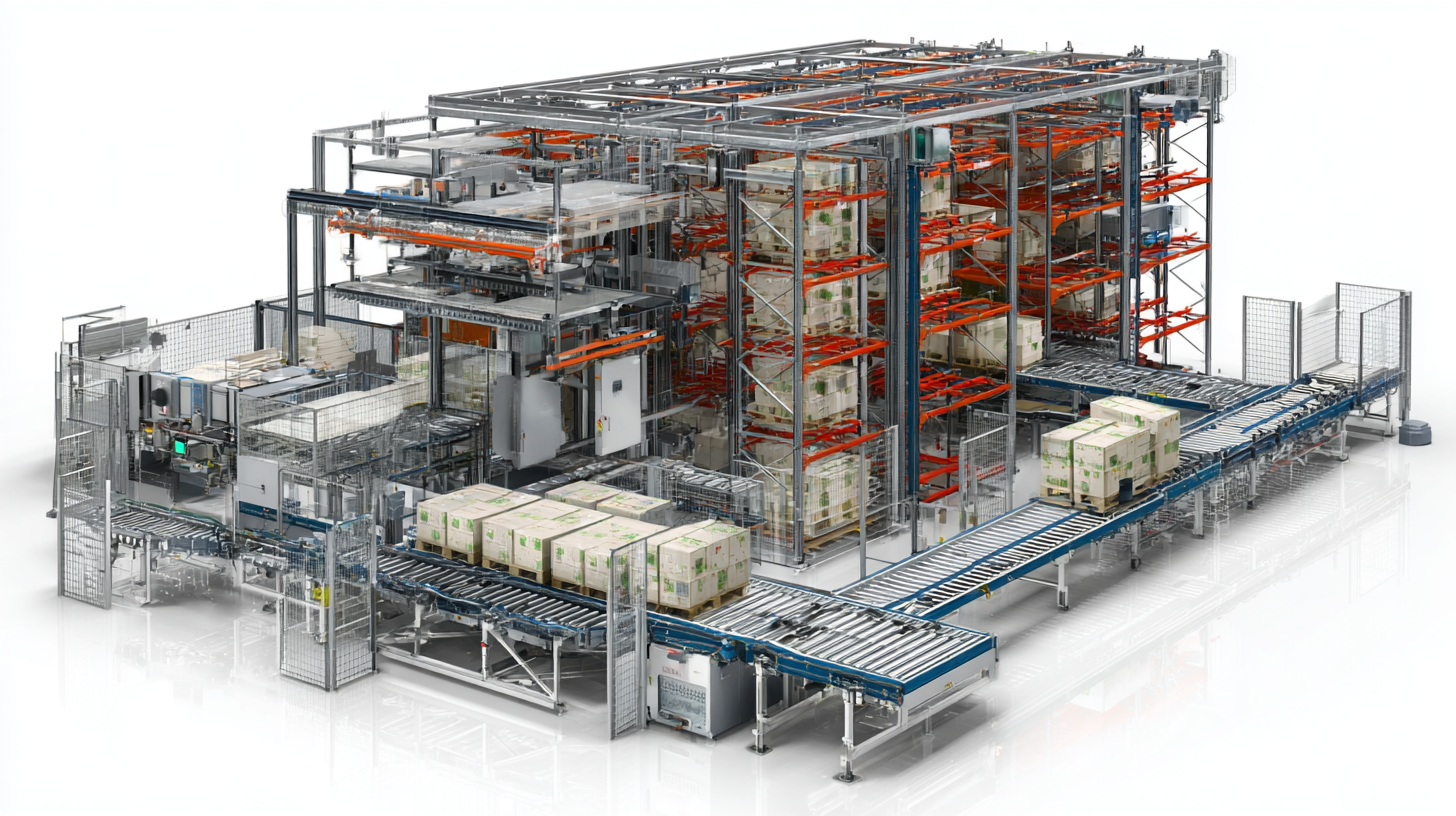
Multi-level shuttle systems (MLS) and multi-level shuttle solutions with multi-aisle functionality (MAL) vs. 2D/3D shuttle systems – Image: Xpert.Digital
Automated warehouse technologies in competition: The strategic repositioning of multi-level shuttle systems
The development of high-performance bearings: Strategic decisions between MLS, multi-aisle and 3D technology
Intralogistics is undergoing a fundamental transformation. Driven by the exponential growth of e-commerce, the acute shortage of skilled workers, and the demand for maximum space efficiency, traditional warehouse concepts are increasingly reaching their physical and economic limits. Where for decades the storage and retrieval machine (SRM) was the undisputed standard for automated high-bay warehouses, highly dynamic shuttle systems are now establishing themselves as the answer to the complex requirements of modern distribution centers. However, choosing "the shuttle" is no longer a simple decision – it requires a nuanced examination of a growing diversity of technological architectures.
Today, the competition between technologies primarily revolves around multi-level shuttle systems (MLS), solutions with multi-aisle functionality (MAL), and highly flexible 2D or 3D variants. These systems differ not only in their kinematics and design but also follow entirely different investment and operational logics. While classic stacker cranes score points with low acquisition costs in standardized processes, the focus for shuttle solutions shifts to throughput, scalability, and redundancy. With peak performance of over 1,000 to as many as 3,000 double cycles per aisle per hour, these systems are redefining what is possible in warehouse logistics.
Here, we examine the strategic repositioning of these technologies. We analyze why, despite higher initial investments (CAPEX), the total cost of ownership (TCO) of shuttle systems is often lower due to energy efficiency and reduced maintenance costs. Furthermore, we investigate the architectural differences between aisle-based and 3D systems and clarify which technology offers the decisive competitive advantage for each application scenario – from pharmaceuticals to deep-freeze. Ultimately, the choice of storage system is not purely a technical question, but an economic decision about the future viability of one's supply chain.
When throughput determines investment decisions
Intralogistics is undergoing a fundamental paradigm shift. While classic storage and retrieval machines have been the standard solution for automated high-bay warehouses for decades, multi-level shuttle systems and related shuttle technologies are increasingly gaining market share. This shift is by no means technology-driven, but rather follows a precise economic logic arising from the changing requirements of modern distribution centers. Choosing between different automation solutions is complex and requires a deep understanding of the technical, economic, and operational parameters.
Technological foundations and architectural differences
Multi-level shuttle systems (MLS) represent a distinct category of automated storage solutions, fundamentally different from two-dimensional and three-dimensional shuttle variants. An MLS system consists of compact, lightweight shuttle vehicles with integrated lifting capabilities that can autonomously serve multiple storage levels. These vehicles reach speeds of up to four meters per second and handle maximum payloads of between thirty and fifty kilograms. Space utilization is remarkably efficient, with a density of up to thirty-six containers per square meter of floor space.
In contrast, two-dimensional shuttle systems operate exclusively horizontally on a defined storage level. Each level has a dedicated shuttle vehicle, while vertical transport is handled by separate lift systems. This architectural separation of horizontal and vertical movement allows for precise scaling of throughput, as shuttles and lifts can be sized independently. The aisle performance of typical two-dimensional systems ranges from 500 to 1,000 double cycles per hour.
Three-dimensional shuttle systems represent the most technologically advanced option. These autonomous vehicles move in three dimensions and can switch between levels without separate lift technology. This complete freedom of movement results in maximum flexibility, but requires complex control and navigation technology as well as a correspondingly elaborate infrastructure.
The difference compared to conventional storage and retrieval machines is substantial. While a typical storage and retrieval machine achieves 80 to 120 double cycles per hour, high-performance shuttle systems handle 500 to over 1,000 double cycles in the same time. Specialized configurations such as the Multi Access Warehouse from psb intralogistics even achieve up to 3,000 double cycles per aisle per hour.
Economic analysis and investment structure
The investment costs of automated storage systems exhibit significant structural differences. Shuttle systems generally require higher initial investments per storage location than conventional stacker cranes. This cost difference results from the multitude of active components: A functional shuttle warehouse requires multiple shuttle vehicles per aisle, separate vertical lifts, complex control systems, and sophisticated racking technology with integrated guide rails. Traditional stacker crane systems are often less expensive to purchase due to decades of standardization and benefit from established manufacturing processes.
However, the operating cost structure reverses this relationship. Shuttle systems are more energy-efficient per storage and retrieval cycle because their lightweight construction and the separation of horizontal and vertical movement consume significantly less energy. An MLS system consumes approximately sixty percent less energy than a comparable RBG per work cycle. Modern shuttle vehicles utilize supercapacitor technology for power supply and feed braking energy back into the system. Advanced systems feature intelligent energy-saving modes such as deep sleep functions, which minimize standby consumption.
Maintenance costs are also lower for shuttle systems. While stacker cranes, as complex individual machines, shut down the entire aisle in the event of technical problems, shuttle systems, thanks to their modular architecture, can replace individual defective vehicles during operation. Although the racking technology in shuttle solutions is more complex, maintenance work can be carried out during operation because the aisles remain accessible and multiple shuttles compensate for downtime.
Return-on-investment calculations for automated warehouse systems are based on standardized amortization periods. Successful automation projects aim for ROI periods of less than five years, with amortization often achieved within two to three years. Choosing between different technologies requires a differentiated analysis of initial investment, ongoing operating costs, energy consumption, and maintenance expenses over the entire lifecycle.
Throughput and scalability as decision criteria
Throughput is the key differentiating factor between various automation solutions. Depending on their design, conventional storage and retrieval machines achieve 80 to 120 double cycles per hour. This performance is sufficient for warehouses with low to medium turnover and aisle throughput below 150 double cycles per hour. Shuttle systems, on the other hand, address medium to high throughput requirements and typically handle 500 to 1,000 double cycles per hour and aisle.
High-performance configurations significantly exceed these values. The Evo Shuttle from KNAPP, in its two-dimensional version, achieves over one thousand double cycles per aisle per hour. The Multi Access Warehouse from psb intralogistics is designed for up to three thousand double cycles per aisle. Such performance levels are achieved through the integration of multiple container lifts per aisle, which can be positioned at any location within the warehouse structure.
Scalability is a fundamental difference between shuttle systems and aisle-based storage and retrieval machines. While the performance of a storage and retrieval machine is limited by the individual machine, shuttle warehouses can be expanded by adding more vehicles during operation. The number of shuttles is scalable independently of the number of storage locations. If throughput requirements increase, additional shuttles are integrated; if storage capacity grows, the aisles are lengthened or expanded. This decoupling of performance and capacity enables a phased investment strategy, limiting initial costs and allowing for later increases as needed.
The Multi Access Warehouse exemplifies this flexibility. The variable number of container lifts and up to two shuttles per level allow the system performance to be precisely adapted to requirements. Conveyor technology can be integrated on any storage level, offering maximum flexibility in layout planning. Individual lifts, conveyor sections, and picking areas can be deactivated during off-peak hours, while simultaneously maintaining ample capacity reserves for peak times.
LTW Solutions

LTW Intralogistics – Engineers of Flow - Image: LTW Intralogistics GmbH
LTW offers its customers not individual components, but integrated complete solutions. Consulting, planning, mechanical and electrotechnical components, control and automation technology, as well as software and service – everything is networked and precisely coordinated.
In-house production of key components is particularly advantageous. This allows for optimal control of quality, supply chains, and interfaces.
LTW stands for reliability, transparency, and collaborative partnership. Loyalty and honesty are firmly anchored in the company's philosophy – a handshake still means something here.
Related to this:
The invisible heroes of logistics: How the world's fastest warehouses work
Redundancy and system availability
The availability of automated storage systems is a critical success factor, especially in time-critical applications such as e-commerce or pharmaceutical logistics. Shuttle systems offer inherent redundancy due to their architecture. The failure of a single shuttle vehicle results in only a minor reduction in performance, as the remaining vehicles continue operation. In contrast, a failure of an automated storage and retrieval system (AS/RS) results in the complete shutdown of the affected aisle.
The multi-access warehouse implements redundancy on multiple levels. Multiple container lifts and conveyor systems for warehouse connectivity significantly increase availability. Each load handling device can be transferred from several shuttles to different lifts and transported out of the warehouse via various conveyor connections. Even during maintenance access, when individual levels or lifts are temporarily deactivated, the warehouse aisle remains functional.
The technical design of highly available systems follows established redundancy principles. Complete one-to-one redundancy of critical components, master-slave configurations of control systems, and watchdog units for monitoring redundant process servers are industry standards. Shuttle systems benefit from their distributed architecture, as the technical or organizational decoupling of plant components increases overall availability.
Application areas and use cases
The suitability of different automation solutions varies considerably depending on the application context. E-commerce fulfillment places the highest demands on throughput and flexibility. Shuttle systems dominate in this segment due to their ability to handle high order peaks and enable parallel processes in narrow aisles. Fast order processing and the ability to manage seasonal fluctuations through flexible shuttle deployment are key advantages.
The pharmaceutical industry utilizes shuttle technology for applications that require both maximum performance and inventory accuracy. Automated inventory management and the ability to precisely sequence orders meet the stringent compliance requirements of this sector.
In production environments, shuttle systems are primarily used as buffer storage and to supply production lines. Just-in-time and just-in-sequence processes benefit from the rapid availability of items and the possibility of automated sequencing. Integration with palletizing robots enables efficient material flow concepts.
Deep-freeze warehouses represent a specialized application where shuttle systems offer significant advantages. Reducing manual labor in deep-freeze environments lowers personnel costs and improves working conditions. Modern shuttle vehicles are designed for operating temperatures down to minus thirty degrees Celsius.
Practical examples and implemented applications
The practical implementation of multi-level shuttle systems demonstrates their performance. ETRA Oy in Finland operates a four-aisle container warehouse with 49,500 storage locations, combining ten GEBHARDT multi-level shuttles and two conventional stacker cranes. This hybrid solution optimally utilizes the strengths of both technologies.
The UK-based multi-brand online retailer Skygate relies on a KNAPP Evo Shuttle system for six million stocked items. The integration of 500,000 specially designed Evo Stacknest containers has increased warehouse efficiency by 25 percent. The solution enables order fulfillment in just 30 minutes.
Arvato operates the world's largest two-dimensional shuttle solution in the cosmetics sector for a beauty and lifestyle retailer. The system stores and retrieves 12,500 containers per hour from double-deep storage. The system's flexibility handles significant variations in order volumes and smooths out peak loads.
EssilorLuxottica uses 450 shuttles in an Evo Shuttle 1D configuration for 500,000 storage locations. The system processes 33,000 packages daily, which corresponds to an output of 250,000 items per seven-and-a-half-hour shift.
HEAD Sportartikel implemented a Jungheinrich automated small parts warehouse (AS/RS) with 36,000 pallet positions, capable of handling 500 containers per hour. This central European warehouse, operational since June 2022, demonstrates the successful automation of a medium-sized distribution center.
Space efficiency and capacity optimization
The space utilization of automated storage systems far surpasses that of manual solutions. Multi-level shuttle systems achieve a density of thirty-six containers per square meter of floor space. High-bay warehouses with ten thousand pallet spaces require only two to three thousand square meters of floor space.
A quantitative comparison of different racking systems with identical warehouse dimensions illustrates the efficiency differences. In a hall measuring 100 by 100 meters with a height of 9 meters, a standard pallet rack holds 20,000 pallets. A pallet flow rack increases the capacity to 36,000 pallets. A pallet shuttle system achieves 46,000 pallets in the same hall, representing an increase of 130 percent compared to the standard solution.
The increased space efficiency results from several technical factors. The elimination of wide picking aisles, multi-deep storage, and optimal vertical space utilization all contribute to increased capacity. Dynamic storage location management allows for the storage of different container sizes on the same level, which increases flexibility and minimizes wasted space.
Decision matrix and system selection
Selecting the optimal storage technology involves a structured evaluation of quantitative and qualitative criteria. Storage and retrieval systems are suitable for applications with low throughput, low turnover rates, heavy goods weighing over fifty kilograms, and non-standard dimensions that cannot be accommodated by standard containers. This established technology offers high operational reliability and manageable maintenance intervals.
Shuttle solutions are preferable for medium to high throughput requirements between one hundred and fifty and one thousand double cycles per hour, high turnover of storage locations, need for manual accessibility of each storage location in the rack, existing buildings that do not allow for a classic high-bay warehouse, and foreseeable performance increases of the system.
The economic viability of automated small parts warehouses typically begins at 3,000 to 5,000 storage locations per aisle at full capacity. When integrated into existing building structures, solutions with fewer than 1,000 locations can be worthwhile. However, if the project requires a new building, automated solutions only become cost-effective with significantly higher container volumes.
A total cost of ownership (TCO) analysis must consider not only investment costs but also energy consumption, maintenance expenses, personnel costs, and land costs over the system's lifecycle. The system's scalability and expandability are long-term factors that are often underestimated in the initial investment decision.
Multi-aisle functionality and hub systems
Multi-aisle concepts expand the basic architecture of shuttle systems by enabling cross-aisle access. The Hubmaster Multi-Aisle Stacker Crane System allows storage and retrieval machines to switch between multiple aisles. This flexibility reduces the number of operator stations required while simultaneously increasing system efficiency.
The psb intralogistics Multi Access Warehouse implements a hub concept by integrating container lifts at any desired position within the storage aisles. The conveyor technology can be connected on any storage level, allowing for maximum flexibility in layout planning. Each load handling device is transported by shuttles to lifts, which then guide the goods to their designated workstation without any cross traffic.
This architecture is particularly effective in long, tall, high-capacity warehouses, where it provides enormous performance reserves. The ability to retrofit lifts and conveyor technology allows the shuttle system's performance to be adapted to increased capacity.
Strategic implications and future prospects
The increasing prevalence of shuttle technologies reflects fundamental changes in intralogistics. E-commerce growth, skills shortages, and rising space costs are accelerating automation. Multi-level shuttle systems and related architectures are not a universal solution but address specific application scenarios with high throughput requirements and a need for flexibility.
Choosing the right automation solution requires a precise analysis of operational requirements, economic conditions, and long-term strategic direction. Shuttle systems offer advantages in throughput, scalability, and redundancy, but require higher initial investments and more complex racking technology. Storage and retrieval machines remain the preferred solution for applications with a clearly defined performance profile, high operational reliability, and low maintenance requirements for medium throughput.
The evidence-based decision matrix must integrate technical parameters such as throughput and energy efficiency, economic factors such as investment costs and payback period, and operational aspects such as redundancy and ease of maintenance. Only a holistic evaluation of these dimensions enables the selection of the optimal storage technology for the specific application.
The technological evolution of automated warehouse systems continues. Artificial intelligence for optimizing warehouse operating strategies, advanced sensor technology for predictive maintenance, and advanced energy storage technologies will further enhance performance and cost-effectiveness. In this context, the strategic positioning of multi-level shuttle systems as a high-performance solution for high-throughput applications will be further solidified.
Consulting - Planning - Implementation

Konrad Wolfenstein
I would be happy to serve as your personal advisor.
contact me at wolfenstein ∂ xpert.digital
Just call me on +49 7348 4088 965 (Munich) .
Your intralogistics experts
Consulting, planning and implementation of complete solutions for high-bay warehouses and automated storage systems - Image: Xpert.Digital
More information here:










