

Electricity price trap of the energy transition: The fatal misconception in solar expansion – What's going wrong
Xpert Pre-Release

Available in 27 languages 📢
Prefer Xpert.Digital on GoogleⓘPublished on: September 1, 2026 / Updated on: September 1, 2026 – Author: Konrad Wolfenstein
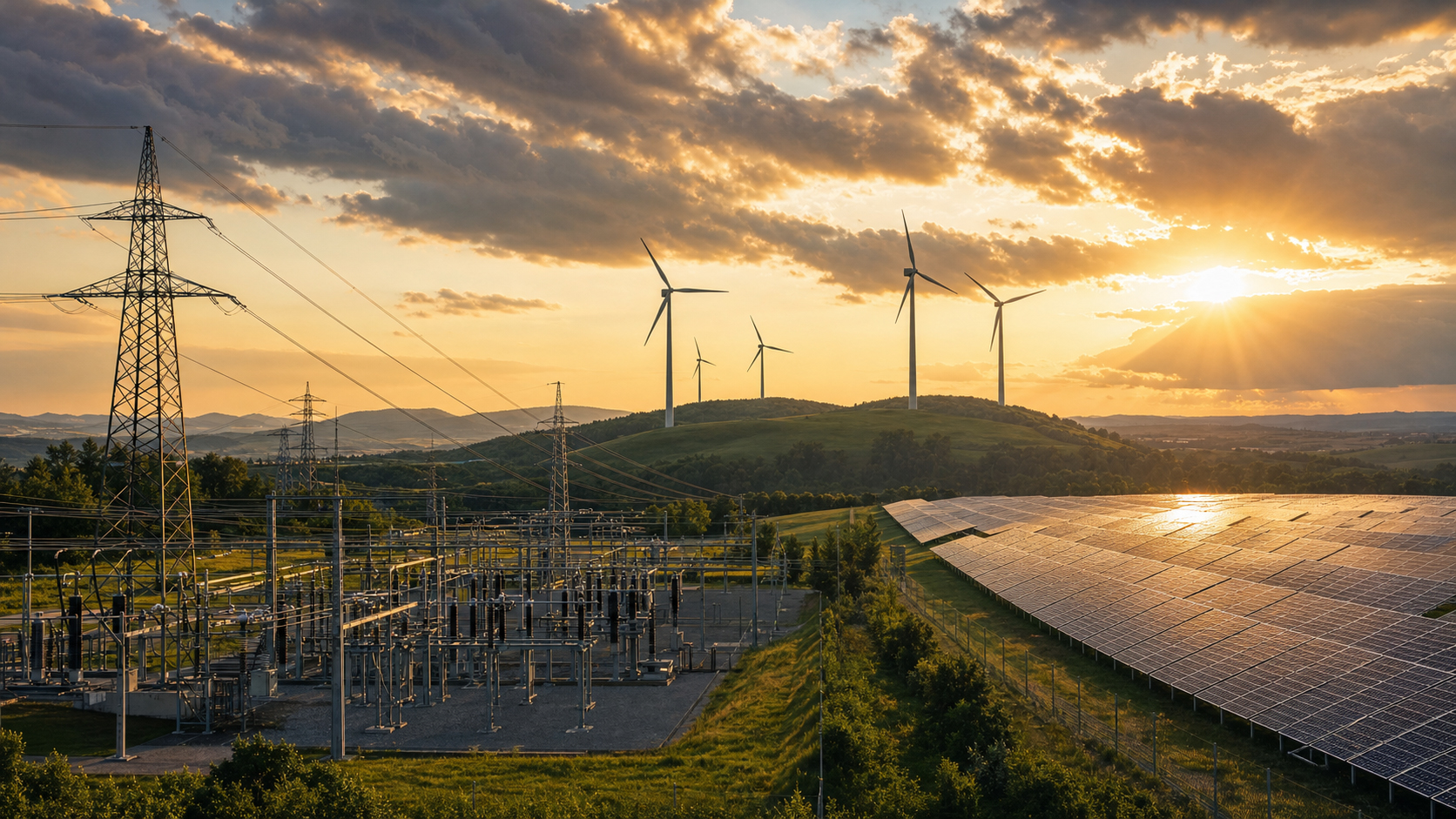
Electricity price trap of the energy transition: The fatal misconception in solar expansion – What's going wrong – Creative image on the topic, with AI: Xpert.Digital
Blackout threat or scaremongering? What's really behind the grid bottlenecks of the energy transition?
Simple network trick ignored: How Germany is wasting billions on electricity expansion
Cost explosion in the electricity grid: The simple mistake that politicians are completely overlooking
Germany's energy transition is caught in a costly dilemma: The technical and scientific solutions for a stable and affordable electricity grid have long been available – but political implementation is lagging drastically behind. The result is paradoxical developments: While solar panels are stacked on rooftops in Bavaria, overwhelming local grids on sunny days, huge wind and solar farms in the northeast are often only being built where connections are cheapest – far from major consumption centers. Yet there are simple, almost free ways to lower electricity prices and relieve the strain on the grid, such as the clever dual use of existing grid connections or smart, regional subsidies. Nevertheless, policymakers missed crucial opportunities in the recent reform of the Renewable Energy Sources Act (EEG). Only one new regulation, coming into effect in 2027, demonstrates that a change of thinking is possible – and it will profoundly transform the private solar market. Our analysis sheds light on why we are still cutting corners in the wrong places when restructuring our energy supply and what a truly grid-friendly system could look like.
Why the energy transition is cutting corners in the wrong place: A system in transition, not a system on the verge of collapse
Germany's electricity supply is in the midst of one of the largest infrastructural transformation projects of the post-war era. A few large, centrally controlled power plants are being replaced by a network of tens of thousands of small, decentralized, and in some cases extremely weather-dependent generation facilities. Such a transformation cannot, by its very nature, proceed smoothly, especially since many of today's relevant technological and economic developments were simply unforeseeable at the time of the international climate commitments in the late 1990s. It is therefore hardly surprising that this transformation process is encountering not only technical and regulatory challenges but also generating public skepticism.
At the same time, there is growing evidence that an electricity system based primarily on renewable energies is fundamentally viable. Two developments are crucial to this: increasing flexibility in generation and consumption, which would have been almost unimaginable just a few years ago, and advances in storage technology that were not anticipated at this pace even a decade ago. In addition, there is a significantly improved technical and societal understanding of so-called "dark doldrums," meaning periods when neither wind nor solar power generates any significant amount of electricity.
When previous funding models become a problem
Despite these positive developments, the German energy system is at a point where structural flaws are becoming increasingly apparent. Support mechanisms that were necessary and sensible in their time have led to significant regional and technical imbalances over the years. At the same time, important accompanying measures, such as the nationwide rollout of smart metering systems for households and businesses, are progressing considerably more slowly than originally planned.
There are indeed simple and effective measures that could be implemented practically immediately, incur hardly any additional costs, and, moreover, strengthen local economic structures. A scientific study in the journal European Planning Studies describes corresponding approaches that could relieve the strain on the electricity grid, increase domestic energy production, and ultimately also lower electricity prices.
Bavaria's solar boom meets Brandenburg's open spaces
A key criticism of the study concerns the geographical distribution of photovoltaic systems in Germany. A significant proportion of rooftop installations are concentrated in Bavaria, while large ground-mounted systems are predominantly located in the northeast of the country, for example in Brandenburg and Saxony-Anhalt. This uneven distribution is not a matter of chance, but rather a direct result of the nationwide standardized subsidy system, which is based solely on the amount of energy generated. Regional differences in grid load, land availability, or proximity to consumers have thus far played virtually no role.
Fraunhofer analyses of the regional distribution of renewable energies confirm this pattern: Rooftop installations show strong increases primarily in southern and western Germany, while ground-mounted installations are experiencing dynamic growth not only in the south but also in the new federal states, because many grid connection applications already exist there and are projected for the future. Those who invested in Bavaria simply followed economic logic: High solar irradiance and an already densely populated environment ensured attractive returns. Those who built in the northeast benefited from comparatively inexpensive and readily available building land along highways and railway lines.
Network bottlenecks as the price of uncontrolled distribution
This seemingly rational site selection at the plant level has generated considerable costs at the system level. In Bavaria, photovoltaic systems are now regularly shut down because the local distribution grid can no longer handle the peak feed-in on sunny days. In northeastern Germany, on the other hand, the electricity produced must first be transported over long transmission distances to the major consumption centers in the west and south, resulting in additional grid infrastructure, grid losses, and costs.
A logical solution would be a funding model more closely aligned with the approach already established for wind power. Individual regions could stipulate a regionally differentiated minimum output from photovoltaic systems, which would then be specifically subsidized. The level of funding would depend on how high the expected yield tends to be compared to other regions. In areas with lower solar yields, where there are also too few systems in operation, the funding would be correspondingly higher to create an economic incentive for expansion.
Why western Germany could use more solar power
Such a regionally staggered model would create new investment incentives, particularly in western and northwestern Germany, where photovoltaic systems are currently relatively sparsely distributed. The decisive advantage would lie in shorter transport distances between generation and consumption, as these regions are among the most densely populated and economically active parts of Germany. Less long-distance transport means less need for expensive transmission lines and lower grid losses, which could ultimately result in lower grid fees and thus lower electricity prices for consumers.
This opportunity was missed in the most recent amendment to the Renewable Energy Sources Act. Instead of differentiating photovoltaic subsidies more regionally, the reform focused on other priorities, while the fundamental unequal distribution of installations across the country remains.
Why wind power remains the underestimated pillar of the energy transition
The missed opportunities are even more evident in wind power than in solar energy, despite wind turbines achieving a significantly higher number of full-load hours compared to photovoltaic systems and specifically supporting electricity production in the winter months when solar systems generate little yield. The current German wind energy market is showing considerable progress: according to the German Wind Energy Association (BWE), 29,226 onshore wind turbines with a total capacity of over 68 gigawatts were in operation across Germany at the end of 2025, with 958 new turbines with a capacity of around 5.2 gigawatts added during 2025.
The existing funding model for wind energy already takes into account the fact that yields in southern Germany are systematically lower than in the windier north. This results in somewhat higher subsidies for installations in the south, which in principle creates additional investment incentives in regions with previously low wind power development, such as Baden-Württemberg or Bavaria.
When the cheapest network connection leads to the wrong location
The problem, however, is that for economic reasons, new wind turbines are primarily built where a technically simple and therefore cost-effective grid connection is possible. This cheapest connection point, however, is by no means automatically the most sensible location from the perspective of grid efficiency and local electricity demand. The result is wind farms whose location is primarily driven by connection costs, while the actual regional energy demand plays a subordinate role.
A more strategically sound alternative would be to strategically construct wind turbines where sufficient yield is expected and where there is genuine local electricity demand, even if the grid connection at that location is initially more expensive. Because the generated electricity would largely be consumed locally, the need for expensive, long transmission lines could be significantly reduced. Higher connection costs in the short term would thus be offset in the long term by lower investments in the national transmission grid.
New: Patent from the USA – install solar parks up to 30% cheaper and 40% faster and easier – with explanatory videos!

New: Patent from the USA – Install solar parks up to 30% cheaper and 40% faster and easier – with explanatory videos! - Image: Xpert.Digital
The core of this technological advancement is the deliberate departure from conventional clamp mounting, which has been the standard for decades. The new, more time- and cost-effective mounting system addresses this with a fundamentally different, more intelligent concept. Instead of clamping the modules at specific points, they are inserted into a continuous, specially shaped support rail and held securely in place. This design ensures that all forces – whether static loads from snow or dynamic loads from wind – are distributed evenly across the entire length of the module frame.
More information here:
Energy transition thought through pragmatically: Why we need to build over grid connection points
Regional value creation as an underestimated argument
An often overlooked advantage of wind energy lies in its regional value chain. From the manufacturing of components and the construction of the plant to ongoing maintenance and operation, the economic activity largely takes place locally. The construction of a wind turbine thus essentially represents a direct form of regional economic development, from which local tradespeople, service providers, and communities all benefit.
Supplementing this principle with a targeted expansion of local residents' financial participation in the profits from wind turbines could further increase public acceptance. Operators are already obligated to pay approximately €30,000 annually to surrounding communities for each larger wind turbine, creating direct financial benefits for the affected municipalities and at least partially mitigating the frequently cited conflict between climate protection and local interests.
The wasted trick with the network connection point
Another approach, particularly obvious from a planning perspective, concerns the so-called "overbuilding" of grid connection points. At each connection point, a specific maximum feed-in capacity is typically permitted, for example, 1,000 kilowatts. If a wind turbine with exactly this rated capacity is located at such a point, the connection point is formally considered to be fully utilized, even if this maximum capacity is rarely reached in practice.
In reality, a typical wind turbine only reaches its rated output for about 1,000 hours a year, often considerably less, and for many hours no electricity is fed into the grid at all. During the remaining hours of the year, a photovoltaic system could also feed into the grid via the same connection point without exceeding the permissible maximum output. Because wind and solar energy systematically complement each other throughout the year – the sun provides the most power in summer, while the wind blows stronger from autumn to spring, and often in the evenings and at night – the existing grid connection capacity could be used much more efficiently.
More electricity without a single additional kilometer of power line
This principle could be further developed by adding battery storage to existing grid connection points, combined with a simultaneous increase in installed wind and solar capacity beyond the actual connection limit. In the event of short-term overproduction, the storage system would first charge and then feed the electricity into the grid precisely during those hours when neither wind nor sun is providing sufficient power. Without any additional expansion of the physical grid capacity, this would allow electricity to be supplied for significantly more hours of the year.
This concept is already being implemented in some cases, but always with complex individual applications and special permits, which slow down the process and increase costs. A fundamental right to build over grid connection points, which many energy developers have long desired, is not yet enshrined in law. Such a regulation would make the energy transition immediately more cost-effective and pragmatic, without requiring the development of fundamentally new technologies.
Two missed opportunities and one small exception
The latest revision of the Renewable Energy Sources Act (EEG) missed two key opportunities that could have relieved pressure on electricity grids and made the feed-in of renewable energies more consistent. Both measures would have involved minimal or even no additional costs and had the potential to lower electricity prices in the long term.
Instead of making photovoltaic subsidies more targeted and regionally differentiated, policymakers opted for a significant overall reduction in subsidies, albeit with a certain time lag. To put this in perspective: Compared to other European countries, the previous level of German subsidies was still very high, and a guaranteed subsidy period of twenty years seems hardly justifiable given falling system costs. More differentiated, regionally controlled subsidies could therefore have been combined with the goal of cost reduction, as could legislation to ensure the more efficient use of existing grid connection points.
A small step towards a pragmatic system
From south-facing roofs to east-west systems: How the new direct marketing is changing solar parks
At least one opportunity for a smarter expansion of renewable energies arises with the comprehensive direct marketing of solar power, which will come into effect in 2027 and was approved by the Federal Cabinet at the end of July 2026. For new photovoltaic systems, the fixed feed-in tariff will be eliminated; instead, the revenue will depend directly on the market value of the electricity in the precise hour in which it is actually generated.
This shift fundamentally changes the economic logic of solar panel orientation. Instead of orienting modules as optimally as possible towards the south, as was done in the past to maximize the absolute amount of electricity generated, a more flexible orientation of the solar panels, such as towards the east and west, will be more advantageous in the future. While such a system will produce fewer kilowatt-hours overall from the same installed capacity, the market value of electricity is significantly higher in the morning and evening hours than during the sunny midday hours, when a large proportion of solar panels are feeding into the grid simultaneously. Therefore, a flexibly oriented system can ultimately generate a higher economic return. Current market analyses already show that a typical south-facing roof in 2025 will only achieve an average revenue of 5.15 cents per kilowatt-hour, while 27 percent of the electricity generated will occur during hours with a market price of zero or below.
Between political hesitancy and technical feasibility
Overall, German energy policy presents a contradictory picture. On the one hand, there is now a solid technical and scientific understanding of how significant efficiency gains can be achieved with relatively simple planning interventions – be it through regionally differentiated solar subsidies, more grid-friendly wind power sites, or the systematic development of grid connection points. On the other hand, the actual legislative implementation lags significantly behind this level of knowledge.
The introduction of comprehensive direct marketing for solar power demonstrates that pragmatic reforms are fundamentally possible when the political will exists. The parallel decision to shift from the current smart meter rollout to a more comprehensive smart grid rollout, which will involve the installation of not only intelligent metering systems but also active control devices, also points toward a more flexible and digitized electricity grid. However, this transition also entails higher annual operating costs for plant operators, showing that technological modernization and cost reduction do not automatically go hand in hand.
What a truly grid-friendly expansion could achieve
The Fraunhofer regionalization studies for the grid development plan illustrate how strongly the future expansion of renewable energies will be spatially concentrated if no targeted planning adjustments are made. For onshore wind energy, a total installed capacity of approximately three times is expected by 2045, with some regions, such as the west coast of Schleswig-Holstein or the West Frisian North Sea coast, already close to their long-term expansion targets, while in regions like the Ruhr area or the Rhine-Main metropolitan region, virtually no further expansion is expected.
From a purely technical perspective, these concentration trends are not inherently wrong; after all, plants should be built where the natural site conditions are most favorable. However, problems arise when this natural concentration is not accompanied by appropriately forward-looking grid planning, and the transmission grid merely has to compensate for the expansion of existing plants retrospectively. This is precisely where the described planning interventions come into play: they do not aim to fundamentally slow down or redistribute the expansion of renewable energies, but rather to better coordinate generation and grid infrastructure from the outset.
An energy transition that still needs to learn to be pragmatic
Overall, it can be said that the German energy transition is significantly more advanced technically and scientifically than the public debate often suggests. Storage technologies, a growing understanding of periods of low wind and solar output, and new market mechanisms such as direct marketing demonstrate that an electricity system based predominantly on renewable energies is fundamentally viable. At the same time, the recent amendment to the Renewable Energy Sources Act illustrates that a considerable gap still exists between scientific knowledge and political implementation.
The essentially cost-neutral measures – regionally differentiated solar subsidies, more grid-friendly site selection for wind turbines, and a legally enshrined right to build over grid connection points – could have been implemented with comparatively little political effort. The fact that these opportunities have so far remained untapped does not mean, however, that they have been permanently lost. The move towards direct marketing of solar power shows that pragmatic reforms in German energy policy can still prevail if the economic and social pressure becomes strong enough.
📈🚀 From visibility to trust 👀🤝 Your scalable path with Xpert.Digital

From visibility to trust: Your scalable path with Xpert.Digital - Image: Xpert.Digital
In industrial B2B, sustainable business relationships rarely emerge overnight. They develop step by step – through visibility, professional relevance, recurring touchpoints, and growing trust. Xpert.Digital's 4-stage model addresses precisely this: It offers a structured path that begins with a manageable entry point and can evolve into deeper collaboration in business development if needed.
Instead of relying on loud marketing promises, this model puts the relationship at the forefront. Companies start with clearly defined, easily calculable measures and then decide, based on their own experience, how far they want to expand the collaboration. A key factor for this undisturbed trust-building process: The platform completely avoids annoying advertising ads, so the editorial focus remains solely on the companies' expertise.
More information here:
Your partner for business development in the fields of photovoltaics and construction
From industrial rooftop PV to solar parks and larger solar parking lots
☑️ Our business language is English or German
☑️ NEW: Correspondence in your native language!

Konrad Wolfenstein
I and my team are happy to be available to you as your personal advisor.
You can contact me by filling out the contact form here [email protected]:or simply call me at +49 7348 4088 965. My email address is
I'm looking forward to our joint project.










