Sondersfeld solar park: What Freystadt can now do with the solar power
Xpert Pre-Release

Available in 27 languages 📢
Prefer Xpert.Digital on GoogleⓘPublished on: November 12, 2026 / Updated on: November 12, 2026 – Author: Konrad Wolfenstein
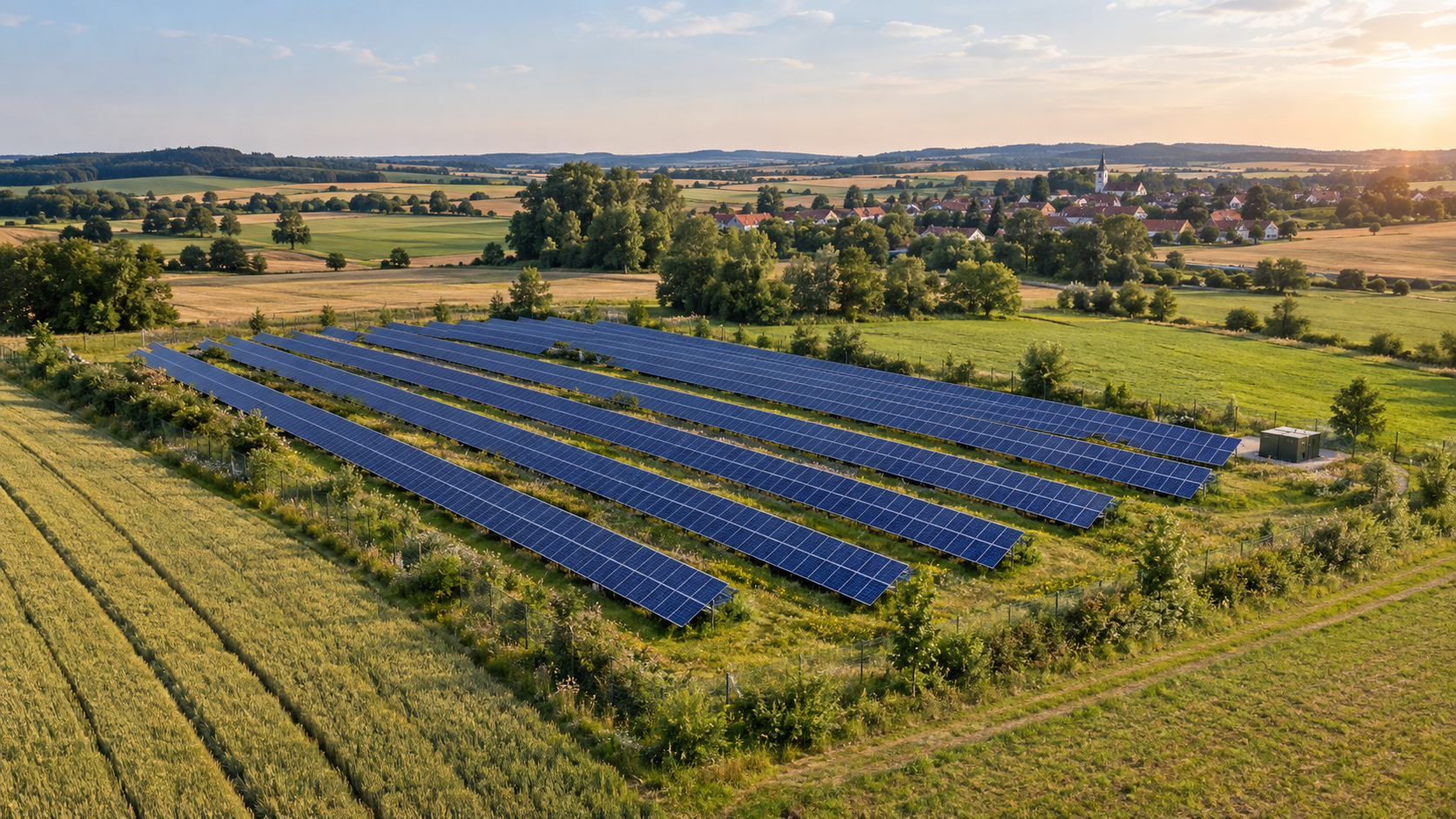
Sondersfeld solar park: What Freystadt can now do with the solar power – creative image on the topic, with AI: Xpert.Digital
Modules alone do not create prosperity
Solar power for Freystadt: What opportunities does the Sondersfeld solar park offer?
Freystadt gives the green light for a solar park – but its economic success is uncertain
The Freystadt town council has given the green light for the Sondersfeld solar park as part of its urban development planning. This marks an important step for the project – however, little is yet known about its actual size, investment costs, and expected revenues. Whether the solar park will be an economic benefit for Freystadt and the region therefore depends on more than just the number of installed modules: crucial factors include a viable grid connection, reliable revenues, the utilization of the land, and how much added value remains locally. At the same time, the municipality has other projects underway, including new building plots in Sulzkirchen, a business expansion at the Fohlenhof stud farm, and a planned village hall in Ohausen. These projects underscore the need to consider energy supply, commerce, housing, and public infrastructure together. This article outlines the potential economic opportunities offered by the solar park, the remaining risks, and the information needed for a sound assessment.
Sondersfeld solar park: How Freystadt can turn solar power into economic location value
The Freystadt town council has given the green light for the Sondersfeld solar park as part of its urban development planning. This moves forward a project that, at first glance, appears to be just another local contribution to the expansion of renewable energies. However, the decision has far broader economic implications: the use of scarce land, the development of municipal revenues, the competitiveness of businesses, the expansion of the electricity grid, and the distribution of economic opportunities in rural areas. At the same time, other projects were discussed in Freystadt, including new building sites in Sulzkirchen, a business expansion at the Fohlenhof stud farm, and a planned village hall in Ohausen. Energy supply, commercial development, housing, and public infrastructure are thus all simultaneously on the municipal development agenda.
However, key economic indicators for Sondersfeld are unknown. There is no reliable information on the planned output, the area required, or the investment volume. Therefore, neither the specific electricity production nor the profitability or municipal revenues can be reliably quantified. This information gap is crucial for the evaluation: A positive planning decision is an important step forward, but not yet proof of an economically viable and fully implementable power plant.
The central economic question is therefore not whether photovoltaics are fundamentally sensible. It is under what conditions a solar park in Sondersfeld will sustainably generate more benefits than it requires in terms of land, capital, grid infrastructure, and municipal coordination efforts. A convincing answer must differentiate between the benefits for the operator, the benefits for Freystadt, and the benefits for the entire energy system.
A municipal resolution opens the door, but it does not replace an investment calculation
Urban planning establishes the spatial and legal framework for determining which uses are permitted at a given location. For a solar park, it is therefore an essential part of project development. However, it does not automatically transform a theoretically feasible land use into a financed, connected, and operational facility.
Several independent checks lie between political approval and economic operation. The land must be secured, technical requirements must be met, a suitable grid connection must be available, and the revenues must cover the investment and operating costs over the useful life of the project. Further necessary permits, conditions, and contractual agreements can also affect its realization.
From an economic perspective, a positive planning step initially reduces some of the development risk. For project developers and investors, the likelihood increases that funds already invested in planning, expert opinions, and preparation can later be refinanced through ongoing plant operation.
The value of this progress, however, depends on what other risks remain. A solar park with advanced planning can still fail due to an expensive grid connection, unfavorable financing, or insufficient marketing revenue. Conversely, a plant with good technical conditions can lose considerable profitability due to lengthy coordination processes.
Freystadt's decision should therefore be understood as a necessary building block, not as an economic end result.
Photovoltaics has long been an important component of the electricity industry
The significance of individual solar parks can only be properly assessed against the backdrop of the expansion already achieved. Photovoltaics are no longer a minor supplement to the electricity supply in Germany. According to preliminary figures, solar power plants generated around 92 terawatt-hours of electricity in 2025, covering approximately 17 percent of the country's gross electricity consumption. One terawatt-hour is equivalent to one billion kilowatt-hours. This scale demonstrates that additional installations are now being added to an already substantial existing infrastructure.
This changes the economic objective of further expansion. In an early market phase, the primary focus was simply on building additional renewable generation capacity. As its spread increases, the timing of electricity generation, where it can be fed into the grid, and which consumers can absorb it become more important.
A new solar park not only competes with fossil fuel power plants. During sunny hours, it also encounters the simultaneous production of many other solar installations. This interdependence doesn't make further expansion unnecessary. However, it does increase the importance of grid planning, flexible demand, storage, and well-thought-out marketing.
For Sondersfeld, this leads to a clear conclusion: Economic success will not depend solely on the quality of the modules or the annual solar irradiance. Equally important is how well the project integrates into an electricity system in which solar power already plays a significant role.
The real location advantage lies in the interplay of several factors
A good solar site is not simply an area with as much sun as possible. The crucial factors are the interplay of land costs, yield, grid connection, construction costs, financing, and marketing.
Two installations with the same nominal output can therefore achieve very different economic results. A location with a slightly lower electricity yield can be more attractive if it allows for a short and inexpensive grid connection. Conversely, a particularly productive area can be economically disappointing if extensive power line work or difficult land negotiations become necessary.
In addition, the terrain's characteristics play a role. Shape, shading, slope, soil conditions, and access options all influence how much usable capacity can be installed on a given area and what the costs will be. An awkwardly shaped site may require more pathways, longer cable runs, or larger unused peripheral areas.
The economic evaluation should therefore not begin with the question of how many modules can be installed at most. The starting point should be which system configuration achieves the highest long-term benefit under the local conditions.
This distinction is particularly important for Sondersfeld because concrete technical and financial data is lacking. Without it, any statement about an exceptionally favorable or particularly profitable location would be premature.
What a transparent model calculation can achieve
Even without concrete project data, it is possible to explain the order of magnitude that determine an investment review. However, assumed values must be clearly distinguished from actual information regarding the special field.
A purely model system with ten megawatts of installed capacity would produce ten million kilowatt-hours annually, assuming an annual yield of 1,000 kilowatt-hours per kilowatt of installed capacity. That would be ten gigawatt-hours. This assumption serves solely to illustrate the economic relationships; it does not describe either the planned size or the expected yield of the Sondersfeld solar park.
Assuming an average revenue of five cents per kilowatt-hour, this would result in calculated annual gross revenues of €500,000 from electricity sales. From this amount, ongoing operating costs, rent, insurance, marketing costs, any applicable municipal payments, and debt service would have to be covered.
Even a change of just one cent per kilowatt-hour in the average revenue would make a difference of €100,000 per year in this model production. This illustrates why small changes in electricity prices or contract terms can have a significant impact on profitability.
Such a calculation does not replace a project cost estimate. However, it demonstrates why a sound evaluation must consider performance, annual yield, the actual marketable electricity volume, and the revenue structure together.
Why electricity quantity and electricity value differ
Annual electricity production is an important technical indicator. However, it is insufficient on its own to determine economic viability. Crucially, the economic value of the generated kilowatt-hours at any given time must also be considered.
Photovoltaic systems primarily produce electricity when there is sufficient sunlight. Many systems therefore feed power into the grid simultaneously. When high solar generation coincides with limited demand and insufficient flexibility, the market price can drop significantly. Under certain conditions, it can even become negative.
The economic effect can be explained without complicated technical jargon: A product loses value if it is offered in large quantities at the same time and cannot find enough additional buyers in the short term. With electricity, this relationship is exacerbated by the fact that generation and consumption must be balanced at all times.
For a solar park, therefore, the average electricity price over the entire year is not the only factor that matters. The price during the hours when the system is producing electricity is crucial. The market value of solar power can deviate from the general average price. Energy economics is therefore increasingly linking generation costs with market values, flexibility, and grid integration.
A project can achieve high technical yields and still be under economic pressure. Conversely, a specifically tailored generation and marketing strategy can improve the value of production without maximizing the annual electricity output.
Low production costs do not guarantee a sufficient return on investment
The levelized cost of electricity (LCOE) is a frequent topic of discussion regarding solar parks. This refers to the cost per kilowatt-hour generated, distributed over the park's lifespan. This includes, in particular, investment costs, financing, operation, and expected electricity yield.
This metric is helpful, but it only answers one side of the economic question. It shows what generation costs, not automatically what can be earned with the electricity.
A plant can produce electricity relatively cheaply and still achieve a weak return if its marketing revenues are even lower or if the electricity cannot be fed into the grid as planned more frequently. Similarly, rising financing costs can partially negate any technical cost advantage.
It would be particularly problematic to equate low module prices with a correspondingly low overall investment. Modules are only one component of the project. Substructure, inverters, cables, transformer technology, grid connection, planning, construction work, and financing remain separate cost items.
The economically sound question is therefore: What are the total costs of a kilowatt-hour that can actually be delivered and marketed? This analysis is more complex than comparing individual component prices, but it reflects the investment reality much more accurately.
The grid connection determines more than just technical feasibility
For a solar park, grid connection is the link between theoretically possible generation and economically viable production. Without sufficient connection options, even an ideally suited site remains merely a potential location.
Several questions need to be considered. First, it must be determined at which point the power can be fed in. Second, it is crucial to determine the power capacity that can be absorbed there. Third, it must be established what technical measures and costs will be necessary. Fourth, the timeline plays a role.
A long connection line can increase the investment. Additional technical requirements can extend the planning and procurement process. If a necessary grid expansion is only available later, the start of electricity revenues will be delayed.
The distinction between installed module capacity and potential feed-in capacity is also important. A system can technically have more power than it is permitted to feed into the grid simultaneously. Whether such a configuration is economically viable depends on the generation profile, any applicable limitations, and, if applicable, the use of a storage system.
For Freystadt, therefore, an isolated consideration of the solar area would be too narrow. The location must be evaluated together with the grid connection point and the regional development of generation and consumption.
Time is a cost factor that is often underestimated in early debates
Project delays not only cause organizational effort; they also have direct economic value.
As long as a solar park is not operational, it generates no electricity revenue. At the same time, expenses for land acquisition, planning, technical preparation, or financing may already have been incurred. Depending on the contract terms, additional costs will arise, while the start of the return on investment is delayed.
This does not mean that every thorough review is uneconomical. On the contrary: Early detection of planning errors can prevent far greater losses. The crucial point is the difference between necessary diligence and avoidable inefficiencies.
An economically sound development process is one that identifies significant risks early on. If it only becomes apparent shortly before the planned start of construction that a grid connection will be considerably more expensive or that the technical planning needs to be adjusted, the subsequent costs increase.
Municipal planning certainty therefore has its own intrinsic value for a location. It does not consist of approving every project as quickly as possible. It consists of comprehensible criteria, reliable processes, and a good coordination between land use, infrastructure, and actual feasibility.
Financing turns technical risks into economic opportunities
Solar parks are capital-intensive projects. A large portion of the total expenses is incurred before the first electricity is sold. Afterward, the revenue must cover the investment and its financing for many years.
This results in a particular sensitivity to financing conditions. A higher interest rate increases the necessary debt service. Additional uncertainty can also lead lenders to demand more equity or to base their calculations on more conservative assumptions regarding expected income.
Therefore, financial viability depends not only on whether a project appears profitable under favorable conditions. It must also be able to withstand weaker years, technical malfunctions, or unfavorable market prices.
Long-term power purchase agreements can reduce some revenue uncertainty. However, they do not eliminate all risk. Crucial factors include the precise pricing, the contract duration, the agreed delivery profile, and the buyer's financial reliability.
Sound financing distributes risks in a way that allows them to be borne by all parties involved. If risks are simply ignored, projects initially appear cheaper than they actually are. This discrepancy is then later corrected through lower returns, additional financing, or conflicts.
New: Patent from the USA – install solar parks up to 30% cheaper and 40% faster and easier – with explanatory videos!

New: Patent from the USA – Install solar parks up to 30% cheaper and 40% faster and easier – with explanatory videos! - Image: Xpert.Digital
The core of this technological advancement is the deliberate departure from conventional clamp mounting, which has been the standard for decades. The new, more time- and cost-effective mounting system addresses this with a fundamentally different, more intelligent concept. Instead of clamping the modules at specific points, they are inserted into a continuous, specially shaped support rail and held securely in place. This design ensures that all forces – whether static loads from snow or dynamic loads from wind – are distributed evenly across the entire length of the module frame.
More information here:
Strategies for the optimal use of solar power
Battery storage can help, but it is not an automatic return on investment
A battery storage system can shift solar power into a time-sensitive supply. Instead of feeding all available production into the grid immediately, a portion is stored and released later. This makes it possible to combine periods of low and high electricity prices.
However, the economic benefits depend on specific conditions. A storage system incurs additional investment costs, energy losses, ongoing expenses, and age. Furthermore, it must be clarified how it can be technically operated and contractually marketed.
The dimensions are also crucial. Power and storage capacity describe different properties. Power determines how quickly charging or discharging is possible. Capacity determines how much energy can be stored. A high charging power with low capacity serves a different purpose than a storage system designed to deliver energy over several hours.
The economic analysis must therefore ask what additional revenues or avoided losses the storage system enables and whether these outweigh its total costs. The fact that flexibility is becoming increasingly important for a renewable energy system does not automatically make every storage investment profitable.
It is not known whether a storage facility is planned for Sondersfeld. Therefore, it should be discussed as a possible addition, not as a fixed component.
Local businesses do not benefit solely from geographical proximity
A solar park near a commercial enterprise can create economic opportunities. However, this does not automatically mean that local businesses will immediately receive cheaper electricity.
If the generated electricity is fed into the public grid as usual, neighboring consumers do not receive a special electricity tariff simply due to distance. A concrete price advantage requires a corresponding technical, contractual, and legal framework.
Long-term supply relationships, suitable procurement models, or, under appropriate conditions, direct supply concepts are all conceivable. Whether these are attractive depends, among other things, on the company's consumption profile. A business with high daytime consumption may be a better fit for solar production than a company whose electricity demand is primarily at night.
A distinction must be made between annual quantity matching and temporal matching. A company can consume the same amount of electricity over the course of a year as a solar park generates, and still require additional procurement during many hours.
This leads to a strategic approach for Freystadt: energy and commercial development should be considered together. The concurrently discussed expansion of the Fohlenhof business demonstrates a further need for development at the site, but does not prove a concrete energy-related connection to the solar park.
Municipal revenues must be kept strictly separate
A solar park can bring financial benefits to a municipality. However, these benefits arise through different channels and should not be combined into a single, lump sum.
One option is financial participation according to Section 6 of the Renewable Energy Sources Act. For ground-mounted solar installations, affected municipalities can be offered a total of 0.2 cents per kilowatt-hour actually fed into the grid. It is unknown whether corresponding payments will be agreed upon for Sondersfeld.
The scale can be illustrated by the explicitly hypothetical model production of ten million kilowatt-hours. With a fully corresponding feed-in and an agreed price of 0.2 cents per kilowatt-hour, this would theoretically result in €20,000 annually. This is not a revenue forecast for Freystadt, but rather an illustration of the relationship between electricity production and potential payment.
This is distinct from rental income, which would be considered if the municipality itself owned the properties in question. Private leases, on the other hand, are initially income of the respective owners. Tax implications also constitute a separate category and depend on the company structure, profit development, and tax framework.
A transparent municipal assessment should therefore show separately for each type of revenue who is entitled to it, how secure it is, and under what conditions it actually arises.
Regional value creation is more than the sum of investment costs
A large investment sum sounds like a strong economic boost for the region. However, it only indicates the total amount of capital being invested. It doesn't directly reveal what proportion will remain locally.
If technical components are sourced from outside the region, a significant portion of the investment flows to other locations. However, regional value creation can still occur, for example through construction work, electrical work, surveying, maintenance, servicing, and other services.
Two phases can be distinguished in terms of timing. During planning and construction, larger order volumes may arise at times. In contrast, the personnel requirements of a solar park are comparatively limited during operation. Therefore, long-term employment effects should not be equated with the temporary construction workload.
For the local economy, regularly recurring payments can be more significant than a one-off investment. Depending on their structure, these include leases, municipal participation, local service contracts, and returns from potential local equity investments.
The crucial question, therefore, is not just how expensive the solar park will be. It is what proportion of its economic impact will actually reach Freystadt and the surrounding communities, and how lasting this effect will be.
Land has economic value, even if it is not reflected on an invoice
Ground-mounted photovoltaic systems require space that could, at least in part, be used for other purposes. This missed alternative must be considered in the overall economic analysis.
However, when it comes to agricultural land, the comparison cannot be reduced solely to the annual gross margin of a crop. Soil quality, management structure, lease agreements, farm development opportunities, and the importance of contiguous land also play a role.
For a landowner, solar energy can promise attractive and predictable income. For a farm that leases land, however, the same development can be problematic if it leads to the loss of important production areas or intensifies regional competition for land.
From an economic perspective, therefore, it's about more than just the highest immediately achievable lease payment. A municipality must weigh up different land use demands: energy production, agriculture, landscape, natural environment, and potential future development needs.
Neither the size of the area nor its previous use is known for Sondersfeld. A concrete assessment of the land conflict would therefore be speculative. However, the general principle is: the more carefully alternative locations are examined, the more robust the justification for why a particular area should be used for solar power.
Ecological quality depends on the design
A solar park is neither automatically an ecological benefit on every affected area, nor necessarily a serious intervention without compensatory measures. The initial conditions and the specific design are crucial.
This differentiation is economically relevant because ecological requirements can influence land use, maintenance, construction methods, and long-term management. At the same time, well-coordinated concepts can reduce conflicts and strengthen social acceptance.
Factors to be examined include distances, vegetation development, maintenance practices, permeability for animals, and the handling of sensitive landscape elements. A simple comparison of module area and agricultural land is insufficient if the actual land use between and beneath the modules is disregarded.
Alternative designs are not without their drawbacks. Systems intended to enable additional agricultural use can be more technically complex. Taller structures, greater spacing, or special operating requirements affect profitability. The benefits must therefore be weighed against additional costs and potential yield losses. Different installation and usage concepts can result in higher electricity generation costs compared to simple ground-mounted systems.
A convincing solution is therefore not necessarily the most technically complex. It is the one that comprehensibly integrates energy production, land use, and ecological requirements at the given location.
Acceptance arises from a fair distribution of benefits and burdens
Public support for a solar park does not depend solely on whether people generally favor renewable energies. Often, it comes down to specific distribution issues.
Who receives lease payments? Who bears the burden of changes to the landscape? What benefits will the community gain? Can citizens participate economically? Are the impacts on agriculture and nature seriously considered? Such questions are economically relevant because they determine whether a project is perceived as a collaborative development or as a one-sided exploitation of land.
Information and participation are not the same thing. An early explanation of technical and economic relationships improves transparency. Financial participation, on the other hand, creates an additional economic relationship, which itself must be structured transparently.
Citizen participation should not be confused with a risk-free savings product. Those who invest capital assume entrepreneurial risks, depending on the model. Expected returns, terms, exit options, and potential losses must be clearly presented.
From a municipal perspective, therefore, sober communication is particularly valuable. Exaggerated promises may facilitate approval in the short term, but damage trust in the long run. Reliable, and if necessary, limited commitments are more economically and politically sustainable.
Several construction projects require a common development logic
The simultaneous consideration of a solar park, new building sites in Sulzkirchen, business expansion at the Fohlenhof, and a village hall in Ohausen illustrates that municipal development consists of several parallel tasks. These projects pursue different goals but, in some cases, affect the same scarce resources: land, administrative capacity, infrastructure, and public funds.
This does not imply that they are already technically or financially linked. Such a connection has not been established. However, it does present an opportunity for planning purposes to systematically examine their interactions.
New residential areas will change infrastructure needs in the long term. Commercial expansions can lead to additional electricity demand. Public buildings require viable operational and energy concepts. At the same time, all these projects demand attention and implementation capacity.
A forward-looking approach to community development therefore does not consider these projects solely sequentially. It asks what common requirements arise and where coordination can prevent later additional costs.
Especially in smaller municipalities, the benefits of such coordination can be significant. Individual decisions may seem manageable in isolation. However, taken together, they determine how land use, energy demand, and municipal obligations develop over many years.
A reliable assessment requires scenarios, not a single wishful calculation
Long-term investments should not be judged solely on the basis of average expectations. A single return figure can easily obscure the assumptions that actually support the result.
For a solar park, a baseline scenario would be useful initially, combining realistic assumptions about electricity production, operating costs, marketing, and financing. Alongside this, a less favorable scenario should be included, for example, with lower revenues, a later start of operation, or higher connection costs.
A more favorable scenario can also be helpful. However, it should not become a prerequisite for the project to appear economically viable. A sound investment should not depend on several uncertain developments simultaneously turning out to be positive.
Threshold values are particularly revealing. At what average revenue does the current cash surplus no longer suffice? How much can the investment increase? What delays can the project withstand? Such questions make risks tangible.
For municipal assessments, a second perspective comes into play: Even if a project remains profitable for the operator, its local benefit may be lower than expected. Therefore, the operator's financial statements and the public benefit assessment should be prepared separately and then compared.
Dismantling has been part of the economic responsibility from the very beginning
A solar park should not only be considered up to the point of commissioning. The end of its use should also be part of the planning.
Technical components can be replaced, systems modernized, or areas repurposed later. The actual outcome cannot be fully predicted at the start of a project. This makes clear responsibilities and contractual agreements all the more important.
The key economic question is who bears the subsequent costs if an operator fails or a plant can no longer be operated economically. Decommissioning obligations are only as reliable as their specific design and safeguards.
The restoration of the area should also be described as clearly as possible. It is not sufficient to generally assume a later return of the property if it remains unclear which foundations, cables, or other installations need to be removed.
These questions seem far removed from the current planning decision. In fact, they concern the complete life-cycle costs of the project. An investment is not inexpensive simply because some of its future obligations are disregarded today.
For the community, early clarification provides protection against subsequent burdens and at the same time improves the comparability of different project concepts.
Which information will bring the greatest insights for Sondersfeld right now?
The currently missing information is not a minor detail. It determines whether municipal approval can translate into an economically viable project.
First, installed capacity, actual space requirements, and expected annual production would be needed. These figures allow for an initial assessment of space efficiency and energy-related significance.
This is followed by information on the grid connection point, available feed-in capacity, expected connection date, and the associated costs. Without this information, the technical feasibility remains incompletely assessed from an economic perspective.
On the revenue side, the marketing model, price risks, and, if applicable, the integration of a storage system would need to be known. At the municipal level, contractually secured payments, possible local participation models, and the distinction between private and public revenues would be particularly important.
Finally, land use, ecological design and deconstruction safeguards are all part of the overall picture.
Not every business detail needs to be public. However, for a proper public assessment, the key figures and the essential distributional effects should be comprehensible. The clearer this information is, the less the discussion needs to rely on general hopes or sweeping fears.
The key factor is not the number of modules, but the overall long-term benefit
The Sondersfeld solar park exemplifies the next phase of the energy transition in rural areas. Expanding renewable energy generation remains crucial. However, its economic success increasingly depends on how well land, grids, financing, marketing, and local interests align.
With this positive step in the development planning process, Freystadt has created a prerequisite for further development. However, this does not yet allow for any definitive statements regarding performance, investment volume, completion date, or municipal revenue. This very restraint is an essential part of a sound evaluation.
The clearly reasoned economic perspective is: A solar park makes particular sense if it not only generates cheap electricity, but can also be connected at reasonable costs, manages its revenue risks, adequately considers land conflicts and creates a comprehensible local benefit.
Combining this with broader community development opens up opportunities. However, it requires a careful distinction between actually agreed-upon benefits and merely conceivable synergies.
Sondersfeld would then be more than just another location for photovoltaics. The project could become a building block for economically viable local energy and site development. Whether this potential is fully realized depends not only on the planning decision itself, but also on the quality of the subsequent technical, financial, and municipal implementation.
Your partner for business development in the fields of photovoltaics and construction
From industrial rooftop PV to solar parks and larger solar parking lots
☑️ Our business language is English or German
☑️ NEW: Correspondence in your native language!

Konrad Wolfenstein
I and my team are happy to be available to you as your personal advisor.
You can contact me by filling out the contact form here [email protected]:or simply call me at +49 7348 4088 965. My email address is
I'm looking forward to our joint project.