
The top topic at LogiMAT, and more in demand than ever: safety concepts and accident prevention in high-bay warehouses
Xpert Pre-Release

Available in 27 languages 📢
Prefer Xpert.Digital on GoogleⓘPublished on: February 28, 2026 / Updated on: February 28, 2026 – Author: Konrad Wolfenstein
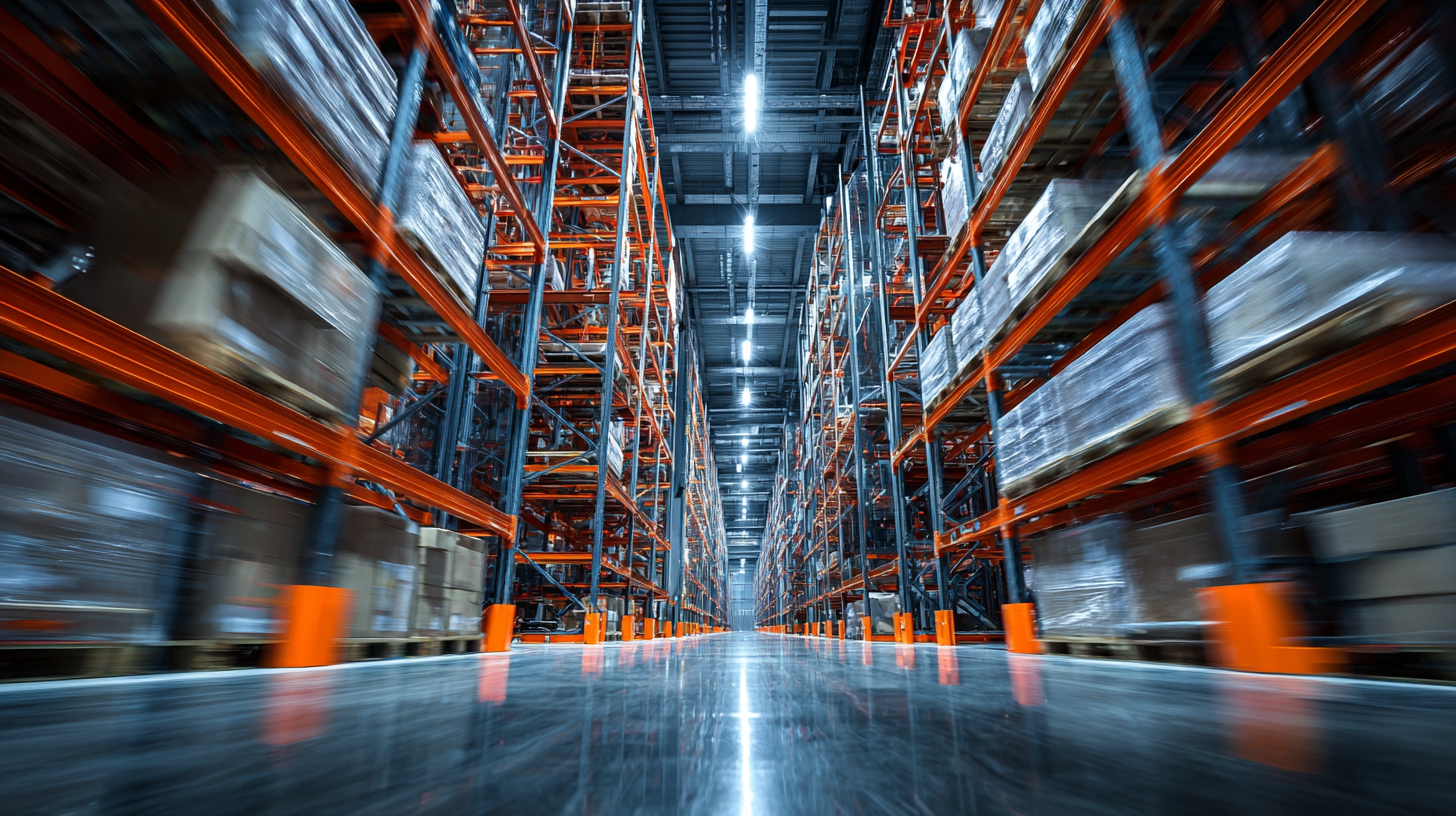
The top topic at LogiMAT, and more in demand than ever: safety concepts and accident prevention in high-bay warehouses – Image: Xpert.Digital
Over 200 accidents daily: The shocking truth about safety in German camps
Safety concepts and accident prevention in the warehouse: Why the high-bay warehouse is becoming the Achilles' heel of modern logistics
Hackers control forklifts: The invisible cyber threat in the modern logistics center
The intralogistics industry is caught in a fundamental tension. On the one hand, automation, robotics, and artificial intelligence are driving the efficiency of warehouse systems to previously unimaginable levels. On the other hand, with every additional level in the high-bay warehouse, every networked sensor, and every increase in cycle time, the risks to people, materials, and infrastructure grow. The fact that safety concepts and accident prevention in high-bay warehouses are no longer niche topics, but rather a strategic matter of survival for logistics companies, is evident not only in the alarming accident statistics of the German Social Accident Insurance (DGUV), but also in the growing presence of this topic at Europe's leading trade fairs. LogiMAT 2026, taking place in Stuttgart from March 24 to 26 with over 1,600 exhibitors from more than 40 countries, is dedicating prominent space to warehouse safety. What was once a peripheral issue is now at the top of the agenda for decision-makers.
The stark truth of the numbers: Accident statistics as a wake-up call
The data is both clear and alarming. In 2024, the German Social Accident Insurance (DGUV) recorded a total of 754,660 reportable workplace accidents in Germany, a decrease of 3.7 percent compared to the previous year. 345 insured individuals lost their lives as a result of a workplace accident, and another 214 died in commuting accidents. For 2023, for which more detailed industry data is available, the DGUV recorded 79,806 reportable accidents in the area of conveying, transport, and storage equipment alone. Of these, 33,834 incidents involved material handling trolleys and forklifts, while racking systems and pallets were involved in 15,240 accidents. This translates to more than 218 accidents per day in this segment of intralogistics alone. In 2024, 5,924 reportable accidents involving counterbalance forklifts were recorded, four of which were fatal, as well as 1,032 accidents involving industrial trucks used in warehouse and goods logistics.
Although the overall number of accidents has been trending downward for years, it would be a dangerous misconception to conclude that this signals a general all-clear. Dr. Edlyn Höller, Deputy Managing Director of the German Social Accident Insurance (DGUV), explicitly warned against taking this positive trend for granted. Declining accident figures are the result of the commitment of companies and employees and should not lead to complacency. The shortage of skilled workers will worsen in the coming years, which is why measures to reduce accident-related absences should be seen as investments, not bureaucracy. The number of unreported accidents, ranging from near misses to minor injuries that do not result in three days of sick leave, is likely to be significantly higher than the official statistics. Every unreported accident prevents the implementation of effective preventative measures.
The Economics of Failure: What Warehouse Accidents Really Cost
The economic and business costs of workplace accidents in warehouses are systematically underestimated. The Federal Institute for Occupational Safety and Health estimated the total economic losses in production due to work incapacity for 2024 at €134 billion. The loss in gross value added amounted even more significantly, at €227 billion, based on an average of 20.8 days of work incapacity per employee.
At the individual company level, the situation is even more dramatic. The direct costs of a single workplace accident, consisting of continued wage payments, medical care, and repair costs, often represent only the tip of the iceberg. Indirect costs such as production downtime, rework, recruitment of replacement personnel, damage to reputation, and administrative expenses can amount to up to ten times the direct costs. A simple model calculation illustrates this: For a production worker with a gross monthly salary of €4,000 and a payroll tax factor of 1.7, the employer's costs alone amount to approximately €10,200 for six weeks of absence, without including lost productivity and compensation costs.
In the logistics sector specifically, each employee averages around 25 sick days per year, with musculoskeletal disorders being among the main causes. The resulting annual production loss in this sector alone exceeds €17 billion. This contrasts sharply with the empirically proven Return on Prevention (ROP). An international study by the International Social Security Association determined a ROP of 2.2, meaning that every euro invested in preventive occupational health and safety measures yields an average return of €2.20 in economic benefits. A study by the University of Giessen, conducted as part of the DGUV project "Quality in Prevention," quantified the ROP at 1.6. 75 percent of the companies surveyed reported that investments in occupational health and safety reduce or stabilize operating expenses in the long term. These figures should convince even the most skeptical that safety is not a cost factor, but an investment with a measurable return.
Anatomy of Danger: Where the greatest risks lurk in the high-bay warehouse
High-bay warehouses are inherently high-risk zones. The combination of extreme height, immense loads, dynamic movements by industrial trucks, and the interaction between humans and machines creates a hazardous situation whose complexity can hardly be overestimated.
Industrial trucks as the main cause
Forklifts and other industrial trucks are by far the leading cause of serious warehouse accidents. The accident mechanisms are varied: crushing injuries, contusions, and fractures result from excessive speed, inadequate training, and blind spots. Collisions with racking structures are among the most dangerous scenarios because a seemingly minor impact can trigger a chain reaction. The consequences of a forklift-rack collision do not necessarily occur immediately. Damaged rack supports can give way hours or even days after the initial collision, causing the racking to collapse in a so-called domino effect.
The domino effect: When shelves become chain reactions
The most devastating warehouse accidents are caused by the domino effect, in which a single damaged shelf section brings down entire rows of racks. The tragic incident in Queis, Saxony-Anhalt, in January 2008 illustrates this scenario in a shocking way: A forklift truck struck a 13-meter-high and 70-meter-long high-bay rack containing approximately 2,000 tons of paper bales. When the trade supervisory authority and the Federal Agency for Technical Relief (THW) inspected the damage the following day, the metal structure collapsed like dominoes. Five people were buried, two of whom died, including a 33-year-old THW employee. As recently as January 2026, the THW's site safety team was called to a partial collapse of a high-bay rack in Taufkirchen, where a nine-meter-high shelf section had collapsed due to a forklift. Only immediate safety measures prevented a domino effect that could have caused half the warehouse to collapse.
Falling loads and incorrect loading
Another key risk scenario is falling loads. Incorrectly stored goods, exceeded maximum weights, or damaged load carriers can cause pallets, crates, or loose materials to fall from a great height. The consequences are immediately life-threatening. Round and long materials can also roll out or tip over if they are not secured by suitable restraints such as push-through protection, back panels, or special cantilever systems. The maximum load capacity of a rack, as specified by the manufacturer, is only guaranteed if the rack is loaded correctly and is free of defects. Even a single damaged rack upright can significantly reduce the load-bearing capacity and trigger the collapse of the entire load.
Ergonomic strain and gradual health damage
Besides the acute risks of accidents, chronic ergonomic strains represent a significant, because insidious, safety problem. Lifting heavy loads, repetitive movements, and awkward postures lead to musculoskeletal disorders, which are among the most common occupational diseases in logistics. In the traffic and transport sector, 23 percent of all sick days are attributable to musculoskeletal disorders. These long-term effects are no less costly than acute accidents and contribute significantly to the above-average absenteeism rates in the logistics industry.
The regulatory foundation: Standards and regulations as a minimum standard
German and European regulations for safety in high-bay warehouses are extensive and multi-layered. They range from overarching occupational safety laws to detailed technical standards for individual components.
The central European standard for the safety of racking systems is DIN EN 15635, which regulates the application and maintenance of stationary steel racking systems. It defines the requirements for regular inspections and provides guidelines for assessing damage. The standard mandates a minimum annual racking inspection by a qualified person, supplemented by weekly visual inspections. At the national level, DGUV Regulation 108-007, formerly BGR 234, specifies the requirements for storage facilities and equipment regarding stability, load-bearing capacity, traffic routes, and installation. The German Ordinance on Industrial Safety and Health (Betriebssicherheitsverordnung), in particular Section 10, obliges employers to conduct recurring inspections of work equipment, while the German Occupational Safety and Health Act (Arbeitsschutzgesetz) requires a comprehensive risk assessment in Section 5. TRBS 1203 further defines the requirements for qualified persons authorized to carry out these inspections.
| Rules | Scope | Core content |
|---|---|---|
| DIN EN 15635 | Stationary steel shelving systems | Annual inspection, weekly visual inspection, damage assessment |
| DGUV Rule 108-007 | Storage facilities and equipment | Stability, load-bearing capacity, traffic routes |
| BetrSichV §10 | General work equipment | Recurring inspections by qualified persons |
| Occupational Safety and Health Act §5 | All workplaces | Risk assessment by the employer |
| VDI 3564 Sheet 1 | High-bay racking systems from 9 m | Fire protection measures, sprinklers, smoke extraction |
| Machinery Directive 2006/42/EC | Automated storage systems | Enclosure, emergency stop, sensor monitoring |
| IndBauRL 6.4.2 | Warehouse buildings with a minimum storage height of 7.5 m | Automatic fire extinguishing systems are mandatory |
A comprehensive network of regulations exists for the safe operation of storage facilities. In principle, the Occupational Health and Safety Act (ArbSchG §5) obligates employers to conduct a general risk assessment of all workplaces. The Industrial Safety Ordinance (BetrSichV §10) specifies this in more detail and requires recurring inspections of work equipment by qualified personnel.
Specifically for storage facilities and equipment, DGUV Regulation 108-007 defines requirements for stability, load-bearing capacity, and traffic routes. For stationary steel racking systems, the standard DIN EN 15635 prescribes annual inspections, weekly visual checks, and a systematic damage assessment. For automated storage systems, the Machinery Directive 2006/42/EC applies, requiring measures such as enclosures, emergency stop switches, and sensor monitoring.
Particular attention is paid to fire protection in high-bay warehouses. According to the Industrial Building Directive (IndBauRL 6.4.2), automatic fire extinguishing systems are mandatory in warehouses with a storage height of 7.5 meters or more. If the height exceeds nine meters, the more stringent requirements of VDI 3564 Part 1 apply, which details specific fire protection measures such as sprinklers and smoke extraction systems.
Particularly stringent regulations apply to fire protection. High-bay racking systems are subject to special requirements due to the high concentration of materials and the limited accessibility for firefighting, which must be considered during the design phase. According to the Industrial Building Code, automatic fire extinguishing systems, i.e., sprinkler systems, are mandatory for storage heights of 7.5 meters or more. Further requirements come into effect for storage heights of nine meters or more, which are specified in VDI Guideline 3564 Part 1. This guideline describes a risk-based compilation of fire protection measures and addresses structural, technical, and organizational aspects. Especially in fully automated high-bay racking systems, which are off-limits to everyone, the system's fire protection is of paramount importance, as even the fire department will not be able to enter such a warehouse in the event of a fire and will be limited to preventing the fire from spreading. The functional design of high-bay racking systems, with their open, chimney-like spaces, promotes rapid fire spread in the event of a fire, which can lead to flashover up to the ceiling of the hall within just a few minutes.
LTW Intralogistics Solutions

LTW Intralogistics – Engineers of Flow - Image: LTW Intralogistics GmbH
LTW offers its customers not individual components, but integrated complete solutions. Consulting, planning, mechanical and electrotechnical components, control and automation technology, as well as software and service – everything is networked and precisely coordinated.
In-house production of key components is particularly advantageous. This allows for optimal control of quality, supply chains, and interfaces.
LTW stands for reliability, transparency, and collaborative partnership. Loyalty and honesty are firmly anchored in the company's philosophy – a handshake still means something here.
Related to this:
More than just steel and concrete: The most important pillars of future-proof warehouse safety
The most important pillars of prevention: From concept to lived safety culture
An effective safety concept for high-bay warehouses is not based on individual measures, but on an integrated approach that systematically combines technical, organizational and personal measures.
Risk assessment as a strategic basis
The risk assessment according to Section 5 of the Occupational Health and Safety Act and Section 3 of the Industrial Safety Ordinance forms the basis of every safety concept. This evaluation identifies potential hazards and risks associated with working at height. It considers the structure and stability of the racking system, the type of materials stored, potential dangers from falling objects, and safe access to the storage racks. A crucial aspect of the risk assessment is the involvement of all relevant parties, including management, safety officers, and the employees affected. It is essential to understand that the risk assessment is not a one-time event, but an ongoing process that must be updated whenever there are changes to operating conditions, stored goods, or the technology used.
Technical rack protection: impact protection, push-through protection and upright protection
Technical safety measures on the racking itself form the first line of defense against mechanical impacts. Upright protectors must have a minimum height of 400 millimeters and protect the racking uprights from damage caused by forklifts or other industrial trucks. Push-through guards on double racking systems, which must be effective up to a height of at least 150 millimeters, prevent loads from being pushed to the opposite side and endangering people there. Back panels and side barriers prevent stored goods from falling into traffic areas. Floor markings and generously sized traffic routes reduce the risk of collisions between forklifts and racking systems. Separate routes for people and forklifts are among the fundamental requirements of the German Ordinance on Industrial Safety and Health.
Regular inspection and proactive maintenance
Strict adherence to the inspection intervals according to DIN EN 15635 is non-negotiable. Weekly visual inspections serve to identify obvious damage, such as impacted uprights, while the annual expert inspection by a qualified person uncovers more serious defects. All inspections and their results must be documented in writing. A traffic light system is used to identify any damage: green for undamaged parts, yellow for damage requiring monitoring, and red for areas that must be closed off immediately. Improper repairs, especially welding work on rack uprights, alter the material structure and can lead to significant losses in load-bearing capacity, potentially resulting in rack collapse.
Training and qualification as a security multiplier
Inadequate training represents one of the most serious threats to warehouse safety. Employees who are not properly trained struggle to operate warehouse equipment, and the inability to understand how forklifts, conveyor belts, or other machinery function significantly increases the risk of accidents. Equally critical is a lack of awareness of hazardous areas. Inadequately trained employees are often unaware of potential hazards within the warehouse, such as areas with poor visibility, unsecured shelving, or specific risk zones. Developing standardized work instructions and uniform procedures is the foundation for a shared understanding of safety among all employees. Only when every employee has the same level of knowledge about the procedures relevant to smooth and safe operations can a high level of safety be maintained in the long term.
Personal protective equipment as a last line of defense
Personal protective equipment (PPE), consisting of a safety helmet, safety shoes, protective gloves, and reflective clothing, represents the last line of defense when preventive measures fail. For work at heights, such as maintenance work on high-bay racking systems, personal fall protection equipment is essential. This equipment must provide protection against falls while simultaneously allowing sufficient freedom of movement. Reflective clothing makes employees visible in poorly lit warehouse areas and reduces the risk of collisions with forklifts and other industrial vehicles. Crucially, it is not only the provision of PPE but also its actual and correct use in daily operations that is essential, requiring continuous awareness training and consistent monitoring.
Technological Revolution: How Automation and AI are Transforming Warehouse Safety
The increasing automation is fundamentally changing the safety landscape in high-bay warehouses. Where human error was previously the main cause of accidents, new, technology-driven risks are coming to the fore in automated environments, while other traditional hazards are significantly reduced.
Sensors, IoT and predictive maintenance
Modern warehouse systems utilize Internet of Things (IoT) sensors that continuously provide data on inventory levels, temperature, humidity, equipment status, and the location of goods. This data is analyzed in real time and fed into automated control processes. Predictive maintenance based on AI algorithms makes it possible to detect potential failures and signs of wear before they lead to safety-relevant incidents. AI-based maintenance assistants can plan the maintenance of high-bay warehouses with exceptional efficiency and precision. Dynamic adjustments to storage zones or robot routes based on current location and performance data not only improve throughput but also operational reliability.
Collision avoidance and assistance systems
Forklift assistance systems with automatic speed control, proximity sensors, and warning systems for critical areas significantly reduce the risk of collisions. Modern intralogistics solutions integrate features such as collision avoidance and automatic speed control as early as the planning phase. Mobile robots are considered particularly safe in human-machine environments because they are equipped with state-of-the-art safety systems and automatically detect load carriers, objects, and people, bringing them to a stop in time.
Collaborative robots and exoskeletons
Cobots and intelligent assistance systems are increasingly taking over physically demanding or repetitive tasks, thereby not only reducing physical strain but also increasing workplace safety. Exoskeletons, as wearable support systems, specifically relieve strain on stressed muscle groups during lifting, holding, and carrying activities. Companies report significantly reduced absenteeism due to musculoskeletal disorders after the introduction of exoskeletons. Weighing sometimes less than one kilogram and featuring a flexible textile frame, these devices offer employees complete freedom of movement while simultaneously providing relief. Leading companies such as DB Schenker and Toyota are already relying on exoskeleton solutions from specialized providers to make workplaces more ergonomic.
New risks due to automation
Automation, however, also creates entirely new sources of danger. Unexpected movements of storage and retrieval machines, sensor malfunctions, false starts due to software problems, or entering safety zones during operation are among the specific risks of automated warehouse systems. The increased speed and frequency of automated processes often result in more serious consequences of errors than in traditional warehouse structures. Therefore, the planning of such systems must always be accompanied by a comprehensive risk assessment that considers both the technical and organizational characteristics of automated environments. The quality of the load carriers used also plays a crucial role: Pallets transported automatically must be checked for dimensional accuracy, stability, and sensor detectability to prevent malfunctions and disruptions during operation.
Cybersecurity: The invisible flank of the high-bay warehouse
A largely underestimated but potentially catastrophic risk scenario is the cybersecurity of networked warehouse management systems. With the increasing digitalization of warehouse processes, the complexity of security requirements rises considerably. Networked systems and autonomous mobile robots collect, process, and transmit sometimes highly sensitive data, which is often integrated into cloud-based warehouse management systems.
A demonstration at the IT Defense 2019 IT security conference in Stuttgart showed how alarmingly easy it is to attack PLC and SCADA systems that control high-bay warehouses. Security expert Stefan Strobel demonstrated how he used the IP address of the control module and the Metasploit attack tool to take control of a high-bay warehouse and move pallets into already occupied storage positions, which in reality would have caused loading units to fall. The Siemens Simatic S7 1200 systems and their predecessors are used in thousands of industrial applications.
The risk is not limited to theoretical scenarios. In real-world customer cases, OT systems of German companies have already been attacked and compromised by hackers, who exploited vulnerabilities in industrial control computers. Publicly accessible networks, inconsistent data protection standards, and fragmented infrastructures significantly increase the attack surface. OT network security in warehouse operations is therefore not a niche IT topic, but business-critical. A successful cyberattack on a high-bay warehouse can not only lead to operational downtime and millions of euros in damages, but also directly endanger human lives if storage and retrieval machines go out of control or safety systems are deactivated. The zero-trust approach, network segmentation between IT and OT systems, and regular security audits are therefore essential elements of a modern security concept for high-bay warehouses.
The human factor: Skilled worker shortage as a security risk
The shortage of skilled workers has become a major risk factor in warehouse logistics, extending far beyond purely economic problems and directly impacting occupational safety. Staff shortages lead to longer truck downtimes, decreased productivity, and higher error rates. While temporary work and overtime may alleviate the pressure in the short term, they drive up costs and place a strain on permanent staff.
DGUV statistics show a direct correlation between staff shortages and accident rates. Reportable workplace accidents in the retail and logistics sectors rose by 2.72 percent in 2022 compared to the previous year, while other sectors recorded declining figures. Overburdened warehouse teams make more mistakes under time pressure, neglect safety standards, and take risks that would be avoided under normal circumstances. The skills gap further exacerbates the problem: Technological change through digitalization and automation is creating new skill profiles at a pace that training and professional development programs often cannot keep up with. The sector's image and structural problems, characterized by low wages, shift work, and high employee turnover, deter potential applicants and reinforce the cycle of staff shortages and safety risks.
Research findings from the Technical University of Munich and the University of Cologne also show that a lack of trust between warehouse employees and automated systems impairs performance in hybrid human-robot work environments. When defining operational processes, the human factor and its impact on operations must be understood and considered in order to increase the efficiency of automated and robot-assisted warehouse systems. The formation of effective human-robot teams requires targeted investments in training, trust-building, and the ergonomic design of interfaces.
LogiMAT 2026 as a seismograph of the industry
LogiMAT 2026, taking place from March 24 to 26 at the Stuttgart Trade Fair Center, is once again fully booked with over 1,600 exhibitors from more than 40 countries and a gross exhibition area of approximately 120,000 square meters. The trade fair, considered the world's largest for intralogistics solutions and process management, impressively reflects the strategic importance of warehouse security.
At LogiMAT 2025, it became clear that warehouse safety is no longer a fringe issue. Companies are increasingly recognizing that safety brooks no compromise. Certified fall protection solutions, collision protection systems, and intelligent assistance systems were among the most talked-about exhibits. At LogiMAT 2026, Fraunhofer IML will present new technologies within the framework of the Social Networked Industry Forum that can reduce the physical strain on warehouse workers, provide cognitive support, and optimize logistics processes. Highlights will also include AI-supported analysis and forecasting models for warehouse management systems, as well as cloud-based applications.
The thematic breadth of LogiMAT 2026 encompasses all key dimensions of warehouse security: from physical infrastructure to automation and robotics, and on to software, data management, and sustainability solutions for logistics. The focus is on how companies can handle the raw material of the future—data—efficiently and securely, how to define the interfaces between skilled workers and intelligent robot assistants, and how virtual environments can be used to plan and safeguard real-world scenarios. Across all exhibition areas, LogiMAT 2026 is expected to feature hundreds of world and European premieres.
Integrated Security Management: The Path from Obligation to Excellence
The future of warehouse security lies not in individual technologies or isolated measures, but in an integrated security management system that considers physical security, cybersecurity, fire protection, and occupational safety as a whole. Such a system takes into account all the assets of the high-bay warehouse in their entirety, from the stored goods and the physical infrastructure to control systems and IT infrastructure, right through to personnel-related data and documentation.
The security needs analysis of modern high-bay warehouses shows that there is a high to very high need for protection, particularly in the areas of integrity and availability. Tampering with or failures in the warehouse could not only jeopardize the company's economic viability but also endanger human lives and the fulfillment of legal obligations. Relevant standards and certifications such as ISO 9001 for quality management, ISO 28000 for supply chain security management, and, where applicable, ISO 27001 for information security of IT and SCADA systems provide the framework for such an integrated security concept. Furthermore, the NIS2 Directive, where applicable, mandates the implementation of a state-of-the-art security management system.
A future-proof safety concept for high-bay warehouses must integrate five dimensions: firstly, continuous technical monitoring and predictive maintenance of all safety-relevant components; secondly, a comprehensive training and qualification program that meets the increasing demands of automation; thirdly, a robust OT security concept with network segmentation, access controls, and incident response plans; fourthly, a holistic fire protection concept that integrates structural, technical, and organizational measures; and fifthly, a data-driven safety culture that sees every near miss as a learning opportunity and translates it into preventive improvements.
Investing in warehouse safety is no longer a matter of goodwill, but an economic necessity and a legal obligation. Companies that understand safety as a strategic competitive factor and invest in integrated safety systems benefit not only from lower accident rates and operating costs, but also from higher employee satisfaction, reduced turnover, and increased attractiveness as employers in an increasingly competitive job market. The return on prevention, averaging €2.20 per euro invested, is not just a key performance indicator, but also reflects the fact that safe workplaces are more productive workplaces.
Consulting - Planning - Implementation

Konrad Wolfenstein
I would be happy to serve as your personal advisor.
contact me at wolfenstein ∂ xpert.digital
Just call me on +49 7348 4088 965 (Munich) .
Your intralogistics experts

Consulting, planning and implementation of complete solutions for high-bay warehouses and automated storage systems - Image: Xpert.Digital
More information here:










