
Is your high-bay warehouse outdated? Is the equipment manufacturer insolvent, or is there no alternative? How to escape the manufacturer trap with a retrofit
Xpert Pre-Release

Available in 27 languages 📢
Prefer Xpert.Digital on GoogleⓘPublished on: August 25, 2026 / Updated on: August 25, 2026 – Author: Konrad Wolfenstein
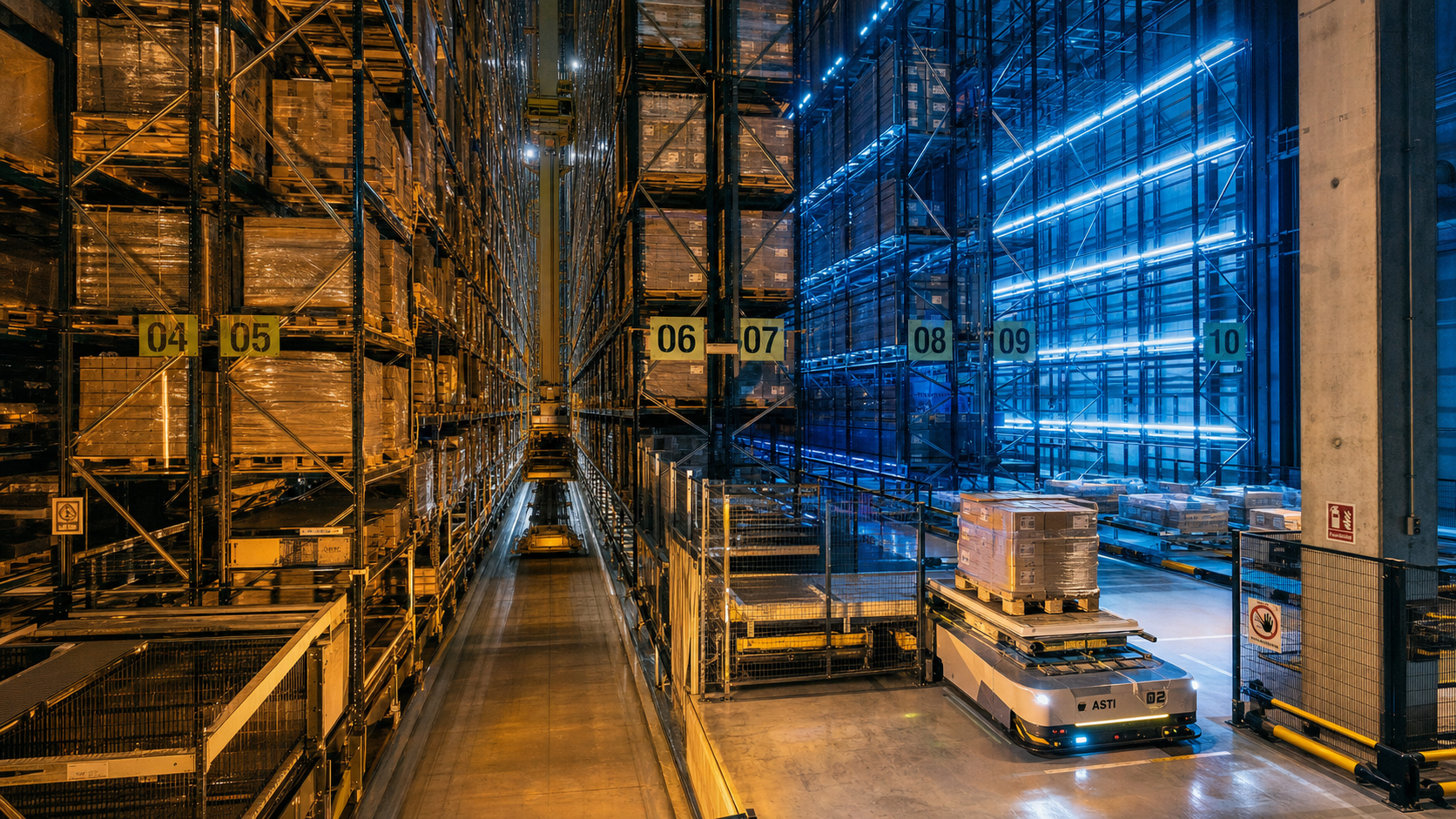
Is your high-bay warehouse outdated? Is the equipment manufacturer insolvent, or is there no alternative? How to escape the manufacturer trap with a retrofit – a creative image on the topic, created with AI: Xpert.Digital
Energy costs and NIS2 requirements: Why warehouse retrofitting will soon be unavoidable
From old to high-tech: How outdated high-bay warehouses can achieve peak performance again during ongoing operations
When a tried-and-tested high-bay warehouse gets old, spare parts become scarce, or the original manufacturer has even disappeared from the market, logistics managers often face a seemingly insurmountable dilemma. A completely new building not only devours vast sums of money and valuable space, but also threatens years of construction and costly production interruptions. In most cases, the far smarter, more sustainable, and more economical alternative is retrofitting. By selectively modernizing the mechanics, control technology, and IT infrastructure – usually directly during ongoing operations – older systems can be brought up to the latest technological standards, regardless of the manufacturer. This saves up to 50 percent of the costs compared to new construction, protects against the growing threat of cyberattacks, and also drastically reduces energy consumption. Learn why the retrofit market is currently developing rapidly, where the limits of existing system refurbishment lie, and what really matters when choosing the right implementation partner to finally break free from dependence on individual manufacturers.
How to save your intralogistics system from a standstill
Many companies with established high-bay warehouses sooner or later face a dilemma that seems insurmountable at first glance. The core of the system still functions reliably, but the original manufacturer no longer exists, has gone bankrupt, or has been acquired by a competitor who no longer supports the old system. At the same time, more efficient solutions have long been available on the market, promising higher throughput, better energy efficiency, and modern software integration. However, the budget for a completely new building is often lacking, and even if it were available, a construction period of several years with production interruptions would be a real threat. It is precisely in this situation that manufacturer-independent retrofitting unfolds its full economic potential, as it allows existing structures to be reused and only those components that are actually outdated or at risk of failure to be replaced – regardless of who originally built the system.
The term retrofit originally comes from mechanical engineering and describes the upgrading of existing technical systems with new technology without replacing the entire system. In intralogistics, this has developed into an independent business field in recent years, going far beyond simply replacing worn parts. It encompasses the modernization of storage and retrieval machines, conveyor technology, control software, warehouse management systems, and the entire IT infrastructure, while preserving the load-bearing structure, i.e., the racking system and the building itself. This approach differs fundamentally from new construction, which typically requires structural modifications and a complete system replacement.
A growth market arises from economic pressure
The retrofit market in intralogistics has been growing significantly faster than the market for new systems for several years, and the reasons for this are multifaceted. System integrators like TGW report that they now handle around five times as many retrofit projects annually as they did ten years ago, indicating a structural shift in the investment strategies of many companies. The growth of online retail and the increasing automation of warehouse processes have increased the overall number of existing logistics systems, which in turn has led to a rise in the number of systems requiring modernization after ten, twenty, or more years of operation.
A study by the supplier Unitechnik, with over one hundred participants from the production and logistics sectors, paints an insightful picture of the current market situation. Sixty-eight percent of respondents cite spare parts problems as a practical reason for a retrofit, while fifty-one percent complain about too many disruptions during operation. Fifty-three percent of companies are already planning a concrete retrofit project, twenty-seven percent have already modernized, and the trend is continuing upwards. Particularly revealing is the fact that for only a quarter of the respondents is the lowest price the most important selection criterion for a retrofit provider. Far more decisive are the provider's sound understanding of the processes, dedicated contacts with transparent communication, and execution by their own trained personnel. This result underscores that retrofitting is not simply a matter of price, but rather a question of trust, where competence and reliability determine the project's success.
The business accounting speaks a clear language
From a purely economic perspective, the advantages of retrofit projects over new construction can be demonstrated with reliable key performance indicators. Systematically implemented warehouse retrofits typically cost thirty to fifty percent less than a complete new build because existing structures such as racking systems, building envelope, and parts of the conveyor technology can be reused. Furthermore, no additional space is required, which is a significant locational advantage, especially in metropolitan areas with scarce and expensive commercial space. Practical data from several hundred completed projects also shows a reduction in unplanned downtime of ten to twenty percent, an increase in throughput of fifteen to twenty-five percent, and a reduction in unplanned repairs of up to thirty percent. The amortization period for such projects is generally between two and four years, which, compared to the often ten to fifteen-year service life of a new building, represents an exceptionally attractive return on investment.
A particularly impressive practical example is a high-bay warehouse built in 1980, whose modernization reduced costs to just twenty percent of the otherwise required new investment, thus making the construction of a completely new facility unnecessary. A project in the Port of Hamburg also demonstrates that entire high-bay warehouses can be fundamentally modernized with an investment in the low single-digit millions, while a new building of comparable capacity would cost many times that amount. Another study on the modernization behavior of German warehouse operators shows that companies with retrofit experience primarily pursue capacity expansion and rationalization as concrete objectives, followed by unit and process cost optimization, as well as the replacement of outdated technology. In practice, the optimization potential of warehouse modernization regularly proves to be greater than many operators initially anticipate.
Manufacturer independence as a strategic breakthrough
The true core of retrofitting's economic and strategic appeal lies in manufacturer independence. Historically, operators of warehouse and conveyor systems were often tied to the original equipment supplier because controls, spare parts, and software interfaces were proprietary and incompatible with other vendors' systems. This dependency becomes an existential risk as soon as the manufacturer disappears from the market, whether through insolvency, acquisition, or a strategic realignment of its product portfolio. Companies caught in this situation were long forced to either rely on a functioning but technologically outdated system without support or undertake a costly complete rebuild.
Manufacturer-independent retrofit providers solve this dilemma by being able to upgrade systems with modern technology, regardless of the original manufacturer or year of manufacture. Well-known companies in the industry, including Stöcklin Logistik, Fehr Lagerlogistik, Gilgen Logistics, and Knapp, have specialized in recent years in analyzing, evaluating, and gradually modernizing existing systems of any origin. These third-party providers act as neutral intermediaries between the operator and the original manufacturer, thus creating genuine freedom of choice for companies that were previously effectively trapped in a technological dead end. For operators, this means regaining significant negotiating power, as they are no longer dependent on a single provider but can choose from a range of specialists.
New drivers beyond the pure question of cost
Besides the obvious cost savings, other factors are now driving the demand for retrofit solutions, factors that are often underestimated in the public perception. The explosively rising energy costs of recent years have prompted many operators to invest specifically in intelligent plant retrofits in order to achieve significantly higher energy efficiency and permanently reduce ongoing operating costs. Modern drive technology, energy-optimized controls, and intelligent load management can considerably reduce the energy consumption of existing plants without requiring a single square meter of new construction.
Another increasingly important driver is new legal regulations and the growing awareness of cybersecurity in industrial control systems. Older plant control systems, designed decades ago without considering modern IT security standards, now represent potential entry points for cyberattacks and must be modernized to comply with regulatory requirements such as the European NIS2 directive. A retrofit offers the opportunity to upgrade control technology and network architecture to a contemporary security standard without replacing the entire mechanical components of the plant. Furthermore, integration into modern IT landscapes is crucial, as many older systems are difficult or impossible to connect to current enterprise resource planning (ERP) and warehouse management systems, which can become a real competitive disadvantage in an increasingly digitized supply chain.
LTW Intralogistics Solutions

LTW Intralogistics – Engineers of Flow - Image: LTW Intralogistics GmbH
LTW offers its customers not individual components, but integrated complete solutions. Consulting, planning, mechanical and electrotechnical components, control and automation technology, as well as software and service – everything is networked and precisely coordinated.
In-house production of key components is particularly advantageous. This allows for optimal control of quality, supply chains, and interfaces.
LTW stands for reliability, transparency, and collaborative partnership. Loyalty and honesty are firmly anchored in the company's philosophy – a handshake still means something here.
Related to this:
Retrofit instead of new construction: How to make your intralogistics secure and meet NIS2 requirements
NIS2 without excuses: How retrofitting makes old industrial plants safe – What makes managing directors personally liable
The NIS2 Directive is an EU-wide regulation on cybersecurity, which has been transposed into national law in Germany as the NIS2 Implementation Act (NIS2UmsuCG) since December 6, 2025, and applies without a transition period.
Who is affected
This includes approximately 29,500 to 30,000 companies in 18 defined sectors (including energy, water, manufacturing, mechanical engineering, logistics, health, digital infrastructure) with at least 50 employees and an annual turnover or balance sheet total of 10 million euros, divided into "particularly important" and "important" establishments.
Core duties
- Registration with the Federal Office for Information Security (BSI), originally due within three months of entry into force (deadline expired on March 6, 2026)
- Risk management measures according to a ten-point catalog (§30 BSIG), such as risk analysis, backup and crisis management, supply chain security, cryptography and multi-factor authentication
- Tiered reporting requirements for security incidents: early warning within 24 hours, detailed report within 72 hours, final report no later than one month later
- Personal liability of management: They must approve measures, monitor their implementation and participate in cybersecurity training (§38 BSIG)
Sanctions
Violations can result in fines of up to 10 million euros or 2 percent of global annual turnover for particularly important institutions, and up to 7 million euros or 1.4 percent of global annual turnover for important institutions – whichever is higher.
Relevant for your retrofit context: Older, proprietary control systems in high-bay warehouses without modern IT security architecture can become a real compliance risk, further increasing the pressure to modernize.
How a structured retrofit project works in practice
A professionally executed retrofit project always begins with a precise as-is analysis, systematically recording the current state of the mechanical components, electronics, software, and material flow. Each relevant component of the system receives its own technical profile, documenting its wear level, spare parts availability, and compatibility with modern systems. Based on this, potential improvements can be identified, and modernization measures can be prioritized both technically and financially, resulting in phased plans that combine short-term benefits with long-term sustainability.
Crucial for economic success is also the fact that the project is implemented without a complete production shutdown. Experienced providers rely on backup processes and flexible timeframes, enabling conversion work to be carried out even during ongoing operations—a key factor, especially for companies with continuous multi-shift operation. A prime example is a high-bay warehouse belonging to a major logistics provider that was over 35 years old. During this time, the stacker cranes and conveyor technology were modernized, and a completely new warehouse management system, including system monitoring, was implemented. Another example from the consumer goods industry demonstrates how a high-bay warehouse with approximately 5,000 pallet spaces was modernized during daily multi-shift operation without disrupting the close integration with the connected production process.
Criteria for deciding between retrofit and new construction
The choice between retrofitting and new construction should be based on a structured evaluation of several criteria and not solely on an intuitive assessment of the age of a system. Key decision-making criteria include, first and foremost, whether the current performance of the system still meets operational requirements or whether there are structural capacity bottlenecks that cannot be resolved even through modernization. Equally important is the technical condition of the mechanics and the basic structure, as a retrofit is only worthwhile if the supporting racking system and the building structure are still sufficiently robust.
The technological status of the control and software components used must also be assessed to determine whether they will still meet industry standards in three to five years, thus avoiding the need for another short-term modernization. The availability of spare parts is another key criterion, as existing bottlenecks or discernible downward trends in spare parts supply strongly argue for timely modernization. The frequency of unplanned failures and the ability to integrate with modern ERP and inventory management systems also factor into a well-informed decision. Those who systematically consider these criteria will, in most cases, conclude that a targeted retrofit is the more economically sound and less risky alternative to a complete new build, especially if no fundamental structural capacity expansion is required.
Limits and risks of modernization in existing buildings
Despite the compelling economic arguments, retrofitting is not a panacea and reaches its limits in certain situations. If the load-bearing structure of a racking system is weakened by decades of use, corrosion, or inadequate maintenance, modernizing the control and drive technology cannot solve the fundamental safety problem, making new construction unavoidable in such cases. Similarly, retrofitting reaches its limits when a company requires a fundamentally different storage logic, such as switching from pallet-based to fully automated container storage with significantly greater racking height, as such fundamental changes often require structural modifications that go beyond simple retrofitting.
Another risk lies in the complexity of integrating different technology generations within the same plant. Older mechanical components and new digital control systems must be carefully coordinated, which requires a high level of process understanding and experience on the part of the implementing supplier. This is precisely why the aforementioned market study shows that companies place far more value on process expertise and reliable communication than on the lowest bid price when selecting a supplier. In the worst-case scenario, an inadequately planned retrofit can lead to longer downtimes than originally anticipated, thus jeopardizing the project's expected profitability.
Further market developments
Everything indicates that the retrofit market in intralogistics will continue to grow in importance in the coming years, driven by a combination of aging plant infrastructure, persistent cost pressures, regulatory requirements for cybersecurity, and the increasing need for energy efficiency. For companies whose original plant manufacturer no longer exists or whose systems have fallen behind technologically, manufacturer-independent retrofitting represents a strategic opportunity to regain competitiveness without having to take on the financial risk of a completely new build. The crucial factor lies less in whether modernization makes sense, but rather in choosing the right partner for planning and implementation. As the available market data impressively demonstrates, it is not the lowest price, but rather the deep understanding of the processes and the reliability of the supplier that determine the long-term economic success of a retrofit project.
Consulting - Planning - Implementation

Konrad Wolfenstein
I would be happy to serve as your personal advisor.
You can contact me at wolfenstein∂xpert.digital or
Just call me on +49 7348 4088 965 .
Your intralogistics experts

Consulting, planning and implementation of complete solutions for high-bay warehouses and automated storage systems - Image: Xpert.Digital
More information here:










