
Robots sell easily – profitable operation is the real challenge
Xpert Pre-Release

Available in 27 languages 📢
Prefer Xpert.Digital on GoogleⓘPublished on: October 30, 2026 / Updated on: October 30, 2026 – Author: Konrad Wolfenstein
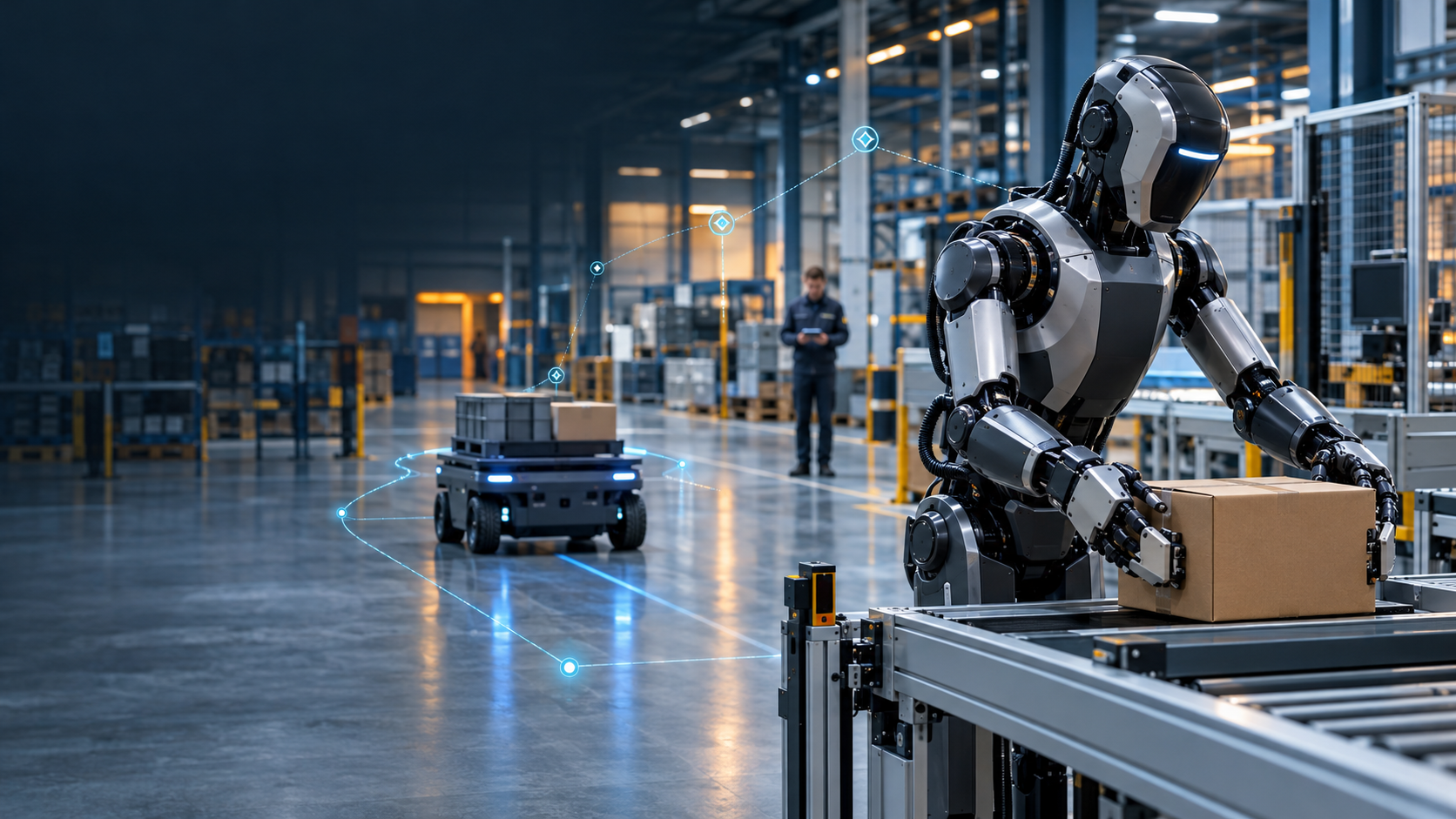
Robots sell easily – profitable operation is the real challenge – creative image on the topic, with AI: Xpert.Digital
More AI, lower costs? What robots still need for an economic breakthrough
Humanoids, delivery robots and exoskeletons: Who really makes money with robotics
Robotics boom without profits? Why success is only determined in practice
The robotics market is growing, new machines are being unveiled, and AI promises to make robots more flexible and easier to use. But impressive demos and high sales figures are not yet proof of an economic breakthrough. For companies, what matters is whether a machine works reliably, integrates into existing processes, and delivers more value than it costs over its entire lifespan. This is precisely what determines whether a technological innovation becomes a viable business.
There is no single robot that can solve all tasks. Stationary industrial robots, mobile platforms, humanoid machines, and exoskeletons serve different purposes – and each must be measured against appropriate criteria. Crucial factors are not only top speed, agility, or AI performance, but also production costs, maintenance, safety, availability, and the required human support. This overview shows what matters when transitioning from demonstration to reliable deployment – and why the question is not which robot is the most impressive, but which one delivers sustainable, affordable benefits under real-world conditions.
Robotics at a turning point: Why money is made with decisions
The economic breakthrough of robotics does not depend on how human-like machines look or how spectacularly they move. What matters is whether they reliably perform tasks under real-world conditions, integrate into existing processes, and create more value than they cost over their entire lifespan. This perspective shifts the focus from individual devices to an interplay of decision-making software, data, industrial manufacturing, maintenance, and human collaboration.
The idea that software is the last missing piece of the puzzle for autonomous robotics therefore makes an important point, but falls short as a complete explanation. Without sound decision-making, even sophisticated mechanics remain economically limited. Conversely, even a powerful AI model cannot automatically transform an unsuitable machine, an unstable supply chain, or a poorly organized process into a profitable system. The upcoming competition will primarily determine which providers can bring these building blocks together.
One market, multiple stages of development
Industrial robotics has long been a major investment market: In 2025, 603,307 new industrial robots were installed worldwide, while the number of robots in operation rose to approximately 5.08 million units. 655,000 new installations are expected for 2026; this figure is a forecast and not a confirmed annual result. The market for humanoid robots must be considered within this broader context, not as a complete replacement for it.
A stationary welding robot, an autonomous transport vehicle, a portable support system, and a bipedal humanoid solve different problems. Therefore, their economic viability cannot be assessed using the same sales arguments. For an automated welding cell, cycle time and process quality are key factors. For a mobile transport robot, on the other hand, traffic flow, safe handovers, and available operating hours are paramount. An exoskeleton must first adapt to the human's working posture, while a humanoid must first translate its greater freedom of movement into a tangible economic advantage.
This is crucial for interpreting market figures. Installed industrial robots, delivered humanoid robots, and announced production capacities are not interchangeable. Likewise, a delivered machine does not automatically equate to a permanently productive installation. A market can simultaneously exhibit high investments, rapidly growing production volumes, and disappointing customer returns. Conflating these factors leads to an overestimation of the speed of economic breakthrough.
MobED and the serial production hurdle
The development of the MobED mobile platform illustrates how significantly robotics changes during the transition to series production. At the end of August 2026, in addition to technical functionality, the focus was explicitly on material costs, quality, and production capability. The omission of a communication module was part of the cost optimization strategy. Internal key performance indicators (KPIs) of 108 and 103 percent were cited for the Pro and Basic variants, respectively. Without a clearly defined reference point, these figures should not be interpreted as cost savings or as evidence of a specific cost overrun.
The decision regarding series production, scheduled for September 1, 2026, was a planned approval step. Such a date does not equate to proof of actual series production approval. Likewise, achieving internal quality, production, and cost targets does not automatically demonstrate that customers will generate a positive return on investment with the platform.
Economically, a clear trend is evident: A research project can justify a complex, custom solution as long as it demonstrates a technical feasibility. A mass-produced product, on the other hand, must be procured, assembled, tested, and maintained with consistent quality. Components are then selected not only for their performance but also for availability, the complexity of variations, and life-cycle costs. The crucial question is no longer what else could technically be incorporated, but rather which function the customer actually needs and is willing to pay for.
Less technology, better efficiency
Omitting a communication module can be beneficial if its function is reliably fulfilled by another means or is not required for the intended application. Conversely, it would be a problematic cost-saving measure if it made daily monitoring, updates, or troubleshooting more complex. Therefore, lower material costs are only an improvement if they do not lead to higher operating costs elsewhere.
This applies to the architecture of the entire product. A cost-effective basic version can offer integrators an attractive platform, provided that interfaces, documentation, and responsibilities are clearly defined. Conversely, a fully featured version can justify a higher price if it sufficiently simplifies commissioning and operation. The decisive factor is not the maximum range of functions, but rather the balance between customer benefit and organizational effort.
The published MobED specifications do indeed differentiate between a Pro version with integrated autonomy and a Basic version without this feature. The Pro version is specified with a maximum weight of 88 kilograms and a maximum payload of 47 kilograms, while the Basic version is limited to a maximum weight of 78 kilograms and a maximum payload of 57 kilograms. This additional capability is not free of charge: it also requires physical resources. Which variant is more economically viable depends on whether the integrated capabilities more than compensate for the loss of payload and the additional system overhead in the specific application.
Operating data exceeds peak values
Both MobED variants are specified to offer more than four hours of operating time and a charging time of no more than two and a half hours from 10 to 90 percent charge. The technical specifications also mention a curb height of up to 200 millimeters and a maximum incline of ten degrees. Such values help to narrow down potential applications, but do not replace field testing under specific loads and on specific surfaces.
The maximum speed must be interpreted with particular caution. The platform is described as capable of speeds up to ten kilometers per hour; however, the specifications for a specific chassis position during autonomous operation specify a limit of 0.3 meters per second. No generally applicable transport capacity can be derived from this. Information such as route length, dwell times, traffic volume, and transfer procedures is missing.
The stated operating time is not automatically the same as productive working time. A robot can be switched on and still be waiting for an available elevator, a goods transfer, or human clearance. Therefore, for the customer, what counts is the work completed per available shift. The most meaningful key performance indicator is often not the maximum speed or the nominal battery life, but the effort required per successfully completed transport. Only this perspective connects technical performance with operational results.
Decisions need a clear hierarchy
Autonomous movement consists of several decision-making levels. A system must first receive a destination, then determine a suitable route, and finally navigate it safely under changing conditions. The widely used Nav2 navigation architecture separates, among other things, global planning, local control, and additional behavioral functions. This functional division illustrates why autonomous driving cannot be reduced to a single algorithm.
The overarching plan determines which task should be processed at which time. Route planning identifies a generally suitable path. Local motion planning reacts to people, obstacles, and short-term changes. The control system must also consider the actual possible movements of the chassis. An intelligent command is of little use if the local execution is erratic or the machine constantly requires assistance in tight spaces.
For companies, this hierarchy is also a cost control tool. Shared software components can distribute development effort across multiple platforms. At the same time, differences in dimensions, braking behavior, sensors, and payload must be explicitly considered. Universal software, therefore, does not mean that every device executes the same program code unchanged. Rather, a common architecture with clearly defined adaptations is economically valuable. It facilitates reuse without ignoring the specific characteristics of each machine.
Security must not be negotiable
A robot always operates with incomplete information. People can suddenly change direction, fields of vision can be obstructed, and an accurate map cannot predict a temporarily blocked passage. Therefore, the decision-making software must not only select appropriate actions but also recognize when its own assessment is insufficient.
A controlled stop under such circumstances is not a sign of a lack of intelligence. It only becomes economically problematic when it occurs so frequently that the operational process becomes unreliable. The challenge lies in not pitting safety against availability. A machine that continues to operate recklessly is just as unsuitable for the market as a machine that responds to every unusual situation with a permanent shutdown.
This leads to a fundamental architectural decision: Learning functions should operate within clearly defined operational and safety boundaries. A language model can interpret a command or generate a suggested course of action. However, whether the resulting action is permissible must be verified separately. Situations are particularly critical in which convincingly formulated responses generate human trust, even though the physical action has not yet been sufficiently tested. Natural-sounding communication and demonstrably safe behavior are distinct product characteristics.
VLA makes data economically valuable
Vision-Language-Action (SLA) models combine visual information, verbal task descriptions, and action control; such systems process, for example, camera images, instructions, and information about the robot's state. Their economic promise lies in transferring tasks with less individual programming. This promise is particularly relevant when jobs, products, and processes change frequently.
The development of an internal system for the automatic identification of robot subtasks therefore addresses a significant bottleneck. A complete task does not consist of a single movement, but rather a sequence of meaningfully connected steps. Automatically recognized subtasks can help structure demonstrations, locate errors, and reuse training material. The benefit arises not from the identification alone, but from its integration into a robust development process.
The quality of these labels remains crucial. If unsuitable movement segments are incorrectly assigned, an automated process can rapidly reproduce faulty data. Therefore, sampling, verifiable quality criteria, and a separation between training and testing material are essential. The relevant economic metric is not the quantity of automatically labeled data, but rather the effort required for each skill actually learned and reliably transferable. A large amount of data without measurable competence gains is not a competitive advantage.
Simulation is no substitute for reality testing
Discussions with NVIDIA regarding a potential BMR reference model, as well as joint data collection and simulation validation, align with this development. A reference model can establish a common technical foundation upon which various partners can build. However, as long as these are merely discussions about possibilities, this does not yet constitute proof of a formal product partnership or a commercially available system.
The strategic connection extends beyond individual visits: Hyundai has publicly described its collaboration with NVIDIA on a Robot Reference Platform. Standardized development environments can facilitate access to hardware and software for research institutions and smaller companies. Their economic benefits lie primarily in reducing repetitive groundwork and making development results more comparable.
Simulation can systematically vary dangerous, rare, or costly situations. However, its validity is limited only by its assumptions about friction, sensors, material behavior, and environmental conditions. A convincing result in a virtual environment does not automatically translate to the same performance in real-world operation. Therefore, a closed learning cycle is essential: real-world observations refine the model, simulation expands the testing environment, and subsequent trials reveal which improvements are actually transferable. The key is shortening robust development cycles, not simply the sheer number of virtual trials.
The underestimated everyday life of development
The most economically valuable part of robotics development is often the least spectacular. This includes reproducible error analysis, testing of modified software versions, sensor calibration, and determining whether an improvement at one location creates new problems elsewhere. A good demonstration shows that a task is possible. A robust development process reveals the conditions under which it can be successfully performed.
Particularly important is the robot's behavior after a malfunction. Can it safely resume its task if an object shifts? Does it detect an incomplete handover? Can an employee resolve the issue without calling in specialists? Such characteristics often have a greater impact on operating costs than an additional capability that is rarely used.
The crucial organizational unit is therefore not the isolated AI team, but the combination of software development, mechanics, manufacturing, quality assurance, and customer service. If feedback from operations is not systematically evaluated, the same errors will be repeated across many installations. Conversely, if all special requests are adopted without scrutiny, an almost unmanageable landscape of variants emerges. Economically successful development requires both: proximity to the deployment site and the discipline to transform individual cases into reusable solutions.
FedEx reviews the entire process
The visit of FedEx executives to the Namyang research center and the presentation of CRD, BMR, MobED, QubED, X-ble Shoulder, and X-ble Waist demonstrate the breadth of potential applications. However, a product presentation alone does not inform either a procurement decision or a planned fleet size. Its economic value lies primarily in bringing together concrete tasks and technical solutions.
A more advanced example is the collaboration between FedEx and Dexterity. At the end of July 2026, the expansion of autonomous trailer loading at the FedEx location in Hagerstown, Maryland, was announced. The concept implemented there combines the global Foresight model with the two-armed Mech robot system and goes beyond the previously used pilot site.
What's particularly interesting from an economic perspective is that it's not just about picking up a single package. Integration also includes destination planning, trailer allocation, maintenance, and personnel processes. A high-performance machine can only realize its full potential if the upstream and downstream processes are compatible. If the robot is supplied with unsuitable shipment sequences or if its operation disrupts other processes, its theoretical speed advantage will not translate into sufficient financial benefit.
Loading is more than just gripping
When loading trailers, packages must be arranged to optimize space utilization, stack stability, and processing speed. According to the company, Foresight combines visual information, depth data, and tactile sensation to determine the necessary physical actions. The technical challenge lies in the continuous coordination between the next appropriate handle and the resulting overall stack.
Therefore, the number of individual handling movements is insufficient for an economic evaluation. Relevant factors include fully loaded trailers, undamaged shipments, and reliability within the actual parcel mix. Even an automated process can be uneconomical if human intervention remains too frequent or too time-consuming. The amount of additional support required for each fully completed loading operation would be particularly informative.
Expanding a deployment is a stronger market signal than a single demonstration. However, it does not yet constitute publicly documented proof of a specific amortization period. The announcement regarding the Hagerstown installation does not include a complete investment calculation or an independently verified profitability metric. Therefore, an objective analysis must distinguish between actual operational progress and as-yet-unknown economic viability. This distinction is crucial to prevent a comprehensible industrial development from being prematurely transformed into a general guarantee of success.
Humanoids must earn their form
The humanoid design promises flexibility in environments created for humans. This advantage is particularly relevant where existing access points, working heights, and tools should be altered as little as possible. However, it diminishes in importance when a specialized machine can perform the same task more easily and reliably.
On level surfaces, a wheeled platform may be the more economically sensible choice. For a clearly defined manipulation task, a stationary robot arm may suffice. A humanoid robot must therefore not only be able to perform a task, but also justify the additional complexity of its design. The relevant alternative is rarely solely the human employee. Often, the machine competes with a combination of process changes, simple automation, and targeted human support.
The assessment of robotics as a human-oriented industrial technology, as also advocated by Si Hyun Joo at the AI Summit Seoul, is consistent with this. Human orientation does not necessarily mean human-like appearance. It can equally mean easing physically demanding tasks, simplifying operation, or meaningfully complementing existing jobs. Economically, what is convincing is not the greatest possible similarity to humans, but rather the appropriate distribution of skills between humans and machines.
🎯🎯🎯 Data-driven B2B industry hub as a quasi-in-house solution

The quasi-in-house solution: How Xpert.Digital closes operational gaps in B2B marketing and sales – Smart Content-Driven Business - Image: Xpert.Digital
Xpert.Digital is a data-driven B2B industry hub led by Konrad Wolfenstein . The company acts as an external, quasi-in-house solution for industrial partners, closing operational gaps in marketing, content, and sales – without requiring additional resources on the client side.
More information here:
Economic efficiency of robots compared to human labor
Mileage is not the same as work output
The advances made by Chinese humanoids in mobility, endurance, and running performance should not be equated with a similarly rapid development of general work capability. A study of commercial deployment in August 2026 still revealed significant limitations in adaptability, reliability, and complex manipulation. This does not contradict the mechanical advancements but rather describes a different aspect of the system.
A continuous run, for example, tests power supply, motion control, and thermal stress. It reveals little about whether the same machine can grip a poorly visible object with sufficient force. In everyday work, changing lighting conditions, unfamiliar packaging, tight tolerances, and incomplete information are additional factors. The crucial question is the transfer of a learned skill to a changed situation.
The blanket statement that the brains of Chinese humanoid robots are limited would therefore be too simplistic as a national assessment. The problems described are fundamental challenges of learning robotics. At the same time, efficient manufacturing structures and a dense supplier market can create a significant advantage, even if individual suppliers fail economically. For international competition, not only the current performance of a particular model is important, but also the speed at which entire ecosystems can produce, test, and improve new designs.
Lightweight construction requires durable lifespans
The materials side opens up an additional development path. In August 2026, VIGOR and Celanese agreed to develop lightweight plastic solutions for humanoid robot joints. The aim is to reduce the weight of the joint modules by more than 30 percent compared to conventional metal constructions. This is a development goal for specific assemblies, not a proven weight reduction for the entire robot.
Less moving mass can simplify the design of drives and energy storage systems. However, the economic benefits depend on whether precision, durability, and service life are maintained under real-world conditions. A lightweight component that requires more frequent replacement or loses its accuracy can increase overall costs.
Therefore, material properties and manufacturing quality are closely linked. For highly stressed joints, stiffness, temperature behavior, dimensional accuracy, and wear are among the relevant factors. The industrial challenge lies in ensuring these properties not just for individual prototypes, but across numerous production batches. Successful lightweight construction is thus not simply a matter of material substitution. It requires a coordinated design, suitable testing procedures, and a robust spare parts strategy. Only when these elements are perfectly aligned does weight reduction translate into a significant productivity gain.
Growth is not yet profit
The gap between market expectations and actual operating profitability is illustrated by the half-year figures of a group of 36 publicly listed robotics-related companies in South Korea. For the first half of 2026, they reported combined revenue of 1,290.5 billion won and an operating loss of 134.3 billion won. The published analysis indicates a revenue increase of approximately ten percent, but simultaneously a 20.3 percent increase in the operating loss. The aggregate operating loss margin is therefore calculated at approximately 10.4 percent.
These figures do not describe the humanoid robot industry as a whole. The group under consideration includes diverse business models, encompassing components, automation, and related technologies. Therefore, applying the shared loss margin to every robot manufacturer would be just as wrong as assuming that all robotics applications are economically unviable.
At the company level, the differences are considerable: In the aforementioned analysis, Doosan Robotics achieved half-year revenue of 32.9 billion won with an operating loss of 26.4 billion won, while Koh Young recorded revenue of 161.4 billion won and an operating profit of 24.4 billion won. The crucial question, therefore, is where in the value chain a company operates and how far its business model has already been standardized. Industry growth alone does not answer this question.
Scaling can increase losses
Robotics companies require upfront investments in development, manufacturing, and market access. However, this does not automatically justify every loss. It is particularly important to distinguish between temporary start-up costs and structurally unprofitable installations. If each additional machine requires extensive individual development and support, increasing sales can initially exacerbate financial problems.
A robust scaling logic is demonstrated by a reduction in the effort required per installation without compromising service or security. This requires sufficient standardization of products, interfaces, and operating limits. Spare parts and training should also be provided more efficiently as the fleet grows. If, on the other hand, every customer project remains a unique case, the company is more of a costly project provider than a scalable platform manufacturer.
Furthermore, a distinction must be made between operating profit and net profit. Improvements in net income can arise from factors other than stronger profitability of the core business. Therefore, recurring customer revenue, troubleshooting costs, and cash consumption are particularly important for the economic viability of robotics. A convincing growth trajectory does not necessarily require high profits immediately, but rather a plausible explanation of why additional demand should lead to better, rather than worse, results in the long run.
Unitree is changing the capital terms
Unitree's IPO is now more than just a potential industry development: its first day of trading in Shanghai took place on August 19, 2026. The strong price increase on its debut and the significant drop the following day demonstrated the stark contrast between expectations and uncertainty. Such a market reaction reflects attention and a willingness to invest, but not the profitability of all subsequent applications.
For the industry, a high-profile IPO has several effects. It creates a visible valuation benchmark, potentially improves access to equity capital, and can encourage other providers to pursue similar financing methods. At the same time, there is a risk that very different companies will be compared based on a shared vision for the future. Research systems, long-running industrial products, and household robots with long-term announcements, however, carry different sales risks.
At Unitree, it's also important to note that the company offers both robot dogs and humanoids, and a significant portion of its customers come from universities and research institutions. Demand for development platforms is economically relevant, but it doesn't equate to widespread industrial use. Therefore, when evaluating the entire industry, funding success, actual deliveries, and sustained productivity must be kept separate. Otherwise, a rising company valuation could suggest a market maturity that still needs to be achieved in practice.
Supply chains determine availability
A high-performance design alone does not guarantee scalable production. For humanoid systems, components such as drives, transmissions, sensors, electronics, and mechanical assemblies must be available in consistent quality. The discussion about local North American supply structures therefore touches on a crucial point. However, it should not be misinterpreted as a demand for complete regional self-sufficiency.
The economic value of local suppliers often lies in shorter communication channels, faster change management, and reliable spare parts supply. An inexpensive component sourced from a great distance can become costly if supply disruptions bring a fleet to a standstill. Conversely, the forced relocation of a previously efficient supply chain can initially lead to higher costs and quality risks. Regionalization is therefore a trade-off between unit price, security of supply, and technological maturity.
The second source of supply is particularly important. It cannot be achieved simply by finding a similar component in another catalog. Interchangeability must be designed into the product and tested in practice. This creates a strategic conflict for manufacturers: highly optimized custom parts can improve performance but make switching suppliers more difficult. Standardized components, on the other hand, can facilitate scaling and maintenance, even if they don't offer the theoretically best solution in every detail.
LG postpones the competition
LG plans to unveil a bipedal humanoid robot based on NVIDIA's Isaac GR00T in the first quarter of 2027. Jetson Thor is slated to provide the onboard computing power, and Halos for Robotics will serve as the safety framework; LG intends to contribute components such as drives, sensors, and batteries from its own corporate group. However, the announced unveiling date does not equate to a confirmed start of series production or widespread commercial availability.
The combination of various industrial capabilities is particularly significant from an economic perspective. A large corporation can integrate component development, manufacturing, financing, and its own production sites. This can facilitate testing and reduce dependence on individual external suppliers. However, it does not guarantee suitable customer benefits or an economically sound overall project organization.
In parallel, LG plans to test wheel-based CLOiD robots in a washing machine production facility in Tennessee. This makes it clear that even a corporation with humanoid ambitions is pursuing multiple design approaches. The competition is no longer just about the most convincing humanoid body. It is shifting towards the ability to connect suitable machines, training data, software, and real-world production conditions. At the same time, companies must ensure they continue to develop their own models and interfaces so that technological partnerships do not result in intractable platform dependencies.
Hospitals require other documentation
Discussions regarding a potential pilot project with Eunpyeong St. Mary's Hospital in the CMC environment open up a field of application with specific requirements. A feasibility study under discussion does not yet constitute proof of approved routine use. Particularly in a hospital setting, technical possibilities must be considered separately from organizational and, where applicable, medical suitability.
For non-clinical transports, reliable route guidance, safe handovers, and the integration of doors and elevators can be more important than a particularly wide range of movement. Data protection, cleaning, responsibilities, and the handling of people who move unexpectedly or require assistance also need to be considered. Therefore, the economic benefit depends on the entire process, not just the mobile platform itself.
Time saved should not be prematurely equated with reduced personnel costs. If caregivers travel fewer routes, this can increase the time available for other tasks. However, this only results in genuine relief if handovers function smoothly and no new coordination tasks arise. Suitable metrics would therefore include reliably completed transports, avoided interruptions, and the actual support needs. The crucial question is whether a system simplifies the daily work of staff or merely shifts the workload elsewhere.
Exoskeletons are calculated differently
X-ble Shoulder demonstrates that robotics doesn't necessarily have to aim for complete automation. Korean Air became the system's first official customer in July 2025, using it to support assembly and maintenance work. The X-ble Makes it Possible campaign highlights this specific application. Its core economic principle is supporting existing skills, not replacing employees.
The system uses a non-electrically driven mechanism to relieve strain during overhead work and therefore requires no battery. It claims to reduce shoulder joint stress by up to 60 percent and the activity of certain shoulder muscles by up to 30 percent. These product-specific claims should not be equated with a correspondingly high increase in productivity or a proven reduction in sick days.
For operational decisions, the specific task is crucial. A support system can be helpful at one workplace and a hindrance at another. Key factors are freedom of movement, comfort, adjustability, and actual long-term use. A thorough cost-benefit analysis therefore considers not only acquisition and maintenance but also training, user acceptance, and potential changes to workflows. Precisely because humans are responsible for flexible control, a relatively simple technical support system can be more economically attractive in suitable situations than a significantly more complex, fully automated system.
Understanding is a question of productivity
Natural communication between humans and robots is not just a matter of user-friendliness. It influences how quickly an order can be placed, a misunderstanding recognized, or a malfunction resolved. A good interface clearly communicates what the system has understood, what action it plans to take, and when support is needed.
However, linguistic fluency alone is not a guarantee of quality. A robot that responds fluently but executes its command incorrectly generates additional monitoring costs. Economically valuable is communication that reveals uncertainty and facilitates correction. In noisy environments, clear displays, simple confirmations, or readily identifiable movement intentions may be more suitable than a lengthy conversation.
Acceptance is not solely achieved through design. Employees must be able to understand what data is being collected and who is responsible for errors. If a system is perceived as additional surveillance or an unreliable burden, its practical usability decreases. Therefore, involving future users is not merely an accompanying process. It is an integral part of the technical implementation and directly influences whether the anticipated reduction in workload is actually achieved in daily practice.
Small software ideas open up new markets
The award given to the Baby Sleep Drive service at the 24H Code Race, based on Pleos Connect, represents a different path of innovation. In this competition, vehicle applications were developed as prototypes within short development cycles; the sleep service in question was among the award-winning entries. However, such recognition does not demonstrate clinical efficacy or a viable business model.
The economically interesting connection lies in the reuse of platforms. If existing vehicle data and software functions are accessible via defined interfaces, new services can emerge without having to develop a new hardware architecture for every idea. A similar principle applies to modular robotics: a standardized base can support various specialized applications.
The crucial point remains the boundary between an appealing demonstration and lasting value. A service must solve a real problem, function reliably, and be maintainable with a reasonable amount of effort. In security-related applications, clear responsibilities are also essential. The value of an open ecosystem is therefore not measured by the number of submitted ideas, but by the number of meaningful services that actually survive testing, adaptation, and maintenance. The speed of innovation and product ownership must be aligned.
Platforms need economic rules of the game
The MobED Alliance connects the central platform with ten component suppliers, five robotics solution companies, and supporting public institutions. Ten industry-specific modules are also planned, for example, for delivery, safety applications, and digital signage. This division of labor allows for specialization: not every participant has to develop the chassis, application, and on-site support entirely in-house.
At the same time, new coordination problems arise. If a function fails, it must be clear whether the platform provider, module manufacturer, integrator, or operator is responsible. Unclear responsibilities lead to longer disruptions and weaken trust in the entire solution. A technically open system therefore needs binding economic and organizational rules.
Interface stability, update responsibility, and the availability of spare parts are particularly important. The use of operational data must also be clarified in advance. A customer may legitimately want to prevent sensitive process information from being used for third-party purposes. At the same time, the provider needs feedback to improve its software. Successful platforms strike a balance between these interests. They reduce the costs of joint development without increasing dependencies to such an extent that partners and customers lose their own autonomy.
Regulation should be factored into the calculation
For the European market, technological development is further shaped by binding requirements. The EU Machinery Regulation is essentially applicable from January 20, 2027. Reporting obligations under the Cyber Resilience Act have been in effect since September 11, 2026; the main product obligations follow from December 11, 2027. Which regulations apply to a specific system must be assessed based on the product, its function, and its operating environment.
For manufacturers and operators, this is not a mere formality. Software maintenance, documentation, and handling security vulnerabilities generate costs over many years. If these obligations are not considered when offering a low initial price, a funding gap will arise during later operation. Conversely, a robust security and maintenance organization can become a significant selling point.
It also makes economic sense to plan for adjustments early on. A later change to the security architecture can be significantly more costly than a suitable design from the outset. For customers, this means evaluating not only the current functionality but also the planned support period and the supplier's ability to provide long-term support. The lowest purchase price is of little value if a system is no longer reliably supported, either technically or organizationally, after a short time.
Payment is made for completed tasks
A sound investment analysis begins with the activity, not the equipment. First, it must be determined what problem needs to be solved and what the actual performance of the existing process is. Then, acquisition or leasing, integration, energy, maintenance, software, training, and necessary support must be included. On the benefits side, these include additional capacity, improved quality, higher availability, and potentially demonstrable relief for employees.
These factors cannot be arbitrarily added together. The same freed-up working time cannot simultaneously be fully allocated to both personnel cost reduction and additional production output. Likewise, it is essential to avoid equating theoretical continuous availability with practically usable capacity utilization. A system generates no additional revenue if, outside of normal shifts, neither materials are available nor downstream processes are operating.
Rental and performance-based models can reduce investment risk for customers, but shift cost and utilization risks to the provider. They only work if the billable benefit is clearly defined and technically reliably achievable. In the long term, therefore, the ability to guarantee task completion is likely to become more important than the sheer number of machines sold. Economic advantage arises where sound decisions, suitable hardware, and controlled operational processes converge. The benchmark is not the most human-like robot, but the solution that reliably delivers affordable benefits under real-world conditions.
📈🚀 From visibility to trust 👀🤝 Your scalable path with Xpert.Digital

From visibility to trust: Your scalable path with Xpert.Digital - Image: Xpert.Digital
In industrial B2B, sustainable business relationships rarely emerge overnight. They develop step by step – through visibility, professional relevance, recurring touchpoints, and growing trust. Xpert.Digital's 4-stage model addresses precisely this: It offers a structured path that begins with a manageable entry point and can evolve into deeper collaboration in business development if needed.
Instead of relying on loud marketing promises, this model puts the relationship at the forefront. Companies start with clearly defined, easily calculable measures and then decide, based on their own experience, how far they want to expand the collaboration. A key factor for this undisturbed trust-building process: The platform completely avoids annoying advertising ads, so the editorial focus remains solely on the companies' expertise.
More information here:
Your global marketing and business development partner
☑️ Our business language is English or German
☑️ NEW: Correspondence in your native language!

Konrad Wolfenstein
I and my team are happy to be available to you as your personal advisor.
You can contact me by filling out the contact form here [email protected]:or simply call me at +49 7348 4088 965. My email address is
I'm looking forward to our joint project.









