
Why Germany's electricity grid is becoming the most expensive renovation project of the energy transition
Xpert Pre-Release

Available in 27 languages 📢
Prefer Xpert.Digital on GoogleⓘPublished on: May 17, 2026 / Updated on: May 17, 2026 – Author: Konrad Wolfenstein
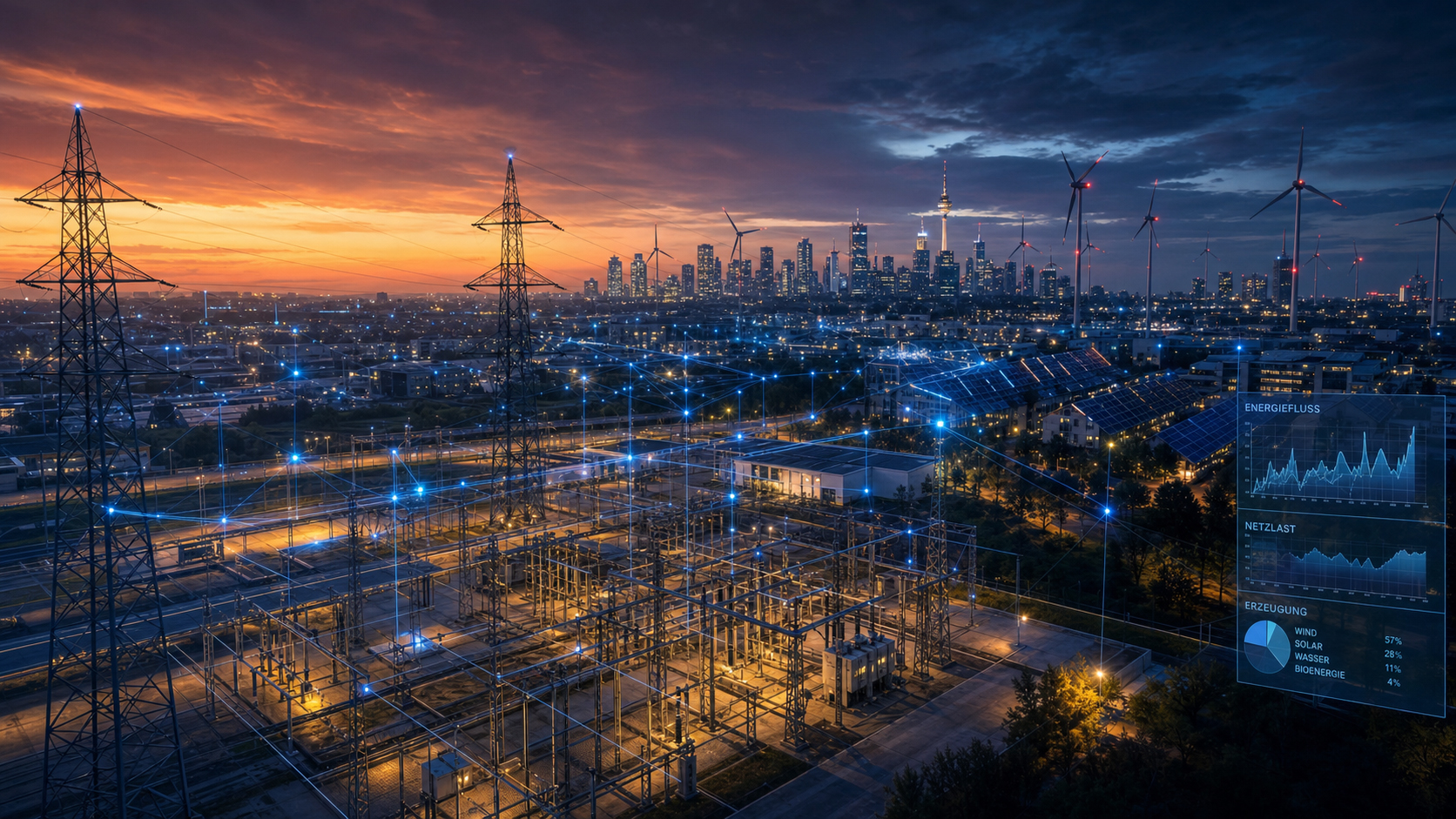
Why Germany's electricity grid is becoming the most expensive renovation project of the energy transition – Image: Xpert.Digital
The fear of reform: Why politicians are caving in to municipal interests when it comes to the electricity grid
24 percent return without risk: How network operators rake in profits at the expense of citizens
A doubling of electricity grid costs by 2045? Buzzwords like "cost explosion" currently dominate the political debate surrounding the energy transition – but they distract from the real scandal. A damning analysis by the management consultancy 3EPunkt reveals the stark reality: it's not the urgently needed expansion that makes our electricity grid the most expensive project in Europe, but rather a system riddled with historically grown flaws. While consumers and the non-privileged middle class foot the bill, grid monopolists rake in state-guaranteed dream returns, sometimes exceeding 24 percent. At the same time, an absurd patchwork of 851 regional grid operators and perverse regulatory incentives are blocking the urgently needed digitalization. Let's take a look at the true cost drivers of the energy transition – and at a historic political reform failure that will cost citizens tens of billions of euros annually unless a change of course is implemented immediately.
The big misconception: Rising costs are not the same as an explosion
Few topics in German energy policy are as persistently misunderstood as the costs of the electricity grid. Political discussions are dominated by buzzwords like "cost explosion" and "exploding grid fees," suggesting that the impending grid expansion for the energy transition will become an almost unbearable financial burden for consumers and industry. Many commentators, however, conflate two fundamentally different things: the absolute increase in grid costs on the one hand, and the specific costs per kilowatt-hour consumed on the other. A study by Tim Meyer, founder of the Berlin-based management consultancy 3EPunkt, presents a sober analysis that is unparalleled in its clarity and political impact.
The figures from the German Association of Energy and Water Industries (BDEW), compiled by the research firms Frontier Economics and Consentec, form the starting point of the analysis: Absolute grid costs are projected to rise from just under €30 to €32 billion annually today to around €70 billion by 2045. This sounds like a doubling and is triggering corresponding political alarm. However, this assessment overlooks the fact that electricity consumption in Germany will at least double during the same period – a forecast shared by both the Federal Network Agency and independent research institutes. Those who transmit twice as much electricity through a grid with twice the capacity will not pay more per kilowatt-hour than they do today – they will pay the same amount. The much-cited "cost explosion" turns out, upon closer examination, to be a statistical artifact resulting from flawed benchmarks.
The real problem lies elsewhere: in the amount of money that is unnecessarily incurred despite rising demand and expanding networks because the system is inefficiently organized, creates perverse incentives, and preserves structural privileges that are politically convenient but economically unjustifiable. The 3EPunkt study quantifies the savings potential already achievable today at €5.2 billion annually – this potential will grow to €12.4 billion per year by 2045, which corresponds to approximately 17 percent of the total network costs projected for that period.
The foundation of the energy transition: What distribution networks can do and why they are underestimated
To understand why the reform debate is so urgent, one must first consider the sheer scale of the distribution network. With roughly 1.9 to 2 million kilometers of cable and hundreds of thousands of transformers, the distribution network represents by far the largest segment of Germany's electricity infrastructure. It encompasses all voltage levels below the high-voltage transmission networks of the major operators – from medium voltage through low voltage down to individual household connections. This network accounts for more than 60 percent of total network costs, making it by far the most expensive part of the German electricity supply system.
The importance of distribution networks extends far beyond their cost. They are the true arena where the energy transition is taking place. Virtually all photovoltaic systems, the vast majority of wind turbines, large-scale battery storage systems, heat pumps, and charging stations for electric vehicles are connected to the distribution network. The technological shift towards a decentralized, renewable energy supply is therefore not occurring in the major high-voltage transmission lines between regions, but rather in the dense network of cables, transformer stations, and grid connections that crisscrosses our cities, towns, and industrial areas. Anyone who neglects or operates the distribution networks inefficiently is directly hindering the energy transition – regardless of how much money is invested in offshore wind power or new transmission lines.
These distribution networks in Germany are operated by more than 850 legally independent network operators. This number alone already hints at the structural problem at the heart of the 3EPunkt analysis: a historically developed fragmentation that is unparalleled in any other comparable industrialized country and that has prevented systematic efficiency improvements for decades.
Perverse incentives through design: Why the regulatory system penalizes digitalization
The first and potentially most serious systemic flaw concerns the core of network regulation: incentive regulation by the Federal Network Agency. The system of regulated network charges stipulates that network operators can pass on their costs to customers via an approved revenue framework. This sounds reasonable, but it contains a fatal imbalance in the incentive structure.
Investments in physical grid capacity – new cables, new transformers, new substations – are readily recognized and refinanced by regulators. Investments in digitalization, smart metering systems, flexibility platforms, or the data infrastructure for a smart grid, however, are more difficult to integrate into the revenue framework and offer network operators little measurable regulatory benefit. The result is a distorted investment logic: network operators prefer to expand conventional capacity because this aligns with the regulatory framework – even when intelligent control and flexibility could achieve the same result at a fraction of the cost.
The extent of this structural distortion is considerable. The German government's monitoring report suggests that consistent digitalization and increased flexibility in grid operation could save up to 30 percent of the investment required for distribution networks. Based on forecasts for 2045, this would correspond to savings of around seven billion euros per year, solely through modernization of the operating model – without laying a single meter less cable or connecting a single heat pump less. A single-family home's grid connection is sometimes only used at one percent of its capacity today, a typical solar park at around ten percent. In a digitally controlled, flexible grid, this ridiculously low utilization could be dramatically improved – with direct cost benefits for all users.
The smart meter rollout is symptomatic of Germany's dilemma. While almost every household in Sweden, Denmark, and Italy is equipped with a smart meter, less than five percent of all households in Germany will have such a device by the beginning of 2025. The 2023 law on restarting the digitalization of the energy transition is intended to give the rollout more momentum – but the structural perverse incentives in the regulations remain unaffected. As long as network operators are not given preferential regulatory treatment for operating smart systems compared to conventional capacity expansion, smart solutions will remain the niche product they are today.
The expensive patchwork: 851 network areas and the failure of standardization
The second key systemic flaw is structural in nature and touches on politically sensitive territory: the extreme fragmentation of the German grid operation. With 851 independent grid areas, Germany operates a system that historically grew out of municipal public services and has now become an enormous economic inefficiency problem.
Each of these network operators maintains its own technical standards for components such as transformers, switchgear, and cables. Each operates its own IT and software systems for network documentation, operations management, and customer communication. Each has its own procurement processes, tendering procedures, and billing systems. This leads to a massive proliferation of administrative costs, prevents economies of scale in procurement, and makes industry-wide solutions virtually impossible. Tim Meyer's study quantifies the potential savings through standardization and defragmentation at around three billion euros annually – projected for the year 2045; the current figure is correspondingly lower, but already substantial.
This finding is politically inconvenient because a significant portion of small distribution network operators are municipally owned or integrated into municipal structures. For many municipalities, public utilities are not only an economic asset but also an instrument of local self-governance, local employment, and regional identity. Undertaking consolidation or standardization would risk conflicts with municipal representatives, unions, and local interest groups. Therefore, as Meyer stated when presenting his study, this issue, despite its obvious importance, is not being addressed. It is a prime example of political cowardice at the expense of the public.
A European comparison shows that there are other ways to do things. Countries like France, the Netherlands, and Denmark have developed significantly more consolidated distribution network structures, enabling lower operating costs, higher technical standards, and faster response times for integrating new technologies. Germany lags behind structurally in this regard—not due to a lack of expertise or technical know-how, but because of a political system that prioritizes the preservation of vested interests over overall societal efficiency.
Monopoly profits in the no-man's-land of regulation: When network operators rake in dream profits
The third systemic flaw is, from an economic perspective, the easiest to quantify – and simultaneously the most politically explosive. Electricity grids are natural monopolies. Anyone with an electricity connection is necessarily dependent on the grid operator of their supply area – there is no alternative, no provider to which one could switch, no price comparison that would set market forces in motion. This is precisely why the state regulates the profits of these monopolists – at least in theory.
Practice differs considerably from theory. An analysis of 22 network operators, which forms the basis of the 3EPunkt study, revealed average returns on equity of over 24 percent for the year 2025. This figure is remarkable even in the broader economic context: Even for high-risk companies operating in competitive markets, a return on equity exceeding 15 percent is considered exceptional. For a regulated monopoly business with legally guaranteed revenues, minimal market risk, and government-backed refinancing, such a return is simply unjustifiable.
The cause lies in a discrepancy between the calculated return on investment used by the Federal Network Agency and the actual market returns achieved. Due to their low-risk, monopolistic position, network operators can raise capital at significantly more favorable conditions than assumed by regulatory calculations – and pocket the difference as extra profit. In his analysis, Meyer considers a return on equity of around eight percent to be appropriate – a figure that would still be attractive enough to mobilize sufficient capital for the necessary network investments. The difference between today's level and this fair value corresponds to potential savings of €2.3 billion annually until 2045.
While the Federal Network Agency has taken steps in recent years to lower equity interest rates, setting them at 5.07 percent for new installations and 3.51 percent for existing installations for the current regulatory period (2024–2028) is progress. However, this hardly explains the actual returns, which sometimes exceed 24 percent – suggesting considerable leeway in cost management by the network operators themselves. In 2025, SPIEGEL magazine reported on a deliberate practice of network operators recording excessive costs in the reference years of the regulatory period in order to subsequently profit for years on end from the approved revenues – a systemic problem that the Federal Network Agency intends to combat with a planned reduction of the regulatory periods to three years.
Our EU and German expertise in business development, sales and marketing

Our EU and German expertise in business development, sales and marketing - Image: Xpert.Digital
Industry focus areas: B2B, digitalization (from AI to XR), mechanical engineering, logistics, renewable energies and industry
More information here:
A thematic hub offering insights and expertise:
- Knowledge platform covering global and regional economies, innovation and industry-specific trends
- A collection of analyses, insights, and background information from our key areas of focus
- A place for expertise and information on current developments in business and technology
- A hub for companies seeking information on markets, digitalization, and industry innovations
AgNes in a dead end: How lack of network access is blocking the battery boom
The structural financing problem: Who pays when everyone wants to save money?
Beyond the immediate inefficiencies, there is a profound structural problem in the financing of network costs, created by perverse incentives in the existing pricing system. Network costs are, by their very nature, primarily fixed costs – costs for providing and maintaining infrastructure that are incurred regardless of how much electricity is actually flowing at any given moment. A kilometer of cable costs almost the same whether it is utilized at two percent or eighty percent capacity.
The current system of grid fees, however, primarily bases payment obligations on energy consumption – that is, on the amount of kilowatt-hours transmitted. This creates a distribution problem that worsens with increasing prosumer penetration. Households with their own photovoltaic systems and home storage consume significantly less grid-supplied electricity, but still use the grid – for feeding in, as backup, and for nighttime consumption. They therefore pay lower grid fees, even though they continue to use and, in some cases, even burden the grid infrastructure. Energy economist Lion Hirth has pointed out in this context that the private value of self-generated solar power for the household is around 30 cents per kilowatt-hour – the electricity tariff saved through self-consumption – while the economic value of the electricity on the exchange is often less than five cents per kilowatt-hour. The difference is a hidden subsidy borne by those who do not have access to their own generation.
The problem is even more pronounced with regard to industrial grid fee privileges. Under the so-called baseload privilege of Section 19 of the Electricity Grid Fee Ordinance, large industrial consumers who maintain a consistent electricity load are rewarded with substantial discounts on grid fees – amounting to approximately €1.4 to €1.5 billion annually. These costs are passed on to households and non-privileged, mostly medium-sized, businesses. This is no small matter: for an average household, this translates to an additional burden of around €32 per year. In September 2024, the European Court of Justice ruled comparable exemptions from 2012 and 2013 to be illegal state aid, leading to billions of euros in repayments. Nevertheless, similar privileges continue to exist in slightly modified form.
If network charges were structured more according to the capacity principle rather than the energy principle – that is, based on reserved capacity and not on the electricity flowed – this would come significantly closer to a cost distribution based on the polluter-pays principle. This would not result in overall cost savings, but it would lead to a fairer distribution of the load and the elimination of incentives that lead to a progressive erosion of the network's financing base.
Myth or method: Where do the horror figures really come from?
A critical understanding of the circulating cost scenarios is essential to properly contextualize the debate. The BDEW study, which serves as the basis for warnings of a doubling of grid fees, does not arrive at its high projected values due to specific errors in the modeling of physical grid costs – but rather through assumptions about the future distribution of these costs. Specifically: If it is assumed that the self-consumption of privately generated electricity continues to increase significantly, that industrial privileges remain unchanged to the same extent, and that the grid fee structure remains essentially unchanged, then the specific grid fees for the remaining chargeable kilowatt-hours will rise disproportionately.
It's a kind of economic self-fulfilling prophecy: because the system creates perverse incentives, more and more consumers are switching to self-consumption, which is free of charge. Because the base of chargeable electricity volume is shrinking, fixed costs have to be spread over fewer and fewer kilowatt-hours. Because the charges per kilowatt-hour are rising, the incentives for self-sufficiency become even more attractive. It's a spiral that could be broken with simple regulatory adjustments, if the political will existed. The McKinsey scenario and the grid development plan project a further increase in net electricity consumption to up to 1,000 terawatt-hours by 2037. With a polluter-pays-based and comprehensive assessment basis for grid charges, rising absolute costs, coupled with doubled consumption, would lead to stable costs per kilowatt-hour on average.
The regulatory architecture: What needs to change
The 3EPunkt analysis, along with several accompanying studies and statements from the Federal Network Agency, paints a fairly clear picture of the necessary reform measures. These are not technological revolutions that are being called for, but rather regulatory adjustments that have long been standard practice in other countries.
First, incentive regulation needs a fundamental readjustment. Digitization, flexibilization, and increased grid utilization must be at least as attractive from a regulatory perspective as conventional capacity expansion. The Federal Network Agency has taken initial steps with its new regulations for the period after 2027 – shortening the regulatory periods to three years and accelerating cost adjustments are sensible measures. However, they do not solve the fundamental problem of the lack of positive incentives for digitization investments. The dena Distribution Network Study II from summer 2025 explicitly recommends allowing the permanent use of flexibility without a direct expansion obligation and recognizing the costs of digitization through regulation.
Secondly, nationwide, binding technical and procedural standards for grid operation are long overdue. Common standards for transformers, switchgear, and grid components, uniform data interfaces, standardized business processes, and shared software platforms would save billions simply through economies of scale and the elimination of parallel structures – without requiring a single grid operator to merge or relinquish its legal independence. In this vein, dena Study II advocates for intensified cooperation between grid operators and the formation of competence clusters and joint ventures.
Third, the return on equity of network operators must be brought up to a level that corresponds to the actual risk structure of the regulated monopoly business. A return on equity of around eight percent – as Meyer set as a benchmark – is still sufficient to mobilize capital for the massive network investment needs of the coming years. It is important to emphasize: the network operators are not to be weakened. The aim is to capture regulatory rents that arise not from economic performance, but from systemic flaws.
Fourth, the structure of grid charges requires fundamental review. A stronger performance orientation – that is, a system that prioritizes reserved grid capacity rather than the amount of electricity transmitted – would stabilize grid financing, reduce privileges for self-consumption, and subject special industrial regulations to critical revision. The Institute for Macroeconomics and Business Cycle Research (IMK) of the Hans Böckler Foundation has calculated that the decarbonization pathway by 2045 requires total investments of approximately €651 billion in Germany's grid infrastructure. These investments must be financed – but they must be financed fairly, not through a growing number of subsidies and exemptions at the expense of the majority.
Investment needs and efficiency potential: Not a contradiction, but a unity
A common misconception in political debate is that those who demand efficiency reforms and want to reduce costs are questioning the necessary expansion of the grid. This is wrong. The message of this analysis is precisely the opposite: More efficient grid operation enables faster and more cost-effective grid expansion, not less expansion.
If the utilization of existing grid capacities is increased through digitalization and flexibility, more photovoltaic systems, heat pumps, and charging stations can be connected before new physical capacity is required. If grid planning is coordinated and based on standardized data – as recommended jointly by the dena Study II for the electricity, heating, and gas sectors – parallel infrastructures are avoided and permitting processes are accelerated. If grid operators cooperate in regional networks and make joint purchases, they can address the shortage of skilled workers more effectively and better bridge supply bottlenecks for critical components.
The IMK report demonstrates that annual grid investments must increase by at least 127 percent compared to 2023 levels – from around €15 billion then to the €34 billion needed today. This is an enormous financial challenge. Refusal to reform will not lessen it, but rather exacerbate it. Every year in which perverse incentives keep grid utilization low and fragmentation prevents efficiency gains not only delays the energy transition, but also increases its cost for all stakeholders.
The responsibility of politicians: Natural monopolies need real regulation
Electricity grids are a special case in a market economy. Competition, which normally generates efficiency and lowers prices, is structurally impossible here. A household or a business cannot change its grid operator, negotiate, or switch to a cheaper provider. This power imbalance is the core economic reason why the state must act as a counterweight through regulation – in the interest of the general public, not the monopolists.
In reality, however, German politics has repeatedly prioritized the interests of grid operators and large industrial consumers over those of the majority in recent years. The dispute between the Federal Network Agency and the new federal government over the reform of the baseload privilege is symptomatic: Network Agency President Klaus Müller publicly criticized the regulated industrial privileges as outdated because they subsidize continuous electricity consumption instead of rewarding flexible, grid-relieving consumption patterns. The federal government, on the other hand, is hesitant out of consideration for the affected industrial sectors. The result is a subsidy of up to €1.5 billion annually at the expense of all other electricity customers.
This refusal to reform is systemic. The Federal Network Agency itself admits that the new regulatory framework, intended to be more flexible and investment-friendly from 2027 onwards, will not solve the fundamental structural problems – a lack of incentives for digitalization, fragmentation of network operations, excessive returns, and unfair cost allocation – through incremental adjustments alone. A political decision is needed to consistently implement the reform agenda, even if this generates resistance in the short term.
A European competition problem: What others are doing better
The comparison with neighboring European countries is sobering. The Netherlands, Denmark, France, and large parts of Scandinavia have significantly fewer network operators, far more harmonized technical standards, and considerably more developed structures for digital network management. Smart meters are not a future project in these countries, but rather a reality. Consequently, the integration of renewable energies into the distribution networks in these countries is happening faster and more cost-effectively.
For Germany, this is not merely an academic problem. Germany as an industrial location competes for investment with regions that offer lower energy costs and more reliable grid infrastructure. A company that pays less for grid usage in the Netherlands or Sweden, while simultaneously benefiting from a digitally controlled, flexible grid, has a structural cost advantage over its German competitor. The debate surrounding the "high-cost path" of Germany's energy transition thus has an international competitive dimension that often remains under-examined in domestic political discussions.
The starting point for reforms in Germany is by no means hopeless. The technical know-how is available, the institutional foundations for effective regulation are in place, and the research on efficiency potential is clear. What is lacking is the political courage to challenge existing vested interests and end the regulatory rents that have become entrenched in the structures of German grid operations over the past decades.
Between energy transition and stagnation: What's at stake
The electrification of transport and heating is no longer a vision of the future, but an ongoing economic and social transformation. Millions of heat pumps, electric cars, and charging stations will be connected to the grid in the coming years. The "Adequacy 2050" study by the transmission system operator TransnetBW shows that flexible, market-oriented households with their own generation and storage could enable economic savings of up to eleven billion euros across Europe by 2050 – solely through intelligent load management. This potential can only be realized in a digitized, smartly controlled distribution network.
The dena Distribution Network Study II, conducted with the participation of 26 network operators, estimates the cross-sectoral investment needs of a representative model distribution network operator at 85 to 123 percent above current levels by 2045. These investments must be managed despite strained municipal finances, a shortage of skilled workers, and rising capital costs. Without structural reforms that unlock existing efficiency potential and improve investment conditions, this challenge will be virtually impossible to overcome.
The potential savings of €12.4 billion annually by 2045, identified in the 3EPunkt study, may initially sound abstract. In concrete terms, it means that millions of households would pay less for grid usage. Industrial companies would have lower energy costs. Municipalities and public utilities would have more room for investment. The energy transition would not succeed despite grid costs, but would gain momentum through a more cost-effective, modern grid. The path to this goal lies not in technological miracle solutions, but in political decisions that should have been made long ago – and which, in the face of the largest infrastructure transformation in the history of German energy supply, can no longer be postponed.





