
A global comparison: Planning failure as a location risk – and why this is not purely a German problem
Xpert Pre-Release

Available in 27 languages 📢
Prefer Xpert.Digital on GoogleⓘPublished on: June 18, 2026 / Updated on: June 18, 2026 – Author: Konrad Wolfenstein
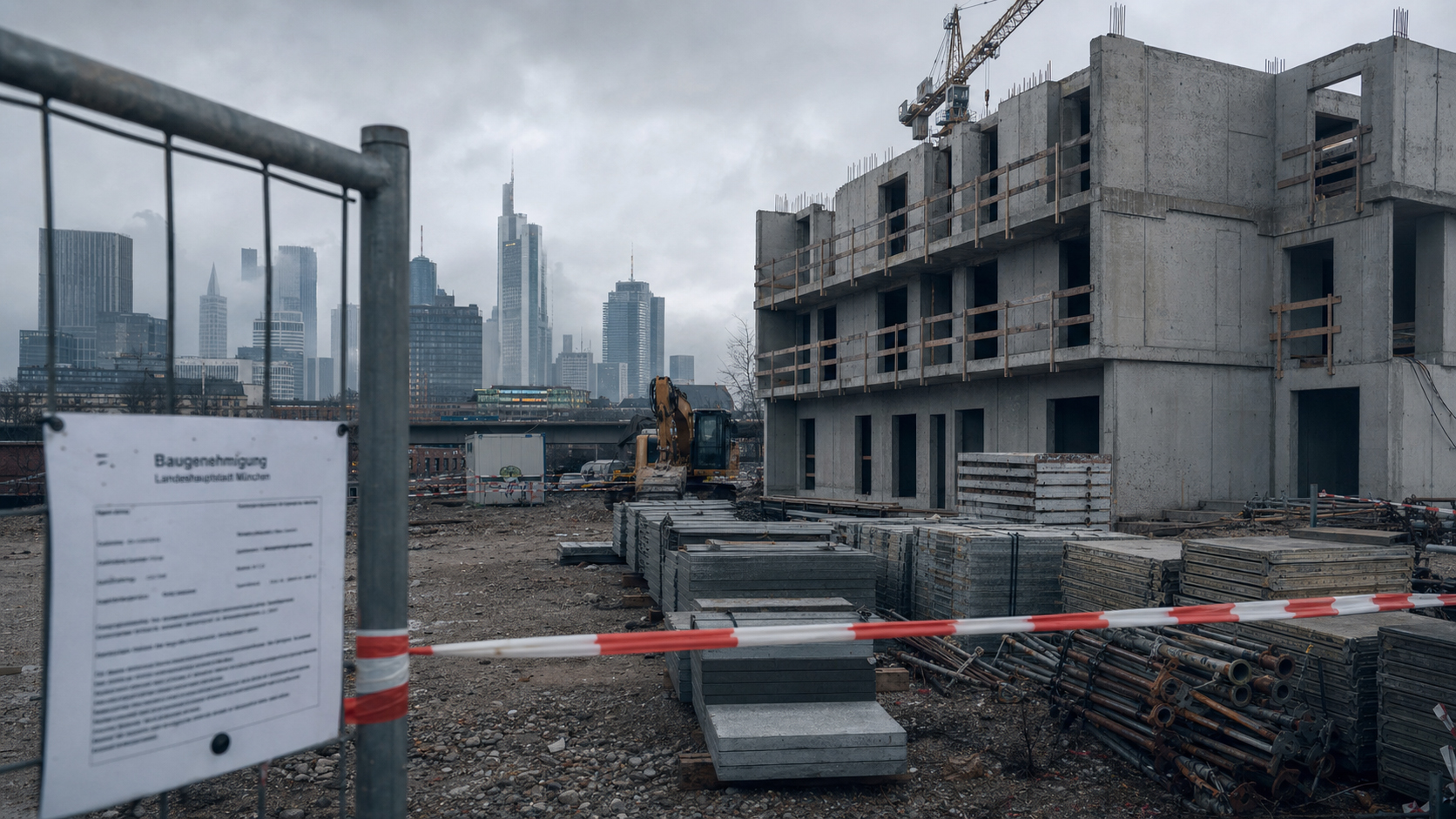
A global comparison: Planning failure as a location risk – and why this is not solely a German problem – Image: Xpert.Digital
Bureaucratic madness: How a single formal error jeopardizes billions in investments
140,000 apartments at risk: The fatal verdict that reveals Germany's planning chaos
Stuttgart 21 was just the beginning: Why the German planning system is on the verge of collapse
A simple procedural error in gravel extraction is jeopardizing the future of an entire region: The recent ruling by the Higher Administrative Court of Münster on the Ruhr Regional Plan ruthlessly exposes how Germany is paralyzing itself through legalistic obsession. At a stroke, 140,000 planned apartments and nearly 200,000 potential jobs lost their legal basis. But this economic fiasco is far more than a local problem on the Lower Rhine – it is emblematic of the deep structural crisis facing Germany as a whole. Our comprehensive report analyzes the true causes of this systemic planning failure. Why are we suffocating in bureaucracy and extremely lengthy approval processes while construction is already underway elsewhere? A stark comparison reveals striking parallels to the USA and shows why China's extremely fast but authoritarian alternative model cannot be a solution for us. Learn why Germany's error-intolerant planning law urgently needs reform and what pragmatic solutions other democracies are successfully demonstrating. Because one thing is certain: the competition never sleeps – and capital never waits.
When gravel extraction paralyzes an entire region – and why this is not just a German problem
On June 12, 2026, the Higher Administrative Court (OVG) of Münster issued a ruling whose implications can hardly be overstated: the entire Ruhr Regional Plan was declared invalid. What began as a legal dispute over gravel extraction rights in the Lower Rhine region—between municipalities, residents, and a raw materials company—ended with the complete collapse of the central spatial planning instrument for one of Europe's most densely populated industrial regions. 140,000 planned apartments, 195,000 potential jobs, commercial areas, wind energy projects, and recreational areas have since hung in the balance. The question that arises, however, is not purely legal: it is an economic policy issue, a systemic one, and, viewed internationally, one that extends far beyond Germany's borders.
The problem is not new, nor is it uniquely German – yet its specific manifestation is characteristic of the German regulatory state. This report analyzes the structural causes, draws comparisons with the USA and China, and examines what this reveals about the future viability of Germany as a business location.
The verdict and its immediate consequences for the Ruhr region
The Ruhr Regional Plan, adopted by the Ruhr Regional Association (RVR), is the overarching planning instrument for 53 cities and districts with approximately five million inhabitants. It regulates where residential developments are built, where industry is established, where wind turbines are erected, and where recreational areas are created. Without a legally valid regional plan, this large region lacks the planning law basis for any major development decision. In his reasoning for the verdict, presiding judge Hans-Joachim Hüwelmeier spoke of "serious errors" that had made a decision against the plan "unavoidable.".
The case was initially triggered by a two-pronged legal action: Several municipalities and residents in the Wesel district sued against newly planned gravel extraction areas, arguing that the expansion was excessive and fearing the destruction of the Lower Rhine landscape. Simultaneously, the raw materials company Holemans GmbH filed a lawsuit seeking an even further expansion of the open-pit mine. The court identified not only substantive but also procedural deficiencies: According to the ruling, the RVR (Regional Association Ruhr) had used outdated data to calculate regional gravel demand. Furthermore, a procedural error in the 2018 public participation process was found, rendering the entire plan legally contestable.
The economic consequences are immediate. Stefan Dietzfelbinger, CEO of the Lower Rhine Chamber of Industry and Commerce in Duisburg, warned publicly: “Nothing is worse for companies than uncertainty. If you want to invest, if you want to create jobs, you need reliability.” Many cities in the Ruhr region – including Essen, Hagen, and Dortmund – initially refrained from commenting and awaited the written ruling. Kamp-Lintfort, one of the municipalities that filed the lawsuit, stated that it had never intended to derail the entire plan, but merely to remove the gravel extraction plan from the regional plan. What began as a limited legal dispute unleashed a systemic dynamite that no one had fully foreseen.
The structural failure: Not ideas, not capital – but the ability to implement them
This is a sore point in the German economic discourse: Germany doesn't suffer from a lack of ideas, engineers, or capital. It suffers from a systemic deficit in implementation. The German Construction Industry Federation (ZDB) succinctly put it in a statement: Current planning law, with its complex approval procedures, has become an obstacle to modernization, investment, and innovation. While the financial resources for many infrastructure projects are available, the legal and administrative capacity to implement them in a timely manner is lacking.
For the past five years, Germany has experienced a persistent weakness in investment, significantly worse than that of its European neighbors. Foreign direct investment in Germany amounted to just under €35 billion in 2024 – the second-lowest figure since 2015. A study by the ifo Institute shows that 90 percent of the companies surveyed perceive the density of regulations as an obstacle to investment. In an LBBW survey from spring 2025, 75 percent of medium-sized companies identified bureaucratic burdens as the main obstacle to future investments in Germany.
This structural paralysis isn't limited to regional planning. The Stuttgart 21 project serves as a prime example. Contractually agreed upon in 2009 with total costs of approximately €4.5 billion and an opening date of 2019, the Stuttgart underground station has now ballooned to over €11 billion in costs – with the earliest possible commissioning date in 2030, meaning a delay of at least eleven years. According to insiders, the total costs could rise significantly above €12 billion. The comparison is devastating: In the same timeframe, China built over 50,000 kilometers of high-speed rail lines.
Approval times in international comparison: What the figures reveal
To put the German permitting problem into perspective, a dispassionate international data perspective is needed. This reveals that the problem is real, but not unique.
In Germany, a simple building permit takes between four and 24 weeks under normal circumstances, depending on the federal state and the type of procedure. But that's just the tip of the iceberg. Currently, the processing time for building plans in Berlin is between five and eight years, while Hamburg, at around 1.5 years, fares significantly better. In 2024, only 215,300 apartments were approved in Germany – around 17 percent fewer than the previous year and the third consecutive decline. The average time from approval to completion of a new building has now increased to 26 months, six months longer than in 2020. The German Economic Institute (IW) calculated that between 2020 and 2023, only 37 to 43 percent of the required new housing was built in the high-growth metropolitan regions.
The situation is even more dramatic for infrastructure projects. Planning procedures for wind turbines take an average of 5.3 years, with the formal approval process alone taking 24.2 months. The Chamber of Industry and Commerce (IHK) notes that, with the same EU framework legislation, neighboring European countries like Denmark and the Netherlands manage to plan significantly faster.
An academic comparison between Germany and the USA revealed the following: The American building permit process for a standard project involves 17 percent more procedural steps than the German one, but at an average of 68 days, it takes only slightly more than half the time of the German process, which takes 126 days. Interestingly, both countries rank closely together in the World Bank's Doing Business ranking for building permits – the USA in 24th place, Germany in 30th (out of 190 countries). However, these figures mask how differently the systems diverge for large-scale projects, especially when legal disputes arise.
The American system: Same disease, different symptoms
The US suffers from a structurally related problem, but one that manifests itself in different institutional forms. The central instrument is the National Environmental Policy Act (NEPA), which has mandated environmental impact assessments for federal infrastructure projects since the 1970s. What began as a well-intentioned environmental protection regulation has evolved into one of the most powerful investment barriers in the Western world.
The figures are clear: The average processing time for an Environmental Impact Statement (EIS) was 2.2 years in the 1970s. By 2011, it had risen to 6.6 years. For energy projects, the average is 4.5 years, for transmission lines even 6.5 years – and some projects wait more than a decade for approval. By 2024, the situation had improved marginally: The median was 2.8 years, but 61 percent of all EIS still exceeded the legally mandated two-year deadline. Almost a quarter of all completed EIS took more than five years, some even more than ten.
The prime example of American planning failure is the California High-Speed Rail. Approved in 2008 with a budget of $33 billion and a completion target of 2020, the project has now devoured $15.7 billion without producing a single kilometer of operational high-speed track. Current estimated total costs are as high as $128 billion—nearly four times the original budget. The Federal Railroad Administration (FRA), in a 300-page report, cited "systemic failures in management, financing, and scheduling" and threatened to withdraw $4 billion in federal funding. An attempt at legislation by California Senator Scott Wiener to tighten approval rules failed in August 2025 due to opposition from local governments and utility companies.
The crucial finding from research is this: more rigorous environmental impact assessments do not necessarily lead to faster results. The main causes of delays in the US are insufficient government funding, staff turnover, applicants' lack of information, and compliance with other laws – not the environmental impact assessments themselves. The problem, therefore, is not primarily content-related, but rather capacity- and institutionally driven. The best solution would thus be better resource allocation for permitting agencies – a sobering finding that applies equally to Germany.
China's construction speed: The model that no one wants to copy – but everyone fears
No international comparison of planning and implementation speed can do without China. Over the past 25 years, the People's Republic has built an infrastructure network that is unparalleled in its scale, speed, and cost-efficiency. More than 50,000 kilometers of high-speed rail now connect 97 percent of China's major cities with trains traveling at speeds of up to 350 kilometers per hour. By comparison, in Germany, the planning and approval process for a comparable line would often take longer than the entire construction in China. Individual high-speed lines, such as the over 1,300-kilometer-long Beijing-Shanghai connection, were built in three to four years. Beijing Daxing Airport, one of the world's largest single-terminal airports, was approved in 2014 and opened in 2019 – just five years from approval to operational launch.
The structural features that enable this speed are well known: a centralized decision-making system with state control over land use, state-controlled banks that finance projects regardless of private-sector profitability, local government officials whose careers are directly tied to measurable growth performance, and a near-complete absence of legal recourse for third parties. Lengthy legal battles through multiple instances, blockades by environmental organizations or citizens' initiatives—phenomena that are commonplace in Germany and the USA—simply do not exist in the People's Republic.
Related to this:

This is certainly not a model that democratic societies could or should copy. China's construction successes are accompanied by a complete abandonment of transparent citizen participation, large-scale forced relocations, often inadequately documented environmental damage, and structures at the local level that foster corruption. China builds quickly because it externalizes the costs of this speed—onto its citizens, to nature, to the rule of law. Democracies consciously avoid this choice. But the question must still be asked: How much speed can democratic systems achieve without abandoning their fundamental values?
History shows that democratic societies are indeed capable of rapid infrastructure development. The construction of the American Interstate Highway system in the 1950s and 1960s, the post-war infrastructure in West Germany, the rapid expansion of the autobahn network in South Korea – all of this demonstrates that the rule of law and construction performance need not be mutually exclusive. The difference to today lies less in the system itself than in institutional capacity, political prioritization, and the design of legal recourse.
Our EU and German expertise in business development, sales and marketing

Our EU and German expertise in business development, sales and marketing - Image: Xpert.Digital
Industry focus areas: B2B, digitalization (from AI to XR), mechanical engineering, logistics, renewable energies and industry
More information here:
A thematic hub offering insights and expertise:
- Knowledge platform covering global and regional economies, innovation and industry-specific trends
- A collection of analyses, insights, and background information from our key areas of focus
- A place for expertise and information on current developments in business and technology
- A hub for companies seeking information on markets, digitalization, and industry innovations
Why Germany's planning law systematically blocks projects
Litigation culture as a systemic issue: Who is allowed to stop what?
A key distinguishing feature between Germany, the USA, and China is the scope of judicial access to infrastructure projects. In Germany, the right of recognized environmental associations to bring class action lawsuits has been codified since 2006 and has been used much more actively since 2013. This is based, on the one hand, on the Aarhus Convention of the United Nations, which requires its member states to facilitate access to courts for environmental NGOs. On the other hand, European law has expanded this approach. The consequence: Even projects that meet all substantive legal requirements can be completely derailed by formal procedural errors – as in the case of the Ruhr Regional Plan.
In the current case, the Higher Administrative Court of Münster identified a procedural error in the 2018 public participation process, as well as methodological weaknesses in the data used to determine gravel extraction needs. The result was the total invalidity of the entire plan – not just its disputed sections. The fact that even a well-functioning planning region like the Ruhr area can lose its entire legal basis due to formal deficiencies in one aspect of its planning illustrates a dangerous systemic characteristic of German planning law: its lack of resilience to errors.
In the US, legal disputes in the NEPA process lead to an average of 23 to 30 months of additional delay, depending on whether the lawsuit is won by the government or by plaintiffs. Legal challenges to projects are also commonplace there, but the substantive separation between a specific aspect and the overall plan is less pronounced. In China, this legal avenue is practically non-existent. Germany must find its own answer somewhere between these extremes.
German legislation has taken initial steps in this direction. In October 2025, the Act to Accelerate Housing Construction – the so-called "Construction Turbo" Act – came into force, allowing deviations from existing planning law with municipal approval. In December 2025, the Federal Cabinet approved the draft Infrastructure Future Act, which aims to digitize and accelerate planning and approval processes for transport and energy projects. As early as 2023, the federal and state governments had agreed on a "Pact for Accelerating Planning, Approval, and Implementation," comprising around 150 measures. These are not marginal reform attempts – but whether they will have a systemic impact remains to be seen, as long as courts can continue to overturn entire plans due to minor formal errors.
The economic dimension: What delays really cost
Behind the abstract concept of planning law lie very concrete economic losses. For the Ruhr region, these are immediately tangible: 53 cities and five million people are left without a central planning instrument. New construction projects and investments are in limbo, and business development and jobs are at risk. The Chamber of Industry and Commerce's CEO, Dietzfelbinger, characterized the ruling as a "devastating blow to the economy.".
The overall economic impact of planning failures is difficult to quantify, but clearly negative. Nationwide, there is a shortage of approximately 1.4 million apartments, almost exclusively in the lower and middle price segments. The German Economic Institute (IW) estimated the annual need for new construction between 2021 and 2025 at 372,000 apartments per year – but on average, far fewer were actually built; in 2024, only 215,300 units were approved. The resulting social costs – rising rents, spatial segregation, and reduced access for low-income groups and immigrants – are immediate and observable.
For companies, the loss of confidence in planning certainty is a cost factor in its own right. Investment decisions are postponed, relocated, or canceled when it is unclear whether the framework conditions of a project will still apply in five years. Germany's persistent weakness in investment—five years in a row, with a decline of around two percent in 2024—cannot be explained by a single cause. However, bureaucracy and regulatory density are consistently among the three most frequently cited factors when companies are asked what deters them from investing in Germany.
By analogy with the US, the cost explosions of California High-Speed Rail demonstrate the same mechanism: every additional delay generates extra costs through contract adjustments, price escalation clauses, financing costs, and reputational damage. The project has spent almost $15.7 billion since 2008 without delivering a single operational kilometer. A federal report explicitly cites permitting delays and a lack of acceptance by third parties as structural causes – identical to the problems in Germany.
Systemic reflection: What is “typically German” and what is not
The initial question deserves an honest answer: Is what the Ruhr regional plan case reveals typically German – or is it universal? The answer is: both. The fundamental problem – that democratic states governed by the rule of law produce procedures that generate delays – is global. Neither the USA nor comparable Western European democracies are immune. Even Japan, which maintains a similar environmental legal system to the USA, struggles with lengthy approval processes for infrastructure projects.
However, what is specific to Germany are several interconnected characteristics. First, the extreme intolerance of errors in planning law: Unlike other legal systems that strictly distinguish between remediable procedural errors and fundamental defects, in Germany formal errors in participation can lead to the complete invalidity of an entire plan – regardless of whether the substantive error affects the plan's essential provisions or not. The Ruhr Regional Plan is an almost textbook example of this pathology.
Secondly, there is the multi-level problem: Germany is a federal state with strong local self-government. The coordination between the federal, state, regional, and local levels creates a complexity that practically predetermines planning errors and makes correction difficult. European neighbors like France and the Netherlands, which also operate under EU framework legislation, manage this much better with more centralized planning systems.
Thirdly, a specific litigation culture has emerged from the interplay of the Aarhus Convention, national environmental administrative law, and an active civil society. This is not inherently bad – democratic control of planning decisions is valuable. However, the asymmetry between the ease of halting a plan and the difficulty of establishing a legally sound plan is structurally problematic.
Fourth and finally, there is the institutional capacity weakness of planning authorities. Overburdened administrations, staff shortages, a lack of digitalization, and unclear responsibilities are well-known problems in both Germany and the USA. In Germany, there is also a lack of a politically sound prioritization culture: Which projects take precedence when capacity is limited? In China, this question has already been answered by the party and planning apparatus. In democratic societies, political institutions must assume this function – which presupposes that they possess the institutional strength and the political will to do so.
Reform perspectives: What Germany can learn without becoming China
International comparisons allow for the derivation of pragmatic reform options that do not call the rule of law into question, but address its pathologies.
In 2008, the United Kingdom introduced a planning reform with the Planning Act, creating a standardized approval process with clear deadlines for Nationally Significant Infrastructure Projects (NSIPs). Access to judicial remedies for these projects was restricted, but not eliminated. This resulted in a significant acceleration of large infrastructure projects compared to the previous system. A comparable categorization and prioritization of critical infrastructure projects with direct appeal to the Federal Administrative Court, as demanded by the Chamber of Industry and Commerce (IHK), would be a German equivalent.
The Netherlands and Denmark demonstrate that EU environmental law is compatible with faster procedures – through better prior coordination between authorities, earlier and more binding public participation, and a clearer distinction between remediable and irreparable planning errors. The new German Infrastructure Future Act and the amendment to the Federal Building Code (BauGB) are moving in this direction, but the real test is yet to come.
Crucially, error tolerance and correction must be strengthened in planning law. If a formal publication error in one section of a regional plan leads to the complete invalidity of the entire plan, this is not a sign of a functioning rule of law, but rather of excessive procedural rigor that does not serve the actual purpose of protection – ensuring sound, democratically legitimate planning. An explicit remedial clause for formal procedural errors that had no substantive impact on the plan's provisions would be an important first step.
Related to this:

Capital waits – but democracies are still allowed to plan
The ruling by the Higher Administrative Court of Münster is not an isolated case. It is a symptom. It shows how a system that has been optimized for decades for maximum procedural certainty and comprehensive participatory rights is falling behind in its implementation capabilities. This lag is real, it is measurable, and it has tangible economic and social consequences – for the Ruhr region, for Germany, for businesses, and for citizens.
International comparisons reveal two key lessons. First, Germany is not alone in facing this problem. The US is grappling with NEPA delays, skyrocketing infrastructure costs, and politically blocked reforms. Planning failure is a structural characteristic of complex legal systems in open societies, not a uniquely German problem. Second, Germany has a more pronounced problem in specific dimensions. The intolerance of errors in planning law, the institutional capacity weaknesses of its authorities, the extreme federal complexity, and the asymmetry between ease of litigation and planning effort create a situation that is unusually pronounced in international comparison.
The Chinese model is not the answer. Those who accelerate infrastructure development by dismantling the rule of law and citizen participation buy speed at the cost of fundamental democratic values. But the alternative to China's model is not stagnation. It is a reformed, effective, and error-tolerant planning law that combines democratic oversight with the capacity for implementation. Other democracies demonstrate that this is possible.
Germany has the tools. It has the engineers, the financial resources, the legal tradition, and now also the legislative approaches. What it needs is political will – and the readiness to transform planning law, optimized for protection for decades, into effective legislation. Capital doesn't wait. But a new planning law can't be built overnight either. The time to start was yesterday. The next best time is today.





