
Next2Sun insolvent: A warning for Germany's energy transition
Xpert Pre-Release

Available in 27 languages 📢
Prefer Xpert.Digital on GoogleⓘPublished on: October 5, 2026 / Updated on: October 5, 2026 – Author: Konrad Wolfenstein
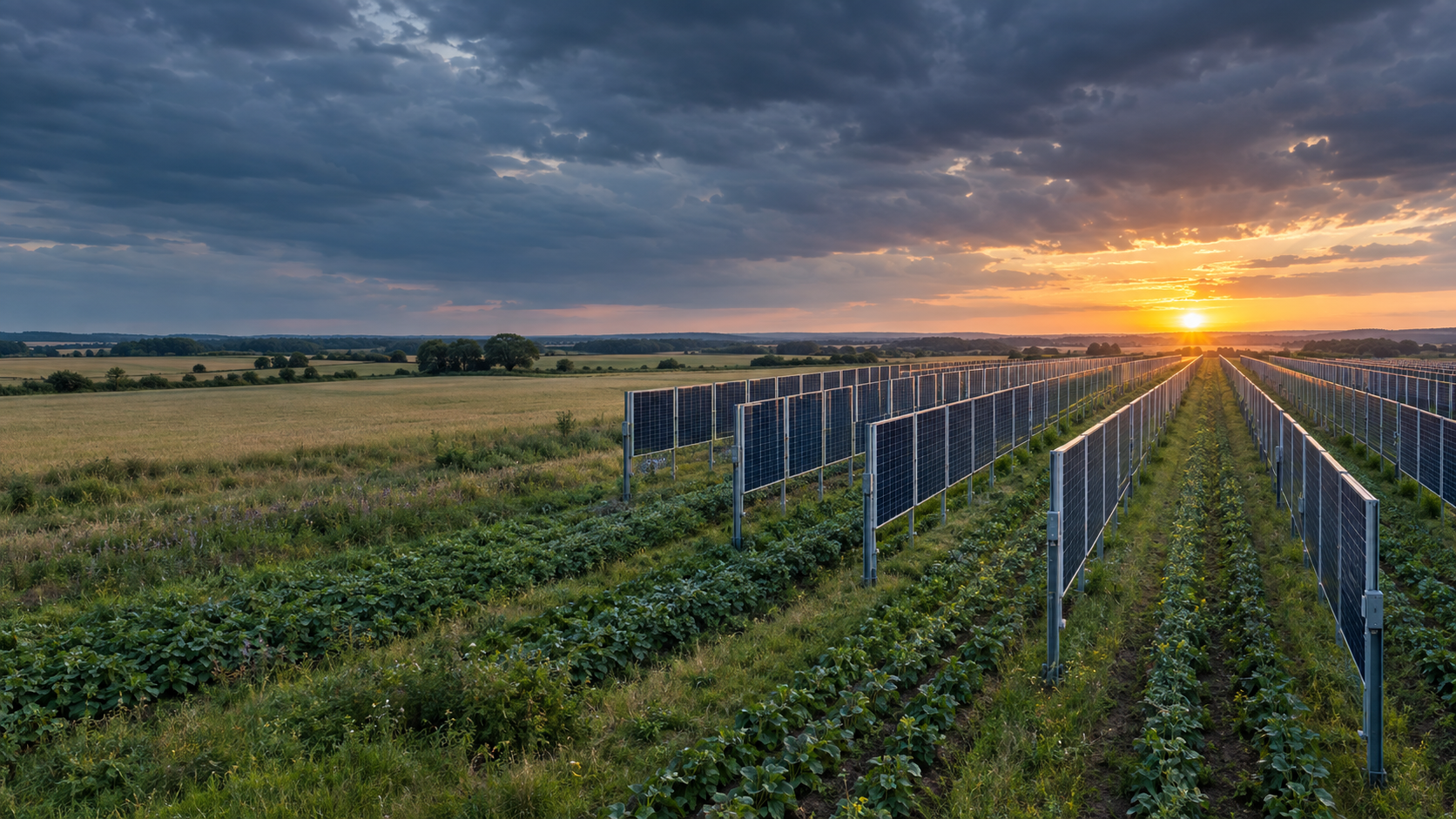
Next2Sun insolvent: A warning for Germany's energy transition – Creative image on the topic, created with AI: Xpert.Digital
Funding problems at Next2Sun: How the energy transition is endangering pioneers
The challenges facing the German solar industry: An analysis
When innovation fails: The insolvency of Next2Sun and its lessons for the future
The insolvency of Next2Sun, a pioneer in vertical bifacial photovoltaics, is not only regrettable corporate news but also an alarming signal for the entire German energy transition. On October 5, 2026, Next2Sun Technology GmbH and Next2Sun Mounting Systems GmbH filed for insolvency proceedings under self-administration at the Saarbrücken District Court. This decision exposes a fundamental contradiction: Although the demand for green electricity is growing and ambitious political climate targets are being set, innovative companies developing technological solutions often fail due to a lack of financing. Despite a stable market position and a promising business model, Next2Sun was unable to secure the necessary capital of up to five million euros, raising the question of how the German solar industry can be financed in the future. The insolvency is therefore not just an isolated case but a symptom of deeper structural problems within the industry that urgently need to be addressed. In this context, it is essential to learn the lessons from the Next2Sun case in order to secure the innovative strength and competitiveness of the German energy transition in the long term.
Next2Sun in insolvency: When the energy transition cannot finance its pioneers
Germany wants green electricity – but is letting the companies behind it starve on the capital market
The insolvency of two companies in the Next2Sun Group is more than just a sad piece of corporate news from Saarland. It exposes a fundamental contradiction in Germany's energy transition: Technologically sound solutions can meet growing demand, significant expansion potential, and political climate goals, yet still fail due to a lack of financing. On October 5, 2026, Next2Sun Technology GmbH and Next2Sun Mounting Systems GmbH filed for insolvency proceedings under self-administration at the Saarbrücken District Court. As things stand, Next2Sun AG, Next2Sun Projekt GmbH, and the project companies that operate already implemented agri-photovoltaic plants are not affected. The business operations of the affected companies are also to continue for the time being.
This distinction is crucial. It does not mean the immediate shutdown of the entire group, nor does it prove that vertical agrivoltaics has failed, either technically or fundamentally from an economic perspective. The companies affected are primarily those that consolidate technology, components, and assembly systems. Project development, on the other hand, will continue in a non-insolvent company. Ongoing projects will be reviewed for their economic viability and further developed where possible. The search for investors continues in parallel. The goal of the self-administration is to facilitate an orderly restructuring process, preserve existing expertise, and safeguard as many jobs as possible.
The situation is nonetheless serious. A company considered a pioneer and technology leader in vertically installed bifacial photovoltaics, having implemented more than 65 megawatts peak both domestically and internationally, and most recently employing more than 140 people at locations in Germany, Austria, Poland, and Japan, was unable to secure a relatively modest additional capital requirement. The failed financing campaign aimed for up to five million euros. In nominal terms, share subscriptions and other offers of this magnitude were received. However, due diligence revealed that significant portions of the offers were not sufficiently binding. Thus, the issue was not a lack of interest, but rather a lack of reliable, readily available capital.
A bankruptcy with an uncertain outcome
Insolvency proceedings under self-administration differ from the common perception of immediate liquidation. Management remains capable of acting, but is supervised by a court-appointed administrator. This approach can be beneficial if a core business, marketable technology, customer relationships, and realistic prospects for continued operation exist. However, it does not guarantee a successful restructuring. Crucially, short-term liquidity can be secured, the business model adapted, and an investor or strategic partner found.
For Next2Sun, the opportunity lies in the fact that not all parts of the group are affected and project development can continue. Plants already in operation remain outside the scope of the requested proceedings. This reduces the risk that operating assets and ongoing revenues will be completely drawn into the restructuring. At the same time, this separation could complicate the restructuring because technology development, system manufacturing, project planning, and implementation are economically intertwined. A group that derived its strength precisely from covering multiple value chain stages must now prove that these stages also function under new ownership, licensing, or cooperation structures.
The most economically attractive asset is not simply the inventory of components or fully planned projects. It is the combination of patents, systems knowledge, reference plants, agricultural experience, permitting expertise, and an international network. This package can be valuable to an energy supplier, an infrastructure investor, a large project developer, a manufacturer of assembly systems, or an industrial strategist. However, its price depends on how well the intellectual property is legally protected, how robust the project pipeline is, what margins are realistically achievable, and how much additional financing is needed to achieve a stable positive cash flow.
The decision to continue a project will therefore not be based solely on technological attractiveness. An investor will want to know which projects are ready for construction in the short term, whether grid connections have been secured, which supply and purchase agreements exist, how much pre-financing is required, and whether there are risks arising from warranties or legacy projects. Equally important is the question of which company holds which rights, employees, customer contracts, and patents. The more transparently this structure can be presented, the greater the chance of a solution that involves more than just the sale of individual assets.
A lot of support is no substitute for liquidity
The failed rescue attempt highlights the difference between societal support, non-binding interest, and a legally binding commitment that actually provides funding. A share subscription, an investment intention, or an offer of talks can generate public confidence. However, for the insolvency-related going concern forecast and daily solvency, only capital that is legally binding, available on time, and free of unfulfilled conditions counts. If two major commitments cannot be fulfilled, a nominally achieved funding target can be undercut again within a few days.
The fact that no investor funds were accepted because the necessary threshold was not reached is correct from a regulatory policy perspective and from the standpoint of investor protection. It prevents small investors from contributing capital to a situation whose medium-term financing remains unclear. For the company, however, this safeguard clause meant that even the smaller subscriptions that were actually received could not be used as bridge financing. The campaign was thus designed as an all-or-nothing solution: either a sufficiently large financing buffer was generated, or the investment would not materialize at all.
Lowering the minimum investment to €600 broadened the potential investor base, but it couldn't replace institutional capital. Growth companies with project-based businesses need not only many supporters, but also a few financially strong anchor investors who can make a firm commitment even during difficult times. Private equity can supplement this, but it's only suitable to a limited extent for covering short-term operating losses, pre-development costs, and project-related collateral amounting to millions. The situation becomes particularly problematic when the campaign is perceived as a last-ditch effort to save the company. In that case, the risk for investors increases, while the timeframe for thorough due diligence decreases.
This process therefore illustrates not merely a communication failure, but a harsh financing reality. Positive feedback is an intangible asset. Liquidity is a cash flow figure. Between the two lies the assessment of creditworthiness, terms, maturities, collateral, and decision-making authority. Many companies fail not because no one likes their idea, but because not enough investors are willing to actually transfer their money at the required time, given the existing risks.
The boom masked the vulnerability
Next2Sun was founded in 2015 and has evolved from a technology pioneer into an internationally active group. Its vertical bifacial design differs significantly from conventional, south-facing ground-mounted systems. Instead of aiming for maximum yield around midday, the bifacial modules primarily capture sunlight in the morning and evening. An east-west orientation results in a generation profile with two daily peaks and a lower midday peak. In a power grid with rapidly expanding conventional photovoltaic capacity, this profile can have a greater overall system value than an additional kilowatt-hour generated during the already high-yielding midday period.
The company had expected to deliver around 50 megawatts of project volume in 2026. That would have been almost as much as in the previous ten years combined. For 2027, more than 70 megawatts were projected, with even triple-digit annual megawatt volumes planned for the medium term. These figures indicate a significant market ramp-up. On the other hand, they also reveal the classic danger zone of a growing project company: capital requirements often increase faster than recorded revenue and operating cash flow.
In energy projects, there are often long periods between order placement and payment. Land must be secured, plans drawn up, expert opinions paid for, permits obtained, grid connections reserved, components ordered, and personnel hired. If a funding decision, building permit, or bank approval is delayed, the costs remain while the expected cash inflow fails to materialize. Growth exacerbates this pre-financing challenge. A company can have a full project pipeline and still become insolvent if the funding gap between expenditures and receipts becomes too large.
Pioneers, in particular, incur additional costs. They not only have to implement projects, but also explain markets, help shape technical standards, convince authorities, study agricultural impacts, establish new supply chains, and create references. Many of these expenditures generate societal benefits, but cannot be fully factored into the price of the first system sold. Later competitors often profit from the established standards and increased acceptance without having borne the full cost of pioneering. From an economic perspective, this creates a gap between the benefits of the innovation and the privately achievable return for the innovator.
The balance sheet had a stronger effect than the cash balance
The published annual financial statements of Next2Sun AG as of December 31, 2024, demonstrate why a superficial examination of the balance sheet cannot explain the subsequent crisis. The AG is essentially a management holding company and not synonymous with the entire operating group. Its total assets at the end of 2024 amounted to approximately €4.74 million. Reported equity totaled around €4.17 million, which, mathematically, corresponded to a high equity ratio of nearly 88 percent. This was offset by liabilities of almost €499,000 and provisions of just over €76,000.
These figures initially convey a sense of stability. However, the composition of the assets is more important than the ratio. Approximately €2.46 million was attributable to financial investments, primarily holdings in affiliated companies. A further €2.19 million consisted of receivables from affiliated companies. In contrast, cash and bank balances amounted to only around €67,400. This does not mean that the company was over-indebted at the end of 2024. However, it does mean that a large portion of its assets was tied up in holdings and intra-group claims and was not readily available as liquidity.
Receivables from affiliated companies decreased year-on-year from approximately €2.47 million to €2.19 million. At the same time, the AG increased its carrying amount in Next2Sun Technology GmbH by €1 million to approximately €2.32 million. Overall, the carrying amount of financial assets rose from approximately €1.43 million to €2.46 million within a year. This development indicates continued financing and capitalization of the operating structure. This can be normal for a holding company. However, in a subsequent crisis, it becomes apparent that the value of investments and intra-group receivables depends on the economic performance of the subsidiaries.
The profit and loss statement of the AG (public limited company) should also not be interpreted as consolidated financial statements. The holding company's revenue in 2024 amounted to only €204,000. This was supplemented by approximately €12,000 in other operating income and about €142,600 in interest and similar income, primarily from affiliated companies. After deducting personnel expenses, other operating expenses, and interest expenses, the net loss for the year was approximately €40,600. In the previous year, a small profit of approximately €18,600 had been reported. The accumulated deficit thus increased to approximately €263,500.
It is particularly striking that the AG's other operating expenses rose from approximately €48,700 to around €148,600. At the same time, the holding company had substantial capital reserves and received further premiums from share subscriptions in 2024. This structure initially mitigated losses. However, it does not answer the crucial question of how much liquidity the operating subsidiaries consumed in 2025. Consolidated financial statements for 2025 were not yet available during the rescue attempt. All that was known was that total revenue and profit had declined significantly compared to 2024.
The economic lesson here is clear: A high equity ratio only provides protection if the assets are valuable and sufficiently liquid. A company can appear financially sound on the balance sheet and simultaneously suffer an acute cash flow shortage. In groups with a holding structure, liquidity, liabilities, project opportunities, and risks are further complicated by the fact that they are distributed across various legal entities. Therefore, for investors, a consolidated cash flow analysis is more important than a single balance sheet ratio.
The year 2025 became a turning point
The company cited the lack of or delay in securing state aid for the planned agri-PV subsidies as a major burden. This resulted not merely in a political annoyance, but in a concrete business risk. Project developers plan personnel, supply chains, and preliminary work based on expected market conditions. If a promised funding mechanism does not take effect in time, projects may not be financed, despite fundamental demand, or they may not be implemented under the calculated conditions.
For an established standard technology, such a delay is inconvenient. For a specialized company in a young market, it can be life-threatening. Customers wait, banks demand more equity, investors postpone decisions, and project revenues are pushed into later fiscal years. However, the cost base cannot be reduced at the same pace without compromising the ability to execute later. Engineers, project planners, and sales teams cannot be arbitrarily brought on and off.
Added to this was an increasingly cautious financing environment. Following the interest rate hikes of previous years, investors became more selective. Banks no longer just examined the expected annual yield of a photovoltaic system, but also the hourly generation profile, negative electricity prices, curtailment risks, grid congestion, marketing agreements, and the resilience of project partners. This creates a valuation problem for innovative technologies: their system benefits may be greater, but there is less long-term operational data, fewer standardized financing models, and fewer comparable transactions.
Next2Sun thus found itself caught in a classic bind. The company had to continue investing to meet the anticipated market upswing, while this upswing was being delayed politically and financially. According to the company, losses in 2025 were initially largely absorbed by bank loans and equity. This bought time but did not create a sustainably viable financing cycle. When further growth capital was needed in 2026, the risk appetite of institutional investors was limited.
New: Patent from the USA – install solar parks up to 30% cheaper and 40% faster and easier – with explanatory videos!

New: Patent from the USA – Install solar parks up to 30% cheaper and 40% faster and easier – with explanatory videos! - Image: Xpert.Digital
The core of this technological advancement is the deliberate departure from conventional clamp mounting, which has been the standard for decades. The new, more time- and cost-effective mounting system addresses this with a fundamentally different, more intelligent concept. Instead of clamping the modules at specific points, they are inserted into a continuous, specially shaped support rail and held securely in place. This design ensures that all forces – whether static loads from snow or dynamic loads from wind – are distributed evenly across the entire length of the module frame.
More information here:
Agri-photovoltaics: Potentials and risks for the future
Technologically advanced, financially demanding
Vertical bifacial agrivoltaics solves several problems simultaneously. It allows for agricultural use between the module rows, reduces the need for complete conversion of agricultural land, and generates electricity at different times of day than conventional south-facing systems. Depending on the location, row spacing, ground reflectance, and module type, considerable specific yields can be achieved. The lower installable power per hectare is partially compensated for by improved agricultural usability and a more market-oriented electricity profile.
The generation profile is becoming increasingly important. At the end of 2025, Germany had approximately 117 gigawatts of installed photovoltaic capacity and would need to add an average of almost 20 gigawatts per year until 2030 to reach the target of 215 gigawatts. However, with increasing capacity, the value of an additional kilowatt-hour during sunny midday hours decreases. In 2025, negative wholesale prices occurred for 573 hours. At the same time, photovoltaics fed 74.1 terawatt-hours into the grid. A significant portion of solar production thus fell during hours when the market price was low or negative.
Vertical east-west systems can mitigate this so-called cannibalization. They generate relatively more power in the morning and evening, when demand is often higher and solar supply is lower. This can enable higher marketing revenues, better grid utilization, and a reduction in storage requirements. However, this advantage does not automatically translate into a better profit margin. Higher system costs, lower power density, more complex planning, specialized substructures, and a still smaller supply market can negate the revenue advantage.
The economic viability therefore depends on several revenue streams and benefit components. These include electricity sales, potential subsidies, continued agricultural use, lease income, avoided land conflicts, a more favorable feed-in profile, and, where applicable, local direct purchase agreements. Many of these advantages benefit different stakeholders. The grid operator benefits from a smoother grid profile, the farmer from dual land use, the municipality from acceptance and added value, and the electricity consumer from a broader distribution of generation. However, the project company can only finance these overall benefits if they are translated into cash-generating revenues through contracts or subsidy regulations.
Huge potential does not yet constitute a market
The theoretical potential for agrivoltaics in Germany is exceptionally large. Scientific potential analyses indicate that around 500 gigawatts peak could be installed on particularly suitable sites. Under broader technical assumptions, the potential extends into the thousands of gigawatts. These figures demonstrate that agrivoltaics need not remain a niche phenomenon. However, they say little about how many projects can be approved, connected to the grid, and financed in the short term.
By mid-2025, a relevant database listed 95 agri-PV systems with a combined capacity of approximately 390 megawatts peak and an area of about 1,210 hectares. Of these, 28 were vertically integrated systems. Compared to its theoretical potential, the market was therefore still in its early stages. This is attractive for pioneers because growth is possible. At the same time, it is risky because standards, funding regulations, banking models, and permitting processes are not yet fully established.
A location can be ideally suited for agriculture and yet fail due to the lack of a grid connection point. A technically compelling project can be delayed by municipal planning, environmental protection requirements, delivery deadlines, or the creditworthiness of the customer. And a project with guaranteed electricity yield can remain unfinanceable if the revenue model is too dependent on fluctuating market prices. The actual market volume that can be developed is therefore always considerably smaller than the technical potential.
This creates a dangerous expectation error for companies. High potential figures encourage ambitious investments in personnel, sales, and production capacities. However, the actual flow of funds depends on the few projects that overcome all bottlenecks simultaneously. If the market matures more slowly than the organization, a funding gap emerges. Next2Sun therefore did not fail due to a lack of available space, but rather due to the timing and financial constraints that allowed it to translate potential into profitable business.
The new energy policy shifts the risks
The German government officially remains committed to its goal of achieving an 80 percent share of renewable energies in gross electricity consumption by 2030. At the same time, the support system is to become more market-, grid-, and system-oriented. The draft reform of the Renewable Energy Sources Act, presented in 2026, envisions a gradual move away from long-term fixed feed-in tariffs, more direct marketing, intelligently controllable plants, and a stronger focus on grid capacity and price signals. For solar energy, the emphasis is to be placed more strongly on cost-effective ground-mounted installations.
The basic economic rationale is understandable. A power system with a high proportion of photovoltaics should not permanently reward producers for feeding power into the grid at the same time, regardless of demand or grid conditions. Negative prices signal a lack of flexibility. Storage, flexible consumers, dynamic tariffs, and controllable generation must therefore be more strongly integrated into the market. Subsidies that reward only installed capacity without considering the temporal value of production become increasingly inefficient as the grid expands.
However, the distribution of transition risk is problematic. Large energy companies can organize direct marketing, forecasting, balancing group management, and price hedging internally or through established partners. Small operators, citizen energy cooperatives, and specialized medium-sized enterprises bear relatively higher transaction costs. If long-term predictable feed-in tariffs are reduced or eliminated, the share of market price, marketing, and financing risk increases. Banks respond to this with higher requirements for equity capital, collateral, and contracts.
However, speaking of a complete legal shutdown of the citizen-led energy transition would be too sweeping. Existing installations retain their agreed-upon conditions, and even small new installations can remain economically viable through self-consumption, storage, and flexible marketing. The reform, however, fundamentally alters the business model. It tends to favor players who possess economies of scale, data expertise, access to electricity trading, and cheap capital. Without simplified marketing models and fair aggregation offers, there is a risk of market concentration in favor of larger companies.
For Next2Sun, the direct cause-and-effect relationship is limited. The insolvency did not result solely from a future reform of the Renewable Energy Sources Act (EEG), but rather from losses already incurred, delayed subsidy effects, and a failed attempt to raise capital. However, the political realignment is influencing investor expectations. Those providing capital today are assessing the revenue conditions of the next ten to twenty years. Regulatory uncertainty increases the required risk premium even before a law has been definitively passed.
Gas security and solar competition
The accusation that policymakers are protecting fossil gas interests while simultaneously burdening decentralized renewable energies touches upon a real distributional conflict, but it should be formulated precisely. In an increasingly renewable electricity system, Germany needs guaranteed power for hours with low wind and solar production. In the short term, flexible gas-fired power plants will likely be the primary source of this power, later ideally powered by climate-neutral gases or hydrogen. Such plants are not primarily built for long hours of full-load operation, but rather as a capacity reserve for periods of scarcity.
This creates a political asymmetry. For dispatchable power plant capacity, state-supported investment or capacity mechanisms are being discussed because the market alone may not adequately compensate for the provision of capacity. In contrast, for photovoltaics, there is a stronger push for market integration and the reduction of guaranteed feed-in tariffs. Both measures can be justified on systemic grounds, but they address different risks differently: Guaranteed capacity receives a security guarantee for availability, while new renewable energy producers are expected to bear more price and marketing risks.
An economically sound policy should not favor individual technologies, but rather transparently compensate for system services. These include guaranteed capacity, flexible demand, storage capacity, grid-friendly site selection, and feed-in at valuable times. Vertical photovoltaics could benefit from such a framework because its morning and evening profiles can be more favorable from a systemic perspective. However, as long as this advantage only manifests indirectly through volatile market prices, financing remains more difficult than with fixed subsidies or long-term power purchase agreements.
The problem is therefore less a simple battle between gas and solar than an incomplete pricing of system values. Gas-fired power plants solve the problem of periods of low wind and solar output, but not the dependence on fuel prices and imports. Photovoltaics lowers marginal costs and emissions, but without storage and flexible demand, it generates increasing midday surpluses. The most cost-effective solution lies in a portfolio approach. For this to happen, market rules must enable investment in all necessary functions without making political affiliation or company size the decisive financing advantage.
Why this case extends beyond Next2Sun
The German solar industry is experiencing a paradox. Expansion is reaching high levels, while individual manufacturers, installers, and project developers are coming under pressure. Around 16.4 gigawatts of new photovoltaic capacity were added in 2025. The market volume is therefore substantial. Nevertheless, margins are declining in parts of the value chain, while financing, grid connections, and marketing are becoming more challenging. A growing end market does not guarantee profitable growth for every supplier.
Project developers are particularly vulnerable. They invest early, realize revenue late, and depend on a chain of external decisions. If project financing fails, existing obligations remain. If grid connection is delayed, sales are postponed. If the market value of solar power falls, banks change their models. At the same time, inexpensive modules can reduce overall costs, but they can also intensify competition and reduce the margins of companies that provide development, engineering, and system integration.
Innovative medium-sized companies also face the so-called "valley of death" between demonstration and industrial scaling. Funding is available for research, and bank loans for established infrastructure projects. In between lies the phase in which the technology is proven, but the business model is not yet standardized. It is precisely at this stage that five or ten million euros are often harder to raise than hundreds of millions of euros later on for a low-risk portfolio of completed projects.
The insolvency is therefore a warning signal for German innovation financing. It is not enough to promote research and set expansion targets. Companies need growth capital, reliable approval processes, clear funding conditions, and financing instruments that also reflect novel systemic advantages. Otherwise, patents and reference plants will be developed in Germany, while the subsequent scaling will be undertaken by more financially powerful international players.
What a viable rescue would have to achieve
A successful restructuring must first secure short-term liquidity while simultaneously reducing structural capital requirements. This includes consistently prioritizing projects based on their readiness for construction, profit margin, grid connection, and financing feasibility. Projects with lengthy approval processes or uncertain funding must not tie up resources to the same extent as projects that can generate revenue within a few months. A smaller, focused portfolio can be more valuable for continued operation than a large but capital-intensive pipeline.
Secondly, a strategic investor would likely be more suitable than another broadly diversified rescue campaign. An industrial partner could contribute not only capital, but also purchasing power, manufacturing capacity, project financing, guarantees, and market access. Licensing models are also conceivable, whereby Next2Sun would no longer fully implement its technology itself in every region. This reduces the capital requirement, but carries the risk of lower margins and a loss of control over parts of the value chain.
Thirdly, the system value of the technology must be monetized contractually. Long-term power purchase agreements with consumers who have high loads in the mornings and evenings could reward the generation profile. Combinations with battery storage, electrolyzers, or flexible commercial consumers could unlock additional revenue. Cooperations with agriculture, municipalities, and regional energy suppliers are also worthwhile if they not only create acceptance but also provide binding agreements on land use, offtake, and financing.
Fourth, the group needs transparency regarding legacy issues and future funding requirements. An investor will not rescue a technology if it remains unclear what additional losses will need to be financed to reach profitability. A robust, integrated plan comprising profit and loss statements, balance sheets, and cash flow projections is therefore essential. It must include pessimistic scenarios for permitting delays, negative prices, lower project margins, and higher financing costs.
What politicians should learn from this
Policymakers should better coordinate funding commitments and state aid approvals. Announced market incentives can prompt companies to invest even though their legal implementation is still uncertain. If the mechanism is later delayed or changed, companies bear the standby costs. A reliable state must either create legal certainty in a timely manner or offer transitional arrangements that prevent abrupt funding gaps.
Furthermore, funding should be more strongly differentiated according to system value, without creating an opaque subsidy regime. Technologies with lower midday peak demand, better land use, or a more favorable grid profile generate benefits that are not apparent in simple kilowatt-hour comparisons. Tenders could take such characteristics into account through transparent criteria. Alternatively, local grid fees, flexible connection agreements, or time-dependent market premiums could send appropriate signals.
For citizen-owned energy projects and smaller companies, easy access to direct marketing is crucial. If every small project requires complex trading, metering, and balancing group structures, an indirect barrier to market entry is created. Standardized contracts, regulated data access, and competitive aggregation offerings could unlock economies of scale without abandoning the decentralized ownership structure.
Finally, public financing should focus more strongly on the scaling phase. Guarantees, subordinated debt, or co-financing instruments can mobilize private capital without socializing losses across the board. This must be preceded by an independent technical and commercial review, appropriate equity contributions, and clear restructuring objectives. Not every company with a green product is worth saving. But a financing system that regularly loses technologically valuable pioneers during the transition to the mass market is economically inefficient.
The real value is now up for decision
Next2Sun is not merely an isolated case, nor is it proof of a general failure of the energy transition. Rather, the case demonstrates how closely technology, regulation, the capital market, and project implementation are intertwined. A good invention cannot scale without liquid funds. A large pipeline cannot generate cash flow without grid connections and binding financing. Political expansion targets provide direction, but they do not replace bankable revenue models.
The coming weeks will reveal whether the separation of insolvent and non-insolvent companies facilitates restructuring or weakens the group's operational integration. Crucially, an investor will assess the value of the patents, references, employees, and international market position as higher than the restructuring costs. Equally important is whether ongoing projects can generate sufficient liquidity quickly and whether customers retain confidence despite the proceedings.
For Germany, more is at stake than the survival of a single company. If innovative energy technologies are developed, tested, and brought to market here, but fail to attract capital during the scaling phase, a portion of the future value creation will inevitably migrate elsewhere. Society will then be financing the early learning costs, while others reap the industrial returns. This would be neither a rational industrial policy nor a cost-effective energy transition.
The provocative truth, therefore, is this: Germany doesn't lack solar energy ideas, but rather the patience, capital, and regulatory reliability needed to scale up the more ambitious ones. Next2Sun can still be restructured. However, even a successful rescue wouldn't eliminate the underlying structural problem. Only when the market appropriately assesses the temporal, spatial, and agricultural benefits of renewable technologies, and companies can finance the transition from innovation to scaling, will pioneering technological work translate into sustainable industrial value creation.
Your partner for business development in the fields of photovoltaics and construction
From industrial rooftop PV to solar parks and larger solar parking lots
☑️ Our business language is English or German
☑️ NEW: Correspondence in your native language!

Konrad Wolfenstein
I and my team are happy to be available to you as your personal advisor.
You can contact me by filling out the contact form here [email protected]:or simply call me at +49 7348 4088 965. My email address is
I'm looking forward to our joint project.







