

News on the GridParty insolvency: PV terraces & solar carports: How a savior from Bavaria is reviving the lucrative niche market
Xpert Pre-Release

Available in 27 languages 📢
Prefer Xpert.Digital on GoogleⓘPublished on: July 2, 2026 / Updated on: July 2, 2026 – Author: Konrad Wolfenstein
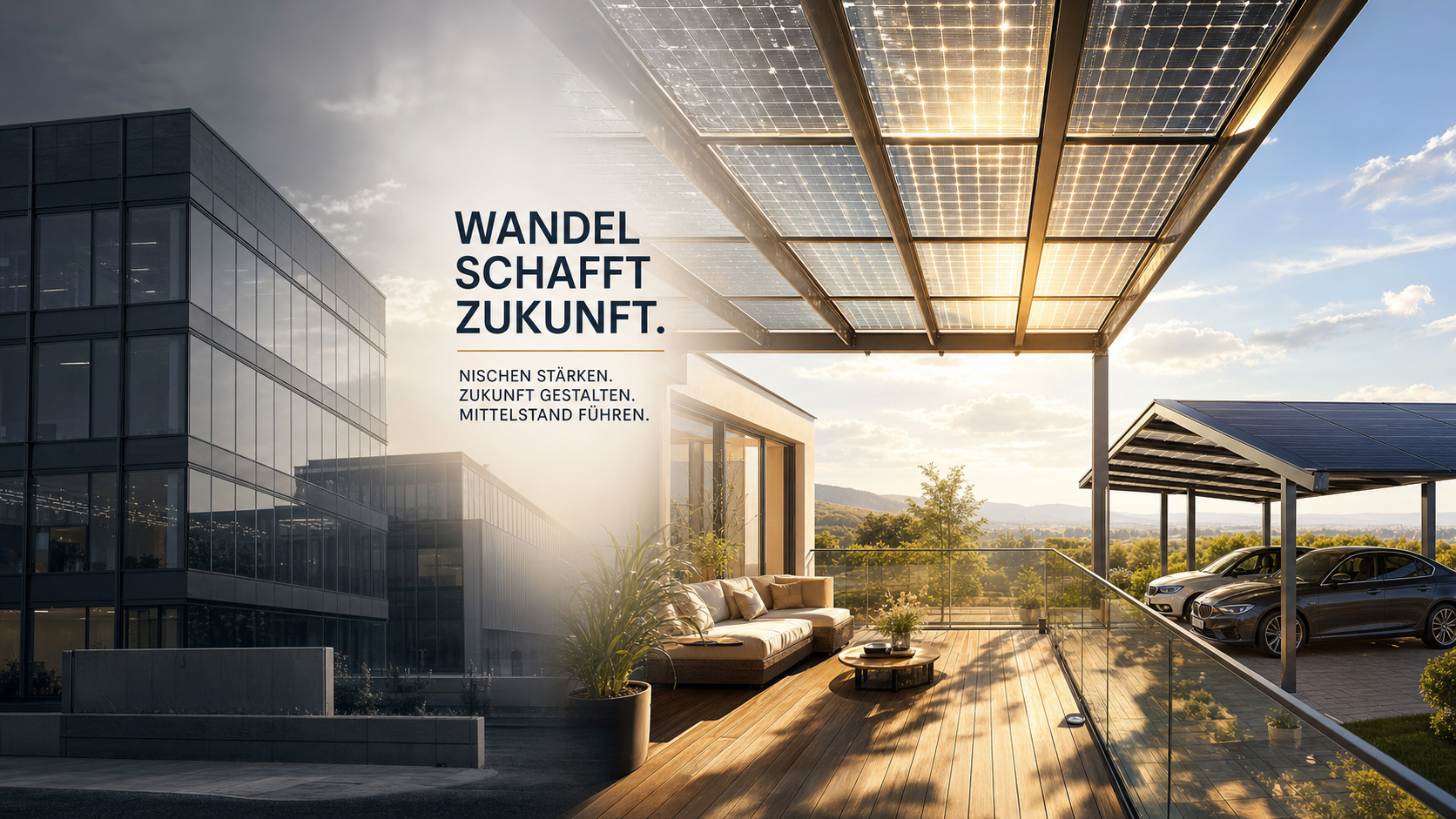
New developments regarding the GridParty insolvency: PV terraces & solar carports: How a savior from Bavaria is reviving the lucrative niche market – Image: Xpert.Digital
Insolvency in the solar market: How pvDach eK is building a successful model from the remnants of a pioneer
Solar pioneer insolvent: The true story behind the GridParity crash – and who benefits now
The German solar industry is currently undergoing a ruthless market shakeout. When once-celebrated flagship companies suddenly slide into insolvency, the explanation is often readily available: unpredictable politics and a lack of subsidies are to blame. But a closer look behind the scenes usually reveals a completely different picture. The most prominent example of this phenomenon is the dramatic collapse of GridParity AG. Despite a highly profitable niche market for PV terraces and solar carports, the company maneuvered itself into ruin through leadership chaos, resistance to advice, and fatal strategic missteps.
But where one player fails due to mismanagement, a historic opportunity opens up for the next. This is precisely where pvDach eK comes in. The company not only secured the naming rights of the failed pioneer, but is currently demonstrating impressively how it can be done better: With a lean cost structure, a clear focus on the B2B segment, and calm yet highly professional management, pvDach eK is transforming innovative niche products into a crisis-proof success story.
pvDach eK takes over and turns the niche into a success story
The preliminary insolvency of GridParity AG, ordered by the Munich District Court on October 24, 2025, marks the end of a Bavarian solar company that had been considered a pioneer for years. The case has triggered a political debate in which the company itself placed the blame solely on the federal government's energy policy. But a closer look reveals a more uncomfortable truth: the collapse was largely self-inflicted. Meanwhile, a new era in this market segment is beginning with pvDach eK from Rottenburg – and the successor's strategic positioning demonstrates how to do exactly what GridParity did wrong.
Bankruptcy in a triple package: The end of GridParity, UrbanPV and AgriPV
The insolvency proceedings at GridParity AG were not an isolated event, but rather a domino effect. On October 24, 2025, the parent company, GridParity AG, filed for insolvency proceedings at the Munich District Court (Case No.: 1542 IN 3786/25). Attorney Stefan Strüwind of the law firm Lecon Insolvenzverwaltung was appointed as the provisional insolvency administrator, assisted by attorney Philipp Kugler. At that time, GridParity AG employed eleven people.
The domino effect was swift. On December 30, 2025, insolvency proceedings were opened against both subsidiaries: UrbanPV GmbH (Case No.: 1542 IN 3980/25) and AgriPV GmbH (Case No.: 1542 IN 3981/25), both located at Siemensstraße 8 in Dachau near Munich. UrbanPV GmbH, founded in the fall of 2024 under Managing Director Thomas Gaßner to specialize in solar roofs for leisure pools, weekly markets, and public squares, had thus existed for less than a year. Attorney Thomas Klöckner was also appointed as special insolvency administrator for AgriPV GmbH to separately examine an internal claim filed by the parent company.
The timeline of events is remarkable: As recently as May 2025, GridParity presented its "AgriPV Yearbook 2025" at Intersolar Europe and reported several hundred inquiries for AgriPV projects. In the same year, GridParity AG was recognized as one of the strongest medium-sized companies in Bavaria, ranking 32nd. The collapse from a distinguished medium-sized company to complete corporate insolvency within just a few months cannot be plausibly explained without internal causes.
The convenient myth: When politics has to serve as a scapegoat
CEO Dr. Erich Merkle, founder of GridParity AG with over 25 years of industry experience and a track record of more than 20 startups and corporate restructurings, wrote on LinkedIn in September 2025 that politicians were undermining the foundation for investments in solar power plants. He personally blamed Economics Minister Katherina Reiche for the predicament: banks had withdrawn financing, and contracts that were considered certain had not been awarded. This narrative resonated widely in media coverage and fit well into the then-ongoing debate about the energy policy of the Merz government.
The political stressors were very real. The Federal Minister for Economic Affairs questioned the feed-in tariff for new small-scale PV systems and announced in a ten-point plan the elimination of the fixed tariff for systems below certain power classes. Furthermore, the EU Commission's state aid approval for Solar Package I was still pending. This package included, among other things, an increase in the feed-in tariff of 2.5 cents per kilowatt-hour for special PV systems such as agrivoltaics and parking lot PV. The German Cooperative and Raiffeisen Association estimated that the state aid requirement would not be lifted until summer 2026 at the earliest. All of this created real uncertainty in the market.
However, a different question is crucial: Why did other companies survive in the exact same regulatory environment while GridParity collapsed? Political uncertainty was a stressor for the entire industry—it was the trigger, not the root cause of the failure. The uncomfortable answer lies within the company itself.
Risky expansion instead of strategic consolidation
Perhaps the most fatal strategic miscalculation by GridParity's management was the founding of two new subsidiaries in the fall of 2024, a period when the solar industry was already experiencing massive downturns. In the segment of small rooftop systems up to ten kilowatts, the market collapsed by more than 50 percent in 2024 and 2025. Tying up capital and management capacity for UrbanPV GmbH and AgriPV GmbH in this situation, instead of consolidating the core structure, was a business decision with predictable consequences.
When the parent company faltered, it dragged both subsidiaries down with it – a classic domino effect that could have been avoided with a more cautious expansion strategy. The fact that promising investor negotiations fell through completes the picture: A company with a stable internal structure, a compelling public image, and a clear strategy can find investors, even in uncertain markets, who are willing to weather a political transition. GridParity couldn't.
The market consolidation in the German solar industry hit this period with full force. In the first half of 2025, newly installed PV capacity fell by almost 15 percent compared to the previous year. Prominent insolvencies during this period included Eigensonne, Envoltec, Enersol, Wegatech, and SolarMax. These companies shared a common pattern: aggressive expansion during the boom from 2022 to 2024, followed by collapse during the first market downturn.
The technological legacy: A high-quality niche with real market potential
What GridParity lost as a company wasn't its technology or its market potential – it lost itself through flawed management. Its product portfolio remains relevant and future-proof. Fraunhofer ISE estimates the installable agri-PV potential in Germany at 500 gigawatts – a figure that already exceeds the national expansion target of 400 gigawatts for 2040. Germany has a market potential of up to 59 gigawatts of unused parking space for solar carports and canopies. The European market for commercial solar parking is projected to grow to almost half a billion US dollars by 2032.
Frameless double-glass modules using GridParity technology are certified for overhead mounting according to EN12600 – a feature that conventional framed standard modules simply cannot offer. This certification is no small matter: it is the fundamental technical requirement for PV patio roofs, carport roofs, and any form of walkable or transparent solar construction. The market for this specific combination of aesthetic architecture and energy generation is small but structurally stable – and it is far less dependent on feed-in tariff policies than the private small-roof segment, because its added value through self-consumption, shading function, and visual enhancement can be demonstrated independently of subsidy schemes.
GridParity thus had structurally sound products for a structurally sound market. What was lacking was the organization to bring these products to market reliably and profitably.
📈🚀 From visibility to trust 👀🤝 Your scalable path with Xpert.Digital

From visibility to trust: Your scalable path with Xpert.Digital - Image: Xpert.Digital
In industrial B2B, sustainable business relationships rarely emerge overnight. They develop step by step – through visibility, professional relevance, recurring touchpoints, and growing trust. Xpert.Digital's 4-stage model addresses precisely this: It offers a structured path that begins with a manageable entry point and can evolve into deeper collaboration in business development if needed.
Instead of relying on loud marketing promises, this model puts the relationship at the forefront. Companies start with clearly defined, easily calculable measures and then decide, based on their own experience, how far they want to expand the collaboration. A key factor for this undisturbed trust-building process: The platform completely avoids annoying advertising ads, so the editorial focus remains solely on the companies' expertise.
More information here:
From GridParity to pvDach: Leadership instead of chaos – the lesson for investors
pvDach eK: Name rights acquired, market redefined
This is where pvDach eK from Rottenburg, owned by Harald Mohler, comes in. The company has acquired the naming rights of GridParity AG, inheriting not just a name, but a twelve-year brand presence, a product history, and an established customer base. pvDach eK had already been working in the same segments – as a specialist for frameless double-glass modules, PV terraces, and solar carports. The acquisition of the naming rights is therefore the logical formalization of an already established market position.
The strategic difference to GridParity is fundamental: Where GridParity failed due to resistance to advice, leadership chaos, and an expansion spiral, pvDach eK focuses on operational leanness and clear market segmentation. The modules are not produced in-house, but rather manufactured by contract manufacturers – a capital-efficient decision that limits fixed costs and flexibly adjusts production volumes to demand. This structure is not that of a cost-cutting mass supplier, but rather that of a quality-conscious specialist whose core competencies lie in product knowledge, application consulting, and project management.
The decision to actively target large customers is another strategic move with significant consequences. Institutional clients – industrial companies, municipalities, real estate developers, and agricultural businesses – demonstrate considerably more stable demand than private end customers, who react to signals related to the Renewable Energy Sources Act (EEG). Their investment decisions are based on self-consumption returns, depreciation options, and strategic sustainability goals. This customer segment is the most independent of debates surrounding feed-in tariffs.
The frameless module: Why a niche is sometimes more valuable than the mass market
The logic of the solar module market has followed a clear pattern for years: standardization, volume production, and price erosion. Chinese manufacturers have dominated the market for conventional framed modules through massive production capacities, driving prices down to a commodity level where European suppliers can barely make any profit. In 2025, wholesale module prices for standard TOPCon modules temporarily fell below ten euro cents per watt-peak – a level that would be structurally unsustainable for a European niche supplier.
Frameless double-glazed modules for overhead mounting are largely exempt from this price war. They meet technical certification requirements that standard modules do not. They appeal to a customer base for whom aesthetic integration, light transmission, and the dual function of roof and power generation are decisive factors – and who are willing to pay a significantly higher price than in the mass market. pvDach eK describes this segment as being very successful – a statement fully supported by market logic.
Furthermore, from 2026 onwards, the general module price rose again, as Chinese overstocks disappeared from the market and trade restrictions dampened import pressure. For specialists who were never caught in the commodity spiral, this market normalization is neutral to positive: The purchase costs for specialized modules hardly change structurally, while the gap to the mass market price widens again, thus increasing the customer's perception of fair pricing.
PV terraces: Market opportunity between living and energy generation
According to pvDach eK, the business with PV patio roofs is booming – and for good reason. Semi-transparent solar modules for patio roofs combine several customer benefits in a single product: shading, light filtering through controlled transparency levels, electricity generation, visual enhancement of the property, and a tax-deductible energy-efficient upgrade. Compared to a conventional pergola without an energy function, the higher price can, in many scenarios, be at least partially justified over the system's lifetime by the self-consumption value of the generated electricity – and this without dependence on feed-in tariffs.
This independence from self-consumption is a strategic advantage in the current regulatory climate. While feed-in tariffs for small systems are under political attack, the economic viability of a terraced system that directly uses its output for household supply is hardly affected by this debate. pvDach eK thus operates in a segment that is structurally robust in the face of regulatory headwinds.
Furthermore, the segment benefits from a societal megatrend that has been permanently accelerated since the COVID pandemic: the increased appreciation for high-quality outdoor living areas at home. PV terrace systems are located at the intersection of garden and landscape design, architecture, and energy technology – a positioning field in which pvDach eK operates without direct competition from standard solar providers.
Solar carports: Infrastructure for the mobility transition with structural tailwinds
The expansion of pvDach eK into the market for large PV carports is both economically and strategically sound. Germany leads Europe in solar carport installations and has a potential of up to 59 gigawatts of usable parking space. The already implemented solar panel mandate for large commercial parking lots in several federal states – in North Rhine-Westphalia, for example, starting at 35 parking spaces – creates a regulatory demand that far exceeds voluntary adoption. A turnkey solar carport for two vehicles will cost between €8,000 and €25,000 in 2026 and, depending on the location, will generate between 900 and 1,300 kilowatt-hours per installed kilowatt-peak per year – enough to achieve significant self-consumption rates in commercial areas.
The fact that pvDach eK has already completed initial projects in this segment is a significant indicator. It means that the company has already mastered the technical, planning, and logistical requirements of the commercial large-scale carport business. This was precisely GridParity's strategic weakness: despite its technological potential, it was unable to execute projects smoothly and generate customer trust. pvDach eK is proving the opposite – and is thus building the reference base that is essential for systematically approaching large institutional clients.
The global solar carport market is growing at an annual rate of 13.5 percent and is projected to increase from US$671 million to US$756 million by 2035. Approximately 56 percent of all installations worldwide are combined with charging infrastructure for electric vehicles – a compatibility that represents significant added value for commercial customers with company fleets. In this market, pvDach eK, with its specialized knowledge of frameless roofing modules, is structurally better positioned than general suppliers without specific product expertise.
What investors, banks and partners can learn from the GridParity case
The GridParity case provides a clear methodological lesson for anyone investing in or collaborating with solar companies: technological expertise and market niche alone are insufficient evaluation criteria. The ability to lead a team, accept advice, respond strategically, and be operationally reliable is at least as important as the product portfolio. Employer reviews, employee turnover in leadership positions, and the ability to close financing deals are more meaningful indicators of viability than a trade fair appearance at Intersolar.
For pvDach eK, this lesson represents a favorable starting point: The company inherits the technological legacy and trademark rights of a pioneer without inheriting its organizational burdens. It benefits from a market structure where direct competition has been thinned by the wave of industry insolvencies and positions itself in a segment that, despite general market pressure, offers a structurally healthy margin outlook. What GridParity lacked in terms of leadership culture and strategic agility is precisely what a well-managed mid-sized company like pvDach eK embodies every day.
The market rewards reliability: Structural perspective for pvDach eK.
The structural framework for specialized solar providers in the niche segment is better in 2026 than the general sentiment in the industry suggests. First, the market consolidation of 2024 and 2025 eliminated direct competitors without disrupting the demand structure. Second, module prices are normalizing after Chinese manufacturers reduced their overstock – which, with stable or rising end-customer prices, does not create margin pressure for specialists. Third, the mandatory installation of solar panels on commercial parking lots strengthens the structural demand for precisely the product that pvDach eK offers.
The regulatory risks remain real: The draft of the Renewable Energy Sources Act (EEG) foresees significant cutbacks for the private small-roof segment from 2027 onwards. However, pvDach eK is structurally less exposed than pure end-customer providers due to its consistent focus on the commercial market and the strengthening of B2B customer relationships. A company that builds PV terraces for homeowners, plans large carports for commercial properties, and serves industrial customers with certified specialized solutions has a diversified demand base that can absorb regulatory cutbacks in individual segments.
The business model of pvDach eK thus answers not only the question of how to capitalize on GridParity's insolvency. It answers the more fundamental question of how a company can operate profitably and stably in the German solar market in 2026: with focused niche expertise, a lean production structure, reliable project execution, and a customer strategy that is structurally independent of the feed-in tariff debate. This is precisely the lesson that GridParity never learned – and that pvDach eK is now putting into practice.
🎯🎯🎯 Data-driven B2B industry hub as a quasi-in-house solution

The quasi-in-house solution: How Xpert.Digital closes operational gaps in B2B marketing and sales – Smart Content-Driven Business - Image: Xpert.Digital
Xpert.Digital is a data-driven B2B industry hub led by Konrad Wolfenstein . The company acts as an external, quasi-in-house solution for industrial partners, closing operational gaps in marketing, content, and sales – without requiring additional resources on the client side.
More information here:
Your global marketing and business development partner
☑️ Our business language is English or German
☑️ NEW: Correspondence in your native language!

Konrad Wolfenstein
I and my team are happy to be available to you as your personal advisor.
You can contact me by filling out the contact form here [email protected]:or simply call me at +49 7348 4088 965. My email address is
I'm looking forward to our joint project.







