
Mobile Pallet Racking: Lack of space in the warehouse? How mobile racking systems can suddenly double your floor space
Xpert Pre-Release

Available in 27 languages 📢
Prefer Xpert.Digital on GoogleⓘPublished on: May 1, 2026 / Updated on: May 1, 2026 – Author: Konrad Wolfenstein
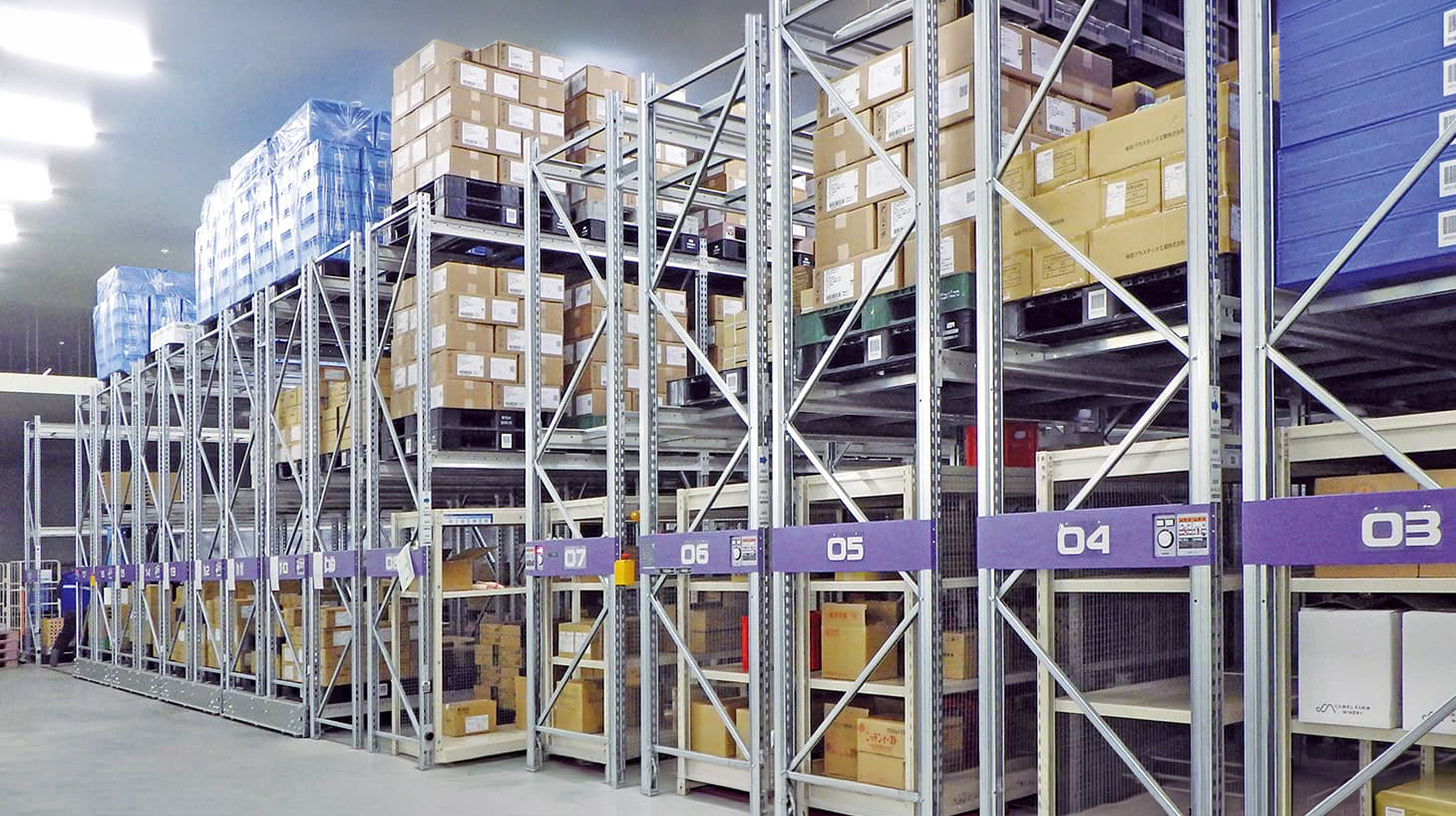
Mobile Pallet Racking: Lack of space in the warehouse? How mobile racking systems can suddenly double the available space – Image: Daifuku
The hidden cost driver: Why static shelving is obsolete in logistics
Up to 50% more space: This intralogistics solution pays for itself in record time
How smart high-density racking makes expensive new warehouse construction unnecessary
In times of skyrocketing real estate prices and scarce space in urban centers, logistics companies face a massive challenge: How can they increase storage capacity without having to rent or build expensive new warehouses? The answer often lies within their own existing infrastructure – hidden in inefficiently used traffic areas. Conventional fixed racking systems waste up to 60 percent of the floor space on permanently empty aisles. Mobile high-density racking systems address precisely this structural bottleneck. With movable rows of racks on floor rails, they open the aisle only where it is needed. The result is astonishing: a doubling of storage capacity on the same footprint or a 50 percent reduction in space requirements. This article examines the physical logic, the enormous economic advantages, and the state-of-the-art safety concepts behind this "silent revolution" in intralogistics. Using examples of proven technologies, it becomes clear why smart, mobile racking systems are no longer a niche solution, but a strategic measure that is indispensable in the modern supply chain.
Mobile high-density racking systems: While companies desperately search for new storage space, the solution has long been under their own roof – and is still criminally underestimated
Modern logistics faces a fundamental contradiction: the demand for warehouse space is growing rapidly, while available space in metropolitan areas is becoming increasingly scarce and expensive. In Germany, peak rents for logistics properties in Munich reached up to €10.70 per square meter per month in 2025, while in Berlin and Hamburg they were around €8.50. This development forces companies to use their existing space more efficiently – and this is precisely where the classic fixed-rack system reveals its structural weakness.
Every conventional high-bay warehouse is essentially a compromise: a fixed aisle is required for every two rows of racking. This means that in a typical fixed-rack warehouse, 40 to 60 percent of the total floor space is not used for actual storage, but serves as traffic space for forklifts and order pickers. These aisles are permanently empty when not in use – a silent but costly structural problem that is rarely explicitly shown in daily operating statements, but is always paid for.
It is precisely in this gap between requirements and reality that the mobile high-density racking system, such as Daifuku's Mobile Rack, has positioned itself in the market for years. The approach is strikingly simple and simultaneously economically far-reaching: Instead of maintaining a permanent aisle for each pair of aisles, the racking rows are mounted on motorized dollies that move along embedded floor rails. A single, movable aisle thus replaces an entire network of static traffic areas. The result is a reduction in warehouse floor space of up to 50 percent with the same storage capacity – or conversely, a doubling of storage capacity on the same footprint.
Given that the global market for mobile pallet racking systems is estimated at around US$4.8 billion in 2024 and is projected to grow to over US$9 billion by 2033, representing an annual growth rate of over 8 percent, it becomes clear that this is not a niche technology, but rather an established and strategically relevant solution to structural market problems. Daifuku, the world's leading supplier of material handling equipment with a global market share of approximately 14.8 percent and annual sales of around 612 billion yen in fiscal year 2025, exemplifies the maturity of this technology and its industrial penetration.
Design principle and physical logic: How mobile shelving systems reclaim space
The Daifuku Mobile Rack is based on a mechanically elegant design principle: At both ends of the storage system are fixed rows of shelves firmly anchored to the floor. Between these end shelves, the actual storage modules move on dollies – mobile bases with integrated drives – along precise floor rails. The lateral movement of these dollies creates a work step exactly where it is needed at any given time. When no access to a row of shelves is required, the dollies are compactly retracted, thus saving space.
The economic implications of this constructive decision are considerable. Compared directly to a conventional fixed-rack system, the mobile system allows for a doubling of storage density on the same footprint. SSI Schäfer, one of Daifuku's main competitors in this segment, estimates the achievable space savings compared to static racking systems at up to 45 percent, while the capacity of the same warehouse volume can be increased by over 90 percent. In absolute terms, this means that a warehouse with a 1,000 square meter footprint can theoretically offer the same number of pallet spaces after conversion to a mobile racking system as a conventional warehouse with 2,000 square meters – at a fraction of the rental costs, heating costs, and maintenance expenses.
For companies operating in expensive metropolitan areas like Munich, Frankfurt, or Berlin, where rents can reach up to €10.70 per square meter per month, investing in mobile racking systems often pays for itself within 12 to 24 months. Every square meter of storage space saved directly impacts rent and operating costs. Furthermore, reduced costs for air conditioning, heating, lighting, and fire protection mean that a more compact warehouse simply requires less energy per stored unit. This advantage becomes a key factor in cost-effectiveness, especially in temperature-controlled environments such as cold storage facilities, pharmaceutical depots, or sensitive archives.
Three operating modes, three storage environments: Maximum flexibility for heterogeneous processes
A key feature that distinguishes the Daifuku Mobile Rack from simple compact racking systems is its three specific operating modes, tailored to different warehouse logistics requirements. These modes are not mere marketing hype, but rather reflect a deeper understanding of the system, covering various goods access scenarios. Forklift operation, manual order picking, and inventory work each place different demands on the spatial geometry – and an intelligent system must be able to switch efficiently between these states without incurring downtime or safety risks.
The economic rationale behind this requirement lies in the increasing complexity of modern distribution centers. The European warehouse automation industry is growing at an annual rate of 14.4 percent and is projected to reach a volume of nearly US$9.6 billion by 2030. This growth spurt is primarily driven by the e-commerce boom, steadily rising labor costs, and the increasing labor shortage in the warehouse sector. Therefore, the degree of automation, ease of use, and adaptability to different operating situations are not merely convenience features, but rather tangible competitive parameters.
Faster forklift access: When every second affects the space cost calculation
The full-aisle mode allows forklifts unrestricted access to the open aisle at full scale. As soon as an operator issues the aisle request command, the motorized dollies move into the desired configuration and clear the aisle. Combining this mode with special guide rails and three-way or narrow-aisle forklifts makes it possible to further reduce the aisle width without compromising operational safety.
From a business perspective, this mode is particularly relevant for warehouses with high pallet throughput, where access time has a direct impact on picking efficiency and thus on delivery reliability. In the German intralogistics sector, which represented a market volume of US$2.91 billion in 2024 and grew to US$3.20 billion by 2025, reducing idle times through faster forklift access times translates into measurable efficiency gains. Every avoided empty run and every saved waiting time improves the ratio of usable time to total operating time of a material handling vehicle – a parameter that, in modern warehouse KPI systems, directly contributes to profitability under the term "Overall Equipment Effectiveness.".
Parallel order picking reimagined: Two aisles, one system, no compromise
The half-aisle mode is one of the most subtle yet practically effective features of the Daifuku Mobile Rack. It allows for simultaneous manual picking in two different aisles – that is, retrieving individual items from the shelves without using a forklift. This seemingly simple function addresses a key operational dilemma of modern warehousing: the increasing SKU diversity in e-commerce and omnichannel logistics necessitates more frequent individual access to various shelf levels, which quickly becomes a bottleneck in a classic compact racking system with only one aisle always available.
The European e-commerce warehousing market shows that semi-automated warehouse solutions will be the dominant operating model, with a 46 percent market share by 2025. This semi-automation strikes a balance precisely between the two, embodied by the half-aisle mode: Fully automated operation is capital-intensive and inflexible, while purely manual operation is associated with high labor costs. A mobile racking system with intelligent multi-aisle operation offers the ideal compromise between investment costs and operational efficiency.
Climate efficiency and inventory precision: The economic added value of uniform spacing
The equal-spacing mode distributes all movable racking units evenly across the entire available width of the warehouse. It was primarily designed for inventory work, as the uniform spacing between the rack rows ensures optimal access to every single rack position for employees, eliminating the need for forklifts or complex maneuvers. This aspect may seem like a minor point at first glance, but it is highly relevant from a business perspective: Inventory processes are among the most time-consuming and error-prone activities in warehouse operations. Any measure that improves the accuracy and speed of inventory counting directly impacts inventory accuracy and, consequently, the predictability of the entire supply chain management process.
This mode is particularly interesting in temperature-controlled warehouses: Deep-freeze and refrigerated warehouses are among the most energy-intensive commercial properties. Up to 60 to 70 percent of a cold storage facility's total energy consumption is attributable to refrigeration technology. In such environments, the equal-space mode significantly improves air circulation, as the uniform spacing between the shelving units allows the cold air mixture to distribute homogeneously. This effectively prevents the clumping of heat or moisture, which can occur in tightly packed shelves. This not only contributes to food or product quality but also reduces the energy consumption of the refrigeration system, as less balancing power is required. With current industrial electricity prices in Germany exceeding 20 cents per kilowatt-hour, this efficiency gain is not a marginal effect but a significant cost factor in the annual operating budget.
Ease of use as a competitive advantage: Why ergonomic design directly increases productivity
A technically sophisticated system loses its economic value if the people operating it cannot use it intuitively. Daifuku paid particular attention to this principle in the design of its Mobile Rack operating system. The main buttons for opening and closing the aisles are designed as large, hemispherical pushbuttons, whose dimensions and high-contrast coloring make them easy to see and operate, even from a moving forklift.
The link between user-friendliness and productivity is well-documented in intralogistics research. In an industry suffering from a chronic labor shortage—in Germany alone, over 28,000 new industrial robots were installed in 2023 to compensate for the lack of warehouse personnel—reducing training times represents a direct monetary advantage. A system that can be fully mastered within a few hours reduces training costs, lowers the error rate in the initial phase, and increases employee job satisfaction. The latter is of strategic importance given the high turnover rates in the warehouse sector: The costs for recruiting and training a new warehouse worker are estimated in the literature at several thousand euros per person—costs that can be significantly reduced through intuitive system design.
The nerve center of the warehouse: transparency and control in real time
The Daifuku Mobile Rack's control panel is more than just a simple switchboard – it's the informational interface between human and machine. It integrates mode selectors for the three operating modes described, a central emergency stop switch, and a display that shows the current operating status and any error messages in plain text. The deliberate decision to display error information directly, rather than encoding it in cryptic error codes, has direct business implications.
In practice, a well-designed display system means that malfunctions can be diagnosed and resolved more quickly, without having to call in a specialized service technician. Unplanned downtime is among the most expensive events in warehouse logistics. With a throughput of several hundred pallet movements per hour, every minute of downtime can lead to significant delivery delays and consequential costs. Clear diagnostic interfaces are therefore not just a convenience feature, but an essential element of operational resilience.
Mobile in the warehouse, mobile in the hand: Remote control as a productivity multiplier
The optional remote control for the Daifuku Mobile Rack adds a mobile control component to the stationary control panel, which can be used both on foot and from a forklift. From a purely ergonomic perspective, this solution eliminates a specific, yet common, inefficiency problem: the unnecessary trip to the stationary control panel.
In a warehouse with long aisles, the detour to the control panel can cost several meters and thus valuable seconds every time you change aisles. At first glance, this seems trivial, but in high-frequency logistics, these detours add up to measurable time losses. A study on movement times in warehouses shows that unproductive walking distances and waiting times can account for between 20 and 40 percent of a picker's total working time, depending on the system design. A remote control that allows aisle openings directly at the work location is therefore a classic process optimization measure with a quickly measurable return on investment.

Expert partner in warehouse planning and construction
Mobile shelving as a business case: saving space, minimizing risks
Security as an integrated system philosophy: Multi-layered protection for people and facilities
In modern warehouse planning, safety is no longer a secondary compliance issue, but an integral part of the system architecture. The Daifuku Mobile Rack implements this principle with a multi-layered safety concept that addresses various risk scenarios and follows one fundamental principle: each safety layer should remain effective even if another fails. This redundancy approach aligns with current machine safety standards and is also economically sound – because a single serious accident far exceeds the cost of a comprehensive safety system.
The Mobile Rack's safety concept includes acoustic and visual warning devices, mechanical safety interlocks, contactless sensor systems, manual emergency shutdowns, and a seismic monitoring unit. This combination of technical safeguards addresses both human error and unforeseen external influences, thus covering the entire spectrum of relevant risks in warehouse operations.
Motion warning with signal effect: Visual and acoustic safety as standard
The Daifuku Mobile Rack's basic safety features include a flashing light and an audible alarm that activate automatically as soon as a dolly starts moving. This combined visual and audible warning is a simple yet effective means of accident prevention in environments where noise levels, limited visibility, and the simultaneous operation of various processes demand significant attention from employees.
The economic rationale behind this measure is significant: Workplace accidents in warehouses cause considerable direct and indirect costs. Direct costs include medical expenses, continued wage payments, and potential claims for damages; indirect costs arise from business interruptions, increased insurance premiums, and reputational damage. The German Social Accident Insurance Institution for Trade and Logistics (BGHW) points out that the interaction between humans and machines, particularly in automated and semi-automated warehouses, poses specific risks that can be systematically reduced through preventative warning systems.
Physical assumption of responsibility: The removable safety lock as a liability barrier
The removable safety lock of the Daifuku Mobile Rack is a mechanical safety element of striking conceptual clarity: When an employee enters a rack aisle, they physically take the locking plate with them. As long as this plate is not replaced, the aisle's closing mechanism cannot be triggered from any other point. The system thus makes it physically impossible to unintentionally trap a person working in the aisle or expose them to a crushing hazard.
From a legal and insurance perspective, this design is an elegant means of clarifying liability: Safety responsibility is unambiguously transferred to the person entering the aisle and carrying the plate. In companies that are certified according to ISO 45001 – the international standard for occupational health and safety management systems – or are seeking certification, such a mechanical process anchoring serves as an argument for auditing authorities and insurers. It demonstrates that safety is not solely based on employee training and discipline, but is also ensured by design features of the system.
Preventing unauthorized access: How intelligent sensors eliminate workplace accidents
The Trespass sensors of the Daifuku Mobile Rack perform a function that goes beyond the mechanical safety interlock: they automatically detect whether a forklift or person has entered an aisle that is not cleared or is already closing, and in this case, immediately stop the movement of all dollies. At the same time, the entire system is put into a secure locked state, which can only be released by manual authorization.
This function is particularly relevant in high-throughput warehouses with simultaneous operations, where multiple employees and vehicles are working at the same time. Modern logistics centers in Germany increasingly operate in an environment characterized by e-commerce growth, tight delivery windows, and just-in-time requirements. In this context, the likelihood of errors due to time pressure increases significantly. Automated detection and shutdown systems eliminate the human error component in defined hazardous situations and replace it with reliable sensor decisions – a safety benefit that cannot be replicated with purely organizational measures.
Obstacle detection without contact: Contactless technology protects goods and mechanics
Each dolly in the Daifuku Mobile Rack is equipped with electronic beam bumpers that function as non-contact obstacle detectors. When the dolly's sensor detects an object in its path—be it a discarded tool, spilled goods, or any other unforeseen item—the dolly stops automatically and immediately, without any physical contact. This non-contact detection principle protects both the stored goods from collision damage and the sensor bumper itself from the mechanical wear and tear that would be unavoidable with touch-based switching systems.
From a maintenance perspective, the superiority of non-contact sensors over mechanical contact switches is well documented. Non-contact sensors typically have significantly longer service lives, require less maintenance, and respond more consistently throughout their entire lifecycle. In a warehouse environment where system failures directly translate into lost revenue, any reduction in maintenance frequency and intensity represents a measurable economic benefit. Mobile racking systems with a projected lifespan exceeding 20 years benefit considerably from components that can maintain this extended operating time without frequent maintenance interventions.
The last line of defense: Emergency shutdown as an indispensable safety net
The Daifuku Mobile Rack features a multi-stage emergency shutdown system that goes beyond the standard control panel. Additional emergency stop switches can be installed on rack uprights within the aisle area, as well as at other strategically important locations in the warehouse, ensuring that a shutdown point is within easy reach in any emergency. This decentralization of the emergency shutdown function follows the principle that, in an emergency, no employee should have to search for a long time or travel long distances before being able to stop the system.
The requirements for emergency shutdown devices are detailed in the European machinery safety standard EN ISO 13850. Among other things, this standard requires that emergency shutdown elements be present at specific intervals and accessible at all times. The flexible installation concept of the Daifuku Mobile Rack allows the system to be designed in compliance with the standard while simultaneously taking into account the specific spatial conditions of the respective warehouse – a feature of considerable practical importance during official approval and ISO 45001 certification.
Earthquake resilience as an underestimated location factor: Seismic safety in warehouse planning
The integration of a seismic sensor into the Daifuku Mobile Rack's safety system is an element that initially receives little attention in the German market – yet it is strategically significant. The seismograph detects vibrations exceeding a defined threshold and automatically stops all moving rack units. Combined with the seismic isolation properties of the dolly construction itself, this creates an integrated protection system that stabilizes stored goods on the racks during earthquakes and prevents them from falling.
While Germany is not a typical earthquake-prone country, the importance of seismic protection measures should not be underestimated. Particularly in regions like the Swabian Alb, the Upper Rhine Graben, or the area around Aachen, tremors occur regularly. These rarely receive media attention, but can pose a significant risk to highly sensitive stored goods or densely packed high-bay warehouses. Internationally, especially in Asia and parts of North and South America, the seismic risk to storage facilities is considerable. For Daifuku, a globally operating company that installs facilities in Japan, the USA, Southeast Asia, and other seismically active regions, the integrated seismograph is not a luxury feature, but an insurance and operational necessity.
The economic damage caused by a seismic event in an unsecured high-bay warehouse can be substantial: damaged goods, destroyed racking structures, employee injuries, and extended operational downtime can quickly add up to millions. Preventive seismic safety systems pay for themselves in a single event – a classic insurance principle that is often underestimated in warehouse planning.
System variants for special industrial storage: pallets, rolls and long goods stacks
The Daifuku Mobile Rack is not a monolithic, standardized product, but rather a modular system family that can be specifically configured for various load types and storage requirements. The most basic variant is the classic pallet rack, which covers the standard requirements of logistics and distribution and, as the most common design, forms the core of the product portfolio.
In addition, Daifuku offers specialized solutions for coiled goods such as steel spools, coils, cable drums, or other cylindrical loads that cannot be safely stored on conventional pallet racks due to their shape. These specialized racks are relevant for the metalworking, electrical, and automotive supply industries. Another solution addresses the storage of long goods—that is, long, rod-shaped materials such as steel beams, pipes, profiles, or wooden beams—for which conventional storage approaches are often inefficient. The availability of all three solutions within the same system concept allows manufacturing companies to consolidate heterogeneous stored goods under a unified operational and maintenance framework.
This system diversification has direct strategic significance: Companies that need to change their product portfolio or repurpose their storage capacities are not dependent on a complete system change. The modular expansion and reconfiguration of the existing mobile rack system allows for gradual adaptation to changing requirements – a flexibility advantage that represents real added value in a time of increasingly volatile supply chains and dynamic market conditions.
Market dynamics and strategic classification: Mobile racking technology in the context of warehouse automation
The full economic impact of mobile high-density racking systems only becomes clear when viewed within the context of the broader market dynamics of warehouse logistics. The shortage of skilled workers in the warehousing sector is a structural problem in Germany and Europe without a short-term solution. In 2023, over 269,000 industrial robots were in operation in Germany, a significant proportion of them in logistics and material handling, making Germany the European leader in robot density. Nevertheless, the gap between capacity and demand remains substantial, and mobile racking systems offer a pragmatic middle ground: they increase the efficiency of available personnel without requiring the investment of a fully automated warehouse solution.
Daifuku explicitly positions the Mobile Rack as the ideal solution for facilities with sufficient staffing, low ceilings, lower pallet throughput requirements, or locations where a higher degree of automation is neither necessary nor economical. This transparent positioning is commercially astute: it prevents misinvestments where a customer purchases the wrong system class and strengthens confidence in the supplier's consulting expertise. At the same time, it opens up a broad target group – from medium-sized manufacturing companies and pharmaceutical warehouse operators to food wholesalers and archiving service providers.
The global market for mobile pallet racking systems is growing at an annual rate of 7 to 8 percent and, according to various market estimates, will reach values between 9 and 10 billion US dollars by 2033. Asia-Pacific, led by China, dominates the global market, driven by both the massive expansion of e-commerce logistics in the region and the strong increase in industrial production. North America holds a market share of approximately 28 percent and is driven by investments in the automation of warehouse infrastructure, while Europe plays a specific role as a premium market with particularly high quality and safety requirements.
For Daifuku, which reported consolidated net sales of approximately 612 billion yen for fiscal year 2025 and holds an 18 percent share of the automated racking segment in the North American market, the Mobile Rack is a strategically important product in a portfolio characterized by organic growth and acquisitions. The company invested US$35 million alone to double its US production capacity in order to meet the increasing demand for warehouse automation solutions. This willingness to invest reflects a fundamental understanding of the market: the demand for space-efficient, secure, and low-maintenance storage solutions will continue to rise in the coming years, driven by urbanization, land scarcity, e-commerce growth, and regulatory pressure on operating costs and sustainability.
In a world where storage space in economic centers is becoming increasingly scarce, the ability to utilize the same footprint with double the capacity is not a mere technological gimmick, but a fundamental competitive advantage. Mobile high-density racking systems are one piece of a larger puzzle in warehouse efficiency – but one whose return on investment is measurable, whose implementation is proven, and whose integration capabilities into existing system landscapes are continuously being improved.
Your intralogistics experts
Consulting, planning and implementation of complete solutions for high-bay warehouses and automated storage systems - Image: Xpert.Digital
More information here:
Your global marketing and business development partner
☑️ Our business language is English or German
☑️ NEW: Correspondence in your native language!

Konrad Wolfenstein
I and my team are happy to be available to you as your personal advisor.
You can contact me by filling out the contact form here simply call me at +49 7348 4088 965. My email address is [email protected]:or
I'm looking forward to our joint project.
☑️ SME support in strategy, consulting, planning and implementation
☑️ Creation or realignment of the digital strategy and digitization
☑️ Expansion and optimization of international sales processes
☑️ Global & Digital B2B trading platforms
☑️ Pioneer Business Development / Marketing / PR / Trade Fairs
Our global industry and economic expertise in business development, sales and marketing

Our global industry and economic expertise in business development, sales and marketing - Image: Xpert.Digital
Industry focus areas: B2B, digitalization (from AI to XR), mechanical engineering, logistics, renewable energies and industry
More information here:
A thematic hub offering insights and expertise:
- Knowledge platform covering global and regional economies, innovation and industry-specific trends
- A collection of analyses, insights, and background information from our key areas of focus
- A place for expertise and information on current developments in business and technology
- A hub for companies seeking information on markets, digitalization, and industry innovations










