
Mini Load AS/RS – Better than mobile robots? Why smart companies are only building their small parts warehouses vertically
Xpert Pre-Release

Available in 27 languages 📢
Prefer Xpert.Digital on GoogleⓘPublished on: April 15, 2026 / Updated on: April 15, 2026 – Author: Konrad Wolfenstein
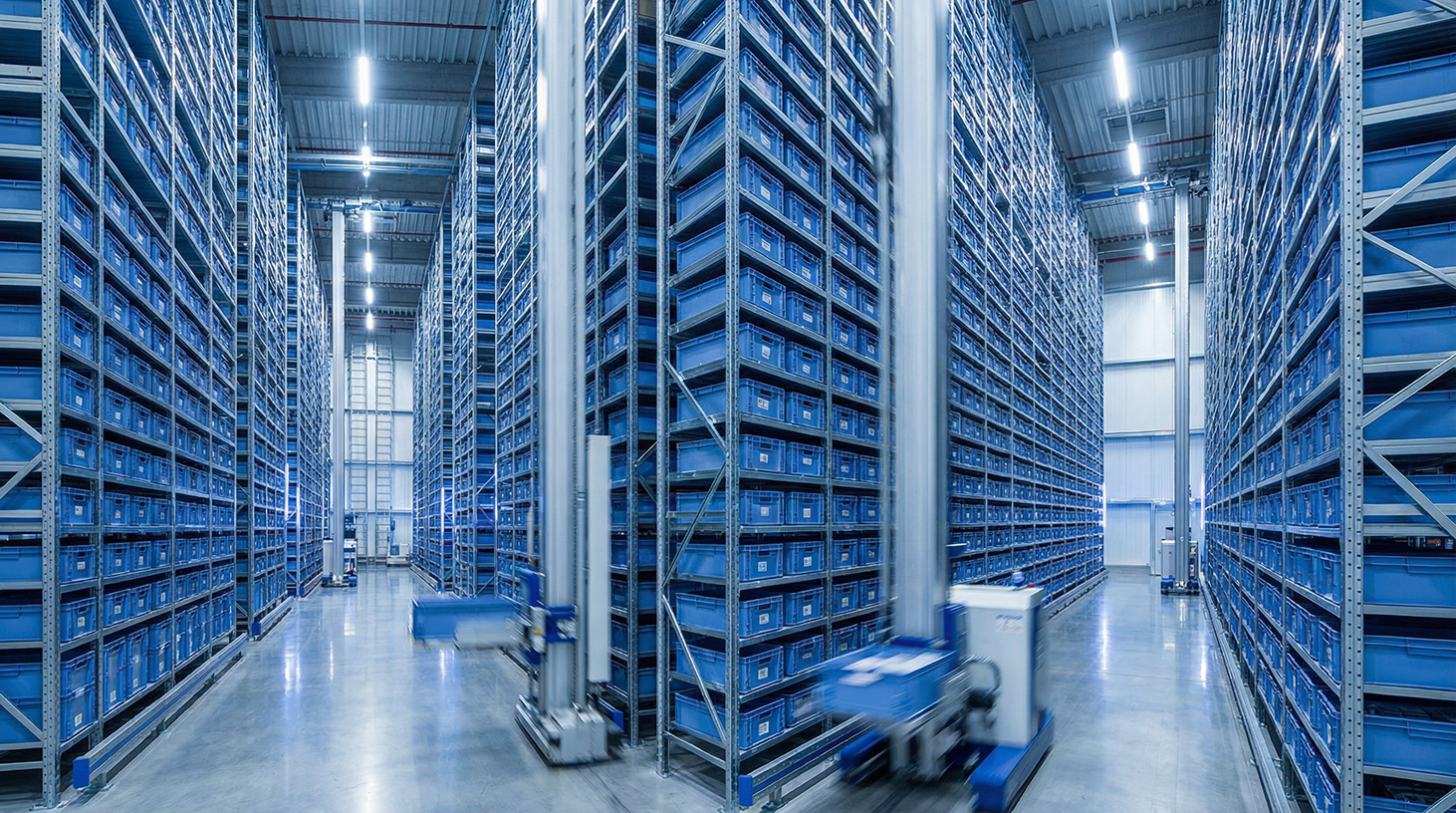
Mini Load AS/RS – Better than mobile robots? Why smart companies are only building their small parts warehouses vertically – Creative image: Xpert.Digital
More than just a shelf: Why the market for mini load systems is currently exploding – Up to 20 meters high
When downtime costs millions: Why the Mini Load AS/RS is now replacing manual warehouses
Goodbye, skilled worker shortage! Why fully automated warehouses pay for themselves in record time
In an era where e-commerce generates unprecedented order volumes, product variety is rapidly expanding, and the logistics industry is gripped by a skilled labor shortage, manual small parts warehouses are finally reaching their limits. The solution to this structural overload is no longer a vision of the future, but proven high technology: the Mini Load Automated Storage and Retrieval System (AS/RS). As the fully automated heart of modern intralogistics, it revolutionizes the warehouse through enormous space savings, breathtaking throughput rates, and maximum precision. Companies that want to remain competitive recognize these systems – driven significantly by global industry leaders like Daifuku – as far more than just a technological upgrade. It is a highly profitable, strategic investment. In the long term, it reduces operating costs, mitigates staffing shortages, reduces the carbon footprint, and makes supply chains resilient for tomorrow's demands. Learn below why the automated small parts warehouse is becoming a decisive competitive advantage and what decision-makers need to consider when investing.
When downtime costs capital: Why manual small parts warehouses are becoming obsolete
In the halls of modern distribution centers and manufacturing plants, a transformation has been underway for years that attracts little attention from the outside, but has fundamental internal implications for competitiveness, cost control, and delivery capability: Manual picking of small parts is being systematically replaced by automated storage systems. The Mini Load Automated Storage and Retrieval System – or Mini Load AS/RS for short – is at the heart of a technological and economic realignment that no longer affects only large corporations.
The Mini Load AS/RS is, in its basic technical structure, a highly automated racking system equipped with one or more storage and retrieval machines. These machines move with high precision and speed through narrow aisles between multi-tiered racks, storing and retrieving containers, cartons, trays, and other small load carriers. The word "mini" belies its economic relevance: it's not about small systems, but about the efficient handling of small goods – and the market behind it is anything but small.
Daifuku, founded in Japan in 1937 and now a global market leader in automated material handling, did not invent this system, but significantly developed and distributed it worldwide. The company recently achieved annual sales of approximately US$4.16 billion and has topped the ranking of the largest intralogistics providers several times in a row. Daifuku has already implemented more than 30,000 systems worldwide – among which the Mini Load AS/RS is one of the most widely deployed solutions.
Figures that support the investment argument
Anyone considering a Mini Load AS/RS would be wise to understand the broader market context. The global market for automated storage and retrieval systems (AS/RS) was estimated at approximately $9.86 billion in 2025. Market researchers anticipate this will increase to $14.80 billion by 2030, representing a compound annual growth rate (CAGR) of 8.5 percent. Other market studies arrive at similar figures: Fortune Business Insights estimates the market size at $10.13 billion in 2026 and expects it to reach $17.4 billion by 2034, with a CAGR of 7.0 percent.
Even more dynamic growth expectations are emerging, particularly for the Mini Load AS/RS submarket. According to data provider Dataintelo, the global Mini Load AS/RS market volume was US$4.25 billion in 2024. An increase to US$9.47 billion is expected by 2033, representing a CAGR of 9.1 percent. Other observers even forecast a CAGR of 13.3 percent for the period from 2026 to 2033. While the range of estimates illustrates the uncertainties inherent in market research, the overarching finding is clear: the growth is real, structurally driven, and not a short-lived cyclical phenomenon.
Behind these growth drivers lie several reinforcing megatrends. The explosive growth of e-commerce increases the number of orders while simultaneously reducing the average order size – a combination that structurally overwhelms manual systems. The increasing variety of SKUs (Stock Keeping Units) in almost all product categories significantly increases the organizational effort in conventional rack warehouses. And the demographic-driven shortage of skilled workers in Europe and North America is making it increasingly difficult to recruit and retain the necessary workforce for labor-intensive order picking processes.
The storage and retrieval machine as the heart of automation
The central component of every Mini Load AS/RS is the storage and retrieval machine (SRM). It moves along rails on the racking fronts, transporting load carriers between storage locations and the transfer stations to the conveyor system. Daifuku uses aluminum masts for its SRMs, enabling a particularly lightweight yet rigid construction. The urethane wheels used minimize noise, allowing operation even in close proximity to office spaces or in multi-story buildings – an advantage that conventional heavy-duty conveyor technology simply cannot offer.
Daifuku's latest generation of storage and retrieval machines is 15 percent lighter than its predecessor, and the associated motor has been reduced in size, directly translating into lower energy consumption. This is no small detail – in a system that operates 24/7, 365 days a year, energy costs add up to a significant operating expense. Therefore, anyone who focuses solely on the initial investment costs in the equipment specifications is overlooking the long-term importance of operating costs.
The height a mini load stacker crane can reach is another crucial differentiating factor. While conventional storage systems are typically designed for heights of 8 to 12 meters, mini load stacker cranes can operate at heights of up to 20 meters – almost twice the vertical storage capacity on the same footprint. Anyone operating in densely populated urban areas with rising land and rental prices immediately understands the economic significance of this parameter: vertical storage space is, in many markets, the only realistically scalable dimension.
Bearing density, precision and the double-depth principle
A key lever for maximizing storage capacity in the Mini Load AS/RS is double-deep storage. This allows significantly more load carriers to be accommodated on the same footprint without substantially slowing down access. Daifuku offers various extraction technologies for this purpose: Fork extraction slides a plate under the load carrier and is available in both single and double depths. Side-hook extraction utilizes extendable side plates with movable pins and is particularly suitable for stored goods of varying dimensions. For special applications in roll goods storage – such as paper or film rolls as well as vehicle wheels – a roll extraction technology is available, enabling direct handling without auxiliary trays and further increasing storage density.
The precision with which these systems operate is another economically relevant feature. Inventory discrepancies that arise in manually managed warehouses due to incorrect storage, picking errors, or unclear zone markings are virtually eliminated in automated systems. Warehouse management systems (WMS) and warehouse control systems (WCS) record every movement in real time, creating complete transparency and enabling predictive inventory planning. The integration of barcode and RFID technology ensures that every load carrier is uniquely identified and located at all times.
Unlike a manual warehouse, a Mini Load AS/RS does not operate on the principle of fixed storage locations, but rather uses dynamic slot allocation. The system assigns storage locations based on current utilization and access frequencies – fast-moving items are placed closer to the picking points, slow-moving items further back or higher up. This algorithm-driven slotting optimization represents a structural efficiency gain that no manual organization can offer with comparable consistency.
Throughput as a crucial performance indicator
Throughput – measured in storage and retrieval operations per hour – is the crucial operational metric in small parts warehouses. This is where the Mini Load AS/RS truly shines. Modern systems achieve travel speeds of up to 120 meters per minute, enabling a very high throughput. Where a single order picker in a conventional shelving system typically achieves only a fraction of this performance – including all travel time, search time, and picking errors – the automated storage and retrieval system (AS/RS) delivers the required item directly to the operator's workstation.
The goods-to-person principle is not merely a technical detail, but a fundamental paradigm shift in warehouse organization. Instead of employees walking long distances through the warehouse – in large companies this can amount to several kilometers per shift – they position themselves at ergonomically designed picking stations, to which the system automatically delivers the required load carriers. This completely eliminates unproductive walking time, significantly reduces physical strain, and considerably increases picking performance per working hour.
For applications with particularly high throughput requirements, Daifuku offers the dual-stacker crane configuration: Two storage and retrieval machines operate simultaneously in the same aisle, almost doubling capacity while also providing redundancy. If one machine fails, the second takes over without interrupting operations. In conjunction with sorting transfer vehicles (STVs), loading and unloading flows can be distributed across multiple storage aisles, thus preventing bottlenecks in the material flow.
System variants and expansion modules
Daifuku's Mini Load AS/RS is not a rigid, one-size-fits-all system, but a modular platform that can be adapted to specific industry needs. In addition to the classic stacker crane-based system, there is a shuttle vehicle variant that is particularly suitable for sequencing, sorting, and buffering tasks and reacts even more flexibly to changing warehouse layouts.
Several add-on modules are available for order picking integration. The U-shaped conveyor layout is ideal for parts picking in manufacturing plants and spare parts centers because it minimizes transport distances and supports an ergonomic sequence of gripping movements. The combination of a gravity channel and a pick-to-light system allows one or two storage and retrieval machines to automatically replenish the picking channels, while the light guidance system provides precise picking instructions to employees on the other side of the channel – a configuration that combines speed and accuracy.
The Sorting Transfer Vehicle (STV) completes the system's flexibility: It handles the transport of load carriers between multiple storage aisles, thus creating a centralized material flow that remains stable even with rapidly increasing order volumes. All these enhancements follow the principle of gradual scalability – a key argument for decision-makers who may not need the full expansion potential today, but might in the future.

Expert partner in warehouse planning and construction
Hybrid material flows: Integration of RBG, AMR and AI in the warehouse – How an automated deep-freeze warehouse pays for itself in 2–5 years
Refrigeration, chemicals, pharmaceuticals: Use in demanding environments
A special feature of the Daifuku Mini Load AS/RS is its suitability for so-called "harsh environments"—storage conditions where manual work is either uneconomical, hazardous to health, or simply impractical. Its use in refrigerated and deep-freeze environments is a prime example. According to the company, Daifuku has been active in the field of cold storage logistics since 1973 and is considered one of the most experienced providers of fully automated deep-freeze warehouses.
The economic logic behind this is compelling: A deep-freeze warehouse operating at -25 degrees Celsius, when manually managed, ties up immense personnel resources and requires strict protective clothing, short shifts, extensive training procedures, and high staff turnover. In contrast, a fully automated Mini Load AS/RS operates around the clock at these temperatures without interruption, without cold-weather gear, and without personnel-specific restrictions. The investment in such a system often pays for itself faster in deep-freeze environments than in normal temperature ranges because the savings in personnel costs and the reduced inventory error rate generate a significantly higher return on investment.
Mini Load AS/RS systems are also playing an increasingly important role in the pharmaceutical and electronics assembly industries – both sectors with the highest demands for cleanliness, traceability, and picking accuracy. Panasonic Energy uses Daifuku systems to buffer finished products before they reach the packaging line; Komatsu uses them for raw material supply across multiple production sites. Connectwell Industries operates an integrated system for raw materials, semi-finished products, and finished goods in a single facility.
The competition among mobile robots: threat or complement?
No analysis of the Mini Load AS/RS would be complete without an honest examination of its technological competitors. Autonomous mobile robots (AMRs) and autonomous container robots (ACRs) are currently experiencing a growth phase that has led many industry observers to prematurely declare the demise of traditional stacker crane systems. The argument often goes like this: AMRs are more flexible, scalable, and less expensive to purchase – so why bother with a permanently installed system?
The answer lies in the fundamentally different performance characteristics. A Mini Load AS/RS can reach building heights of up to 20 meters with a single stacker crane. An AMR swarm would need to use numerous vehicles to achieve the same vertical storage capacity and would still be limited to areas accessible near ground level. The throughput per unit is structurally much higher with the stacker crane, as there are no encounters, congestion, or pathfinding problems that are unavoidable in AMR environments. ACR systems also exhibit significant speed disadvantages in double-deep storage because accessing rear load carriers is more complex.
This doesn't mean that AMRs and ACRs are irrelevant – quite the opposite. For shallower shelves, frequently changing warehouse layouts, or as a scalable entry-level solution, they are a legitimate alternative. However, operational intelligence lies in choosing the right system for the right use case and – in growing operations – using both technologies in a complementary way. Daifuku itself offers both and can therefore implement hybrid material flow concepts that combine the best of both worlds.
Skills shortage as a structural investment driver
In Germany, a representative study by TMG Consultants, which surveyed over 2,500 manufacturing companies between March and July 2024, paints a sobering picture: 63 percent of companies have not automated their intralogistics at all or only to a limited extent. A further 22 percent have semi-automated processes; highly automated processes with integrated systems are found in just 11 percent of companies. However, 94 percent of the companies that have already invested in automation solutions report having achieved positive results.
This finding aligns with structural market drivers: According to industry reports, the shortage of skilled workers, particularly in order picking, packaging, and internal transport, is so pronounced that it can no longer be compensated for solely by salary increases or improved working conditions. Demographic trends in Europe suggest that this shortage will not decrease in the coming decades, but rather increase dramatically. Automated systems are therefore no longer just an option for increasing efficiency, but are becoming a structural necessity for companies that want to survive in highly competitive markets.
Furthermore, there is another, often overlooked aspect: AS/RS systems reduce workplace accidents and ergonomic strain. When employees no longer have to spend hours searching shelves, carrying heavy containers, and navigating narrow aisles, sick leave and accident rates decrease. This has not only humanitarian but also immediate economic consequences for payroll costs and business continuity.
ROI, amortization and the business calculation
The investment costs for a Mini Load AS/RS are undoubtedly substantial. Depending on size, height, throughput requirements, and integration effort, project budgets range from the low to mid-single-digit millions – and can be significantly higher for large systems. This is a significant barrier to entry, which can be particularly daunting for small and medium-sized enterprises (SMEs). Therefore, a thorough and comprehensive business analysis is essential.
On the cost side, there are the capital expenditures (Capex) for hardware, installation, software integration, and start-up costs. On the revenue side, there are savings in personnel costs, lower error rates and the associated reduced rework costs, lower space costs due to significantly higher storage density, and improved inventory quality through the reduction of shrinkage, spoilage, and expired goods. For well-designed projects, amortization periods of two to five years are considered entirely realistic; in deep-freeze and pharmaceutical applications with above-average personnel cost savings, amortization can occur even faster.
A 4flow study analyzing a reference warehouse with 50,000 square meters of floor space concludes that warehouse automation can reduce CO₂ emissions by up to 47 percent – and that operating cost savings alone can generate more than €12.5 million within 15 years. This underscores the importance of considering not only direct personnel costs but also the entire operational cost structure when calculating investment.
Sustainability as a strategic dimension
Economic analysis and sustainability considerations are no longer separate dimensions in the warehouse context. According to a 4flow analysis, logistics facilities are responsible for approximately 13 percent of greenhouse gas emissions in the entire logistics and transport sector. Automated systems that operate in the dark (so-called "dark warehouses") require no heating, lighting, or air conditioning for human workers – this drastically reduces energy consumption. Daifuku's latest generation of stacker cranes combines lightweight construction with smaller drive motors, thus achieving measurable improvements in energy efficiency.
Modern AS/RS systems can be seamlessly integrated with AI-supported energy management systems that shut down machines when inactive, optimize routes, and proactively manage peak demand. In 62 percent of German logistics companies, intelligent transport systems and robotic technologies are now an integral part of their sustainability strategy. Warehouse automation – and the Mini Load AS/RS in particular – is therefore not at all at odds with the ESG agenda, but rather a powerful tool for its implementation.
Integration into digital supply chain architectures
The Mini Load AS/RS is not an isolated system. Its full potential is only realized when integrated with a digital infrastructure that seamlessly links warehouse management, order processing, and higher-level planning systems. Integration into existing warehouse management systems is technically mature and standard practice for experienced system integrators – however, it requires extremely careful interface planning, the quality of which significantly determines subsequent operational efficiency.
The Industry 4.0 concept adds another valuable dimension to the system: Real-time data from the automated storage and retrieval system (AS/RS) operation enables predictive maintenance, allowing for the identification of maintenance needs long before unplanned downtime occurs. This not only reduces repair costs but also maximizes system availability – a critical factor in companies where the storage system forms the absolute backbone of delivery capability. Daifuku offers corresponding monitoring and service solutions through its digital ecosystem, empowering operators to proactively manage the system instead of merely reacting to malfunctions.
Competitive landscape: Daifuku and its challengers
Daifuku is not the only provider in the Mini Load AS/RS segment, but it is the one with the broadest global presence and the highest sales volume. Relevant competitors include companies such as Dematic, TGW Logistics Group, Mecalux, viastore, Swisslog, GEBHARDT Intralogistics, and Bastian Solutions, which also hold very strong market positions in certain regions and industries. Dematic and Daifuku are considered the two dominant forces globally, offering particularly scalable solutions thanks to decades of experience and state-of-the-art technology.
Market concentration in the AS/RS segment is comparatively high, primarily due to the enormous barriers to entry: Long-term reference projects, highly complex, proprietary control software, and a reliable global service network are very difficult to imitate. New suppliers – especially from Asia – have opportunities primarily in the low-price segment and with less complex standard configurations. In the high-end sector and for demanding integration tasks, established market leaders like Daifuku will clearly maintain their structural advantage for the time being.
Strategic implications for decision-makers
Anyone making an investment decision in favor of Mini Load AS/RS today is actually deciding on three dimensions simultaneously: operational efficiency today, scalability for tomorrow, and strategic positioning in a radically changing competitive landscape. Companies that invest early in high-quality automation solutions build up structural cost advantages that expand cumulatively compared to competitors without automation through lower labor costs and increased workforce availability.
The system's modularity allows for a small start and dynamic scaling with increasing volume – often a decisive factor for medium-sized businesses that don't immediately require the maximum configuration. The decision should always be based on a comprehensive total cost of ownership (TCO) analysis that realistically considers capital expenditures (Capex), operating expenses (Opex), land costs, personnel costs, error costs, and energy costs over a period of at least ten years. Those who focus solely on the purchase price during the planning phase miss the system's true economic logic.
The Mini Load AS/RS is no longer a future technology – it's a proven, essential infrastructure. The question for industry is therefore no longer whether, but when and in what configuration to invest. For growing companies with high SKU volumes, rapidly increasing order volumes, and a growing shortage of qualified personnel, the clear answer is: now.
Your intralogistics experts

Consulting, planning and implementation of complete solutions for high-bay warehouses and automated storage systems - Image: Xpert.Digital
More information here:
Your global marketing and business development partner
☑️ Our business language is English or German
☑️ NEW: Correspondence in your native language!

Konrad Wolfenstein
I and my team are happy to be available to you as your personal advisor.
You can contact me by filling out the contact form here or simply call me at +49 7348 4088 965. My email address is : [email protected]
I'm looking forward to our joint project.
☑️ SME support in strategy, consulting, planning and implementation
☑️ Creation or realignment of the digital strategy and digitization
☑️ Expansion and optimization of international sales processes
☑️ Global & Digital B2B trading platforms
☑️ Pioneer Business Development / Marketing / PR / Trade Fairs
Our global industry and economic expertise in business development, sales and marketing

Our global industry and economic expertise in business development, sales and marketing - Image: Xpert.Digital
Industry focus areas: B2B, digitalization (from AI to XR), mechanical engineering, logistics, renewable energies and industry
More information here:
A thematic hub offering insights and expertise:
- Knowledge platform covering global and regional economies, innovation and industry-specific trends
- A collection of analyses, insights, and background information from our key areas of focus
- A place for expertise and information on current developments in business and technology
- A hub for companies seeking information on markets, digitalization, and industry innovations










