

Canada: 52 billion for AI – Who really profits from the mega-project in Saskatchewan
Xpert Pre-Release

Available in 27 languages 📢
Prefer Xpert.Digital on GoogleⓘPublished on: September 17, 2026 / Updated on: September 17, 2026 – Author: Konrad Wolfenstein
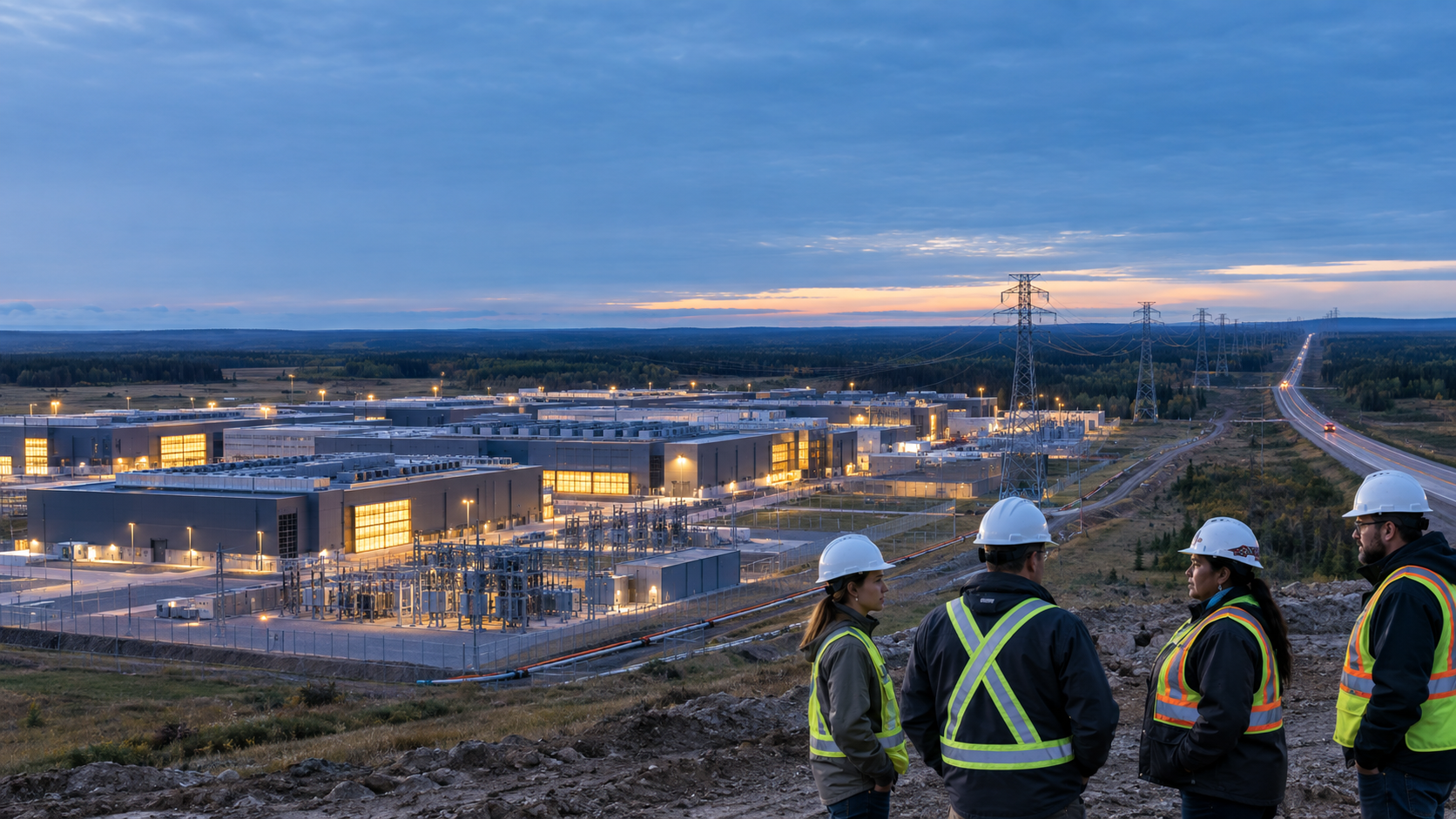
Canada: 52 billion for AI – Who really profits from the mega-project in Saskatchewan – Creative image on the topic, with AI: Xpert.Digital
From raw materials to AI: Gigawatt data center planned – How Saskatchewan is becoming the new digital heavy industry
AI on a gigascale: Why the massive 52 billion euro project needs more than just land
In the Canadian province of Saskatchewan, one of North America's most ambitious infrastructure projects is currently taking shape: Bell Canada and the provincial government are planning to build a superlative AI data center. With a projected capacity of up to 1.2 gigawatts and a theoretical investment volume of over 50 billion Canadian dollars, an industrial energy system with integrated digital manufacturing could emerge. However, these impressive figures mask a complex economic and regional landscape. While the project is intended to usher in the transformation from a traditional resource-based economy to digital heavy industry in the densely populated south, the Indigenous and structurally weak north risks being left behind once again. The gigantic scale of the project does not guarantee mass employment or widespread prosperity for all. On the contrary, a heated debate is raging about how to satisfy the immense energy demands and how to contractually enshrine local value creation, Indigenous participation, and genuine data sovereignty so that ultimately all of Saskatchewan benefits from this AI boom.
Saskatchewan is investing in AI on a gigascale scale: $52 billion, 1.2 gigawatts – but the north will only benefit if it secures its share
Bell Canada and the Saskatchewan provincial government plan to create one of Canada's largest AI infrastructure hubs in the Regina area. The starting point is a 300-megawatt data center currently under construction in the rural community of Sherwood, just outside the provincial capital. According to a non-binding agreement announced in September 2026, the complex is slated for phased expansion by up to 900 megawatts. At full capacity, this would enable a total of 1.2 gigawatts. This would not only be a very large data center, but also an industrial energy system with integrated digital manufacturing capabilities.
The frequently cited investment figure of more than $50 billion requires precise clarification. Canadian reports refer to Canadian dollars and sometimes estimate the potential total volume at up to 52.5 billion Canadian dollars. At an exchange rate of approximately 0.72 US dollars per Canadian dollar, this would roughly correspond to 37.8 billion US dollars. Therefore, the statement that the project is worth more than 50 billion US dollars would be misleading based on the currently known information. Furthermore, this figure does not solely represent Bell's direct construction expenditures. The large total is expected to include the data center, customer-installed computing equipment, and the associated power generation.
This distinction is economically crucial. A dollar spent on a locally constructed building generates different regional effects than a dollar spent on imported graphics processors. High-end AI chips, server systems, and other specialized components are predominantly manufactured outside of Saskatchewan. A significant portion of the nominal investment value could therefore flow into global supply chains. Locally impactful expenditures primarily involve land, construction, power, cooling, network infrastructure, security, logistics, maintenance, professional services, and personnel. The headline thus describes the maximum capital base of the overall system, not automatically an equally large demand stimulus for the province.
From data center to digital heavy industry
An AI data center of this size is most comparable to a large-scale, energy-intensive industrial plant. While it doesn't process ores, chemicals, or agricultural commodities, it requires enormous amounts of capital, electrical power, networking technology, and cooling capacity. Its products are computing power, trained models, digital decisions, and automated services. This shifts Saskatchewan's traditional role as a resource, agricultural, and energy province toward that of a digital raw materials producer.
This comparison also highlights a key difference. Traditional industrial plants often employ more people relative to the capital invested than modern hyperscale data centers. Once a data center is built, many processes are automated. Its economic value stems primarily from the utilization of expensive equipment, not from a very large workforce. Therefore, high investment sums should not be equated with correspondingly high long-term employment effects. A site can house billions of dollars in assets and yet create only a few hundred direct, permanent jobs.
For Saskatchewan, the strategic appeal lies precisely in this high capital intensity. The province can combine energy, land, political support, and a comparatively manageable cost structure with national telecommunications networks. Bell, in turn, can expand its traditional business model of mobile, fixed-line, and media services by adding a new dimension: The company not only provides connections but also organizes data centers, AI capabilities, cloud access, cybersecurity, and data storage. This brings Bell closer to the value creation of cloud and AI infrastructure providers.
The first 300 megawatts are more economically viable than the later 900 megawatts. Bell has stated that it will invest approximately 1.7 billion Canadian dollars in additional capacity for the initial phase. According to the company, the capacity is contractually secured, including by CoreWeave and Cerebras. The first phase is scheduled to go live in the first half of 2027. The expansion to 1.2 gigawatts, however, is a development path. It depends on customer commitments, commercial contracts, permits, environmental impact assessments, financing, energy projects, and the actual demand for AI computing power.
A scale far beyond normal provincial projects
Saskatchewan's real gross domestic product (GDP) in 2025 was approximately 85.4 billion Canadian dollars. A theoretical project volume of up to 52.5 billion Canadian dollars would therefore correspond to more than 60 percent of the province's annual economic output. This comparison should not be interpreted as a direct contribution to GDP, as investments are spread over several years, include import components, and encompass assets not entirely manufactured in Saskatchewan. However, it does illustrate the extraordinary scale of the project.
The scale is enormous, even in relation to the electricity grid. At the end of fiscal year 2025/26, SaskPower had approximately 6,191 megawatts of available generation capacity. A fully utilized AI campus with 1,200 megawatts would theoretically correspond to almost one-fifth of this capacity. This doesn't mean the data center will simply consume 20 percent of the current provincial grid. The original 300 megawatts will remain connected to the grid, while Bell is to manage the additional up to 900 megawatts according to the principle of self-generated power. Nevertheless, the comparison illustrates why the project cannot be treated like a typical commercial development.
Saskatchewan is attempting to capitalize on a global shortage. Worldwide, the demand for electricity from data centers is growing rapidly. Artificial intelligence is driving this increase more than traditional cloud services. At the same time, a lack of grid connections, transformers, turbines, skilled workers, and permits is delaying many projects. Regions that can offer land, energy, and reliable processes are therefore gaining bargaining power. In this competition, Saskatchewan is selling not only affordable land but also the capability to enable digital infrastructure on an industrial scale.
However, the province is also assuming a concentration risk. If the campus is fully built, significant portions of the new energy, construction, and service capacities will depend on the development of the AI market and a few large customers. If demand falls short of expectations or new chip generations become significantly more efficient, later expansion phases could be postponed. Conversely, a sustained AI boom could cause the facility to grow faster than education systems, the housing market, and suppliers can adapt.
The north is not located at the building site
Geography is the most important starting point for assessing the impact on northern Saskatchewan. The data center is not being built in the north, but near Regina in the south of the province. The direct construction work, most municipal contracts, and the majority of future operational sites will therefore be concentrated in the greater Regina area. Residents of northern communities should not expect that a $52 billion project will automatically bring construction sites, server farms, or large industrial parks to their doorsteps.
Northern Saskatchewan is sparsely populated, has challenging infrastructure, and is heavily influenced by Indigenous communities. Approximately 42,000 people live in about 45 municipalities in the northern administrative region; according to regional surveys, the proportion of the population of Indigenous descent is around 86 percent. Many settlements are geographically dispersed. Roads, broadband networks, educational facilities, and housing are not universally available to the same standard as in the south. This structure increases the cost of economic participation and limits the spontaneous mobility of the workforce.
The benefits for the North will therefore be predominantly indirect. Northern workers can qualify for jobs at the Regina site. Companies from the North can bid for supply, maintenance, or logistics contracts. SaskTel can market new digital services based on the Bell infrastructure. Educational institutions can develop programs in data center technology, electrical engineering, cybersecurity, and AI applications. Indigenous businesses can participate in construction, security, transportation, energy, housing, and utilities. However, none of these effects will occur automatically.
The crucial question, therefore, is not whether the project is large enough, but whether the institutional ties to the North are strong enough. Without targeted training positions, procurement quotas, travel subsidies, partnerships, and digital access, the North will remain a spectator to a southern investment boom. With a well-thought-out participation strategy, however, the project could trigger a long-term boost in skills development and demand that extends beyond the immediate location.
Many jobs make the headlines, but fewer are actually there
The published employment figures must be differentiated according to their nature. Between 800 and 1,200 positions are mentioned for construction and technical development. At full capacity, up to 500 permanent jobs are expected to be created in data center operations and energy generation. In addition, approximately 100 management positions are planned at the Bell AI Fabric headquarters. Furthermore, up to 3,000 additional jobs in security, logistics, maintenance, and local services are also anticipated.
The first two categories are relatively concrete. Construction jobs are real, but temporary and fluctuate with the different development phases. Permanent positions in operations, energy, and management are more valuable in the long run, but often require specialized qualifications. The figure of up to 3,000 additional jobs should be treated with more caution. Bell derives this figure from experiences in other markets. It represents a potential environment of indirect and induced effects rather than jobs that are already contractually secured.
Even in the most optimistic scenario, employment intensity would be low. 600 direct operational and management positions with a capital investment of over 50 billion Canadian dollars translate to a total investment of over 80 million dollars per direct permanent position. This ratio should not be interpreted as a criticism of the project's economic viability. Rather, it illustrates that the project is heavily reliant on capital, computing power, and energy. This is important for labor market policy: An AI campus can increase productivity, the tax base, and technological expertise, but it is no substitute for labor-intensive industries or broad-based employment in small and medium-sized enterprises.
The direct share of jobs for northerners is likely to be small initially. Distance to Regina, relocation costs, family ties, and a lack of specialized qualifications present obstacles. At the same time, the region has experience with mobile work models in mining, forestry, and construction. Rotation systems, temporary accommodation, and project-based employment are not uncommon there. If Bell and its contractors explicitly open up such models, northern skilled workers could participate in construction and maintenance without relocating permanently to Regina.
Qualification determines distribution
The quality of the jobs created is more important to northern Saskatchewan than their sheer number. Data centers require electricians, plant mechanics, refrigeration and air conditioning technicians, network engineers, system administrators, cybersecurity specialists, control room operators, civil engineers, security personnel, and maintenance service providers. Power generation further increases the demand for turbine, gas, high-voltage, and environmental technology. Many of these jobs are well-paid and in demand for the long term.
At the same time, structural gaps in education and employment persist in northern Saskatchewan. Older regional data show significantly lower labor force participation and higher unemployment than the provincial average. While more recent province-wide data indicate improvements in the employment of Indigenous people outside of reserves, they do not replace a current, detailed analysis of the north. The underrepresentation of Indigenous workers in higher-skilled technical and managerial roles is particularly problematic. A general pledge to consider local workers is therefore insufficient.
A multi-year skills development pathway would be necessary, beginning before the commissioning of later expansion phases. Vocational schools, colleges, universities, Indigenous training organizations, unions, and businesses would need to develop joint curricula. Short certificates could facilitate entry into security, logistics, and basic maintenance roles. Longer programs should cover electrical engineering, industrial automation, fiber optics, data center operations, and cybersecurity. Crucially, participants from remote communities would need support for travel, accommodation, childcare, and digital learning resources.
Without such assistance, the primary beneficiaries would be already qualified workers from Regina, Saskatoon, or other provinces. While this would be understandable from a business perspective, it would weaken the regional political ambitions. Fair participation from the North does not mean lowering qualification requirements. It means enabling people to meet these requirements in a timely manner. Therefore, the greatest sustainable asset of the project might not be the server room itself, but rather a permanently improved level of technical training.
SaskTel as a bridge to remote communities
The potentially most important link between the AI campus and northern Saskatchewan runs through SaskTel. Under the agreement, Bell will reserve up to ten megawatts of wholesale capacity for SaskTel, subject to technical and commercial conditions. This represents less than one percent of the potential overall project. However, for a province-wide telecommunications company, this capacity could be substantial if it translates into marketable products for businesses, government agencies, healthcare facilities, and educational institutions.
SaskTel is already investing in fiber optics and 5G for rural, northern, and indigenous communities. The Aurora program aims to improve connectivity in more than 30 northern and indigenous areas. Federal funding is supporting the connection of more than 6,500 households in 35 rural and remote communities, including over 4,800 indigenous households. These networks are a necessary foundation, but not a viable economic benefit in themselves. Digital value is only created when reliable bandwidth is combined with computing power, applications, training, and affordable plans.
Several applications could emerge for the North. Healthcare services could process image data and AI-supported diagnostics within Canada. Schools and colleges could utilize powerful learning platforms and virtual labs. Mining and forestry companies could process sensor data, remote sensing, and predictive maintenance regionally. Municipalities could automate administrative services and store data under Canadian law. Indigenous organizations could develop their own language, cultural, and geodata projects without necessarily transferring sensitive information to foreign cloud providers.
These opportunities, however, require an active product policy. Simply providing computing capacity in Regina won't eliminate high end-customer prices or the shortage of skilled personnel in La Ronge, Buffalo Narrows, or remote First Nations communities. SaskTel needs to create standardized, affordable offerings that also provide access for small organizations. Otherwise, the reserved capacity will primarily be used by larger government agencies and corporations, while smaller northern players will hardly benefit.
Data sovereignty as an economic product
Bell and the government strongly justify the project with Canadian data sovereignty. This means that sensitive data and computing processes are stored, processed, and controlled in Canada according to Canadian rules. This is more than just a political slogan. For government agencies, healthcare providers, research institutions, financial services companies, defense contractors, and critical infrastructure providers, the location of data storage and processing can be a procurement criterion. Bell is attempting to develop this into a commercial offering.
For northern Saskatchewan, this question has a particular dimension. Indigenous data sovereignty encompasses not only state security but also First Nations control over information about their members, territories, resources, languages, and cultural heritage. A Canadian server address alone does not guarantee such self-determination. Crucial factors include ownership rights, access rules, contractual terms, model training, and the ability to transfer or delete data later.
The project could therefore become a test case for a differentiated form of sovereignty. Bell, SaskTel, and Indigenous partners could develop technical environments in which communities manage their own data spaces. Access could be logged, models adapted locally, and sensitive data kept separate. Such services would not only be relevant for Saskatchewan but could be offered throughout Canada. This would transform regional participation into a scalable business model.
However, there is a risk that sovereignty is interpreted too narrowly as the nationality of the operator. The chips, software libraries, cloud tools, and customer platforms used often remain international. Even a Canadian data center is part of global technology chains. The promise of sovereignty only becomes economically credible if contracts, security architecture, key management, personnel access, and auditing procedures are transparent. Location is important, but not sufficient on its own.
A new dimension of digital transformation with 'Managed AI' (Artificial Intelligence) - Platform & B2B solution | Xpert Consulting

A new dimension of digital transformation with 'Managed AI' (Artificial Intelligence) – Platform & B2B solution | Xpert Consulting - Image: Xpert.Digital
Here you will learn how your company can implement customized AI solutions quickly, securely and without high entry barriers.
A managed AI platform is your all-inclusive, worry-free solution for artificial intelligence. Instead of dealing with complex technology, expensive infrastructure, and lengthy development processes, you receive a ready-made solution tailored to your needs from a specialized partner – often within just a few days.
The key advantages at a glance:
⚡ Rapid implementation: From idea to ready-to-use application in days, not months. We deliver practical solutions that create immediate added value.
🔒 Maximum data security: Your sensitive data stays with you. We guarantee secure and compliant processing without sharing data with third parties.
💸 No financial risk: You only pay for results. High upfront investments in hardware, software, or personnel are completely eliminated.
🎯 Focus on your core business: Concentrate on what you do best. We take care of the entire technical implementation, operation, and maintenance of your AI solution.
📈 Future-proof & scalable: Your AI grows with you. We ensure continuous optimization and scalability, and flexibly adapt the models to new requirements.
More information here:
Contracts instead of promises: This is how Saskatchewan can still prevent the digital sell-off
Energy becomes the real bottleneck
The additional capacity of up to 900 megawatts will be provided under the "Bring Your Own Power" principle, outside the normal load on the provincial grid. Bell will finance the generation and operation; the plan is for partner-developed power generation from natural gas. The government aims to prevent households and existing businesses from having to pay for the grid expansion for the AI campus or being displaced by the project.
The principle makes sense from a regulatory perspective, but it doesn't solve all the problems. Even a privately owned gas-fired power plant solution requires pipelines, permits, reserve capacity, grid synchronization, transformers, and potentially connections to the public grid. If the plant draws on the grid during disruptions or feeds in surplus electricity, technical and contractual interactions arise. Transparent rules for connection costs, balancing energy, reserve capacity, and decommissioning are therefore essential.
At full capacity, a 1.2-gigawatt campus would theoretically require 10.5 terawatt-hours of electricity per year. In reality, consumption is lower due to maintenance, load fluctuations, and phased occupancy. Even a high occupancy rate of 85 percent would yield approximately 8.9 terawatt-hours. This would correspond to roughly one-third of the annual electricity supplied by SaskPower most recently. This rough comparison illustrates why energy supply is the economic heart of the project.
For northern Saskatchewan, the energy demand could create indirect opportunities. The region has experience with raw materials, hydropower, uranium, and large-scale industrial projects. In the long term, supply chains for nuclear energy, grid equipment, construction, and environmental monitoring could benefit. In the short term, however, the planned additional generation is focused on natural gas in connection with the Regina site. A direct energy boom in the north will not automatically follow.
The fossil price of digital growth
The use of natural gas provides Bell with predictable power output and may shorten the implementation time compared to some network projects. For AI data centers, a virtually uninterrupted power supply is crucial. Wind and solar energy can contribute to the overall balance, but require storage, reserve power plants, or other dispatchable sources for such continuous load. From an investor's perspective, gas is therefore a pragmatic solution.
From a climate and industrial policy perspective, however, a conflict of objectives arises. Saskatchewan already has a comparatively carbon-intensive electricity mix. In fiscal year 2025/26, approximately 41 percent of available generation capacity came from natural gas and 25 percent from coal. A new AI campus, which will have been in use for decades, with additional gas-based power generation, could sequester significant emissions. Closed-loop cooling reduces water consumption but does not eliminate the carbon emissions from electricity generation.
This point also impacts competitiveness. Large technology customers are publishing climate targets and increasingly paying attention to the emissions of their supply chains. If Saskatchewan offers rapid capacity but high carbon intensity, this could limit customer choice in the long run or incur additional costs for emissions reduction. A pure gas strategy may therefore be an accelerator for the initial phase, but not a sufficient model for the entire life cycle.
An energy architecture with a development pathway would be economically sound. Gas can guarantee security of supply, while wind, solar, storage, load flexibility, waste heat recovery, and, in the future, nuclear energy or carbon capture and storage (CCS) can reduce the emissions factor. It is crucial that this pathway includes measurable intermediate targets. Without transparent data on efficiency, methane emissions, capacity utilization, and CO₂ intensity, the environmental impact assessment remains speculative. Precisely because the project claims national significance, its energy data should exceed the minimum legal requirements.
Water technology only solves part of the environmental problem
Bell is planning a closed-loop cooling system that will not require municipal water for cooling during operation. This is a significant advantage in the arid prairie. Conventional evaporative cooling can consume considerable amounts of water in large data centers. An air-cooled, closed loop significantly reduces this demand and shifts the primary use of the water to initial filling, replenishment, and normal building functions such as drinking water, sanitary facilities, and fire protection.
However, this does not resolve the environmental issue. A campus of this size requires land, alters drainage, generates noise and light, necessitates roads, and can impact local ecosystems. Generators, transformers, coolers, and switchgear operate around the clock. The Sherwood community has therefore agreed upon regulations regarding water, wastewater, noise, and shielded lighting. Such regulations are important but must be monitored and updated throughout the entire development process.
The sequence of assessments is particularly problematic. A full provincial environmental impact assessment was not conducted for the original 300-megawatt project. A subsequent assessment at the federal level could no longer commence as a designated procedure because the physical construction work was already significantly advanced. The opposition and parts of the public are therefore demanding a moratorium on large data centers until more transparent assessment and public participation procedures are in place.
The quadrupling of capacity increases the pressure to provide sufficient justification. A project cannot be permanently evaluated based on documentation prepared for only a quarter of its eventual capacity. Even if each expansion phase is approved separately, the public needs a cumulative assessment of electricity, gas, emissions, water, traffic, land use, and emergency risks. Legal certainty is not only about protecting citizens, but also about protecting investments. Unclear procedures increase the risk of subsequent delays, lawsuits, and political interference.
Indigenous participation must not remain symbolic
Bell has announced plans to collaborate with Indigenous partners, Saskatchewan suppliers, and educational institutions. For northern Saskatchewan, this is the primary distribution channel. The region is predominantly Indigenous; however, many of its communities are located far from the construction site. A general partnership statement, therefore, reveals little about who will actually receive contracts, ownership shares, training, or permanent positions.
Substantial participation can take several forms. Indigenous businesses could receive framework agreements for construction, transportation, security, housing, food, environmental monitoring, and maintenance. First Nations could participate in energy or fiber optic projects. Apprenticeships could be linked to guaranteed interviews or employment pathways. Data platforms could be designed according to principles of Indigenous data sovereignty. An independent reporting system could disclose annually how many contracts, wages, and apprenticeships actually flow into Indigenous communities.
A distinction must be made between consultation and economic partnership. Consultation should consider rights, environmental impacts, and affected interests. Economic participation aims at asset creation and long-term returns. Both are necessary, but one does not replace the other. A municipality can be awarded a supply contract and still have legitimate objections regarding environmental impacts. Conversely, a formally correct process can take place without generating any significant local added value.
For Bell, a credible Indigenous participation strategy would be more than just a matter of social responsibility. It could unlock skilled professionals, reduce permitting risks, and enable a diverse range of sovereign data spaces. For the Global North, the project offers the opportunity to move beyond its role as a supplier of raw materials and into digital services, technological ownership, and the data economy. A prerequisite is that participation becomes contractually measurable and is not limited to photo ops or non-binding declarations of intent.
Supply chains as an underestimated multiplier
The greatest employment effects could occur outside the actual data center. 24-hour operation requires spare parts, cleaning, security, cabling, electrical equipment, fuel and gas services, testing, software support, transportation, and specialized tradespeople. During construction, concrete, steel, earthworks, cranes, accommodation, and catering are added to the mix. The greater the local share of these services, the greater the impact of every dollar invested in the province.
Market entry barriers still exist for companies from northern Saskatchewan. Large operators require safety certifications, insurance, certifications, cyber standards, rapid response times, and high capacity. Smaller indigenous or regional companies cannot always meet these requirements on their own. Bell and the province could therefore fund supplier development, divide contracts into suitable lots, facilitate partnerships with larger prime contractors, and publish tender plans early.
A particular potential lies in services that can be provided remotely. Network monitoring, security analysis, data annotation, software testing, customer support, and certain administrative tasks don't need to be permanently based in Regina. With good fiber optic connections, teams in northern communities could perform these functions. This would be more valuable from a regional policy perspective than solely relying on commuters working on construction sites, because income and expertise would remain local.
However, this requires real demand. Funding programs must not create training for professions that Bell or its partners subsequently centralize or automate. Planning should be based on concrete job profiles: Which tasks are performed internally, which are outsourced, which are needed around the clock, and which can be done remotely? Only on this basis can reliable employment pathways for the north be developed.
Taxes, infrastructure and public services
The government emphasizes that Bell will have to finance the additional 900 megawatts itself and will not receive any direct provincial subsidies. This limits the immediate risk to taxpayers, but does not mean there will be no public costs. Permitting agencies, roads, training, police, fire departments, housing, and municipal planning can all generate additional expenses. Potential tax breaks, expedited procedures, or long-term energy contracts also have economic value, even without a direct grant.
A complete cost-benefit analysis would therefore have to compare public revenues and expenditures over decades. On the revenue side are property taxes, corporate taxes, income taxes, sales taxes, and fees. On the expenditure side are infrastructure, administration, training, and potential environmental impacts. Opportunity costs must also be considered: skilled workers, gas, network components, and construction capacity tied up in the AI project may be lacking elsewhere.
For the north, it is crucial whether a portion of the additional revenue flows back there. Since the main site is located in the Regina area, municipal taxes will primarily accrue there. However, provincial and federal revenues could fund programs for broadband, education, housing, and business development in the north. A transparent regional participation fund would be one way to address this geographical imbalance. Its funding could be tied to actual project revenues or installed capacity, not simply to the announcement of full rollout.
Without such a mechanism, the distribution remains at the discretion of the general budget. This is legally normal, but politically less visible. If the government and Bell explicitly promise benefits for all of Saskatchewan, they should also demonstrate how these benefits will materialize outside of Regina. Measurable regional indicators would depoliticize the debate and limit both exaggerated expectations and blanket rejection.
An AI boom with real demand risk
Global demand for AI computing power is currently growing exceptionally fast. However, the market is not without risk. New chips deliver more performance per watt, software is becoming more efficient, and companies are increasingly evaluating which AI applications actually generate economic benefits. At the same time, large cloud providers are investing enormous sums in their own capacities. A regional provider must therefore offer consistently competitive prices, reliable energy, modern hardware, and strong customer contracts.
Bell mitigates some of this risk by having tenants finance their own computing equipment, while the company provides the building, energy, cooling, and network connectivity. This model reduces Bell's direct capital requirements for the most expensive accelerators. However, it doesn't completely eliminate the utilization risk. If customer projects fail, hardware becomes obsolete more quickly, or a tenant defaults on their obligations, the economic viability of the site can suffer.
The non-binding agreement for an additional 900 megawatts should therefore be understood as an option and not as a final investment decision. Each phase should only be built if there are customers and the financing is secured. This is sensible, but it makes the large job creation and investment figures conditional. Policymakers and the public should distinguish between the secured 300-megawatt project, the next phase that is eligible for approval, and the long-term maximum scenario.
Technological changes can also influence site selection. If AI models become smaller and more efficient, the demand per application decreases. Conversely, if the number of applications increases significantly at the same time, the overall demand can still grow. These opposing effects are difficult to predict. Therefore, a modular development approach is advantageous for Saskatchewan. It avoids overcapacity and allows for improvements to energy and environmental standards with each phase.
Three realistic development paths
In the conservative scenario, the project essentially remains at the already started 300-megawatt campus. The first capacity will come online in 2027, Bell will fulfill existing contracts, and the major expansion will be implemented slowly due to permitting issues, energy concerns, or weaker demand. Saskatchewan will gain a significant AI hub, but not the announced gigawatt campus. The north will see some opportunities in training, supply chain, and SaskTel, but no broad structural transformation.
In the medium-range scenario, several expansion phases are implemented, and the site might reach 600 to 900 megawatts. Bell acquires additional customers, establishes its headquarters, and sets Saskatchewan apart as Canada's center for sovereign computing power. Construction remains active for years, regional supply chains expand, and technical training programs reach a significant number of participants from the north. This scenario appears more economically plausible than the immediate implementation of the maximum plan because it brings demand and infrastructure together gradually.
In the expansion scenario, the full capacity of 1.2 gigawatts is reached. The campus attracts additional cloud, software, research, and energy companies. SaskTel develops competitive services on the reserved capacity, and indigenous partners assume substantial roles in supply chains, training, and data management. Saskatchewan would thus effectively build a new industrial cluster. At the same time, emissions, gas demand, skills shortages, and regulatory risks would be at their highest.
For northern Saskatchewan, the difference between these scenarios depends less on the final capacity of the data center than on the rules governing participation. Even a 1.2-gigawatt project may have little impact in the north if contracts, training, and services remain concentrated in the south. Conversely, even the 300-megawatt phase can generate noticeable effects if it is strategically linked to broadband, skills development, decentralized work, and indigenous entrepreneurship.
What should now be contractually agreed
The promised benefits should be translated into verifiable targets. This includes separate reporting on Bell's own construction expenditures, tenants' computing technology, and investments in energy facilities. Only then can it be determined what portion of the 52.5 billion Canadian dollars will actually have an impact in Saskatchewan. Similarly, employment figures should be reported by construction, ongoing operation, indirect effects, region, and Indigenous participation.
For the North, binding training and procurement pathways would be particularly important. Bell and the prime contractor could set minimum targets for qualified applicants from northern and Indigenous communities without promising automatic hiring guarantees. Tenders should be published early and explained in regional information sessions. A supplier program could support companies with certification, financing, and partner searches. Its effectiveness would need to be reviewed annually by an independent body.
The use of the up to ten megawatts for SaskTel should also be specified in more detail. It needs to be clarified when the capacity will be available, under what conditions it can be acquired, and what services will result from it. A portion could be explicitly designated for public and indigenous applications. Affordable entry-level offers would be necessary so that not only large customers benefit from the infrastructure.
On the environmental side, each expansion phase requires transparent data on electrical load, gas consumption, greenhouse gases, water, noise, and emergency power. A cumulative report should consider the entire project. Furthermore, a plan for the gradual reduction of carbon intensity would be economically sound. It would make the project more attractive to customers with climate targets and limit the risk of future regulatory or CO₂ costs.
The North is given a chance, not a right to prosperity
Bell's project has the potential to transform Saskatchewan's economy. It combines telecommunications, energy, and AI into a new form of digital industry and could provide the province with a strategic pillar beyond its traditional resource and agricultural sectors. The 300-megawatt phase already underway is a real project. However, the expansion to 1.2 gigawatts and the total investment of up to 52.5 billion Canadian dollars remain a conditional maximum plan.
For northern Saskatchewan, the impact is neither automatic nor primarily geographically direct. The construction site is near Regina. The greatest immediate benefits will therefore accrue in the south. The north can be involved through mobile labor, suppliers, SaskTel services, training, and Indigenous data models. Whether this results in a lasting boost to development will be determined by contracts, budgets, and institutional partnerships, not by the size of the press release.
The clear economic perspective is therefore this: The project is an extraordinary opportunity for Saskatchewan, but not yet proof of widely distributed prosperity. Its quality should not be measured solely in gigawatts and billions. Crucial factors are the local value creation per dollar invested, the number of permanently skilled employees, the CO₂ intensity of the computing power, the transparency of the permitting process, and the measurable involvement of northern and indigenous partners.
If these conditions are met, the campus can be more than just an energy-hungry server farm in the south. It could establish a provincial network of computing power, education, broadband, entrepreneurship, and a sovereign data economy. If they are not met, a large part of the north will remain a spectator while capital, energy, and value creation concentrate elsewhere. The $52 billion question, therefore, is not how big the data center will be. It is who will ultimately own its growth.
🎯🎯🎯 Data-driven B2B industry hub as a quasi-in-house solution

The quasi-in-house solution: How Xpert.Digital closes operational gaps in B2B marketing and sales – Smart Content-Driven Business - Image: Xpert.Digital
Xpert.Digital is a data-driven B2B industry hub led by Konrad Wolfenstein . The company acts as an external, quasi-in-house solution for industrial partners, closing operational gaps in marketing, content, and sales – without requiring additional resources on the client side.
More information here:
Your global marketing and business development partner
☑️ Our business language is English or German
☑️ NEW: Correspondence in your native language!

Konrad Wolfenstein
I and my team are happy to be available to you as your personal advisor.
You can contact me by filling out the contact form here [email protected]:or simply call me at +49 7348 4088 965. My email address is
I'm looking forward to our joint project.









