
Is mandatory shelter use coming soon? Shelter shock: Why there's only room for 1 percent of the population in Germany
Xpert Pre-Release

Available in 27 languages 📢
Prefer Xpert.Digital on GoogleⓘPublished on: August 14, 2026 / Updated on: August 14, 2026 – Author: Konrad Wolfenstein
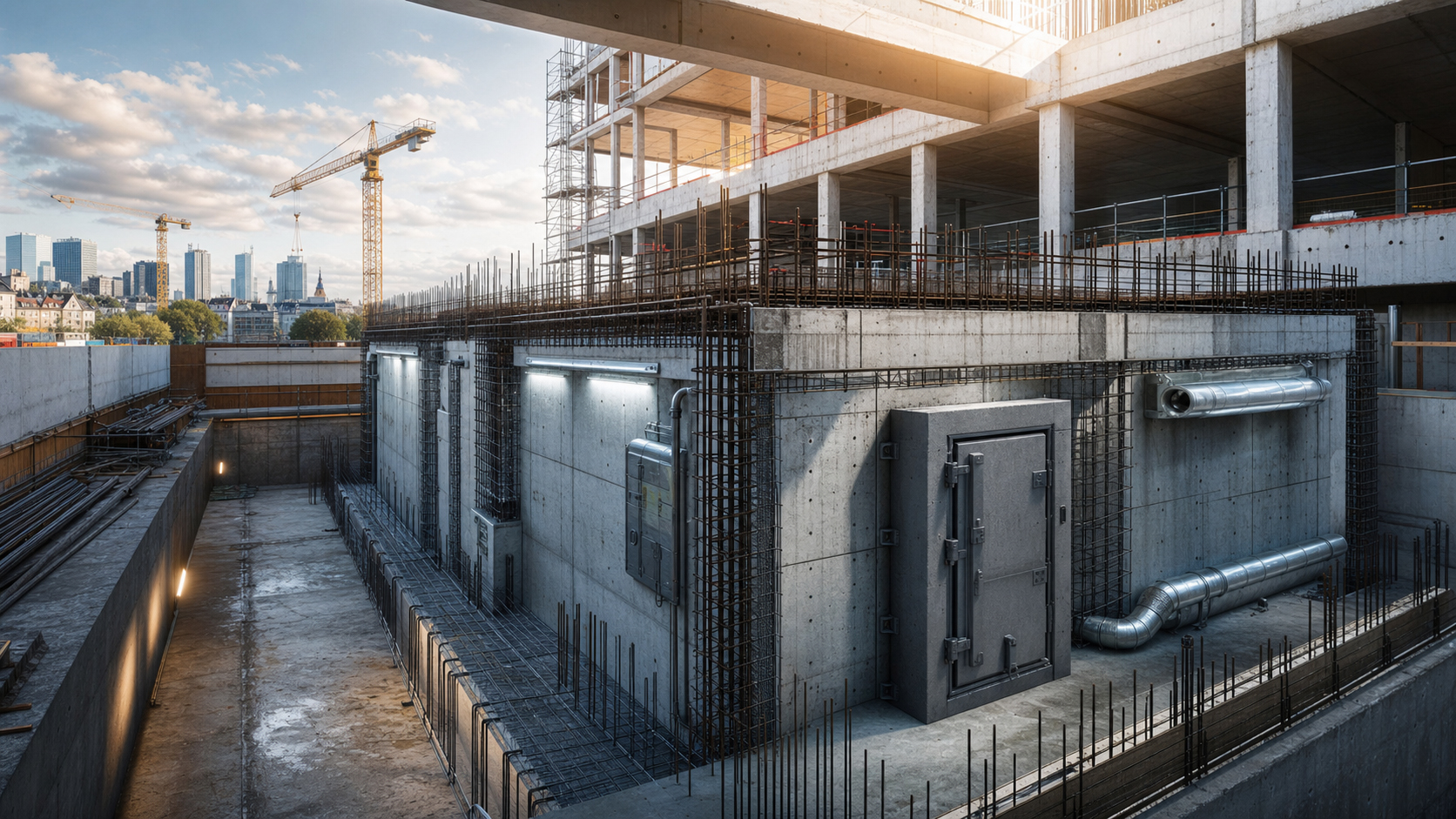
Is mandatory shelter use coming soon? Shelter shock: Why there's only room for 1 percent of the population in Germany – a creative image on the topic, created with AI: Xpert.Digital
Bunker instead of hobby room? What a private shelter in the basement really costs now
A turning point in building law: When the obligation to provide one's own shelter could come
Poland and Switzerland are leading the way: Germany's dangerous shelter gap
In a world increasingly thrown into disarray by geopolitical crises and the war in Ukraine, a topic that was dismissed in Germany for decades as a relic of the Cold War is coming into sharp focus: civil defense shelters. While neighboring countries like Switzerland offer comprehensive coverage and Poland is rapidly enacting new building regulations, Germany is virtually without protection in the event of an emergency. Public shelters are available for less than one percent of the population – the drastic result of a political funding freeze in 2007. But this "turning point" in security policy is now also affecting the construction industry and planning law. Homeowners, municipalities, and project developers are suddenly faced with a completely new question: How can this glaring security deficit be remedied? What legal and tax frameworks already exist? And, most importantly, what does it actually cost to build a private shelter? This article sheds light on Germany's dangerous shelter gap, looks at successful international examples, and shows why bunker construction could soon become a crucial factor in urban and building planning.
When the basement becomes a matter of survival: Germany's dangerous shelter gap – A country without cover
Germany currently has just 579 public shelters with a total of approximately 477,593 shelter spaces. This is theoretically sufficient for less than one percent of the population, whereas in the past, the Federal Republic boasted more than 2,000 such facilities. This glaring lack of shelter is no accident, but rather the result of a political decision: in 2007, the federal government, in agreement with the states, decided to definitively abandon the construction and maintenance of public shelters and to cease funding them. Furthermore, the remaining facilities are largely unusable and unfit for service, as they have not been maintained for decades. Since September 2020, the Federal Agency for Real Estate, based in Bielefeld, has been responsible for managing these remaining shelters, underscoring the administrative marginalization of this issue for many years.
This situation stands in stark contrast to the security policy reality, which has fundamentally changed since Russia's war of aggression against Ukraine in 2022. What was considered a relic of the Cold War during the long period of the peace dividend is now recognized as a security policy void, the closing of which requires considerable financial, planning, and construction efforts.
A turning point has reached even the basement
The concept of a turning point, originally referring to defense policy and the German Armed Forces, has long since extended to civil protection. The federal and state governments have now agreed on the basic elements of a national shelter concept designed to systematically address the glaring lack of adequate facilities. The initial focus is not on constructing new, traditional bunkers, but rather on identifying suitable existing buildings. The Federal Office of Civil Protection and Disaster Relief plans to systematically identify potential public shelters based on established criteria, such as underground parking garages, subway stations, and suitable basements.
It is noteworthy that the Federal Ministry of the Interior has so far refrained from imposing a legal obligation on private building owners to construct their own shelters in new buildings, a requirement that has been standard practice in Israel for decades and will apply in Poland from 2026. Instead, the federal government is relying on voluntary measures and is initially prioritizing so-called structural self-shelters, i.e., underground basement areas that owners can harden themselves, for example, by covering light well windows. In the long term, this is to be supplemented by more technically sophisticated home shelters, which are intended to offer better protection for extended periods of occupancy. This reluctance towards mandatory requirements can also be explained by concerns about additional construction costs in a housing sector that is already under pressure.
Building planning law is opening up to protective structures
Parallel to the conceptual debate, a quiet but consequential amendment to building law is taking place. A legislative initiative proposes adding a provision for the designation of shelters to Section 9, Paragraph 1, Number 5 of the Federal Building Code. This will provide municipalities with a tool for precisely controlling the construction of such shelters on a property-by-property basis, significantly simplifying the implementation of municipal or other shelter concepts. Under current law, shelters are already largely permissible: In designated building zones, public shelters are considered facilities for social purposes, as they fulfill the state's duty of care and protection, and they are permitted, at least as exceptions, in most types of building zones. Shelters designed to serve neighboring properties or those specific to individual properties are also generally considered permissible ancillary facilities.
This legal opening is more than a formal clarification. It signals that legislators now consider structural civil protection as an integral part of urban and building planning, and no longer as an anomaly in planning law. For architects, developers, and project planners, this means that shelter concepts can be incorporated into development plans and building permit procedures at an early stage, creating planning certainty and avoiding subsequent retrofitting costs.
Tax incentives from another era
Contrary to popular belief, a legal framework for private shelters does exist in Germany, albeit dating back to a bygone era. The Shelter Construction Act still governs the tax treatment of expenses for shelters. Those constructing a shelter can claim increased depreciation allowances of up to ten percent of the construction costs in the year of completion and in the eleven following years, instead of the regular depreciation for wear and tear, provided these costs are not covered by subsidies. This regulation was originally created to encourage private builders to voluntarily construct shelters, but since the funding program was discontinued in 2007, it has hardly been actively promoted or used.
The lack of current legal regulations and approvals for shelter construction from the Federal Office of Civil Protection and Disaster Relief has left a significant gap. Private providers like the German Shelter Center, lacking their own German standards, rely on the decades-old, proven technical guidelines for mandatory shelter construction issued by the Swiss Federal Office of Civil Protection. This reliance on foreign standards illustrates how far Germany has fallen behind comparable neighboring countries in this area.
Switzerland as a reference model for comprehensive care
A look at Switzerland shows the level of protection achievable with consistent building regulations. There, approximately 365,000 private and public shelters exist nationwide, offering around nine million shelter spaces, which corresponds to a coverage rate of over 100 percent of the resident population. This is based on the Civil Protection Act, which stipulates that a fully equipped shelter must be available for every resident within a reasonable distance of their home, generally within a 30-minute walk.
The Swiss system operates through a combination of mandatory construction and a substitute levy. If a municipality has too few shelter spaces, owners of residential buildings with a certain number of rooms or more must construct and equip their own shelter when building a new structure. If they cannot fulfill this obligation for technical reasons, a substitute levy is imposed, which is used for the construction and maintenance of public shelters. The threshold is 38 rooms or more for larger residential buildings, although individual cantons may set lower thresholds for smaller municipalities with fewer than 1,000 inhabitants. Nursing homes and hospitals are subject to a separate, stricter regulation, as they house particularly vulnerable groups. (Note: The word "Spitäler" used in the original has been changed to the German term "Krankenhäuser".)
In light of the global threat situation in 2025, the Swiss Federal Government has further emphasized the importance of this system by increasing the substitute levy per shelter space from 800 to 1,400 Swiss francs and extending the construction obligation to include certain renovations. Nationwide, this currently provides the cantons with approximately 880 million Swiss francs for the construction and renovation of shelters. This continuous adjustment demonstrates that civil protection in Switzerland is understood as an ongoing state infrastructure responsibility requiring regular adaptation to construction costs and threat levels, and not as a one-off investment of the past.
Poland is catching up at a radical pace
Poland, which has a more immediate perception of threat due to its geographical proximity to Russia and Belarus, is reacting even more decisively than Switzerland. With the so-called Shelter Law, which came into force on January 1, 2026, new multi-story residential buildings, public buildings, and their underground garages must be planned and constructed in such a way that a temporary refuge can be organized within them in the event of a crisis. This obligation is already established at the planning stage and is thus firmly anchored in the building permit process, not merely as a subsequent addition.
Polish law distinguishes three categories of protective infrastructure: fully equipped, airtight shelters with filtration and ventilation systems; non-hermetically sealed refuges; and temporary emergency shelters that can be set up at short notice for personal protection. Responsibility for implementation lies with the Polish state, municipalities, and increasingly, private owners, with the Ministry of the Interior assuming strategic control and the state fire service responsible for inventory and technical guidance.
At the same time, Poland significantly simplified the private construction of smaller shelters with a parallel deregulation reform of building law, which came into effect at the beginning of 2026. Freestanding private shelters with a usable floor area of up to 35 square meters for the residents of a single-family home no longer require a building permit, but only a simple building notification with a waiting period of 21 days. This combination of stricter requirements for large construction projects and drastic simplification for small private projects demonstrates a pragmatic approach that balances safety and building bureaucracy, consciously choosing speed and individual initiative.
Hub for Security and Defense - Advice and Information

Hub for Security and Defense - Image: Xpert.Digital
The Security and Defence Hub offers expert advice and up-to-date information to effectively support companies and organizations in strengthening their role in European security and defence policy. Working closely with the SME Connect Defence Working Group, it particularly promotes small and medium-sized enterprises (SMEs) that wish to further develop their innovative capacity and competitiveness in the defence sector. As a central point of contact, the Hub thus creates a crucial bridge between SMEs and European defence strategy.
Related to this:
Construction industry on the cusp of a new era: Shelter concepts as a market of the future
What a shelter in Germany actually costs
The economic dimension of the issue becomes particularly evident in the construction costs, which vary considerably and depend largely on whether a shelter is integrated into a new building from the outset or retrofitted into an existing basement. Integration during the initial construction of the house is the most cost-effective option. According to experts, basic protection with fundamental ballistic and structural safety incurs additional costs of approximately €35,000 to €40,000, as this requires, in addition to the already planned structural work, heavier steel reinforcement, thicker concrete walls and ceilings, as well as a reinforced door and roof.
Retrofitting an existing basement is significantly more expensive, as it requires additional structural reinforcements to be installed in a finished building. Homeowners should expect to pay between €100,000 and €150,000 for this. Those opting instead for a freestanding shelter in the garden or under a separate garage will pay around €150,000 for prefabricated systems accommodating six people, plus an additional €15,000 for the necessary excavation work. At the lower end of the price range are mobile steel shelters, colloquially known as panic rooms, which are available starting at €15,000. However, these offer significantly reduced protection against debris or radioactive fallout and do not provide the full protection of a traditional CBRN shelter.
The following overview summarizes typical cost categories as calculated by specialist providers on the German market:
| shelter type | Cost framework | Special features |
|---|---|---|
| Integrated basic protection in new buildings | from about 35,000 to 40,000 euros | Steel reinforcement, armored door, armored cover, part of the shell construction |
| Subsequent basement conversion (temporary protection) | approximately 100,000 to 150,000 euros | Static retrofitting in an existing building, more complex |
| Self-contained garden shelter, ready-made solution | from approximately 150,000 euros plus 15,000 euros for earthworks | Completely new building structure required |
| Mobile steel protective cell (panic room) | from about 15,000 euros | Reduced scope of protection, not full ABC protection |
These figures illustrate that structural civil protection measures for private households represent a significant financial investment, which for many building owners only appears economically justifiable within the context of a planned new construction project. This is precisely where the planning opportunity lies: those who integrate shelter concepts into the building plans early on often save more than double the investment compared to retrofitting them later.
The economic leverage of a new market segment
The growing demand for shelter technology is opening up a new, previously marginal market segment with considerable growth potential for the construction industry. Specialized suppliers of armored doors, filter systems, ventilation technology, and precast concrete elements are already benefiting from increased demand triggered by the war in Ukraine, general geopolitical uncertainty, and media coverage of Germany's supply shortages. Similar to the energy crisis, which triggered a boom in heat pumps and photovoltaic systems, a comparable surge in demand for security building technology could develop, provided that political frameworks such as binding building regulations or tax incentive programs are in place.
At the same time, new consulting and planning services are emerging. Architectural firms that develop expertise in shelter design early on can position themselves as specialists in a market segment that is still largely untapped. Engineering firms with experience in bunker construction or defense technology also have access to a civilian field of application that extends beyond traditional defense contracts. Furthermore, a comparison with Poland shows that a legal obligation can generate significant economies of scale for the construction supply industry, as standardized components such as armored doors or filter systems can be produced more cost-effectively in larger quantities.
Municipal basement search as a temporary solution
Since a comprehensive construction of new shelters would be neither financially feasible nor structurally viable in the short term, the federal and local governments are currently pursuing a pragmatic interim solution. Municipalities are being called upon to identify suitable existing buildings whose basements can be converted into shelters with reasonable effort. One idea being considered is an application that would allow citizens to find the nearest shelter at the touch of a button, similar to the already established warning app. In metropolitan areas, basements in public buildings, department stores, underground parking garages, subway stations, and road tunnels are also being considered, as these already possess a certain degree of structural integrity and are sometimes located underground.
This strategy is economically sound, as upgrading existing buildings is considerably cheaper than constructing new, specialized shelters. However, it encounters clear technical limitations, since many existing buildings lack both the necessary structural strength to withstand debris loads and suitable ventilation and filtration systems to protect against radioactive, biological, or chemical hazards. Simply registering a basement as a potential refuge therefore does not replace a genuine obligation to construct shelters, but merely provides a short-term emergency solution of inferior protection.
Regulatory gap as a structural risk
From an economic perspective, the lack of a binding German standard for private shelter construction represents a structural problem that extends beyond mere safety concerns. Without government approval standards, private providers currently operate in a regulatory gray area, where, due to the absence of official testing criteria, building owners must rely on manufacturers' self-declarations or foreign standards. This complicates quality assurance, prevents standardized price comparisons, and undermines private investors' confidence in what is a sound long-term investment.
A binding national standard, such as the one Switzerland has maintained for decades with its technical guidelines for mandatory shelter construction, would not only increase public safety but also provide the German construction industry with planning certainty for investments in production capacities and skilled worker training. As long as this standardization is lacking, the market remains fragmented and difficult for larger developers and project planners to predict, which in turn dampens the willingness to voluntarily integrate shelters into larger new construction projects.
A long overdue realignment
Civil defense in Germany is at a turning point between decades of neglect and a newly awakened awareness of security policy. The existing infrastructure is inadequate both quantitatively and qualitatively, while international examples such as Switzerland and increasingly Poland demonstrate that consistent building regulations, combined with mandatory construction and compensatory levy systems, can achieve near-complete coverage within a few decades. The pending amendment to the Building Code to better anchor shelters in planning law is an important, albeit so far cautious, step in this direction.
This presents a dual perspective for building owners, project developers, and the construction supply industry: those who invest early in shelter planning and the corresponding expertise can benefit from both potential future regulatory tightening and the growing security awareness of private building owners. Given the significant cost differences between integrated new construction planning and subsequent retrofitting, the most economically sound approach is clear: shelter concepts should be an integral part of every responsible building plan from the outset, rather than having to improvise them as an expensive retrofit in a crisis situation.
Consulting - Planning - Implementation

Markus Becker
I would be happy to serve as your personal advisor.
Head of Business Development
Chairman SME Connect Defense Working Group
Consulting - Planning - Implementation
Konrad Wolfenstein
I would be happy to serve as your personal advisor.
You can contact me at wolfenstein∂xpert.digital or
Just call me on +49 7348 4088 965 .





