
Are Iranian banks on the verge of collapse? Financial collapse as a harbinger of systemic failure
Xpert Pre-Release

Available in 27 languages 📢
Prefer Xpert.Digital on GoogleⓘPublished on: January 14, 2026 / Updated on: January 14, 2026 – Author: Konrad Wolfenstein
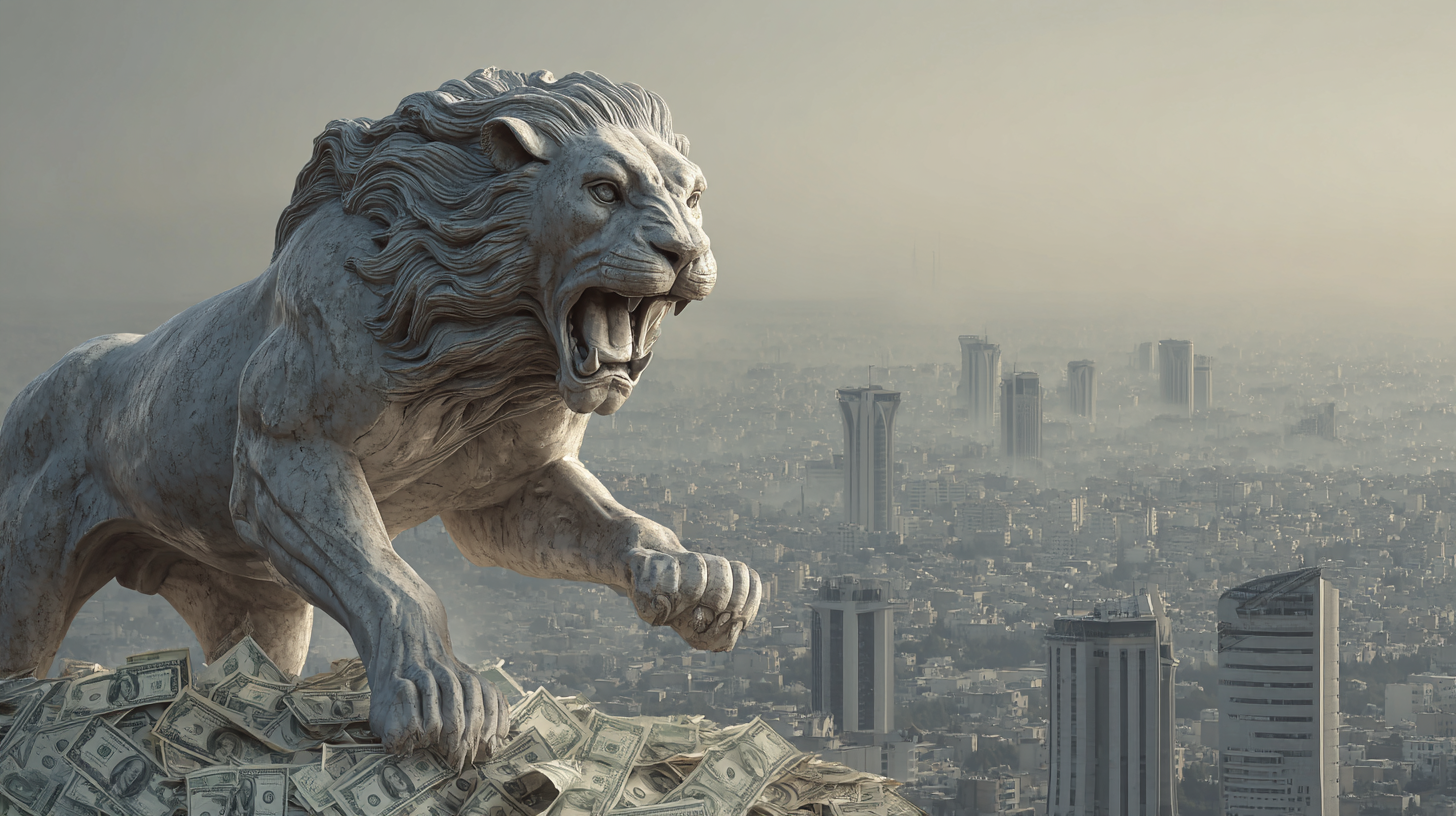
Are Iranian banks on the verge of collapse? Financial collapse as a harbinger of systemic failure – Creative image: Xpert.Digital
Financial earthquake in Tehran: Could the collapse of Sepah Bank be the trigger for the regime's downfall?
Iran's shadow economy is imploding: How the Revolutionary Guard is driving the country to ruin
The news came like a bombshell amidst an already dramatic crisis: Five Iranian banks are on the brink of collapse, including Sepah Bank, one of the country's three largest financial institutions and simultaneously the financial hub for the powerful Revolutionary Guard and the regular army. This news, published by the Wall Street Journal in January 2026, marks more than just another episode in the chronic decline of the Iranian economy. It reveals the structural implosion of a system that for decades has been based on a toxic mix of ideological power politics, systemic corruption, and economic self-exploitation.
The looming insolvency of Sepah Bank is not an isolated event, but rather the visible manifestation of a deeper systemic crisis that has engulfed all sectors of Iranian society. While the official inflation rate climbed to 48.6 percent in October 2025, reaching its highest level since May 2023, the Iranian rial lost roughly half its value within a year. At the end of December 2025, one US dollar was trading at over 1.42 million rials, a historic low for the Iranian currency. The World Bank forecasts an economic contraction of 1.7 percent for 2025 and a further decline of 2.8 percent for 2026, a dramatic revision of earlier forecasts that had predicted moderate growth.
Suitable for:

The anatomy of a financial crisis
To understand the scope of the current banking crisis, it is worth looking at the precedent of Ayandeh Bank, which was officially declared insolvent in October 2025. This once prominent private bank, owned by the regime-affiliated businessman Ali Ansari, operated 270 branches nationwide and served approximately seven million customers. In the end, it suffered a loss of over US$5.1 billion on debts of nearly US$3 billion. The bank's equity ratio had plummeted to negative 350 percent, meaning that the institution had not only lost all of its capital but had also accumulated massive additional liabilities.
The background to this catastrophe is revealing for understanding the entire Iranian banking system. Internal investigations revealed that Ayandeh Bank operated for years as a closed-loop system, prioritizing loans to companies linked to the bank's main shareholders. Particularly egregious was the lending for the Iran Mall megaproject, where the bank exceeded the limits set by the linked companies law by a factor of 1,062. The bank's claims from this single project reached a value of 51 billion tomans by March 2022.
Documents released by the opposition group Simay-e Azadi prove that high-ranking government officials, including then-President Raisi, Speaker of Parliament Ghalibaf, and Central Bank Governor Farzin, had been aware of the Ayandeh Bank's disastrous situation for years. A top-secret report from the Parliamentary Research Center, dated June 2023, found that the bank had an 80 trillion toman overdraft with the Central Bank and that 130 trillion toman of its outstanding loans were considered dubious. The report explicitly warned that continuing the bank's operations would only exacerbate the accumulated losses.
The central bank warned as early as 2025 that eight more Iranian banks faced closure if they did not implement fundamental reforms. Sepah Bank is now among those institutions in acute danger. Its role as the financial headquarters of the Islamic Revolutionary Guard Corps, the paramilitary organization that holds a central position of power in Iran not only militarily but also economically, is particularly critical.
The Revolutionary Guard as an economic conglomerate
The Islamic Revolutionary Guard Corps, officially known as Sepah-e Pasdaran, was founded in 1979 during the Islamic Revolution to protect the new regime from internal and external enemies. Over the decades, however, this organization has evolved into a gigantic economic empire, estimated to control between one-third and 40 percent of the entire Iranian economy. According to the World Bank, Iran's gross domestic product in 2024 was US$436.91 billion, meaning that the Revolutionary Guard Corps' business activities are likely worth between US$140 billion and US$175 billion.
The economic backbone of the Revolutionary Guard is Khatam al-Anbia, the Pasdaran's technology holding company, originally established in the late 1980s to rebuild the country after the war against Iraq. This holding company now controls over 812 registered companies both within and outside Iran and had already secured 1,700 government contracts by 2012. The conglomerate employs approximately 25,000 engineers and staff, of whom only ten percent are direct members of the Revolutionary Guard; the remainder work as contractors.
Khatam al-Anbia's activities span virtually all of the country's lucrative economic sectors: dams, drainage systems, highways, tunnels, buildings, offshore structures, water supply systems, and oil, gas, and water pipelines. The organization is heavily involved in the construction of the Tehran Metro, controls the country's largest shipyard through subsidiaries, and has secured exclusive contracts for several phases of the massive South Pars gas development project.
Paradoxically, the economic dominance of the Revolutionary Guard was further strengthened by international sanctions. As foreign companies left Iran and domestic businesses came under pressure, the Pasdaran-affiliated units were better positioned to operate under the restrictions. They benefited from privileged access to foreign currencies, informal trade routes, and the protection afforded by the regime's security structures. The Revolutionary Guard does not have to pay taxes or customs duties on its business activities in Iran, giving it a significant advantage over private competitors.
The shadow empire of the Bonyads
Besides the Revolutionary Guard, a second pillar of economic power concentration exists: the religious endowments, known as Bonyads. These quasi-official organizations are controlled by current and former government officials and clerics, and report directly to the Supreme Leader. They receive substantial benefits from the Iranian government, including tax exemptions, but are not required to have their budgets publicly approved. It is estimated that these institutions control nearly 60 percent of the Iranian economy.
The most well-known and powerful of these foundations is Setad, officially known as the Main Office for Enforcing the Imam's Orders. It was established by the founder of the Islamic Republic, Ayatollah Ruhollah Khomeini, shortly before his death in 1989. Originally conceived as a clearinghouse for the real estate belonging to exiled or dispossessed Shah supporters, to support the poor and needy, Setad has grown into one of the most influential companies in the country, with an estimated value of over US$90 billion.
Another significant religious foundation is Bonyad-e Mostazafan, the Foundation of the Disenfranchised, with corporate assets of $12 billion. Its annual revenue exceeds the state's tax revenue. This foundation was established in the aftermath of the Islamic Revolution to manage confiscated assets, including property originally belonging to religious minorities such as Baháʼís and Jews. The U.S. Treasury Department has described Bonyad Mostazafan as a vast network of shell companies used by the Iranian leadership to siphon off assets.
The economic wealth of these foundations is partly the result of asset embezzlement and dealings with human rights abusers and supporters of international terrorism. By 2017, the armed forces of the Islamic Republic, the Revolutionary Guard, and the Ministry of Defense and Logistics owed the Mostazafan Foundation nearly $2.5 million in trade debts. Despite its overwhelming influence on the Iranian economy, Bonyad Mostazafan operates outside of government oversight and is exempt from paying taxes on its multi-billion-dollar profits due to a 1993 decree by the Supreme Leader.
The misuse of assets also benefits the Supreme Leader's inner circle. Gholam-Ali Haddad-Adel, a close confidant of Khamenei and father-in-law of his son Mojtaba Khamenei, resides in foundation properties worth approximately $100 million, paying rents far below market rates. While the Supreme Leader enriches himself and his allies, the foundation's original mission of caring for the poor has become a secondary objective. According to the foundation's former president, in recent years only about seven percent of its profits were allocated to poverty reduction projects.
The breakdown of trust
The merchants' uprising: Why these protests are more dangerous for the Iranian regime than ever before
The combination of economic monopolies held by the Revolutionary Guard, opaque religious foundations, and systemic corruption has completely undermined the Iranian population's trust in the financial system. When the central bank decided to end a program in late December 2025 that gave some importers access to cheaper US dollars, it triggered a chain reaction. Prices for basic foodstuffs like cooking oil and chicken skyrocketed overnight, and some products became unavailable altogether.
Price fluctuations forced bazaar traders in Tehran and other cities to close their shops, a drastic measure for a group that had traditionally supported the Islamic Republic. On December 28, 2025, shopkeepers in Tehran's Grand Bazaar began protesting, closing their businesses, and going on strike. The epicenters of these protests were the Alaeddin Passage, the Charsou shopping complex on Jomhouri Street, Ahangaran Lane in the Grand Bazaar, Cheragh Bargh, the Shush Bazaar, and the mobile phone vendors' alley in Pakdasht.
Merchants chanted slogans like "The merchant would rather die than be humiliated" and "Don't be afraid, don't be afraid, we stand together." Fearing an escalation of the popular uprising, the Revolutionary Guard declared a state of 100% alert throughout Tehran. What began as an economic protest quickly expanded into a movement critical of the system. Demonstrators demanded not only economic reforms but the overthrow of the entire Islamic Republic.
The protests spread rapidly across the country. By January 6, 2026, at least 29 people had died, including two members of the security forces. More than 1,200 people were arrested. Protests took place in 27 of Iran's 31 provinces and in at least 88 cities. Human rights organizations published differing estimates of the death toll: Iran Human Rights reported 730 fatalities, while the Norway-based organization Hengaw reported 2,500. On January 9, 2026, at least 217 deaths were recorded in Tehran alone, while hospitals in Tehran and Shiraz were overwhelmed with wounded, many with gunshot wounds.
The government responded with a pattern of violence and half-hearted attempts at appeasement. President Massoud Peseshkian tried to ease the pressure by offering monthly direct payments of nearly seven US dollars. At the same time, however, he stated that this measure alone could not resolve the crisis. Attorney General Mohammed Mohawedi-Assad warned that any attempt to use the economic protests as a tool of insecurity would trigger an inevitable legal, proportionate, and decisive response. Security forces acted with increasing brutality, with eyewitnesses reporting seeing hundreds of bodies throughout Tehran.
The cyber front of economic warfare
Parallel to the physical crisis in its financial system, Iran experienced a wave of targeted cyberattacks on its financial infrastructure. The hacking group Predatory Sparrow, which is believed to have links to Israeli security services, claimed to have attacked Sepah Bank and all infrastructure belonging to the Islamic Revolutionary Guard Corps. The group asserted that it had destroyed all of the bank's data in this cyberattack.
In a statement posted on the X platform, the group wrote that Sepah Bank was an institution used to circumvent international sanctions and finance terrorism through the accounts of the Iranian population. The bank allegedly financed regime proxies, missile programs, and the military's nuclear project. Just days earlier, the same hacking group had targeted the Iranian cryptocurrency exchange Nobitex, claiming to have destroyed more than $90 million in assets.
These cyberattacks have further destabilized the already fragile Iranian banking sector. Reports indicate that dozens of bank branches in several Iranian cities were damaged or set on fire overnight, a reaction to anger over inflation, currency devaluation, and a loss of confidence. Simultaneously, reports of massive capital outflows have increased, with members of the economic elite securing assets abroad as the domestic situation continues to destabilize.
The structural causes of the ongoing crisis
The current banking crisis is a symptom of deeper structural problems in the Iranian economy. According to the World Bank, Iran has suffered a lost decade of economic growth due to its continued focus on oil and its neglect of diversification. Hossein Marashi, the reformist Secretary General of the Kargozaran-e Sazandegi party, stated that economic growth in Iran over the past two decades has been only about one percent. The lack of economic activity has significantly reduced the population's purchasing power, and importing basic foodstuffs with foreign currency has proven extremely difficult. Marashi added that the Iranian economy has been a casualty of the nuclear issue for the past 20 years.
Only 20 percent of Iran's gross domestic product is generated in the private sector, a shockingly low figure that reflects the regime's systematic restriction of private economic activity. The economy's structural weaknesses are exacerbated by chronic inflation. In October 2025, food inflation reached 57.9 percent, while the general inflation rate stood at 48.6 percent. The World Bank forecasts that the inflation rate will not fall below 40 percent in 2026.
Oil exports, traditionally the backbone of the Iranian economy, are suffering under the tightened sanctions. Although Iran managed to export an average of 1.56 million barrels per day in the first quarter of 2024, the highest level since the third quarter of 2018, despite international restrictions, the revenue from these exports is far from sufficient to cover the economy's structural deficits. The crude oil goes almost exclusively to China, which is largely shielded from Western pressure, and is sold at significant discounts.
Our global industry and economic expertise in business development, sales and marketing

Our global industry and business expertise in business development, sales and marketing - Image: Xpert.Digital
Industry focus: B2B, digitalization (from AI to XR), mechanical engineering, logistics, renewable energies and industry
More about it here:
A topic hub with insights and expertise:
- Knowledge platform on the global and regional economy, innovation and industry-specific trends
- Collection of analyses, impulses and background information from our focus areas
- A place for expertise and information on current developments in business and technology
- Topic hub for companies that want to learn about markets, digitalization and industry innovations
Billions for Hezbollah, handouts for the people: Iran's absurd priorities revealed
The foreign policy burden
Another significant burden on the Iranian economy is the costly support of regional proxy militias. According to a senior US sanctions official, Iran transferred one billion dollars to Hezbollah in Lebanon in the first ten months of 2025 alone. US estimates put the annual flow of approximately 700 million dollars to Hezbollah, while support for the Assad regime in Syria, according to internal regime documents, had already reached 50 billion dollars by 2021.
According to reports from Chainalysis, the Iranian Revolutionary Guard Corps has used more than two billion US dollars in cryptocurrencies to circumvent sanctions and support affiliated groups, including Hezbollah, Hamas, and the Houthis. While Supreme Leader Khamenei attempts to offer Iranian citizens seven dollars a month, he has reportedly transferred one billion dollars to Hezbollah, according to the US Treasury Department, which would provide each member of the Lebanese militia with a monthly salary of over 1,000 dollars.
This prioritization has led to one of the protesters' most popular slogans: "Neither Gaza nor Lebanon, my life for Iran." The systematic neglect of domestic needs in favor of regional ideological goals has completely undermined the regime's legitimacy in the eyes of many Iranians. A state economic expert was quoted in December 2025 as saying: "The legitimacy of the Islamic Republic's system has reached a historic low. Corruption has permeated all areas of the state apparatus, from gasoline distribution to the value chain, including exports and imports.".
Suitable for:

The geopolitical dimension
The banking crisis has hit the Iranian regime at a particularly inopportune time. Following the twelve-day war with Israel and the US in June 2025, during which Iranian nuclear facilities were attacked, the regime's carefully cultivated image of invulnerability has suffered significant damage. At the end of September, the United Nations imposed severe sanctions on Iran under the so-called trigger mechanism after talks on the nuclear program collapsed.
The international community is watching developments in Iran with growing concern. US President Donald Trump has repeatedly warned of possible military intervention should there be a violent crackdown on the protesters. US officials have revealed that the administration has begun initial talks about possible military action against Iran, should such measures become necessary to reinforce the threats. These discussions revolve around potential targets, with one possibility being a coordinated airstrike on various Iranian military installations.
At the same time, according to information obtained by the Wall Street Journal, Iran's Arab rivals, particularly Saudi Arabia, Oman, and Qatar, have spoken out to the US government against an attack on Tehran. Behind the scenes, these countries have warned the White House that an attempt to overthrow the Iranian leadership would destabilize oil markets and ultimately harm the US economy. Above all, they fear repercussions within their own countries.
The European Union is preparing new sanctions against the regime in Tehran. EU Commission President Ursula von der Leyen announced plans to propose further sanctions against the Iranian Revolutionary Guard Corps. Germany is advocating within the EU for the Iranian Revolutionary Guard Corps to be classified as a terrorist organization, which would have far-reaching legal and economic consequences.
The socio-economic catastrophe
The impact of the economic and banking crisis on the Iranian population is devastating. It is estimated that up to 40 percent of Iranians live below the poverty line, while the political elite grows ever wealthier. The prices of basic foodstuffs like bread are barely affordable for large segments of the population. Compared to December of the previous year, food prices have risen by 72 percent, and prices for health and medical products by 50 percent.
Unemployment rose to 12.6 percent, though the actual rate is likely much higher, as many people work in the informal economy or have given up looking for work. The World Bank noted that Iran's economy has limited capacity to create jobs, a direct result of the regime's restrictions on the private sector.
The situation is particularly precarious for pensioners and civil servants. In Kermanshah, a group of pensioners gathered in October 2025 to protest their living conditions. They chanted slogans such as "You have plundered Iran and left us destitute," "Rampant oppression has driven us to the streets," and "Poverty, corruption, inflation. The plagues of the people.".
Hundreds of contract workers at refineries 1 through 9 of the South Pars gas complex went on strike and held rallies to protest the neglect of their demands. Employees of the Iranian offshore oil company protested in the Siri and Kharg regions, as well as on gas platforms. In Mashhad, bakers demonstrated outside the offices of Nanino and Sepah Bank, highlighting the direct link between the banking crisis and people's daily struggles.
Systemic corruption as a foundation
Corruption permeates all levels of the Iranian state and economy. The case of Ayandeh Bank exemplifies how closely business interests and political power are intertwined. Granting loans to the bank's main shareholder companies, providing financing for the Iran Mall megaproject, and paying extremely high interest rates to depositors—all with the aim of becoming a credit institution too large to fail—led to a total loss of 90 trillion tomans in the first half of 2022, equivalent to 56 times its registered capital of 1.6 trillion tomans.
The bank's equity ratio was minus 150 percent in the first half of 2022, despite the regulatory standard of at least plus eight percent. Central bank reports show that the company that owns Iran Mall received loans from Ayandeh Bank that were 1,062 times higher than the legal limit for related parties. Macro loans and liabilities amounted to approximately 220 trillion tomans, while loans and liabilities to related parties totaled 109 trillion tomans.
Despite clear evidence of mismanagement and corruption, the bank remained operational for years. Documents show that as early as June 2023, the country's Attorney General, Mohammad Jafar Montazeri, wrote to the Central Bank Governor, stating that the imbalance of some banks was one of the biggest challenges facing the country's monetary and banking sector. Nevertheless, it took another 16 months before the bank was finally closed.
This systematic inaction is no accident, but rather an expression of the entanglement of interests between the economic and political elite. The Guardian Council, tasked with protecting Iran's political institutions, helps military groups and their economic networks to strengthen themselves. It shapes legislation in their favor and, through its power to vet candidates, ensures that loyalists are placed in elected offices with oversight authority.
The illusion of reform
The reform-oriented government under President Massoud Peseshkian is attempting to manage the crisis through limited economic reforms. It eliminated subsidies for importers who had previously benefited from a state-favored exchange rate. However, the government spokesperson warned that this could initially lead to price increases. As compensation, every person living in an Iranian household will now receive a monthly allowance of ten million rials, equivalent to just under six euros.
These measures are cosmetic at best and completely ignore the structural causes of the crisis. As long as the Revolutionary Guard and religious foundations control between 60 and 80 percent of the Iranian economy without paying taxes, without being subject to democratic oversight, and without being accountable to the public, substantial reforms are impossible. President Peseschkian himself admitted: We shouldn't expect the government to handle all of this alone.
The reformist newspaper Sazandegi quoted Marashi as stating that the inflation rate, which stood at 37 percent at the end of March 2025, had already reached over 53 percent and would certainly exceed 55 percent by the end of the year. The food crisis, he said, had the potential to drive starving people into the streets. The country was facing an unprecedented crisis. This assessment from a regime insider underscores the seriousness of the situation.
The historical dimension
The current protests differ significantly from previous protest movements in Iran. While the Mahsa Amini protests of 2022 primarily fought against the mandatory hijab and for social freedoms, the current demonstrations are clearly economically motivated. The trigger was the practical impossibility for ordinary people to earn a living. This economic dimension makes the protests potentially more dangerous for the regime, as they encompass broad segments of the population and are not limited to specific social groups or age classes.
The participation of the bazaar traders, who have traditionally been a pillar of the Islamic Republic, is particularly significant. Their rejection of the regime signals a fundamental break in the social consensus. As one young bazaar trader explained to the taz newspaper: "The protesters want the Islamic Republic to disappear. This radical demand shows that it's no longer about reforms within the system, but about a system change.".
Economist Mahdi Ghodsi from the Vienna Institute for International Economic Studies explained in an interview with the Wiener Zeitung how economic conditions have driven people into the streets and how dangerous this could become for the regime. The Achilles' heel of the Iranian regime is its economy, the collapse of which could also mean the end of the regime. If a regime can no longer pay its henchmen, it loses the foundation of its power.
The international reaction
The international community is watching the developments with a mixture of concern and cautious optimism. While human rights organizations such as Amnesty International and Human Rights Watch document and condemn the brutal crackdown on the protests, governments are debating appropriate responses. The US has already imposed new sanctions on Hezbollah financiers and is threatening further measures.
The German government is advocating for the Revolutionary Guard to be listed as a terrorist organization, which would have significant legal and economic consequences. At the same time, President Trump is considering providing satellite internet access to the protesters in Iran. He wanted to speak with tech billionaire Elon Musk, whose company SpaceX operates the Starlink service. The Iranian government has almost completely blocked internet access for its citizens, and telephone connections are also partially disrupted, in order to hinder communication between the protesters and suppress the publication of reports about the mass protests.
According to the Wall Street Journal, a meeting with senior US officials is planned to discuss possible options, including strengthening anti-government online sources, using cyber weapons against Iranian military and civilian sites, imposing further sanctions on the government, and potentially launching military strikes. However, Trump is not expected to make a final decision at the meeting. Some advisors would prefer to wait until the leadership in Tehran comes under even greater pressure. The situation in Iran is evolving rapidly, and the regime's stability could quickly shift in either direction.
An uncertain future
The looming collapse of Sepah Bank and four other banks is more than a financial crisis. It symbolizes the failure of an entire economic model based on ideological indoctrination, military force, and systemic corruption. The question is no longer whether the system can be reformed, but how long it can be sustained.
The World Bank forecasts an economic contraction of 2.8 percent for 2026, which will further exacerbate the already catastrophic situation. The inflation rate is not expected to fall below 40 percent, while the purchasing power of the population continues to decline. The structural problems of the economy—the dependence on oil exports, the restrictions on the private sector, and the monopolistic position of the Revolutionary Guard and religious foundations—will not resolve themselves.
The Iranian regime faces a fundamental dilemma. To stabilize the economy, it would have to break the power monopolies of the Revolutionary Guard and the Bonyads, which would be tantamount to abandoning its own power base. However, as long as these structures remain in place, a sustainable economic recovery is impossible. The Iranian population is increasingly understanding this dynamic, which explains the anti-systemic nature of the current protests.
The international community also faces difficult decisions. Tightened sanctions could further weaken the regime, but would also harm the population. Military interventions carry the risk of regional destabilization and could paradoxically strengthen the regime by triggering nationalist sentiment. At the same time, inaction in the face of massive human rights violations is morally questionable.
What is currently unfolding in Iran is a multifaceted crisis in which economic collapse, social mobilization, and the search for political meaning are visibly intertwined for the first time in years. The banking crisis is not the cause, but rather the catalyst of a deeper systemic crisis. Whether this will lead to fundamental changes or be brutally suppressed once again by the regime remains to be seen. What is certain, however, is that the current economic model is not sustainable and time is working against the regime.
The coming weeks and months will show whether the Iranian people have the strength and perseverance to force substantial change, or whether the regime can maintain its power through a combination of violence, limited concessions, and external support. The Sepah Bank, once a symbol of the Revolutionary Guard's economic might, could become a symbol of its decline. The collapse of an institution considered indispensable for decades demonstrates that nothing lasts forever in Iran and that even the most powerful pillars of the system can erode when the foundation becomes fragile.
Your global marketing and business development partner
☑️ Our business language is English or German
☑️ NEW: Correspondence in your national language!

Konrad Wolfenstein
I would be happy to serve you and my team as a personal advisor.
You can contact me by filling out the contact form or simply call me on +49 7348 4088 965 (Munich) . My email address is: wolfenstein ∂ xpert.digital
I'm looking forward to our joint project.
☑️ SME support in strategy, consulting, planning and implementation
☑️ Creation or realignment of the digital strategy and digitalization
☑️ Expansion and optimization of international sales processes
☑️ Global & Digital B2B trading platforms
☑️ Pioneer Business Development / Marketing / PR / Trade Fairs
🎯🎯🎯 Benefit from Xpert.Digital's extensive, five-fold expertise in a comprehensive service package | BD, R&D, XR, PR & Digital Visibility Optimization

Benefit from Xpert.Digital's extensive, fivefold expertise in a comprehensive service package | R&D, XR, PR & Digital Visibility Optimization - Image: Xpert.Digital
Xpert.Digital has in-depth knowledge of various industries. This allows us to develop tailor-made strategies that are tailored precisely to the requirements and challenges of your specific market segment. By continually analyzing market trends and following industry developments, we can act with foresight and offer innovative solutions. Through the combination of experience and knowledge, we generate added value and give our customers a decisive competitive advantage.
More about it here:










