

How the InvestBulgaria Agency plans to attract new investors: Out of Asia, into Europe
Xpert Pre-Release

Available in 27 languages 📢
Prefer Xpert.Digital on GoogleⓘPublished on: July 18, 2026 / Updated on: July 18, 2026 – Author: Konrad Wolfenstein
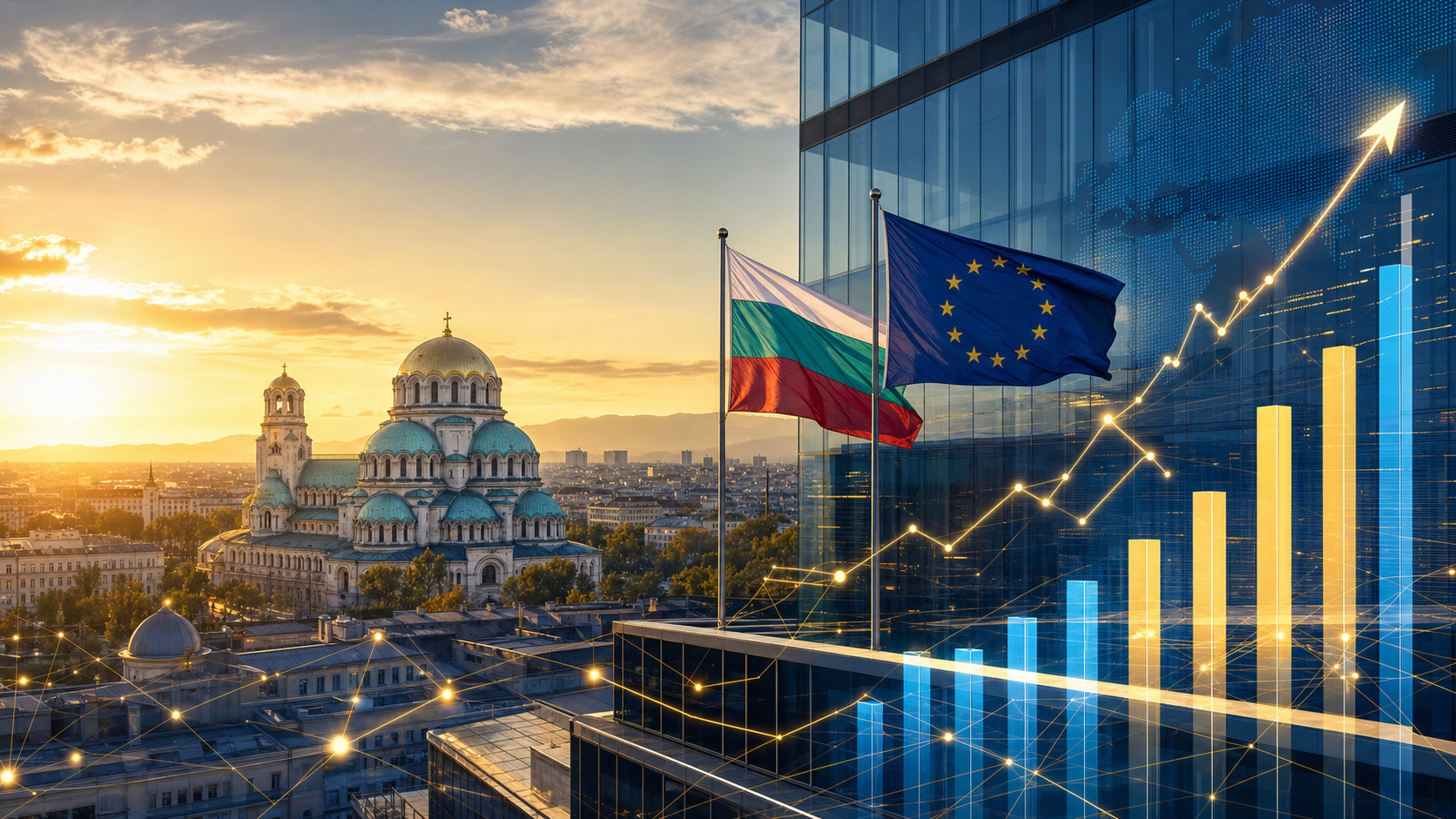
How the InvestBulgaria Agency plans to attract new investors: Out of Asia, into Europe – Image: Xpert.Digital
Euro accession & 10% tax: Will this country become Europe's new economic miracle?
800 million euros in two months: The secret investment boom in the Balkans
Nearshoring in focus: Why Bulgaria is suddenly the best alternative for Europe's supply chains
For years, Bulgaria was considered a difficult place for international investors – plagued by bureaucratic hurdles, political instability, and corruption. But the Black Sea nation is on the cusp of a historic economic turning point: With its accession to the Schengen Area in 2025, the groundbreaking introduction of the euro at the beginning of 2026, and a profound institutional overhaul of government investment incentives, the landscape in Europe is being reshaped. Bulgaria is now aggressively positioning itself as a highly attractive nearshoring location, boasting a 10 percent flat tax rate, the elimination of all exchange rate risks, and significantly streamlined bureaucratic processes. Initial billions in investments and rapid growth in foreign capital are already showing results. But will Bulgaria truly succeed in transforming itself from a European problem child into a new investor magnet, or will old structural weaknesses threaten to derail its ambitious upswing? An in-depth analysis reveals a country caught between rapid catch-up and unresolved problems.
From Europe's problem child to investor magnet – will Bulgaria dare to take the decisive leap?
Few member states of the European Union have been perceived as so contradictorily over the years as Bulgaria. On paper, the country boasts one of the lowest tax rates on the continent, a geographically privileged location between the Black Sea and Central European markets, and a well-educated, multilingual workforce. However, the practical experience of international investors has long been dominated by a different picture: cumbersome bureaucracy, unclear responsibilities, political instability, and a reputation that lagged far behind the country's actual advantages. This gap between potential and reality is the starting point for the current reform efforts, at the heart of which lies the InvestBulgaria Agency, the state's investment promotion agency.
The agency, which celebrates its 30th anniversary this year, has transformed itself in recent months from a rather passive information center into an active marketing and service tool. This transformation coincides with a period of fundamental change in Bulgaria's macroeconomic environment. Joining the Eurozone on January 1, 2026, has definitively eliminated exchange rate risk, Schengen accession at the beginning of 2025 has accelerated logistical integration into the European single market, and a newly established Investment Coordination Council aims to end the notorious bureaucratic fragmentation. Bulgaria is thus consciously positioning itself as a nearshoring alternative for companies seeking to bring their supply chains from the Far East closer to core European markets.
An awards ceremony as a stage for the economic change of course
The extent to which this transformation is now being publicly celebrated by the Bulgarian government and business community was evident at the end of April 2026 at the Hyatt Regency Hotel in Sofia. There, the InvestBulgaria Agency awarded the title of "Investor of the Year" for the twentieth time, coinciding with the institution's own thirtieth anniversary. The main award went to BTL Industries Bulgaria for a €51 million investment in Plovdiv, which created more than 700 new jobs. The company, active in the country since 1998, has become the global production base for its group, now employs over 850 people, and exports medical equipment to more than 120 countries.
Further awards highlighted the sectoral breadth of current investment activity. Intuitive Surgical Bulgaria was honored for a greenfield project in Parvomay, Aero Technic BG for the expansion of its aerospace division in Sofia, Nestlé Bulgaria for growth at its capital city location, and Festo Bulgaria for innovative industrial investments at multiple sites. Additional special awards recognized sustainable business practices, low-carbon production concepts, start-ups, social entrepreneurship, and regional development, including for companies such as Air Liquide and Simobotics, as well as for the municipality of Stara Zagora as a successful investor community. At the same event, the agency announced a striking figure: In the first two months of 2026, foreign direct investment in Bulgaria exceeded €800 million – almost double the amount for the same period of the previous year.
Figures that tell a story of recovery, but not a success story without setbacks
This current dynamic must be viewed against the backdrop of a volatile recent past. In 2024, net inflows of foreign direct investment plummeted dramatically: by the end of August of that year, they amounted to only around €698 million, compared to just over €3.1 billion in the same period of the previous year – a decline of approximately 77 percent. This trough primarily reflected Bulgaria's political instability, which has now seen seven parliamentary elections since 2021, an unprecedented frequency for the European Union.
The recovery began gradually. In the first half of 2025, net inflows amounted to €848 million, although still slightly below the previous year's figure. For the full year 2025, the Bulgarian National Bank then reported a significant increase to approximately €3.26 billion, a rise of 14.2 percent compared to 2024 and the highest level in years. The largest positive net inflows came from the Netherlands, Greece, and Italy, while capital outflows occurred from countries including the United States and Malta. The cumulative total volume of foreign investment in the country had already reached approximately €59.2 billion by the beginning of 2025, representing a year-on-year increase of 5.2 percent. These figures demonstrate that the recent momentum for reform did not emerge from a vacuum, but rather builds upon an already underway, albeit fragile, recovery.
The operational restructuring of the InvestBulgaria Agency
The real core of the current investment initiative, however, lies not solely in macroeconomic conditions, but in a very concrete institutional modernization project. Since August 2025, the InvestBulgaria Agency has been implementing an EU-cofinanced project with a total volume of approximately €3.58 million, scheduled to run until August 2027. The aim is to significantly increase both the depth of the agency's services for investors and its international visibility.
The project is divided into three successive phases. First, targeted investor services will be developed, supported by a comprehensive digitization project with a budget of approximately €1.2 million. The second phase will see the creation of a comprehensive marketing concept, defined by shared core messages, sectoral priorities, and target group-specific communication, with a budget of around €527,000. Finally, the third phase focuses on direct investor communication: 22 promotional events for investors are planned, attracting more than 400 potential investors, along with at least 25 individual meetings with the top management of specifically identified major international companies. A deliberate geographical focus is placed on the economically weaker northern regions of Bulgaria, which have thus far lagged significantly behind the dominant Sofia metropolitan area in the nationwide competition for business locations.
Digital tools as a new business card
In addition to traditional advertising and service tools, the InvestBulgaria Agency has launched an interactive investment map of Bulgaria, the first digital platform of its kind to centrally compile information on industrial zones, available land, research infrastructure, and other investment properties. This initiative addresses a recurring complaint from international investors who, in the past, often had to gather information from numerous disparate and poorly coordinated sources.
In parallel, the physical infrastructure was developed: By the end of June 2026, all eleven nationwide industrial zones and parks were completed and open to investors, financed with the equivalent of over €100 million from the National Reconstruction and Resilience Plan. Larger, already established industrial zones, such as the Trakia Economic Zone in Plovdiv, home to companies like Liebherr, Osram, and DSV, and which has already attracted around €3 billion in investments, exemplify how functioning site infrastructure can translate into concrete successes in attracting new businesses. This offering is complemented by six special economic zones with particularly favorable investment conditions in Plovdiv, Svilengrad, Dragoman, and the ports of Burgas, Ruse, and Vidin.
The institutional framework: A council against the fragmentation of responsibilities
Since this summer, the work of the InvestBulgaria Agency has been complemented by a higher-level political structure designed to address the very problem most frequently cited by international investors: the lack of coordination between various ministries and agencies. On June 30, 2026, the inaugural meeting of the new Investment Coordination Council took place, chaired by the Prime Minister and with substantive leadership provided by the responsible Deputy Prime Minister. The body was established through an amendment to the Investment Promotion Act, which the Bulgarian Parliament passed in early June 2026, and reports directly to the Council of Ministers.
The council consists of ten members, headed by the Deputy Prime Minister responsible for investment, and supplemented by the relevant ministers from the respective ministries. The council is supported by a permanent central coordination unit, which serves as the primary point of contact for investors in day-to-day operations, while the council itself makes overarching strategic decisions. As part of this reform, all investment-related institutions, including the InvestBulgaria Agency and the Bulgarian Agency for Small and Medium-Sized Enterprises, have been consolidated under the Ministry of Economy. This consolidation is more than symbolic: previously, investors had to communicate with multiple agencies simultaneously, without a central authority to resolve jurisdictional conflicts or expedite procedures.
Legal improvements with a noticeable impact on everyday life
The institutional reforms would be of little value without the accompanying legislative changes, which were passed in 2024 and 2025 and form the actual regulatory backbone of the new investment policy. The expansion of cash grant funding is particularly significant: Prioritized investment projects can now receive government subsidies not only in the manufacturing sector, but also in education and research and development. In the manufacturing sector, subsidies can cover up to 60 percent of the investment amount, depending on the region, while in the education and research sector, subsidies can cover up to 50 percent, regardless of location.
Equally significant is the reduction of the minimum investor stake from 40 to 25 percent, which lowers the financial barrier to entry for a broader range of companies. The ratio between investment costs and the price of land acquisition without public tender has been reduced from five to one to three to one, a direct response to the sharp rise in real estate prices in the country in recent years. The introduction of fixed 14-day deadlines for the initial review of submitted documents by the InvestBulgaria Agency and the relevant municipal authorities is likely to have a particularly noticeable administrative impact. This phase previously operated without a binding deadline and regularly resulted in delays that were difficult for investors to predict. This is complemented by a further reduction in general processing times for administrative services and, for the first time, explicit incentive schemes for joint investment projects involving multiple companies, which significantly facilitates the formation of consortia and joint ventures. Between 2008 and 2024, a total of 359 investment projects with a total value of 7.7 billion euros were certified under the Investment Promotion Act, creating more than 48,000 jobs.
Find a partner in Bulgaria 🇧🇬 🔍🤝 and become a partner ➕

Bulgaria - Find and become a partner - Image: Xpert.Digital
Bulgaria is transforming from an underestimated EU market into a strategic nearshoring hub for European industrial SMEs. With low location costs, EU legal certainty, access to the Eurozone, and strong logistics networks on the Black Sea, the country offers robust alternatives to Asian supply chains.
At the same time, Bulgarian companies also benefit from this growing economic network, which serves as a strong springboard for their own expansion into Germany, Europe and global markets.
More information here:
A thematic hub offering insights and expertise:
- Knowledge platform covering global and regional economies, innovation and industry-specific trends
- A collection of analyses, insights, and background information from our key areas of focus
- A place for expertise and information on current developments in business and technology
- A hub for companies seeking information on markets, digitalization, and industry innovations
How InvestBulgaria is making northern Bulgaria attractive to investors
The euro as an underestimated location factor
No other single factor has recently altered Bulgaria's macroeconomic environment as dramatically as its accession to the Eurozone on January 1, 2026. The previously virtually unchanged fixed exchange rate of 1.95583 lev per euro became formal parity, and the lev ceased to exist as a legal tender. For companies relocating production or procurement to Bulgaria, this completely eliminates all exchange rate risks. The German-Bulgarian Chamber of Industry and Commerce estimated the conversion costs for the Bulgarian economy eliminated by the euro at approximately €518 million annually, equivalent to about 0.5 percent of Bulgaria's 2024 gross domestic product.
Eurozone membership also impacts the country's credit rating with international rating agencies, as the previous systematic devaluation due to effectively foreign-currency-denominated government debt no longer applies. The European Commission forecasts economic growth of 2.0 percent for Bulgaria in 2025 and 2.1 percent in 2026. International investors structurally assess Eurozone members differently than non-members because institutional integration into the architecture of the European Central Bank and the commitment to common fiscal discipline create a confidence premium that goes far beyond mere tax and cost calculations. With a trade volume exceeding €12 billion in 2024, Germany remains by far Bulgaria's most important trading partner, followed by a growing number of German companies such as the Schwarz Group with its retail chains Lidl and Kaufland, the metals group Aurubis (the country's second-largest company by revenue), as well as Zeiss and Siemens Digital Industries.
Security as a new chapter in investment policy
Alongside its investment promotion framework, Bulgaria implemented a comprehensive screening system for foreign direct investment from third countries between 2024 and 2025. The revised Investment Promotion Law of March 2024 and the implementing regulations that entered into force in July 2025 established an Interministerial Council for the Screening of Foreign Direct Investments, responsible for security-related investments from non-EU countries. The screening regime applies to investments from third countries as soon as at least ten percent of the capital stake in a Bulgarian company is acquired or the investment value exceeds two million euros.
The relevant council has 45 days to reach a decision, which can be extended once by a further 30 days. Failure to make a decision is considered tacit approval, an important safety net against potential administrative obstacles. Violations of the notification requirement can be punished with a fine of five percent of the investment value, but at least 50,000 Bulgarian lev. This instrument is part of a pan-European security framework and signals that Bulgaria is increasingly acting with geopolitical sensitivity, which should strengthen the trust of Western partners in the long term, even if it entails additional bureaucratic vetting steps for certain investor groups.
The unresolved problems beneath the shiny surface
A serious economic analysis cannot ignore the structural weaknesses that could jeopardize the ambitious institutional reform. The most serious problem remains corruption. In Transparency International's Corruption Perceptions Index, Bulgaria fell three places in 2025 to 84th out of 182 countries surveyed, placing it second to last within the European Union. The OECD's 2026 report on anti-corruption and integrity certifies that Bulgaria fully complies with the regulations on conflicts of interest, but only achieves a practical implementation rate of 67 percent. Nevertheless, in May 2026, after years of failure, Parliament passed an anti-corruption law that establishes a new anti-corruption authority, thereby enabling the release of approximately €370 million in previously blocked EU recovery funds.
In the World Justice Foundation's Rule of Law Index, Bulgaria ranked 61st out of 163 countries in 2025, the second-worst position within the European Union. Criticisms include the observed influence of politicians on the judiciary. The second major risk is persistent political instability: seven parliamentary elections since 2021 have prevented any government from fully implementing structural reforms. While the new Investment Coordination Council, through its formal parliamentary resolution, is institutionally more stable than purely governmental decisions, its actual operational effectiveness still depends on the political will of the incumbent government.
Digitalization gaps and a tight labor market
A third structural risk lies in the persistent digitalization gap in public administration. Business surveys conducted by the German-Bulgarian Chamber of Industry and Commerce repeatedly identify cumbersome administrative processes and a lack of digitalization as key risk factors for the economic landscape, as many companies still lack access to digital government services. Without a significant acceleration of this modernization, even the new legal deadlines will likely prove difficult to meet in practice.
A fourth, often underestimated risk exists: the increasing shortage of skilled workers. The Bulgarian labor market is already noticeably strained, and the European Commission expects a further slight decrease in unemployment to 3.8 percent in 2025 and 2026, which effectively corresponds to full employment and presents new investors with real recruitment challenges. Well-trained specialists are becoming increasingly scarce due to demographic change and ongoing emigration pressure towards Western Europe, while at the same time labor costs are rising significantly, partly due to increasing social security contributions. This development requires investors to increasingly improve productivity and innovation in order to remain competitive.
Sofia dominates, but the north is expected to catch up
Geographically, the distribution of foreign investment in Bulgaria remains highly unbalanced. At the end of 2024, almost 43 percent of the stock of foreign direct investment outside the financial sector was in manufacturing, followed by trade with 23 percent, the ICT sector with almost 13 percent, and the real estate sector with almost 12 percent. Spatially, the greater Sofia area dominates with a share of around 61 percent of all direct investment, while the economically weaker northern regions of the country have lagged significantly behind.
This is precisely where the new marketing strategy of the InvestBulgaria Agency comes in, aiming to increase the visibility of industrial zones, available land, and infrastructure outside the capital region. If successful, this could significantly diversify the currently highly concentrated investment landscape in the coming years, simultaneously achieving desirable regional policy effects to combat the ongoing exodus from structurally weak parts of the country.
A location profile with a clear strategic outline
Despite all structural tensions, Bulgaria's strategic position in the European competition for investment is clearly defined. Joining the Schengen Area at the beginning of 2025 significantly simplified logistical integration into the European single market; the free movement of goods without border controls means shorter transit times and less customs bureaucracy. The subsequent adoption of the euro a year later completely eliminated exchange rate risk, while the country's attractiveness as a business remains unchanged with a uniform corporate and income tax rate of ten percent.
In the automotive sector, Bulgaria is already firmly integrated into European supply chains; an estimated 80 percent of the vehicle sensors installed in Europe originate from Bulgarian production facilities. The electronics industry, pharmaceuticals, and increasingly IT services and shared service centers are following this pattern. The EU-funded recovery and resilience program is also now having a visible impact: By May 8, 2026, €3.27 billion, approximately 53 percent of the total allocation, had already been disbursed to Bulgaria and invested in infrastructure, digitalization, energy networks, and decarbonization. For investors from Germany, Austria, and Switzerland, the combination of the euro, Schengen membership, and nearshoring creates a location profile that is increasingly appearing to be unrivaled in terms of cost-effectiveness in the eastern part of the European Union.
A reform step with an uncertain outcome
It would be wrong to celebrate the new investment initiative of the InvestBulgaria Agency and the accompanying Investment Coordination Council as a panacea for the country's structural problems. Equally wrong, however, would be to dismiss these reforms as mere bureaucratic window dressing. They represent a necessary, but not sufficient, step on a longer path of reform. They are necessary because the institutional fragmentation of the previous system has demonstrably driven away capital: investors who had to navigate multiple ministries simultaneously, without clear points of contact, without fixed deadlines, and without coordinated feedback, have often simply avoided Bulgaria in the past.
However, these measures are insufficient because the actual investment decisions of international companies do not primarily depend on the administrative architecture, but rather on the perception of political stability, the rule of law, and resistance to corruption—factors that cannot be remedied by organizational reforms alone. Nevertheless, the signaling effect of the current efforts is considerable. If the newly created structures deliver measurable results in the next twelve to eighteen months, such as reduced processing times, actually occupied industrial zones, and faster processing of certification applications, then this could contribute to a genuine change in Bulgaria's reputation. In a European competition for investment, where Germany is struggling with high energy prices and Central and Eastern Europe is increasingly losing its competitiveness in terms of labor costs, Bulgaria could be on the market at precisely the right time with the right institutional offering. Ultimately, the crucial question is not whether Bulgaria possesses the structural prerequisites to succeed in international investment competition, but whether the political will in the country remains strong enough to consistently translate these prerequisites into lasting practice.
🎯🎯🎯 Data-driven B2B industry hub as a quasi-in-house solution

The quasi-in-house solution: How Xpert.Digital closes operational gaps in B2B marketing and sales – Smart Content-Driven Business - Image: Xpert.Digital
Xpert.Digital is a data-driven B2B industry hub led by Konrad Wolfenstein . The company acts as an external, quasi-in-house solution for industrial partners, closing operational gaps in marketing, content, and sales – without requiring additional resources on the client side.
More information here:
Your global marketing and business development partner
☑️ Our business language is English or German
☑️ NEW: Correspondence in your native language!

Konrad Wolfenstein
I and my team are happy to be available to you as your personal advisor.
You can contact me by filling out the contact form here [email protected]:or simply call me at +49 7348 4088 965. My email address is
I'm looking forward to our joint project.





