

Movatec Premiere | Intralogistics for SMEs: Why everyone will be looking to Dornbirn in 2026 – in parallel with TECH.CON
Xpert Pre-Release

Available in 27 languages 📢
Prefer Xpert.Digital on GoogleⓘPublished on: July 16, 2026 / Updated on: July 16, 2026 – Author: Konrad Wolfenstein
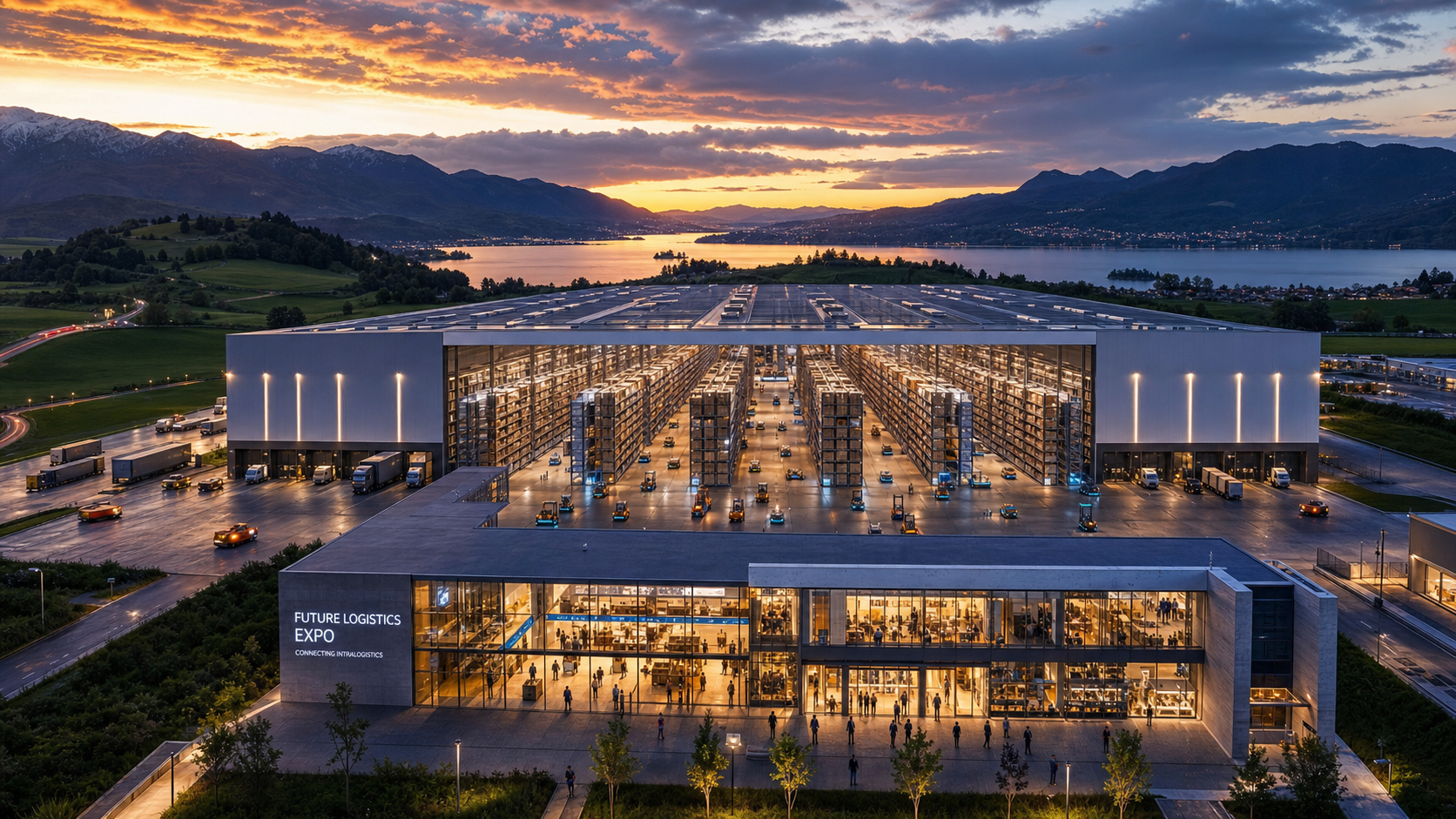
Intralogistics for medium-sized businesses – Image: Xpert.Digital
AI, robots and smart warehouses: How a new trade fair is shaping the supply chains of the future
Away from global chaos: Why the automated high-bay warehouse is now becoming a matter of survival
No time for LogiMAT? Why the Lake Constance region is now offering its own trade fair response
Global logistics is facing a historic turning point: supply chains are becoming regionalized, the shortage of skilled workers is forcing automation, and the once-disreputable warehouse is once again taking center stage in business decisions as a strategic buffer. It is precisely at this stage of major upheaval that a new trade fair is celebrating its premiere, perfectly capturing the spirit of the times. On September 23 and 24, 2026, Movatec will open its doors for the first time in Dornbirn, Austria – and it promises to be far more than just a regional industry gathering. Nestled in the economically strong Lake Constance region, which spans four countries, the trade fair positions itself as a leading platform for intralogistics, robotics, and automation. It is specifically aimed at medium-sized businesses seeking concrete, scalable solutions amidst a thicket of AI solutions, high-bay warehouses, and automated guided vehicles. Together with the concurrently held TECH.CON, this creates a trade fair duo that demonstrates that multi-million-euro investment decisions continue to be based on personal exchange and trust. The following article highlights why Movatec is coming at exactly the right time, what billions of euros potential lies dormant in the intralogistics market, and why the Lake Constance region is the ideal laboratory for the logistics future of Europe.
When one region rearranges the world: Why Dornbirn suddenly matters
Not a coincidence, but a strategy: The birth of a trade fair at the right moment
On September 23 and 24, 2026, Movatec will open its doors for the first time at the Dornbirn Exhibition Centre – and it would be a disservice to dismiss the event as just another regional trade fair. Movatec is a response to a profound shift taking place in global logistics: the question of where goods are stored, moved, and processed is being redefined. And the answer increasingly lies in the heart of Europe. Dornbirn, the western Austrian exhibition center in the heart of the four-country region, occupies a niche that no other trade fair has yet consistently addressed – the intelligent interface between industrial automation, regional supply chains, and medium-sized businesses in German-speaking countries.
Messe Dornbirn GmbH is organizing Movatec as a joint trade fair with TECH.CON, the trade fair for production and process automation, robotics, and digitalization. This conceptual tandem is no coincidence: anyone considering intralogistics today cannot ignore production automation – and vice versa. The two areas are so closely intertwined that considering them in isolation is hardly practical anymore. The joint trade fair highlights this connection and offers decision-makers a condensed, two-day information format tailored to their limited time.
Between Lake Constance and the global market: The economic region as a success factor
The choice of Dornbirn as the location is strategically astute, because the region hosting this trade fair is itself one of the most economically exceptional in Europe. The Lake Constance region, encompassing four countries – Lake Constance-Upper Swabia in Germany, Vorarlberg in Austria, Eastern Switzerland, and the Principality of Liechtenstein – is home to over four million inhabitants and generates a gross domestic product of approximately 330 billion euros. This puts the region on par economically with a medium-sized European nation like Denmark, which achieves a GDP of 382 billion euros. With a GDP per capita of over 66,000 euros, it ranks among the top five regions in Europe.
What makes this region economically unique is its exceptionally high industrial density. On average, one in four jobs is in industry – in sub-regions like the Lake Constance district or the Vorarlberg Rhine Valley, it's almost one in two. Over half of all employees in the Lake Constance region – precisely 56.1 percent – work in technology- or knowledge-intensive sectors, which is significantly higher than the EU average of 46.7 percent. In the high-tech sector, Vorarlberg and the Oberallgäu region, with over 20 percent, and the Lake Constance district and the Lindau district, with over 30 percent, are well above the EU benchmark of 5.8 percent. Numerous companies in this region are global market leaders in their respective segments, deeply rooted in the region, and have no intention of leaving.
For a trade fair for intralogistics and automation, this means that Movatec's catchment area is not just any trade fair environment, but one of the most industrially dense and economically powerful regions on the entire continent. Exhibitors here meet decision-makers from world-class companies who make real investment decisions – not trade fair visitors simply gathering information.
The weight of intralogistics: A billion-dollar market undergoing structural change
To properly understand the significance of Movatec, a clear picture of the industry it serves is essential. The global intralogistics market – encompassing all systems, technologies, and processes that control internal material and goods flows – is projected to reach a value of approximately US$63 billion in 2026. By 2034, it is expected to grow to US$140.73 billion, representing an annual growth rate of 10.4 percent. These figures make intralogistics one of the most dynamic investment sectors in the global economy.
The sub-market for automated storage and retrieval systems alone is growing from US$12.3 billion in 2024 to an estimated US$21.85 billion by 2031 – an annual growth rate of 8.6 percent. This global dynamic is of particular interest to Germany, one of the world's largest intralogistics production locations: Domestic manufacturers recorded a production volume of €27.7 billion in 2024. In 2025, this was followed by a cyclical decline of 7 percent to €25.8 billion, and the VDMA Materials Handling and Intralogistics Association expects stagnation at the same level for 2026. The reasons for this lie in the weak industrial economy – particularly in the automotive sector – geopolitical uncertainties, and stricter trade conditions resulting from US tariffs.
The total export volume of German intralogistics providers fell by 7 percent in 2025 to €18.6 billion, down from €20.1 billion the previous year. However, this short-term weakness masks a persistently high demand for automation in the long term. Jan Drömer, Chairman of the Board of the VDMA's intralogistics division and CIO of Neura Mobile Robots GmbH, put it clearly: the structural demand remains high, and many investments have merely been postponed – the association expects a recovery by 2027 at the latest. It is in this environment that Movatec is emerging: not in a period of abundance, but at a moment of strategic reflection – as a platform where postponed decisions can finally gain momentum.
Fully automated warehouse as a focal point: What high-bay warehouses can really do today
No topic reflects the transformation of modern intralogistics better than the automated high-bay warehouse. For decades, these systems were considered expensive, custom solutions for large corporations. Today, they have become the operational backbone of modern supply chains. The core of their value lies in the consistent utilization of vertical space: While conventional flat warehouses occupy valuable land, high-bay warehouses utilize the airspace above production or distribution centers, enabling significantly greater storage capacity on a much smaller footprint.
Modern systems combine this space efficiency with fully automated storage and retrieval machines, shuttle systems, and seamless integration with the warehouse management system. Availability rates exceeding 99 percent are now standard, and AI-supported predictive maintenance further reduces downtime. The economic amortization of such systems has accelerated significantly due to falling component prices and increasing software maturity. Space savings, reduced personnel costs, and process stabilization—especially the elimination of picking errors—are the three key drivers of return on investment. In regions with high land prices, such as the Lake Constance region, the Rhine Valley, or the greater Stuttgart area, the economic benefits of automated high-bay warehouses are particularly pronounced today.
At the same time, the requirements for these systems are changing. Classic pallet warehouses are being complemented by hybrid architectures that can manage both large load carriers and small parts containers. AutoStore systems, miniload systems, and cube storage solutions enable a level of storage granularity that was unheard of in previous generations. Kardex Austria is among the exhibitors at the premiere and is positioning itself as a one-stop automation partner for storage systems ranging from small parts and panels to AutoStore architectures. voestalpine Krems Finaltechnik is specifically using the trade fair to present projects already implemented in the Lake Constance region and to strengthen existing networks.
Supply chain under pressure: Why warehousing is becoming strategic again
For years, the credo of supply chain optimization was: as little inventory as possible, as fast as possible from A to B, just-in-time delivery pushed to the limits of what is feasible. This philosophy first came under serious attack with the COVID pandemic. Then came the disruptions in the Suez Canal, the Russian war of aggression against Ukraine, geopolitical tensions surrounding Taiwan, and finally the new US tariff policies starting in 2025 – and suddenly the dogma of lean inventory no longer appeared as an efficiency measure, but as a dangerous fragility.
The global industry's response has since been a strategic rethink: Nearshoring and reshoring – the relocation of production and procurement back to closer sales markets – have gained momentum. Data from the first quarter of 2026 clearly shows that companies in the automotive, fashion, and pharmaceutical sectors are shifting production steps to southern and eastern European regions to make supply chains more resilient. Investments in regional logistics hubs and multimodal transport networks are increasing. Brussels is pushing for up to 70 percent of the value of critical goods such as motor vehicles to be "Made in Europe" in the future.
This leads to a paradoxical finding for intralogistics: While global supply chains are becoming leaner, regionalized production networks require more storage capacity, more buffer logic, and more on-site automation. The warehouse is returning as a strategic resource. And with it, the demand is increasing for precisely those systems that are the focus at Movatec: intelligent warehouse technology, fully automated high-bay warehouses, driverless transport systems, and integrated software solutions. ÖBB Infra Terminal Service Austria is explicitly using the trade fair to present current investment and automation projects in the Lake Constance region's terminal network – a concrete example of the strategic link between intermodal infrastructure and intralogistics.
AI, driverless systems and the difficult path to scaling
The intralogistics industry is currently discussing no technology more intensely than artificial intelligence – and hardly any other is viewed with such ambivalence. LogiMAT 2026, Europe's leading intralogistics trade fair, which took place in Stuttgart in March, highlighted this contradiction: AI is ubiquitous at the booths, used in the planning of logistics systems, in the control of processes, and in the optimization of workflows – yet the transition from individual solutions to scalable overall systems is still not universally successful. Humanoid robots provided impressive visual effects but did not deliver any directly applicable industrial solutions.
This is changing. Driverless transport systems – autonomous, ground-based vehicles that move goods without human intervention – will be the operational standard in advanced logistics centers by 2026. The real challenge today lies not in the technology itself, but in selecting the right system architecture. Those investing in intralogistics today no longer need to choose the "best system" in isolation, but rather a consistent system architecture in which hardware, software, wireless data systems, identification solutions, and warehouse management systems work seamlessly together. The trend is unmistakably moving from isolated individual solutions to integrated, comprehensive systems. Movatec addresses this demand by uniting all the relevant pillars under one roof: automation, IT, big data, software, hardware, and AI in logistics are presented not separately, but as a cohesive ecosystem.
At the same time, investment uncertainty is growing. Companies are considering more carefully when and how to invest in intralogistics and are seeking guidance in a jungle of solutions that is becoming increasingly dense every day. This is precisely where one of the core values of a focused regional trade fair like Movatec lies: It offers decision-makers the opportunity to explore the available options in a manageable, quality-assured environment, to engage in direct discussions, and to prepare the decisions relevant to their own operations without the stress of travel.
LTW Intralogistics Solutions

LTW Intralogistics – Engineers of Flow - Image: LTW Intralogistics GmbH
LTW offers its customers not individual components, but integrated complete solutions. Consulting, planning, mechanical and electrotechnical components, control and automation technology, as well as software and service – everything is networked and precisely coordinated.
In-house production of key components is particularly advantageous. This allows for optimal control of quality, supply chains, and interfaces.
LTW stands for reliability, transparency, and collaborative partnership. Loyalty and honesty are firmly anchored in the company's philosophy – a handshake still means something here.
Related to this:
Why regional trade fairs are now more important than global leading trade fairs for SMEs
Global logistics infrastructure in transition: What the major trends mean for regional trade fairs
To understand Movatec within a global context, one must first grasp the forces currently reshaping global logistics infrastructure. Three dominant trends shape the landscape: First, the geopoliticization of supply chains – the deliberate redesign of trade and procurement routes based on political risk assessments. Second, digitalization and data integration, which connect warehousing, transport, and production into a smart network. And third, decarbonization, which makes energy consumption and resource efficiency in warehousing and transport systems mandatory considerations.
All three trends converge in intralogistics. Geopolitical diversification creates new warehousing requirements. Digitalization transforms high-bay warehouses into data-driven nodes in the information network. Decarbonization makes recuperation systems, energy-efficient drives, and sustainable packaging cycles a competitive advantage. At Movatec, this is reflected in a thematic focus explicitly addressing sustainability – reusable systems, environmentally friendly solutions, and energy-efficient technologies. This is not merely a decorative addition, but a response to a regulatory and economic reality in which the CO₂ footprint of logistics processes is increasingly becoming a key performance indicator in tenders, ESG reports, and supplier agreements.
On a global scale, the limitations of purely global perspectives become apparent: Europe continues to benefit from its strong single market, which absorbs around 60 percent of all German intralogistics exports. The five largest exporters within the EU are Germany, Italy, the Netherlands, France, and Austria. Movatec occupies a specific position within this European internal dynamic: It addresses the market at a point where regional proximity, industrial density, and a shared language converge – and where business relationships are based on trust, which often cannot be established at major trade fairs.
What measurements can achieve that algorithms cannot: The value of physical encounters
In a world where product presentations are readily available online, price comparisons can be made in seconds, and webinars seem to have replaced every other format, the question of the added value of physical trade fairs is becoming increasingly urgent. The answer lies not in information transfer—the internet is unbeatable in this respect—but in the accumulation of relationship capital. Purchasing decisions in the field of intralogistics and automation are not impulsive actions. They involve investments in the six- to seven-figure range, planning horizons of five to ten years, and integration issues that deeply impact the operational architecture.
Such decisions require trust. And trust is built through personal conversations, live demonstrations, hands-on experience with technology, and informal networking at the evening event. Movatec has incorporated this mechanism into its trade fair concept: The modular, all-inclusive stand concept with standardized stand sizes up to a maximum of 48 square meters and transparent costs significantly lowers the financial barrier to entry for exhibitors, especially for medium-sized companies. Admission for visitors is free, which facilitates broader participation.
Alexander Klacska, Chairman of the Federal Transport and Traffic Division of the Austrian Federal Economic Chamber, succinctly summarizes the idea behind the trade fair: The goal is to provide a platform and space for innovative spirit, and he sees this as a concept that breaks new ground. This assessment is shared by prominent industry representatives from the region: FERCOM Austria, ÖBB Infra Terminal Service Austria, voestalpine Krems Finaltechnik, and the Blum Group have all confirmed their participation in the premiere – a strong signal of the acceptance of the new format.
The role of small and medium-sized enterprises: Why Dornbirn is not Stuttgart – and that's a good thing
LogiMAT in Stuttgart is the largest annual intralogistics trade fair in Europe. Hundreds of exhibitors, tens of thousands of visitors, international participation – the format is impressive, but also overwhelming for small and medium-sized enterprises (SMEs). Decision-makers from medium-sized manufacturing companies in Vorarlberg, the Allgäu region, or the canton of St. Gallen looking to make a concrete investment decision will find an overwhelming array of offerings in Stuttgart, but perhaps not the level of personal interaction necessary to truly prepare for such a decision.
This is precisely where Movatec's unique selling point lies. It is not a competitor to LogiMAT, but rather its regional complement. As Messe Dornbirn GmbH itself states, it positions itself not as a leading international trade fair, but as a business-oriented forum with regional depth. This positioning prevents overambition and sharpens the focus on what is essential: the direct exchange between suppliers and users in an economically homogeneous and culturally familiar environment. The President of the Vorarlberg Chamber of Commerce, Karlheinz Kopf, emphasizes that targeted professional development for skilled workers is a key success factor for the region's economy – and that the two trade fairs offer a compact and practical platform for learning about current developments in production, automation, and logistics.
For small and medium-sized enterprises (SMEs), participation is not only economically advantageous, as it keeps transport routes short and focuses the target group regionally. It is also strategically relevant because the shortage of skilled workers – a key structural problem in DACH industry – is driving the demand for automation solutions like almost no other factor. Those who fail to invest in automated warehouse systems today risk being unable to deliver tomorrow in a labor market lacking sufficient warehouse personnel.
Four countries, one market, one language: The Lake Constance region as a logistics laboratory
The Lake Constance region, encompassing four countries, is not a unified economic area in the legal sense, but in practice it functions like one. Companies commute, purchase goods, and cooperate across borders. Skilled workers from all four countries collaborate. Goods flow daily across the borders between Vorarlberg, Bavaria, Baden-Württemberg, the Swiss cantons, and Liechtenstein. This vibrant economic region previously lacked a dedicated platform for intralogistics and automation – until Movatec.
From a logistics perspective, this region is a particularly interesting laboratory for testing and disseminating innovations: Companies that introduce and validate an automation solution here can transfer it to neighboring markets with virtually no cultural or linguistic adaptation required. Dornbirn's proximity to Munich, Zurich, Stuttgart, and Vienna makes it a geographical hub where different regulatory environments—German, Austrian, and Swiss law—converge with a shared language and industrial culture. The IBH Lab network of the International Lake Constance University and the BodenseeAIRea network illustrate the already close collaboration between academia, industry, and public institutions—a foundation upon which intralogistics companies can build their market development.
Key topics at Movatec: What's really at stake
The thematic architecture of Movatec reflects the entire spectrum of a modern intralogistics ecosystem. In the area of automation, the focus is on warehouse automation, automated guided vehicles (AGVs), lifting and conveying equipment, and intelligent load carriers. The IT and software sector showcases supply chain management systems, wireless data systems, and labeling and identification solutions. Safety and infrastructure encompass fire protection, load securing, loading docks, and operational equipment – topics that rarely make headlines in the public eye but are crucial for the certification and insurability of high-bay warehouses. Third-party logistics and fulfillment services, as well as sustainability solutions, complete the picture.
This breadth of topics is not an overload of information, but rather a reflection of operational reality: Anyone planning a high-bay warehouse simultaneously needs racking technology, a warehouse management system (WMS), AGV integration, a fire protection solution, a labeling strategy, and often a 3PL partner for the start-up phase. Those who underestimate this complexity of decision-making will fail not because of the technology itself, but because of the integration. Movatec promises to make this complexity manageable within a concise trade fair format – no easy promise, but a necessary one.
Between stagnation and structural change: What the numbers really mean
The stark industry statistics paint a mixed picture. The production volume of German intralogistics manufacturers fell to €25.8 billion in 2025, and the VDMA (German Engineering Association) expects no improvement for 2026. Total export volume from the EU27 countries in the intralogistics sector amounted to approximately €53.9 billion by November 2025 – also a decline of about 5 percent compared to the previous year. Exports to the US by German intralogistics providers fell by 7 percent to €2.3 billion in 2025, triggered by special tariffs on steel and aluminum. China, long an important sales market, slipped to 14th place among German customer countries – with an export volume of just €326.8 million, a decrease of 22.8 percent compared to 2024.
This data is significant but should not be misinterpreted. The decline is due to cyclical and geopolitical factors, not structural ones. The need for automation remains strong – it is merely being postponed, not abandoned. Companies that delay investments today will face an even more urgent need for action in two to three years, as the shortage of skilled workers and competitive pressure will continue to increase. The VDMA views the current stagnation as a bottoming out, from which new growth impulses are expected from 2027 onwards – for Movatec, this means launching in a market environment where thoughtful decision-makers are looking for guiding platforms.
Movatec in the context of the trade fair landscape: positioning and perspective
The trade fair landscape for logistics and intralogistics is diverse. LogiMAT in Stuttgart is the leading European event for this segment. Transport Logistic in Munich addresses global freight transport. For specific markets, there are events such as IMHX in Birmingham, CeMAT Asia in Shanghai, and MODEX in Atlanta. Each of these trade fairs serves a different scope and offers a different level of expertise.
Movatec deliberately positions itself below the level of leading trade fairs, but above local business presentations. Its added value lies in its focus: on a clearly defined geographic region, on a clearly delineated target group of medium-sized industrial and commercial enterprises, and on a range of topics that corresponds to the actual decision-making needs in this market. The concept of the modular, all-inclusive stand up to 48 square meters is not just a price point, but a statement of format: the fair does not want flagship presentations by corporations, but rather a practical presence from suppliers who want to engage with their customers. Commitments from companies such as Kardex, voestalpine, ÖBB Infra, and FERCOM Austria, as well as the support from the Austrian Federal Economic Chamber and the Vorarlberg Chamber of Commerce, indicate that the foundation is solid. The 2027 fair is already scheduled for September 29 and 30 – a sign that Messe Dornbirn GmbH is already planning for continuity even before the first edition has taken place.
A region is reinventing its logistics future
Movatec is more than just a new trade fair. It reflects a region that is becoming aware of its economic strength and wants to actively shape it. The Lake Constance region, encompassing four countries – one of the most innovative and industrially densely populated regions in Europe – has previously lacked a dedicated platform for intralogistics and automation. Movatec fills this gap with a concept that is regionally rooted, thematically focused, and precisely timed: right in the middle of a phase in which intralogistics is gaining strategic importance globally, Europe is restructuring its supply chains, and medium-sized companies are urgently seeking guidance on complex automation decisions.
The dynamics of major international trends – nearshoring, resilience building, AI integration, decarbonization – are converging on a regional industry that possesses the technological and financial resources to implement these trends. Movatec provides the platform for this exchange. Whether this will be enough to establish it as a long-term fixture in the trade fair landscape remains to be seen. The conditions are exceptionally favorable for a first-time trade fair.
Consulting - Planning - Implementation

Konrad Wolfenstein
I would be happy to serve as your personal advisor.
You can contact me at wolfenstein∂xpert.digital or
Just call me on +49 7348 4088 965 .
Your intralogistics experts

Consulting, planning and implementation of complete solutions for high-bay warehouses and automated storage systems - Image: Xpert.Digital
More information here:










