
Countering pessimism: India's demographic AI risk – opportunity or danger for the younger generation?
Xpert pre-release

Available in 27 languages 📢
Prefer Xpert.Digital on GoogleⓘPublished on: March 31, 2025 / Updated on: March 31, 2025 – Author: Konrad Wolfenstein
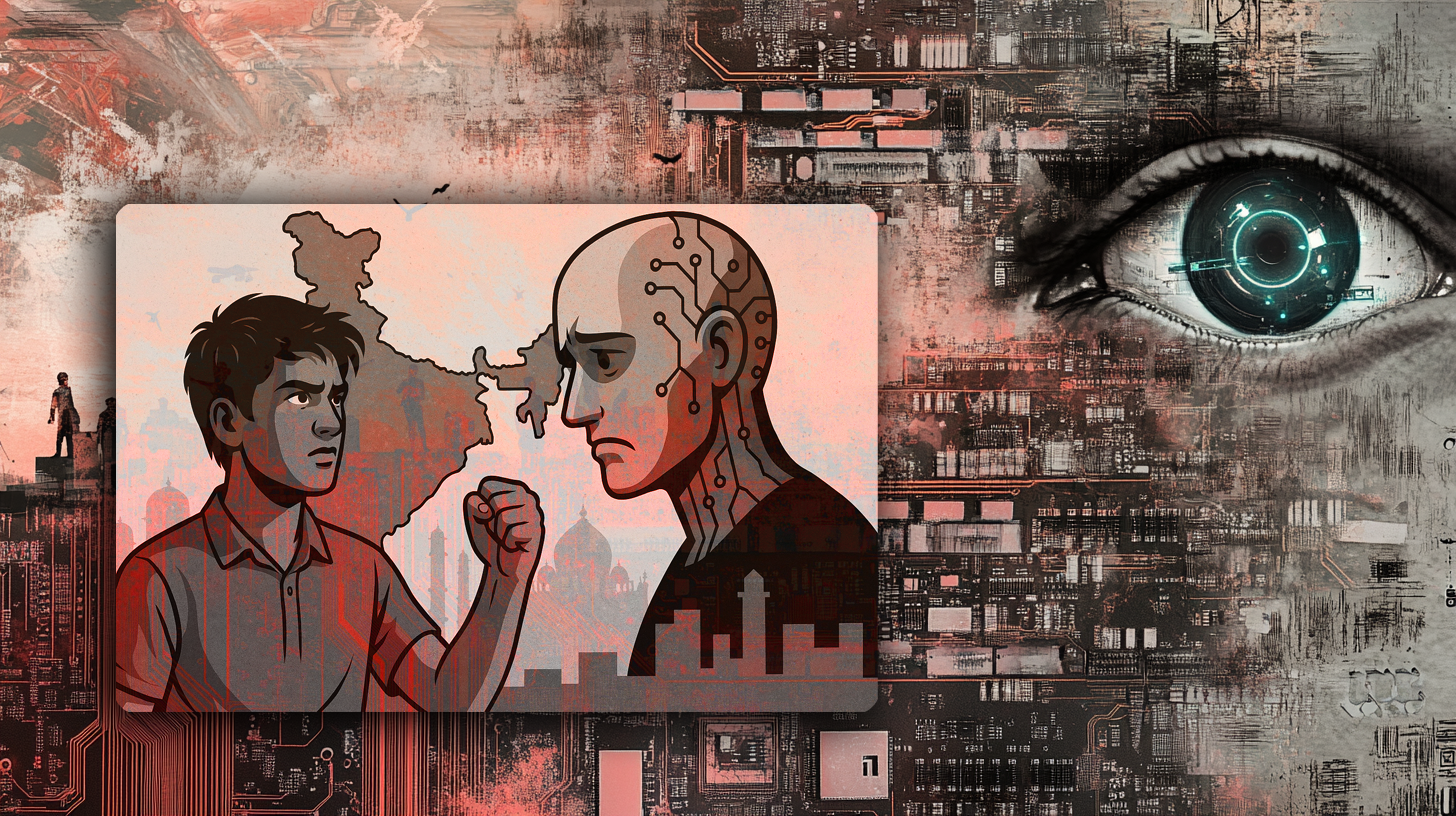
Countering pessimism: India's demographic AI risk – opportunity or threat for the younger generation? – Image: Xpert.Digital
India's demographic dividend in the age of artificial intelligence: An opportunity or a challenge?
A turning point for India's economy?
India stands at a crossroads in its economic development. For decades, the country's economic hopes rested on its so-called demographic dividend—the competitive advantage derived from a large, young, and increasingly educated population. The prevailing assumption was that the entry of a large number of young people into the labor market would automatically lead to more jobs and significant economic growth. However, this optimistic view is now being challenged by the rapid advance of artificial intelligence (AI) across various industries.
A new, sobering analysis by the US investment bank Bernstein has cast doubt on this thesis. The report argues that the rise of AI could negate the benefits India expects from its young population. The main concern is that some 500 million Indians aged 5 to 24 are expected to enter the labor market over the next two decades. Bernstein analysts see this as a potential “doomsday scenario” for a country that has based its economic growth on a service-oriented model. They argue that AI systems are now capable of performing tasks more accurately and quickly, often at a fraction of the cost associated with employing Indian engineers. This fundamental shift necessitates a critical reassessment of the assumption that a larger young population automatically translates into greater economic prosperity.
This article aims to examine the arguments of the Bernstein analysis, analyze the potential impact of AI on India's demographic dividend in the coming years, consider counterarguments to this pessimistic view, and discuss the strategic imperatives India must address to navigate this evolving environment. By examining the dual impact of AI on the labor market, comparing it with other countries, and considering the critical role of education and skills, this article seeks to provide a comprehensive understanding of the challenges and opportunities facing India as it stands at the intersection of its demographic potential and the rise of artificial intelligence.
Suitable for:

India's Demographic Dividend: Promise and Potential
The demographic dividend refers to the economic growth potential that can arise from changes in a population's age structure, particularly when the proportion of the working-age population (typically between 15 and 64 years old) is larger than the proportion of the dependent population (children and the elderly). This transition occurs when a country undergoes demographic shifts, typically characterized by declining birth and death rates, resulting in a larger proportion of the economically active population. India is currently in a phase where its population is relatively young, with a lower proportion of dependents, creating a significant window of opportunity for boosting economic growth.
India possesses a significant demographic advantage, boasting one of the youngest populations in the world. India's working-age population (15-64 years) is projected to reach 67% by 2030, which has the potential to significantly boost productivity and GDP growth, and potentially increase per capita income. This large number of young people offers the promise of increased productivity, higher savings and investment rates, and a large domestic market to fuel economic growth. Historically, there has been considerable optimism that India's demographic dividend could propel the country to new economic heights, similar to the economic miracles in East Asian countries, where a growing working-age population has had a strong positive impact on economic growth.
However, realizing the full potential of this demographic dividend is not without its challenges. India faces pre-existing problems, such as significant skills gaps in its workforce, relatively low labor force participation, particularly among women, and a large informal sector that often lacks job security and adequate benefits. Furthermore, a substantial portion of India's youth lacks job-relevant knowledge, and there is a significant mismatch between the skills of university graduates and labor market demands. Experts have long emphasized that substantial investment in education, healthcare, and skills development is essential to transforming this demographic advantage into a productive and efficient workforce. The uneven distribution of this demographic expansion across India's states also presents an asymmetry, with working-age population growth likely to be concentrated in the poorest states. This regional disparity could lead to varying impacts of technological advancements such as artificial intelligence across the country.
The Bernstein Report: A looming threat to India's advantage?
The report by Bernstein analysts paints a worrying picture, characterizing the impact of AI on India's demographic dividend as a potential "doomsday scenario".
The core argument of Bernstein's analysis is that the rapid advance of AI poses a significant threat, as it could potentially replace human labor in numerous sectors at a pace and cost that could negate the benefits of India's large young labor force. The report specifically highlights the economic viability of AI subscriptions, suggesting that these could perform tasks with greater accuracy and speed at a fraction of the cost associated with employing Indian engineers. This cost-efficiency of AI challenges the traditional labor arbitrage advantage that India has relied upon, particularly in its service-oriented growth model. Bernstein's analysts call for a "serious reassessment" of the long-held assumption that a larger influx of young people into the labor market will automatically translate into more jobs and sustainable economic growth. Their assessment suggests that the sheer size of India's youth population is no guarantee of economic prosperity in an era where AI is increasingly capable of performing a wide range of tasks, potentially rendering a significant portion of the future labor force redundant. While some of Bernstein's more comprehensive research touches on the development of AI in China compared to the West, the main focus of the report in question appears to be on the specific impact on India's demographic dividend.
Suitable for:

The dual impact of AI on the Indian labor market: displacement and creation
The integration of artificial intelligence into the Indian economy is expected to have a dual impact on the labor market, leading both to the displacement of existing jobs and the creation of new roles and opportunities. Understanding these dynamics is crucial to anticipating the challenges and preparing for the future of work in India.
Several sectors in India are particularly vulnerable to job losses due to automation and AI-driven efficiency. The information technology (IT) and business process outsourcing (BPO) sectors, which have been major employers in India, are facing increasing automation of tasks such as customer support and data entry. Manufacturing, especially roles involving routine and repetitive assembly line work, is also vulnerable to automation through robotics and AI-powered systems. In retail, AI is being used for tasks such as inventory management, customer service chatbots, and even automated checkout processes, potentially impacting jobs in traditional retail. Transportation could also experience job losses with the advent of autonomous vehicles and AI-optimized logistics. Furthermore, middle management and supervisory roles involving routine decision-making and data analysis are also at risk of automation. Reports indicate potentially significant job losses, with NASSCOM estimating that AI and automation could displace up to 69 million jobs in India by 2030, and the World Economic Forum forecasting around 5.1 million job losses by 2025. Low-wage earners engaged in repetitive tasks are particularly vulnerable to these changes. Even office jobs involving data processing and compliance are becoming increasingly automated.
The rise of AI is also creating new jobs and opportunities across various sectors in India. There is a growing demand for professionals with expertise in AI engineering, data science, and machine learning. New roles are emerging, such as AI trainers, ethical AI architects, and AI consultants, to support the development and deployment of AI technologies. Specialized roles focusing on natural language processing (NLP), computer vision, and the integration of AI into existing systems are also on the rise. The need for AI research and development is also growing, creating opportunities for skilled researchers and scientists. Some forecasts indicate a substantial number of new jobs. For example, a ServiceNow report predicts that 2.73 million new technology-related jobs will be created in India by 2028, and MeitY estimates over 20 million new jobs due to digital interventions such as AI. These new roles often require specialized skills, leading to increased demand for AI-related expertise and potentially higher salaries in these fields.
India vs. the World: A Comparative Perspective on AI and Demographics
The integration of AI and its impact on the labor market is a global phenomenon, with various countries experiencing similar trends and challenges. Nations like China and Singapore are investing heavily in AI infrastructure and development, positioning themselves as key players in the global AI landscape. An IMF analysis suggests that nearly 40% of global employment is exposed to AI, with varying degrees of impact between advanced and emerging economies. Advanced economies face a higher exposure rate of around 60%, while emerging economies like India have a rate of approximately 40%.
Comparing India's situation with other countries with similar demographic structures, such as large developing countries with significant youth populations, reveals both parallels and differences. While the research snippets do not provide detailed comparative analyses with specific countries, the general trends suggest that the potential of AI to disrupt traditional labor markets is a common concern. However, the specific impacts are likely to vary depending on factors such as the prevailing economic structure, the educational level and skills development of the working-age population, and the proactive measures taken by governments and industries to adapt to the changing technological landscape. China's rapid progress in developing AI applications, particularly in areas such as e-commerce and AI-powered recommendation systems, as Bernstein noted, underscores AI's potential to rapidly transform large economies with significant digital penetration.
India occupies a unique position with its vast and young population, rapidly growing digital infrastructure, and strong service-oriented economy. While the current adoption and adoption of AI in India is relatively low compared to more developed economies in the US, Europe, and developed Asia, this presents both a challenge in terms of catching up and an opportunity to plan strategically for future impacts. India's existing strength in digital talent and its potential to become a global hub for AI capabilities are significant advantages. The lower initial level of AI adoption could offer India a window to learn from the experiences of other nations and take targeted measures to mitigate potential negative consequences for its workforce while simultaneously harnessing AI for economic growth and development.
🎯🎯🎯 Benefit from Xpert.Digital's extensive, five-fold expertise in a comprehensive service package | BD, R&D, XR, PR & Digital Visibility Optimization

Benefit from Xpert.Digital's extensive, fivefold expertise in a comprehensive service package | R&D, XR, PR & Digital Visibility Optimization - Image: Xpert.Digital
Xpert.Digital has in-depth knowledge of various industries. This allows us to develop tailor-made strategies that are tailored precisely to the requirements and challenges of your specific market segment. By continually analyzing market trends and following industry developments, we can act with foresight and offer innovative solutions. Through the combination of experience and knowledge, we generate added value and give our customers a decisive competitive advantage.
More about it here:
Why AI doesn't have to be a threat to India's demographic dividend - maximizing opportunities through AI adaptation
Countering pessimism: Alternative views on AI adaptation in India
While the Bernstein report presents a potentially pessimistic outlook, alternative perspectives suggest that AI will not necessarily wipe out India's demographic dividend entirely. A key argument is that AI will complement, rather than completely replace, human labor in many roles. This implies that while some tasks can be automated, human workers will still be needed to work alongside AI systems and leverage their unique capabilities. It is also suggested that those workers who effectively learn to use AI tools will become more productive and valuable, potentially even replacing those who cannot adapt to these technological advances.
Historically, technological revolutions have led to the creation of entirely new industries and professions that were not foreseeable at the outset. There is optimism that AI could similarly boost innovation and entrepreneurship in India, leading to the emergence of new economic activities and employment opportunities that are currently unimaginable. Furthermore, with strategic and sustainable investments in human capital and education, India's young population can be equipped with the skills and knowledge necessary to adapt to the evolving demands of an AI-driven labor market and thrive in this new environment. AI itself has the potential to revolutionize the education system, enabling personalized learning experiences and making skills development more effective, thereby better preparing the future workforce.
India possesses inherent strengths, including a substantial base of digital talent, and has the potential to become a leading global hub for AI capabilities and innovation. The Indian government has also demonstrated a proactive approach by launching various initiatives aimed at fostering AI research, development, and digital infrastructure across the country. These efforts, combined with the adaptability and resilience often observed in India's workforce, suggest that the negative predictions of the Bernstein report are not inevitable and can be mitigated through well-designed and effectively implemented strategies.
Strategic Imperatives: Political and Business Responses to the AI Challenge
Addressing the potential challenges that AI poses to India's demographic dividend requires a concerted effort, including proactive government policy and strategic responses from the business sector.
The Indian government has already initiated several programs aimed at promoting AI competence and developing the necessary skills within the workforce. Initiatives such as the IndiaAI Mission, FutureSkills Prime, and YUVAI focus on building an AI-savvy workforce through various skills development and training programs, as well as integrating AI education into academic curricula from school to university. The government is also working to establish centers of excellence in AI and data science to foster research and innovation in these critical fields.
Industry and the private sector also play a crucial role in managing this transition. Increased investment in AI research and development by private companies is essential to foster innovation in India. Furthermore, companies must take responsibility for proactively retraining their existing workforce to adapt to the changing demands arising from the adoption of AI. Collaboration between industry and educational institutions is vital to ensure that training programs are aligned with the specific needs and requirements of the labor market.
To mitigate potential job losses, the government may need to consider policy interventions such as strengthening social safety nets, providing unemployment benefits, and implementing support programs for workers who lose their jobs due to automation. It may also consider policies that encourage companies to focus on using AI to augment human capabilities, rather than solely on replacing jobs. The idea of taxing companies that replace human labor with AI has also been suggested as a potential measure if the private sector fails to address the employment impact responsibly.
Fostering a dynamic ecosystem for AI innovation and entrepreneurship is also crucial. Supporting AI startups through funding, mentoring, and access to resources can accelerate the development of new AI-based solutions and create new jobs. Initiatives such as the proposed National AI Marketplace (NAIM) could facilitate the sharing of data and the deployment of AI models, further boosting innovation across various sectors.
Suitable for:

The central role of education and skills development in the age of AI
A fundamental transformation of India's education and skills development ecosystem is of paramount importance for the country to effectively leverage its demographic dividend in the face of rapid AI advances. Incremental changes to the existing system are unlikely to suffice to address the scale and speed of the technological upheaval brought about by AI.
Integrating AI-focused curricula from primary school through higher education is essential for building a future-proof workforce. Emphasis must be placed on early vocational training to equip students with practical skills that can facilitate a smoother transition from education to employment. Strengthening partnerships between academic institutions and industry will ensure that the skills taught are directly aligned with the demands of the evolving labor market. Furthermore, the potential of AI to personalize learning pathways and improve overall educational outcomes should be harnessed to create more effective and engaging learning experiences for students nationwide.
The focus of education and skills development initiatives must extend beyond imparting technical skills in AI, machine learning, and data science. Developing unique human skills such as critical thinking, complex problem-solving, creativity, and adaptability will be equally important, as these are the skills likely to be highly valued in an AI-driven world. Continuous learning and professional development throughout an individual's career will also be crucial to ensuring that the workforce remains relevant and competitive in a rapidly evolving technological landscape.
Addressing the existing AI skills gap requires a multi-pronged approach. India must not only expand its overall AI talent pool but also focus on attracting and retaining top-tier AI research talent to drive domestic innovation. Strategies to curb talent brain drain and improve the overall quality of STEM education are essential to ensure a larger proportion of graduates are employable and possess the advanced skills required in the AI age.
Long-term vision: Integrating AI for sustainable economic growth in India
Looking ahead, the integration of AI holds immense potential for fostering sustainable economic growth and development in India. Long-term economic benefits could include significant productivity gains, a surge in innovation across various sectors, and a substantial increase in India's overall GDP. Estimates suggest that AI could make a significant contribution to the Indian economy, with some forecasts predicting an increase of nearly US$957 billion by 2035. Key sectors such as agriculture, healthcare, and manufacturing are expected to experience transformative growth through the application of AI technologies.
Given long-term demographic shifts, extending beyond the next two decades, the integration of AI could play a crucial role. As India's population eventually begins to age, AI could help address challenges associated with a shrinking working-age population and rising dependency rates by boosting productivity and supporting an aging population.
However, the widespread adoption of AI also necessitates careful consideration of ethical and societal implications. Issues such as data privacy, the potential for algorithmic bias leading to unfair outcomes, and the general need for responsible AI development must be proactively addressed through appropriate regulations and ethical frameworks. Furthermore, there is a risk of increasing inequality if the benefits of AI-driven economic growth are not distributed equitably across all segments of society.
Despite these challenges, India has a strong desire to establish itself as a global leader in AI, and its demographic dividend, if fostered and strategically aligned with AI development, can be a key factor in realizing this vision. By focusing on building a skilled workforce, fostering a robust innovation ecosystem, and considering ethical factors, India can harness the power of AI to achieve long-term, sustainable, and inclusive economic growth.
Suitable for:

Shaping the future of India's demographic dividend with AI
The analysis of the Bernstein report and the broader landscape of AI's impact on India reveals a complex interplay between the country's demographic potential and the transformative power of artificial intelligence. While the Bernstein analysis raises legitimate concerns about AI's potential to undermine the traditional advantages of India's large and young working-age population, a more comprehensive perspective recognizes both the challenges and the significant opportunities that lie ahead.
The duality of AI, with its capacity to both displace and create jobs, necessitates a balanced and strategic approach. Global comparisons show that India is not alone in facing these challenges, and its relatively lower current level of AI adoption could present a valuable window for proactive planning and intervention. Counterarguments to a purely pessimistic view highlight the historical tendency of technological advances to create new opportunities and the potential of AI to augment human capabilities.
Ultimately, India's ability to successfully shape the future of its demographic dividend in the age of AI depends on proactive and well-coordinated action by the government, industry, and educational institutions. Strategic imperatives include sustained investment in comprehensive skills development and training programs, fostering a robust ecosystem for AI innovation and entrepreneurship, and implementing policies to mitigate potential job losses and ensure a just transition for the working-age population. The pivotal role of education cannot be overstated; a fundamental transformation of the education system is essential to equip India's youth with the future-proof skills needed to thrive in an AI-driven economy. By pursuing a long-term vision that prioritizes ethical considerations and inclusive growth, India has the potential not only to mitigate the risks highlighted in the Bernstein report but also to harness the power of AI to deliver sustainable economic growth and secure a prosperous future for its burgeoning young population.
We are there for you - advice - planning - implementation - project management
☑️ SME support in strategy, consulting, planning and implementation
☑️ Creation or realignment of the digital strategy and digitalization
☑️ Expansion and optimization of international sales processes
☑️ Global & Digital B2B trading platforms
☑️ Pioneer Business Development

Konrad Wolfenstein
I would be happy to serve as your personal advisor.
You can contact me by filling out the contact form below or simply call me on +49 7348 4088 965 (Munich) .
I'm looking forward to our joint project.
Write to me

Xpert.Digital - Konrad Wolfenstein
Xpert.Digital is a hub for industry with a focus on digitalization, mechanical engineering, logistics/intralogistics and photovoltaics.
With our 360° business development solution, we support well-known companies from new business to after sales.
Market intelligence, smarketing, marketing automation, content development, PR, mail campaigns, personalized social media and lead nurturing are part of our digital tools.
You can find out more at: www.xpert.digital - www.xpert.solar - www.xpert.plus
Keep in touch









